

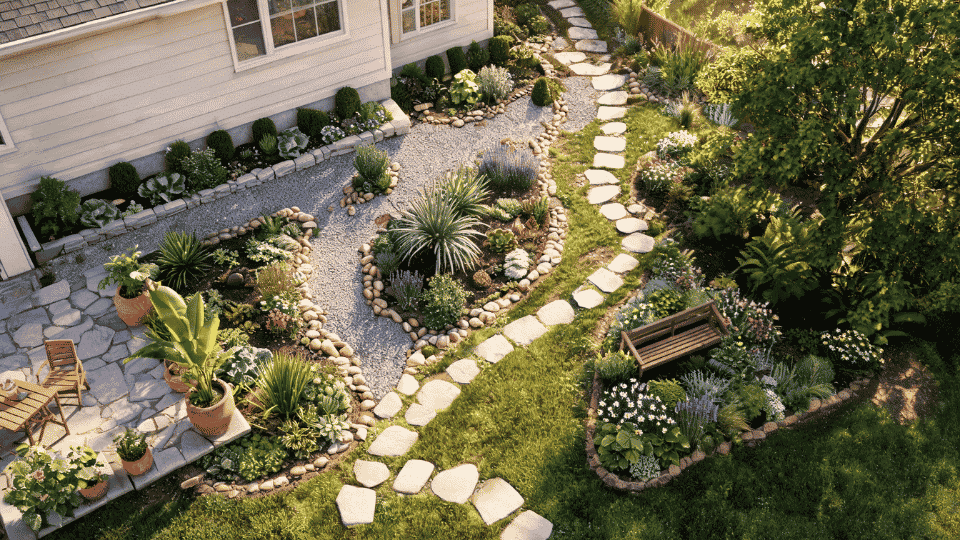


Garden landscaping looks simple in photos, but climate changes what works the moment you break ground.
A dry Arizona yard, a soggy Pacific Northwest border, a humid Gulf Coast patio, a frost-heaved Midwest bed, and a mild coastal California edge all need different answers, different materials, different drainage strategies, and different plants.
The ideas that hold up in one region fall apart in another, and that gap is almost never about budget. It is about reading the site before picking the style.
My approach has always been site-first. I want to know where water collects, where frost sits the longest, what the ground feels like after rain, and how much maintenance the space can realistically absorb. That tells me which garden landscaping ideas belong there and which ones will need rescuing by June.
The projects below are sorted by climate. Each one solves the most common failure mode in that region. Start with your climate, pick one project, and build from there.
| Cost Note: Figures in this article are estimates based on national averages. Actual costs vary significantly by region, contractor, materials, and project scope. Always get at least three quotes before committing to any project above $1,000. |
Start with the Site Before Choosing the Style
Before settling on a garden style, spend time watching the space. Notice where the sun hits in the morning, where shade sits in the afternoon, and where water collects after rain.
Check whether the yard slopes, whether wind dries out one corner, and whether the soil feels sandy, sticky, or compacted. Look at where the outdoor tap sits and how far the hose can reach.
Also, be honest about how much maintenance you can manage after planting day. A style shapes the look, but the site decides what survives. One finished bed, path, or planting pocket almost always looks better than a large makeover that never gets completed.
If you are also planning a seating structure to anchor the space, deck building costs are worth understanding before you commit to a layout.
Why Climate Should Shape Your Garden Landscaping Plan
Climate affects how a garden works, not just which plants belong in it.
| Climate | Main design priority | What usually goes wrong |
|---|---|---|
| Dry | Water control and shade | Plants dry out, or the soil stays bare |
| Rainy | Drainage and raised roots | Beds turn muddy, or plants rot |
| Hot and humid | Airflow and spacing | Crowded plants get diseased |
| Cold | Winter structure | The garden looks empty after summer |
| Mild | Editing and rhythm | Too many plant choices create clutter |
I always think of climate as the first design rule. The same idea can succeed in one place and fail in another. A gravel bed in Arizona solves a water problem, while that same bed in a rainy yard may need a very different base and drainage plan.
Garden Landscaping in Dry or Semi-Arid Regions
Best for: Arizona, New Mexico, Nevada, Utah, Colorado, and dry inland California.
Dry gardens need water management before anything else. Structure, shade, and smart plant zoning come first. Once those are in place, the garden starts to look finished.
Plants and Aesthetic Direction for Dry Regions
| Plants to consider | Aesthetic direction |
| Lavender | Silver foliage, soft scent, and a relaxed Mediterranean feel |
| Russian sage | Airy blue-purple color with a low-water, meadow-like look |
| Agave | Sculptural form that gives the bed a strong visual structure |
| Desert marigold | Bright seasonal color without heavy watering or constant care |
| Apache plume | Soft seed heads that add movement and desert texture |
| Blue grama grass | Fine texture that works well with gravel and stone |
Keep the palette edited. Silver, blue-grey, terracotta, gravel, and stone usually look stronger than too many colors fighting for attention.
1. Create a Hydrozoned Gravel Garden Bed
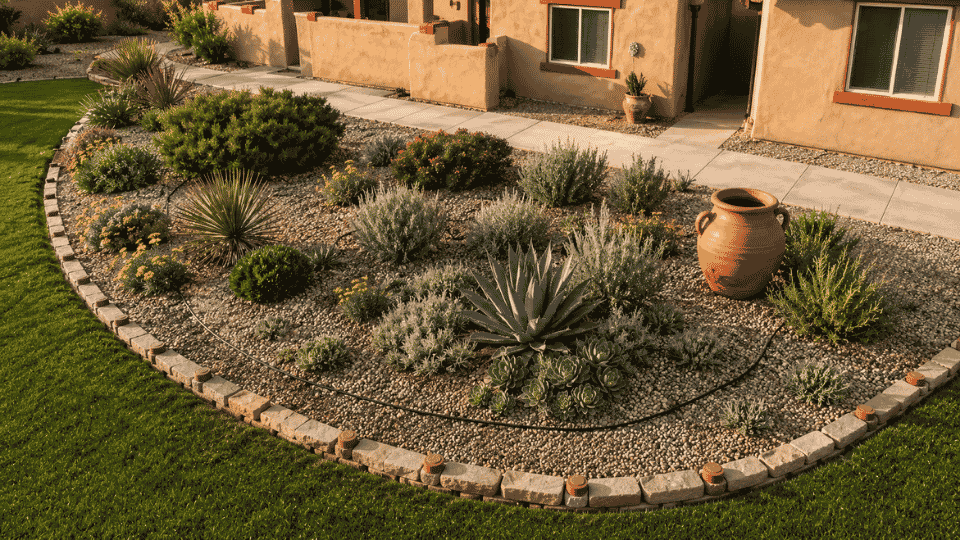
A hydrozoned gravel bed works well in a sunny, exposed part of the yard where bare soil dries out fast.
Choose one bed shape first. Use a curved shape for a softer desert look, or a straight edge for a modern feel. Group plants by water need, with thirstier plants closer to the drip line and tougher plants near the outer edge.
Use cardboard under the gravel to reduce weeds, but cut open planting pockets so roots can settle into the soil. Keep gravel slightly away from plant crowns so moisture does not sit against the stems.
Personalize it with:
- A Santa Fe-style pot
- A stone from an old garden project
- A color pulled from your house trim
- One sculptural plant from a past trip or yard
2. Add a Dry Creek Bed for Erosion Control and Shape
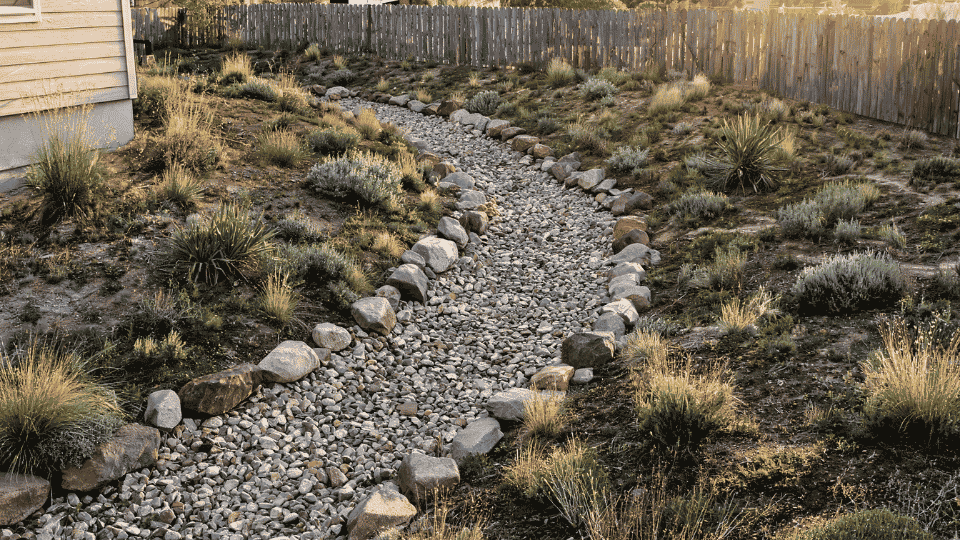
A dry creek bed works best where water briefly rushes through the yard after heavy rain. It gives runoff a clear path, protects bare soil, and adds a natural line through the garden. Use larger stones at the edges and smaller river rock through the center.
- Best for: Slopes, side yards, and runoff lines after heavy rain.
- Main benefit: Controls erosion while adding movement and structure to the garden.
- Style fit: Works with desert, rustic, native, and Colorado-inspired gardens.
- Budget tip: Spend on edge stones because they hold the channel in place.
3. Build a Shade Island Around One Anchor Plant or Structure
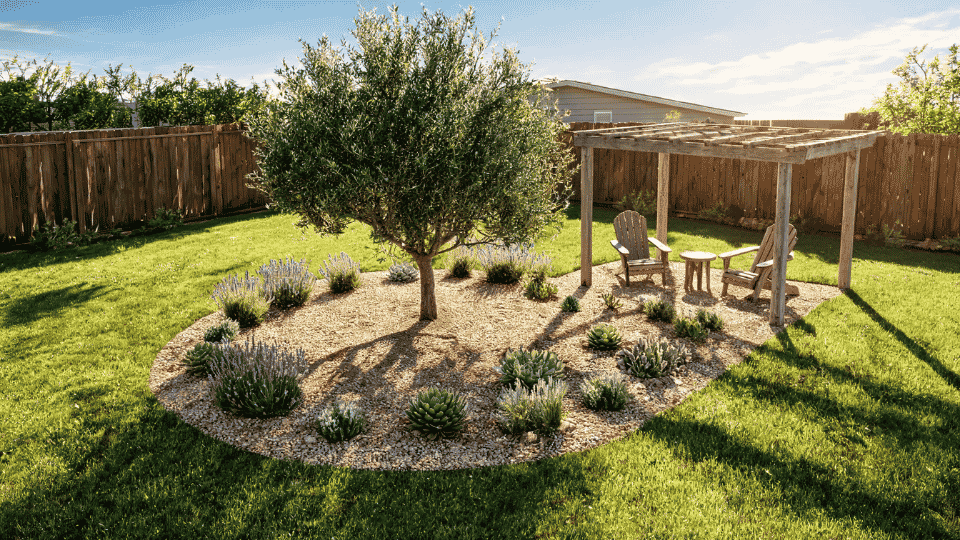
A shade island gives an exposed yard a cooler resting point without adding lawn. Start with one strong anchor, such as a drought-suited tree, large shrub, or pergola. Then surround it with gravel, decomposed granite, or low-water plants to make the area feel finished.
- Best for: Open yards that feel hot, flat, and exposed.
- Main benefit: Adds shade without expanding lawn or water demand.
- Style fit: Suits modern, native, and relaxed outdoor living spaces.
- Budget tip: Buy the anchor first, then fill around it simply.
4. Use Decomposed Granite Paths Between Planting Pockets
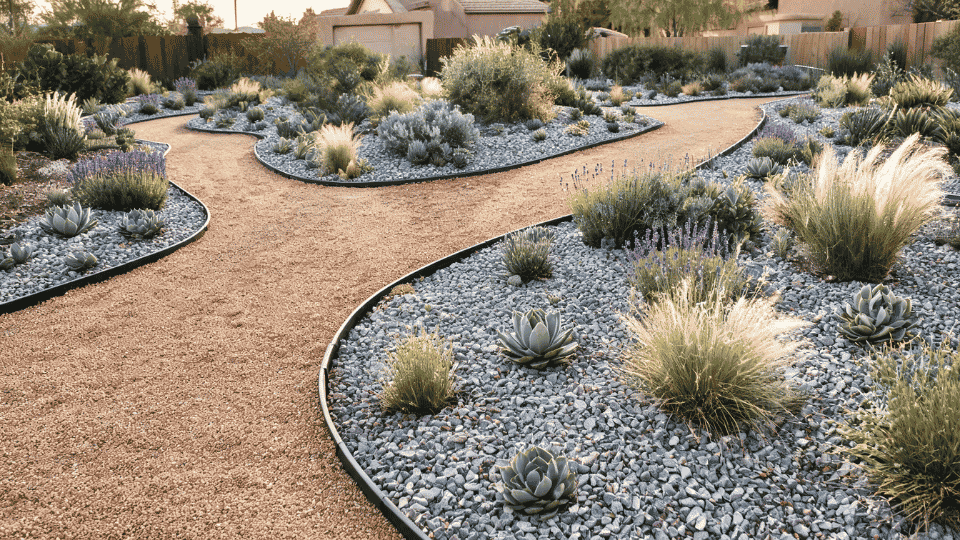
Decomposed granite works well when a dry garden needs clear walking routes. It feels softer than concrete, suits informal layouts, and divides planting pockets without crowding the yard. Strong edging matters here, without it, the material drifts into beds within a season.
If you want raised planting structure alongside the paths, building a simple planter box keeps the design looking deliberate rather than scattered.
- Best for: Side yards, front paths, and separated planting pockets.
- Main benefit: Provides access without sealing the ground like concrete does.
- Style fit: Works with desert, Mediterranean, rustic, and modern gardens.
- Budget tip: Invest in edging before upgrading the path material.
Rainy or Damp Regions
Best for: Pacific Northwest, wet coastal Northeast, and damp parts of the upper Midwest.
Rainy gardens need water control before plant selection. The strongest ideas lift roots, slow runoff, and keep the ground usable through wet seasons.
Plants and Aesthetic Direction for Rainy Regions
| Plants to consider | Aesthetic direction |
| Astilbe | Soft flower plumes that brighten damp, shaded planting beds |
| Japanese iris | Elegant blooms that suit wet soil and cool palettes |
| Ligularia | Bold leaves that add drama to damp garden corners |
| Ferns | Layered green texture for woodland and shaded areas |
| Sedges | Grass-like movement that handles damp soil better than turf |
| Creeping Jenny | Low golden groundcover for softening wet bed edges |
Lean into layered greens, mossy tones, white flowers, pale pinks, stone, and timber. The garden can feel lush, but it still needs clear edges.
5. Build a Rain Garden in a Low Spot
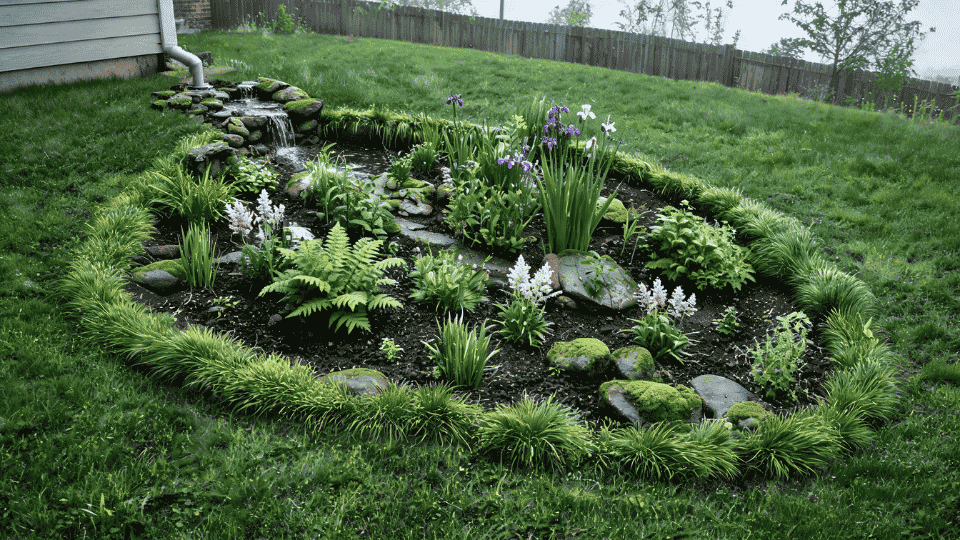
A rain garden turns a soggy patch into a planted bowl that catches runoff, slows it down, and helps it soak into the soil.
Place it at least 10 feet from the house so water does not move toward the foundation. Shape the area as an oval, crescent, or kidney form so it looks intentional.
The center should sit a few inches lower than the surrounding soil. Put moisture-loving plants in the lowest part and more flexible plants around the edge. Add stones where water enters to stop erosion.
Personalize it with:
- A woodland-style plant palette
- A cottage garden colour mix
- Ferns inspired by a rainy walk or holiday
- A small stone feature from a previous garden job
6. Create Raised Planting Islands in Persistently Soggy Beds
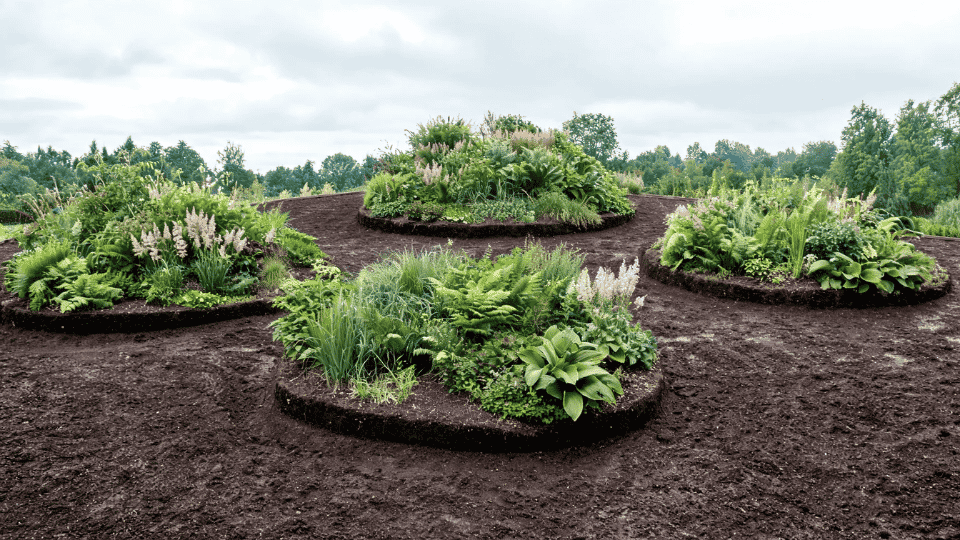
Raised planting islands help when the ground stays wet for too long after rain. Instead of forcing plants into saturated soil, build low mounds that lift the roots above the wettest layer. The garden gains shape, height, and better growing conditions without a full drainage overhaul.
- Best for: Heavy clay, wet borders, and flat, low-lying beds.
- Main benefit: Lifts plant roots above waterlogged soil and rot.
- Style fit: Suits cottage, woodland, and soft naturalistic gardens.
- Budget tip: Improve the soil on the mound before buying extra plants.
7. Add a Raised Timber Path Through Muddy Areas
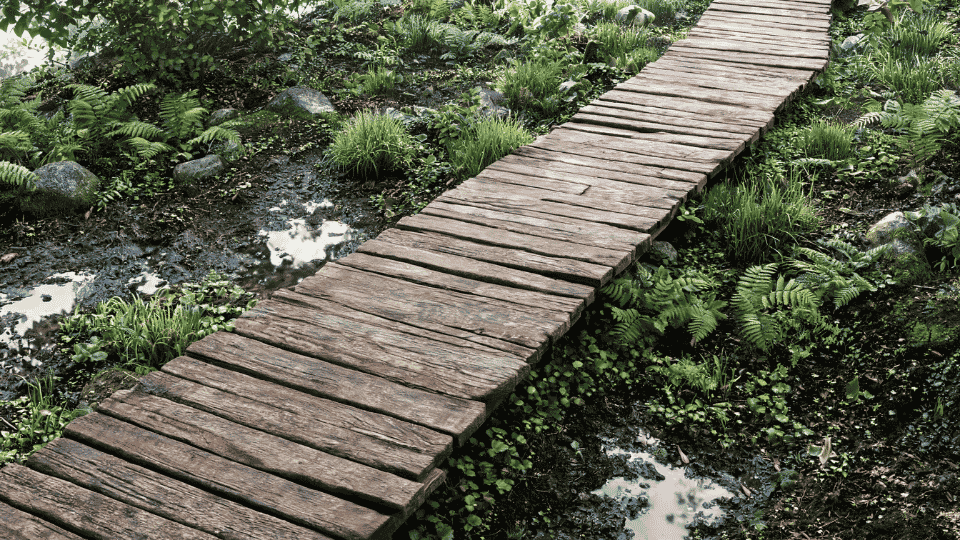
A raised timber path turns a wet, messy walking route into a useful garden feature. It keeps shoes cleaner, reduces soil compaction, and protects nearby planting edges. In damp gardens, timber often feels more natural than pavers and sits better over soft ground.
- Best for: Muddy side yards, woodland paths, and shaded routes.
- Main benefit: Keeps feet clean while reducing soil compaction damage.
- Style fit: Works with woodland, coastal, and natural garden styles.
- Budget tip: Choose thick timber over thin pavers in wet soil.
8. Turn a Damp Shaded Corner Into a Moss and Fern Feature
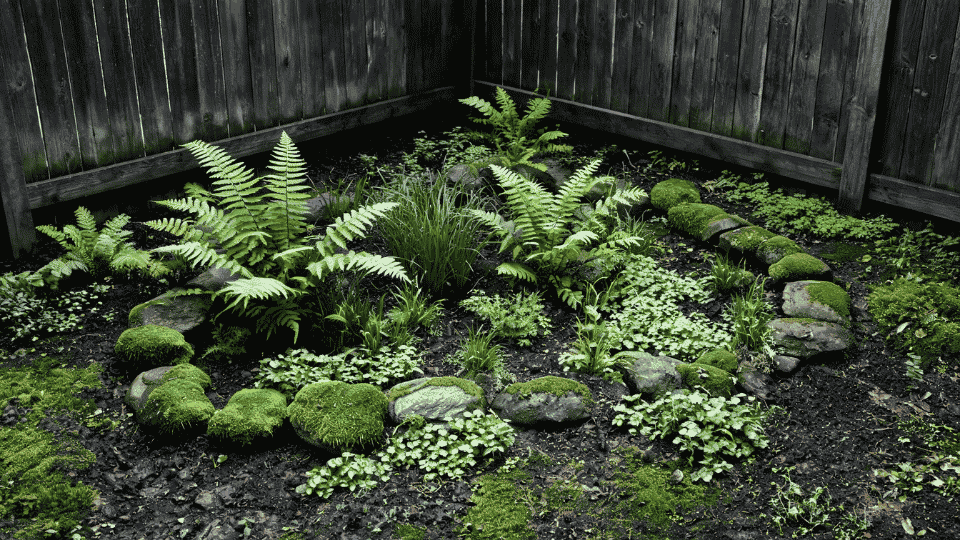
A damp, shaded corner does not need to become a problem area. Treat it as a green texture feature instead. Ferns, mossy stones, sedges, and shade-tolerant groundcovers can make the space feel calm, intentional, and easier to maintain than a struggling flower bed.
- Best for: North-facing corners where flowering plants keep failing.
- Main benefit: Uses natural dampness instead of fighting the site.
- Style fit: Suits woodland, Japanese-inspired, and quiet green gardens.
- Budget tip: Use texture and stone instead of seasonal replanting.
Hot and Humid Regions
Best for: Florida, the Gulf Coast, the coastal Southeast, and humid parts of Texas.
Hot, humid gardens grow fast. Without airflow and spacing, that growth can create disease and extra maintenance.
Plants and Aesthetic Direction for Hot and Humid Regions
| Plants to consider | Aesthetic direction |
| Crinum lily | Big leaves and flowers for a bold tropical feel |
| Firebush | Warm color that attracts pollinators and handles heat well |
| Muhly grass | Soft movement that balances heavy tropical foliage nearby |
| Caladium | Bright foliage for shade, pots, and humid corners |
| Ginger lily | Fragrant flowers with a lush, layered garden look |
| Dwarf bougainvillea | Strong color for containers, walls, and sunny edges |
Aim for tropical abundance with control. Use bold foliage, repeated shapes, and clean edges so the garden feels lush rather than chaotic.
9. Build an Airflow-Friendly Tropical Border
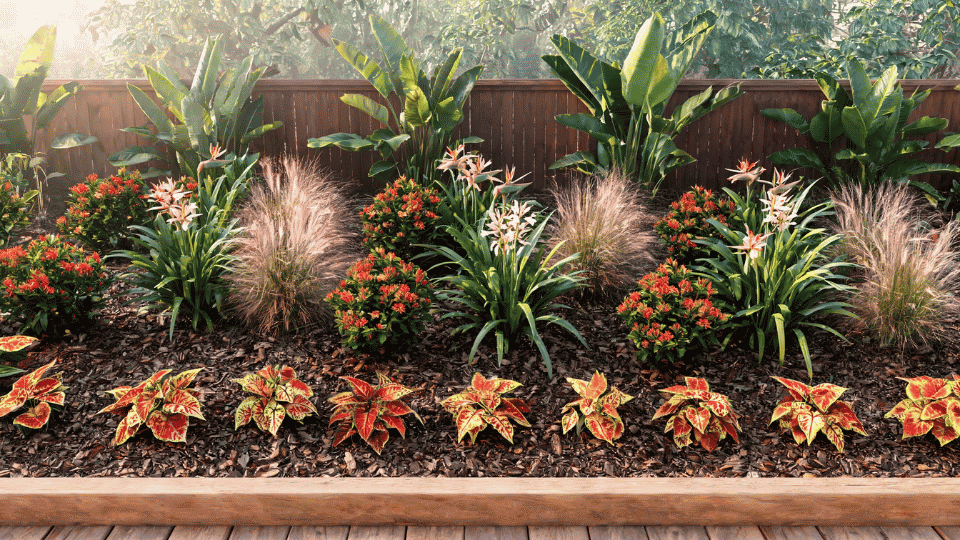
An airflow-friendly tropical border gives you lush planting without creating a damp wall of crowded growth.
Choose a fence line, patio edge, or side yard with decent air movement. Cut a clean front edge before planting. Use three layers: tall plants at the back, medium plants in repeated groups, and low plants along the front.
Space everything by mature size, not nursery size. Mulch the bed, but keep mulch a few inches away from stems to reduce rot.
Personalize it with:
- A plant color from a hotel garden you loved
- A bold leaf shape from a past client project
- A family courtyard memory
- A repeated red, white, or lime-green accent
10. Build a Container Cluster With Raised Drainage on a Humid Patio
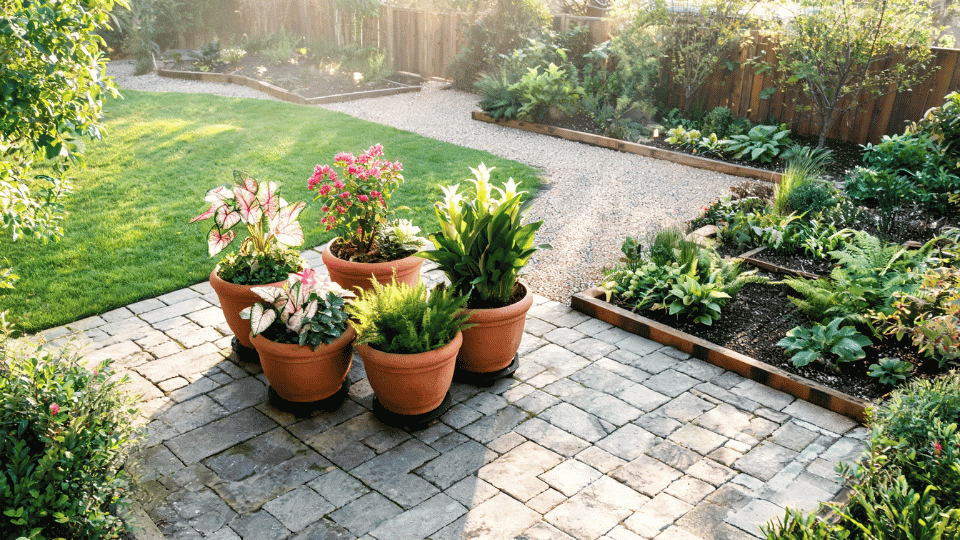
Container clusters are useful in humid climates because you control the soil, drainage, and spacing. Raise pots slightly so rainwater can drain rather than pool underneath. A few large containers usually look better than many small ones, especially when the pot material feels consistent.
- Best for: Paved patios, covered entries, and bare humid corners.
- Main benefit: Gives drainage control without planting in wet soil.
- Style fit: Suits tropical, modern, cottage, and coastal patios.
- Budget tip: Match pot finish, not every pot shape exactly.
11. Create a Wide Mulch Ring Under Trees Where Grass Fails
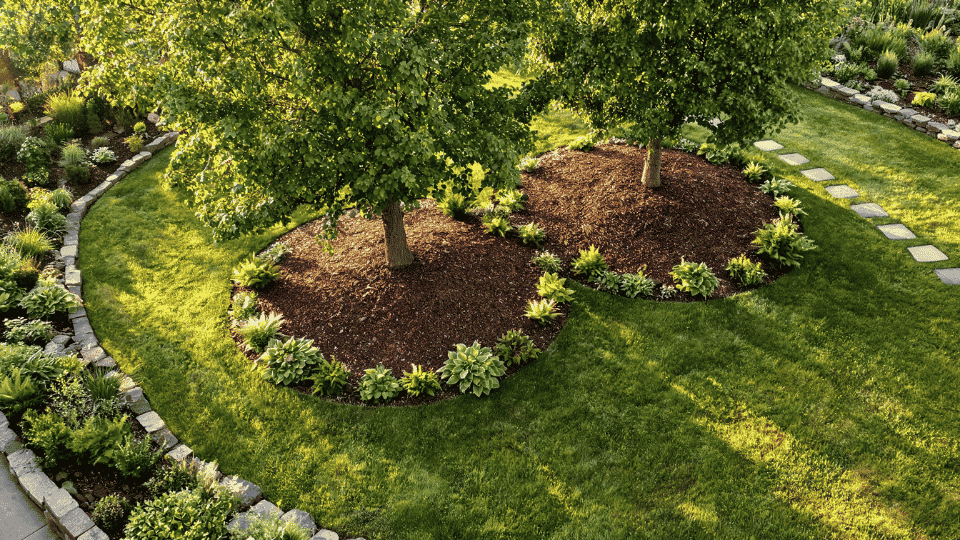
Grass often struggles under mature trees in humid regions because shade, surface roots, and damp air work against it. A wide mulch ring solves the problem of repeated reseeding and makes the area look intentional. Add stepping stones or shade plants if the space needs more detail.
- Best for: Mature shade trees with thin, struggling turf below.
- Main benefit: Stops repeated reseeding and protects surface tree roots.
- Style fit: Works with tropical, relaxed, and naturalistic garden styles.
- Budget tip: Expand the ring slowly over two growing seasons.
12. Install a Hardscape Strip Near Downspouts and Rain-Splash Zones
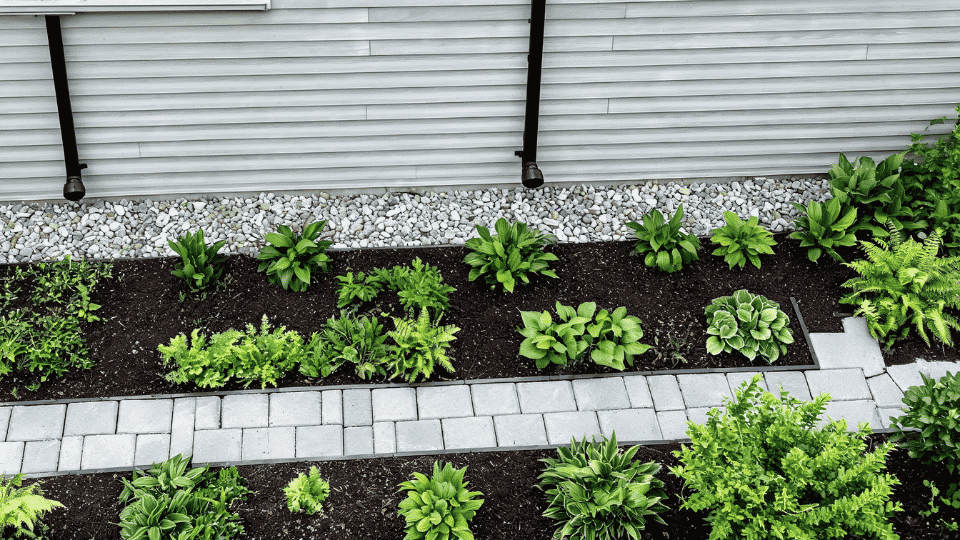
A hardscape strip is a small fix for places where rain hits the soil with force. Gravel, river stone, or pavers break the splash before it reaches walls, doors, or plant crowns. It keeps the area cleaner and helps reduce soil-borne disease around humid planting beds.
- Best for: Downspouts, thresholds, patio edges, and wall-side beds.
- Main benefit: Stops mud splash from hitting walls and plant crowns.
- Style fit: Suits clean, modern, tropical, and practical family gardens.
- Budget tip: Treat only true splash zones, not every bare patch.
Cold or Snowy Regions
Best for: Midwest, New England, northern mountain states, and the upper Great Plains.
Cold gardens need structure that reads well through frost and snow, not just summer flowers.
Plants and Aesthetic Direction for Cold Regions
| Plants to consider | Aesthetic direction |
| Siberian iris | Upright leaves and spring flowers for cool-climate borders |
| Black-eyed Susan | Summer color and seed heads for late-season interest |
| Karl Foerster grass | Tall movement that keeps structure through winter weather |
| Winterberry holly | Red berries that stand out clearly against the snow |
| Hellebore | Early flowers that brighten shaded cold-region beds |
| Snowdrop | Small early blooms that signal the garden waking up |
A cold-region garden needs bones. Flowers help, but paths, edging, evergreens, bark, berries, and grasses carry the space in winter.
13. Build a Four-Season Foundation Bed
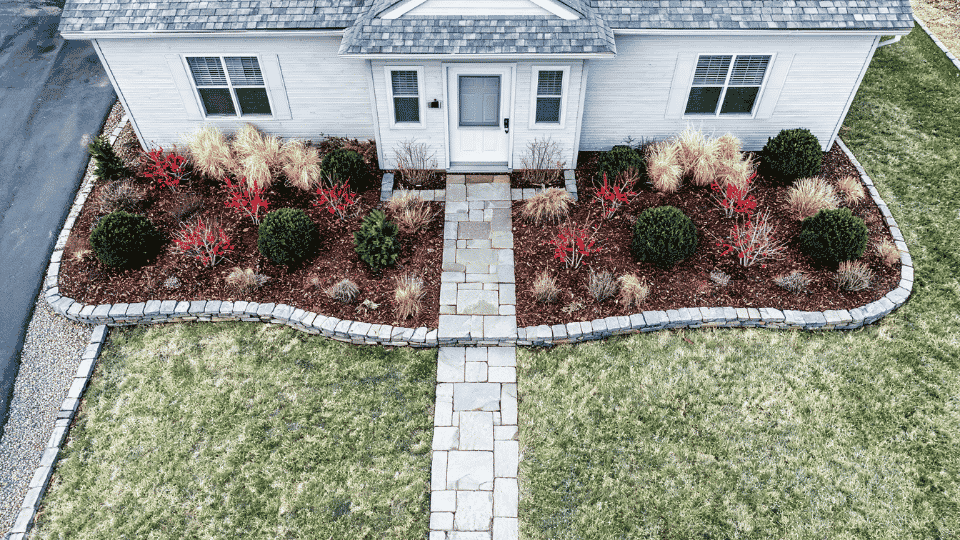
A four-season foundation bed works best where you can see it from the street, front walk, or inside the house during winter.
Cut a clear bed edge, improve the soil, and use stone, steel, or heavy timber edging that can withstand freeze-and-thaw. Plant evergreen anchors first because they hold the shape when everything else is dormant.
Add hardy perennials in repeated groups. Choose plants with more than one season of interest, such as spring flowers, summer color, autumn seed heads, or winter berries. Mulch the bed to protect roots, but keep plants away from snow-dump zones.
Personalize it with:
- Red berries near a window
- Grasses that move in snow
- Evergreens that remind you of an older family garden
- A stone edge inspired by a past front-yard job
14. Plant a Bulb-and-Perennial Layered Bed for Extended Season Color
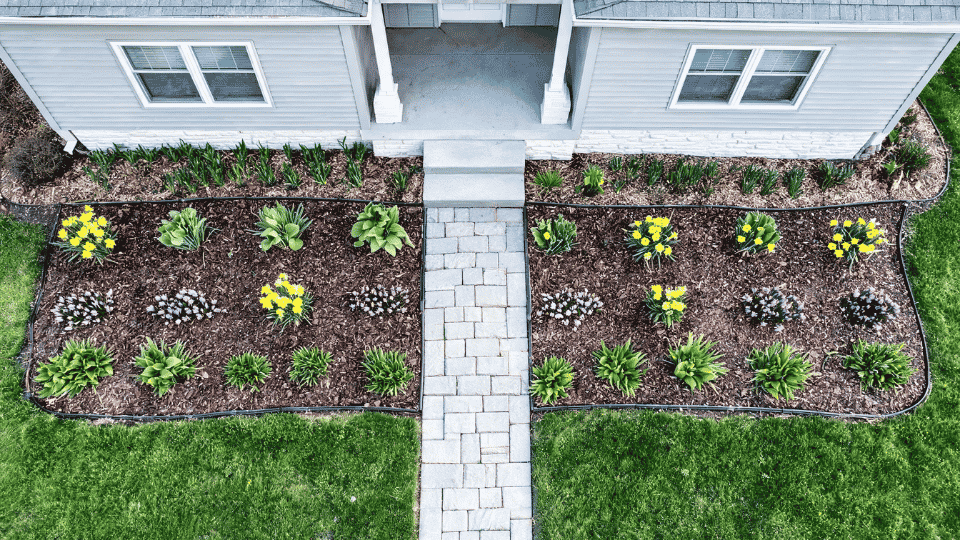
A bulb-and-perennial bed adds color to cold gardens without taking up more space. Spring bulbs bloom early, then perennial foliage rises and covers the fading leaves. This creates a smoother seasonal handoff and keeps the bed from looking empty between early spring and summer.
- Best for: Front beds, walkway borders, and foundation plantings.
- Main benefit: Adds early color before perennials fully wake up.
- Style fit: Works with cottage, traditional, and naturalistic gardens.
- Budget tip: Buy bulbs in bulk to reduce plant costs.
15. Use Gravel With Structural Edging for Freeze-Thaw Paths
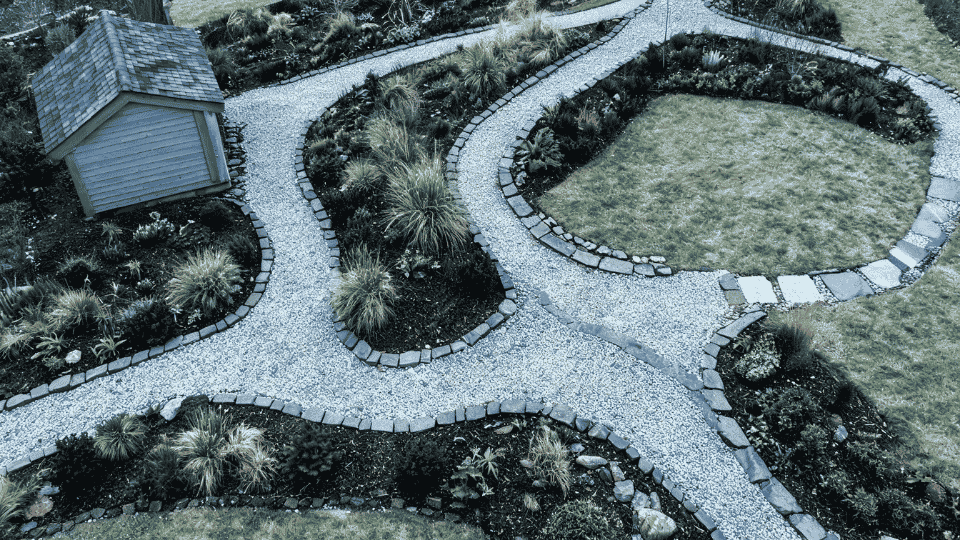
Cold-region paths need materials that can handle ground movement. Thin pavers may crack or shift after repeated freeze-thaw cycles, while gravel can move slightly without breaking. The key is strong edging, which keeps the path clean, contained, and easier to maintain.
- Best for: Informal side paths and access routes between beds.
- Main benefit: Handles ground movement better than thin concrete pavers.
- Style fit: Suits rustic, cottage, naturalistic, and classic gardens.
- Budget tip: Spend on edging before decorative gravel upgrades.
16. Create a Wind-Buffer Pocket to Protect an Exposed Bed
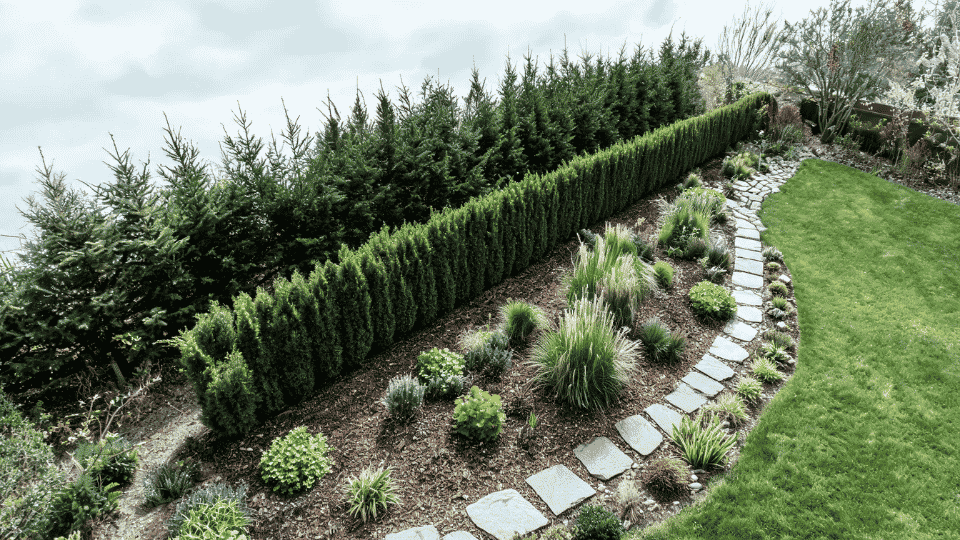
A wind-buffer pocket helps protect plants in cold, exposed gardens. Use hardy shrubs, evergreens, or a short fence section on the windward side of the bed. Even a small buffer can reduce winter stress, slow drying winds, and make the area feel more sheltered.
- Best for: Windy corners, north-facing beds, and hillside gardens.
- Main benefit: Reduces winter wind stress and plant desiccation damage.
- Style fit: Works with four-season, traditional, and naturalistic gardens.
- Budget tip: One dense grouping can shelter a small area.
Mild or Temperate Regions
Best for: Southern coastal California, mild mid-Atlantic areas, and moderate parts of the Pacific Northwest.
Mild climates offer more planting freedom, but that freedom can create unfocused gardens. Restraint, rhythm, and clear edges matter most here.
Plants and Aesthetic Direction for Mild Regions
| Plants to consider | Aesthetic direction |
| Salvia | Repeated color and pollinator-friendly movement through long seasons |
| Gaura | Airy flowers that soften structured beds and path edges |
| Catmint | Low, fragrant edging with a relaxed cottage-garden feel |
| Dwarf pittosporum | Evergreen structure that keeps mixed borders looking tidy |
| Kangaroo paw | Warm sculptural accents for sunny, mild-climate planting beds |
| Society garlic | Soft purple flowers with neat, grass-like foliage texture |
Choose two or three main colors and repeat plant shapes. A strong foreground, middle layer, and background layer will make the space easier to read.
17. Build a Layered Mixed Border With a Fixed Color Rhythm
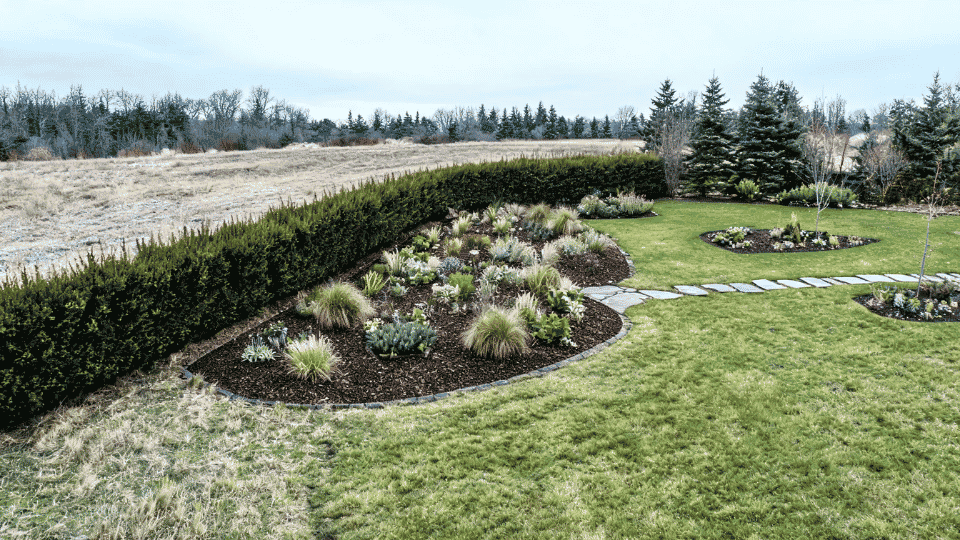
A layered mixed border works well along a fence, path, or long garden edge.
Choose two or three main colors before shopping. This stops the border from becoming a random nursery haul. Set taller shrubs or upright plants at the back, medium plants in repeated drifts through the middle, and one low plant along the front edge.
Leave space for mature size, even if the bed looks a little open at first. Mild-climate plants can fill out quickly.
Personalize it with:
- A color rhythm from a previous garden
- A planting mix that reminds you of a favorite doorway
- A soft purple, silver, and cream palette
- A repeated flower color from a past job
18. Create an Edible Ornamental Border
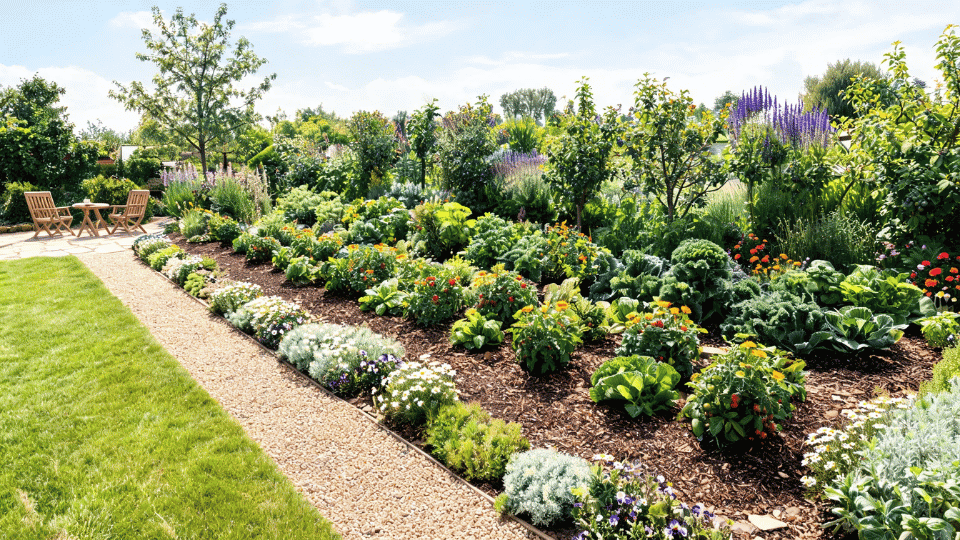
An edible ornamental border blends useful plants with a designed garden look. Herbs, compact vegetables, flowers, and fruiting shrubs sit together well when the layout feels repeated and tidy. Keep taller plants toward the back and use flowers or herbs to soften the front edge.
For beginning builders who want to start with a defined planting structure, building outdoor furniture alongside raised garden frames in the same weekend makes the whole layout feel cohesive faster.
- Best for: Sunny, mild gardens with good soil and access.
- Main benefit: Combines harvest value with ornamental planting structure.
- Style fit: Suits cottage, Mediterranean, and casual modern gardens.
- Budget tip: Start with herbs because they are useful and decorative.
19. Add a Courtyard-Style Seating Pocket
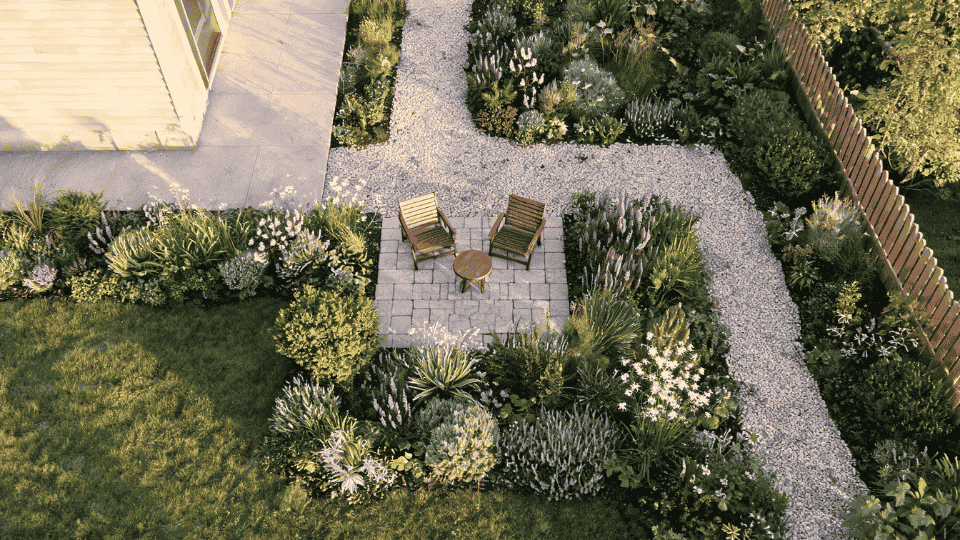
A courtyard-style seating pocket makes the garden usable rather than merely decorative. Mark a small floor area with gravel or pavers, add a bench or two chairs, and frame the space with planting.
Even a compact pocket feels private when plants sit on two sides.
Once the seating area is sorted, you can look at DIY outdoor sectional options to expand the space as the budget allows.
- Best for: Mild gardens with long outdoor living seasons.
- Main benefit: Turns the garden into a usable destination.
- Style fit: Suits Mediterranean, modern, cottage, and coastal gardens.
- Budget tip: Keep the floor small, finished, and easy to maintain.
How to Keep Garden Landscaping Affordable
Budgeting works better when it is tied to climate. The smartest spend is the one that prevents the most common failure in your region.
| Climate | Spend on | Save on |
| Dry | Drip irrigation, gravel, drought-suited plants | Thirsty annuals and large lawn areas |
| Rainy | Drainage, raised soil, timber paths | Plants that need dry soil |
| Hot and humid | Shade, spacing, mulch, drainage strips | Dense planting that traps humidity |
| Cold | Frost-stable edging, hardy evergreens, and mulch | Tender plants that die in winter |
| Mild | Edging, repeated plant groups, mature spacing | Impulse plant buys |
The cheapest garden to run is one that suits its climate. Spending in the right place now saves money every season after.
If you want to see how a well-planned outdoor structure anchors a garden layout, the DIY pergola build breaks down exactly where outdoor budgets go wrong at every stage.
Common Garden Landscaping Mistakes to Avoid
These mistakes make gardens fail early, cost more over time, and look worse even as the work increases.
| Mistake | Why does it hurt the garden |
| Copying a design from another climate | Water, soil, frost, and humidity change what survives |
| Shopping before planning | Plant purchases turn into clutter |
| Choosing the wrong surface | Materials behave differently in heat, rain, frost, and humidity |
| Planting too close | Crowding causes weak growth, disease, and extra pruning |
| Fighting the site | The garden needs constant rescue |
| Designing only for the peak season | The space looks bare when flowers fade |
Every mistake on this list is easier to avoid before digging starts. A garden that suits its site improves faster and costs less.
Frequently Asked Questions
How do I make a small garden look properly landscaped?
Use one clear bed shape, one path or edge, and a few repeated plant varieties. Small gardens lose focus when too many plants, pots, and materials compete. Every feature should have a job.
What is the cheapest garden landscaping idea that still looks good?
A defined planting bed with edging, mulch, and three or four repeated hardy plants is the lowest-cost option that still reads as intentional design. The edging does most of the visual work.
Do straight or curved garden beds work better?
Both can work. Straight beds suit modern homes, narrow spaces, and formal front gardens. Curved beds suit cottage gardens, irregular plots, and yards where the boundary already curves.
How do I start landscaping without tearing up the whole garden?
Begin with one visible edge, a front bed, fence line, or path border. Finish that area fully before starting another. A complete small project looks better than a half-finished large one.
What garden landscaping ideas work in shady yards?
Shade suits ferns, hostas, astilbe, and creeping Jenny. Layered groundcovers and mossy stones read well in low-light conditions. Work with what the site gives you rather than trying to force sun-lovers into deep shade.
How often should I update my garden landscaping?
Review the garden each season, but make big changes slowly. Replace plants that keep failing, widen paths that feel cramped, and edit crowded areas before adding more. Small updates typically work better than full redesigns.
What garden landscaping ideas work for slopes?
Dry creek beds, terraced beds, and ground-hugging native plants all handle slopes well. The goal is to slow water movement and anchor the soil before adding anything decorative.
Final Takeaway
Good garden landscaping starts with the place you already have. A dry yard needs different choices than a rainy, humid, snowy, or mild garden.
I would rather build one climate-smart feature well than force a style that needs constant rescue. My best advice is to pick one visible area, solve the site problem first, then add beauty through plants, texture, and structure.
When the garden landscape works with its climate, it becomes easier to maintain, more affordable, and much better to live with.