

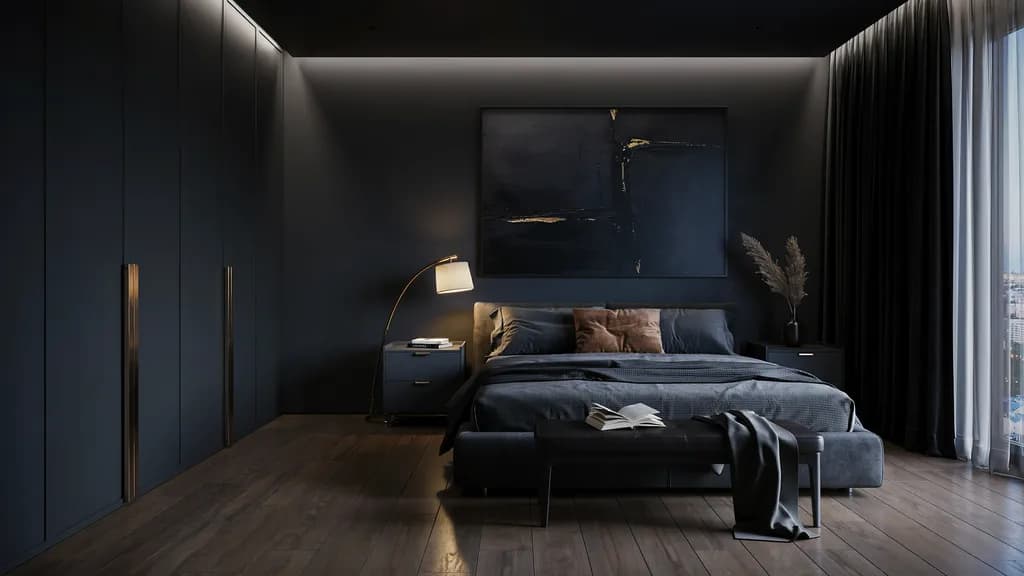
A well-planned black bedroom feels calm and grounded, not gloomy or cramped. Designers pair black walls with brass fixtures, warm wood, and soft linens. The result looks like a magazine spread and sleeps even better. If you’ve been eyeing black bedroom ideas. Black is often avoided because we worry it will make a bedroom feel smaller or absorb too much light. Used thoughtfully, however, it can create depth without sacrificing warmth or personality. These black bedroom ideas show how to use the color across walls, furniture, decor, and rooms of different sizes. Black Bedroom Wall Ideas for a Stylish Space Walls set the tone for a black bedroom. The amount of black you use, along with the room’s lighting, textures, and surrounding colors, determines whether the result feels cozy or overly dark. Some homeowners commit to four black walls. Others prefer just one accent wall or a patterned paper. Here are six ways to bring black onto your bedroom walls the right way. 1. Paint All Walls Black for a Dramatic Bedroom Painting every wall black makes the boldest statement on this list. It works best when the rest of the room balances it out. Use matte or eggshell black paint to create a sophisticated backdrop. Balance with lighter bedding, warm lighting, and textured fabrics. 2. Create a Black Accent Wall Behind the Bed A black accent wall behind the bed is the easiest way to try this trend without full commitment. A black wall creates instant contrast, especially against white, beige, or soft gray walls. It can still work in a small bedroom, since keeping the other walls lighter helps the space feel open. Use black only behind the headboard to create a focal point. Use lighter adjoining walls for stronger contrast. 3. Add Black Wall Paneling for Texture Black paneling turns a flat black wall into something with real depth. Vertical wood slats installed over black paint add texture and a natural element, softening the wall’s dark color. Molding or panel designs work the same way, adding shadow lines instead of relying on paint alone. Combine black paint with wood slats, molding, or panel designs. Use vertical details to emphasize height. Pair textured walls with simpler furniture so the room does not feel overly busy. 4. Try Black Wallpaper with Subtle Patterns Black wallpaper is a good option when a flat painted wall feels too plain. A subtle pattern adds movement without fighting the dark color. Recommend: Geometric prints Botanical patterns Textured finishes Helps prevent flatness in a dark room. Keep the pattern relatively subtle if the bedding, rugs, or furniture already contain strong prints. 5. Pair Black Walls with White Trim White trim is one of the simplest ways to keep a black bedroom from feeling heavy. White baseboards, doors, and molding draw the eye along clean lines rather than a single solid block of color. Use white or off-white baseboards and molding for contrast. Repeat the lighter trim color elsewhere through bedding or decor. Keep the contrast crisp for modern rooms or choose creamier whites for a softer look. 6. Use Black Ceiling Paint for a Cozy Effect A black ceiling pulls the whole room together. Painting the ceiling the same black as the walls creates a cocoon-like feeling that many find calming. In bedrooms with good natural light or high ceilings, this is a good addition. A low, dim room can feel closed in without enough light to balance it. Creates a cocoon-like atmosphere. Best suited for bedrooms with sufficient lighting and height. Black Bedroom Color Combination Ideas Black works best when another color controls the room’s warmth, contrast, or softness. Lighter neutrals can brighten it, while wood, green, or terracotta add warmer, more natural tones. Here are eight combinations that work well with black bedroom ideas. 7. Black and White Bedroom This is the classic pairing for a modern black bedroom. White keeps the room feeling crisp instead of heavy. Aim for roughly a 60/40 split between black and white surfaces, with white on larger areas like bedding or walls, so the room reads as sharp rather than stark. Use white bedding, rugs, or curtains against dark walls. Repeat black in smaller details to tie the palette together. Works especially well in modern, minimalist, and Scandinavian-inspired rooms. 8. Black and Beige Bedroom Pairing black with beige creates a softer, more effortless bedroom aesthetic and a cozy feel without feeling too dark. Warm beige keeps a black bedroom from feeling cold. Use beige on the largest surfaces, such as the walls or an area rug, and save black for furniture or accents so the room stays warm rather than heavy. Pair the combination with linen, wool, and woven materials. Use beige when you want contrast without a sharp black-and-white look. Add warm wood tones to make the palette feel more relaxed. 9. Black and Wood Bedroom Wood elements introduce warmth and a natural vibe, softening the boldness of black. Lighter woods like oak or ash brighten a black room more than darker walnut, so pick a wood tone based on how much natural light the space already gets. Add oak, walnut, or reclaimed wood furniture. Use visible wood grain to break up smooth black surfaces. Pair wood with black metal fixtures for a mixed-material look. 10. Black and Gold Bedroom Metallic decor pieces, like brass, gold, or silver, pop against a black wall and add a touch of luxury. Keep metallic details concentrated in a few areas so they feel intentional rather than decorative for their own sake. Use brass or gold on lighting, handles, or mirror frames. Repeat the same metal finish in two or three places. Balance reflective accents with softer fabrics and matte surfaces. 11. Black and Green Bedroom Deep green tones sit close to black on the color wheel, so the pairing feels natural rather than jarring. Olive, sage, or emerald all work well against black walls or bedding. Pair black with olive, sage, or emerald tones. Introduce green through bedding, upholstery, artwork, or plants. Add natural wood or woven materials to reinforce the organic feel. 12. Black and Gray Bedroom Layering black with different shades of gray keeps a room feeling modern without adding another color. Charcoal, soft gray, and black together read as one cohesive palette rather than clashing tones. Combine black with charcoal and soft gray. Use lighter gray on textiles to create contrast. Add texture so the monochromatic palette does not appear flat. 13. Black and Terracotta Bedroom Terracotta and other clay tones carry warmth that plain black walls lack on their own. This combination suits Mediterranean-style or earthy interiors especially well. Use terracotta through bedding, cushions, pottery, or rugs. Warm clay tones soften the intensity of black. Works well with Mediterranean and earthy interiors. 14. Black and Cream Bedroom Cream reads softer than bright white against black. It works well for anyone who wants contrast without a stark, high-fashion look. Use cream bedding, curtains, or rugs against black walls. Repeat cream across several surfaces to distribute the contrast. Works well in cozy, transitional, and traditional bedrooms. Black Bedroom Furniture Ideas Furniture is often the easiest way to bring black bedroom ideas into a room without committing to full black walls. A single black bed frame or dresser can do the work of an entire color scheme. Here are six ways to use black furniture well. 15. Add a Black Upholstered Bed An upholstered bed softens the hard edge that black furniture can have. Velvet, linen, or boucle textures add softness against the dark color. It pairs best with cream or oatmeal bedding and a woven jute or wool rug underneath. Velvet, linen, or boucle textures add softness. Creates a strong focal point. Pairs best with: cream bedding, natural rugs, and brass reading lamps. 16. Choose a Black Wooden Bed Frame A black wooden frame suits minimalist and contemporary bedrooms especially well. Its clean lines keep the piece from feeling too heavy in the room. Warm wood nightstands and a light oak floor balance the frame’s dark tone. Pair with oak or walnut side tables. Use white, beige, or muted bedding for contrast. Add a textured throw to soften the frame’s straight lines. 17. Use Black Nightstands for a Matching Look Matching black nightstands on either side of the bed create instant symmetry. Warm lamps on top keep the pair from reading as too stark. Gold or brass lamp bases and a soft table runner soften the matched black look. Creates symmetry around the bed. Add warm lamps to soften the appearance. Pairs best with: brass or gold table lamps, a light-colored table runner, and small ceramic decor pieces. 18. Add a Black Dresser or Storage Cabinet A black dresser adds real storage while keeping the room’s color story intact. Balance it with lighter decor pieces on top so it does not become the only dark element in the room. A woven basket or two, plus a light-colored vase, keeps the surface from feeling heavy. Style it with a cream, terracotta, or ceramic vase. Add rattan or woven baskets nearby. Hang a mirror above it to introduce a reflective surface. 19. Create a Black Built-In Wardrobe Wall A black built-in wardrobe wall gives the room a custom, cohesive look. Integrated interior lighting keeps it functional and stylish. Pairing the wall with a lighter ceiling and a wood- or brass-handle detail keeps the wall from closing in the room. Add warm interior wardrobe lighting. Use brass, bronze, or matte-gold handles for contrast. Keep the ceiling or surrounding walls lighter if the wardrobe occupies most of one wall. 20. Add Black Metal Furniture Accents Black metal furniture adds an edge without taking over the whole room. It works well in small doses across several pieces. Pair metal accents with warm wood or a soft textile to keep the look from feeling too industrial. Examples: Bed frames Side tables Shelving Mirrors Pair the metal with warm wood, linen, cotton, or one additional metal finish such as brass or bronze. Black Bedroom Decor Ideas Decor is what makes a black bedroom either feel flat or come to life. Texture, light, and a few well-placed accents make the biggest difference. These eight ideas cover the details worth getting right. 21. Layer Black Bedding with Different Textures Black bedding in a single flat fabric can look plain under normal light. Mixing textures adds depth without adding another color to the room. Include: Cotton sheets Quilted blankets Velvet pillows Linen throws Texture is what keeps black bedding from looking flat. A quilted blanket over smooth cotton sheets, or a velvet pillow against a linen throw, catches light differently across the bed. That variation gives the eye something to notice, even in a single color. 22. Add Warm Lighting to a Black Bedroom Layered lighting with warm bulbs prevents a black room from feeling too heavy. Lighting matters more in a black bedroom than almost any other design choice. Cover: Wall sconces Pendant lights Bedside lamps Dimmable fixtures Warm bulbs, in the 2700K to 3000K range, soften black paint and dark furniture. Cool white bulbs tend to make black surfaces look flat and a little cold. Dimmable fixtures let you adjust the mood between daytime brightness and evening warmth. 23. Use Mirrors to Reflect Light Mirrors and reflective surfaces can help bounce light around the room and offset the darkness. A large mirror does double duty in a black bedroom. Large mirrors help bounce natural and artificial light. Choose black frames for a cohesive look. 24. Add Large Artwork Against Black Walls Light-colored artwork stands out clearly against black walls and can break up a large uninterrupted dark surface. One substantial piece often creates a cleaner focal point than many small frames. Choose artwork with cream, white, muted, or metallic details. Size the piece to be proportional to the bed or dresser below it. Leave some empty wall space around the artwork. 25. Use Plants to Soften Black Interiors Wood elements and greenery introduce warmth and a natural vibe, softening the boldness of black. Plants achieve the same effect through color and life rather than texture. Use plants as small green accents against dark walls. Snake plants, pothos, and ZZ plants are well-suited to bedrooms with lower light levels. Choose simple planters so the foliage remains the main contrast. 26. Add Soft Rugs for Warmth A soft rug underfoot balances the hard visual weight of black walls or furniture. Texture matters here as much as color. Use: Cream rugs Beige textures Patterned designs 27. Style Black Curtains for a Dramatic Look Blackout curtains work best in bedrooms that need full darkness for sleep or in rooms with strong morning light. They can also make a room feel smaller on their own. Use blackout curtains when blocking morning or street light is the priority. Balance them with a lighter sheer layer or a light-colored curtain rod for contrast. Mount curtains higher to emphasize ceiling height. 28. Add Metallic Accents for Contrast Metallic finishes catch light in a way flat black paint cannot. A mix of one or two metal tones tends to look more intentional than several at once. Examples: Brass Gold Chrome Bronze Repeat the chosen metal through details such as lamp bases, handles, frames, or curtain hardware. Black Bedroom Style Ideas Black adapts to almost any design style, from stripped-down minimalism to full-on maximalism. The style you choose changes how much black you use and what you pair it with. Here are six directions to take a black bedroom. 29. Modern Black Minimalist Bedroom A minimalist black bedroom relies on simple shapes and very little clutter. The color does the visual work instead of pattern or ornament. Features: Clean lines Simple furniture Limited decoration Neutral accents 30. Luxury Black Bedroom with Velvet Details Velvet adds a soft, high-end feel that plain black paint or fabric cannot match on its own. This style leans dramatic on purpose. Use: Velvet headboard Plush bedding Statement lighting 31. Black Scandinavian Bedroom Scandinavian design usually avoids heavy color, so keep black light here. Keeping the rest of the room bright balances the one dark note. Balance black with: Light woods Neutral textiles Simple decor 32. Black Industrial Bedroom Industrial style pairs naturally with black, since both lean toward raw, unfinished materials. Metal and exposed surfaces fit right into this look. Combine it with: Black or aged metal finishes Exposed brick or concrete Dark furniture Warm wood details Adding wood or softer textiles keeps the room from feeling overly hard or utilitarian. 33. Black Bohemian Bedroom A boho black bedroom trades sleek surfaces for texture and pattern. Natural textiles and woven pieces warm up the coolness of black. Combine black with: Rattan Textiles Plants Handmade decor 34. Dark Cottage-Core Inspired Bedroom Dark Cottage-core style leans into black’s dramatic side rather than softening it. Rich fabrics and antique details give the room a sense of history. Use: Antique-style furniture Rich fabrics Ornamental details Black Bedroom Ideas for Different Space Types Not every home has the same room to work with. A black bedroom idea that works in a large main suite might not suit a small apartment or a low-light room. These ideas cover common real-world situations. 35. Small Black Bedroom Ideas A black accent wall can work in a small bedroom by anchoring the space and adding depth, as long as adjacent walls stay lighter. Full black walls can work too, but need more careful lighting. Try: Use black on one wall Add mirrors Keep furniture minimal Use layered lighting 36. Black Bedroom Ideas With Low Natural Light A room with little daylight needs extra help to keep black from feeling dim. Warm bulbs and reflective surfaces do most of the work here. Include: Warm bulbs Reflective surfaces Lighter fabrics Avoid full matte black everywhere, since matte finishes absorb more light than a satin or eggshell black would 37. Black Bedroom Ideas for Couples A shared bedroom needs a color palette and storage plan that work for two people, not one. Comfortable, neutral-leaning textures keep the space feeling calm for both partners. Include: Balanced color palettes Storage solutions Comfortable textures Neutral accents 38. Black Bedroom Ideas on a Budget You do not need a full renovation to bring black into a bedroom. Small, targeted changes get most of the visual impact for a fraction of the cost. Include: Black paint updates New bedding Decorative accents DIY furniture changes Things to Check Before Choosing Black Bedroom Walls A black bedroom can look striking, but it does not suit every space equally well. Before choosing the paint, consider your room’s size, lighting, and overall feel. How tall are your ceilings? Low ceilings can feel lower under a fully black room. If your ceilings sit under eight feet, consider stopping the black at the walls and keeping the ceiling white. Which direction do your windows face? A north-facing room gets soft, indirect light most of the day. Black can feel flat and cool in that kind of light. A south- or west-facing room gets warmer, stronger light, which balances black paint far better. How big is the room, really? Small bedrooms under 120 square feet can handle black on one or two walls without trouble. A fully black room that size often feels tighter than it is. Larger rooms have more room to absorb the color without feeling cramped. What color is your flooring? Dark hardwood or dark carpet paired with black walls can blur the line between floor and wall. Light flooring, like pale oak or a cream rug, gives the eye a clear stopping point. Does this room connect to another space? A black bedroom next to a bright, open hallway can feel like a sudden drop in energy. Adding a lighter accent near the doorway, such as a runner rug or a pale trim color, softens the transition. Final Thoughts Black is one of the boldest choices you can make in a bedroom, but it rewards a little planning. The best black bedroom ideas balance the color with light, texture, and warmth instead of using it alone. Walls, furniture, decor, and lighting all affect whether the final room feels cozy or cold. Start small if you’re unsure, with one accent wall or a few black furniture pieces, then build from there. Done well, a black bedroom can feel calm, grounded, and far more inviting than most people expect.
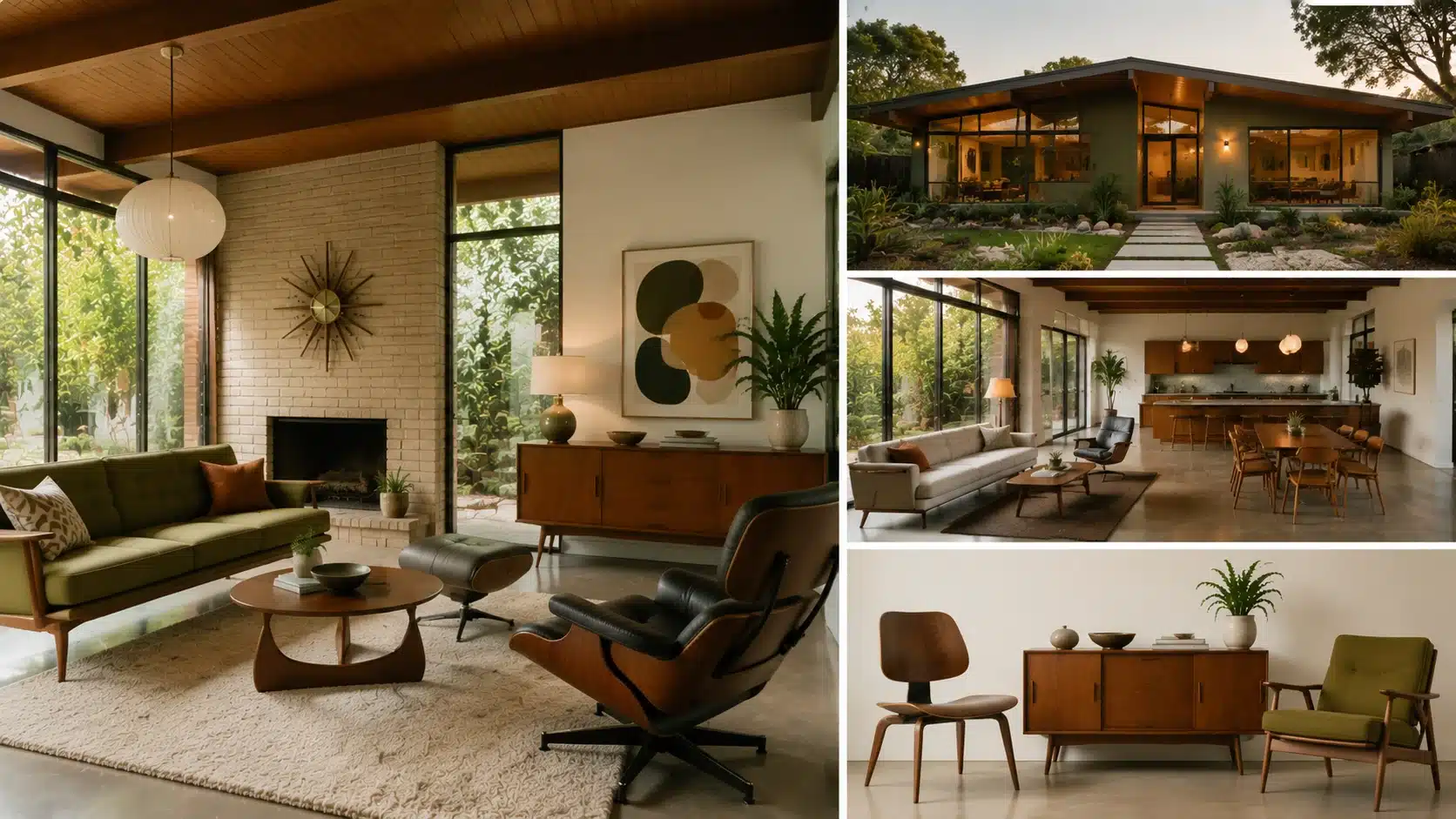
Quick Answer: Mid-century modern is a postwar design movement, roughly 1945 to 1969, built on uncluttered forms, tapered wood furniture, large windows, and open layouts. It values everyday usefulness over ornament, staying warm rather than stark. If you have walked into a room with clean lines and warm wood tones, you have likely seen mid-century modern design. The style gets mixed up with modern and contemporary decor all the time. That confusion makes it hard to know what you are actually shopping for. This blog breaks down what the style means, where it came from, and how it looks in real homes. You will find its history, its defining features, and room-by-room ideas. What Defines Mid-Century Modern Design? Mid-century modern design is defined by a balance of function, simplicity, and visual warmth. The style focuses on uncluttered spaces, practical furniture, and the thoughtful use of materials such as wood, leather, glass, and metal. Each element serves a purpose instead of adding decoration. Furniture features tapered legs, curves, and geometric shapes, while layouts focus on openness and indoor-outdoor connections. The style gained popularity after World War II as designers created practical pieces for changing lifestyles. Its timeless forms and usability keep it relevant in modern homes. The History Behind Mid-Century Modern Design Understanding its history reveals how postwar optimism, new technology, and a handful of designers built a style focused on practical, accessible living. Soldiers returned home, families expanded, and the country needed housing fast. Builders responded with smaller, simpler homes that dropped ornate details in favor of open layouts and clean construction. The Bauhaus School in Germany pushed the idea that design should serve everyday life rather than decorate it. Scandinavian minimal design added warmth through wood and handcraft. The International Style contributed glass walls and a stripped-down structure. Together, these influences gave American designers a starting point they reworked into something distinctly their own. A handful of designers defined the era and still get credit for it today, like: Charles and Ray Eames, this husband-and-wife team pioneered molded plywood and fiberglass furniture, including the Eames Lounge Chair. Eero Saarinen, known for the Tulip Table and Womb Chair, built both around a single sculptural base. Arne Jacobsen, a Danish architect and designer behind the Egg Chair and Swan Chair. Key Characteristics Of Mid-Century Modern Design The style stays easy to recognize through its balance of simplicity, warmth, and function, mixing architectural openness with carefully considered furniture and decor. Clean Lines And Simple Forms: Mid-century modern furniture and architecture rely on straight lines and simple shapes rather than heavy trim or carved details. Natural Materials And Warm Wood Tones: Teak, walnut, and oak appear throughout mid-century furniture, often left with a light finish that highlights the grain. Connection Between Indoor and Outdoor Spaces: Large windows and sliding glass doors were central to mid-century architecture, not just a decorative choice. Organic and Geometric Shapes: The style pairs sculptural, organic pieces, like curved chairs and rounded coffee tables, with more structured geometric forms. Functional Open Spaces: Open floor plans let mid-century homes feel larger than their square footage suggests. Mid-Century Modern Architecture Features Architecture from this era focused on simplicity, natural light, and a strong connection with nature. Mid-century homes used clean structures, open layouts, and materials that made spaces feel larger and more connected. Flat or low-pitched roofs replaced traditional steep designs, creating a simple geometric profile. Floor-to-ceiling windows brought in natural light and connected interiors with outdoor views. Open floor plans removed unnecessary walls between living areas, while post-and-beam construction used exposed supports to create flexible spaces without interior barriers. Indoor-outdoor living became a defining feature, with patios, courtyards, and sliding glass doors extending the home into the surrounding landscape. Famous examples include The Eames House in Los Angeles, which used prefabricated steel components to create an open design, and The Stahl House, known for its glass corners and dramatic city views. How to Create a Mid-Century Modern Home Today You can achieve this timeless look without turning your home into a museum. Combine classic pieces with modern comforts and your own personal taste. Start with One Statement Furniture Piece: Rather than replacing every item in a room, pick one anchor piece to build around. A lounge chair or a vintage credenza can set the right tone. Mix Vintage and Modern Elements: A room filled with vintage pieces can start to look like a theme rather than a home. Pair a contemporary sofa with a vintage-inspired coffee table. Choose Simple Materials: Stick to wood, glass, metal, and natural fabrics when picking new furniture or finishes. These materials echo the original style. Keep Decor Minimal: Mid-century rooms favor fewer well-made pieces over a room packed with accessories. Choose fewer items, but choose ones that serve a purpose. Mid-Century Modern Design Ideas for Different Rooms Each room can take on mid-century style in its own way. Thoughtful furniture, natural materials, and balanced color keep every space comfortable to live in. 1. Mid-Century Modern Living Room A low-profile sofa, a wooden coffee table, and a sculptural floor or table lamp form the backbone of a mid-century living room. Add one accent chair in Sherwin-Williams Cut the Mustard (SW 6384) or Benjamin Moore Hale Navy (HC-154) to break up the base. 2. Mid-Century Modern Kitchen Flat-panel cabinets in Benjamin Moore Swiss Coffee (OC-45) keep the space bright, while a kitchen island in Sherwin-Williams Renwick Olive (SW 2815) adds a period-accurate pop of color. Simple hardware, like slim brass or wood pulls, and open shelving keep the look consistent. 3. Mid-Century Modern Bedroom A platform bed with a low wooden frame anchors this look, especially against walls in Sherwin-Williams Kilim Beige (SW 6106). Add a nightstand or accent wall in Benjamin Moore Hale Navy (HC-154) for depth, then pair it with warm, layered lighting. 4. Mid-Century Modern Dining Room A mid-century dining room pairs a wooden table with sculptural pendant lighting overhead. For drama, paint an accent wall or built-in hutch in Sherwin-Williams Caviar (SW 6990), which grounds the space and lets a walnut table stand out. Pro tip: Balance a dark wall like Caviar with a lighter rug and plenty of natural light so the room does not feel closed in. 5. Mid-Century Modern Bathroom A mid-century bathroom leans on warm wood vanities, simple fixtures, and a spa-like palette. Benjamin Moore Beach Glass (1564) on the walls brings a calm, blue-green tone that pairs well with teak accents and brass hardware. Pro tip: Test Beach Glass on a poster board and move it around the room, since natural light shifts its blue and green undertones through the day. 6. Mid-Century Modern Home Office A simple wooden desk with tapered legs and an ergonomic chair with a molded shell fit the style well. Paint an accent wall in Sherwin-Williams Cavern Clay (SW 7701) behind the desk, and keep trim in Sherwin-Williams Alabaster (SW 7008) for contrast. Common Shades Used in Mid-Century Modern Interiors Color choices in this style pair earthy neutrals with bold accents, creating spaces that feel warm and balanced without ever looking overwhelming. Earthy Neutral Shades Most mid-century rooms start with a neutral base. These shades echo the natural materials used throughout the style and give bolder colors room to stand out. Shades like Benjamin Moore Walnut (CW-240), Sherwin-Williams Kilim Beige (SW 6106), and Sherwin-Williams Renwick Olive (SW 2815) work well on walls, floors, and larger furniture pieces. Bold Accent Colors Against that neutral base, mid-century interiors add pops of color through smaller pieces like chairs, pillows, and art. Shades like Sherwin-Williams Cut the Mustard (SW 6384), Sherwin-Williams Cavern Clay (SW 7701), and Sherwin-Williams Rustic Red (SW 7593) are common choices. Save bold colors for accent chairs, lamps, or artwork. This keeps the space from feeling too busy while still giving it personality. Popular Mid-Century Modern Furniture Pieces Furniture stands out as one of the clearest markers of this style, combining ergonomic shapes, solid craftsmanship, and materials built for everyday comfort. Furniture Piece Design Features Eames Lounge Chair Molded plywood shell with leather cushions Tulip Table Single pedestal base instead of four legs Wishbone Chair Curved wooden frame with a woven seat Credenzas Low, long storage pieces with clean fronts Lounge Sofas Straight lines with exposed wooden legs Exposed legs are one of the easiest ways to spot mid-century furniture. Lifting a sofa or chair off the floor made rooms feel more open, which mattered in smaller postwar homes. Low-profile designs served the same goal. A credenza that sits close to the floor takes up less visual space than a tall cabinet. Mid-Century Modern Vs Modern Vs Contemporary Design Although these styles share a clean look, their history, materials, and design approach differ enough to help individuals choose the right direction. Style Main Difference Mid-Century Modern Warm materials, vintage influence, organic shapes Modern A broader movement focused on simplicity and function without a fixed time period. Contemporary Reflects current trends, which shift as design preferences change Modern design is the umbrella term under which mid-century modern falls, tied to a specific era. Contemporary design changes with the times instead. It describes whatever is currently popular rather than a fixed set of features. Mistakes to Avoid With Mid-Century Modern Design Avoiding a few common mistakes helps keep the style authentic while creating a home that feels comfortable rather than overly staged or dated. Using Too Many Vintage Pieces: Filling a room with original mid-century furniture can make it look like a period set. Mix in newer pieces to keep the space feeling current. Choosing Poor-Quality Reproductions: Cheap reproductions often use thin veneers or weak joinery that wear out quickly. Look for solid-wood construction and quality materials. Making the Space Too Minimal: Mid-century design values simplicity, but a room stripped of all personality can feel empty rather than calm. Leave room for a few personal touches, like art or plants. Ignoring Comfort: Some mid-century pieces prioritize looks over ergonomics. Test seating before buying it, and pair statement chairs with genuinely comfortable options for everyday use. Mixing Too Many Design Styles: Combining mid-century pieces with several other unrelated styles at once can make a room feel disorganized. Choose complementary styles, like a Japandi interior design. Frequently Asked Questions What years are considered mid-century modern? The style generally spans the 1940s through the late 1960s, with its peak popularity in the 1950s and early 1960s. What makes a home mid-century modern? A mid-century modern home typically features an open floor plan, large windows, clean lines, and a strong visual connection to the outdoors through natural light and indoor-outdoor spaces. Is mid-century modern still popular? Yes. The style remains popular because of its timeless designs, functional layouts, natural materials, and ability to blend easily with modern furniture and decor. What colors are used in mid-century modern design? Common colors include warm wood tones, earthy neutrals, olive green, mustard yellow, burnt orange, and muted accent shades, creating a balanced and inviting look. What is the difference between mid-century modern and contemporary? Mid-century modern refers to a specific design movement from the mid-20th century, characterized by recognizable features. Contemporary design refers to current trends and continues to change over time. Why is Mid-Century Modern Design Still Popular? The style continues to draw homeowners because it combines a timeless look, practical layouts, durable materials, and furniture that still works in modern homes. Mid-century modern design has outlasted most decorating trends because its core ideas were never tied to a fad. Clean lines and open layouts work as well in a city apartment as they did in a 1950s suburban home. The style also lines up with a broader shift toward buying fewer, better things. A well-made walnut credenza or an original Eames chair can outlast several generations of mass-produced furniture.
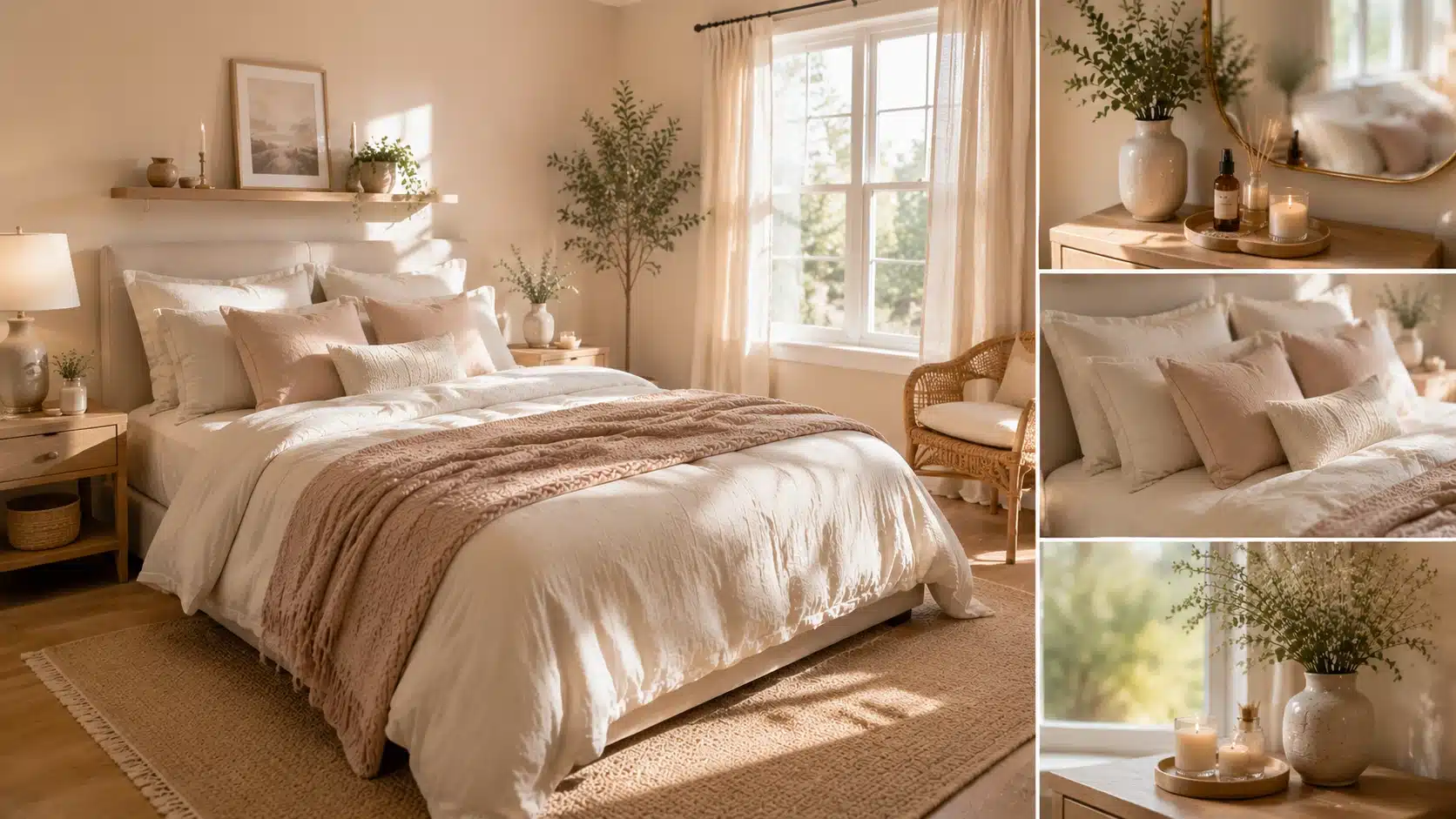
A bedroom should feel like a place where you can slow down, breathe, and reconnect with the person you share it with. Creating a romantic atmosphere doesn’t require expensive furniture or a full renovation. It comes down to a handful of simple choices: soft lighting, comfortable textures, warm colors, and small personal touches that make the room feel like yours. Whether you’re working with a spacious primary suite or a small rented apartment, these romantic, warm, and cozy bedroom ideas are for you. What Makes a Bedroom Feel Romantic, Warm, and Cozy? Before jumping into a list of ideas, it helps to understand the design principles that make a room feel this way in the first place. Most romantic bedrooms share three things: gentle lighting, soft textures, and details that feel personal rather than staged. Soft Lighting Creates a Relaxing Mood: Warm lighting between 2700K and 3000K creates a calming atmosphere. Layer bedside lamps, sconces, and candles rather than relying on harsh overhead lighting. Comfortable Textures Add Warmth: Layer soft bedding, cozy throws, rugs, and fabrics like linen, velvet, cotton, and boucle to add depth, comfort, and a welcoming feel. Personal Details Make the Room Feel Intimate: Add meaningful artwork, favorite books, or shared keepsakes to make the bedroom feel personal, lived-in, and connected to its occupants. Romantic, Warm, and Cozy Bedroom Ideas Once you understand the basics, it helps to see how those principles actually play out in a real room. Below are ideas, each with a few styling tips and a short note on why it works, so you can choose what best fits your space, style, and budget. 1. Layer Soft Neutral Bedding The bed sets the tone for the entire room, so it’s the natural place to start. Soft, neutral bedding in cream, oatmeal, or blush instantly reads as more romantic than bold patterns or stark white sheets, especially once you start layering a few pieces together. Styling Tips Stick to a tonal palette: cream, oatmeal, blush, or soft taupe Layer at least two textures, like linen under a knit throw Add four to six pillows in slightly varying shades for depth Avoid bold patterns that compete with the room’s softness Why It Works: Soft, neutral tones create a calming visual base that feels intimate rather than busy. Layering textures adds richness without adding clutter, which is the balance most romantic bedrooms are built on. 2. Add Warm Ambient Lighting Harsh overhead lighting works against a romantic mood almost every time. Swapping in warm, layered lighting from lamps, sconces, or string lights brings a soft, golden glow that makes a room feel intimate the moment you walk in. Styling Tips Choose warm white bulbs around 2700K over cool or daylight tones Add at least two light sources placed at different heights String lights along a headboard add an easy, romantic touch A dimmer switch gives you flexibility for different moods Why It Works: Warm lighting mimics candlelight and golden-hour sunlight, both of which we naturally associate with relaxation and closeness. 3. Hang Sheer Curtains Sheer curtains add movement, softness, and a slightly dreamy quality to a bedroom, especially when morning light filters through them. Styling Tips Layer sheer curtains behind heavier drapes for flexibility Choose soft white, cream, or blush sheers Hang curtains higher and wider than the window for extra drama Let the fabric pool slightly at the floor for a relaxed feel Why It Works: Sheer fabric diffuses light into a soft, glowing haze rather than harsh direct sun. That gentle movement and glow give the room a quietly romantic quality throughout the day. 4. Decorate with Candles Few things say romantic quite like candlelight. A small cluster of candles on a dresser or nightstand adds warmth and a flickering glow that no light bulb can fully replicate. Styling Tips Group candles in varying heights for visual interest Choose warm scents like vanilla, amber, or sandalwood Flameless candles work well if safety is a concern Place candles on a tray or mirror for extra glow Why It Works: Candlelight is soft, warm, and slightly unpredictable, qualities that read as far more romantic than steady artificial light. A calming scent adds another sense, deepening the overall mood. 5. Add Velvet Accents Velvet feels luxurious and romantic at the same time. A velvet cushion, bench, or headboard adds richness without redoing the whole room. Styling Tips Use velvet in small doses: cushions, a bench, or curtains Deep tones like emerald, burgundy, or navy feel especially romantic Pair velvet with softer fabrics like linen for balance Avoid overusing velvet, since it can feel heavy in large amounts Why It Works: Velvet catches and reflects light in a way that adds depth to a space. Its softness also invites touch, quietly reinforcing the cozy, intimate feeling a romantic bedroom aims for. 6. Create a Statement Headboard A bed without a headboard can feel slightly exposed, even if it’s hard to say why. A tall, upholstered headboard adds drama and an instant sense that the room was put together with intention. Styling Tips Go taller than standard for a more dramatic effect Curved or channel-tufted designs feel especially romantic Soft fabrics like velvet, boucle, or linen work beautifully Keep the wall behind it simple, so the headboard stands out Headboards: A headboard frames the bed and anchors it as the room’s clear focal point. Soft, curved shapes tend to feel more romantic than sharp, angular ones. 7. Use Soft Earthy Wall Colors Soft earthy tones like warm beige, terracotta, sage, or muted clay create a grounded, calming backdrop that feels romantic without leaning into anything too sweet or themed. They pair naturally with warm lighting and natural textures. Styling Tips Test paint samples in your room’s actual lighting before committing Consider an accent wall if a full repaint feels like too much Pair earthy tones with warm wood and soft textiles Avoid stark white trim if you want a softer overall look Why It Works: Earthy tones are rooted in nature, and we tend to associate them with warmth and safety. Unlike bright or cool colors, they create a sense of enclosure that reads as romantic rather than sterile. 8. Add Fresh Flowers Fresh flowers are one of the simplest, most classic ways to add romance to a bedroom. A single stem in a vase or a small bunch on the nightstand brings color, scent, and life into the space. Styling Tips A single stem or small bunch often feels more elegant than a large bouquet Choose soft-toned flowers like roses, peonies, or ranunculus Simple glass or ceramic vases keep the focus on the flowers Dried or faux flowers work well as a low-maintenance alternative Why It Works: Flowers introduce an organic, ever-changing element that static decor can’t replicate. They also add scent, which plays a real role in how romantic a space feels. 9. Style a Cozy Reading Corner A small seating corner, a comfortable chair, a soft throw, and maybe a side table give the bedroom a spot for quiet moments beyond the bed itself. It adds a layer of intimacy that the rest of the room doesn’t. Styling Tips Choose a genuinely comfortable chair, not just a decorative one Add a small lamp for soft, dedicated lighting Layer in a throw blanket and a cushion for extra coziness Keep the corner uncluttered so it feels inviting, not crowded Why It Works: A seating area separate from the bed adds depth to the room beyond sleeping. It also creates a natural spot for connection, whether that’s quiet reading or a shared cup of coffee. 10. Layer Rugs for Extra Warmth Layered rugs add warmth underfoot and visual depth to a room, softening hard flooring while adding texture. Layering a smaller textured rug over a larger neutral one creates a cozy, intentional look. Styling Tips Choose a large neutral base rug and a smaller accent rug on top Stick to soft, warm tones for a romantic feel Position rugs so they extend beyond the bed frame Mix textures, smooth and woven, for added depth Why It Works: Layered rugs add visual interest and warmth while grounding the furniture on top of them. Soft textures underfoot enhance the room’s overall sensory coziness. 11. Install Wall Sconces Wall sconces free up nightstand space while adding a soft glow on either side of the bed. It’s a small upgrade that instantly reads as more considered than basic table lamps. Styling Tips Plug-in sconces are an easy option if rewiring isn’t possible Choose warm metal finishes like brass or aged gold Mirror sconces on both sides of the bed for symmetry Pair with dimmable bulbs for extra flexibility Why It Works: Sconces add light at a flattering height without taking up surface space, so nightstands feel less cluttered. The soft glow also adds a sculptural element to the wall. 12. Hang Soft, Romantic Artwork Soft, muted artwork, florals, abstract shapes, or gentle landscapes add warmth and personality to bare walls without feeling overly themed. A single well-chosen piece often does more than a gallery wall of mismatched frames. Styling Tips Choose soft, muted color palettes that complement your walls Group smaller pieces in odd-numbered clusters Mix frame finishes for subtle variety Hang art at eye level when seated on the bed Why It Works: Art adds an emotional layer to a space, giving your eyes something meaningful to land on. Soft, romantic artwork reinforces the overall mood without competing with anything else in the room. 13. Add a Canopy Look A canopy, whether it’s a full frame or simple draped fabric, adds an undeniable sense of romance and drama to a bedroom. It frames the bed in a way that feels a little like a private world of its own. Styling Tips A curtain rod with draped sheer fabric works as a budget canopy Choose soft, lightweight fabrics that move easily Add fairy lights along the canopy frame for extra warmth Keep the rest of the room simple so the canopy stands out Why It Works: A canopy adds height and softness, drawing the eye upward and creating a sense of enclosure around the bed. That feeling of a room within a room is inherently intimate. 14. Use Natural Wood Furniture Natural wood furniture adds warmth and an organic, grounded feel to a bedroom, pairing beautifully with soft textiles and warm lighting. It also tends to age gracefully, gaining character rather than losing it. Styling Tips Mix wood tones intentionally rather than matching everything Look for secondhand or vintage pieces to save money Pair with brass or matte black hardware for an elevated look Keep surfaces relatively clear to let the wood grain show Why It Works: Wood introduces an organic, slightly imperfect element that contrasts nicely with smooth, manufactured surfaces. It reads as warm both visually and physically. 15. Add a Faux Fur Throw A faux fur throw draped over the bed or a chair adds an instant layer of softness and a small sense of indulgence. It’s the kind of detail that practically invites you to touch it. Styling Tips Drape loosely rather than folding it too neatly Choose cream, blush, or gray tones for a romantic feel Pair with other textures like linen or velvet for contrast Use on a chair or bench if bed space is limited Why It Works: Texture plays a big role in how luxurious a space feels, and faux fur is about as tactile as it gets. Its softness invites touch, reinforcing the room’s cozy, sensory feel. 16. Choose Blush and Cream Tones Blush and cream are about as classic as romantic color palettes get, and for good reason. These soft, warm tones feel gentle and intimate without tipping into anything overly themed. Styling Tips Use blush in smaller doses: pillows, throws, or art Pair with cream and warm white for balance Add brass or gold accents to elevate the palette Avoid using blush as the dominant wall color if you want subtlety Why It Works: Blush and cream sit close together on the color wheel, creating a soft, cohesive look without much contrast. That tonal closeness reads as gentle rather than bold or attention-grabbing. 17. Add Floating Shelves With Personal Touches Floating shelves are a great way to display small, meaningful items, such as a candle, a framed photo, or a small plant, without taking up floor space. They add personality to walls that might otherwise stay empty. Styling Tips Limit each shelf to three or four items for a curated look Mix heights and textures: a candle, a small frame, a plant Choose shelves in wood or matte black for versatility Leave some negative space rather than filling every inch Why It Works: Floating shelves add vertical interest and a personal touch without crowding the floor. Styled thoughtfully, they create small vignettes that feel intentional rather than generic. 18. Switch to Linen Bedding Linen bedding has an effortlessly relaxed, slightly rumpled look that feels romantic in a natural, lived-in way. It’s the opposite of stiff, overly formal bedding, and that’s part of the charm. Styling Tips Choose linen in soft neutral or muted tones Embrace the natural wrinkles rather than fighting them Pair with a few structured pillows for balance Wash linen regularly to keep it soft and fresh Why It Works: Linen’s natural texture and slight imperfections give a room a relaxed, lived-in feel that reads as more authentic than overly stiff bedding. 19. Add Warm Metal Accents A few gold or brass accents- picture frames, candle holders, a mirror frame- add warmth and a touch of glamour without overwhelming the space. They pair beautifully with soft, neutral palettes. Styling Tips Stick to one metal tone, gold or brass, for cohesion Use warm metal accents sparingly; a few well-placed pieces are enough Pair with soft neutrals or blush tones for balance Mirrors and candle holders are an easy starting point Why It Works: Warm metals reflect light beautifully, adding a subtle sparkle that feels elegant rather than flashy. In small doses, they elevate a room without shifting the mood away from cozy. 20. Keep the Room Clutter-Free This last idea isn’t about adding anything; it’s about editing. A clutter-free bedroom feels calmer, more intentional, and ultimately more romantic, since clutter pulls focus away from the details. Styling Tips Clear the surfaces of everyday clutter before bed each night Use baskets or drawers to hide functional items Limit decor to a few meaningful pieces per surface Do a quick reset of the room each morning Why It Works: Clutter keeps the brain subtly on edge, even if you’re not consciously aware of it. A clear, calm space lets the cozy details you’ve added actually stand out. 21. Use a Vintage or Antique Mirror An antique-style or curved mirror softens the hard lines of a bedroom while adding a gentle decorative note, even before it reflects any light. Styling Tips Look for curved or ornate frames over plain modern edges Place a mirror opposite a window to brighten the room Pair with a small tray or candle for extra glow Choose a size proportional to the wall it’s hung on Why It Works: A mirror with character adds a sense of history that a plain modern one can’t. Placed well, it also bounces light around the room, making it feel brighter and more open. 22. Add Scent with Diffusers and Sprays The smell of a bedroom shapes its mood more than most people realize. Soft floral scents or soothing woody notes, such as sandalwood, are always a safe, romantic choice. Styling Tips Use an essential oil diffuser for a subtle, consistent scent Choose calming notes like lavender, vanilla, or sandalwood A light mist of linen spray on the sheets adds a fresh touch Always keep candles attended if using them for scent Why It Works: Scent is one of the most overlooked design tools, yet it shapes how inviting a room feels the moment you walk in, layering in a sense that visuals alone can’t reach. 23. Choose Dimmable Lighting Fixed, bright lighting rarely feels romantic, no matter what else is in the room. A dimmer switch lets the space shift from bright and functional in the morning to soft and relaxed at night. Styling Tips Add dimmers to both overhead and lamp lighting where possible Pair with warm bulbs for the softest possible glow Keep at least one light source low and warm for evenings Test brightness levels at night before finalizing your setup Why It Works: The ability to adjust brightness gives you control over the room’s mood throughout the day, rather than being stuck with one fixed setting that may not fit the moment. 24. Layer in Natural Fiber Textures A jute or wool rug, a woven basket, or a natural-fiber lampshade adds an earthy softness that grounds the room. These textures pair naturally with wood furniture and warm color palettes. Styling Tips Choose a jute or wool rug for warmth underfoot Add a woven basket for blankets or extra storage Mix in a rattan or wicker accent piece for texture Keep the rest of the palette neutral, so textures stand out Why It Works: Natural fibers add visual and physical texture that manufactured finishes rarely match, giving the room an organic, grounded feel that supports the overall coziness. 25. Bring in Rattan and Woven Accents A rattan headboard, chair, or mirror frame adds a relaxed, natural quality that feels collected rather than store-bought. It’s an easy way to soften a room that leans a bit too modern or stark. Styling Tips Start with one rattan piece, like a chair or mirror Pair with soft textiles to balance the texture Avoid overusing rattan, since it can start to feel busy Mix with wood tones for a cohesive, natural look Why It Works: Woven, natural materials add texture and warmth without visual weight, keeping a romantic room feeling light rather than heavy. 26. Mix Patterns Through Throw Pillows A few well-chosen throw pillows in mixed patterns and textures add depth and personality to the bed without requiring a full bedding overhaul. Styling Tips Stick to a shared color family across all patterns Mix scales: one large print, one small print, one solid Use an odd number of pillows for a more natural look Swap seasonally to refresh the room without much cost Why It Works: Layered patterns catch the eye without overwhelming it, as long as the color palette stays consistent. It’s an easy, low-cost way to add richness to the bed. 27. Keep the Style Personal, Not Perfect The most romantic bedrooms rarely look like they came straight out of a showroom. A few personal, slightly imperfect touches, a favorite photo, a well-loved book, a plant that’s a little overgrown. Styling Tips Choose a few meaningful objects over a lot of generic decor Let one or two items show some wear or history Avoid matching every single element too perfectly Update small details seasonally to keep the room feeling lived-in Why It Works: A slightly imperfect, personal room feels warmer and more romantic than one that looks staged, since it reflects the people who actually live there rather than a catalog page. Tips to Make a Bedroom More Romantic A romantic bedroom doesn’t need to come with a large price tag. Small, budget-friendly swaps can shift the entire feel of the room, and the best updates often depend on how much space you’re actually working with. A larger bedroom has more room for layered pieces, while a smaller bedroom usually gets the most impact from one or two well-chosen changes. The table below breaks down simple, affordable options for each. Tips For Larger Bedrooms Update Budget-Friendly Option Lighting Add a floor lamp plus warm bedside lamps Bedding Layer a duvet, throw, and extra pillows Walls Framed artwork above the headboard Decor Fresh headboard and a small reading corner Furniture Rearrange pieces to create two zones Tips For Smaller Bedrooms Update Budget-Friendly Option Lighting Warm bulbs and one wall-mounted sconce Bedding Add a textured throw or extra pillows Walls Removable wallpaper or a single mirror Decor A candle and a small vase of flowers Furniture Rearrange the pieces you already own None of these updates require a big investment, and even one or two changes from the tables above can make a noticeable difference in how warm and romantic the room feels. Pro tip: Start with lighting and bedding first. They have the biggest visual impact for the least money. What to Avoid While Designing a Romantic Bedroom Even a well-decorated bedroom can lose its warmth if a few common mistakes creep in. Using only cool white lighting gives the room a harsh, clinical appearance that works against a romantic mood. Adding too many decorative items makes the space feel crowded rather than calm, which pulls attention away from the room’s overall warmth. Choosing style over comfort can leave a bedroom looking good in photos but feeling so stiff that it’s hard to relax. A romantic bedroom should prioritize rest. Ignoring bedding quality is an easy mistake to make, since the bed is the main visual and functional element in the entire room. Worn or mismatched bedding undercuts every other design choice. Frequently Asked Questions What colors make a bedroom feel romantic? Warm neutrals, muted pinks, deep reds, and earthy shades create a softer, more intimate bedroom atmosphere than cool or stark tones. How can I make my bedroom cozy without new furniture? Use lighting, layered bedding, curtains, a rug, and small decor changes to add warmth without replacing any major furniture pieces. What lighting is best for a romantic bedroom? Warm bulbs between 2700K and 3000K give off a soft glow that feels comfortable and relaxing rather than harsh or clinical. How can I make a small bedroom feel romantic? Use soft textures, warm lighting, a well-placed mirror, and simple decor choices to add coziness without crowding the room. Future Trends for a Romantic Bedroom A romantic bedroom isn’t defined by how much you spend. It comes down to a feeling, built from warm light, soft textures, and a few personal touches that make the space feel like your own. Looking ahead, expect romantic bedroom design to lean further into warm, low-glare lighting, natural materials, and softer, more textural fabrics as people continue favoring calm, restorative spaces over trend-driven looks. Start small if you need to. Swap the bulbs, add a throw, or bring in one piece of art, and let the rest follow.

I’ll never forget the first time I stumbled upon an Art Nouveau building in Brussels. The flowing curves, the vine-like ironwork, the way every detail seemed to dance, it was like the building was alive. That moment sparked my fascination with Art Nouveau architecture, and I’ve been finding these magical structures ever since. If you’ve ever wondered about those whimsical buildings with curved lines and nature-inspired decorations, you’re in the right place. I’ll walk you through everything you need to know about Art Nouveau, from its revolutionary characteristics to the most perfect examples you can visit today. Let’s look into this beautiful world together! Understanding Art Nouveau Art Nouveau was a design movement that flourished roughly between 1890 and 1910. The name means “New Art,” reflecting the desire of architects and designers to move away from older historical styles and create something modern, expressive, and original. It developed during a period of rapid industrial growth. As cities became more mechanical and standardized, designers aimed to reintroduce beauty through flowing lines, natural forms, and visible craftsmanship. Unlike Art Deco, which highlights bold geometry and machine-inspired design, Art Nouveau architecture emphasizes organic curves, floral motifs, and a strong sense of artistic unity throughout the entire structure. Key Characteristics That Define Art Nouveau Style Art Nouveau stands out for its flowing beauty, natural inspiration, and artistic details that change ordinary buildings into expressive works of art. Nature-Inspired Forms: Vines, flowers, leaves, insect motifs, and flowing plant shapes are woven into both structure and decoration. Whiplash Curves: Long, sweeping, asymmetrical lines create a sense of movement and rhythmic flow. Organic Asymmetry: Layouts and façades avoid rigid symmetry, embracing fluid, natural composition. Innovative Materials: Iron, glass, and ceramic tiles add flexibility, lightness, and decorative richness. Ornate Craftsmanship: Mosaics, stained glass, sculpted faces, and intricate handcrafted details enrich surfaces. Gesamtkunstwerk Vision: Architecture, interiors, and furnishings unite into one cohesive artistic expression. These defining features make art nouveau instantly recognizable, blending structure and decoration into a cohesive celebration of nature and creativity. Art Nouveau Architecture Around the World This movement spread across Europe and beyond, leaving beautiful buildings that still inspire travelers, architects, and design lovers today. 1. Hotel Tassel: Brussels, Belgium A project byVictor Horta, this townhouse is widely considered the first true masterpiece of the movement. Its open interior plan replaces traditional rooms with flowing spaces connected by light-filled corridors and decorative iron details. The famous staircase features whiplash railings and mosaic floors that blend structure, ornament, and nature-inspired design into one unified artistic experience. 2. Castel Beranger: Paris, France Developed by Hector Guimard, this apartment building introduced bold new visuals to the streets of Paris. Its façade combines stone, brick, and ironwork in dramatic curves that break away from strict classical symmetry. Organic balconies, sculpted doorways, and intricate decorative details make the building feel expressive, modern, and visually alive throughout every floor. 3. Paris Metro Entrances: Paris, France Also created by Hector Guimard, these entrances changed everyday subway access into sculptural examples of public art. Their green cast-iron frames curve upward like plant stems, forming protective canopies over stairways below. Beautiful lettering, glass panels, and flowing lines make these entrances some of the most recognizable public designs in Paris today. 4. Casa Batlló: Barcelona, Spain The work of Antoni Gaudí, this house changed the style into a bold, imaginative masterpiece. Its façade ripples like water, featuring balconies shaped like masks and columns resembling bones. Inside, curved walls, stained glass, and marine-inspired details create a luminous, dreamlike space filled with color, movement, and artistic energy throughout. 5. Casa Milà (La Pedrera): Barcelona, Spain Another extraordinary work by Antoni Gaudí, this building raises the movement into bold sculptural territory. The flowing stone façade undulates like ocean waves, completely avoiding straight lines and rigid angles. Above, surreal chimneys and ventilation towers stand like abstract guardians against Barcelona’s skyline, creating a dramatic, unforgettable silhouette visible from blocks away. 6. Palau de la Musica Catalana: Barcelona, Spain Crafted by Lluís Domènech i Montaner, this concert hall celebrates the style through its use of light and decoration. Its exterior blends mosaics, arches, and sculptural elements inspired by music and Catalan culture. Inside, a stained-glass skylight floods the hall with color, creating a vibrant and uplifting performance space loved by musicians worldwide. 7. Secession Building: Vienna, Austria Planned by Joseph Maria Olbrich, this landmark represents Austria’s distinctive interpretation of the movement. Its clean white cubic form contrasts strikingly with the ornate golden dome woven from laurel leaves. The overall design symbolizes artistic freedom, progressive ideals, and a confident departure from traditional academic conventions that dominated European cities at the time. 8. Majolikahaus: Vienna, Austria A project by Otto Wagner, this apartment building highlights the style through vibrant surface decoration. Its façade is clad in ceramic tiles painted with bold floral patterns and flowing stems. By combining modern construction methods with refined ornamentation, the design beautifully balances practicality, innovation, and artistic polish across every level of the structure. 9. Hotel Solvay: Brussels, Belgium Another masterpiece by Victor Horta, this mansion showcases the refined and luxurious expression of the movement. Every interior detail, from sweeping staircases to carefully crafted light fixtures, was custom-designed to maintain balance. Rich materials, curved woodwork, and iron accents create a beautiful, unified, and immersive artistic environment throughout the entire residence. 10. Old England Building: Brussels, Belgium Built by Paul Saintenoy, this building expresses industrial grace within the style. Its exposed iron framework supports expansive glass panels, allowing generous natural light to flood the interior. Ornate balconies and finely crafted metal details soften the structural grid, blending engineering strength with graceful artistic refinement and visual warmth. 11. Wainwright Building: St. Louis, USA Designed by Louis Sullivan, this pioneering skyscraper combines early modern verticality with refined ornamentation. Strong vertical lines highlight its impressive height, while intricate terracotta patterns soften the façade’s rigidity. The structure proves that artistic detailing could coexist with innovative steel-frame construction technology and modern engineering ambition in American cities. 12. Glasgow School of Art: Glasgow, Scotland Built by Charles Rennie Mackintosh, this school thoughtfully merges structural clarity with bold decorative experimentation. Strong vertical masses balance refined ironwork and subtle curved detailing across the façade. Inside, carefully designed studios feature custom furniture and intentional lighting, reflecting a cohesive artistic vision that unites function, craftsmanship, and creative expression. 13. Casa Amatller: Barcelona, Spain The work of Josep Puig i Cadafalch, this building gracefully blends Gothic Revival influences with expressive decoration. Its stepped façade and richly ornamented balconies create a bold and memorable street presence. Intricate carvings, patterned ceramic tiles, and symbolic motifs celebrate fine craftsmanship while telling a vivid story across the entire front face. 14. Villa Majorelle; Nancy, France Architected by Henri Sauvage, this villa reflects a refined French interpretation of the movement. Graceful iron balconies curve outward like blooming stems, reinforcing the botanical inspiration throughout the exterior. Inside, flowing wooden details and softly colored stained glass create a warm, intimate atmosphere that feels unified, artistic, and inviting to visitors. 15. Casa Campanini: Milan, Italy A project by Alfredo Campanini, this Milanese landmark displays sculptural beauty. The grand entrance is framed by dramatic carved female figures that command attention. Flowing iron gates, intricate relief panels, and richly layered detailing combine to create a façade that feels theatrical, expressive, and truly unforgettable for anyone passing by. These buildings show how the movement spread across Europe and even the United States, with each city adding its own creative touch. Interior Design in Art Nouveau Buildings When I look at these structures, I always notice that the beauty doesn’t stop at the front door. The interiors were just as important as the exterior. In fact, many architects believed a building should feel like a single, cohesive work of art, from the walls to the smallest door handle. Custom Furniture and Stained Glass Furniture was never random or mass-produced in these buildings. Designers created custom pieces that matched the flowing lines and natural themes. Architects like Victor Horta designed chairs and cabinets with curved wood and floral carvings. Stained glass windows filtered colorful light, often featuring vines, flowers, or insects, making interiors feel warm, artistic, and alive. Curved Staircases and Organic Railings Staircases became sculptural centerpieces inside Art Nouveau homes. Instead of straight lines, they curved gently upward as plant stems. In homes such as Hôtel Tassel, iron railings twist into beautiful, whiplash shapes. The craftsmanship is subtle yet strong, turning a simple staircase into a dramatic artistic feature within the home’s design. Wallpaper and Lighting Design Architects carefully selected wallpaper, tiles, and lighting to match the entire design. Floral and organic patterns echoed the curves found in doors and windows. Designers like Antoni Gaudí used decorative glass and creative light fixtures shaped like flowers. Every surface worked in harmony, creating a unified environment of structure and decoration. Immersive Artistic Atmosphere These interiors felt immersive and complete. Walls, ceilings, and railings flowed together without harsh angles. Natural colors like green, gold, and brown enhanced the organic mood. This “total work of art” approach ensured every detail belonged. The result was a peaceful yet expressive space that still feels magical and inspiring today. Why Art Nouveau Still Inspires Designers Today I truly believe this style still inspires designers because it feels classic and deeply human. Its organic curves and plant-like forms connect buildings to nature in a way that feels calming and intentional. Today, many architects are returning to nature-based and sustainable design, and Art Nouveau already embraced that philosophy over a century ago. I also see its influence in boutique hotels and creative renovations, where designers want spaces to feel artistic and immersive rather than plain or industrial. On social media, these flowing balconies and floral details instantly stand out. To me, Art Nouveau proves that thoughtful craftsmanship and natural beauty will always remain relevant. Art Nouveau vs. Art Deco: What’s the Difference? Many people confuse these two styles, but their design philosophies, shapes, and historical contexts are actually very different. Feature Art Nouveau Art Deco Time Period 1890–1910 1920s–1930s Design Inspiration Nature, plants, flowers, insects Machines, industry, technology Line Style Flowing, curved “whiplash” lines Sharp, straight, geometric lines Overall Look Soft, organic, decorative Bold, sleek, symmetrical Materials Iron, glass, ceramic tiles Chrome, steel, glass, marble Ornamentation Floral motifs and handcrafted details Sunbursts, zigzags, streamlined patterns Famous Architect Antoni Gaudí William Van Alen Iconic Example Casa Batlló Chrysler Building Understanding these differences helps you quickly recognize whether a building celebrates natural curves or modern geometric precision. Final Thoughts After finding the world of Art Nouveau architecture together, I hope you feel inspired to seek out these incredible buildings yourself. What started as a revolutionary movement over a century ago left us with some of the most beautiful structures ever created. These buildings remind us that beauty matters, that nature can inspire our urban spaces, and that true artistry knows no boundaries. Next time you travel to Brussels, Paris, Barcelona, or any European city, keep your eyes open; you might just find your own Art Nouveau treasure. And when you do, drop a comment and share your favorite find, I’d love to hear which hidden gem captured your heart!
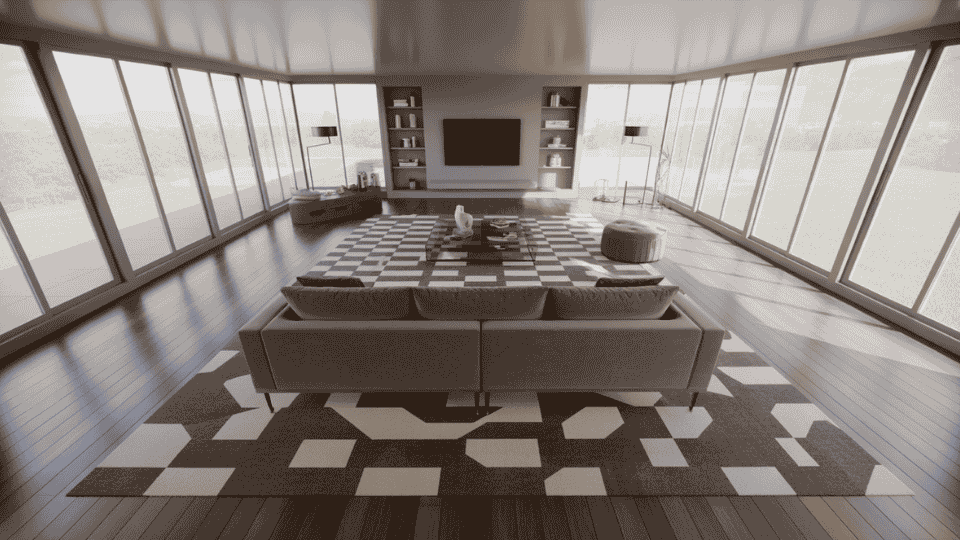
I hate empty living rooms. Hate when all the furniture is squeezed in one place, and the rest of the living room looks like I have upcoming renovations. Hated when people asked me, “oh are you renovating?” when I had just finished renovations. The problem is that the narrow proportions create unique design puzzles that require thoughtful solutions. Now, after years of rearranging furniture and helping friends configure their spaces, I’ve learned that the key lies in balancing function with visual appeal. The right arrangement turns an awkward room into a welcoming retreat where you actually want to spend time. These practical ideas will help you create a comfortable space that works for both relaxation and entertainment without sacrificing style or functionality. The Challenge of Rectangular Living Spaces Long rectangular living rooms present specific obstacles that standard square rooms don’t face. The narrow width often creates a bowling-alley effect, making the space feel cramped despite its ample square footage. Those extended walls can leave awkward gaps that are too small for furniture but too large to ignore. When you add a TV setup to the equation, the complexity increases; you need proper viewing angles, an adequate seating distance, and balanced proportions. Without a strategic approach, furniture ends up pushed against walls, creating a disjointed feel that wastes the room’s potential. Ideas for a Long Rectangular Living Room with a TV Setup 1. Place the TV on the Short Wall Mounting your television on the short wall remains one of the most effective solutions for rectangular spaces. This strategic placement naturally counteracts the bowling alley effect by creating width rather than emphasizing length. The sofa sits comfortably across from the screen without being pushed too far back, maintaining that sweet spot for viewing. This configuration encourages furniture groupings that feel cohesive rather than scattered. You’ll notice how this simple change makes the entire room feel more square and inviting, perfect for both movie nights and casual conversation. 2. Create a Defined Conversation Area Arranging seating to face inward creates a conversation-first layout that prioritizes connection over screen time. Position chairs and sofas to form a loose circle or square, with the TV visible but not dominating every sightline. This inward-facing arrangement works beautifully for families who value face-to-face interaction during gatherings. The coffee table becomes the anchor point, drawing people together naturally. You can still watch TV when you want, but the furniture placement doesn’t force everyone to stare at the screen constantly, offering flexibility for other activities. 3. Opt for a Corner TV Setup Placing your TV in the corner opens up surprising possibilities for furniture arrangement in tight rectangular spaces. This diagonal positioning frees the main walls for other purposes while creating a cozy media nook. Use a corner stand or swivel mount to ensure optimal viewing angles from various seating positions. The arrangement naturally draws seating into an L-shape or gentle curve that faces the corner. This works especially well when you want to maximize floor space in the center of the room for kids’ play areas or yoga practice. 4. Use Area Rugs to Define Zones Area rugs act as invisible walls, dividing your long space into distinct functional zones without physical barriers. Place one rug under your TV viewing area to anchor the sofa and chairs, then position another at the opposite end for a reading spot or home office setup. Choose rugs that share a color family but differ in pattern or texture to maintain a visual connection while defining separate purposes. This approach gives you essentially two rooms in one, making the most of that extended length while avoiding the empty, echoey feeling. 5. Install a Console Behind the Sofa A console table behind your sofa provides both practical storage and a visual divider that naturally segments the room. This narrow piece doesn’t take up much space but offers significant functionality, with surfaces for lamps, plants, and everyday items. The console creates a psychological boundary between your seating area and whatever lies beyond, whether that’s a dining space or hallway. Style it with pairs of matching elements for balance, and use the lower shelf for baskets that hide remotes, magazines, and other living room necessities. 6. Add a Gallery Wall Behind the TV Change that long wall behind your TV into a personal gallery that tells your family’s story through photos and artwork. This vertical design element fills the space beautifully without requiring floor area, making it ideal for narrow rooms. Mix frame sizes and orientations while maintaining consistent frame colors or matting for cohesion. The gallery draws eyes upward and creates a focal point that competes with the rest of the furniture, giving the room multiple centers of interest. You’ll appreciate how this brings warmth and personality to what might otherwise be a blank expanse. 7. Incorporate Modular Furniture for Flexibility Modular furniture adapts to your changing needs rather than locking you into one permanent arrangement. Individual sections connect to form custom configurations that fit your rectangular room’s proportions perfectly today and rearrange when your needs shift tomorrow. Hosting a party? Separate the pieces into individual seats scattered throughout the space. Movie night? Push them together into a large sectional. This flexibility proves invaluable when you move or when kids grow up, and the room functions change. Look for quality connectors that hold pieces securely without complicated hardware. 8. Split the Room with Multiple Seating Areas Creating two separate seating areas makes your long room feel intentionally designed rather than awkwardly stretched. Position your primary TV zone at one end with the sofa and media console, then establish a completely different function at the opposite end, perhaps a reading corner with a pair of chairs and a bookshelf, or a workspace with a desk. This dual-zone approach works particularly well when household members have different activity preferences at the same time. Use lighting and rugs to distinguish each area while keeping colors consistent throughout. 9. Use Multi-Functional Furniture Dual-purpose furniture maximizes every square foot of your rectangular living room by serving multiple needs. Choose a storage ottoman that functions as a coffee table, extra seating, and hidden storage for throws and board games. Select a TV stand with substantial drawer and cabinet space rather than just a simple shelf. Even your sofa might offer hidden storage under the seat cushions. These pieces reduce clutter by giving everything a home while maintaining the clean lines necessary in narrow spaces where visual simplicity prevents overwhelm. 10. Install Floating Shelves for Extra Storage Floating shelves mounted directly to walls provide substantial storage capacity without consuming precious floor space in your narrow room. Install them flanking your TV to create a built-in media center look on a budget, or line them along a long wall to display books and collectibles. The open design keeps things feeling airy rather than heavy, which matters in tight spaces where bulky cabinets would close things in. You can adjust shelf heights during installation to accommodate items of different sizes, creating custom storage tailored to your specific needs. 11. Position Your TV at the Right Eye Level Getting your TV height correct matters more than most people realize, both for comfort and for room proportion. The center of the screen should sit at eye level when you’re seated, typically 42 to 48 inches from the floor, depending on your furniture height. Mounting too high forces you to crane your neck during long viewing sessions, while positioning too low makes the screen feel like an afterthought. Measure your sofa seat height, add your eye height while seated, and mount accordingly. This attention to ergonomics improves both daily comfort and the overall visual balance. 12. Use Furniture to Balance the Space Symmetrical furniture placement creates visual calm in long rectangular rooms that might otherwise feel chaotic or unbalanced. Position matching table lamps on identical end tables flanking your sofa, or place coordinating bookcases on both sides of the TV. This mirrored arrangement provides a sense of order and intentionality, making the space feel professionally designed. You don’t need exact duplicates, just pieces with similar visual weight and height. The resulting balance helps your eyes rest comfortably rather than getting pulled around the room by competing elements. 13. Create Easy Pathways for Movement Traffic flow determines whether your room functions smoothly or creates daily frustration when people constantly bump into furniture. Maintain at least 30 inches of clearance between your coffee table and sofa for comfortable leg room and passage. Position furniture so pathways don’t force people to walk directly in front of the TV screen during shows. Consider how people enter and exit the space, and arrange pieces to accommodate natural movement patterns. This thoughtful planning makes your rectangular room feel spacious and welcoming rather than cramped and obstacle-filled. Creative Storage and Design Solutions Adding smart storage and decorative elements helps your rectangular living room function better while looking more finished. These solutions address both practical needs and visual appeal: Hidden storage ottomans provide seating, footrests, and concealed space for blankets, remotes, and magazines without adding visual clutter to the room Wall-mounted cabinets above or beside the TV keep media equipment and accessories organized while maintaining clean floor lines in narrow spaces Decorative storage baskets on shelves or under consoles offer texture and style while corralling smaller items that otherwise scatter across surfaces Gallery walls on long empty walls create focal points and visual interest, breaking up the expanse without requiring floor space Tall bookshelves at room ends use vertical space efficiently, providing abundant storage while serving as room dividers or architectural anchors Mirrored surfaces strategically placed reflect light and create the illusion of width, making the narrow room feel more spacious and open These storage solutions work together to keep your long rectangular room organized and functional. The key is choosing pieces that serve multiple purposes rather than single-function items that consume valuable space without earning their footprint. Current Living Room Trends Trends right now are all about making your space feel personal and comfortable, rather than just perfect for a photo. Accounts like @mcgeeandco on Instagram show how breaking strict symmetry creates a lived-in feel, letting mismatched chairs and varied side tables add warmth and character. Pinterest designers are posting curved sofas, rounded coffee tables, and arched shelves because softer shapes make long rooms feel friendlier and less boxy. TikTok clips tagged #LivingRoomLayoutTrend highlight zoned arrangements, such as reading nooks beside a TV area, that help rectangular spaces feel like several distinct areas while flowing well together. Color schemes trending across platforms mix earthy tones, rich jewel accents, and layered textures with natural materials like wood and stone, keeping rooms grounded and inviting. These ideas resonate because they make a room work hard for everyday life, not just look stylish for a brief moment. Smart Tips for Rectangular Room Success Understanding a few key principles makes arranging furniture in long, narrow spaces significantly easier. These guidelines apply across different design styles and room sizes: Low-profile furniture with exposed legs maintains sightlines and prevents cramped feelings in narrow rectangular rooms. Proportional furniture sizing ensures pieces fit the room, avoiding oversized sofas or tiny chairs that look misplaced. Layered lighting combines overhead fixtures, table lamps, and floor lamps to eliminate dark corners throughout the length. Properly sized rugs anchor zones by extending under furniture legs, visually connecting pieces within designated areas. Vertical space utilization, such as tall plants, floor-to-ceiling curtains, or stacked storage, draws the eye upward. Use minimal, meaningful accessories to prevent clutter, and curate decorative pieces carefully rather than filling every available surface unnecessarily. These practical strategies help you make the most of your room’s unique dimensions while avoiding common layout mistakes. The goal is to create an intentional, comfortable space rather than forcing furniture into awkward arrangements. Final Thoughts Mastering your long rectangular living room layout with TV requires balancing practical needs with visual appeal. The ideas I shared here offer options for rooms of various sizes and lifestyle needs. Your rectangular room has potential beyond its challenging proportions; the right furniture placement reveals that possibility. Don’t settle for a layout that fights your space when these strategies can work with it. Starting with TV placement on the short wall, then building outward with floating furniture and defined zones, creates the foundation for success. With these strategies, your long living room becomes a functional, inviting space you’ll actually want to spend time in. Share your living room arrangement ideas and drop a comment below.
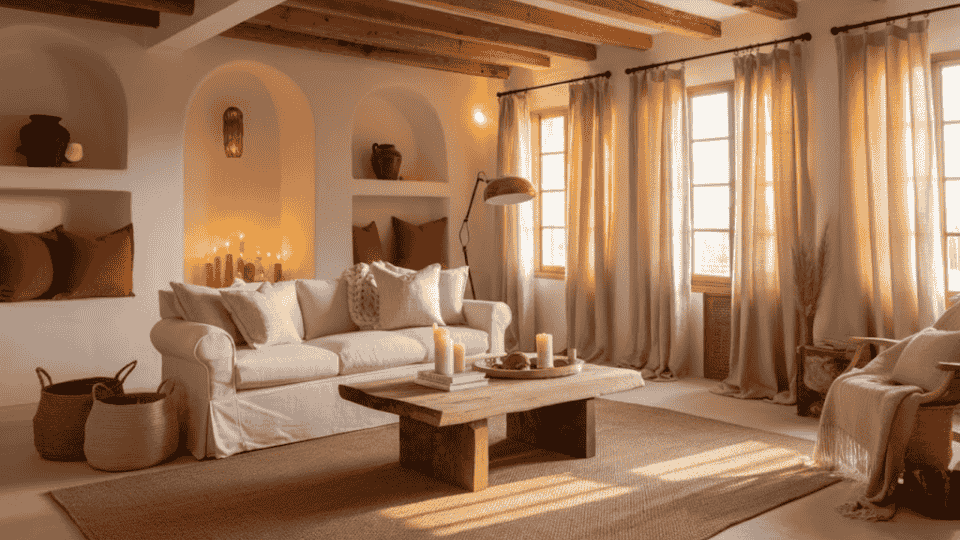
Want to turn your living room into a cozy, warm, aesthetic living room that actually feels like home? Creating that perfect warm atmosphere doesn’t require expensive furniture or a complete renovation of your entire space. I know how overwhelming it can feel when you’re trying to make your living room feel inviting and comfortable. A cozy, warm aesthetic living room focuses on comfort, warmth, and creating a space where people naturally want to gather. Your living room should be a place where you actually want to spend time rather than just pass through. Let me show you exactly how to create that warm, welcoming space you’ve been dreaming about. The Appeal of a Cozy Warm Aesthetic in Living Rooms I believe living rooms need warmth more than any other space because that’s where we actually live and spend time. Your living room is where you relax after long days, gather with family on weekends, and unwind with friends. A comfy, warm farmhouse living room using beige tones, natural textures, and soft decor makes these moments feel even better and more special. Cool, stark spaces might look impressive in photos, but feel uninviting when you’re trying to relax and be comfortable. Warm colors, soft textures, and cozy elements create an atmosphere that naturally encourages people to settle in and stay awhile. The living room should feel like a hug, not a showroom you’re afraid to touch or use daily. Cozy Warm Aesthetic Living Room Ideas to Try I believe creating a cozy, warm living room is easier than most people think when you know the right elements. Here are tried-and-true ideas that convert any living room into a warm, inviting space: 1. Warm Beige Layered Living Room Your cozy, warm beige living room looks refined with different beige shades creating depth throughout the space. Paint walls soft beige, choose a beige sofa, and hang matching curtains reaching the floor. Layer chunky knit throws, linen pillows, and a jute rug to prevent flatness. The finished space appears warm and inviting, with each texture catching light differently as the day progresses. 2. Soft Farmhouse Living Room with Slipcovered Seating Choose white or cream slipcovered sofas and armchairs that create a relaxed farmhouse vibe. Add a distressed wood coffee table and simple greenery in ceramic vessels for genuineness. The space looks lived-in and adorable, perfect for families who actually use their living room daily. Everything feels practical yet welcoming, with washable covers making life easier when messes happen. 3. Cozy Warm Living Room with Balanced Negative Space I’ve learned that leaving space makes rooms feel warmer because it lets you appreciate what’s there without overwhelm. The room looks intentional when you resist filling every surface and corner with furniture or decorative items constantly. Allow breathing room around furniture groupings and keep some walls bare so eyes can rest between focal points. The negative space makes your warm elements stand out and creates a peaceful atmosphere, inviting relaxation. 4. Cozy Living Room with a Large Neutral Area Rug The space looks pulled together when one oversized rug anchors all your furniture perfectly. Choose a rug large enough that your sofa, chairs, and coffee table all rest on it entirely. Go for neutral tones like cream or beige in wool or jute that add warmth underfoot. Everything appears more spacious and intentional, with furniture visually connected. 5. Living Room with a Warm Wood Coffee Table A solid wood coffee table in walnut or oak becomes the natural focal point, warming your space instantly. Place it centrally in front of your sofa and style it simply with a plant and books. The rich wood grain adds character and organic warmth that balances cooler elements like metal or glass. Your room immediately feels more grounded and complete. 6. Warm Aesthetic Living Room with Linen Curtains The space looks airy and sleek with floor-length linen curtains in cream or oatmeal filtering light beautifully. Hang curtain rods near the ceiling and let the fabric puddle slightly on the floor. Natural linen moves gently when windows open, adding life and softness to the room. Light filters through the fabric during the day, creating a warm glow. 7. Earth-Tone Accent Living Room Your room looks grounded with terracotta, clay, and muted brown accents throughout the neutral space. Keep walls beige or cream, then add warmth through rust-colored pillows, clay pots, and woven textiles. Use wooden bowls and natural materials to reinforce the earthy feeling you’re creating. The palette feels cohesive and calming without overwhelming your senses. 8. Cozy Reading Corner Living Room My friend always says, “A home without a reading nook is just a house,” and she’s right. The corner looks inviting with a comfortable armchair, a small side table, and a dedicated reading lamp. Add a soft throw blanket and keep a basket of books within easy reach. This dedicated spot becomes the room’s most cherished area where you escape screens. 9. Warm Beige Living Room with Textured Walls Change plain walls with limewash or plaster that adds dimension and makes beige look refined. The textured surface catches light differently throughout the day, creating subtle shadows and depth. Apply the texture yourself with special rollers or hire professionals for more complex finishes. Your walls look intentional and high-end, proving neutral colors can feel urbane. 10. Comfy Living Room with Overstuffed Seating The room looks inviting with deep, plush sofas that beg you to sink in and stay awhile. Choose pieces with soft, rounded arms and thick cushions that prioritize comfort over sleek modern lines. Add plenty of throw pillows for back support and lounging that feels luxurious. Your space becomes an actual living room where people actually relax. 11. Farmhouse Living Room with Woven Baskets Natural woven baskets in seagrass or rattan make the room look tidy yet casual, with practical storage everywhere. Place large baskets beside sofas for blankets, tuck medium ones under tables for magazines, and use small ones on shelves. The organic texture softens modern furniture and hard surfaces while keeping clutter hidden. Everything appears organized and approachable. 12. Warm Living Room with Wood Ceiling Beams The room looks architecturally interesting with wood beams overhead, bringing warmth to a surface people often overlook. Install real beams for genuineness or faux beams that look convincing and mount more easily. Choose warm wood tones that complement your furniture and flooring below for a cohesive design. The beams draw eyes upward and make even high ceilings feel cozier. 13. Cozy Living Room with Layered Throw Blankets Your space looks lived-in and welcoming with multiple blankets draped across sofas, chairs, and folded in accessible baskets. Mix chunky knits, soft fleece, and woven cotton for visual variety that appears intentionally curated. Keep them within reach so everyone actually uses them instead of treating them like untouchable decorative accessories. The layered look makes people want to curl up immediately. 14. Neutral Living Room with Soft Patterned Pillows The sofa looks styled but calm with subtle patterns like checks or stripes mixed among solid neutral pillows. Balance patterned pieces with solid ones in coordinating colors to prevent visual chaos that overwhelms the space. Stick to consistent color palettes so everything feels cohesive instead of randomly thrown together. Your seating area appears interesting enough to avoid blandness. 15. Warm Aesthetic Living Room with a Fireplace Focus The room looks centered and inviting, with all seating arranged to face the fireplace as the focal point. Style your mantel and add candles or logs in the heart, even if the fireplace doesn’t work. Hang artwork or a mirror above to extend the visual importance of this feature. The fireplace becomes the heart where everyone naturally gathers. 16. Living Room with Soft Rounded Furniture Your space looks gentle and approachable with curved sofas, circular ottomans, and tables featuring soft edges. These rounded shapes create a welcoming atmosphere that is also safer if you have young children. Mix curves with some straight lines to maintain structure and prevent the room from feeling too soft. Everything feels relaxed rather than stiff. 17. Cozy Living Room with Mixed Wood Tones The room looks collected and layered with light oak, medium walnut, and warm pine finishes used throughout. Use different wood tones in your coffee table, side tables, and shelving instead of matching everything perfectly. Make sure all woods have warm undertones rather than mixing warm and cool tones. Your space appears gathered over time. 18. Farmhouse Living Room with Soft Checked Textiles Your room gains farmhouse appeal when you introduce subtle plaid or check patterns through pillows, throws, or curtains. The checks look classic and timeless, adding visual interest without overwhelming your neutral color scheme throughout the room. Choose patterns in cream, beige, tan, and soft gray rather than bold colors that compete inappropriately. The checkered textiles feel nostalgic and cozy, reminiscent of simpler times and comfortable country living that everyone craves. 19. Farmhouse Living Room with Vintage Accents I love hunting for vintage finds because, as my grandmother used to say, “Old things have stories to tell.” The room looks collected and personal with antique frames, weathered wood, and aged ceramics from flea markets. Place vintage books on your coffee table and old crocks on shelves to add character. Your space feels unique and full of stories. 20. Cozy Living Room with Layered Lighting Zones The room looks intimate and intentional, with multiple light sources creating separate zones instead of harsh overhead lighting. Place table lamps on end tables, floor lamps beside chairs, and small accent lights on shelves. Use dimmer switches to adjust brightness based on time of day or desired mood. Your space glows with soft pools of light, creating cozy pockets. 21. Warm Living Room with a Neutral Gallery Wall The wall looks curated with wood-framed artwork in beige, cream, and brown tones arranged together thoughtfully. Use similar wood finishes for cohesion rather than mixing metals or colors randomly throughout the display. Choose abstract pieces, landscapes, or photography featuring warm neutrals that complement your existing scheme perfectly and beautifully. The gallery becomes a focal point, adding interest without introducing loud colors that disrupt the calm atmosphere. 22. Living Room with a Soft Upholstered Ottoman Your space feels inviting when you replace complex coffee tables with a large upholstered ottoman instead of traditional options. Choose one in linen or velvet in a neutral shade that coordinates with your existing furniture beautifully and seamlessly. The ottoman provides flexible seating and a safer surface than hard tables for families with children everywhere. Style the top with a tray holding candles or books for functionality. 23. Cozy Living Room with Natural Fiber Decor The room looks organic with jute, sisal, and seagrass elements woven throughout the space, adding natural texture. Add these materials through rugs, baskets, planters, or wall hangings that bring warmth effortlessly and beautifully. Natural fibers soften hard surfaces and modern furniture while adding an earthy quality that makes spaces feel calm. Everything creates a relaxed atmosphere, connecting your indoor space to the natural world outside your windows. 24. Warm Living Room with Muted Green Accents I’ve found that olive or sage green accents breathe life into beige spaces without disrupting calm feelings. Your room looks fresh with muted green pillows, blankets, or plants in green pots, adding subtle color. These gentle tones complement warm neutrals beautifully and prevent everything from feeling too monotone or boring. The subtle green feels natural and organic, like bringing the outdoors inside your cozy living space. 25. Comfy Living Room with Low Furniture Profile The space looks relaxed when you choose sofas, chairs, and tables with lower profiles instead of tall pieces. Lower furniture makes ceilings feel higher while creating a casual vibe that encourages complete relaxation throughout the day. Sitting closer to the ground creates intimacy that makes conversation easier and more natural among family and guests. Your room appears more spacious, with nothing towering overhead, making the space feel cramped. 26. Warm Living Room with Floor Cushions or Poufs Add floor seating with large cushions or poufs that make the room feel relaxed and approachable for everyone. The space looks laid-back, perfect for families with kids who naturally gravitate toward sitting on the floor. Choose poufs in neutral fabrics or jute that add texture while providing extra seating for gatherings and parties. Toss them around the coffee table or in corners where they’re accessible but not blocking pathways. 27. Farmhouse Living Room with a Soft Neutral Sectional The room looks anchored with a large neutral sectional designed for lounging and gathering together throughout the day. Choose a sectional in cream, beige, or soft gray that accommodates family and guests easily and comfortably. The generous seating makes your space the natural gathering spot where everyone wants to spend relaxing time. Style it with throw pillows and blankets to maximize comfort and maintain that farmhouse appeal perfectly. 28. Warm Living Room with Soft Window Seating Create a window spot by placing a cushioned bench or chair near natural light coming in throughout the day. Layer the seating with soft pillows and keep a throw blanket nearby for chilly mornings or evenings. The area looks intentional, becoming a favorite perch for morning coffee or watching the world outside your window. Natural light makes this spot feel warm and connected to the outdoors throughout the day. 29. Cozy Living Room with Subtle Texture-on-Texture Styling Your space looks rich when you layer bouclé, knit, linen, and wool textures without introducing any color contrast. The monochromatic approach keeps everything calm while varied textures prevent the room from looking flat or dull. Mix smooth linen curtains with chunky knit throws, a bouclé chair, and wool pillows in similar tones. The depth comes from how light plays across different surfaces rather than from competing bright colors. 30. Warm Aesthetic Living Room with Antique Lighting My grandmother used to say, “Good lighting is like a warm hug for your room,” and she was right. The space glows with vintage-style lamps or sconces that cast warm light from decorative bases with character. Choose fixtures with brass, bronze, or weathered metal finishes that add patina and warmth to your walls. Use warm-toned bulbs in all fixtures to enhance the cozy atmosphere during evening hours beautifully. 31. Living Room with Warm Neutral Built-In Shelves Style built-in shelves with pottery, books, and wooden accents that create a curated look without overwhelming everything. The shelves look balanced when you group similar items together and leave some empty space for breathing. Mix vertical books with horizontal stacks, add small plants, and incorporate wooden bowls for texture and warmth. Everything appears collected over time, giving your room depth and a genuine personality. Cozy Warm Aesthetic Living Room Mistakes to Avoid I’ve seen so many people accidentally sabotage their cozy living room goals by making a few common design mistakes. Avoiding these missteps helps you create the warm, inviting space you’re dreaming about without wasting time or money. Here are the biggest mistakes to watch out for: Using Cool Tones: Gray, blue, and stark white paint or furniture make your room feel cold and uninviting instead of warm. Too Much Minimalism: Removing too many items leaves your space feeling empty and sterile rather than cozy and lived-in throughout. Overcrowding the Space: Cramming too much furniture or decor into your room makes it feel cluttered and chaotic instead of comfortable. Harsh Overhead Lighting: Relying only on bright ceiling lights creates a cold atmosphere instead of the warm glow you’re trying to achieve. Skipping Soft Textures: Using only hard surfaces like leather, metal, or glass without adding soft textiles makes the room feel unwelcoming. Catching these mistakes early saves you from having to redo your entire room later when it doesn’t feel right. Pay attention to these common pitfalls, and your living room will feel warm and cozy from the start. Final Thoughts Your dream cozy, warm aesthetic living room is within reach now that you know what actually works and what doesn’t. I hope these ideas inspire you to start making small changes that add up to big improvements. Your living room deserves to feel warm and inviting rather than cold and sterile like a showroom. Remember that creating a cozy, warm living room happens gradually, not overnight, so be patient with yourself. Start with one or two changes and keep adding warmth until your space feels just right. Ready to start creating your dream cozy, warm, aesthetic living room? Share your favorite tip in the comments below!

Power outages are a headache. The lights go out, the fridge is full, and you start wondering what size generator to run a house so things can keep moving. It feels like a big decision, but it does not have to be confusing. In this guide, I will walk through the basics together in simple steps. You will learn how to pick your backup plan, understand the main types of generators, and add up the watts you actually need. You will also see which appliances matter most, what can go wrong with sizing, and how to stay safe. By the end, you’ll be much clearer about what makes sense for your home. Start With Your Backup Plan: Basics, Comfort, or Whole Home Before checking watt numbers, decide how much of your home you want to keep running during an outage. This quick chart makes the choice easier: Backup level What It Helps You Do Common Things You Can Run Essentials only Keep food safe, stay connected, and have basic lighting Refrigerator and or freezer, a few lights, Wi Fi router, phone charging, garage door opener, medical devices (if needed) Comfort backup Add a few daily-use items so home life feels steadier Microwave or coffee maker, a few more rooms of lights, TV or computer, sump pump or well pump, furnace blower (for homes with gas heat) Whole home backup Cover most of the home during longer outages Most circuits in the panel are for bigger loads like HVAC, pumps, and more outlets, and automatic switching with a transfer switch Once you know your backup level, sizing a generator becomes much simpler because you can focus only on the loads that match your plan. The Three Main Types of Generators Different generator types work better for different homes and outage plans. Even if two models have the same watt rating, they can feel very different to use. These three options cover most needs, from basic backup to almost normal life during a power cut. 1. Portable Generators Portable generators are rolled out, started by hand, and refueled as needed. They work well for short outages and basic loads like lights, the fridge, and Wi-Fi. Cost factors: you pay for the generator, heavy-duty cords, a safe home inlet (if you use one), and fuel cans. Upfront cost is low, but you do more work during an outage. 2. Inverter Generators Inverter generators are a quieter kind of portable unit, often used for laptops, routers, TVs, and small appliances. They give steady power and are easier on electronics. Cost factors: you pay for the inverter unit, cords or inlet, maybe a kit to link two units, and fuel. They usually cost more than basic portables but are quieter and smoother. 3. Standby Generators Standby generators sit outside the home and turn on by themselves when the power fails. They can handle bigger loads, including many circuits and HVAC in some setups. Cost factors: you pay for the generator, transfer switch, installation labor, gas or propane line work, pad, and permits. You also pay for fuel and service, but daily use is very easy. How to Calculate What Size Generator to Run a House This simple method helps you size a generator the same way many buying guides and electricians do. Follow these short steps to get a clear number if you are wondering what size generator for house loads you really need. Step 1: List what you want to run at the same time: Make two lists so your plan stays realistic. Must run: fridge, freezer, Wi Fi, some lights, medical device (if needed) Nice to run: microwave, TV, dishwasher, extra lights, window AC. You can rotate loads when needed, such as using the microwave briefly, then turning it off. Step 2: Find running watts and starting watts: Running watts are for normal use. Starting watts are the short surges needed to start motors. These matter most for items like fridges, freezers, sump pumps, well pumps, AC units, and some tools. Step 3: Add up your total running watts: Only include the items you will use at the same time. Leave out anything you plan to rotate. Step 4: Add the biggest surge, then add a safety buffer: Find the item with the highest starting watts and add that to your running total. After that, add a buffer of about 20% to 25% so the generator is not working at its limit. The Appliances that Usually Decide Your Generator Size Some appliances barely change your generator needs. Others can raise the size a lot, especially when they have motors or heating elements. Here are the items that affect generator size the most: Central AC units: need a strong surge to start and steady power to run Well pumps and sump pumps: motor loads that may use 240V and cycle on and off Electric water heaters, stoves, and dryers: large heating loads that can overwhelm small generators Furnace blowers in gas heat systems: needed to push warm air through the home These loads shape your final generator size more than simple items like lights or phone chargers. Decide early which of these you want to keep running during an outage, then size the generator around them. Generator Size Guidelines by Use Case Before picking a generator, it helps to match your backup goal with a size range that fits what you plan to run. This chart gives a clear starting point if you want to know what size generator do I need for my house in real. Use case/household type Typical generator size Usually covers What can push it higher Essentials only About 5,000–8,000 watts Fridge or freezer, lights in a few rooms, router, phone charging, TV, or a laptop Adding a sump pump, adding a well pump, using a microwave often Comfort backup About 8,000–12,000 watts (more if pumps or AC run) Essentials plus more lights and outlets, microwave in short bursts, one pump (depending on surge) Large well pump, bigger window AC, running many kitchen items at once Whole home backup About 15–25 kW for many homes (more for larger homes) Most circuits, central AC in many setups, several big loads running together Multiple AC units, many large appliances, a higher number of 240V loads Square footage alone is not enough. Two homes of the same size can need very different generator sizes based on HVAC, pumps, and the appliances you plan to use. Important Generator Safety Tips Before you even think about starting or sizing a generator, take a minute to walk through these safety basics. Carbon monoxide: Never run a generator indoors or in a garage, and keep it well away from doors and windows. Use carbon monoxide alarms inside the home. Electrical: Never plug a generator into a wall outlet. Use a transfer switch or interlock fitted by a qualified electrician to avoid backfeeding. Operation: Let the unit cool before refueling, use outdoor-rated cords, keep it dry, and stay within its rated load. With these rules in mind, the rest of your generator planning becomes safer and much easier to manage. Generator Sizing Errors to Avoid Many people end up with the wrong generator because of a few common sizing errors. Keeping these points in mind makes your choice much more reliable. Choosing a generator based only on square footage: appliance loads matter far more than home size. Ignoring starting watts for motors: items like fridges, pumps, and AC units need a surge to start. Running central AC with other big appliances: this can overload smaller generators very quickly. Using the generator at full load with no buffer: always leave extra room so the unit can handle spikes. Overlooking 240V loads: some pumps and HVAC systems need more power than standard outlets. Thinking gas heat uses no electricity: the furnace blower still needs power to move warm air. Avoiding these mistakes helps you pick a generator that handles your real needs without strain or surprises. Bottom Line Choosing what size generator to run a house becomes much easier once you break the process into simple steps. You looked at your backup plan, checked the types of generators, and learned how running watts and starting watts shape your final choice. You also saw how certain appliances can change the size you need and why safety rules matter every time you use a generator. Now you have a clear path to find a generator that fits your home and daily needs without guessing. If you want more help with home guides and easy tips, feel free to check out my other posts on the site.

If your lights flickering in house has you confused, I get it. One minute, everything looks normal. Next, a room starts pulsing or dimming, and your mind goes to worst-case scenarios. In this guide, I’ll help you figure out what’s going on without taking unsafe risks. You’ll learn the most common causes, from a loose bulb or bad dimmer match to overloads, water trouble, and utility issues. You’ll also see how patterns point to causes. I’ll share the warning signs that mean you should call a licensed electrician fast, plus simple checks you can do first. By the end, you’ll know what to watch, what to try, and what to report if you need help. Is Light Flickering in House Dangerous? Flickering lights in the house are not always an emergency, but they should never be ignored. Sometimes it is just a loose bulb. Other times, it warns about heat, loose wiring, or a bigger power issue that can damage your home. Watch for these serious signs: Burning or hot plastic smell near outlets, switches, or the electrical panel Buzzing or crackling sounds from fixtures, switches, or the panel Outlets, switches, or the panel feeling warm or hot to the touch Breakers tripping again and again Lights flickering in many rooms at the same time Some lights are dimming while others get brighter at the same time If any of these show up with flickering lights, do not push your luck. Turn off power to the problem area if it is safe to do so, stay away from hot or damaged parts, and call a licensed electrician as soon as possible. Common Causes of Flickering Lights in the House Before you fix anything, it helps to understand the most common reasons lights start to flicker so you can trace the problem with less guesswork. 1. Loose or Worn Light Bulb A loose or tired bulb is one of the simplest reasons for lights flickering in the house. You may see a flicker in only one fixture, or when someone walks above it. Tip: Turn the light off, tighten the bulb, and replace it if the flicker stays. 2. Bulb and Socket Mismatch Not every bulb seats well in every socket, especially in older fixtures. A poor fit can cause random flicker right after a new bulb is installed. Tip: Use the correct base size and never force a bulb that feels wrong or wobbly. 3. Dimmer and LED Mismatch Older dimmers often do not work smoothly with LED bulbs. You may notice flicker only on low settings or only in dimmer rooms. Tip: Use dimmable LED bulbs and an LED-rated dimmer, and keep one bulb brand on each dimmer when possible. 4. Overloaded Circuit If too many heavy appliances share one circuit, voltage can dip whenever something starts. Lights may dim, then return to normal, especially during busy times. Tip: Move heaters, AC units, and other big loads to different circuits and avoid running them all at once. 5. Unbalanced or Wobbly Ceiling Fan A shaking fan can loosen wires in the fan box and make its light flicker. You might see wobble and hear a light thump as it runs. Tip: Balance the fan with a kit, and if the light still flickers, have an electrician check the wiring. 6. Loose Connections or Wiring Problems Loose wires can heat up, which is more dangerous than the flicker itself. You may notice flicker in several fixtures on the same circuit, plus buzzing at outlets or switches. Tip: Do not open boxes or keep testing. Call a licensed electrician quickly. 7. Water Leaks or Moisture Damage Water near wiring can cause a short flicker when the area gets wet, then stop as it dries. This often shows up near bathrooms, kitchens, or laundry areas. Tip: Fix the leak first, then have an electrician inspect any nearby lights and wiring. 8. Voltage Changes and Utility Supply Issues Sometimes the cause sits outside your home. Wind, storms, or damaged lines can make many rooms flicker at once, and neighbors may notice the same thing. Tip: Check your utility company’s outage page and call them if the problem seems widespread. 9. Panel, Breaker, or Main Neutral Issues When multiple lights flickering in house happens across many circuits, the problem may be near the main panel, meter, or service connection. You might see some rooms dim while others brighten. Tip: This is not DIY work. Call both the utility company and a licensed electrician. How to Read Flickering Light Patterns in Your Home When lights flicker, the pattern tells a lot about what might be wrong. Use this table to sort out whether you are dealing with a small issue or something more serious. Flicker Pattern Most Likely Causes Safe Steps to Try Only one light flickers – Loose bulb – Worn bulb – Faulty socket – Switch issue – Loose connection inside that fixture – Turn the light off and tighten the bulb – Swap in a new bulb – If on a dimmer, test with a higher dimmer level – If the socket looks dark, cracked, or melted, stop and call an electrician Several lights flicker in one room – One circuit overloaded – Loose wire feeding that room – Wiring issue in the switch box – Unplug heavy items and test again – Avoid running big appliances on that circuit – If lights still flicker, call a licensed electrician Multiple lights flickering in the house (whole-home flicker) – Loose neutral or hot at service – Utility supply issue – Loose panel connections – Main breaker or meter problem – Write down when the flicker happens and what is running – Call the utility if neighbors see a flicker too, or if it started after a storm – Call a licensed electrician if it seems limited to your home If the table points to whole-home flicker or wiring issues, it is safer to pause DIY work and let a licensed electrician and, if needed, the utility company check the system. What Community Users Say About Whole-House Flicker Homeowners in a Reddit discussion about lights flickering throughout an entire home describe lights dimming and brightening in every room, even when only a few fixtures are on. Electricians in the replies say the most common cause is a loose or bad neutral at the service or from the utility, not a simple bulb issue. Some people later found arcing and loose screws on the main breaker or heat damage on the neutral. Many pros suggest calling the power company first, then an electrician, because whole-house flicker often starts at the service connection, not inside one circuit. Step-by-Step Troubleshooting Flickering Lights in the House Before calling for help, you can follow a few simple steps to narrow down the cause and understand what’s happening in your home. Step 1: Note When and Where It Happens Write down which rooms flicker, what time it happens, what appliances are on, and if there’s wind or storms. Also note if some lights dim while others brighten. This simple log helps an electrician spot patterns quickly. Step 2: Check Bulbs and Dimmers Tighten the bulb in the flickering light, then swap it with a new one if needed. If the light is on a dimmer, use a dimmable LED and try a higher dimmer setting. Changes here can show a simple bulb or dimmer issue. Step 3: Turn Off Heavy Appliances Turn off the AC for a bit and avoid running the microwave, heater, or vacuum. Watch the lights while these are off. If flicker improves, the circuit may be carrying too much load and needs a better layout. Step 4: Look, Touch, and Smell (Safely) Do not open the panel. Look for dark marks or cracked plates, gently touch covers to check for warmth, and sniff for a burning smell. If anything seems wrong, stop testing and call a licensed electrician right away. Step 5: Match the Problem to the Right Help If homes nearby flicker too, call the utility company first. If only your home flickers in many rooms, call an electrician. If flicker happens after storms or near leaks, you may need both the utility (or plumber) and an electrician. Special Flickering Cases that Come up A Lot Some flicker issues show up a lot, especially after LED swaps, homework, or in older houses. This compact table helps you match your situation fast. Situation Common signs Best next step LEDs flicker after bulb change Old dimmer, mixed LED brands, low-quality bulbs Use dimmable LEDs, switch to an LED-rated dimmer, and keep one bulb type per dimmer Flicker after renovation Starts right after repairs, near the worked-on area Have an electrician check connections in that area Older home wiring Frequent flicker, warm outlets, old panel, breakers trip Schedule an electrical inspection If your issue fits one of these rows, it often needs more than a quick bulb swap, so getting it checked early is the safer move. Wrap-Up If you’ve been dealing with lights flickering in house, I hope this guide gives you a clear path forward. You now know what small fixes you can try on your own and what signs point to deeper trouble. You also learned how to read flicker patterns, when to call your utility company, and when your home needs a licensed electrician. Your home should feel steady and safe, and simple steps can help you figure out what’s going on before things get worse. Want to stay ahead of home problems? Check out other home maintenance guides on the website to keep your house safe, efficient, and stress-free year-round.

Ever felt confused when your locksmith starts explaining what needs fixing on your door lock today? Understanding the parts of a door lock helps you make smarter decisions about repairs, replacements, and home security, just like knowing the basics, such as generator size for a house, helps with home planning. I know locks look complicated with all those tiny pieces working together inside that metal casing. Breaking down each component makes it easy to see how everything connects and functions as one system. Knowing the parts of a door lock saves you money because you can identify problems yourself before calling for help. You’ll feel more confident talking with locksmiths and choosing the right locks for your home or business. Let me walk you through each part so you never feel lost again. Main Parts of a Door Lock Explained I know door locks seem complicated, but they’re actually made up of just a few key components working together. Understanding these basic parts helps you know how your locks function and when they might need repair. Here are the main parts you’ll find in most standard door locks: 1. Key The key is the tool you use to unlock and lock your door by inserting it into the keyhole. Each key has a unique pattern of cuts and grooves along its blade that match the lock’s internal pins. When you insert the correct key, those cuts align the pins at exactly the right height inside. This alignment allows the lock cylinder to turn freely and release the locking mechanism that holds your door. 2. Lock Cylinder (Core) The lock cylinder, also called the core, is the round part inside your lock where you insert the key. This cylinder contains all the moving parts, like pins and springs, that make the locking mechanism work properly. It’s one of the most important parts because it determines if your door opens or stays locked securely. The cylinder rotates when the correct key is inserted, which triggers the bolt to move in or out. 3. Pins (Driver Pins and Key Pins) Lock pins are small metal pieces inside the cylinder that come in two types: driver pins and key pins. These pins sit in vertical shafts and rest on top of each other in pairs throughout the cylinder. When the wrong key is used, the pins remain misaligned and block the cylinder from turning at all. The correct key pushes each pin pair to the exact height where they meet at the shear line. 4. Plug The plug is the inner rotating part of the cylinder that holds the key pins and turns when unlocked. It sits inside the cylinder housing and can only rotate when all pins align correctly at the shear line. When you insert the correct key, it lifts the key pins to the perfect height inside the plug. This alignment frees the plug to rotate smoothly, which moves the bolt mechanism and unlocks your door. 5. Housing (Shell) The housing, or shell, is the outer casing that holds all the internal lock components together in one piece. It keeps the cylinder, pins, springs, and other parts protected from damage and appropriately aligned for smooth operation. Strong housing material like solid brass or steel resists drilling, prying, and other forced entry attempts that damage locks. Quality housing ensures all internal parts stay in perfect alignment for years of reliable lock performance. Door Lock Parts You See on the Door I’m sure you’ve noticed the lock parts on your door that you interact with constantly throughout the day. These visible exterior and interior components connect to the hidden mechanisms working inside your door and lock body. Here’s what you’ll see on the surface: 6. Door Knob or Lever Handle Door knobs are round handles you twist to open doors, while levers are flat handles you push down instead. Knobs require you to grip and turn them with your hand, which can be harder for some people. Levers are easier to operate because you just push down with your hand, elbow, or even forearm. Both knobs and levers connect to a spindle that runs through the door and activates the latch mechanism. When you turn or push them, the spindle rotates and retracts the latch so the door opens. 7. Rosette or Escutcheon Plate The rosette or escutcheon plate is the decorative metal piece that sits around the doorknob or keyhole. It covers the rough hole cut into your door where the lock hardware is installed and mounted securely. This plate provides extra stability by distributing the pressure when you turn the knob or insert keys. It also makes your door look finished and professional instead of showing exposed holes or raw edges. Quality plates are made from strong metal that won’t bend, crack, or break with regular daily use. 8. Thumb Turn The thumb turn is a small rotating knob found on the interior side of deadbolts and some door locks. You twist this knob with your thumb or fingers to lock or unlock the door from inside. It’s used instead of requiring a key on the interior side, making it faster to lock up. Thumb turns are especially useful in emergencies when you need to exit quickly without fumbling for keys. They provide convenient one-handed operation while keeping the exterior side secure with a keyed cylinder that requires authorization. Internal Parts of a Lock That Make It Work These internal mechanisms work behind the scenes every single time you lock or unlock your door throughout the day. Here’s what’s working inside: 9. Latch The latch is the metal piece that extends from the door into the strike plate on the frame to keep your door closed. A spring latch retracts automatically when you turn the handle and springs back out when you release it. A dead latch doesn’t retract on its own and stays in place until you manually move it with the lock. Spring latches are convenient for everyday use but provide less security than dead latches. 10. Deadbolt A deadbolt is a solid metal bar that slides deep into the door frame for maximum security and protection. Unlike spring latches that retract easily, deadbolts must be manually locked and unlocked with a key or thumb turn. The bolt extends at least one inch into the frame, making it extremely difficult to force open the door. Deadbolts add extra security because they can’t be pushed back by sliding a credit card or a thin tool. 11. Spindle The spindle is a metal rod that runs through the door and connects the interior and exterior handles together. When you turn either handle, the spindle rotates and activates the latch mechanism inside the door lock. This rotation causes the latch to retract into the door so it can open without any resistance. The spindle must be the correct length to fit your door’s thickness, or it won’t work properly. 12. Strike Plate The strike plate is the metal piece screwed into the door frame that receives the latch or deadbolt. It has a hole or opening where the bolt slides in when the door closes and locks securely. Proper alignment between the strike plate and lock is crucial, or your door won’t close or lock correctly. A reinforced strike plate with long screws that reach the wall studs dramatically increases your door’s security. Parts of a Door Lock by Lock Type Different lock types have unique components beyond the basic parts all locks share. Here’s how lock parts vary by design: Lock Type Main Components Unique Features Deadbolt Lock Key cylinder, bolt, thumb turn (single-cylinder) or second key cylinder (double-cylinder), strike plate, housing A single-cylinder lock has a thumb turn inside; a double-cylinder lock requires a key on both sides for higher security. Knob Lock Round knob, spring latch, lock cylinder, spindle, interior push-button lock, rosette plates Push-button allows locking without a key; spring latch retracts automatically when the knob turns. Lever Handle Lock Lever handle, spring latch, lock cylinder, spindle, mounting plates, and interior lock mechanism Lever design requires less grip strength; the same internal parts, but a different handle shape. Smart Door Lock Motor, circuit board, battery compartment, keypad/touchscreen, deadbolt, cylinder (backup), strike plate, WiFi/Bluetooth module Motor moves bolt electronically; circuit board processes codes; batteries power everything; traditional parts provide backup. I recommend choosing your lock type based on what you actually need, like deadbolts for exterior doors, knob and lever locks for interiors, and smart locks when you want keyless convenience. Common Door Lock Problems Caused by Faulty Parts I’ve noticed that most lock problems trace back to just one or two worn or damaged parts. Here are the most common issues and what’s actually causing them: Worn-Out Lock Cylinder: Keys become harder to insert or won’t turn smoothly when the cylinder pins wear down over time. Misaligned Strike Plate: Your door won’t close properly, or the latch won’t catch when the strike plate shifts out of alignment. Broken Latch or Deadbolt: The door won’t stay closed, or feels loose when the latch spring breaks or the bolt gets stuck. Loose Door Knob or Lever: The handle wiggles or spins freely without retracting the latch when internal screws loosen or the spindle breaks. Catching these problems early saves you money and prevents getting locked out of your home unexpectedly. Most of these issues can be fixed quickly by tightening screws, realigning parts, or replacing the specific damaged component. When to Repair vs. Replace Door Lock Parts? Deciding whether to repair or replace your lock parts depends on the extent of damage and your security needs. Minor issues like loose screws, misaligned strike plates, or worn keys can usually be fixed quickly and inexpensively. You can often repair these problems yourself with basic tools and a little patience to save money. However, broken cylinders, cracked housing, or severely damaged internal mechanisms typically require complete lock replacement for proper security. If your lock has been tampered with, forced, or shows signs of break-in attempts, replace it immediately. Old locks that stick constantly or require excessive force should also be replaced rather than repaired repeatedly. Safety always comes first, so when in doubt about your lock’s integrity, choose replacement over temporary repairs. Frequently Asked Questions How often should door locks be checked? Check your door locks every few months, especially on exterior doors. Look for loose handles, sticking keys, slow bolts, or uneven closing. A quick check helps you catch small issues before they become lockouts, broken hardware, or bigger security problems. Can weather affect door lock parts? Yes, weather can affect locks over time. Moisture can cause rust, while heat and cold can cause doors to expand or contract. This can throw the latch or strike plate out of line. Exterior locks need extra care because they are exposed to rain, dust, humidity, and temperature fluctuations. Why does my key get stuck in the lock? A key can get stuck because of dirt, worn pins, a bent key, or a dry cylinder. Do not force it, since that can break the key inside. Try gentle movement first. If it keeps happening, the lock may need cleaning, lubrication, or replacement. What is the best lubricant for door locks? Use a graphite-based or dry lock lubricant for most door locks. These products reduce friction without leaving a sticky mess. Avoid heavy oils because they can collect dirt inside the cylinder. Too much buildup can make the key harder to turn later. Are all door lock parts universal? No, door lock parts are not always universal. Size, brand, backset, door thickness, and lock type can all affect fit. A knob, latch, or cylinder from one lock may not work with another. Always check the measurements before buying replacement parts. Can I replace only one part of the lock? Yes, you can replace one part if the rest of the lock is still in good shape. Common part replacements include cylinders, strike plates, latches, and screws. If several parts are worn or the lock feels weak, replacing the whole lock is usually safer. Why does my door lock feel loose? A loose lock is often caused by worn screws, a loose mounting plate, or movement inside the handle set. Sometimes the spindle or latch is wearing out, too. Tightening visible screws may help, but if the handle still shifts, the inner parts may need attention. Do interior doors need strong locks? Interior doors usually do not need the same strength as exterior doors. Privacy locks work well for bedrooms and bathrooms, while closets may only need simple passage knobs. For home offices, storage rooms, or shared spaces, a stronger keyed lock may be a better choice. Wrapping Up Your doors are the first line of defense for your property, so keeping locks in good shape matters. Remember that quality parts last longer and provide better security than cheap alternatives that break down quickly. Regular maintenance, such as cleaning cylinders and tightening screws, helps prevent the most common lock problems you might face later. Minor fixes today prevent expensive emergency locksmith calls when something breaks at the worst possible time tomorrow. Which lock part surprised you the most? Share your thoughts or questions in the comments below!