

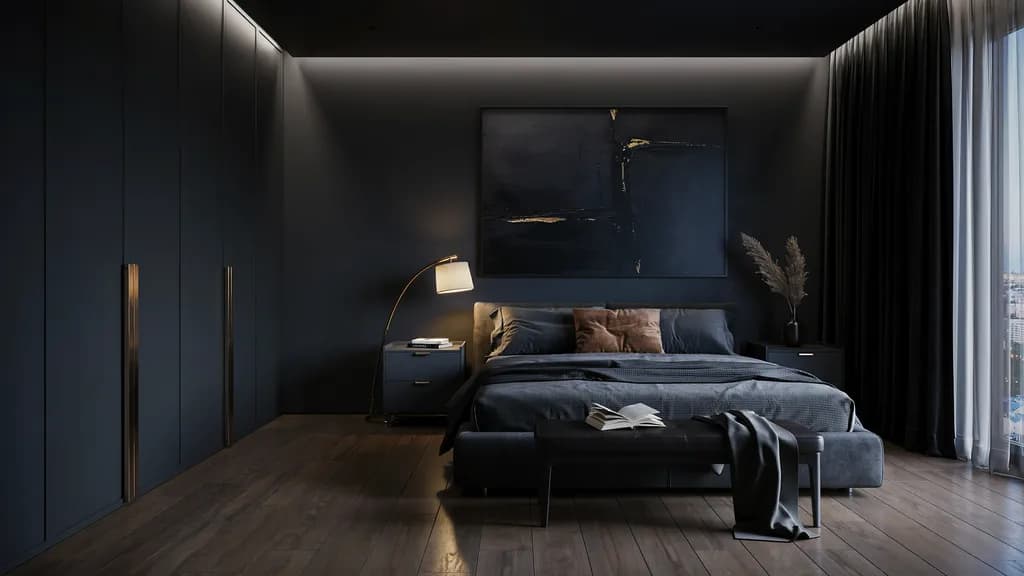
A well-planned black bedroom feels calm and grounded, not gloomy or cramped. Designers pair black walls with brass fixtures, warm wood, and soft linens. The result looks like a magazine spread and sleeps even better. If you’ve been eyeing black bedroom ideas. Black is often avoided because we worry it will make a bedroom feel smaller or absorb too much light. Used thoughtfully, however, it can create depth without sacrificing warmth or personality. These black bedroom ideas show how to use the color across walls, furniture, decor, and rooms of different sizes. Black Bedroom Wall Ideas for a Stylish Space Walls set the tone for a black bedroom. The amount of black you use, along with the room’s lighting, textures, and surrounding colors, determines whether the result feels cozy or overly dark. Some homeowners commit to four black walls. Others prefer just one accent wall or a patterned paper. Here are six ways to bring black onto your bedroom walls the right way. 1. Paint All Walls Black for a Dramatic Bedroom Painting every wall black makes the boldest statement on this list. It works best when the rest of the room balances it out. Use matte or eggshell black paint to create a sophisticated backdrop. Balance with lighter bedding, warm lighting, and textured fabrics. 2. Create a Black Accent Wall Behind the Bed A black accent wall behind the bed is the easiest way to try this trend without full commitment. A black wall creates instant contrast, especially against white, beige, or soft gray walls. It can still work in a small bedroom, since keeping the other walls lighter helps the space feel open. Use black only behind the headboard to create a focal point. Use lighter adjoining walls for stronger contrast. 3. Add Black Wall Paneling for Texture Black paneling turns a flat black wall into something with real depth. Vertical wood slats installed over black paint add texture and a natural element, softening the wall’s dark color. Molding or panel designs work the same way, adding shadow lines instead of relying on paint alone. Combine black paint with wood slats, molding, or panel designs. Use vertical details to emphasize height. Pair textured walls with simpler furniture so the room does not feel overly busy. 4. Try Black Wallpaper with Subtle Patterns Black wallpaper is a good option when a flat painted wall feels too plain. A subtle pattern adds movement without fighting the dark color. Recommend: Geometric prints Botanical patterns Textured finishes Helps prevent flatness in a dark room. Keep the pattern relatively subtle if the bedding, rugs, or furniture already contain strong prints. 5. Pair Black Walls with White Trim White trim is one of the simplest ways to keep a black bedroom from feeling heavy. White baseboards, doors, and molding draw the eye along clean lines rather than a single solid block of color. Use white or off-white baseboards and molding for contrast. Repeat the lighter trim color elsewhere through bedding or decor. Keep the contrast crisp for modern rooms or choose creamier whites for a softer look. 6. Use Black Ceiling Paint for a Cozy Effect A black ceiling pulls the whole room together. Painting the ceiling the same black as the walls creates a cocoon-like feeling that many find calming. In bedrooms with good natural light or high ceilings, this is a good addition. A low, dim room can feel closed in without enough light to balance it. Creates a cocoon-like atmosphere. Best suited for bedrooms with sufficient lighting and height. Black Bedroom Color Combination Ideas Black works best when another color controls the room’s warmth, contrast, or softness. Lighter neutrals can brighten it, while wood, green, or terracotta add warmer, more natural tones. Here are eight combinations that work well with black bedroom ideas. 7. Black and White Bedroom This is the classic pairing for a modern black bedroom. White keeps the room feeling crisp instead of heavy. Aim for roughly a 60/40 split between black and white surfaces, with white on larger areas like bedding or walls, so the room reads as sharp rather than stark. Use white bedding, rugs, or curtains against dark walls. Repeat black in smaller details to tie the palette together. Works especially well in modern, minimalist, and Scandinavian-inspired rooms. 8. Black and Beige Bedroom Pairing black with beige creates a softer, more effortless bedroom aesthetic and a cozy feel without feeling too dark. Warm beige keeps a black bedroom from feeling cold. Use beige on the largest surfaces, such as the walls or an area rug, and save black for furniture or accents so the room stays warm rather than heavy. Pair the combination with linen, wool, and woven materials. Use beige when you want contrast without a sharp black-and-white look. Add warm wood tones to make the palette feel more relaxed. 9. Black and Wood Bedroom Wood elements introduce warmth and a natural vibe, softening the boldness of black. Lighter woods like oak or ash brighten a black room more than darker walnut, so pick a wood tone based on how much natural light the space already gets. Add oak, walnut, or reclaimed wood furniture. Use visible wood grain to break up smooth black surfaces. Pair wood with black metal fixtures for a mixed-material look. 10. Black and Gold Bedroom Metallic decor pieces, like brass, gold, or silver, pop against a black wall and add a touch of luxury. Keep metallic details concentrated in a few areas so they feel intentional rather than decorative for their own sake. Use brass or gold on lighting, handles, or mirror frames. Repeat the same metal finish in two or three places. Balance reflective accents with softer fabrics and matte surfaces. 11. Black and Green Bedroom Deep green tones sit close to black on the color wheel, so the pairing feels natural rather than jarring. Olive, sage, or emerald all work well against black walls or bedding. Pair black with olive, sage, or emerald tones. Introduce green through bedding, upholstery, artwork, or plants. Add natural wood or woven materials to reinforce the organic feel. 12. Black and Gray Bedroom Layering black with different shades of gray keeps a room feeling modern without adding another color. Charcoal, soft gray, and black together read as one cohesive palette rather than clashing tones. Combine black with charcoal and soft gray. Use lighter gray on textiles to create contrast. Add texture so the monochromatic palette does not appear flat. 13. Black and Terracotta Bedroom Terracotta and other clay tones carry warmth that plain black walls lack on their own. This combination suits Mediterranean-style or earthy interiors especially well. Use terracotta through bedding, cushions, pottery, or rugs. Warm clay tones soften the intensity of black. Works well with Mediterranean and earthy interiors. 14. Black and Cream Bedroom Cream reads softer than bright white against black. It works well for anyone who wants contrast without a stark, high-fashion look. Use cream bedding, curtains, or rugs against black walls. Repeat cream across several surfaces to distribute the contrast. Works well in cozy, transitional, and traditional bedrooms. Black Bedroom Furniture Ideas Furniture is often the easiest way to bring black bedroom ideas into a room without committing to full black walls. A single black bed frame or dresser can do the work of an entire color scheme. Here are six ways to use black furniture well. 15. Add a Black Upholstered Bed An upholstered bed softens the hard edge that black furniture can have. Velvet, linen, or boucle textures add softness against the dark color. It pairs best with cream or oatmeal bedding and a woven jute or wool rug underneath. Velvet, linen, or boucle textures add softness. Creates a strong focal point. Pairs best with: cream bedding, natural rugs, and brass reading lamps. 16. Choose a Black Wooden Bed Frame A black wooden frame suits minimalist and contemporary bedrooms especially well. Its clean lines keep the piece from feeling too heavy in the room. Warm wood nightstands and a light oak floor balance the frame’s dark tone. Pair with oak or walnut side tables. Use white, beige, or muted bedding for contrast. Add a textured throw to soften the frame’s straight lines. 17. Use Black Nightstands for a Matching Look Matching black nightstands on either side of the bed create instant symmetry. Warm lamps on top keep the pair from reading as too stark. Gold or brass lamp bases and a soft table runner soften the matched black look. Creates symmetry around the bed. Add warm lamps to soften the appearance. Pairs best with: brass or gold table lamps, a light-colored table runner, and small ceramic decor pieces. 18. Add a Black Dresser or Storage Cabinet A black dresser adds real storage while keeping the room’s color story intact. Balance it with lighter decor pieces on top so it does not become the only dark element in the room. A woven basket or two, plus a light-colored vase, keeps the surface from feeling heavy. Style it with a cream, terracotta, or ceramic vase. Add rattan or woven baskets nearby. Hang a mirror above it to introduce a reflective surface. 19. Create a Black Built-In Wardrobe Wall A black built-in wardrobe wall gives the room a custom, cohesive look. Integrated interior lighting keeps it functional and stylish. Pairing the wall with a lighter ceiling and a wood- or brass-handle detail keeps the wall from closing in the room. Add warm interior wardrobe lighting. Use brass, bronze, or matte-gold handles for contrast. Keep the ceiling or surrounding walls lighter if the wardrobe occupies most of one wall. 20. Add Black Metal Furniture Accents Black metal furniture adds an edge without taking over the whole room. It works well in small doses across several pieces. Pair metal accents with warm wood or a soft textile to keep the look from feeling too industrial. Examples: Bed frames Side tables Shelving Mirrors Pair the metal with warm wood, linen, cotton, or one additional metal finish such as brass or bronze. Black Bedroom Decor Ideas Decor is what makes a black bedroom either feel flat or come to life. Texture, light, and a few well-placed accents make the biggest difference. These eight ideas cover the details worth getting right. 21. Layer Black Bedding with Different Textures Black bedding in a single flat fabric can look plain under normal light. Mixing textures adds depth without adding another color to the room. Include: Cotton sheets Quilted blankets Velvet pillows Linen throws Texture is what keeps black bedding from looking flat. A quilted blanket over smooth cotton sheets, or a velvet pillow against a linen throw, catches light differently across the bed. That variation gives the eye something to notice, even in a single color. 22. Add Warm Lighting to a Black Bedroom Layered lighting with warm bulbs prevents a black room from feeling too heavy. Lighting matters more in a black bedroom than almost any other design choice. Cover: Wall sconces Pendant lights Bedside lamps Dimmable fixtures Warm bulbs, in the 2700K to 3000K range, soften black paint and dark furniture. Cool white bulbs tend to make black surfaces look flat and a little cold. Dimmable fixtures let you adjust the mood between daytime brightness and evening warmth. 23. Use Mirrors to Reflect Light Mirrors and reflective surfaces can help bounce light around the room and offset the darkness. A large mirror does double duty in a black bedroom. Large mirrors help bounce natural and artificial light. Choose black frames for a cohesive look. 24. Add Large Artwork Against Black Walls Light-colored artwork stands out clearly against black walls and can break up a large uninterrupted dark surface. One substantial piece often creates a cleaner focal point than many small frames. Choose artwork with cream, white, muted, or metallic details. Size the piece to be proportional to the bed or dresser below it. Leave some empty wall space around the artwork. 25. Use Plants to Soften Black Interiors Wood elements and greenery introduce warmth and a natural vibe, softening the boldness of black. Plants achieve the same effect through color and life rather than texture. Use plants as small green accents against dark walls. Snake plants, pothos, and ZZ plants are well-suited to bedrooms with lower light levels. Choose simple planters so the foliage remains the main contrast. 26. Add Soft Rugs for Warmth A soft rug underfoot balances the hard visual weight of black walls or furniture. Texture matters here as much as color. Use: Cream rugs Beige textures Patterned designs 27. Style Black Curtains for a Dramatic Look Blackout curtains work best in bedrooms that need full darkness for sleep or in rooms with strong morning light. They can also make a room feel smaller on their own. Use blackout curtains when blocking morning or street light is the priority. Balance them with a lighter sheer layer or a light-colored curtain rod for contrast. Mount curtains higher to emphasize ceiling height. 28. Add Metallic Accents for Contrast Metallic finishes catch light in a way flat black paint cannot. A mix of one or two metal tones tends to look more intentional than several at once. Examples: Brass Gold Chrome Bronze Repeat the chosen metal through details such as lamp bases, handles, frames, or curtain hardware. Black Bedroom Style Ideas Black adapts to almost any design style, from stripped-down minimalism to full-on maximalism. The style you choose changes how much black you use and what you pair it with. Here are six directions to take a black bedroom. 29. Modern Black Minimalist Bedroom A minimalist black bedroom relies on simple shapes and very little clutter. The color does the visual work instead of pattern or ornament. Features: Clean lines Simple furniture Limited decoration Neutral accents 30. Luxury Black Bedroom with Velvet Details Velvet adds a soft, high-end feel that plain black paint or fabric cannot match on its own. This style leans dramatic on purpose. Use: Velvet headboard Plush bedding Statement lighting 31. Black Scandinavian Bedroom Scandinavian design usually avoids heavy color, so keep black light here. Keeping the rest of the room bright balances the one dark note. Balance black with: Light woods Neutral textiles Simple decor 32. Black Industrial Bedroom Industrial style pairs naturally with black, since both lean toward raw, unfinished materials. Metal and exposed surfaces fit right into this look. Combine it with: Black or aged metal finishes Exposed brick or concrete Dark furniture Warm wood details Adding wood or softer textiles keeps the room from feeling overly hard or utilitarian. 33. Black Bohemian Bedroom A boho black bedroom trades sleek surfaces for texture and pattern. Natural textiles and woven pieces warm up the coolness of black. Combine black with: Rattan Textiles Plants Handmade decor 34. Dark Cottage-Core Inspired Bedroom Dark Cottage-core style leans into black’s dramatic side rather than softening it. Rich fabrics and antique details give the room a sense of history. Use: Antique-style furniture Rich fabrics Ornamental details Black Bedroom Ideas for Different Space Types Not every home has the same room to work with. A black bedroom idea that works in a large main suite might not suit a small apartment or a low-light room. These ideas cover common real-world situations. 35. Small Black Bedroom Ideas A black accent wall can work in a small bedroom by anchoring the space and adding depth, as long as adjacent walls stay lighter. Full black walls can work too, but need more careful lighting. Try: Use black on one wall Add mirrors Keep furniture minimal Use layered lighting 36. Black Bedroom Ideas With Low Natural Light A room with little daylight needs extra help to keep black from feeling dim. Warm bulbs and reflective surfaces do most of the work here. Include: Warm bulbs Reflective surfaces Lighter fabrics Avoid full matte black everywhere, since matte finishes absorb more light than a satin or eggshell black would 37. Black Bedroom Ideas for Couples A shared bedroom needs a color palette and storage plan that work for two people, not one. Comfortable, neutral-leaning textures keep the space feeling calm for both partners. Include: Balanced color palettes Storage solutions Comfortable textures Neutral accents 38. Black Bedroom Ideas on a Budget You do not need a full renovation to bring black into a bedroom. Small, targeted changes get most of the visual impact for a fraction of the cost. Include: Black paint updates New bedding Decorative accents DIY furniture changes Things to Check Before Choosing Black Bedroom Walls A black bedroom can look striking, but it does not suit every space equally well. Before choosing the paint, consider your room’s size, lighting, and overall feel. How tall are your ceilings? Low ceilings can feel lower under a fully black room. If your ceilings sit under eight feet, consider stopping the black at the walls and keeping the ceiling white. Which direction do your windows face? A north-facing room gets soft, indirect light most of the day. Black can feel flat and cool in that kind of light. A south- or west-facing room gets warmer, stronger light, which balances black paint far better. How big is the room, really? Small bedrooms under 120 square feet can handle black on one or two walls without trouble. A fully black room that size often feels tighter than it is. Larger rooms have more room to absorb the color without feeling cramped. What color is your flooring? Dark hardwood or dark carpet paired with black walls can blur the line between floor and wall. Light flooring, like pale oak or a cream rug, gives the eye a clear stopping point. Does this room connect to another space? A black bedroom next to a bright, open hallway can feel like a sudden drop in energy. Adding a lighter accent near the doorway, such as a runner rug or a pale trim color, softens the transition. Final Thoughts Black is one of the boldest choices you can make in a bedroom, but it rewards a little planning. The best black bedroom ideas balance the color with light, texture, and warmth instead of using it alone. Walls, furniture, decor, and lighting all affect whether the final room feels cozy or cold. Start small if you’re unsure, with one accent wall or a few black furniture pieces, then build from there. Done well, a black bedroom can feel calm, grounded, and far more inviting than most people expect.
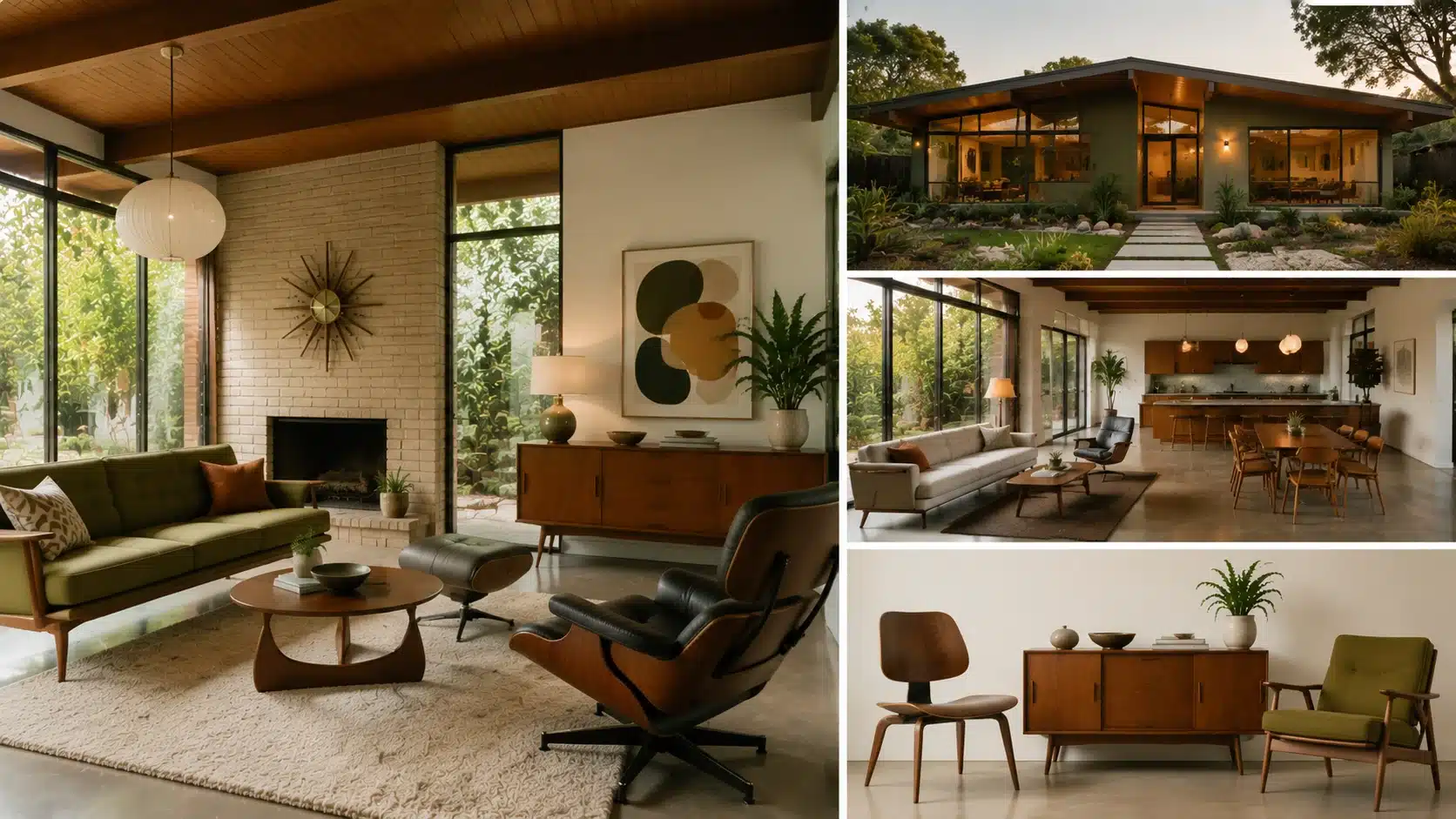
Quick Answer: Mid-century modern is a postwar design movement, roughly 1945 to 1969, built on uncluttered forms, tapered wood furniture, large windows, and open layouts. It values everyday usefulness over ornament, staying warm rather than stark. If you have walked into a room with clean lines and warm wood tones, you have likely seen mid-century modern design. The style gets mixed up with modern and contemporary decor all the time. That confusion makes it hard to know what you are actually shopping for. This blog breaks down what the style means, where it came from, and how it looks in real homes. You will find its history, its defining features, and room-by-room ideas. What Defines Mid-Century Modern Design? Mid-century modern design is defined by a balance of function, simplicity, and visual warmth. The style focuses on uncluttered spaces, practical furniture, and the thoughtful use of materials such as wood, leather, glass, and metal. Each element serves a purpose instead of adding decoration. Furniture features tapered legs, curves, and geometric shapes, while layouts focus on openness and indoor-outdoor connections. The style gained popularity after World War II as designers created practical pieces for changing lifestyles. Its timeless forms and usability keep it relevant in modern homes. The History Behind Mid-Century Modern Design Understanding its history reveals how postwar optimism, new technology, and a handful of designers built a style focused on practical, accessible living. Soldiers returned home, families expanded, and the country needed housing fast. Builders responded with smaller, simpler homes that dropped ornate details in favor of open layouts and clean construction. The Bauhaus School in Germany pushed the idea that design should serve everyday life rather than decorate it. Scandinavian minimal design added warmth through wood and handcraft. The International Style contributed glass walls and a stripped-down structure. Together, these influences gave American designers a starting point they reworked into something distinctly their own. A handful of designers defined the era and still get credit for it today, like: Charles and Ray Eames, this husband-and-wife team pioneered molded plywood and fiberglass furniture, including the Eames Lounge Chair. Eero Saarinen, known for the Tulip Table and Womb Chair, built both around a single sculptural base. Arne Jacobsen, a Danish architect and designer behind the Egg Chair and Swan Chair. Key Characteristics Of Mid-Century Modern Design The style stays easy to recognize through its balance of simplicity, warmth, and function, mixing architectural openness with carefully considered furniture and decor. Clean Lines And Simple Forms: Mid-century modern furniture and architecture rely on straight lines and simple shapes rather than heavy trim or carved details. Natural Materials And Warm Wood Tones: Teak, walnut, and oak appear throughout mid-century furniture, often left with a light finish that highlights the grain. Connection Between Indoor and Outdoor Spaces: Large windows and sliding glass doors were central to mid-century architecture, not just a decorative choice. Organic and Geometric Shapes: The style pairs sculptural, organic pieces, like curved chairs and rounded coffee tables, with more structured geometric forms. Functional Open Spaces: Open floor plans let mid-century homes feel larger than their square footage suggests. Mid-Century Modern Architecture Features Architecture from this era focused on simplicity, natural light, and a strong connection with nature. Mid-century homes used clean structures, open layouts, and materials that made spaces feel larger and more connected. Flat or low-pitched roofs replaced traditional steep designs, creating a simple geometric profile. Floor-to-ceiling windows brought in natural light and connected interiors with outdoor views. Open floor plans removed unnecessary walls between living areas, while post-and-beam construction used exposed supports to create flexible spaces without interior barriers. Indoor-outdoor living became a defining feature, with patios, courtyards, and sliding glass doors extending the home into the surrounding landscape. Famous examples include The Eames House in Los Angeles, which used prefabricated steel components to create an open design, and The Stahl House, known for its glass corners and dramatic city views. How to Create a Mid-Century Modern Home Today You can achieve this timeless look without turning your home into a museum. Combine classic pieces with modern comforts and your own personal taste. Start with One Statement Furniture Piece: Rather than replacing every item in a room, pick one anchor piece to build around. A lounge chair or a vintage credenza can set the right tone. Mix Vintage and Modern Elements: A room filled with vintage pieces can start to look like a theme rather than a home. Pair a contemporary sofa with a vintage-inspired coffee table. Choose Simple Materials: Stick to wood, glass, metal, and natural fabrics when picking new furniture or finishes. These materials echo the original style. Keep Decor Minimal: Mid-century rooms favor fewer well-made pieces over a room packed with accessories. Choose fewer items, but choose ones that serve a purpose. Mid-Century Modern Design Ideas for Different Rooms Each room can take on mid-century style in its own way. Thoughtful furniture, natural materials, and balanced color keep every space comfortable to live in. 1. Mid-Century Modern Living Room A low-profile sofa, a wooden coffee table, and a sculptural floor or table lamp form the backbone of a mid-century living room. Add one accent chair in Sherwin-Williams Cut the Mustard (SW 6384) or Benjamin Moore Hale Navy (HC-154) to break up the base. 2. Mid-Century Modern Kitchen Flat-panel cabinets in Benjamin Moore Swiss Coffee (OC-45) keep the space bright, while a kitchen island in Sherwin-Williams Renwick Olive (SW 2815) adds a period-accurate pop of color. Simple hardware, like slim brass or wood pulls, and open shelving keep the look consistent. 3. Mid-Century Modern Bedroom A platform bed with a low wooden frame anchors this look, especially against walls in Sherwin-Williams Kilim Beige (SW 6106). Add a nightstand or accent wall in Benjamin Moore Hale Navy (HC-154) for depth, then pair it with warm, layered lighting. 4. Mid-Century Modern Dining Room A mid-century dining room pairs a wooden table with sculptural pendant lighting overhead. For drama, paint an accent wall or built-in hutch in Sherwin-Williams Caviar (SW 6990), which grounds the space and lets a walnut table stand out. Pro tip: Balance a dark wall like Caviar with a lighter rug and plenty of natural light so the room does not feel closed in. 5. Mid-Century Modern Bathroom A mid-century bathroom leans on warm wood vanities, simple fixtures, and a spa-like palette. Benjamin Moore Beach Glass (1564) on the walls brings a calm, blue-green tone that pairs well with teak accents and brass hardware. Pro tip: Test Beach Glass on a poster board and move it around the room, since natural light shifts its blue and green undertones through the day. 6. Mid-Century Modern Home Office A simple wooden desk with tapered legs and an ergonomic chair with a molded shell fit the style well. Paint an accent wall in Sherwin-Williams Cavern Clay (SW 7701) behind the desk, and keep trim in Sherwin-Williams Alabaster (SW 7008) for contrast. Common Shades Used in Mid-Century Modern Interiors Color choices in this style pair earthy neutrals with bold accents, creating spaces that feel warm and balanced without ever looking overwhelming. Earthy Neutral Shades Most mid-century rooms start with a neutral base. These shades echo the natural materials used throughout the style and give bolder colors room to stand out. Shades like Benjamin Moore Walnut (CW-240), Sherwin-Williams Kilim Beige (SW 6106), and Sherwin-Williams Renwick Olive (SW 2815) work well on walls, floors, and larger furniture pieces. Bold Accent Colors Against that neutral base, mid-century interiors add pops of color through smaller pieces like chairs, pillows, and art. Shades like Sherwin-Williams Cut the Mustard (SW 6384), Sherwin-Williams Cavern Clay (SW 7701), and Sherwin-Williams Rustic Red (SW 7593) are common choices. Save bold colors for accent chairs, lamps, or artwork. This keeps the space from feeling too busy while still giving it personality. Popular Mid-Century Modern Furniture Pieces Furniture stands out as one of the clearest markers of this style, combining ergonomic shapes, solid craftsmanship, and materials built for everyday comfort. Furniture Piece Design Features Eames Lounge Chair Molded plywood shell with leather cushions Tulip Table Single pedestal base instead of four legs Wishbone Chair Curved wooden frame with a woven seat Credenzas Low, long storage pieces with clean fronts Lounge Sofas Straight lines with exposed wooden legs Exposed legs are one of the easiest ways to spot mid-century furniture. Lifting a sofa or chair off the floor made rooms feel more open, which mattered in smaller postwar homes. Low-profile designs served the same goal. A credenza that sits close to the floor takes up less visual space than a tall cabinet. Mid-Century Modern Vs Modern Vs Contemporary Design Although these styles share a clean look, their history, materials, and design approach differ enough to help individuals choose the right direction. Style Main Difference Mid-Century Modern Warm materials, vintage influence, organic shapes Modern A broader movement focused on simplicity and function without a fixed time period. Contemporary Reflects current trends, which shift as design preferences change Modern design is the umbrella term under which mid-century modern falls, tied to a specific era. Contemporary design changes with the times instead. It describes whatever is currently popular rather than a fixed set of features. Mistakes to Avoid With Mid-Century Modern Design Avoiding a few common mistakes helps keep the style authentic while creating a home that feels comfortable rather than overly staged or dated. Using Too Many Vintage Pieces: Filling a room with original mid-century furniture can make it look like a period set. Mix in newer pieces to keep the space feeling current. Choosing Poor-Quality Reproductions: Cheap reproductions often use thin veneers or weak joinery that wear out quickly. Look for solid-wood construction and quality materials. Making the Space Too Minimal: Mid-century design values simplicity, but a room stripped of all personality can feel empty rather than calm. Leave room for a few personal touches, like art or plants. Ignoring Comfort: Some mid-century pieces prioritize looks over ergonomics. Test seating before buying it, and pair statement chairs with genuinely comfortable options for everyday use. Mixing Too Many Design Styles: Combining mid-century pieces with several other unrelated styles at once can make a room feel disorganized. Choose complementary styles, like a Japandi interior design. Frequently Asked Questions What years are considered mid-century modern? The style generally spans the 1940s through the late 1960s, with its peak popularity in the 1950s and early 1960s. What makes a home mid-century modern? A mid-century modern home typically features an open floor plan, large windows, clean lines, and a strong visual connection to the outdoors through natural light and indoor-outdoor spaces. Is mid-century modern still popular? Yes. The style remains popular because of its timeless designs, functional layouts, natural materials, and ability to blend easily with modern furniture and decor. What colors are used in mid-century modern design? Common colors include warm wood tones, earthy neutrals, olive green, mustard yellow, burnt orange, and muted accent shades, creating a balanced and inviting look. What is the difference between mid-century modern and contemporary? Mid-century modern refers to a specific design movement from the mid-20th century, characterized by recognizable features. Contemporary design refers to current trends and continues to change over time. Why is Mid-Century Modern Design Still Popular? The style continues to draw homeowners because it combines a timeless look, practical layouts, durable materials, and furniture that still works in modern homes. Mid-century modern design has outlasted most decorating trends because its core ideas were never tied to a fad. Clean lines and open layouts work as well in a city apartment as they did in a 1950s suburban home. The style also lines up with a broader shift toward buying fewer, better things. A well-made walnut credenza or an original Eames chair can outlast several generations of mass-produced furniture.
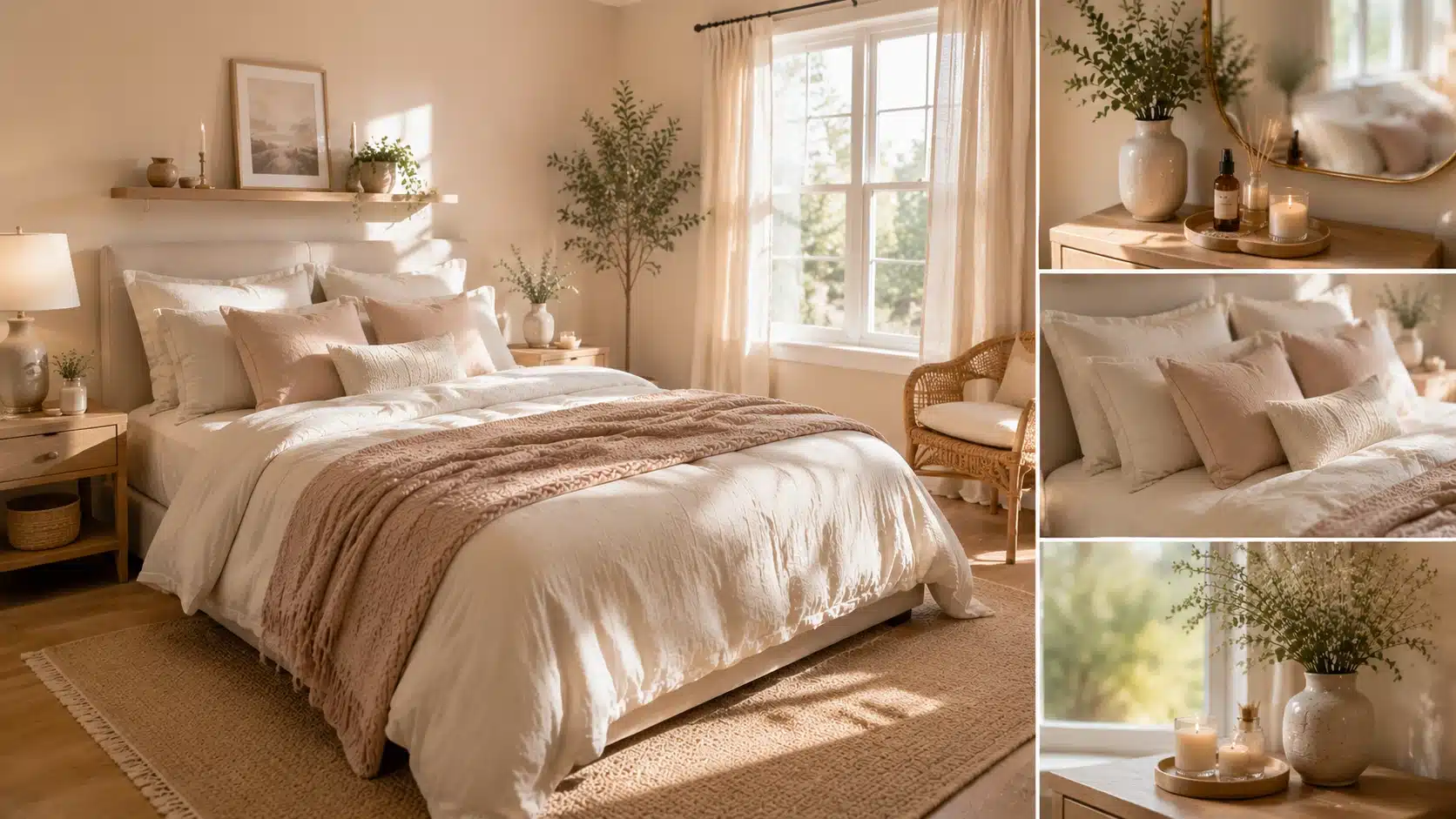
A bedroom should feel like a place where you can slow down, breathe, and reconnect with the person you share it with. Creating a romantic atmosphere doesn’t require expensive furniture or a full renovation. It comes down to a handful of simple choices: soft lighting, comfortable textures, warm colors, and small personal touches that make the room feel like yours. Whether you’re working with a spacious primary suite or a small rented apartment, these romantic, warm, and cozy bedroom ideas are for you. What Makes a Bedroom Feel Romantic, Warm, and Cozy? Before jumping into a list of ideas, it helps to understand the design principles that make a room feel this way in the first place. Most romantic bedrooms share three things: gentle lighting, soft textures, and details that feel personal rather than staged. Soft Lighting Creates a Relaxing Mood: Warm lighting between 2700K and 3000K creates a calming atmosphere. Layer bedside lamps, sconces, and candles rather than relying on harsh overhead lighting. Comfortable Textures Add Warmth: Layer soft bedding, cozy throws, rugs, and fabrics like linen, velvet, cotton, and boucle to add depth, comfort, and a welcoming feel. Personal Details Make the Room Feel Intimate: Add meaningful artwork, favorite books, or shared keepsakes to make the bedroom feel personal, lived-in, and connected to its occupants. Romantic, Warm, and Cozy Bedroom Ideas Once you understand the basics, it helps to see how those principles actually play out in a real room. Below are ideas, each with a few styling tips and a short note on why it works, so you can choose what best fits your space, style, and budget. 1. Layer Soft Neutral Bedding The bed sets the tone for the entire room, so it’s the natural place to start. Soft, neutral bedding in cream, oatmeal, or blush instantly reads as more romantic than bold patterns or stark white sheets, especially once you start layering a few pieces together. Styling Tips Stick to a tonal palette: cream, oatmeal, blush, or soft taupe Layer at least two textures, like linen under a knit throw Add four to six pillows in slightly varying shades for depth Avoid bold patterns that compete with the room’s softness Why It Works: Soft, neutral tones create a calming visual base that feels intimate rather than busy. Layering textures adds richness without adding clutter, which is the balance most romantic bedrooms are built on. 2. Add Warm Ambient Lighting Harsh overhead lighting works against a romantic mood almost every time. Swapping in warm, layered lighting from lamps, sconces, or string lights brings a soft, golden glow that makes a room feel intimate the moment you walk in. Styling Tips Choose warm white bulbs around 2700K over cool or daylight tones Add at least two light sources placed at different heights String lights along a headboard add an easy, romantic touch A dimmer switch gives you flexibility for different moods Why It Works: Warm lighting mimics candlelight and golden-hour sunlight, both of which we naturally associate with relaxation and closeness. 3. Hang Sheer Curtains Sheer curtains add movement, softness, and a slightly dreamy quality to a bedroom, especially when morning light filters through them. Styling Tips Layer sheer curtains behind heavier drapes for flexibility Choose soft white, cream, or blush sheers Hang curtains higher and wider than the window for extra drama Let the fabric pool slightly at the floor for a relaxed feel Why It Works: Sheer fabric diffuses light into a soft, glowing haze rather than harsh direct sun. That gentle movement and glow give the room a quietly romantic quality throughout the day. 4. Decorate with Candles Few things say romantic quite like candlelight. A small cluster of candles on a dresser or nightstand adds warmth and a flickering glow that no light bulb can fully replicate. Styling Tips Group candles in varying heights for visual interest Choose warm scents like vanilla, amber, or sandalwood Flameless candles work well if safety is a concern Place candles on a tray or mirror for extra glow Why It Works: Candlelight is soft, warm, and slightly unpredictable, qualities that read as far more romantic than steady artificial light. A calming scent adds another sense, deepening the overall mood. 5. Add Velvet Accents Velvet feels luxurious and romantic at the same time. A velvet cushion, bench, or headboard adds richness without redoing the whole room. Styling Tips Use velvet in small doses: cushions, a bench, or curtains Deep tones like emerald, burgundy, or navy feel especially romantic Pair velvet with softer fabrics like linen for balance Avoid overusing velvet, since it can feel heavy in large amounts Why It Works: Velvet catches and reflects light in a way that adds depth to a space. Its softness also invites touch, quietly reinforcing the cozy, intimate feeling a romantic bedroom aims for. 6. Create a Statement Headboard A bed without a headboard can feel slightly exposed, even if it’s hard to say why. A tall, upholstered headboard adds drama and an instant sense that the room was put together with intention. Styling Tips Go taller than standard for a more dramatic effect Curved or channel-tufted designs feel especially romantic Soft fabrics like velvet, boucle, or linen work beautifully Keep the wall behind it simple, so the headboard stands out Headboards: A headboard frames the bed and anchors it as the room’s clear focal point. Soft, curved shapes tend to feel more romantic than sharp, angular ones. 7. Use Soft Earthy Wall Colors Soft earthy tones like warm beige, terracotta, sage, or muted clay create a grounded, calming backdrop that feels romantic without leaning into anything too sweet or themed. They pair naturally with warm lighting and natural textures. Styling Tips Test paint samples in your room’s actual lighting before committing Consider an accent wall if a full repaint feels like too much Pair earthy tones with warm wood and soft textiles Avoid stark white trim if you want a softer overall look Why It Works: Earthy tones are rooted in nature, and we tend to associate them with warmth and safety. Unlike bright or cool colors, they create a sense of enclosure that reads as romantic rather than sterile. 8. Add Fresh Flowers Fresh flowers are one of the simplest, most classic ways to add romance to a bedroom. A single stem in a vase or a small bunch on the nightstand brings color, scent, and life into the space. Styling Tips A single stem or small bunch often feels more elegant than a large bouquet Choose soft-toned flowers like roses, peonies, or ranunculus Simple glass or ceramic vases keep the focus on the flowers Dried or faux flowers work well as a low-maintenance alternative Why It Works: Flowers introduce an organic, ever-changing element that static decor can’t replicate. They also add scent, which plays a real role in how romantic a space feels. 9. Style a Cozy Reading Corner A small seating corner, a comfortable chair, a soft throw, and maybe a side table give the bedroom a spot for quiet moments beyond the bed itself. It adds a layer of intimacy that the rest of the room doesn’t. Styling Tips Choose a genuinely comfortable chair, not just a decorative one Add a small lamp for soft, dedicated lighting Layer in a throw blanket and a cushion for extra coziness Keep the corner uncluttered so it feels inviting, not crowded Why It Works: A seating area separate from the bed adds depth to the room beyond sleeping. It also creates a natural spot for connection, whether that’s quiet reading or a shared cup of coffee. 10. Layer Rugs for Extra Warmth Layered rugs add warmth underfoot and visual depth to a room, softening hard flooring while adding texture. Layering a smaller textured rug over a larger neutral one creates a cozy, intentional look. Styling Tips Choose a large neutral base rug and a smaller accent rug on top Stick to soft, warm tones for a romantic feel Position rugs so they extend beyond the bed frame Mix textures, smooth and woven, for added depth Why It Works: Layered rugs add visual interest and warmth while grounding the furniture on top of them. Soft textures underfoot enhance the room’s overall sensory coziness. 11. Install Wall Sconces Wall sconces free up nightstand space while adding a soft glow on either side of the bed. It’s a small upgrade that instantly reads as more considered than basic table lamps. Styling Tips Plug-in sconces are an easy option if rewiring isn’t possible Choose warm metal finishes like brass or aged gold Mirror sconces on both sides of the bed for symmetry Pair with dimmable bulbs for extra flexibility Why It Works: Sconces add light at a flattering height without taking up surface space, so nightstands feel less cluttered. The soft glow also adds a sculptural element to the wall. 12. Hang Soft, Romantic Artwork Soft, muted artwork, florals, abstract shapes, or gentle landscapes add warmth and personality to bare walls without feeling overly themed. A single well-chosen piece often does more than a gallery wall of mismatched frames. Styling Tips Choose soft, muted color palettes that complement your walls Group smaller pieces in odd-numbered clusters Mix frame finishes for subtle variety Hang art at eye level when seated on the bed Why It Works: Art adds an emotional layer to a space, giving your eyes something meaningful to land on. Soft, romantic artwork reinforces the overall mood without competing with anything else in the room. 13. Add a Canopy Look A canopy, whether it’s a full frame or simple draped fabric, adds an undeniable sense of romance and drama to a bedroom. It frames the bed in a way that feels a little like a private world of its own. Styling Tips A curtain rod with draped sheer fabric works as a budget canopy Choose soft, lightweight fabrics that move easily Add fairy lights along the canopy frame for extra warmth Keep the rest of the room simple so the canopy stands out Why It Works: A canopy adds height and softness, drawing the eye upward and creating a sense of enclosure around the bed. That feeling of a room within a room is inherently intimate. 14. Use Natural Wood Furniture Natural wood furniture adds warmth and an organic, grounded feel to a bedroom, pairing beautifully with soft textiles and warm lighting. It also tends to age gracefully, gaining character rather than losing it. Styling Tips Mix wood tones intentionally rather than matching everything Look for secondhand or vintage pieces to save money Pair with brass or matte black hardware for an elevated look Keep surfaces relatively clear to let the wood grain show Why It Works: Wood introduces an organic, slightly imperfect element that contrasts nicely with smooth, manufactured surfaces. It reads as warm both visually and physically. 15. Add a Faux Fur Throw A faux fur throw draped over the bed or a chair adds an instant layer of softness and a small sense of indulgence. It’s the kind of detail that practically invites you to touch it. Styling Tips Drape loosely rather than folding it too neatly Choose cream, blush, or gray tones for a romantic feel Pair with other textures like linen or velvet for contrast Use on a chair or bench if bed space is limited Why It Works: Texture plays a big role in how luxurious a space feels, and faux fur is about as tactile as it gets. Its softness invites touch, reinforcing the room’s cozy, sensory feel. 16. Choose Blush and Cream Tones Blush and cream are about as classic as romantic color palettes get, and for good reason. These soft, warm tones feel gentle and intimate without tipping into anything overly themed. Styling Tips Use blush in smaller doses: pillows, throws, or art Pair with cream and warm white for balance Add brass or gold accents to elevate the palette Avoid using blush as the dominant wall color if you want subtlety Why It Works: Blush and cream sit close together on the color wheel, creating a soft, cohesive look without much contrast. That tonal closeness reads as gentle rather than bold or attention-grabbing. 17. Add Floating Shelves With Personal Touches Floating shelves are a great way to display small, meaningful items, such as a candle, a framed photo, or a small plant, without taking up floor space. They add personality to walls that might otherwise stay empty. Styling Tips Limit each shelf to three or four items for a curated look Mix heights and textures: a candle, a small frame, a plant Choose shelves in wood or matte black for versatility Leave some negative space rather than filling every inch Why It Works: Floating shelves add vertical interest and a personal touch without crowding the floor. Styled thoughtfully, they create small vignettes that feel intentional rather than generic. 18. Switch to Linen Bedding Linen bedding has an effortlessly relaxed, slightly rumpled look that feels romantic in a natural, lived-in way. It’s the opposite of stiff, overly formal bedding, and that’s part of the charm. Styling Tips Choose linen in soft neutral or muted tones Embrace the natural wrinkles rather than fighting them Pair with a few structured pillows for balance Wash linen regularly to keep it soft and fresh Why It Works: Linen’s natural texture and slight imperfections give a room a relaxed, lived-in feel that reads as more authentic than overly stiff bedding. 19. Add Warm Metal Accents A few gold or brass accents- picture frames, candle holders, a mirror frame- add warmth and a touch of glamour without overwhelming the space. They pair beautifully with soft, neutral palettes. Styling Tips Stick to one metal tone, gold or brass, for cohesion Use warm metal accents sparingly; a few well-placed pieces are enough Pair with soft neutrals or blush tones for balance Mirrors and candle holders are an easy starting point Why It Works: Warm metals reflect light beautifully, adding a subtle sparkle that feels elegant rather than flashy. In small doses, they elevate a room without shifting the mood away from cozy. 20. Keep the Room Clutter-Free This last idea isn’t about adding anything; it’s about editing. A clutter-free bedroom feels calmer, more intentional, and ultimately more romantic, since clutter pulls focus away from the details. Styling Tips Clear the surfaces of everyday clutter before bed each night Use baskets or drawers to hide functional items Limit decor to a few meaningful pieces per surface Do a quick reset of the room each morning Why It Works: Clutter keeps the brain subtly on edge, even if you’re not consciously aware of it. A clear, calm space lets the cozy details you’ve added actually stand out. 21. Use a Vintage or Antique Mirror An antique-style or curved mirror softens the hard lines of a bedroom while adding a gentle decorative note, even before it reflects any light. Styling Tips Look for curved or ornate frames over plain modern edges Place a mirror opposite a window to brighten the room Pair with a small tray or candle for extra glow Choose a size proportional to the wall it’s hung on Why It Works: A mirror with character adds a sense of history that a plain modern one can’t. Placed well, it also bounces light around the room, making it feel brighter and more open. 22. Add Scent with Diffusers and Sprays The smell of a bedroom shapes its mood more than most people realize. Soft floral scents or soothing woody notes, such as sandalwood, are always a safe, romantic choice. Styling Tips Use an essential oil diffuser for a subtle, consistent scent Choose calming notes like lavender, vanilla, or sandalwood A light mist of linen spray on the sheets adds a fresh touch Always keep candles attended if using them for scent Why It Works: Scent is one of the most overlooked design tools, yet it shapes how inviting a room feels the moment you walk in, layering in a sense that visuals alone can’t reach. 23. Choose Dimmable Lighting Fixed, bright lighting rarely feels romantic, no matter what else is in the room. A dimmer switch lets the space shift from bright and functional in the morning to soft and relaxed at night. Styling Tips Add dimmers to both overhead and lamp lighting where possible Pair with warm bulbs for the softest possible glow Keep at least one light source low and warm for evenings Test brightness levels at night before finalizing your setup Why It Works: The ability to adjust brightness gives you control over the room’s mood throughout the day, rather than being stuck with one fixed setting that may not fit the moment. 24. Layer in Natural Fiber Textures A jute or wool rug, a woven basket, or a natural-fiber lampshade adds an earthy softness that grounds the room. These textures pair naturally with wood furniture and warm color palettes. Styling Tips Choose a jute or wool rug for warmth underfoot Add a woven basket for blankets or extra storage Mix in a rattan or wicker accent piece for texture Keep the rest of the palette neutral, so textures stand out Why It Works: Natural fibers add visual and physical texture that manufactured finishes rarely match, giving the room an organic, grounded feel that supports the overall coziness. 25. Bring in Rattan and Woven Accents A rattan headboard, chair, or mirror frame adds a relaxed, natural quality that feels collected rather than store-bought. It’s an easy way to soften a room that leans a bit too modern or stark. Styling Tips Start with one rattan piece, like a chair or mirror Pair with soft textiles to balance the texture Avoid overusing rattan, since it can start to feel busy Mix with wood tones for a cohesive, natural look Why It Works: Woven, natural materials add texture and warmth without visual weight, keeping a romantic room feeling light rather than heavy. 26. Mix Patterns Through Throw Pillows A few well-chosen throw pillows in mixed patterns and textures add depth and personality to the bed without requiring a full bedding overhaul. Styling Tips Stick to a shared color family across all patterns Mix scales: one large print, one small print, one solid Use an odd number of pillows for a more natural look Swap seasonally to refresh the room without much cost Why It Works: Layered patterns catch the eye without overwhelming it, as long as the color palette stays consistent. It’s an easy, low-cost way to add richness to the bed. 27. Keep the Style Personal, Not Perfect The most romantic bedrooms rarely look like they came straight out of a showroom. A few personal, slightly imperfect touches, a favorite photo, a well-loved book, a plant that’s a little overgrown. Styling Tips Choose a few meaningful objects over a lot of generic decor Let one or two items show some wear or history Avoid matching every single element too perfectly Update small details seasonally to keep the room feeling lived-in Why It Works: A slightly imperfect, personal room feels warmer and more romantic than one that looks staged, since it reflects the people who actually live there rather than a catalog page. Tips to Make a Bedroom More Romantic A romantic bedroom doesn’t need to come with a large price tag. Small, budget-friendly swaps can shift the entire feel of the room, and the best updates often depend on how much space you’re actually working with. A larger bedroom has more room for layered pieces, while a smaller bedroom usually gets the most impact from one or two well-chosen changes. The table below breaks down simple, affordable options for each. Tips For Larger Bedrooms Update Budget-Friendly Option Lighting Add a floor lamp plus warm bedside lamps Bedding Layer a duvet, throw, and extra pillows Walls Framed artwork above the headboard Decor Fresh headboard and a small reading corner Furniture Rearrange pieces to create two zones Tips For Smaller Bedrooms Update Budget-Friendly Option Lighting Warm bulbs and one wall-mounted sconce Bedding Add a textured throw or extra pillows Walls Removable wallpaper or a single mirror Decor A candle and a small vase of flowers Furniture Rearrange the pieces you already own None of these updates require a big investment, and even one or two changes from the tables above can make a noticeable difference in how warm and romantic the room feels. Pro tip: Start with lighting and bedding first. They have the biggest visual impact for the least money. What to Avoid While Designing a Romantic Bedroom Even a well-decorated bedroom can lose its warmth if a few common mistakes creep in. Using only cool white lighting gives the room a harsh, clinical appearance that works against a romantic mood. Adding too many decorative items makes the space feel crowded rather than calm, which pulls attention away from the room’s overall warmth. Choosing style over comfort can leave a bedroom looking good in photos but feeling so stiff that it’s hard to relax. A romantic bedroom should prioritize rest. Ignoring bedding quality is an easy mistake to make, since the bed is the main visual and functional element in the entire room. Worn or mismatched bedding undercuts every other design choice. Frequently Asked Questions What colors make a bedroom feel romantic? Warm neutrals, muted pinks, deep reds, and earthy shades create a softer, more intimate bedroom atmosphere than cool or stark tones. How can I make my bedroom cozy without new furniture? Use lighting, layered bedding, curtains, a rug, and small decor changes to add warmth without replacing any major furniture pieces. What lighting is best for a romantic bedroom? Warm bulbs between 2700K and 3000K give off a soft glow that feels comfortable and relaxing rather than harsh or clinical. How can I make a small bedroom feel romantic? Use soft textures, warm lighting, a well-placed mirror, and simple decor choices to add coziness without crowding the room. Future Trends for a Romantic Bedroom A romantic bedroom isn’t defined by how much you spend. It comes down to a feeling, built from warm light, soft textures, and a few personal touches that make the space feel like your own. Looking ahead, expect romantic bedroom design to lean further into warm, low-glare lighting, natural materials, and softer, more textural fabrics as people continue favoring calm, restorative spaces over trend-driven looks. Start small if you need to. Swap the bulbs, add a throw, or bring in one piece of art, and let the rest follow.
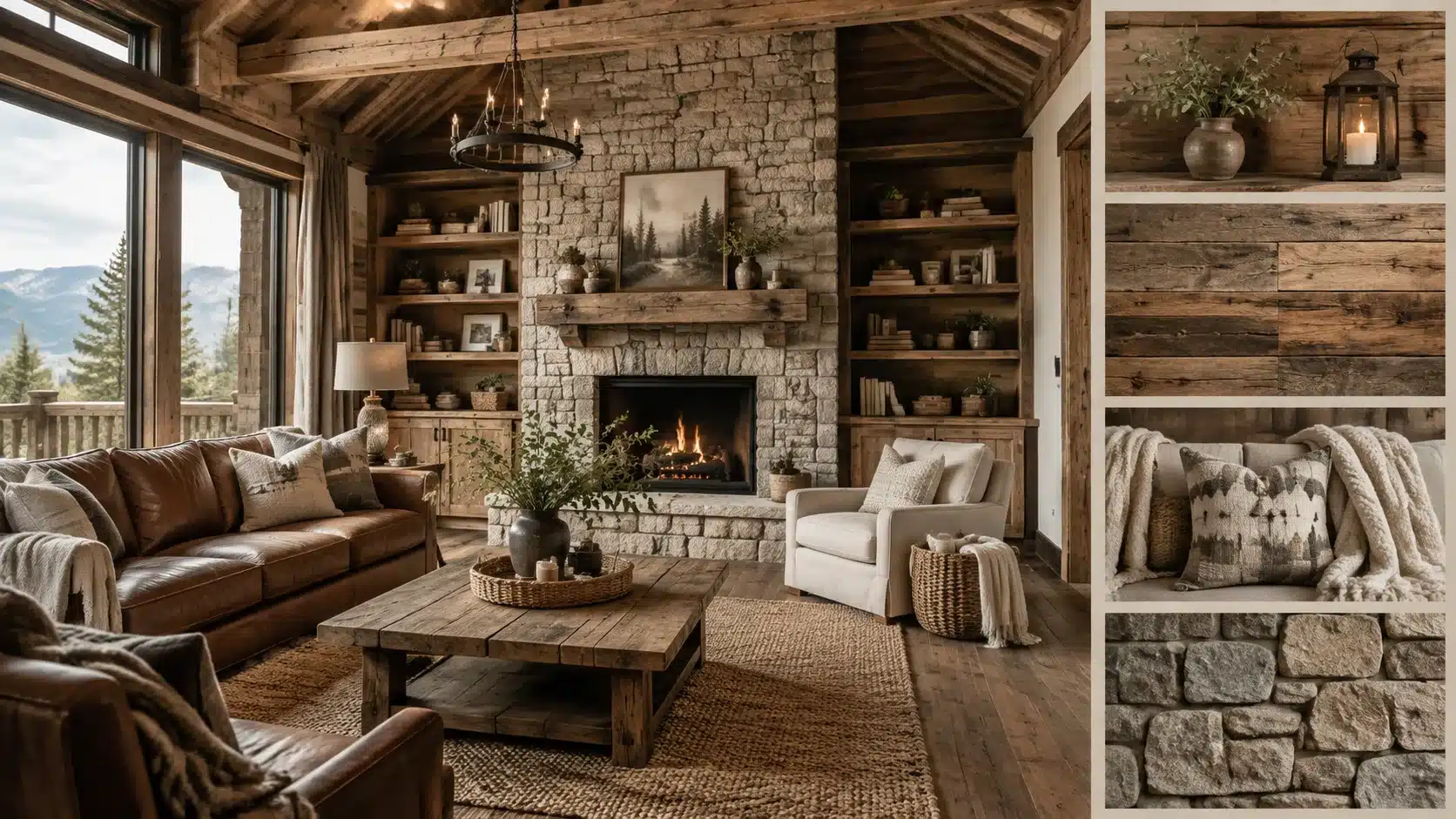
Some homes create an instant sense of comfort the moment you step inside. They feel warm, relaxed, and connected to nature. That is the charm of rustic interior design. While once associated mainly with cabins and rural homes, this style now works beautifully in apartments, modern houses, and urban spaces. Rustic interiors combine natural wood, stone finishes, cozy fabrics, and thoughtful details to create a balanced look. This blog explains the essential elements, color choices, and furniture styles that define rustic design. It also includes room-by-room ideas and tips for blending rustic features with other interior styles. What is Rustic Interior Design? Rustic interior design blends natural materials, earthy tones, and cozy textures to create a warm, welcoming home. Inspired by nature, it brings the outdoors inside through materials like reclaimed wood, stone, leather, and metal. Unlike polished modern styles, rustic design has raw finishes, imperfections, and handcrafted details. Exposed beams, vintage furniture, handmade ceramics, and textured fabrics add character and make each space feel unique. Comfort is a defining part of the style, with cozy blankets, linen fabrics, woven accents, and layered textures creating a relaxed atmosphere. Rustic interiors focus less on perfection and more on creating a practical, personal, and welcoming space that feels connected to nature. Core Elements of Rustic Interior Design Rustic interiors balance natural beauty with everyday comfort. These key elements help shape a space that feels warm, personal, and connected to nature. 1. Natural Materials: Rustic interiors use materials like reclaimed wood, stone, leather, and woven fabrics to bring texture and a natural feel indoors. 2. Earthy Colors: Warm browns, beige, cream, terracotta, and muted greens create a calm, nature-inspired atmosphere. 3. Rustic Furniture: Wooden furniture with visible grain, handcrafted details, and distressed finishes adds character and timeless appeal. 4. Warm Lighting: Soft lighting, wooden fixtures, lanterns, and fireplaces create a cozy and welcoming rustic mood. Rustic Interior Design For Every Room Rustic style can be adapted to different areas of the home by combining natural materials, warm colors, and comfortable textures. Each room can highlight rustic elements while keeping the space functional and inviting. 1. Rustic Living Room with Wood Features A rustic living room brings together natural materials like reclaimed wood, exposed beams, stone fireplaces, and comfortable furniture to create a warm gathering space. Wooden textures add character, while stone elements provide contrast and a grounded feel. Layer the room with linen fabrics, woven rugs, leather seating, and warm lighting to balance the heavier materials. Keeping the décor simple allows the natural textures to become the main feature of the space. 2. Rustic Kitchen with Farmhouse-Inspired Idea A rustic kitchen combines practical design with natural materials. Wooden cabinets, stone countertops, open shelving, farmhouse-style sinks, and rustic kitchen islands create a functional, welcoming space. Use simple ceramics, glass containers, and handcrafted details to add personality without making the kitchen feel cluttered. The focus should remain on durable materials and a comfortable layout. 3. Rustic Bedroom with Layered Natural Textures A rustic bedroom creates a comfortable retreat through natural materials and soft textures. Wooden bed frames, linen bedding, wool blankets, woven rugs, and warm lighting work together to create a relaxed atmosphere. Neutral colors help highlight the beauty of wood and fabric textures while keeping the room calm. Simple furniture and minimal décor allow each material to stand out. 4. Rustic Bathroom With Stone Materials Rustic bathrooms use natural finishes to create a warm and grounded look. Stone walls or countertops, wooden vanities, matte fixtures, and earthy colors add texture without making the space feel outdated. Soft lighting and simple textiles help balance the roughness of stone and wood, creating a bathroom that feels comfortable and connected to nature. 5. Rustic Dining Room With a Statement Wooden Table A solid wood dining table often becomes the centerpiece of a rustic dining room. Its natural grain and imperfect details add character while creating a welcoming place for everyday meals and gatherings. Pair the table with simple chairs, pendant lighting, and subtle natural décor to keep the look balanced. The goal is a space that feels comfortable rather than overly decorated. 6. Rustic Entryway With Functional Storage A rustic entryway combines style with everyday function. Wooden benches, wall hooks, woven baskets, vintage mirrors, and natural rugs help organize daily items while adding warmth to the entrance. Practical storage pieces with natural finishes create a welcoming first impression without taking up unnecessary space. 7. Rustic Home Office with Warm Elements A rustic home office combines a productive workspace with natural warmth. Wooden desks, leather chairs, open shelves, and soft lighting create a comfortable, less formal environment. Adding plants and simple accessories can soften the space while keeping the focus on functionality and organization. 8. Rustic Beverage Station with Earthy Touch A rustic beverage station adds a practical entertaining area while maintaining the style’s warmth. Wooden counters, open shelves, glassware, and natural finishes create a dedicated corner without taking up much space. Warm lighting and simple accessories help the area blend naturally with the rest of the home. Traditional Rustic vs Modern Rustic Design Modern rustic design retains the warmth of traditional rustic style while giving it a cleaner, lighter appearance. Instead of filling a room with heavy wood finishes, it uses natural materials more sparingly. The color palette often includes soft neutrals, warm whites, and earthy shades that create an open feel. Furniture tends to have simpler shapes, with pieces like linen sofas or streamlined chairs replacing oversized designs. The style combines aged materials with modern forms. Rustic details provide texture, while contemporary elements keep the room fresh and practical. Traditional Rustic Modern Rustic Dark wood throughout Balanced wood accents Large, heavy furniture Custom furnitures Decorative approach Simple and purposeful details Modern rustic design creates a comfortable space that feels natural without looking outdated. Blending Rustic Style with Modern Aesthetics Rustic design works well with many interior styles because natural materials create a flexible foundation. Wood, stone, leather, and woven textures can take on a different character depending on the elements paired with them. Here are some popular combinations and how they work. 1. Rustic Modern Design A wooden dining table paired with clean-lined chairs creates a balanced look, where the wood adds warmth and the chairs keep the space refined. Soft neutrals such as warm white, beige, and gray help connect both styles. Concrete surfaces, linen fabrics, and minimal accessories support the look without taking attention away from the natural materials. 2. Rustic Farmhouse Design Rustic and farmhouse styles share many similarities, including wood finishes, neutral colors, and a focus on comfort. The main difference is that farmhouse design draws more inspiration from practical rural living, while rustic style has a broader connection to nature, with open shelving, apron sinks, and shiplap walls. 3. Rustic Industrial Design Rustic industrial style creates contrast by combining warm materials with stronger structural elements. Reclaimed wood works well with metal, exposed brick, concrete, and iron details. The balance between materials is important. Warm wood tones help soften the harder look of industrial features, while metal accents add structure and depth. 4. Rustic Scandinavian Design A Scandinavian design blends natural materials with simple, functional styling. Both styles value wood, wool, and comfortable textures, but Scandinavian interiors usually use lighter colors and cleaner forms. Birch and ash woods often replace darker timber, creating a brighter appearance. Simple furniture, soft fabrics, and subtle decor keep the space calm. Mistakes That Can Ruin a Rustic Interior Design Style Rustic interiors depend on balance. Too many heavy materials, decorations, or dark tones can make the space feel crowded instead of comfortable. Using too much wood: Too much wood can make a room feel dark and heavy. Balance it with lighter colors and fabrics. Adding too many vintage pieces: Too many old pieces can create clutter. Use a few statement items for character. Choosing harsh lighting: Cool lighting can make rustic spaces feel cold. Use warm lights for a cozy feel. Creating a flat color scheme: Only using dark tones can make the room feel dull. Add lighter shades for balance. Filling every surface with décor: Too much décor can make the space feel crowded. Keep only meaningful pieces. Ignoring furniture size: The wrong-sized furniture can affect comfort and flow. Choose pieces that fit the room. How to Add Rustic Style on a Budget? Rustic interiors do not always require major renovations or expensive materials. You can achieve a rustic style without expensive renovations. Small upgrades, secondhand finds, and simple DIY projects can add natural textures, warmth, and character while keeping costs low. Rustic Update How it adds rustic style Average cost Reclaimed wood accents Adds natural texture through shelves, wall panels, or small décor pieces $20–$150 Thrifted furniture Brings aged character and a lived-in feel to the space $50–$300 Furniture refinishing Creates a rustic finish by highlighting natural wood grain $30–$100 Natural fabric décor Adds warmth with linen curtains, woven rugs, and cozy throws $25–$200 Vintage accessories Adds personality through baskets, pottery, and antique-style pieces $10–$100 Warm lighting upgrades Creates a cozy atmosphere with softer, rustic-inspired lighting $20–$150 Start with a few meaningful changes instead of replacing everything. Rustic interiors feel best when they combine natural materials, comfort, and personal touches. Frequently Asked Questions Is modern rustic still in style? Yes, modern rustic remains popular because it combines natural materials, cozy textures, and clean designs for a comfortable yet contemporary look. How do I make my house look more rustic? Use reclaimed wood, stone, textured metals, earthy colors, vintage accents, and warm lighting to bring a rustic feel into your home. What colors make a rustic look? Rustic interiors often use cream, beige, brown, gray, muted greens, and other earthy tones to create a warm and relaxed atmosphere. What stain works best for a rustic look? Dark walnut, classic gray, and aged barrel stains create a weathered wood appearance that adds rustic character to furniture and surfaces. Can rustic design work in a small home? Yes, rustic design works well in small spaces by using simple furniture, natural textures, and warm colors. What stain works best for a rustic look? Dark walnut, weathered gray, and aged oak stains create a rustic finish with a natural, reclaimed wood appearance. Bringing Nature’s Warmth into Your Home Rustic interior design is more than a decorating style, it is a way of creating spaces that feel warm, personal, and connected to nature. By combining natural materials, earthy colors, handcrafted details, and comfortable textures, rustic interiors create a relaxed, timeless atmosphere. Whether you add a few rustic touches or embrace the style throughout your home, the focus remains on simplicity, comfort, and authenticity. The beauty of rustic design comes from celebrating imperfections and creating a space that feels lived-in, welcoming, and uniquely yours.
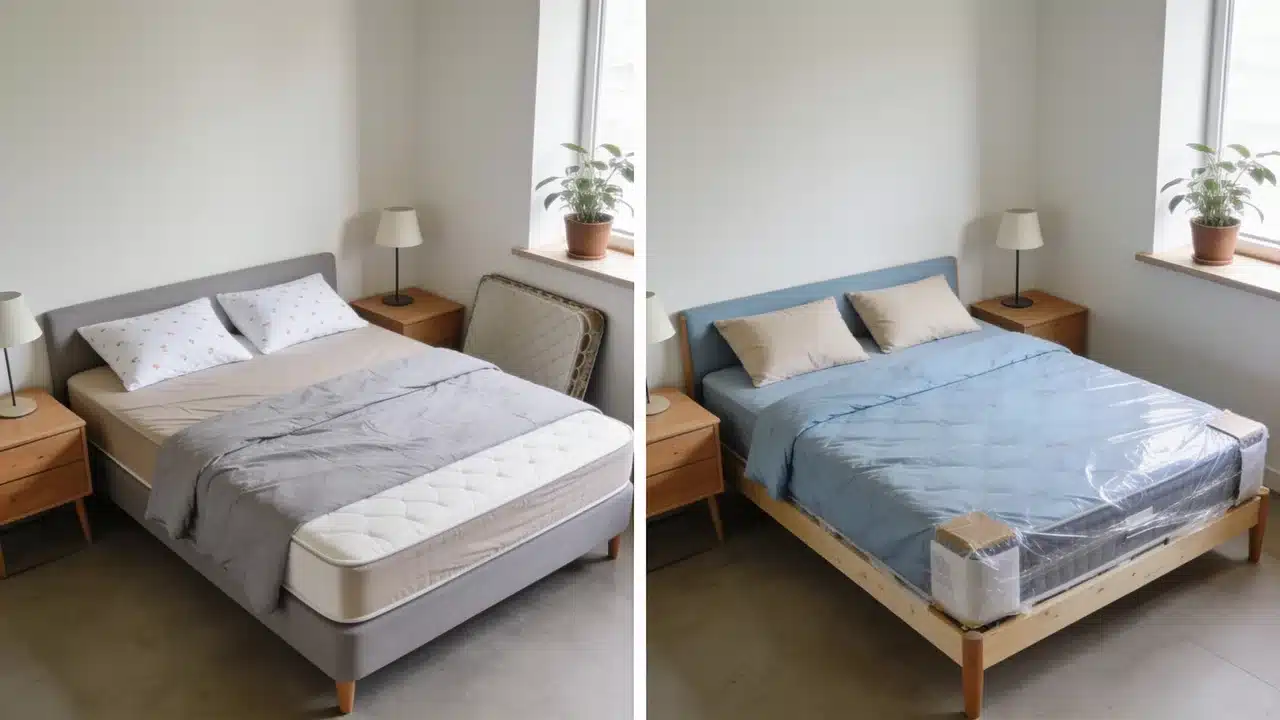
Summary: Most mattresses last between 7 and 10 years. Latex models can often last 10–15 years, while innerspring mattresses usually wear out sooner. Replace your mattress when it no longer provides proper support, comfort, or quality sleep. How long it actually lasts depends on the materials, usage, and maintenance. A mattress gets replaced only after the problem becomes impossible to ignore. A sore back that has been building for months, sleep quality that has quietly dropped, a mattress that looks fine but no longer feels that way. The challenge is that mattresses rarely fail suddenly. They degrade gradually, and because the change is slow, it’s easy to adjust to it without realizing the mattress is the cause. Those ranges in the summary are a starting point, not a fixed deadline. A mattress that is seven years old and still performing well does not need to be replaced. One that is five years old and already sagging does. This blog covers everything that determines a mattress’s lifespan and when to replace it. How Long Does a Mattress Typically Last? Different mattress types age at different rates, depending on how their materials respond to regular use. The table below shows the average lifespans of common mattress types and how long each typically provides proper support. Mattress Type Average Lifespan Durability Latex Mattress 10–15 years Long-lasting and resistant to sagging Hybrid Mattress 7–10 years Good durability from foam and coils Memory Foam Mattress 7–10 years Depends on the foam density Innerspring Mattress 5–8 years Coils and padding wear faster Pillow Top Mattress 5–7 years Comfort layers compress sooner 6 Signs You Need to Replace Your Mattress These signs indicate that a mattress can no longer support proper sleep. Checking for them helps catch the problem before it affects your health or daily routine. 1. Visible Sagging Deep dips or visible body impressions show that the mattress has lost its original support structure. Sagging of one inch or more is a clear sign that replacement is due. Look along the side of the mattress. Uneven areas you do not feel while lying down are often visible from that angle. 2. Morning Aches and Stiffness Persistent back, neck, or hip discomfort upon waking suggests that the mattress no longer adequately supports your body. Stiffness that clears up within the first hour of waking is a common sign. If you sleep better in a hotel or on another bed, your mattress is likely the cause. 3. Poor Sleep Quality Increased tossing and turning or trouble staying comfortable at night can mean the mattress is breaking down. Sleep problems that appear only in bed often point to the mattress first. If your sleep has declined without any other changes in your routine, the mattress deserves a closer look. 4. Uneven or Lumpy Surface A surface that feels uneven or shows visible spring bumps indicates that internal materials have broken down. Sleeping on an uneven surface affects spinal alignment and disrupts sleep quality. You may not notice the unevenness at first. Over time, your body registers it through increased discomfort and restless nights. 5. More Allergies or Odors An older mattress accumulates dust mites and allergens, which worsen allergy symptoms over time. A persistent musty odor usually means moisture has reached the inner layers. If your symptoms improve when sleeping elsewhere, the mattress is likely the cause. A protector alone will not fix the underlying buildup. 6. Increased Motion Disturbance Feeling a partner’s movements more strongly than before can mean the mattress is losing its ability to absorb motion. Springs or foam that no longer isolate movement signals internal wear. Small shifts in the night should not wake you. If they do, the mattress has likely broken down inside. How Often Should You Replace Your Mattress? Replacing a mattress depends more on how it feels than on a fixed schedule. The table below outlines what to check at each stage of a mattress’s age. Mattress Age What to Consider Under 5 years Usually within a normal lifespan 5–7 years Check comfort and support 7–10 years Common replacement period 10+ years Evaluate the condition carefully This comes down to how the mattress performs and feels, not a fixed number of years. That’s really the honest answer to how often you should replace your mattress. What Affects How Long a Mattress Lasts? Three things shape this: materials, usage frequency, and the conditions in which the mattress is kept. 1. Material Quality and Construction The materials inside a mattress shape how long it holds its shape. High-density foam compresses less under body weight and typically lasts longer than low-density options. Latex resists breakdown better than most foam types. Coil design and layer construction also affect how long the support holds up. 2. Usage Frequency A mattress used every night ages noticeably faster than one kept in a guest room. Daily use means more compression cycles and less recovery time between uses. Guest room mattresses often last years longer because they carry body weight far less often. 3. Body Weight and Sleeping Style Greater body weight increases the total pressure on the foam and coils, causing the materials to break down faster. Sleeping positions also affect wear patterns. Side sleepers place concentrated pressure on the hips and shoulders. Stomach sleepers tend to put more strain on the center of the mattress. 4. Mattress Foundation and Support System A mattress typically lasts longer when placed on a compatible foundation. Box springs, slatted bases with gaps of less than 3 inches, and platform beds all affect how weight is distributed. An unsupported or broken frame leads to faster sagging and uneven wear. 5. Sleep Environment The bedroom environment affects how long materials stay in good condition. High humidity causes moisture buildup inside the mattress, which accelerates foam breakdown. Poor ventilation and temperature swings put extra strain on materials. Using a breathable cover and keeping the room dry extends the mattress’s life. Can You Make a Mattress Last Longer? None of the upkeep below takes much time, and it adds up over the years. Use a waterproof mattress protector to stop spills and moisture from reaching inner layers. Rotate the mattress every three to six months if the manufacturer recommends it. This spreads compression across different areas of the foam or coils. Vacuum the surface occasionally and avoid sitting on the same edge every day. Use a compatible foundation and check that it still supports the mattress evenly. A mattress topper can delay surface wear, but it cannot repair underlying structural issues. If sagging is already noticeable, a topper only temporarily covers the problem rather than addressing the cause. What Your Mattress Warranty Covers A mattress warranty covers manufacturing defects, not loss of comfort. The table below compares warranty reality with actual replacement timing across common situations. Situation Replacement Consideration Warranty Reality Daily-use mattress Usually 7–10 years Warranty covers defects, not normal aging Couple’s mattress May wear faster Comfort loss is usually not covered Guest mattress Often lasts longer A longer warranty does not guarantee lifespan Premium latex mattress Can last 10–15 years Warranty reflects coverage, not perfect performance Older mattress (10+ years) Inspect support and comfort Replacement depends on the condition Mattress Topper vs Full Replacement A topper improves the surface feel but cannot fix underlying structural problems. Use a topper if: The mattress has a solid structure but feels too firm or too soft There is no visible sagging, body impressions, or uneven areas The mattress is under 7–8 years old with no signs of structural damage You want to protect the sleep surface and add time before a full replacement Replace the mattress if: Visible sagging or deep body impressions are present Springs feel broken, or the surface is noticeably uneven You wake with pain regularly that eases within an hour of getting up The mattress is over 10 years old Poor sleep quality persists night after night despite no other changes In my experience, a topper usually buys a few months before the underlying problem resurfaces. If the mattress has already given out, replacement is the right call. The clearest test is to press down firmly across the sleep surface. If the mattress springs back evenly, a topper may be enough. If certain areas stay compressed, the structure has already given out. Happy Reading A mattress does not announce when it’s done, it just quietly stops supporting you. So how long does a mattress last? Usually 7 to 10 years, though the actual timing depends on the type, usage, and how it feels. Sag, poor sleep, and persistent stiffness are clearer signals than the calendar. A good foundation, regular rotation, and a protector add real years. As for how often you should replace your mattress, as soon as it stops giving you good sleep. If yours already shows two or more signs above, start comparing mattresses today. Frequently Asked Questions How Long Should a $2000 Mattress Last? A $ 2,000 mattress can typically last 8–12 years when made with quality materials and properly maintained. Lifespan still depends on construction, usage, and care. Can a Mattress Last for 20 Years? Most mattresses do not maintain proper support for 20 years. High-quality latex models may last longer than average, but replacement depends on condition and comfort. How Often Should You Replace a Mattress? Most mattresses should be replaced every 7–10 years, but signs like sagging, discomfort, and poor sleep quality matter more than age alone. How to Tell if a Mattress is Worn Out? Common signs include visible sagging, uneven surfaces, increased motion transfer, waking with stiffness, and a noticeable decline in sleep comfort. Based on the confirmed snippet text from the article, here is the full modified FAQ answer with the link embedded: Do Toddler Beds Use the Same Mattress Size as a Crib? Often yes. Many toddler beds are designed to use a standard crib mattress, with the same 28 x 52-inch dimensions. Check the toddler bed’s instructions before assuming the transition will work, as some designs differ slightly.
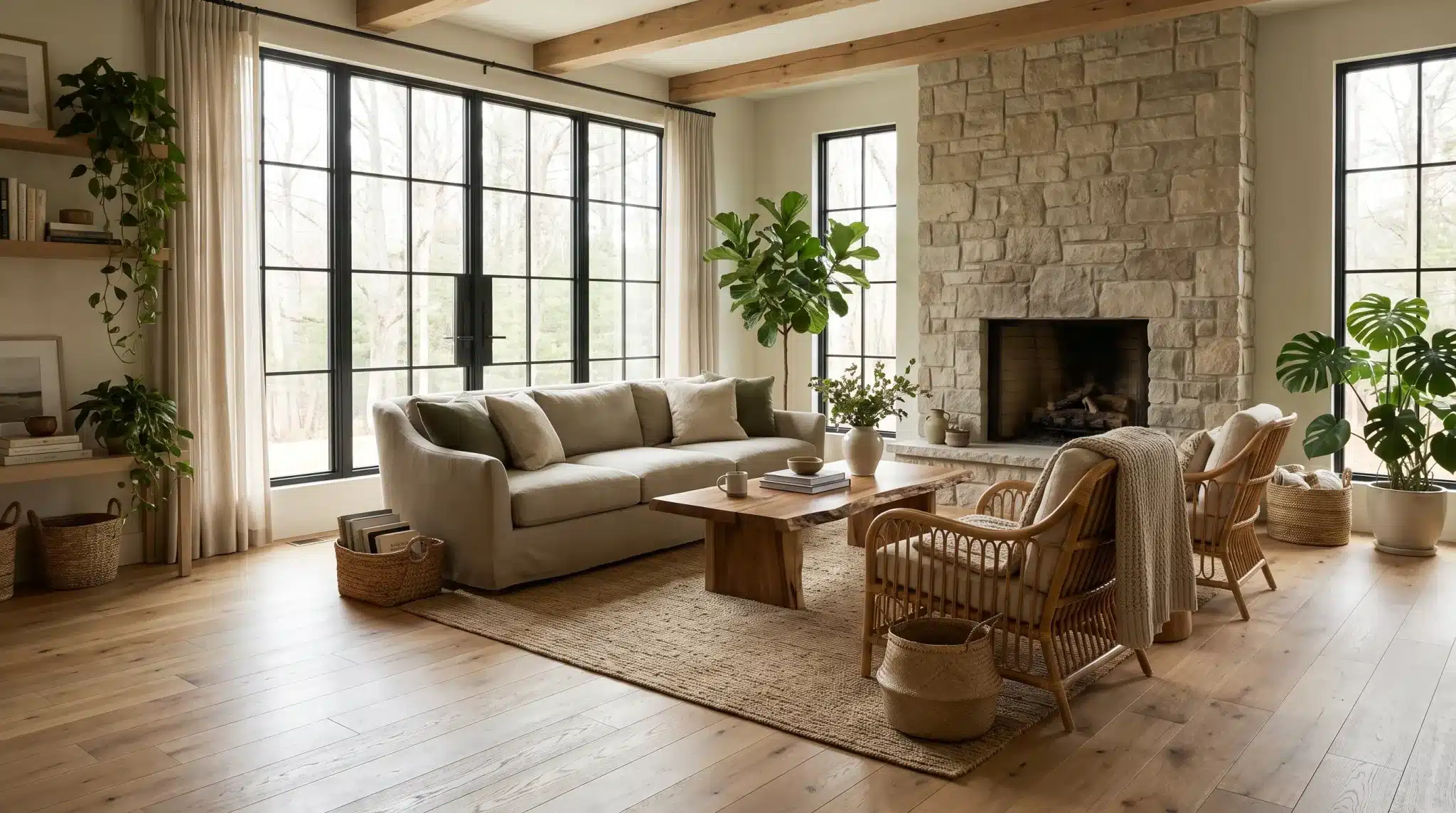
While building my home, I knew I did not want it to feel like a space made only of concrete, glass, and polished surfaces. I wanted it to have a sense of life, warmth, and connection, something that changed with the light, the seasons, and everyday moments. I imagined rooms filled with natural sunlight, the softness of wood and stone, the movement of plants, the calmness of water, and colors that echoed the outdoors. That feeling is what drew me toward biophilic interior design. By bringing together natural elements, organic textures, earthy tones, and sensory details, I made my home more than a place to live. It became a space that felt grounded, personal, and connected to the world outside. 11 Ways to Bring Biophilic Design Into Your Home Biophilic design does not mean turning your home into a greenhouse or copying a picture-perfect space. It is about adding small touches that create a stronger connection with nature. From natural textures and calming colors to plants, light, and organic shapes, these ideas can help you create rooms that feel warmer, more personal, and full of life. 1. Create a Living Green Corner with Indoor Plants Plants are the fastest way to connect a room to nature. Group a few small plants on a shelf. Hang trailing vines near a window, or place one large tree in an empty corner. Choose plants based on the light in the room, not the ones you saw online. A plant that dies within a month teaches you nothing except frustration. Plants also change over time, unlike most furniture. A fern grows new leaves. A vine climbs a wall. I think of plant corners as cozy reading nooks from an old film. Imperfect, a little wild, and completely alive. 2. Use Natural Light as a Design Element Daylight is free, and it does more work than most lighting fixtures. Sheer curtains let light in without losing privacy. Mirrors placed across from windows bounce light deeper into a room. Light colored walls and floors help a small space feel brighter without adding a single lamp. Morning light in a breakfast nook feels different from the golden light of a late-afternoon living room. Once you notice how light shifts throughout the day, you start designing around it rather than against it. 3. Bring in Natural Materials and Organic Textures Wood, stone, bamboo, rattan, linen, and clay all carry small imperfections that machines cannot fake. A wood grain that runs slightly off gives a room texture. So does a hand-thrown ceramic bowl with a rough edge. These materials also age well, which matters more than most trend pieces. Modern earthy homes lean into this fully. Rustic home interiors use it in smaller doses, such as a linen throw or a rattan chair. Either way, texture gives your hand something to notice, not just your eyes. 4. Choose Organic Shapes for Furniture and Decor Nature rarely produces a straight line. A rounded sofa, a curved mirror, or an arched doorway softens a room in a way that hard angles cannot. Sculptural decor pieces do the same job on a smaller scale. Think of a carved wood bowl or an organically shaped vase. Curved furniture has become more common in modern architecture lately. It is not only a style choice. Rooms with soft shapes tend to feel calmer to move through. 5. Build a Nature-Inspired Color Palette Forest green, sage, sand, terracotta, and soft blue all pull from the outdoors. None of them turns a room into a theme park. The trick is balance. One earthy accent wall paired with neutral furniture reads as intentional. Four different greens in one small room read as chaotic. A botanical bedroom might feature sage-colored walls with warm wood furniture. A calm home office might lean on sand and soft blue instead. Pick two or three tones and let them repeat quietly through the room. 6. Introduce Water Elements for Calm and Movement Water brings sound and motion into a space, qualities that plants and materials cannot provide on their own. A small tabletop fountain or a reflective glass surface can add this quality. Artwork featuring water works too, without any renovation. Spa interiors and nature resorts use this constantly. The sound gives your mind something steady to settle on. You do not need an indoor pond to get the benefit. A single fountain on a console table can shift how a whole room feels. 7. Blur the Boundary Between Indoors and Outdoors Large windows, glass doors, and a clear view of a garden or balcony all pull the outside in. If your apartment does not have much of a view, do not worry. A small balcony garden or window box can do surprising work. Outdoor-style seating placed near a big window also helps a room feel less boxed in. Resort-style homes have leaned into this for years. Smaller homes are catching up with clever glass and layout choices. 8. Design for All Five Senses Biophilic design isn’t just something you see. Natural scents like cedar or citrus shape how a room feels. So do soft fabrics, a breeze through an open window, and fresh air. A bedroom with linen sheets, quiet sounds, and fresh air from a cracked window feels restful. A room that only looks good in photos doesn’t feel good. Think about what a room smells like and sounds like, not just what it looks like in a listing photo. 9. Create a Biophilic Home Office Home offices benefit the most from small nature-focused changes. A desk near a window, a plant within reach, and wood furniture instead of laminate all help. Even a view of a tree from your desk chair can make a long workday feel shorter. Creative studios shown in films often mix nature with function. Plants on the desk, natural light, a comfortable chair. It is a small setup, but it works because it removes the sterile feeling most offices default to. 10. Mix Vintage Pieces with Natural Elements A vintage wooden cabinet or a handmade ceramic vase adds a layer of new furniture that cannot be replicated. So does a woven textile passed down from a relative. These pieces carry history, and history makes a room feel personal instead of staged. Pairing an old wooden dresser with a new linen chair does not clash. It tells a story. Rooms built entirely from new furniture can feel like a catalog page. Rooms with a few collected pieces feel like someone actually lives there. 11. Add Botanical Artwork and Nature-Inspired Decor Botanical artwork brings the feeling of the outdoors into rooms where adding real plants is not always practical. A framed leaf print, pressed-flower artwork, landscape painting, or nature-inspired sculpture can create a visual connection to the outside world. Choosing pieces that feel organic rather than overly decorative helps create a balanced look. A handmade ceramic vase, a wooden sculpture, or artwork with earthy tones can add personality without making the room feel themed. Why You Need Biophilic Interior Design A home built around natural light, texture, and greenery tends to feel more relaxing to live in. Several studies in environmental psychology link time spent near natural elements to better focus and lower stress levels. 1. Better Sleep: A bedroom with natural materials, calm colors, and soft light tends to make winding down easier. Harsh overhead lighting, synthetic fabrics, and sterile surfaces pull your body in the wrong direction at the end of the day. Swapping those out for linen bedding, a warmer bulb, or a small plant on the nightstand is a small change that adds up over weeks of better rest. 2. Lower Stress Levels: There is a reason you feel calmer after a walk outside than after sitting in a windowless room. Natural elements, whether real or evoked through texture, color, and material, carry that same quality indoors. A room that includes wood grain, soft green, and a plant in the corner gives your nervous system something gentler to settle on. Over time, that quieter baseline changes how a home feels to return to. 3. Sharper Focus During the Day: Working or studying near a window with a view, even a partial one, tends to reduce mental fatigue. The same effect occurs in plants. A desk positioned near natural light, with a single plant nearby, reduces some of the sensory flatness that comes with enclosed indoor environments. The brain responds to natural variation in light, color, and living things in ways that artificial settings do not replicate. 4. A Stronger Sense of Personal Connection: Homes built with natural materials and collected pieces tend to feel more personal than those filled entirely with new, polished furniture. Wood weathers and changes over time. A handmade clay pot carries marks no machine can reproduce. Living with those things builds a relationship between you and your space that purely aesthetic design does not create. That sense of connection is quieter than most design benefits, but it tends to last longer. Biophilic Design Ideas for Every Room Biophilic design works best when it feels natural to your everyday routine. Instead of adding random nature-inspired elements, think about how each room is used and choose details that bring warmth, texture, light, and a stronger connection to the outdoors. Room Biophilic Design Ideas Living Room Add plants near seating areas, choose wood or rattan furniture, and layer natural fabrics like linen or wool to create a warm, inviting atmosphere. Bedroom Use calming colors, soft natural fabrics, and gentle lighting. Choose simple materials and avoid harsh overhead lights to create a peaceful resting space. Kitchen Place herbs on a windowsill, keep wooden cutting boards visible, and use stone surfaces or natural finishes to add texture to this functional area. Bathroom Add humidity-loving plants, natural stone accents, and soft towels to create a relaxing space that feels more like a spa retreat. Home Office Position your desk near a window, add a nearby plant, and choose natural materials like wood to make the workspace feel calmer and more inspiring. Small changes can make each area of your home feel more connected to nature without requiring a complete redesign. Biophilic design can work in any space, with simple choices that reflect your personal style and bring a more natural feel into everyday living. 5 Biophilic Interior Design Mistakes to Avoid Adding nature-inspired elements can transform a home, but balance matters. Biophilic design works best when it feels natural and personal, not forced. Avoid these common mistakes when creating a nature-connected space: Buying plants without considering your home conditionsA room full of plants looks beautiful in photos, but choosing greenery without considering sunlight, humidity, and the time you have for care can cause plants to struggle or die. Turning your home into a greenhousePlants are an important part of biophilic design, but too much greenery can overwhelm a room. Leave space for furniture, movement, and other natural elements like wood, stone, and textiles. Choosing fake natural materials over authentic texturesPlastic finishes that imitate wood, stone, or plants often feel disconnected up close. Real materials bring warmth, texture, and natural variation that artificial alternatives cannot replace. Ignoring your room’s natural lightEvery room interacts differently with sunlight. A north-facing room may need different plants and colors than a bright south-facing space, so design around the light you actually have. Copying inspiration photos without adapting themA room from Pinterest or a magazine may have different lighting, dimensions, and architecture than your home. Use ideas as inspiration, but adjust them to suit your own space and lifestyle. Final Thoughts Biophilic interior design was never about building a perfect nature-themed room. It is about noticing small things. Morning light on a wood floor, the smell of a plant after watering, a soft throw under your hands. Those moments add up to more than any single design choice. Your home will keep changing, and that is fine. Future homes will likely continue to blend nature, smart technology, and personal touches in new ways. For now, start with one corner, one plant, or one better-placed lamp, and let the rest follow. Frequently Asked Questions How Many Plants Should a Biophilic Room Have? There is no fixed number. Start with one or two plants that match your light and schedule. Add more once you know you can keep them alive. Can Renters Create a Biophilic Interior Without Renovations? Yes. Plants, textiles, mirrors, and furniture choices need no permanent changes. They still shift how a rented space feels. What Furniture Styles Work Best With Biophilic Design? Wood, rattan, and other natural materials pair well with biophilic design. Curved or organically shaped furniture also fits the style naturally. Does Biophilic Design Work with Minimalist Interiors? Yes. A few well-chosen natural materials can bring a minimalist room to life. One or two plants help without adding clutter.
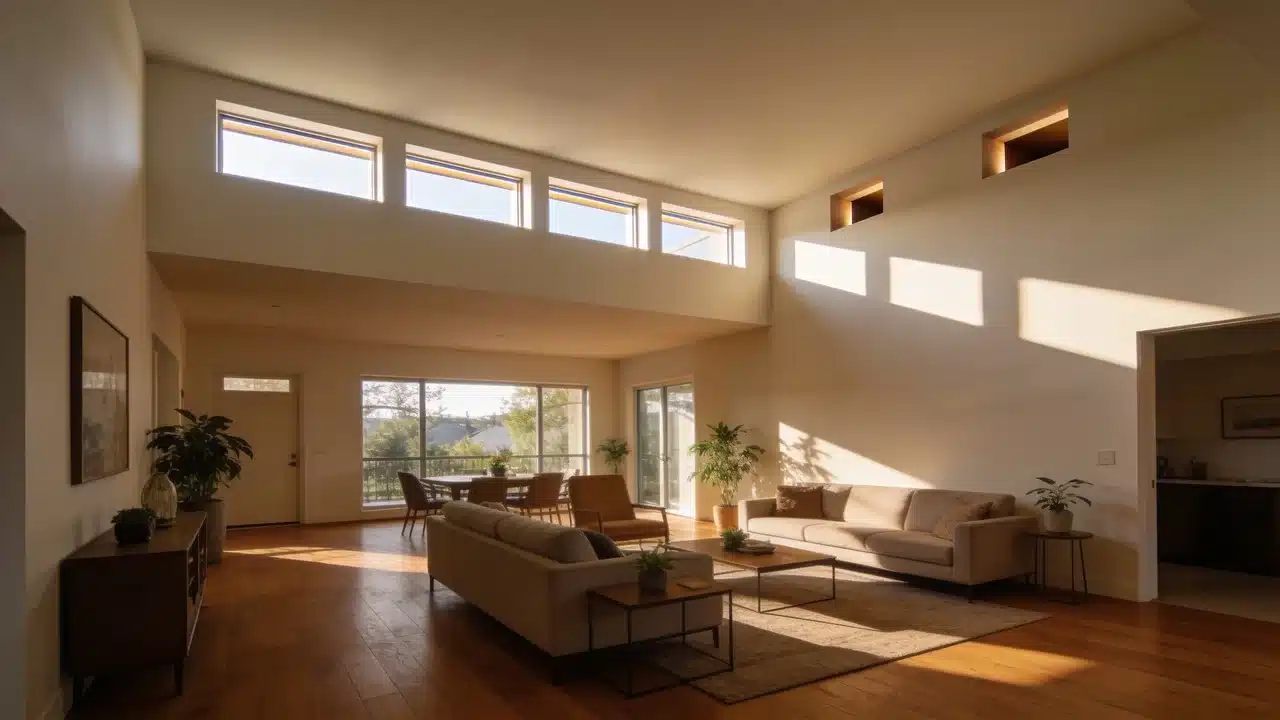
Quick Answer: A clerestory window is a high-set wall window, typically positioned near the roofline, designed to admit daylight and ventilation into a space without using lower wall area. Some windows do more than let in light. They change how a room feels, functions, and breathes. I’ve spent 12 years working through layout problems in real homes, and clerestory windows keep coming up as one of the most practical design decisions you can make. They solve problems that standard Windows simply cannot, a nd yet most people overlook them completely. In this piece, I’ll walk you through the full history and architectural role of clerestory windows, how they work, the types available, the benefits they bring to your home, where to place them, and what to check before installation. What is a Clerestory Window? A clerestory window is a window placed high on a wall, close to the ceiling or roofline. It takes its name from the clerestory, the strip of wall that sits above eye level. Sitting above the standard sight line, it keeps your lower walls free while still pulling daylight deep into the room. The idea is old. Ancient Egyptian temples used raised wall sections with openings to bring light into deep stone interiors, and Roman basilicas and Gothic cathedrals later used tall clerestory bands to fill vast spaces with daylight long before electric lighting existed. The core idea hasn’t changed much; only the materials and methods have evolved. Today, the same approach shows up in passive home design, where placement and orientation do the work artificial lighting used to handle. Standard windows trade wall space for daylight. Place one higher up instead, and sunlight will travel farther into the room, especially in longer or open-plan spaces. How Do Clerestory Windows Work? Placement is everything with clerestory windows. Because the glass sits high on the wall, sunlight enters at a steeper angle and reaches further into the room than a standard window at eye level ever could. In open-plan spaces, you notice the depth of light immediately. When the windows are operable, they also improve airflow through the stack effect. Warm air rises and exits through the upper opening, pulling cooler air in from below. Glazing choice, compass orientation, and external shading all affect how well this works in practice. Getting those three right is where most of the real performance comes from. What are the Types of Clerestory Windows Not every clerestory window works the same way. The type you choose affects the light, airflow, and the overall feel of the space. 1. Fixed Clerestory Windows Designed purely for daylight, fixed clerestory windows do not open. You’ll find them in most modern homes because they are simple to install and need little upkeep. They also cost less upfront since there’s no hardware involved. If ventilation isn’t a priority, this is usually the most practical starting point. 2. Operable Clerestory Windows These can be opened to let warm air out, making them useful in warmer climates or in rooms that heat up quickly. You get more control over indoor comfort without relying on air conditioning. Some models include automated controls, so you can manage airflow without manually reaching the window. 3. Continuous Clerestory Windows These run as long horizontal bands across the upper wall rather than sitting as individual units. This unbroken line of glass creates a strong visual statement in rooms with minimal detailing elsewhere. You’ll often see them in contemporary architecture because they distribute light evenly across a wide space. 4. Roofline Clerestory Windows These follow the angle of your ceiling or roofline rather than sitting in a flat wall section. Because they track the sun above you, they receive more direct sunlight during specific hours, making timing and orientation important. They work well with a pitched or vaulted ceiling The right type depends on your room layout, climate, and how much you want the windows to do beyond bringing in light. Why You Need Clerestory Windows in Your Home In my experience, homeowners come to clerestory windows trying to solve one problem and end up fixing several at once. The most immediate gain is daylight. Because the glass sits high on the wall, sunlight penetrates farther into the room than a standard window at eye level ever does. That depth of light reduces the amount of artificial lighting a room needs during the day, which matters most in longer layouts or open-plan spaces. Privacy is the second reason, and for many people, it is the deciding one. A clerestory window keeps the room bright while cutting direct sightlines from the street, a neighboring property, or a shared outdoor space. You get the light without the exposure. Because the glass sits above eye level, the lower walls remain completely free for shelving, storage, artwork, and furniture, without having to plan around window placement. In operable configurations, warm air rises and exits through the upper opening, pulling cooler air in from below. In rooms that heat up quickly, natural ventilation reduces the load on air conditioning without any mechanical system involved. Positioned and glazed correctly, they also support passive solar performance, retaining warmth in winter and managing heat gain in summer when combined with overhangs or external shading. High glazing also draws the eye upward, making a room read as taller and more open than its dimensions suggest. Best Rooms for Clerestory Windows Clerestory windows fit well in most rooms, but some spaces benefit more than others. Here is where they tend to work best. 1. Living Rooms: A natural fit, especially with vaulted ceilings. You get strong daylight throughout the space without sacrificing eye-level privacy. Since the glass sits well above furniture and seating areas, you can also arrange the room however you like without worrying that window placement will get in the way of a sofa or bookshelf. 2. Kitchens: Placed above cabinets and counters, they bring in light where task lighting often falls short. This works especially well in galley or U-shaped kitchens, where wall space is already occupied by cabinetry and appliances, leaving few options for standard counter-height windows. 3. Bathrooms: One of the most practical applications. You get daylight without compromising privacy, which matters most in bathrooms that face the street, a neighbor’s window, or a shared courtyard. It also reduces the damp, closed-in feel of windowless bathrooms, without the need for frosted glass or blinds. 4. Bedrooms: Clerestory windows provide light without direct exterior views, making them worth considering in street-facing rooms. They let you wake up to natural light each morning while keeping curtains or blinds unnecessary during the day, which is a small but noticeable change for anyone sensitive to overly dark rooms. 5. Home Offices: Natural light from above reduces screen glare and keeps the room feeling open without visual distractions from outside. For anyone working long hours at a desk, this steadier, indirect light is easier on the eyes than a standard window positioned right behind or beside a monitor. 6. Hallways and Staircases: These are often the hardest spaces to light well. A clerestory window can brighten areas with no exterior walls or other places to install glass. A dim, windowless corridor can turn into a space that feels connected to the rest of the home. Every room has different requirements. In my experience, the spaces that gain the most are those where privacy and daylight feel like competing needs. How Clerestory Windows Compare to Skylights All three bring extra light into a space, but they work differently and suit different situations. Knowing the distinction saves you from choosing the wrong option for your room. Feature Clerestory Windows Skylights Transom Windows Location High wall near ceiling Roof surface Above doors or windows Main Purpose Daylight and privacy Overhead lighting Supplemental light Ventilation Available in operable models Available in some models Usually limited Privacy High Depends on placement Depends on location Common Use Homes, offices, commercial buildings Dark rooms, upper floors Entryways and interiors In my experience, the choice usually comes down to one clear priority. If privacy matters most, clerestory windows are the stronger option. If you need overhead light in a room with no usable wall space, a skylight makes more sense. Transom windows work best as a decorative addition rather than a primary light source. Factors You Must Know for Installing a Clerestory Window Getting clerestory windows right takes more planning than you might expect. These are the factors worth thinking through before you commit. Room orientation and climate: South-facing windows bring more heat and light. In warmer climates, exterior shading or overhangs help manage direct sun. Glass type and energy performance: Low-E glazing reduces heat gain and improves overall efficiency. Accessibility and maintenance: High placement affects how you clean and operate the windows. Fixed units need a clear maintenance plan. Fixed vs operable and costs: Operable units cost more and need more upkeep. Structural changes for high-level glazing also add to the overall budget. Final Thoughts Not every home needs them. But if you are working with an open layout, high ceilings, a modern design, or a space where privacy and daylight feel like a trade-off, clerestory windows are worth serious consideration. If you have already noticed the problem of a room that never feels quite right, light that does not reach far enough, or walls too crowded for another standard window, this is likely the solution you have been looking for. Get the orientation, glazing, and ventilation balance right, and the results speak for themselves. If alternatives suit your space better, a skylight or transom may be the smarter call. Have you considered clerestory windows for your home? Drop your thoughts in the comments below. Frequently Asked Questions How much does it cost to install clerestory windows? Costs vary depending on size, glazing type, and whether structural changes are needed. Operable models and custom shapes typically cost more than standard fixed units. Do clerestory windows need planning permission? In many cases, yes. Any structural wall changes or additions to an existing home may require planning approval. Check with your local authority before starting work. Can clerestory windows be added to an existing home? Yes, but it requires structural work. A builder or structural engineer should assess the wall before any openings are cut. What is the best glazing for clerestory windows in hot climates? Low-E double glazing with a low solar heat gain coefficient works best. It limits heat entry while still allowing good light transmission. Do clerestory windows affect home insulation? They can if the wrong glazing is used. Well-specified double or triple glazing maintains thermal performance without sacrificing the daylight benefits.
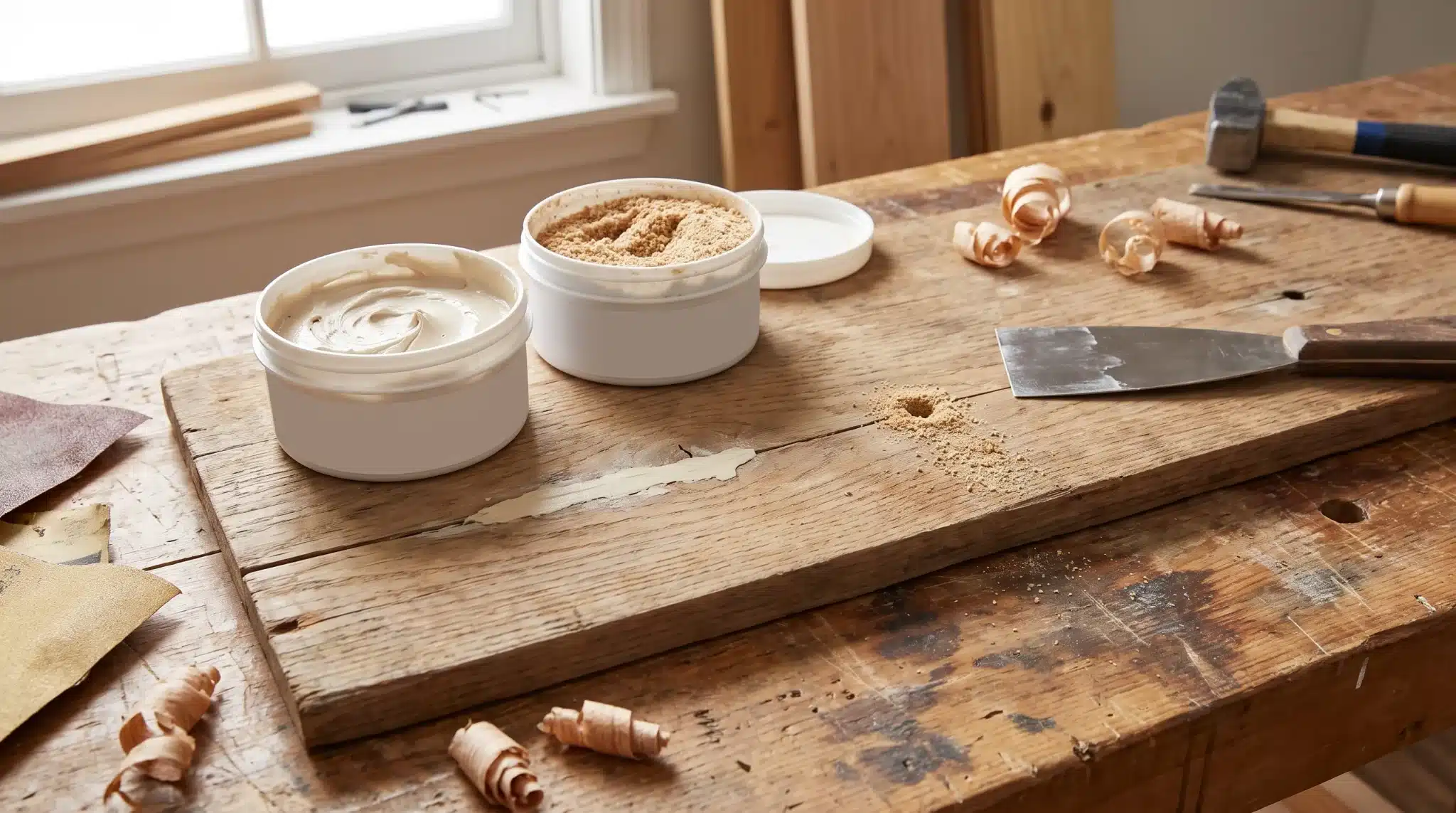
Small wood repairs can be surprisingly tricky. I have seen many projects where a simple crack, dent, or scratch turned into a noticeable patch because the wrong repair material was used. Wood putty and wood filler often look almost identical at first glance. However, each one is designed for a different type of repair. In my experience, wood filler works best for deeper repairs on unfinished wood that will be sanded, painted, or stained, while wood putty is better suited for small touch-ups on already finished surfaces. Choosing between wood putty vs wood filler comes down to understanding the surface you are repairing, the size of the damage, and the finish you want to achieve. You can merge both sections under a broader H2 that introduces the two materials before comparing their differences. What Is Wood Filler? Wood filler is a repair compound used to rebuild damaged areas of wood. It is made with wood fibers or synthetic materials mixed with binders to create a material that hardens as it dries. It works well for filling deeper holes, cracks, dents, and missing sections because it becomes a solid surface that can be sanded smooth. Since filler bonds with the wood rather than sitting only on top, woodworkers often use it during the repair and preparation stage before painting or finishing. Pros Cons Creates a hard surface that can be sanded, shaped, and painted. Can crack if used on wood that expands and contracts frequently. Works well for filling deep holes, cracks, gaps, and damaged wood areas. Usually requires sanding and surface preparation after drying. Bonds with the wood surface for stronger repairs. May not match the natural grain of stained wood. Suitable for unfinished wood projects before painting or staining. Some types dry quickly, leaving less working time. Helps create a smooth surface for professional-looking finishes. Not always ideal for repairs on already finished furniture. What Is Wood Putty? Wood putty is a softer, more flexible material designed for small surface imperfections on finished wood. It is typically made from oils, solvents, and synthetic compounds that keep it slightly pliable after application. Unlike wood filler, putty is not meant for rebuilding damaged areas. It is commonly used after staining or finishing to hide small scratches, nail holes, or minor flaws. Furniture restorers often keep multiple putty shades available to blend repairs into existing finishes without refinishing the entire piece. Pros Cons Stays flexible after drying, allowing it to handle slight wood movement. Not suitable for repairing deep holes, large cracks, or missing wood sections. Works well for small surface repairs like scratches, dents, and nail holes. Takes longer to dry compared to some wood fillers. Available in different colors to match finished wood surfaces. Cannot usually be sanded as smoothly as wood filler. Ideal for repairing finished furniture without removing the existing finish. May not hold up well in areas exposed to heavy wear or moisture. Helps restore the appearance of antique furniture and decorative pieces. Often needs a matching shade for a less noticeable repair. When Should You Use Wood Putty or Wood Filler? Choosing between wood putty and filler comes down to the type of wood and repair. Wood filler works well for serious damage or holes, while putty is best for smoothing surface imperfections and blending with finished wood. Knowing which product to use makes furniture restoration or DIY woodworking projects easier and the results more seamless. Feature / Aspect Wood Putty Wood Filler Best For Small cosmetic repairs on finished wood surfaces Larger repairs on unfinished wood where strength is important Typical Uses Hiding scratches, minor dents, small imperfections Filling nail holes, screw holes, gaps, cracks, small splits Finish Compatibility Matches existing finish, available in different shades Applied before painting or staining for smooth, even surfaces Wood Type Consideration Suitable for all finished wood Dense hardwoods handle differently than softwoods for durability. Strength / Durability Cosmetic only, not structural Strong, durable, can withstand wear Application Examples Furniture, cabinets, interior trim Furniture projects, cabinet prep, trim installation How to Apply Wood Filler Correctly? A smooth wood filler repair starts with proper preparation. Rushing the process can leave uneven patches or weak spots that show through the final finish. Follow these steps for a cleaner, longer-lasting repair. 1. Clean the Damaged Area: Remove dust, dirt, loose wood pieces, and debris before applying filler. A clean surface improves adhesion and helps create a smoother, more even repair. 2. Apply the Filler: Use a putty knife to press wood filler firmly into cracks or holes. Slightly overfill the area because some fillers shrink as they dry. 3. Let It Dry Completely: Allow the filler to dry fully before sanding. Drying time depends on the repair size, product type, and surrounding conditions, with larger areas needing more curing time. 4. Sand the Surface: Once hardened, sand the repaired area with fine-grit sandpaper until it becomes level with the surrounding wood. Create a smooth surface ready for finishing. 5. Finish the Wood: Remove sanding dust and apply paint, stain, or sealant based on the project. Choose a compatible finish to protect the repair and blend it with the wood. How to Apply Wood Putty Correctly? Putty rewards patience and a close color match. Here is the right way to do it. 1. Match the putty color: Choose a wood putty shade that closely matches the finish. Since putty is used for visible repairs on stained wood, a close color match helps the repaired area blend in instead of drawing attention. 2. Press putty into the repair: Apply the putty directly into the scratch, dent, or small surface flaw using a putty knife. For imperfections, you can use your finger to press the material into the damaged area. Make sure the putty fills the spot without leaving gaps. 3. Remove the excess: Once the repair is filled, wipe away extra putty from around the damaged area. Keep the patch level with the surrounding surface so it does not create a raised spot that stands out after drying. 4. Let it set: Allow the wood putty to dry and settle according to the product instructions. Avoid touching or disturbing the repair while it sets, as moving it too soon can affect the final appearance. 5. Seal if needed: Depending on the surface and location of the repair, adding a protective finish can help the putty last longer. Sealing is especially useful for furniture and frequently used wooden surfaces exposed to moisture, dust, or regular wear. How Much Do Wood Putty and Wood Filler Cost? Wood filler runs about $8 to $18 for a standard tub at major retailers. Common DAP fillers sit around $7.98 to $17.98 depending on the size. A single container fills many nail holes and cracks. Wood putty falls in a similar range. Small tubes cost only a few dollars each. A six-pack of Varathane putty runs about $29.69, which works out to $4.95 per unit. DAP putty multi-packs land near $5.57 per tube. Here is a quick price snapshot to compare the two. Product Typical Size Rough Price Wood filler 8 to 16 oz tub $8 to $18 Wood putty 3 to 4 oz tube $5 to $10 Exterior wood filler Larger tub with hardener $15 to $30 Wood Putty vs Wood Filler for Different Home Projects Real projects make the choice clearer. From furniture repairs to flooring fixes, the right product depends on the wood type, surface finish, and level of damage. Engineered hardwood floors, for example, have a layered construction that requires careful repair methods to avoid damaging the top veneer. Project Recommended Product Hardwood floor scratches Filler or repair kit, based on finish Painted cabinets Wood filler Stained furniture Wood putty Door frame repairs Wood filler Small trim damage Wood putty Outdoor wood repairs Exterior-rated wood filler Final Verdict When I choose between wood putty and wood filler, I always start by looking at the repair itself. Wood filler works best for damaged or unfinished wood that needs sanding, painting, or staining, while wood putty is better for small touch-ups on finished surfaces. Taking a moment to match the product to the job can save time and prevent uneven patches later, before applying either one. I recommend checking the type of wood surface and the size of the damage. Those two details usually make it clear which option will give the best result. Frequently Asked Questions Does wood putty harden like wood? No. Wood putty usually stays slightly flexible after it dries. That helps it move with finished wood. It never gets as hard as wood filler. When should you not use wood filler? Skip filler on finished surfaces that need flexibility or a color match. It also fails on large structural repairs and areas with heavy movement. How big of a gap can you fill with wood filler? Most fillers handle small to medium repairs, usually up to about a quarter inch. Bigger gaps may need several applications or another method. Does wood putty need to be sealed? Not always. But sealing helps guard the repair from moisture, dirt, and wear. This matters most on furniture you use every day. How do you apply wood putty correctly? Clean the area, press putty into the spot, and wipe off the excess. Let it set, then add finish protection if the surface needs it.
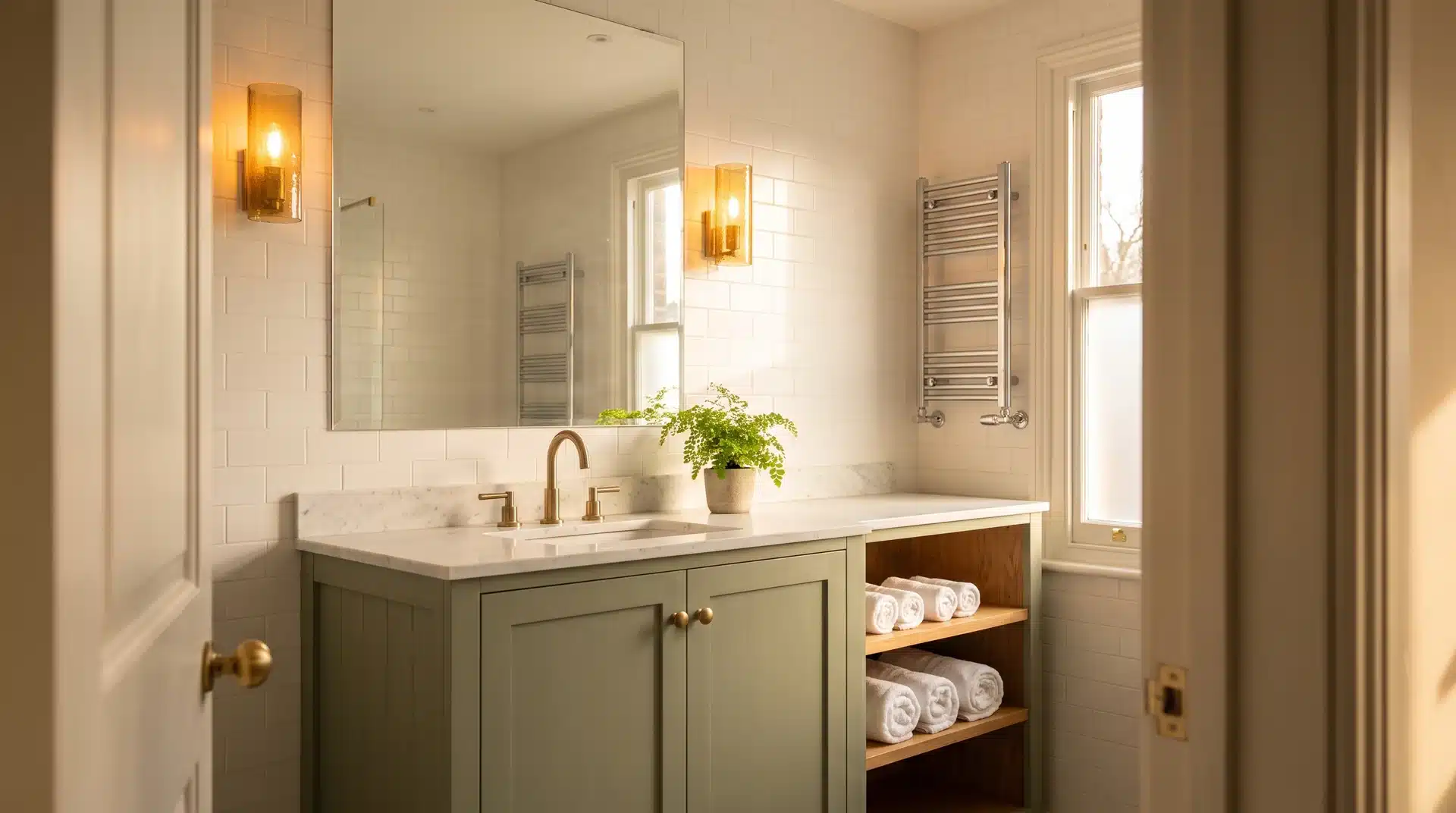
The guest bathroom is the room your visitors judge you by, and most of them do it in the first ten seconds. It does not need a full renovation to make an impression worth remembering. The right guest bathroom ideas can turn a forgotten corner of your home into the detail that guests bring up at dinner months later. A compact powder room, a dated half bath, a full guest suite that simply needs a refresh- the options available now go far beyond new towels and a candle. This list of guest bathroom ideas covers modern, luxurious, welcoming, and low-cost simple bathroom designs with something usable at every budget. Start here. 27 Guest Bathroom Ideas to Inspire Your Next Update The best guest bathroom inspiration does not come from doing more. It comes from doing the right things in the right order and knowing which single change carries the most weight in a small space. 1. Muted Green Vanity With Brass Fixtures A muted green vanity paired with warm brass hardware is one of the strongest guest bathroom combinations. The green adds personality without committing to something loud, and brass softens the contrast against white tile walls. Add a small potted plant and a ceramic soap dispenser to finish the look without overcomplicating it. It photographs well and lives even better in person. 2. White Shiplap Walls With Black Accents White shiplap walls and matte black accents deliver a clean, fresh look that feels inviting without demanding much upkeep. The black fixtures carry the visual work, so the rest of the room can stay quiet. This approach holds up particularly well in smaller guest bathrooms where clutter is the biggest problem to solve. Fresh without trying too hard, which is exactly where a guest bathroom should land. 3. Bold Patterned Wallpaper on One Wall One wall of bold patterned wallpaper turns a forgettable guest bathroom into one guests actually remember. Floral, geometric, or abstract prints all work as long as the rest of the room stays quiet and lets the paper lead. Look for wallpaper labeled for high-humidity rooms and pair it with a simple dark vanity for balance. One wall is enough. The whole room does not need to compete with itself. 4. Floating Vanity for a Modern Guest Bathroom Few upgrades modernize a guest bathroom as fast as a floating vanity without touching anything structural. It reveals the floor line and makes the space read larger than it is. For tighter layouts, the visual breathing room created beneath a floating vanity does more for the room than almost any other decorative choice. Pair with a frameless mirror, and the refresh is complete. 5. Statement Marble Tile Accent Wall A bold marble pattern on a single accent wall elevates a guest bathroom from functional to high-end. Balance it with warmer elements, like a wood vanity or soft lighting, so the drama does not tip into the cold. Large-format marble-look porcelain achieves a visual impact close to the of real marble without the sealing and maintenance demands. Guest bathroom inspiration that ages well rather than dating quickly. 6. Deep Green Vanity With Soft White Tile Deep green against soft white tile is one of the most searched guest bathroom color combinations in the US right now. The contrast is rich without feeling heavy, and the white tile keeps the room from closing in. Pair with brushed gold hardware for warmth or matte black for a sharper edge. Both work. The green carries the design either way. 7. Frameless Mirror Above a Sleek Single Sink A large frameless mirror above a single sink makes a guest bathroom feel designed rather than assembled. It reflects light, adds visual depth, and requires nothing else on that wall to work effectively. Among the highest-impact, lowest-cost upgrades available in any guest bathroom refresh, it suits every design direction from minimal to traditional without forcing a commitment to either. 8. Warm Neutral Palette With Natural Wood Touches Cream, oat, and soft beige tones give a guest bathroom a calm, hospitable quality that holds across seasons and styles. Natural wood touches on the vanity or a small shelf add organic texture without introducing color. This combination reads as intentional yet minimal, making it one of the most broadly appealing guest bathroom ideas for homeowners who want the space to work for a wide range of visitors. 9. Black and White Classic Tile Floor A black-and-white geometric tile floor does the decorating in a guest bathroom without requiring anything bold on the walls. Keep the walls white or off-white, choose simple fixtures, and let the floor carry the visual interest. This has been working in bathrooms for decades and shows no signs of dating. It is one of the most searched guest bathroom ideas for good reason. 10. Layered Lighting With Sconces and Overhead Dimmer Layered lighting transforms a guest bathroom from clinical to warm in a way no paint color or accessory can replicate. Wall sconces flanking the mirror at eye level eliminate the harsh shadows created by overhead-only lighting. Add a dimmer on the ambient circuit, and guests can adjust the room to their own comfort level at any hour. The upgrade most guest bathrooms are missing is the one that makes the biggest, most noticeable difference. 11. Open Shelving With Rolled Towels and Curated Products Open shelving in a guest bathroom signals thoughtfulness. Rolled white towels, a small plant, and two or three curated products displayed neatly communicate that this space was prepared for company rather than just cleaned. The discipline required to keep open shelving organized is part of what makes it so effective. When done right, it is one of the most memorable details in the room. 12. Spa-Inspired Guest Bathroom With Minimal Clutter A spa-inspired guest bathroom does not require expensive materials. It requires editing. Clear the counter of personal items, add one quality texture, invest in a rainfall showerhead if the budget allows, and keep the lighting warm. Guests recognize a spa feeling through what is absent from the room as much as what is present. This is guest bathroom inspiration that costs more in restraint than in spending. 13. Vintage Apothecary Cabinet for Storage and Character A vintage or apothecary-inspired cabinet with glass doors adds character to a guest bathroom while solving the storage problem at the same time. Display folded towels, small toiletry items, and a few curated objects inside. It gives the room a personality that a standard vanity never provides and suits both traditional and transitional interiors without forcing you into either direction. 14. Wainscoting With Bold Paint Above Wainscoting on the lower half of a guest bathroom wall paired with a bold paint color above creates a classic architectural detail that punches well above its cost. Deep navy, forest green, or charcoal above white wainscoting produces a high-end result achievable over a weekend with basic tools and one gallon of paint. Use satin finish above the wainscoting line: it is widely considered the best paint finish for bathroom walls because it handles moisture, wipes clean, and avoids the clinical glare of semi-gloss. 15. Vessel Sink on a Natural Wood Vanity A ceramic vessel sink on a natural wood vanity base reads as purposeful and elevated without approaching luxury price points. The organic quality of the wood grounds the ceramic vessel and keeps the look warm rather than sterile. Choose a countertop vessel over a wall-mount version for easier installation in an existing guest bathroom, and pair with a wall-mounted faucet for a clean, uncluttered counter. 16. Colorful Mosaic Tile Inside the Shower A colorful mosaic tile on the shower floor or back wall is a contained way to add personality to a guest bathroom without committing to bold color throughout. The tile is the feature; everything else stays neutral. Handcrafted tile in artisan finishes adds texture and color depth that standard ceramic tile cannot match, and the effect lands the moment a guest steps inside. 17. Brushed Brass Hardware Throughout Replacing dated chrome hardware with brushed brass throughout a guest bathroom is a low-cost, high-return update that changes how the room reads in an afternoon. Cabinet pulls, towel bars, toilet paper holders, and faucet handles in a consistent brushed brass finish create a cohesion that makes the room feel deliberately designed rather than accumulated over time. This is the single-afternoon project most guest bathrooms need first. 18. Floor-to-Ceiling Tile in a Compact Guest Bath Floor-to-ceiling tile in a compact guest bathroom eliminates the horizontal break that makes tight rooms feel shorter and more confined. A single tile run from floor to ceiling draws the eye upward and adds perceived height. Large-format tiles in a soft neutral tone produce the cleanest version of this effect and require fewer grout lines, which reduces maintenance considerably over time. 19. Rainfall Showerhead as a Luxury Touch A rainfall showerhead is the most consistently appreciated upgrade in a guest bathroom because guests feel it the moment they step in. In most cases, it requires only a showerhead swap and a new arm, not a full shower renovation. The experience it creates makes a guest bathroom feel considerably more premium than its price point suggests, and that gap between cost and perceived value is the whole point. 20. Moody Black and Gold Guest Bathroom Black walls or deep charcoal tile paired with gold hardware and a statement mirror produce a look that photographs well and lands even better in person. This works especially well in powder rooms where there is no shower to contend with. For homeowners who want their guest bathroom to have a point of view rather than a safe palette, this is the direction worth considering. 21. Neutral Linen Towels and Quality Soap Dispenser The accessories in a guest bathroom communicate the level of care that went into the space. Replace plastic soap bottles with ceramic or glass dispensers. Fold neutral linen towels and display them where guests can find them without asking. Add a small dish of hand cream. These are hotel-level touches that cost very little and are immediately apparent when a guest walks in. 22. Patterned Floor Tile With White Walls A patterned cement or encaustic tile floor with simple white walls adds personality to a guest bathroom without touching anything structural. The floor becomes the statement, and the walls recede. This approach works at almost every budget level because the tile is the only investment the design requires. Everything else in the room plays a supporting role. 23. Framed Art Above the Toilet A framed print or small gallery above the toilet is one of the most underused opportunities in a guest bathroom. Guests spend time in that zone, and giving them something worth looking at signals attention to detail. Choose pieces with calm or interesting subject matter and use humidity-rated frames to prevent warping. A small addition that shifts the room from functional to finished. 24. Pedestal Sink for a Classic Small Space A pedestal sink is the right call for a very small guest bathroom where floor space is tight. It opens the floor visually, feels architecturally considered, and suits both traditional and transitional design aesthetics. Pair with a recessed medicine cabinet above for storage that adds nothing to the visual bulk of the room. Simple, purposeful, and still one of the strongest choices for a narrow layout. 25. Statement Mirror as the Room’s Focal Point An oversized, architecturally interesting mirror in a guest bathroom does the work of multiple decorative decisions at once. It reflects light, adds personality, and gives the room a focal point that does not depend on expensive materials elsewhere. An arched, sunburst, or beveled mirror at the right scale can define the entire aesthetic of a small guest bathroom. Nothing else needs to work particularly hard around it. 26. Warm Wood or Shiplap Ceiling Detail A warm wood or shiplap ceiling in a guest bathroom adds dimension and warmth that walls and floors alone cannot deliver. It draws the eye upward, makes the room feel finished rather than incidental, and costs considerably less than tile or stonework. In a narrow bath with lower ceilings, this detail creates the kind of cozy character that guests notice and remember without being able to explain exactly why. 27. Scented Candle and Fresh Flowers as the Finishing Layer No guest bathroom idea works in isolation from how the room smells and feels when someone first walks in. A quality scented candle and a small arrangement of fresh or dried flowers are the finishing layer that ties everything together. They communicate hospitality and attention to detail in a way that no fixture or tile upgrade can replicate on its own. The last thing you add and the first thing a guest registers. Conclusion A guest bathroom does not need a renovation to make an impression. It needs one or two decisions that carry real weight in the space you have, and the kind of finishing touches that say the room was thought about before anyone arrived. The ideas in this list range from a full layout refresh to a thirty-dollar hardware swap that changes how the whole room reads. Pick the one that fits your space, your budget, and the visit you are preparing for. Guests rarely comment on a bathroom directly. But there is a difference between walking into a room that was ready for them and one that was not. They feel it immediately, even if they never say a word. Frequently Asked Questions What is the Best Flooring for a Guest Bathroom? Porcelain tile is the top choice for guest bathroom floors in 2026 due to its water resistance, durability, and wide range of style options at every price point. What Size Vanity Works Best in a Guest Bathroom? A 24-inch vanity suits most compact guest bathrooms without overwhelming the floor space. Wall-mounted versions with at least one drawer and cabinet-handle storage add visual bulk. What are the Guest Bathroom Size Requirements and Clearances? Maintain a minimum of 15 inches from the toilet center to any side wall or vanity, and 21 inches of clear space in front of the toilet to meet standard building code requirements.