

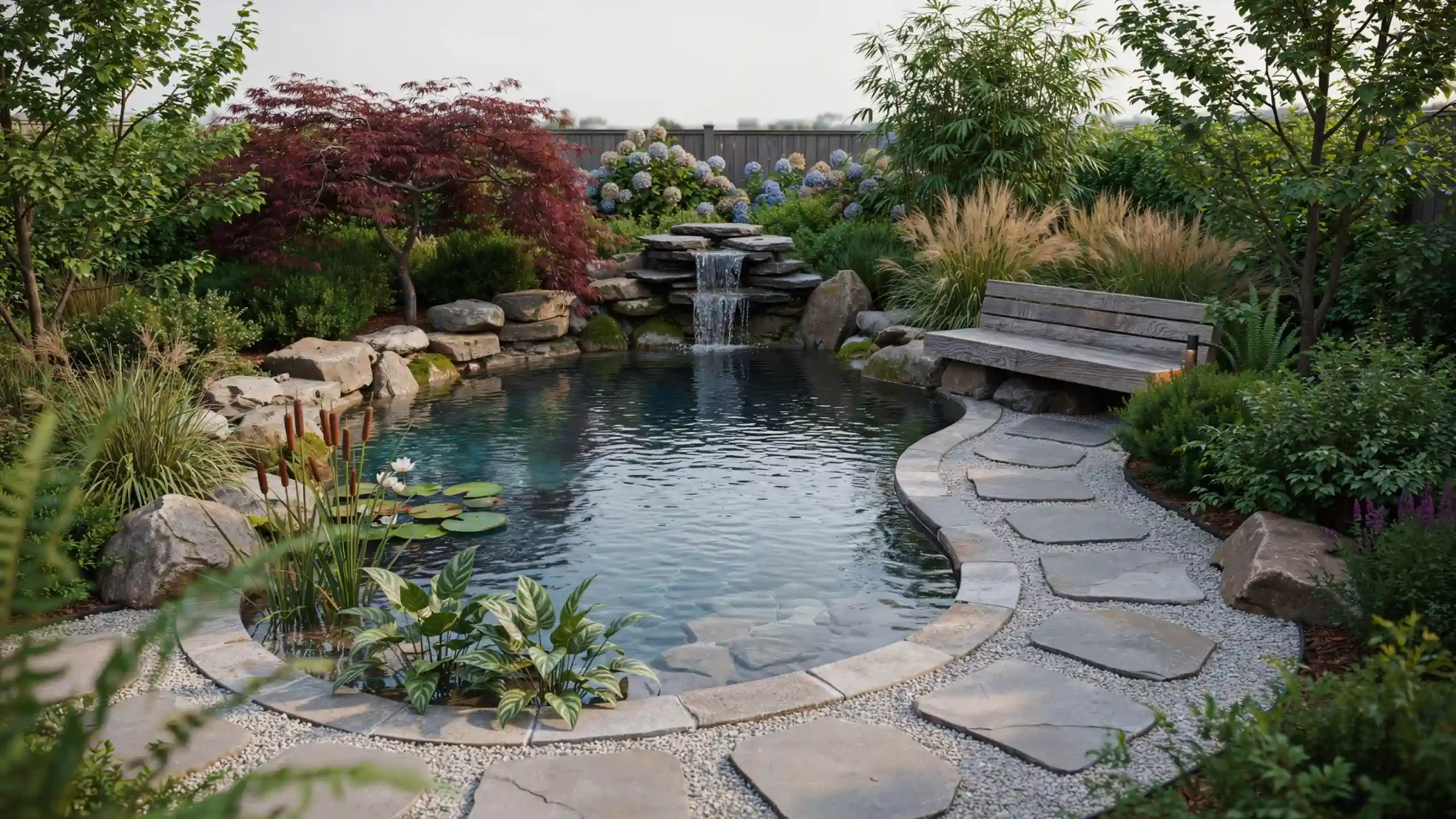


You step outside. The morning air is cool. Water ripples in the pond, and orange shapes glide just below the surface.
A koi pond can turn a plain yard into something special. But there’s more to it than pretty rocks and clear water. Real koi pond ideas need to work for the fish, not just the eye.
Depth matters. Filtration matters. So do shade, safe edges, and good water flow. A viewing spot ties it all together, but only if the fish stay healthy underneath.
Good design isn’t about picking a style first. It’s about building a home. One that happens to look beautiful, too.
What Makes a Good Koi Pond?
A koi pond is more than a decorative water feature. Koi can grow over two feet long and produce a lot of waste, so the pond must be designed for their long-term health before aesthetics.
| Essential Feature | Why It Matters |
|---|---|
| Adequate water volume | Supports full-grown koi |
| Proper depth | Protects fish in hot and cold weather |
| Filtration and aeration | Maintains clean, oxygen-rich water |
| Partial shade | Helps regulate water temperature |
| Easy maintenance access | Makes routine cleaning simpler |
| Predator protection | Keeps koi safe from birds and other animals |
A beautiful pond is only successful when it also provides a healthy environment for the fish. Prioritize function first, and the appearance will naturally follow.
17 Beautiful Koi Pond Ideas for Every Backyard
Every backyard is unique, and the right koi pond design depends on the available space, landscape, and your personal style.
Explore inspiring koi pond ideas tailored to different backyards to create a beautiful, functional outdoor feature.
1. Natural Rock Koi Pond
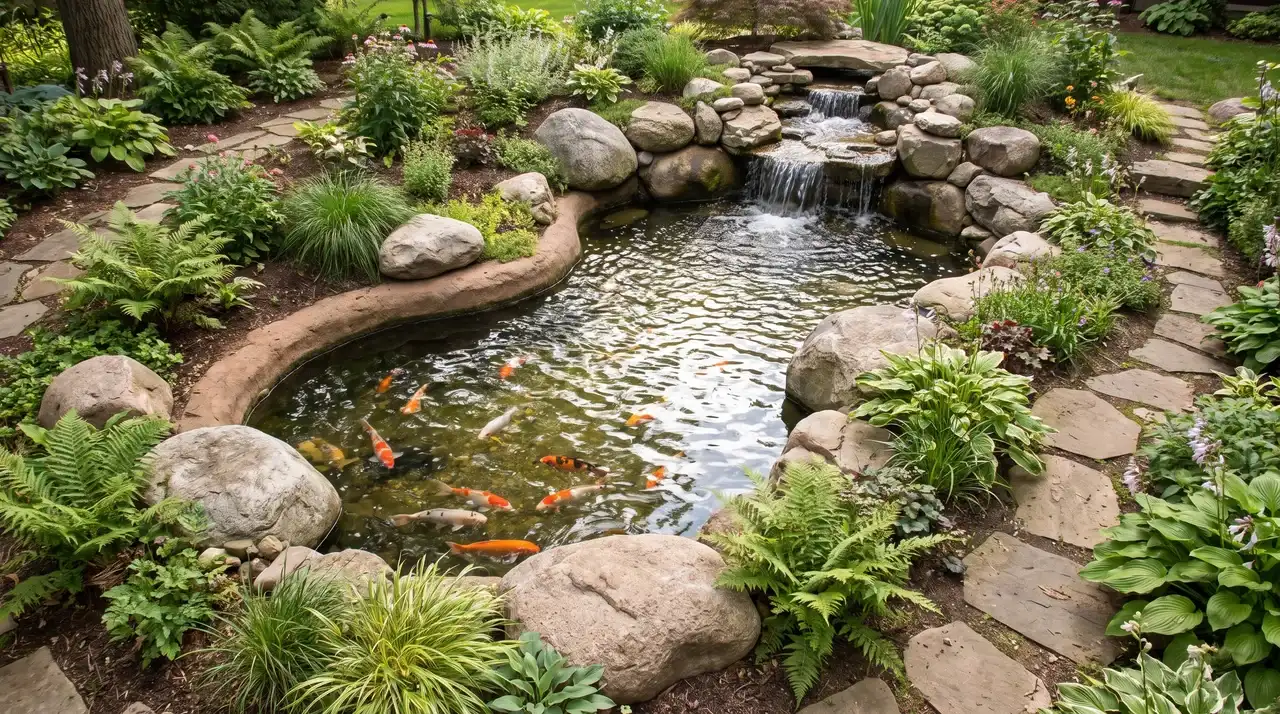
This pond style features an irregular, free-flowing shape that creates a natural and organic appearance.
Smooth boulders are carefully placed around the edges to enhance the landscape, while a variety of native plants add texture, color, and ecological value.
A gentle waterfall provides the soothing sound of flowing water and improves circulation within the pond.
The uneven, curved edges help the pond blend seamlessly into an informal garden setting, while supporting the overall garden structure with natural transitions.
2. Modern Geometric Koi Pond
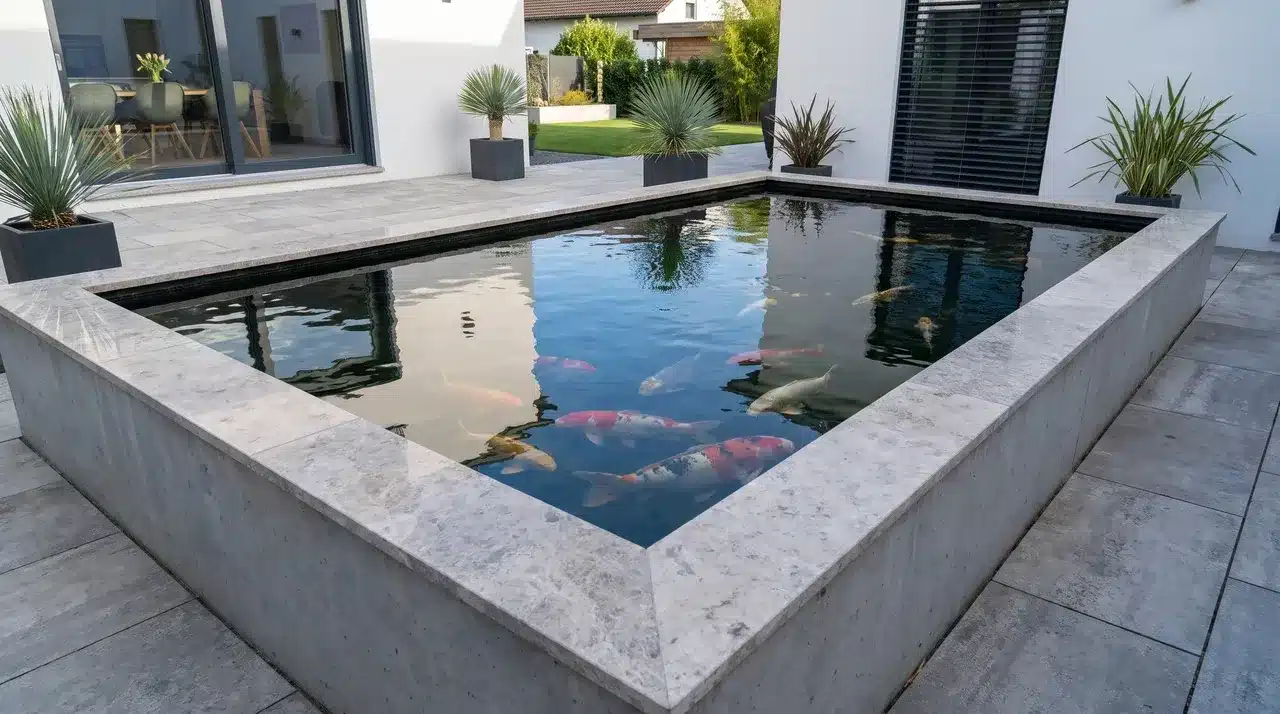
Straight edges and open water give this pond style a clean, elegant, and highly organized appearance.
Concrete or precisely cut stone coping creates polished hardscaping that complements modern and formal landscapes.
Planting is kept minimal, allowing the water’s reflective surface and the graceful movement of koi to become the main focal points.
Formal rectangular ponds are also easier to maintain and clean. A bottom drain makes it easy to empty the pond completely for routine maintenance without relying on manual pumping.
3. Raised Koi Pond
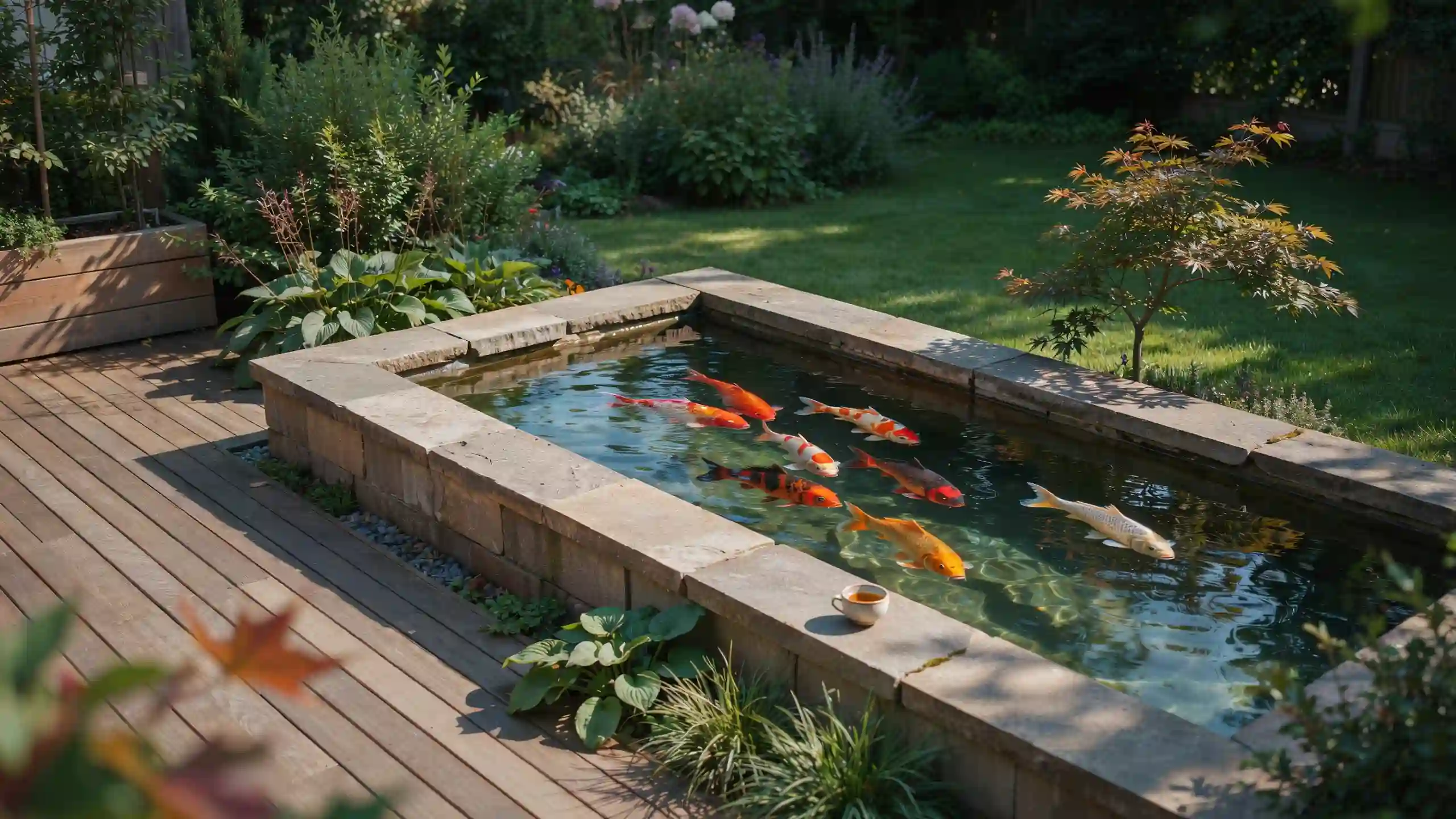
Raised-wall koi ponds elevate the water level above ground, making it easier to enjoy clear views of your fish without bending or leaning over the edge.
They also require less excavation than fully in-ground ponds, which can simplify installation in many backyards.
The raised walls can double as convenient seating, creating a comfortable place to relax and admire the pond. For this reason, many homeowners position raised ponds next to patios, decks, or outdoor living areas.
4. Small Backyard Koi Pond
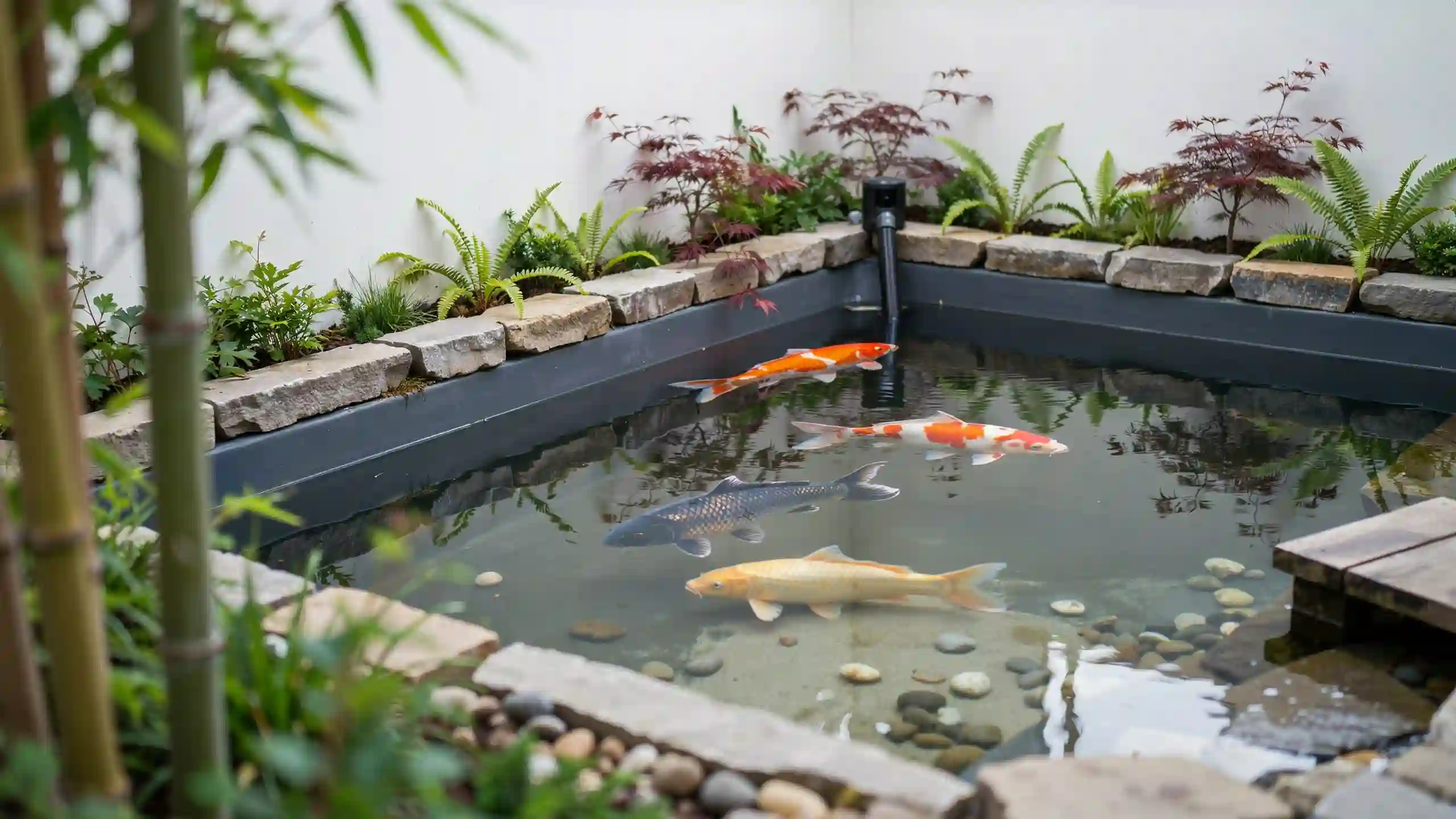
Space is often limited, but koi still need real depth and room to swim. A compact pond can work if it stays deep enough and keeps filtration tucked out of sight.
Avoid the mistake of treating a shallow tub as a permanent home for koi. Koi outgrow small containers fast, and shallow water offers little protection from heat or predators.
Pairing the pond with a practical small backyard can help preserve walking space, seating, and storage without making the yard feel crowded.
5. Japanese-Inspired Koi Pond
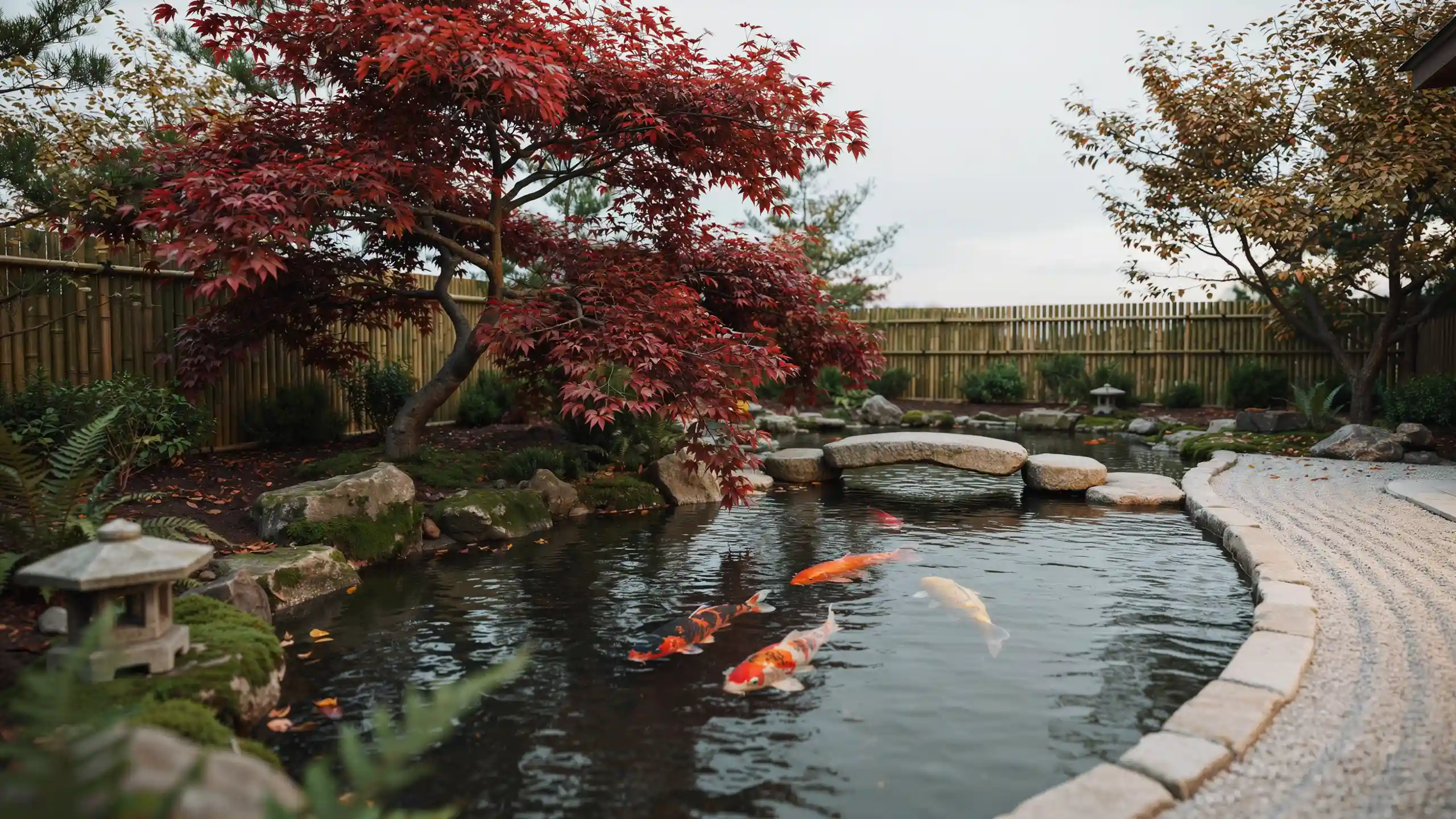
Japanese-inspired koi ponds emphasize simplicity, harmony, and a strong connection with nature.
This timeless design style uses natural stone, a graceful wooden or stone bridge, and carefully chosen plants such as a Japanese maple to create a peaceful, uncluttered setting.
Every feature is thoughtfully placed to achieve balance rather than excess decoration.
Gentle water movement and subtle landscaping enhance the tranquil atmosphere, making the pond an ideal focal point for meditation, relaxation, and quiet enjoyment of the garden.
6. Patio-Side Koi Pond
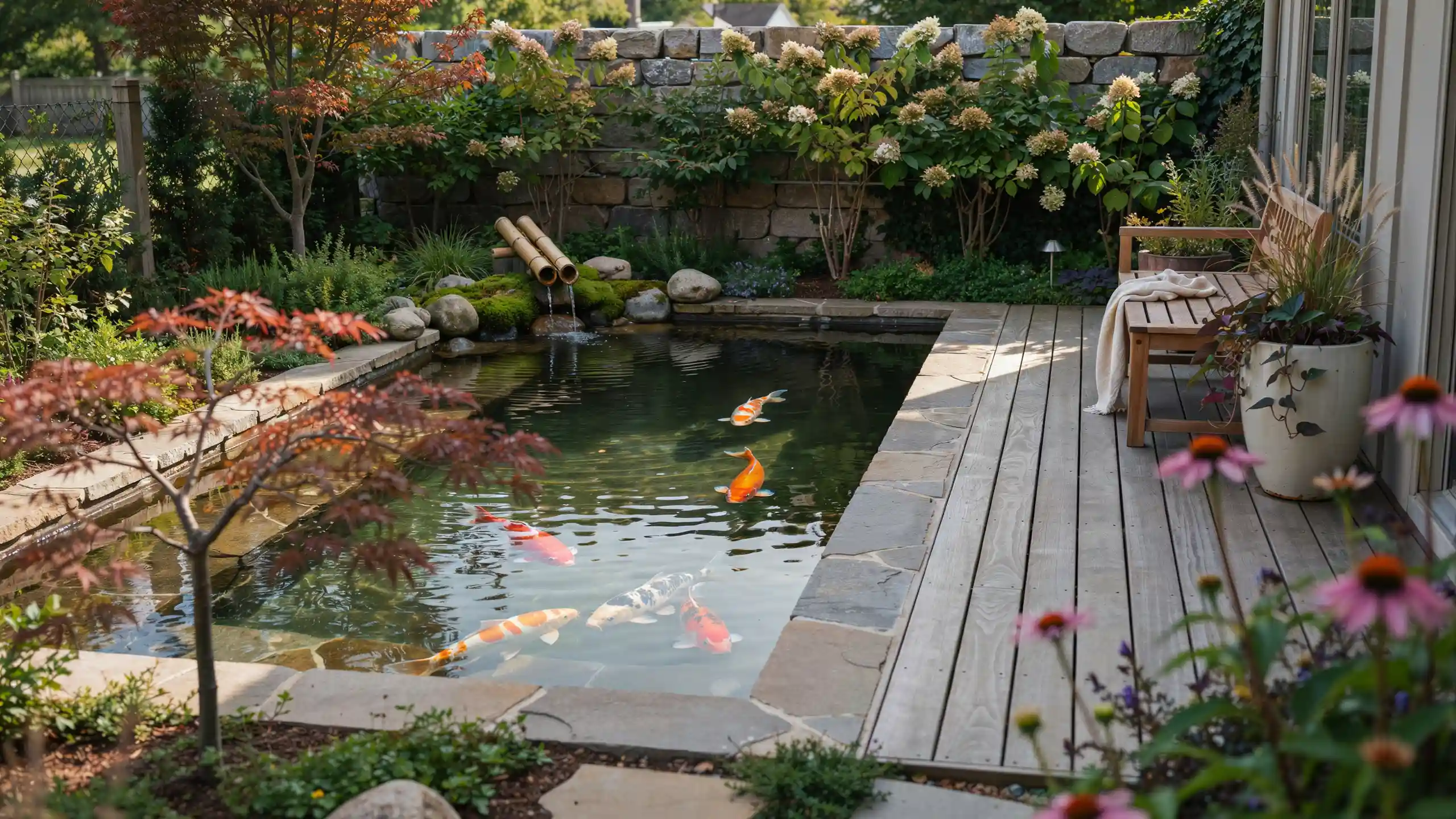
Placing a koi pond near a deck, patio, or outdoor seating area allows you to enjoy its beauty and calming atmosphere every day.
Watching the fish and listening to the gentle sounds of moving water can make the space feel more relaxing and inviting.
A nearby location also makes routine observation easier, helping you quickly spot changes in water quality, fish behavior, or equipment performance.
Detecting problems early can simplify maintenance and support a healthier environment for your koi.
7. Large Landscape Koi Pond
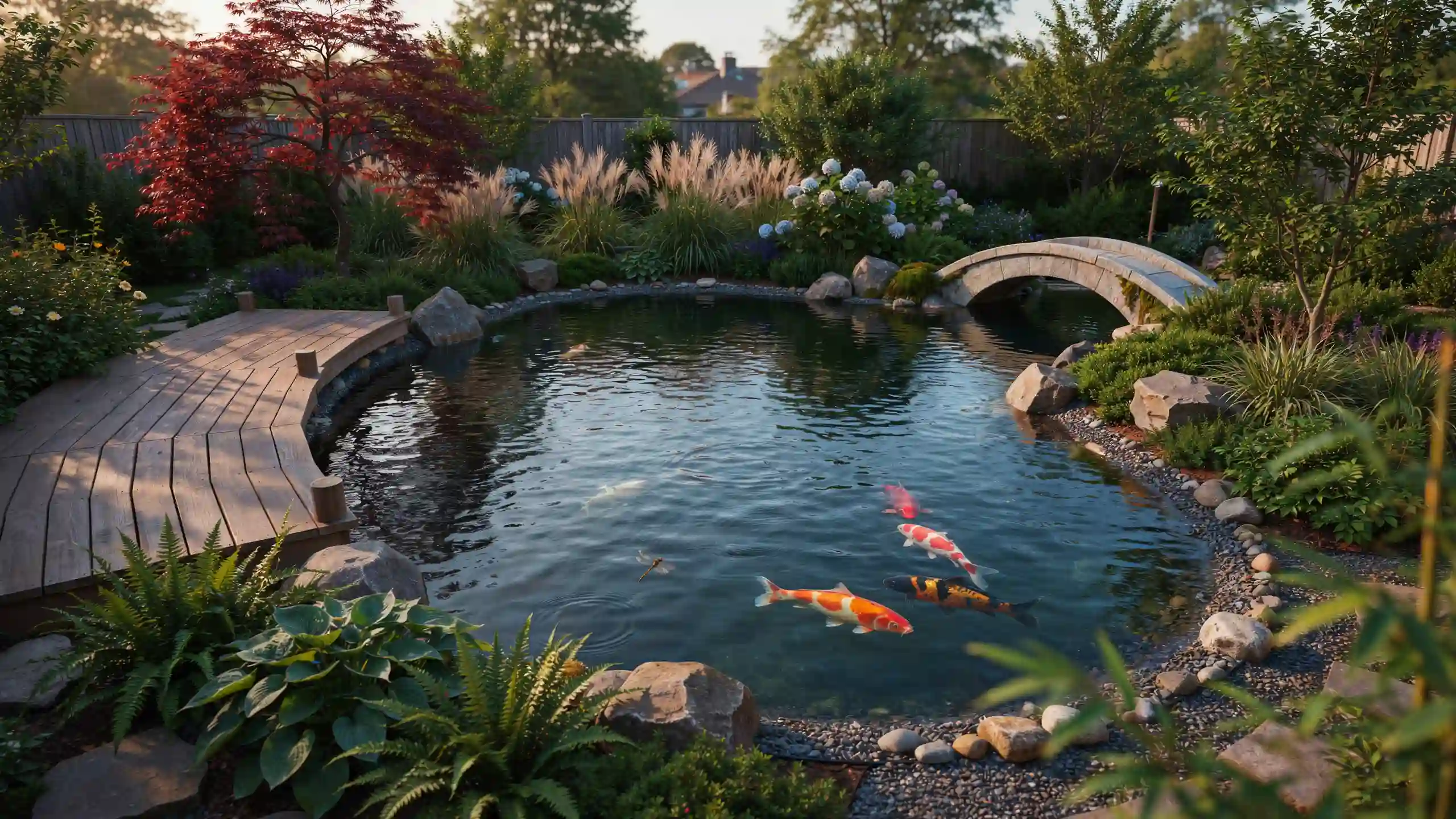
A larger backyard provides the freedom to design a spacious koi pond with sweeping curves, deeper swimming areas, and eye-catching features such as a viewing platform or a decorative bridge.
The extra space allows koi to thrive while creating a striking focal point in the landscape.
Layered planting of trees, shrubs, ornamental grasses, and flowering plants around the pond helps it blend naturally with the surrounding garden, creating a balanced, inviting, and visually appealing outdoor environment.
8. Multi-Level Koi Pond
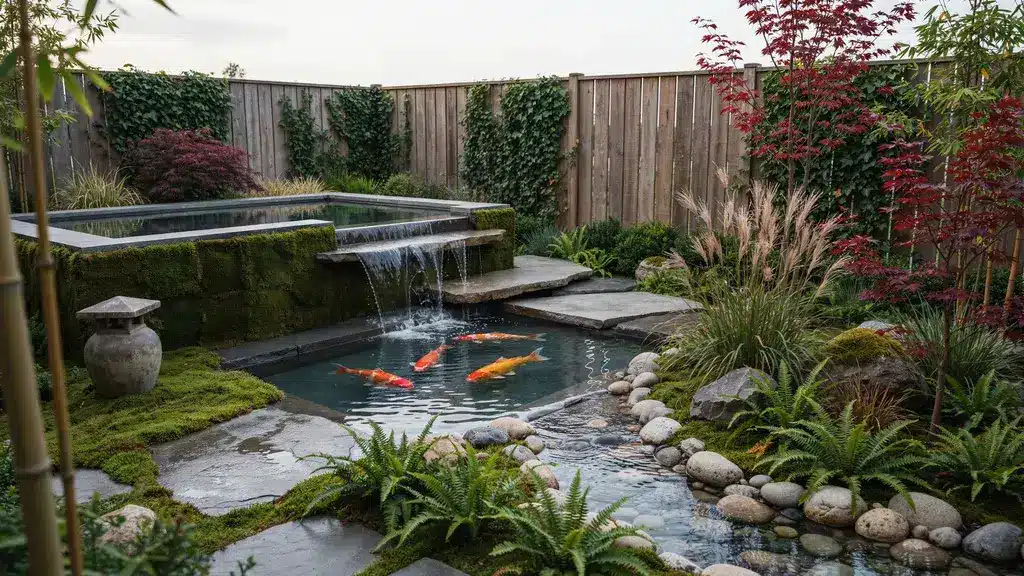
Connected pools or streams sit at different heights across the yard. Water moves naturally between levels, supporting filtration and adding visual movement.
Each level can hold a small waterfall or spillway, adding extra aeration as water drops between pools. Build the upper levels shallower and reserve the deepest pool for the bottom.
That pool needs the most stable temperature and volume for koi. Keep connecting channels wide enough to prevent debris from clogging the flow.
9. Formal Courtyard Koi Pond
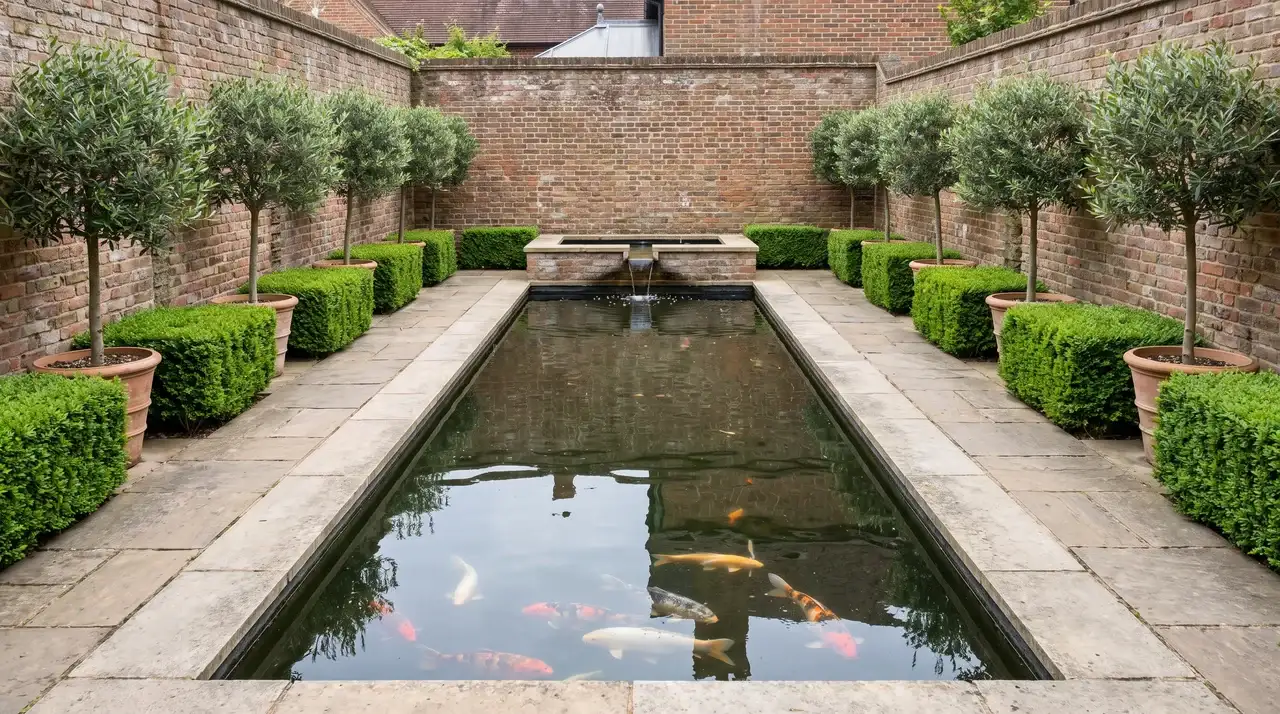
A symmetrical pond framed by walls or neatly clipped hedges. This layout suits a structured, classic garden design inside a walled courtyard or enclosed patio.
Straight edges and matching planting on both sides keep the whole space feeling balanced and intentional. Enclosed walls also block wind and reduce the number of leaves blown into the water.
A small fountain or gentle waterfall adds movement and extra oxygen without breaking the tidy, formal look.
10. Koi Pond with a Viewing Window
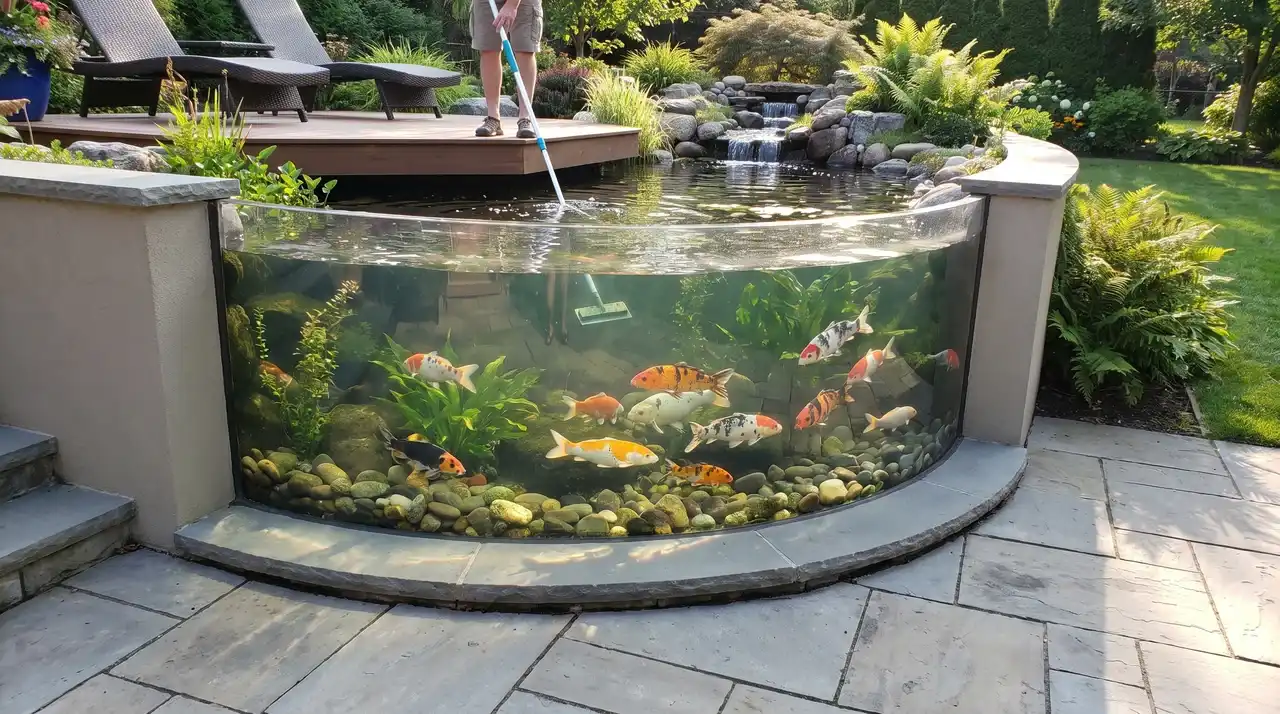
An underwater acrylic panel lets you watch koi from below the waterline. This idea works well built into a deck, patio wall, or window well. It turns the pond into a living display.
The acrylic panel must handle real water pressure, so use marine-grade material.
Have someone experienced with underwater panels install it. Keep the glass clean with an algae scraper. Place the window away from direct afternoon sun to limit glare.
11. Deck-Integrated Koi Pond
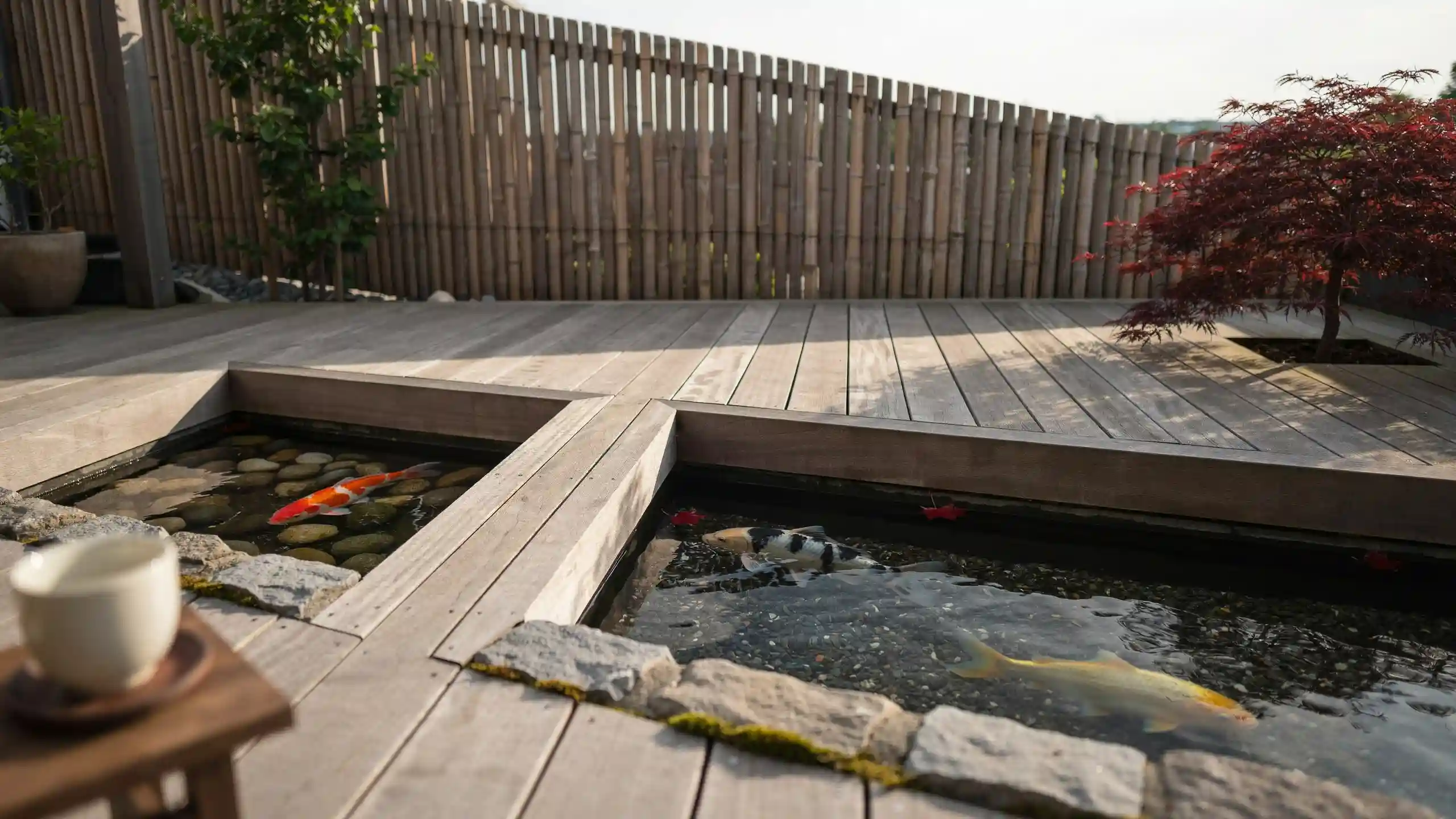
The pond sits partly under or beside a raised outdoor deck. This blends the pond directly into your living space. Cutouts in the decking let you view koi from above.
The rest of the deck stays usable for seating and entertaining. This layout works well on a sloped yard because the deck framing hides the plumbing and wiring underneath.
Keep support beams clear of the pond shell, and leave an access hatch for equipment checks.
12. Koi Pond with a Wooden Bridge
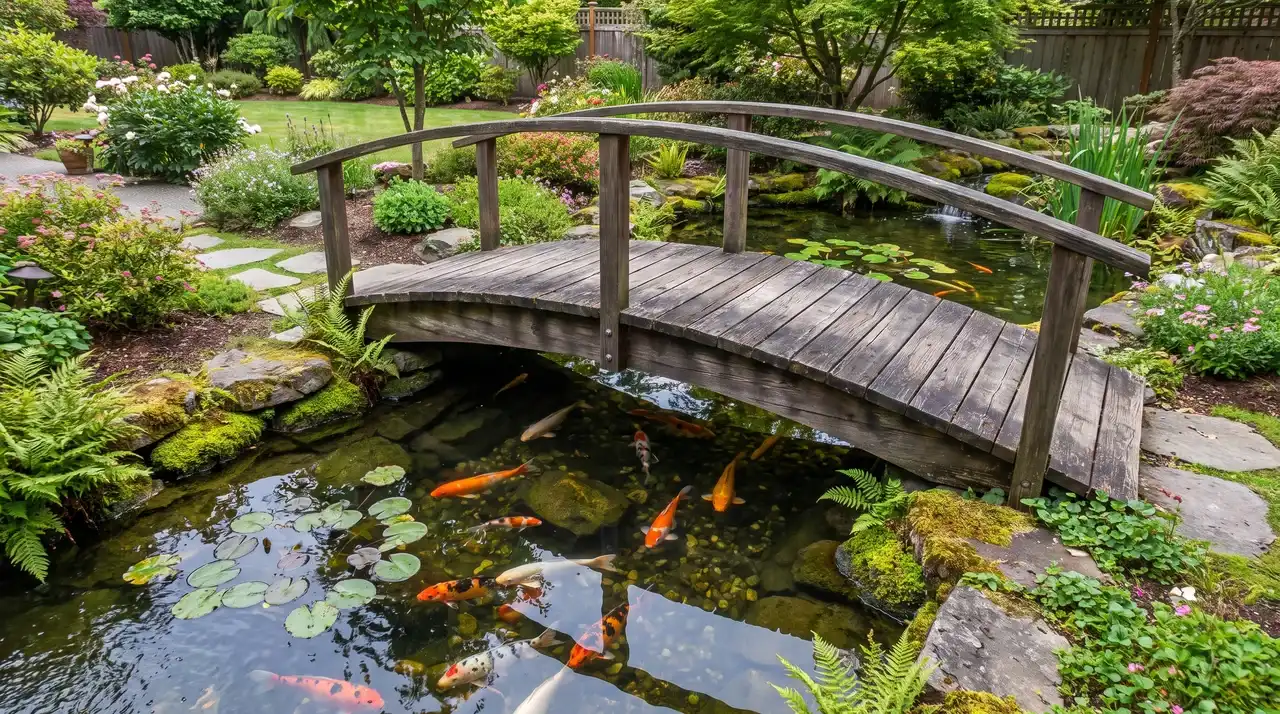
A bridge crosses the water, adding a classic garden touch overhead. It gives guests a reason to pause and look down at the fish.
It also gives you a stable spot to feed koi or reach equipment near the pond’s center.
Choose weather-treated or rot-resistant wood, since constant moisture accelerates decay in untreated lumber. Add a simple railing if the bridge crosses deeper water, especially near children or pets.
13. Minimalist Concrete Koi Pond
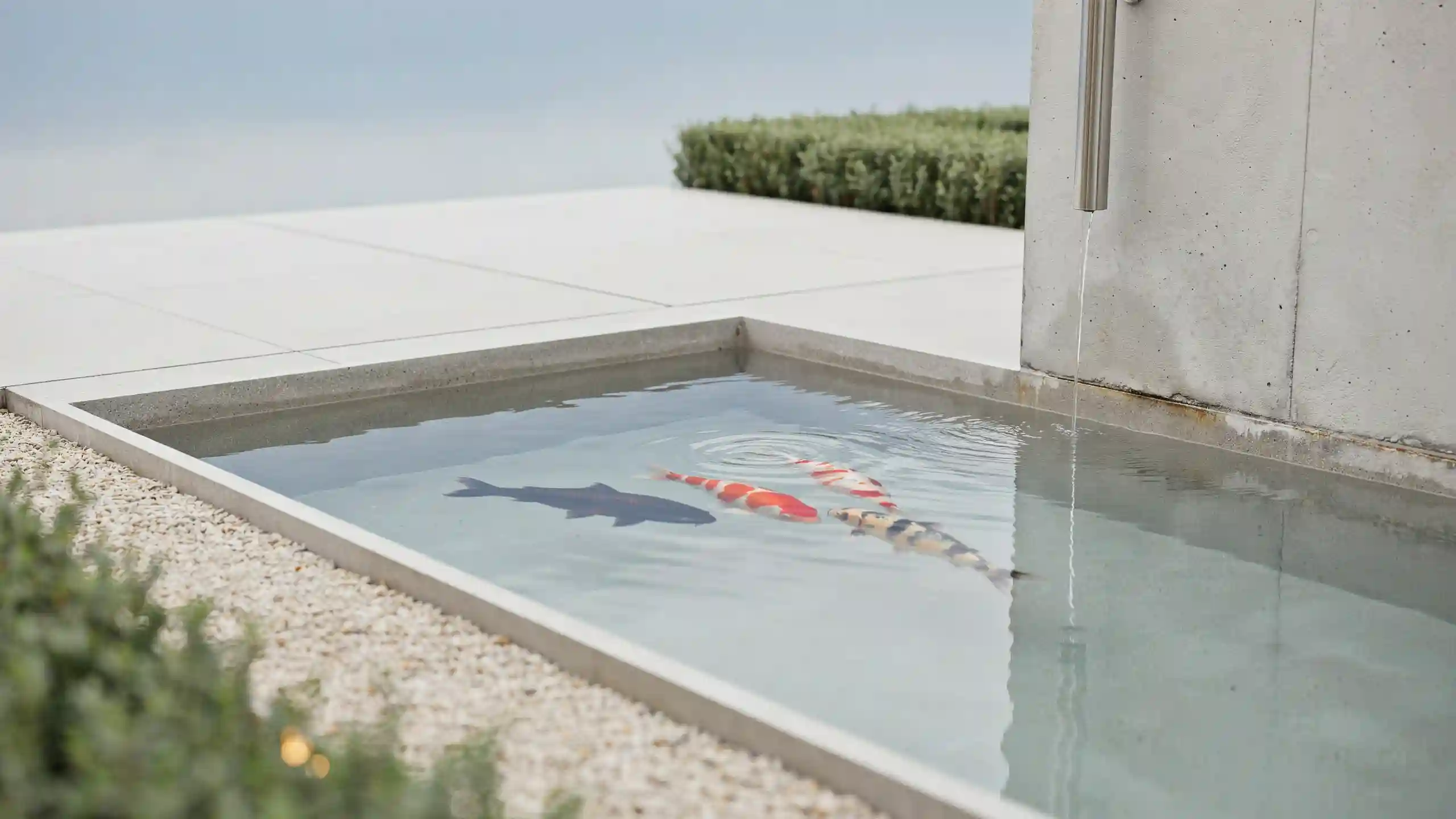
A poured concrete basin with simple, straight lines and minimal ornamentation. Concrete surfaces are durable and low-maintenance, and they pair well with modern architecture, glass walls, and clean outdoor furniture.
A well-sealed concrete shell resists cracking and algae buildup better than an unsealed pour. Ask your builder about a proper waterproof coating.
This style also hides plumbing and filtration lines inside the walls, keeping the surface free of equipment.
14. Koi Pond with Aquatic Plants
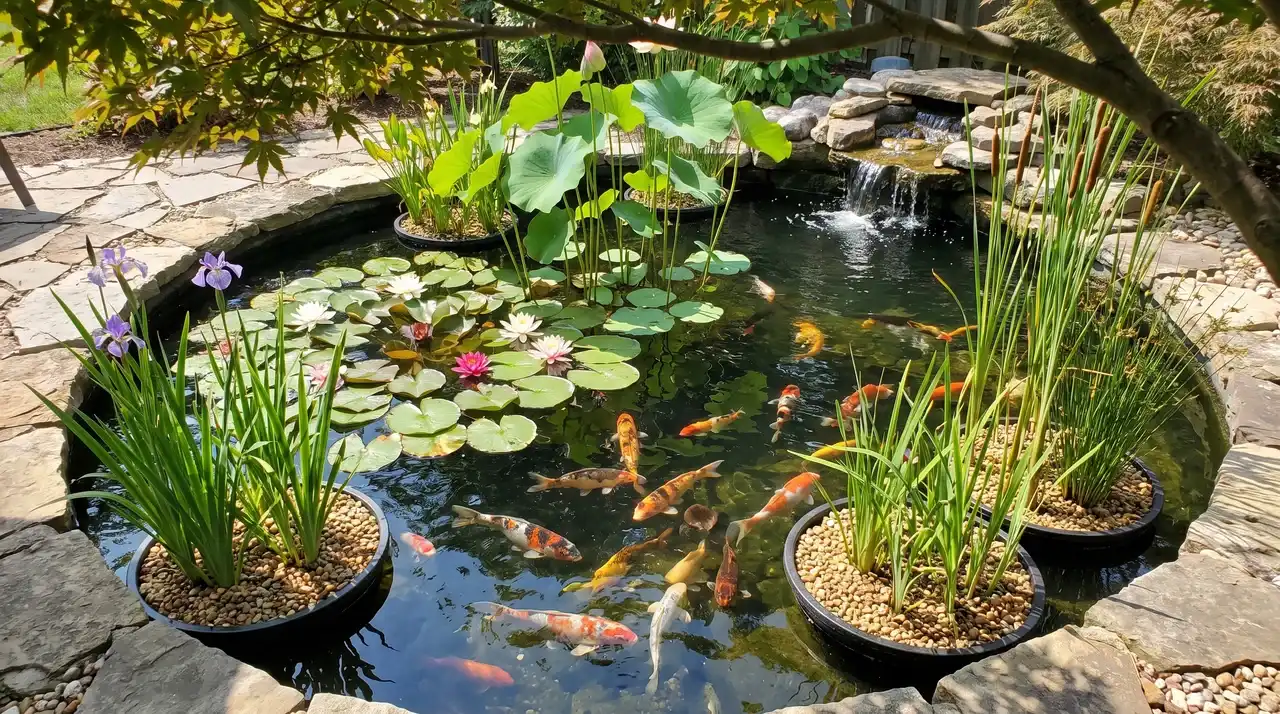
Water lilies, lotus, and marginal plants add shade, oxygen, and natural filtration to a koi pond. Use planting baskets, since koi often dig up and nibble unprotected roots.
Add a layer of gravel on top to stop soil from clouding the water. Position taller plants near the edges and shorter ones near the center to keep the swimming area open.
Well-placed plants also give young or shy koi cover from the sun and from circling predators overhead.
15. Shaded Koi Pond with a Pergola
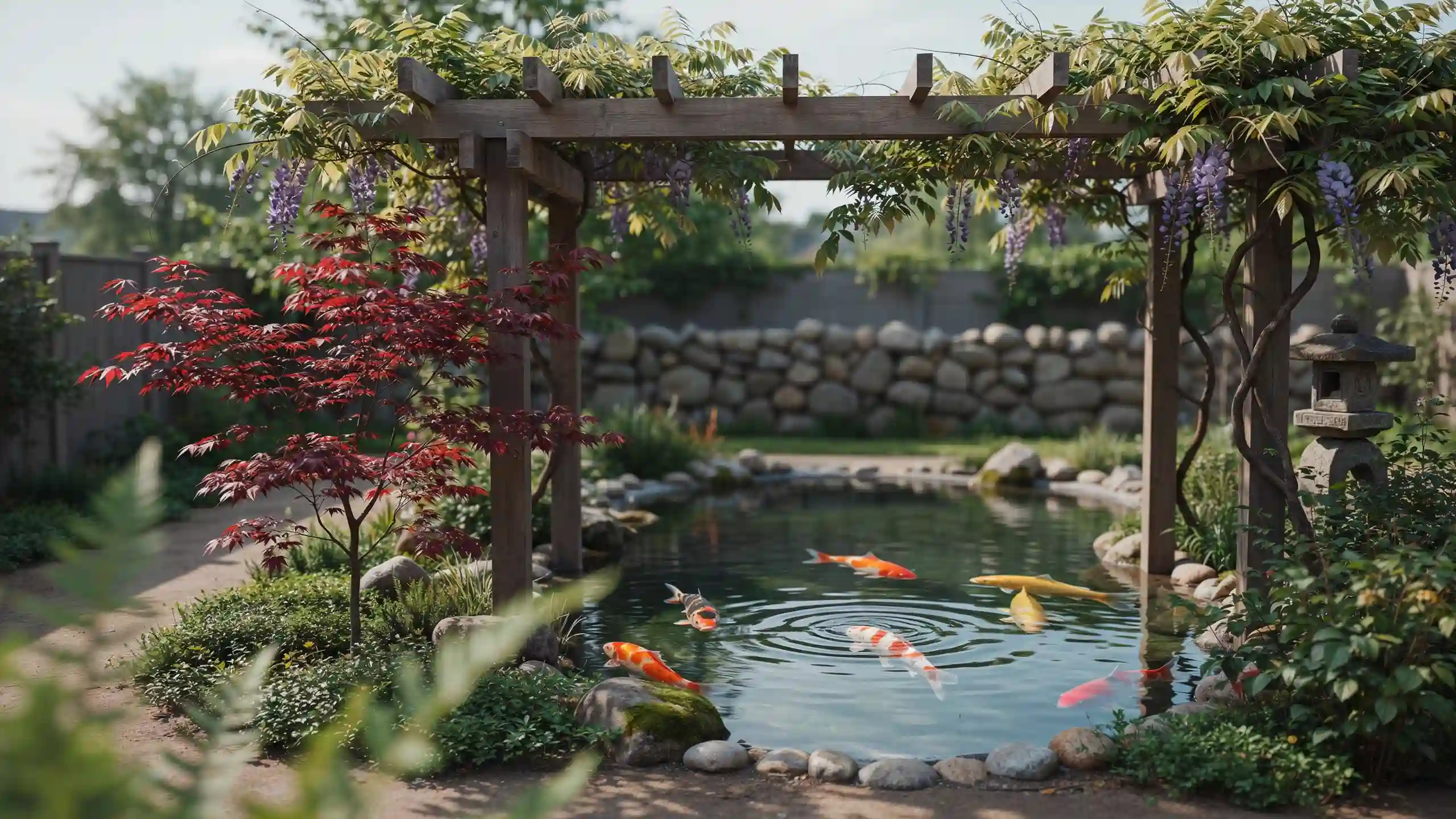
A pergola covered in vines or lattice reduces direct sunlight reaching the water’s surface. Less sun exposure can help limit algae growth and reduce temperature swings, creating more stable conditions for koi.
Choose fast-growing but manageable vines, such as wisteria or grapevine. Trim them back before falling leaves become a filtration problem in autumn.
A pergola also gives you a shaded spot to watch the pond during the hottest part of the day.
16. Wildlife-Conscious Koi Pond
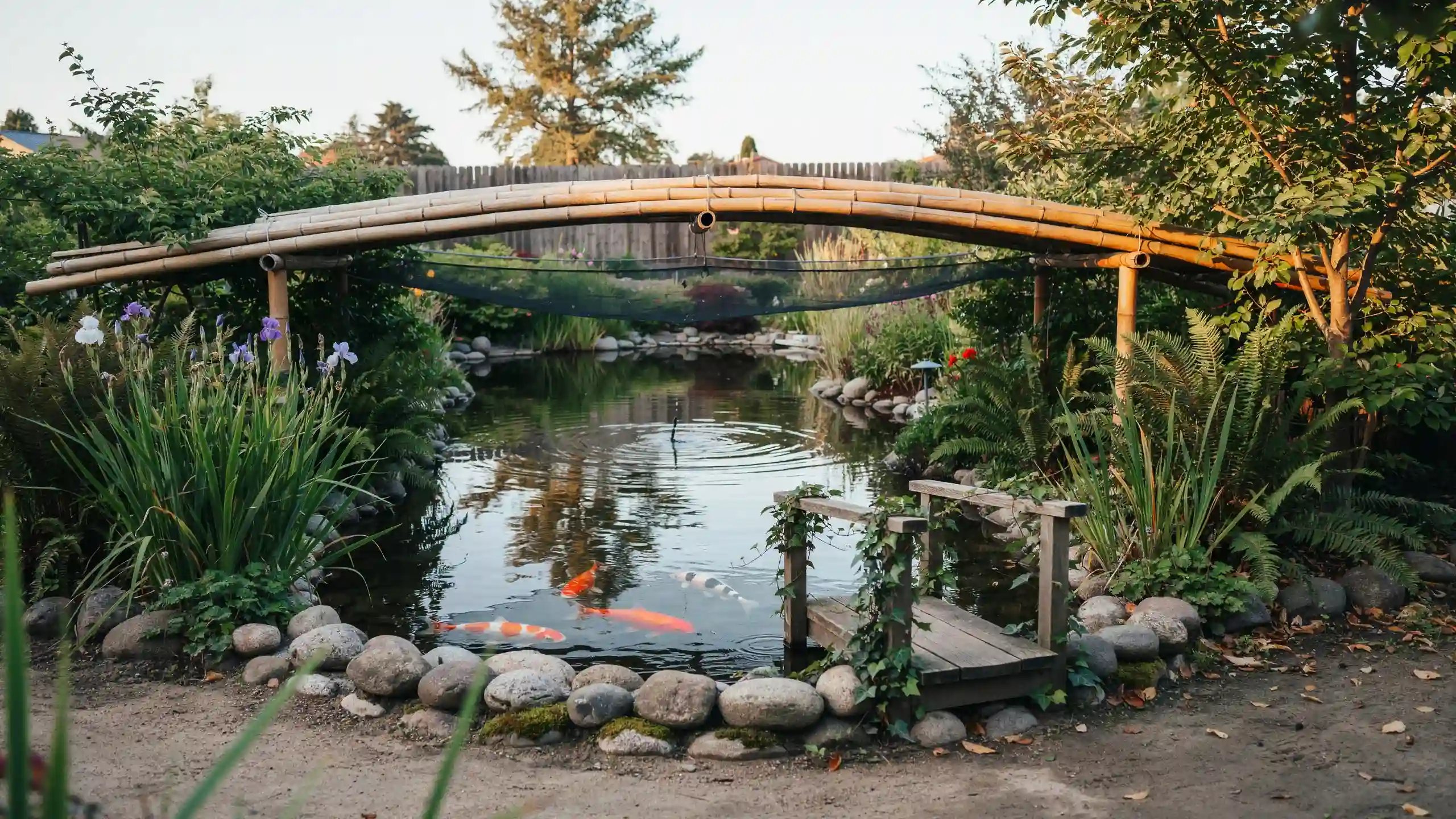
Build with overhangs, plant cover, or discreet netting to block herons and raccoons. Predator protection can look completely natural instead of obvious or bulky.
Use rock ledges, dense marginal plants, or a shaded overhang along one edge. Deeper water near the center also gives koi a safe place to retreat when a predator approaches the surface.
Motion-activated sprinklers near the bank offer another quiet way to discourage visits without harming local wildlife.
17. Koi Pond with a Bog Filter
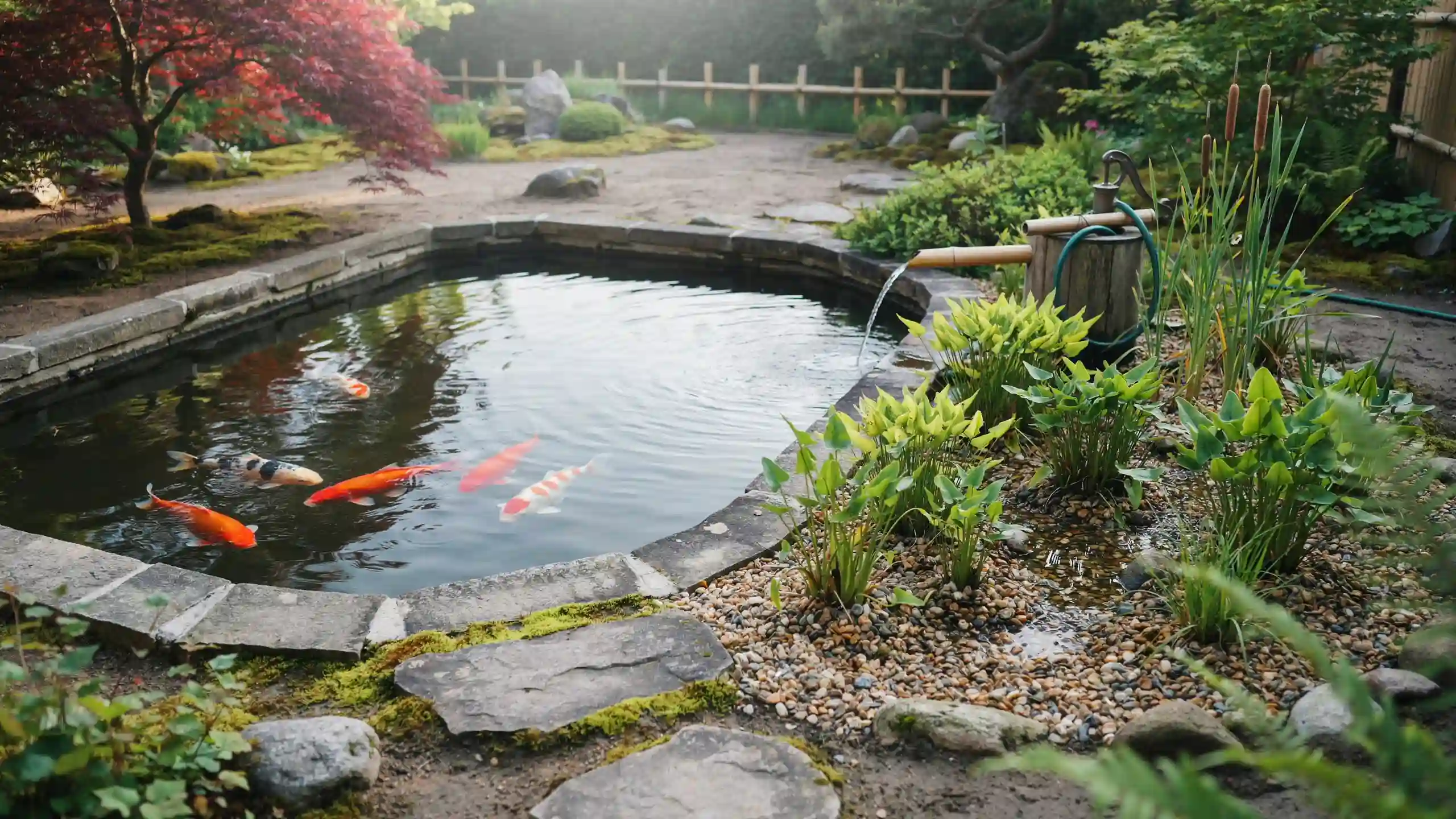
A planted gravel bed filters water biologically before it returns to the main pond. This lowers the need for extra chemical water treatments.
Plant roots and bacteria in the gravel break down waste as water passes through. A bog filter also doubles as a landscaped feature.
Plant it with irises, rushes, and other species that soften the pond’s edge. Size the bog area to about ten to fifteen percent of the total pond surface.
Water Feature Options for a Healthy Koi Pond
Thoughtfully designed water features enhance both the look and feel of a koi pond, turning it into a peaceful backyard focal point.
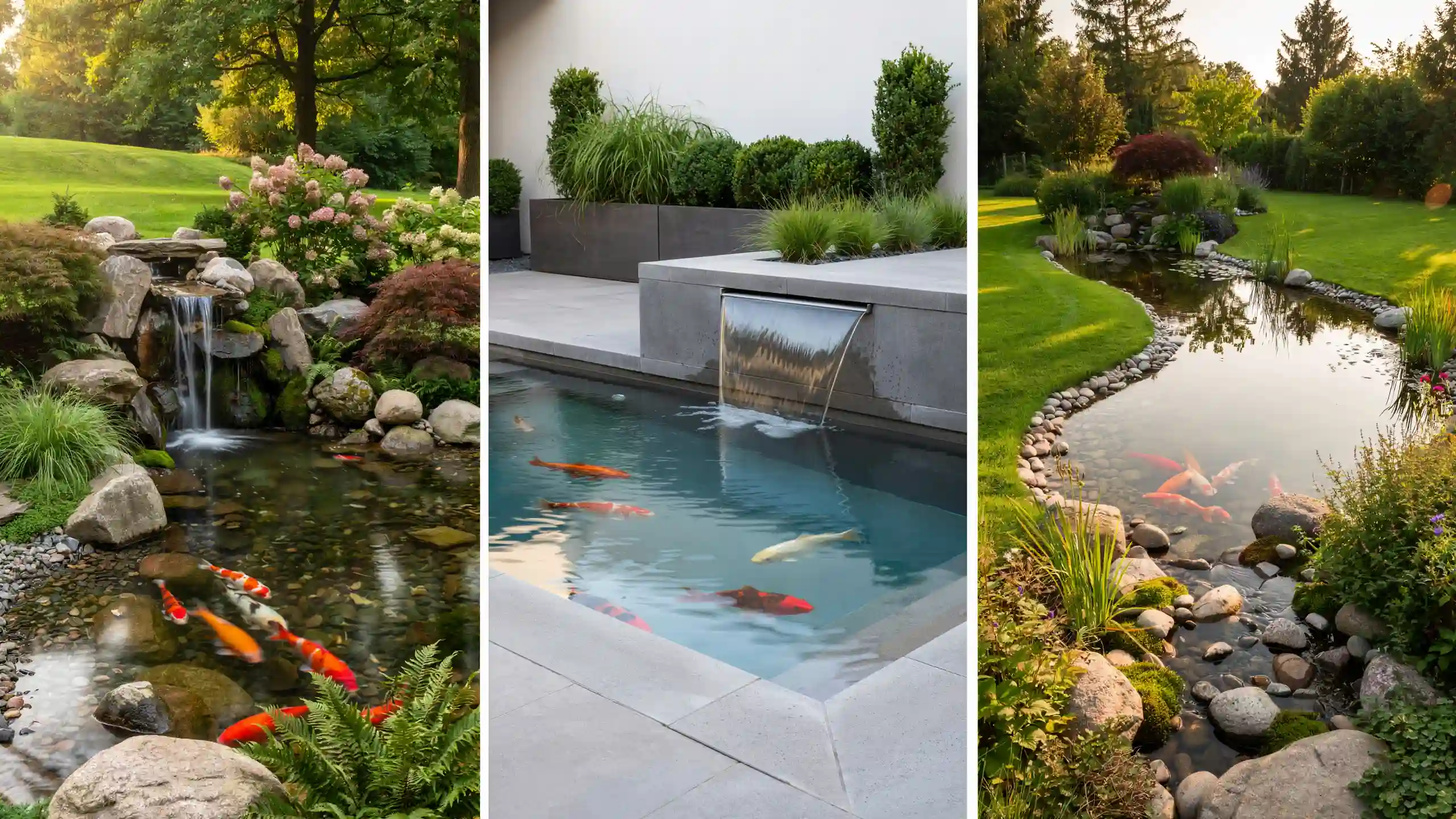
- Natural Stone Waterfall: A small waterfall adds a gentle sound and movement. It also boosts aeration, which koi need for healthy oxygen levels. Keep the stones securely set so they don’t shift over time.
- Modern Spillway: A narrow, straight-edged strip of falling water suits a formal or geometric pond. It offers the same aeration benefit with a cleaner, more structured look.
- Short Pond Stream: A shallow, planted stream can return filtered water to the pond. This creates a softer, more natural transition than a straight pipe or spillway.
Waterfalls and fountains support water movement. But they don’t replace a properly sized filter and aeration system. Think of them as a bonus, not a substitute.
Choosing the Right Pond Size and Depth
The size and depth of your koi pond play a major role in fish health, water quality, and long-term maintenance.
| Factor | What to Consider |
|---|---|
| Surface area | Available yard space and swimming room |
| Depth | Climate, predators, and mature koi size |
| Water volume | Number and expected size of fish |
| Shape | Effective circulation without dead zones |
| Access | Filter cleaning and routine pond care |
Avoid perfectly round or oval shapes. They create circular flow patterns that trap waste in the center. Irregular or kidney-shaped ponds tend to circulate water more evenly.
Before construction begins, confirm local rules. Depth limits, fencing laws, permits, and electrical codes vary by area. It’s easier to check early than to redo work later.
Koi Pond Cost Considerations
Most mid-sized koi ponds cost between $5,000 and $16,000 to install, though smaller ponds can start closer to $2,800. Larger builds of 20 feet or more can exceed $27,000.
| Pond Type | Typical Cost Level | Main Expenses |
|---|---|---|
| Liner pond | Lower | Liner, pump, filter, edging |
| Raised pond | Moderate | Structure, waterproofing, filtration |
| Concrete pond | Higher | Excavation, construction, drainage |
| Large custom pond | Highest | Professional design, advanced filtration, landscaping |
Ongoing costs add up, too. Budget for electricity, water treatments, replacement filter parts, testing supplies, fish food, and annual seasonal servicing.
How to Make Your Own Koi Pond
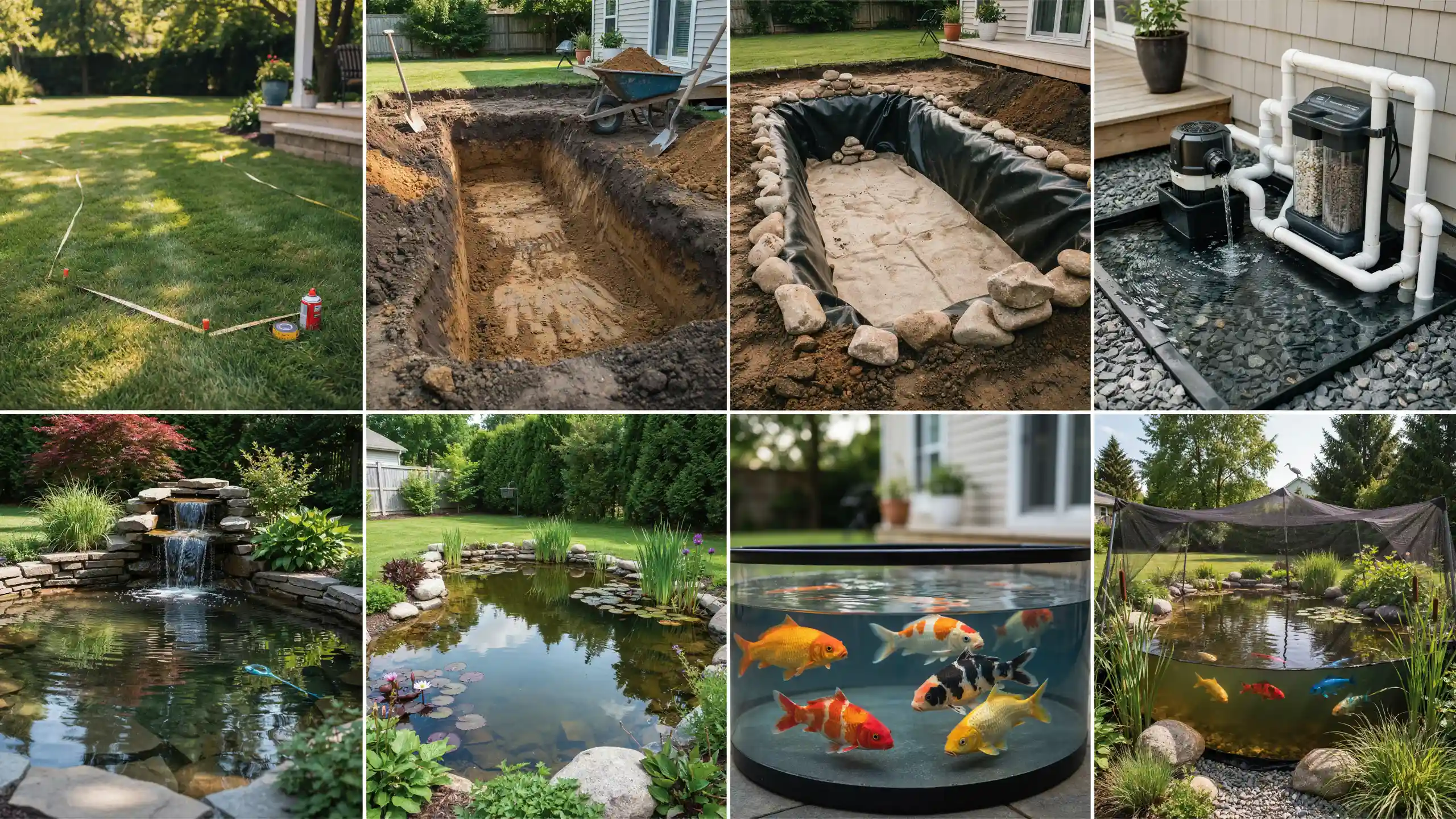
Step 1: Pick a level, partly shaded spot in your yard away from trees, since leaves and strong sun can quickly harm water quality and koi health.
Step 2: Dig the pond at least three feet deep in most climates, since koi need enough depth to safely escape summer heat and harsh winter ice.
Step 3: Line the finished hole with a durable, thick pond liner and underlayment, which guard against leaks and sharp rocks while safely holding thousands of gallons.
Step 4: Install a strong pump and biological filter system early on, since clean, well-oxygenated water keeps koi healthy and helps stop algae blooms from spreading fast.
Step 5: Add a small waterfall, fountain, or aerator to boost oxygen levels, since koi always need well-oxygenated water, especially during hot summer months and crowded conditions.
Step 6: Let the newly built pond cycle fully for several weeks before adding any fish, giving beneficial bacteria time to naturally control ammonia and nitrite levels.
Step 7: Quarantine new koi for two full weeks in a separate holding tank, then slowly introduce them to avoid shocking the fish or spreading hidden disease.
Step 8: Cover the pond with sturdy netting or add tall plants along the edges, since herons, raccoons, and neighborhood cats often see koi as easy meals.
Basic Seasonal Maintenance for a Healthy Koi Pond
Regular seasonal maintenance helps keep your koi pond clean, balanced, and healthy throughout the year.
Spring and Summer: Test the water regularly. Inspect equipment for wear. Control debris before it builds up. Watch oxygen levels closely during hot weather, since warm water holds less oxygen and encourages algae growth.
Fall and Winter: Remove fallen leaves before they sink and decay. Adjust feeding as water temperatures drop, since koi eat less in cold water. Prepare the pond for local winter conditions, including any de-icers or heaters your climate requires.
Pro tip: Don’t judge water quality by looks alone. Test regularly for pH, ammonia, nitrite, nitrate, alkalinity, and temperature. Clear water can still carry hidden problems.
Final Thoughts
A successful koi pond design isn’t just about how it looks on day one. It balances layout with depth, water volume, filtration, and safety.
Maintenance has to stay realistic too, or the pond becomes a chore instead of a joy.
Plan around the koi your fish will become, not the small size they start at. Get depth and filtration right from the start, and the rest of the design has room to be as creative as you want.
Ready to start planning your own koi pond? Share your yard size and style in the comments, and we’ll help you figure out the best fit.
Frequently Asked Questions
How Deep Should a Pond Be for Koi?
A koi pond should be at least 3–4 feet deep. Deeper ponds provide stable temperatures, better protection from predators, and enough space for healthy koi growth.
What Else Can You Put in a Koi Pond?
You can add aquatic plants, water lilies, decorative rocks, beneficial bacteria, and compatible fish species. Avoid overcrowding to maintain good water quality and a balanced ecosystem.
How Long Can Koi Survive in a Pond without a Pump?
Koi may survive a few hours to several days without a pump, depending on oxygen levels, pond size, temperature, and fish population. Restore circulation quickly.
What Is the Best Fish to Put With Koi in a Pond?
Goldfish are among the best companions for koi because they share similar water requirements, peaceful behavior, and feeding habits, making them suitable pond mates.
What Fish Will Koi Not Eat?
Adult koi generally do not eat larger fish like goldfish, golden orfe, or tench. However, they may consume very small fry or fish eggs if available.