

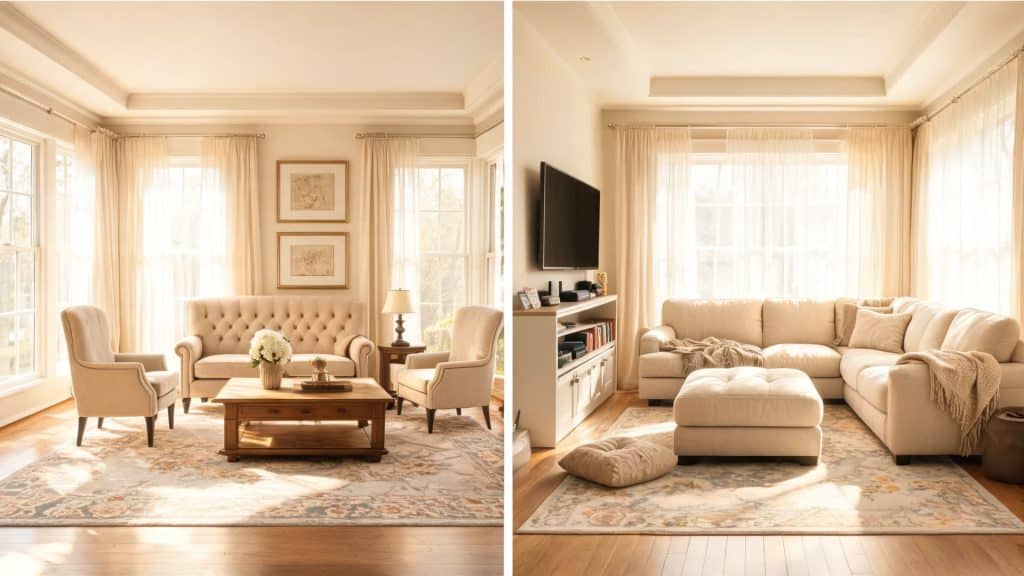


Most homes have at least one of these rooms. Many have both, and nobody’s quite sure which is which.
The confusion makes sense because the names aren’t self-explanatory, and plenty of design guides treat them as interchangeable. They’re not. The living room vs family room distinction comes down to one question: who uses the room, and when?
A living room is a formal space, oriented toward guests and occasional use. A family room is the daily hub, built around how your household actually lives. When you understand that split, every decision about furniture, layout, and placement gets easier.
| Feature | Living Room | Family Room |
| Formality | Formal | Casual |
| Primary Users | Guests and occasional family use | Household, daily use |
| Typical Activities | Reading, conversation, quiet entertaining | TV, games, lounging, family time |
| Furniture | Matching sofas, accent chairs, decorative tables | Sectionals, recliners, durable surfaces |
| Location | Near the front entrance | Near the kitchen or rear of the home |
| Tech | Minimal or discreet | TV, sound system, gaming |
The table above captures the headline differences, but the real value is in understanding why those differences exist and how they should shape your layout decisions.
What a Living Room Is Actually For
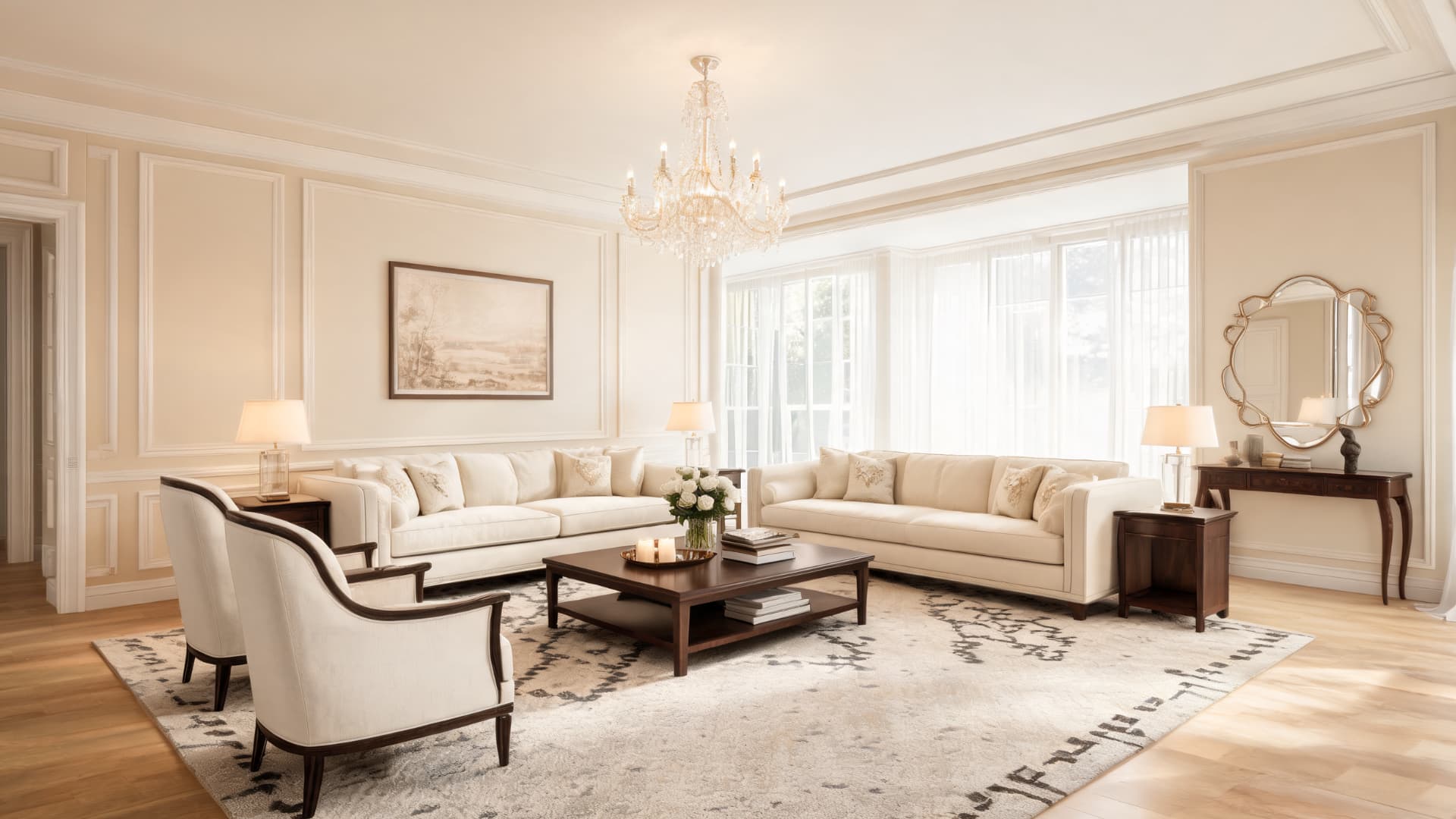
The living room is a formal receiving space. In most homes, it sits near the front entrance and handles guests, quieter leisure, and the kind of social situations where you want the room to make an impression. That’s not pretentious, it’s functional.
Having one defined space that stays tidy and intentional means you’re not scrambling to clear toys and throw blankets every time someone knocks on the door.
Furniture in a living room is chosen for visual coherence and measured comfort. Matched sofas, accent chairs that face each other, a coffee table at the right height for conversation, the layout is designed to support talking, not reclined watching. You’ll often see art, careful lighting, and textiles that would never survive daily family use. That’s by design.
What you generally won’t find in a well-defined living room is a large TV front-and-center, kid-scale storage, or furniture positioned around a screen. That setup works against the room’s purpose. If your “living room” has a 65-inch TV as the focal point and a sectional, you’ve got a family room that happens to face the street.
What a Family Room Is Actually For
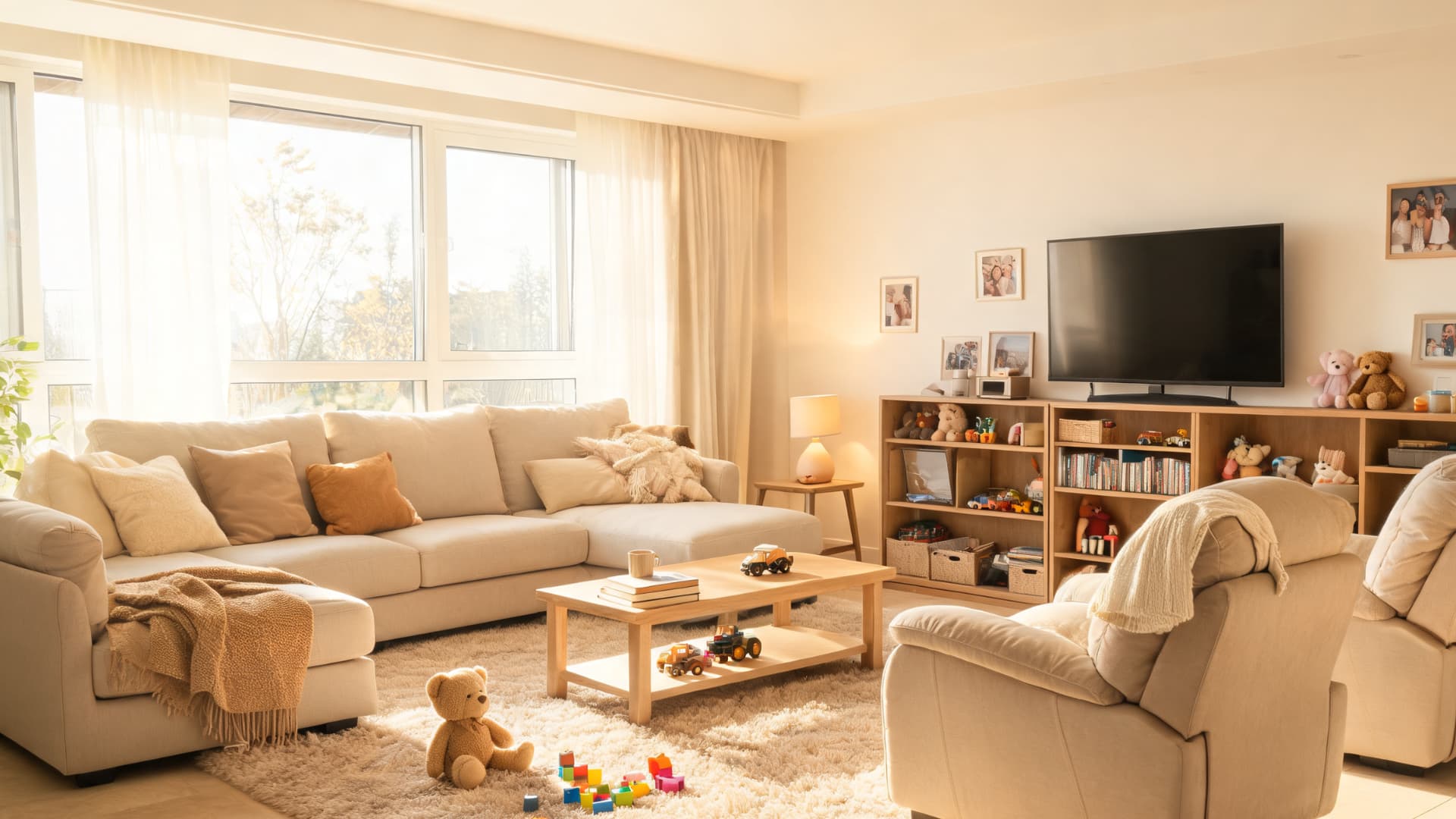
The family room is where the household actually lives. It handles daily use in a way a formal space can’t, because it doesn’t try to look polished under pressure.
Sectional sofas, durable upholstery, storage that absorbs toys and remotes, and a TV that isn’t hidden behind a cabinet. The layout here points toward the screen or the fireplace layout decisions that define the room’s focal point, not toward a conversational cluster of chairs.
Location matters in a way people underestimate. Family rooms sit near the kitchen for good reason. The sightline between the two spaces is the whole point, adults cooking while kids watch a show, or everyone congregating naturally after dinner without being routed through the formal front of the house.
A family room buried in a basement fights this logic. A family room that opens to the kitchen or a rear outdoor space works with how households actually flow.
The furniture needs to handle daily reality. Sofas that are too precious for a spilled drink or a dog that jumps up won’t work here. Performance fabrics, sectionals that can be reconfigured, coffee tables with lift tops or lower shelves, these aren’t compromises, they’re the right tools for the job.
The Real Differences Between a Living Room vs Family Room
1. Formality Changes How You Arrange Furniture
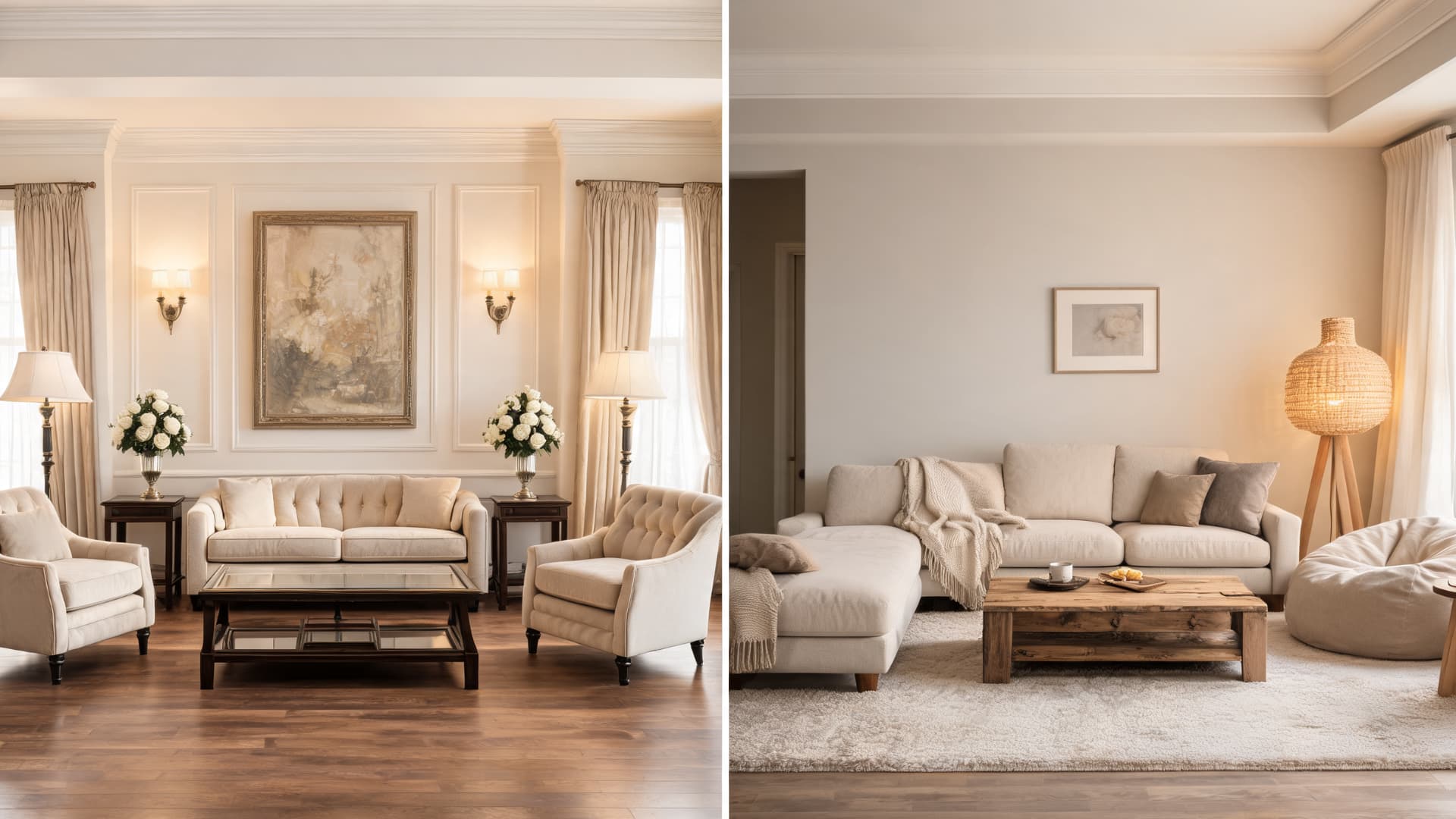
In a living room, furniture arrangement rules follow a symmetrical, conversation-first logic. Two sofas facing each other across a coffee table. An accent chair anchoring a corner. Traffic paths kept clear at 36 inches minimum so the room reads as intentional, not crowded. The goal is a room that looks considered when someone walks in.
In a family room, the arrangement follows use instead of aesthetics. Everything faces the focal point, usually the TV or fireplace.
Clearance between the sofa and the screen matters: a 55-inch TV works at around 7 to 9 feet from the seating; a living room with TV sized at 65 inches wants closer to 9 to 11 feet. Get that wrong and people are craning their necks or sitting so far back the screen feels distant.
2. Activities Define What Furniture You Actually Need
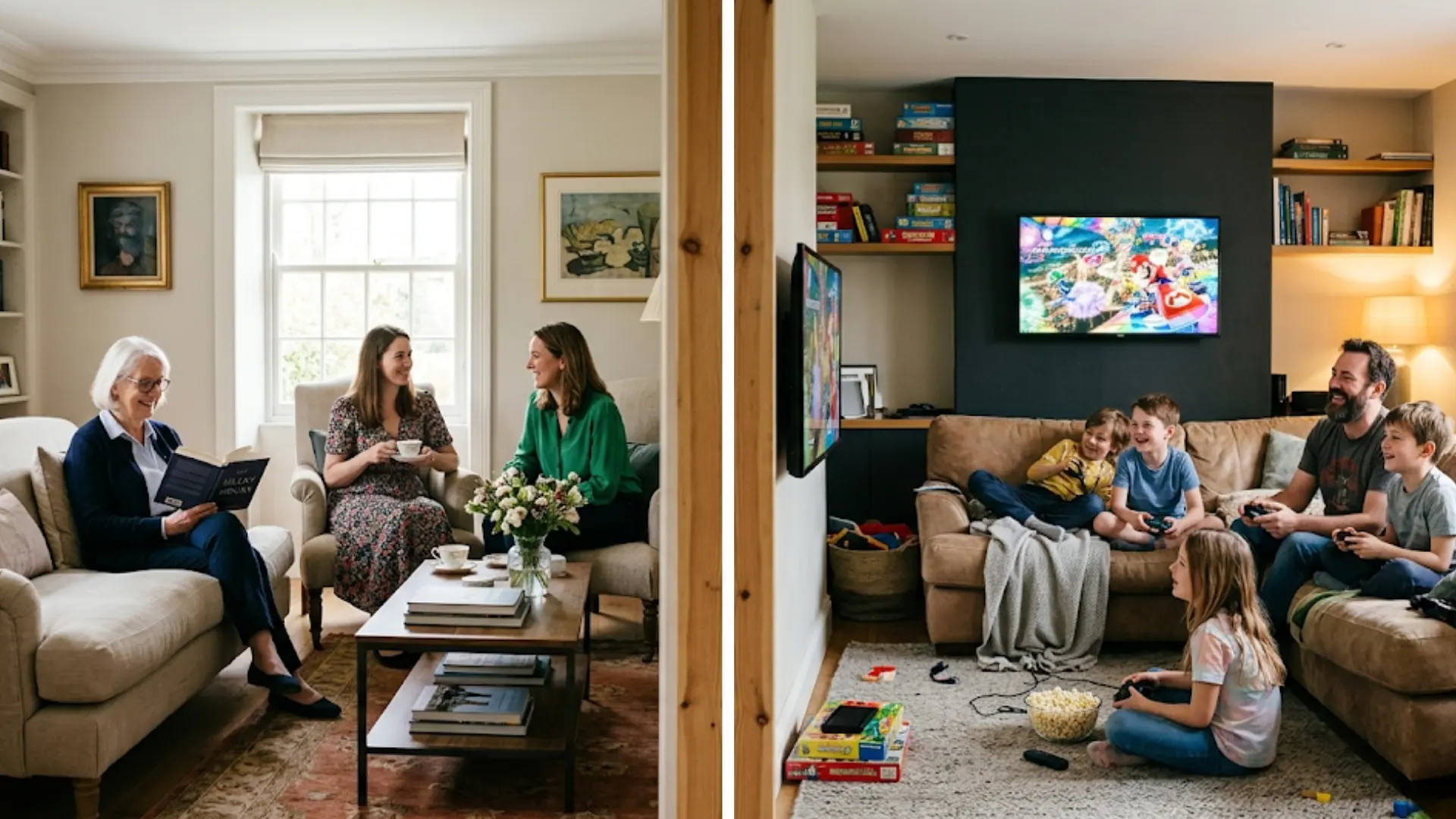
Living rooms handle reading and quiet space activities, board games, cocktails before dinner, and conversations that benefit from a composed setting.
The furniture and layout serve those activities, tables at the right height for a drink, seating close enough for easy conversation (typically 8 feet or less between facing seats), lighting that creates a calm atmosphere without leaving someone in shadow.
Family rooms handle the louder, messier, more continuous side of household life. Streaming, gaming, homework sprawl, kids on the floor, pets on the couch.
The furniture requirements shift accordingly: more seating total, lower and wider coffee tables, side tables that can take a glass without hovering over your lap, storage within arm’s reach.
3. Furniture Durability Is Not Optional in a Family Room
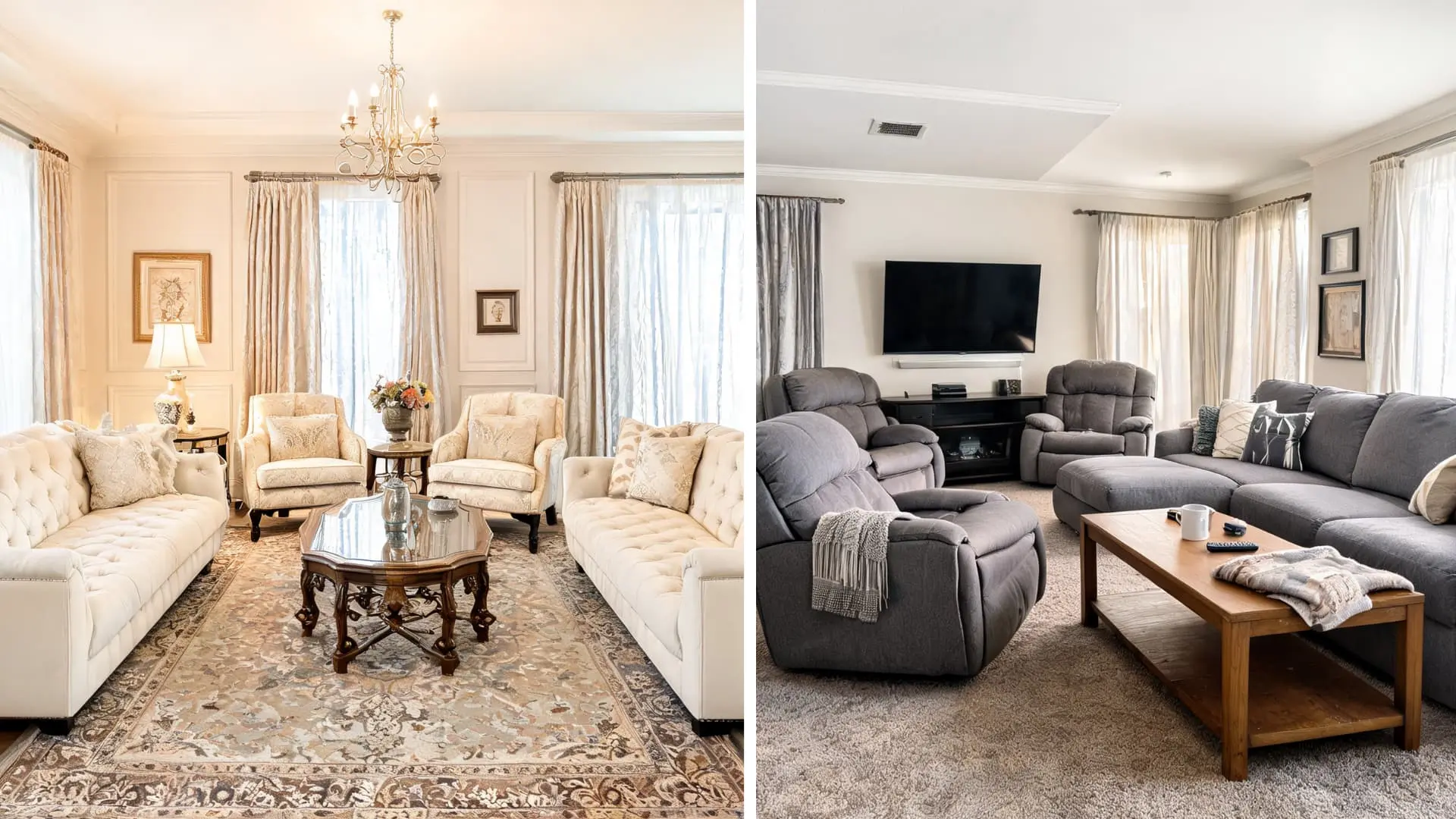
Living rooms can carry delicate or dry-clean-only upholstery because the room isn’t used hard. Velvet sofas, light linen cushions, lacquered wood, all fine in a space that sees guests occasionally.
A family room with that furniture will look wrecked within a year. For family room seating, look for durable furniture material rated for high rub counts (30,000 or above), or leather that improves with use.
Coffee tables with solid wood or stone surfaces handle the daily abuse that a veneered piece won’t. Rugs need to be low-pile, flatwoven, or washable, not a light-colored area rug that shows every crumb.
4. Location in the Home Is Not Decorative, It’s Functional
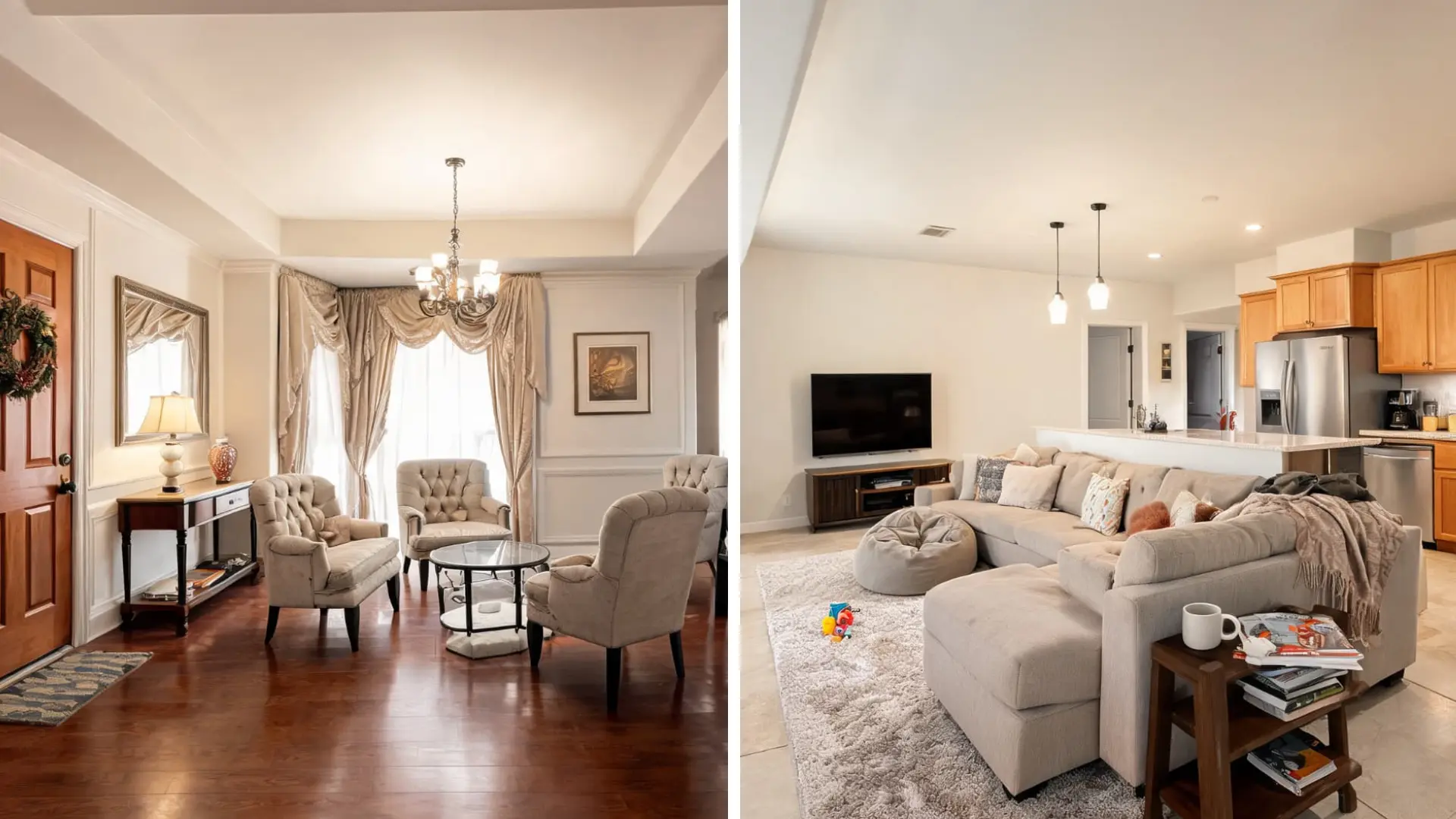
Living rooms placed at the front of the house solve a specific problem: guests arrive, they need somewhere to go, and that space should be presentable. It’s not about showing off, it’s about creating a buffer between the private, daily-use parts of your home and the front door.
Family rooms work best adjacent to the kitchen or opening to a rear outdoor space. This is the traffic pattern that matches how households actually move through the day.
Fighting that pattern by placing a family room at the front of the house, or isolating it on a different floor from the kitchen, reduces how naturally the space gets used.
5. Style and Technology Serve Different Goals
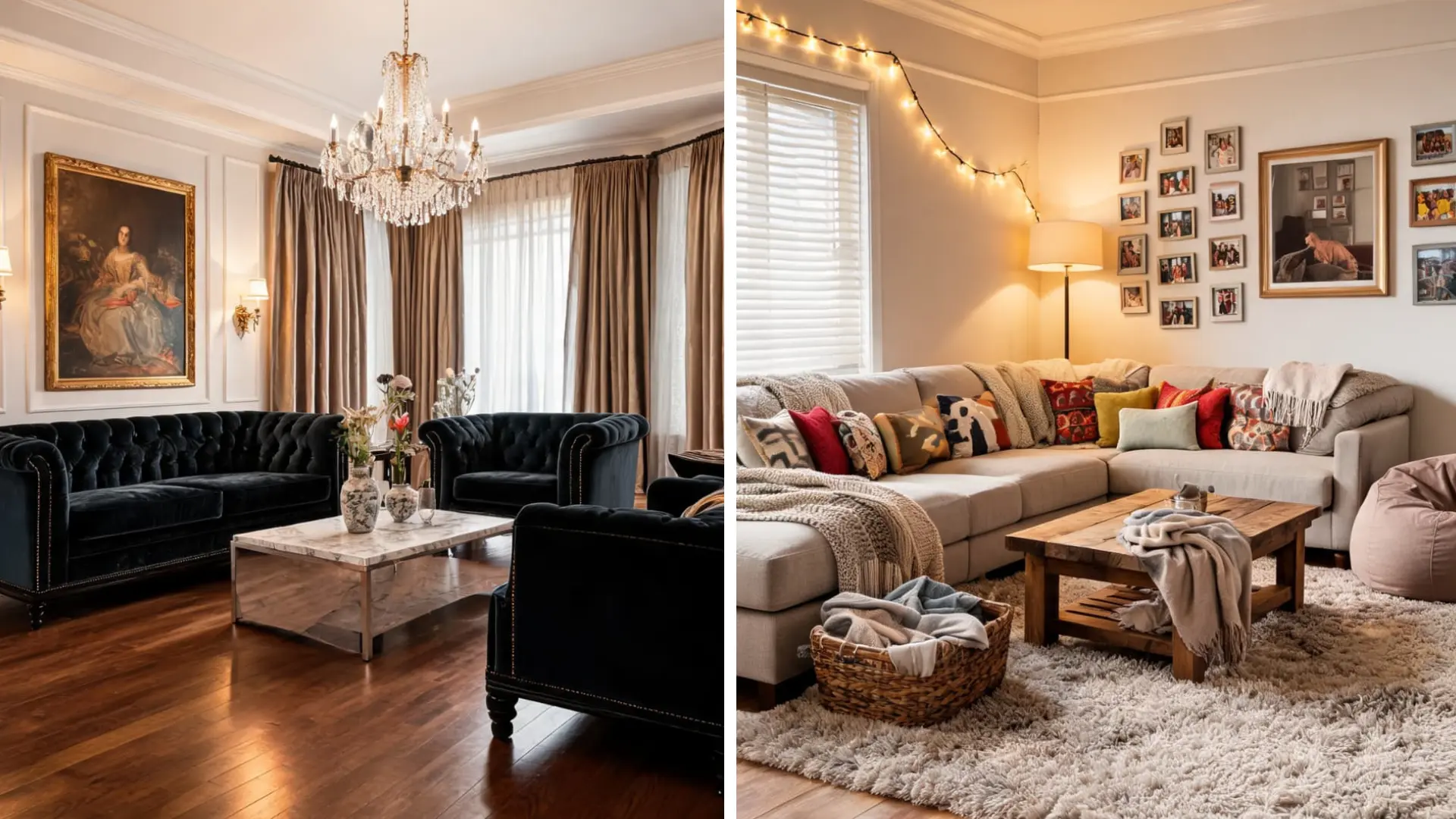
Living rooms often keep technology discreet, a TV behind cabinet doors, speakers integrated into the architecture, lighting on dimmers. The aesthetic goal is a room that doesn’t look like it’s organized around a screen.
Décor is curated: artwork that means something, a few objects chosen deliberately rather than accumulated.
Family rooms are unapologetically media-forward. The TV is central, the sound system is accessible, and the lighting needs to handle both bright task conditions and darkened movie-watching without being stuck at one setting.
Décor can be warmer and more personal — family photos, kids’ artwork, comfortable throws, because the room isn’t trying to impress anyone, it’s trying to be used.
Do You Actually Need Both Rooms?
Not every home can support two separate spaces, and not every household needs them. Here’s how to think about it honestly.
You probably don’t need both if you rarely entertain formally, your household is small, or your home’s layout doesn’t give you two genuinely separate spaces. In that case, a single well-designed room that handles both functions, with some intentional zoning, is the smarter path.
You’ll benefit from both if you regularly host guests and want somewhere to do that without clearing out the household’s daily mess, or if you have children and want the TV-and-noise zone separate from a quieter space for adults.
The separation doesn’t require a big house, it requires two rooms with clear, distinct purposes.
| Note: In many newer homes and open floor plans, the distinction between a living room and a family room has collapsed into a single “great room” that spans the kitchen, dining, and lounge areas. If that’s your setup, the same principles apply, use furniture arrangement and lighting to create distinct zones within the open space, rather than expecting walls to do the work. |
How to Combine a Living Room and Family Room in One Space
If your home has one large room doing both jobs, the goal is zone separation, not a full redesign. The room needs a formal zone that can receive guests and a casual zone that can handle daily household use, and those zones should feel distinct without a wall between them.
Use a large area rug to anchor the casual seating group around the TV. A separate, smaller rug defines the formal conversation area. The rugs don’t need to match exactly, they need to make the spatial logic readable at a glance.
Lighting does significant work here. Put the living zone on one dimmer circuit and the family zone on another. Ambient light that washes the whole room uniformly flattens both areas into one undifferentiated space. Directional or layered lighting, a floor lamp behind a reading chair, recessed lighting focused on the seating cluster, gives each zone its own character.
Keep the TV away from the formal conversation area. If they share a sightline, the TV wins every time and the “living room” zone stops functioning. Even a 90-degree rotation in furniture placement can break that sightline and make the room feel like two intentional spaces.
| Pro Tip: If you’re combining both functions in one room, position the TV on a side wall rather than the wall opposite the main entrance. This keeps the first impression of the room from being dominated by a screen, and it preserves a clear conversation area near the entrance that reads as a living room zone. |
Common Mistakes That Break Both Rooms
| Mistake | Why It Fails | Fix |
| Oversized furniture in a living room | Blocks traffic paths, makes the room feel crowded and hard to use | Leave 36 inches of clearance on all main paths; scale furniture to the room |
| Delicate upholstery in a family room | Deteriorates fast, creates anxiety around normal household use | Use performance fabric or leather rated for heavy use |
| No storage in the family room | Clutter accumulates, room stops functioning | Build in shelving, baskets, or lift-top furniture for everyday items |
| Uniform overhead lighting only | Flattens the room and makes it feel like a waiting room | Layer ambient, task, and accent lighting with dimmer controls |
| TV in the living room as focal point | Undermines the conversational layout the room is supposed to support | Keep TV discreet or move it to the family room where it belongs |
Most of these errors come from treating both rooms as generically “the place where you sit,” rather than spaces with specific jobs to do. Naming the purpose before buying a single piece of furniture saves a lot of reversals later.
Frequently Asked Questions
Can a formal living room still feel comfortable for daily use?
Yes, a formal living room can feel comfortable if you avoid making it too stiff. Choose supportive seating, soft lighting, and a layout that invites conversation. The room can still look polished while feeling usable. The key is choosing pieces that look refined but do not make guests feel afraid to sit down.
What should I do with an unused front living room space?
An unused front living room can become a reading room, music room, office lounge, or quiet sitting area. Keep the layout simple and give the space a clear purpose. If it stays empty because nobody knows how to use it, add function first, then decorate around that purpose.
Should a family room always have a television as its focal point?
A family room does not always need a television, but it should have a clear focal point. That could be a fireplace, game table, large window, or media wall. The best choice depends on how your household spends time there. Design around the activity that happens most often.
How can I make a family room look less cluttered every day?
Use closed storage, baskets, drawers, and furniture with hidden compartments. Keep everyday items close to where they are used, so cleanup feels easy. Avoid too many open shelves because they can look messy fast. A family room should support daily life without looking like everything is on display.
What colors work best in a living room used for guests?
Guest-focused living rooms usually work well with soft neutrals, warm whites, muted greens, taupes, or gentle blues. These colors feel calm and flexible without taking over the space. If you want more personality, add deeper color through pillows, art, rugs, or accent chairs instead of every wall.
How do I make one shared room feel more grown-up?
Use cleaner furniture lines, fewer small decor pieces, layered lighting, and storage that hides daily clutter. Keep toys, remotes, and games organized in closed pieces. Add a rug, art, and side tables to make the room feel intentional. Comfort can stay, but the visual noise should be reduced.
Which room should get the better quality furniture first?
The family room usually deserves the better quality pieces first because it gets the most wear. Choose durable seating, strong tables, and washable or performance fabrics. A living room can handle more delicate pieces if it is used less often. Spend more where your household spends the most time.
Final Thoughts
The real difference between these two spaces comes down to purpose, not just furniture or room name. A living room works best when it feels ready for guests, conversation, and quieter use.
A family room works harder every day, with durable seating, storage, media, and a layout built around how you actually relax. Once you understand the living room vs family room split, your choices become easier.
You can place furniture with more confidence, avoid clutter, and stop forcing one room to do the wrong job. I would start by naming how you use each space, then adjust the layout to match.