

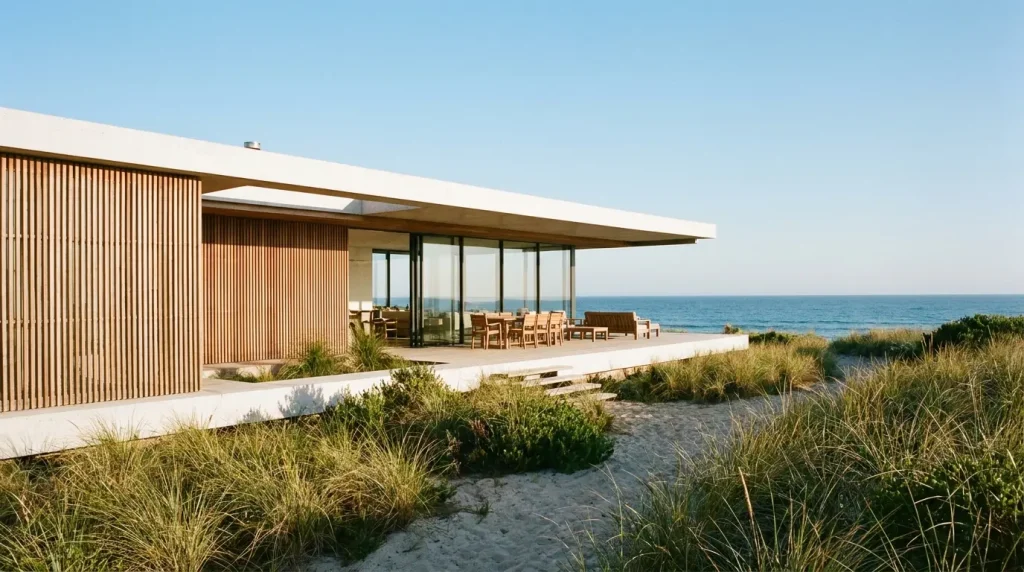


A modern beach house is defined by one specific trade-off: it gives up decoration in exchange for connection. Instead of shell motifs and shiplap trim, the architecture opens up with wide glass, simple forms, and layouts that place the coast inside the room.
That’s the design logic driving every choice I’ll walk you through here, from beach house plans to coastal beach house exterior decisions and the interior details that make daily life work.
According to NOAA, nearly 40% of the US population lives in shoreline counties. That concentration has pushed coastal home design away from themed cottage aesthetics toward a cleaner, more livable standard that works for permanent residents and vacation households alike.
Where a traditional beach cottage relies on decorative trim, enclosed rooms, and nautical references, a modern beach house relies on openness, natural materials, and a clear visual line between inside and out. The home doesn’t try to look like the beach. It tries to feel like it belongs there.
Coastal Beach House Exterior Ideas
The exterior sets the tone before anyone steps through the door. For a modern coastal beach house, that tone should feel open, weather-ready, and visually clean, not dressed up in sea-glass blue siding and rope-wrapped posts. Here are six exterior approaches that hold up in real US coastal climates.
1. Clean White Coastal Exterior
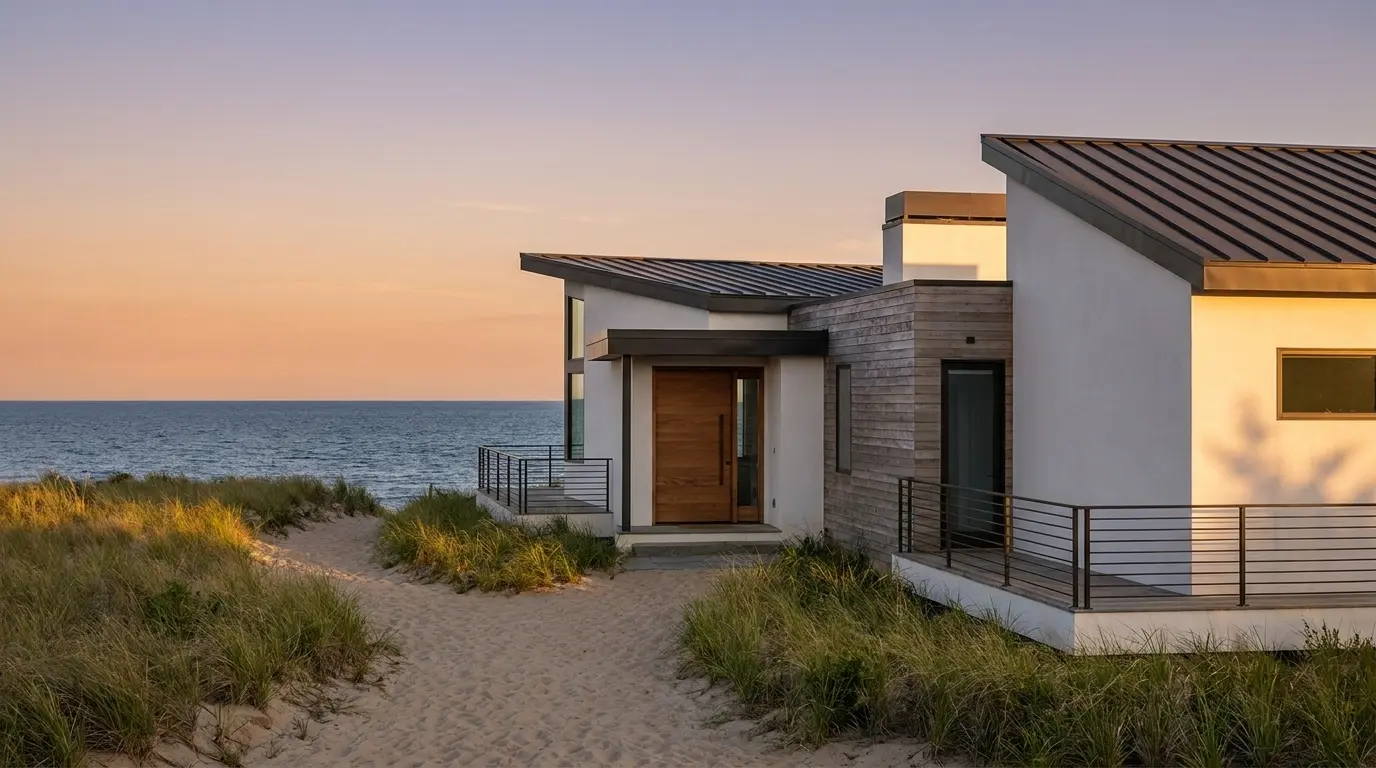
White works because it reflects the coastal light without claiming it. A flat-roofed or sharp-lined white exterior reads as modern immediately.
What separates it from a traditional cottage is the absence of decorative trim, not the color itself.
To keep it from looking sterile, introduce one warm contrast element: a wood front door, a cedar soffit, or a natural stone path. Those details do more work than people expect.
- Sharp roof and wall lines: Straight edges and minimal trim prevent the white facade from reading as a painted-up cottage.
- Warm accent details: A single wood or metal accent such as a door, railing, or fixed outdoor light stops white from flattening out.
2. Wood and Glass Exterior
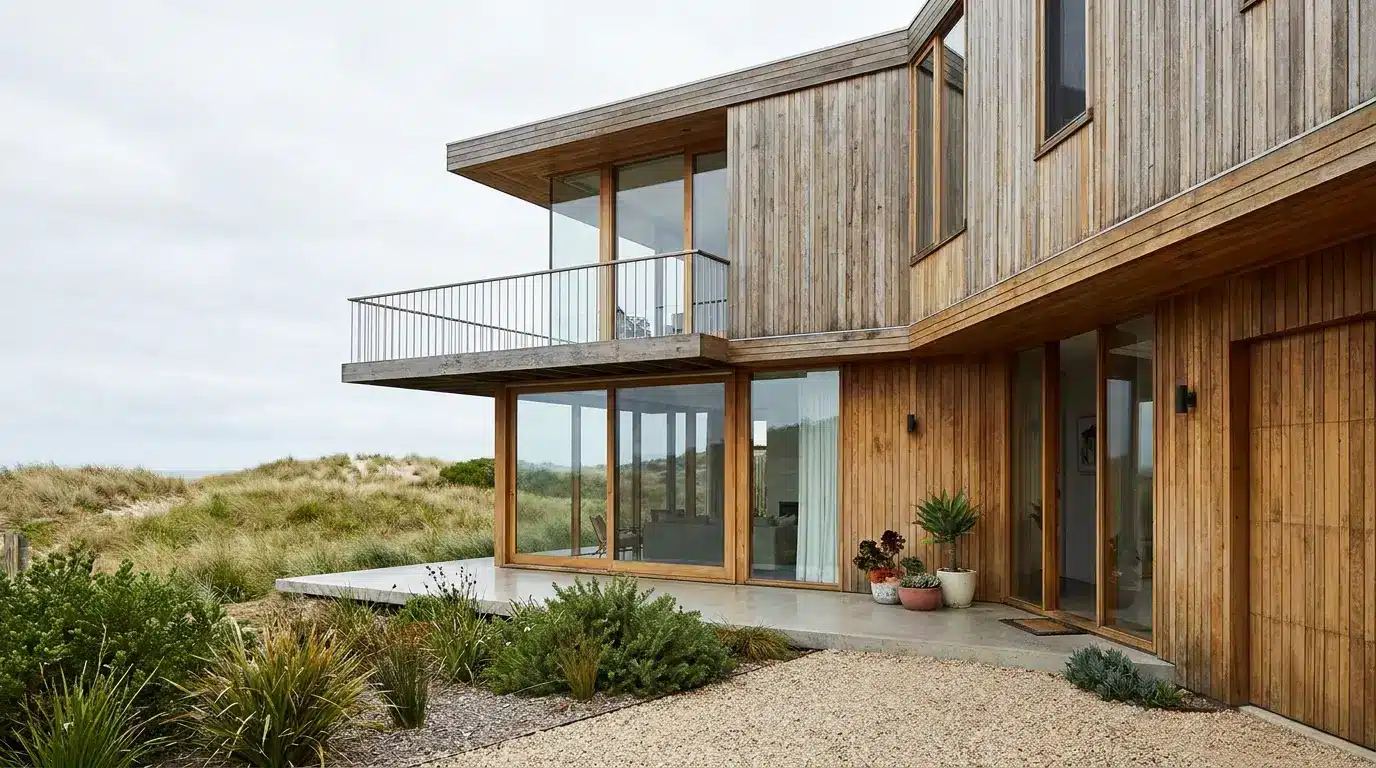
This combination handles the tension between natural materials and modern architecture better than almost anything else in coastal design.
Wood adds warmth; glass gives transparency; together, they avoid the cold flatness that all-concrete or all-white exteriors can produce.
It’s the look you see most often in California, the Carolinas, and Florida’s Gulf Coast, where the goal is relaxed-but-deliberate rather than beach-casual-by-default.
- Vertical or horizontal wood panels: Used in defined blocks such as an upper story or entry surround, wood gives the exterior rhythm without making it look rustic.
- View-framing glass panels: Large glass works best when it frames something specific: water, dunes, or sky. Random coverage feels unplanned.
3. Black-Framed Windows and Modern Contrast
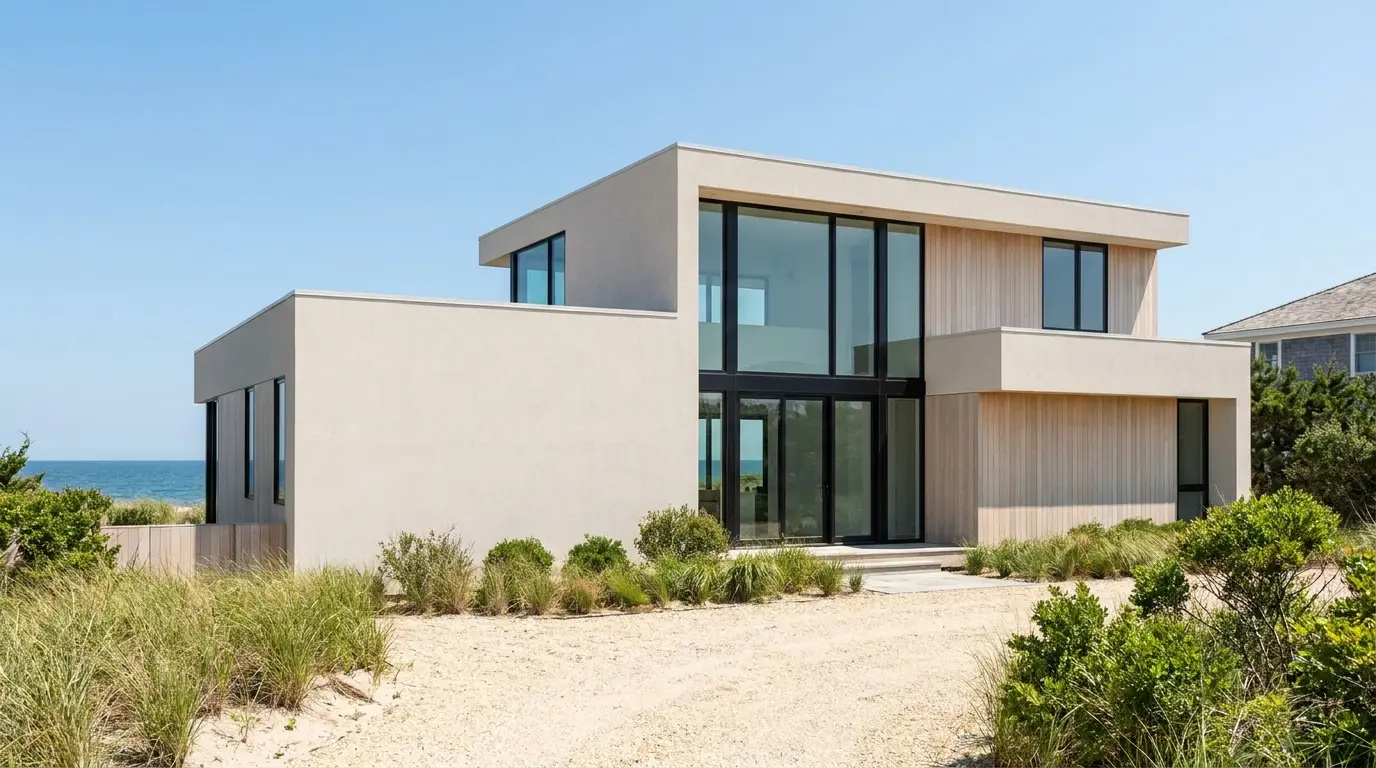
Black window frames are one of the most cost-effective ways to push a coastal beach house exterior toward a distinctly modern look.
The dark lines outline the building geometry and make each window feel intentional. The risk is going too heavy: pairing black frames with dark siding loses the contrast that makes this work.
Stick with white, cream, or pale gray walls so the frames read as sharp detail, not mass.
- Slim frames: Thin black profiles look refined. Thick frames can make a smaller home feel enclosed rather than graphic.
- Neutral wall balance: Pale walls are not the safe choice here; they’re the strategic one. They’re what makes the frame detail land.
4. Flat or Low-Slope Roof
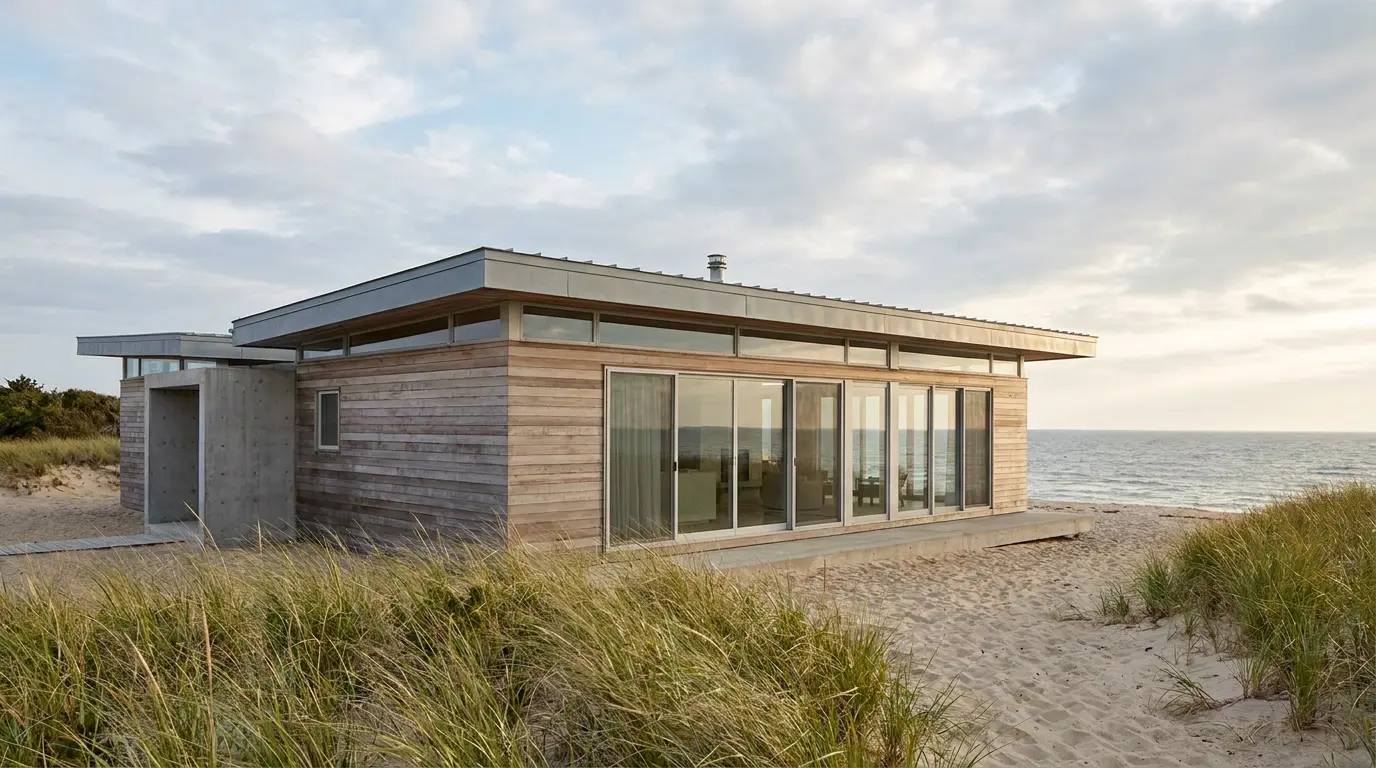
A flat roof does two things for modern coastal design: it creates a low horizontal profile that fits naturally into open beach landscapes, and it avoids the steeply pitched geometry that reads as traditional cottage architecture.
In contemporary US coastal homes, particularly in Florida, Southern California, and the Outer Banks, this roofline has become standard for a reason.
It also allows rooftop decks where local codes permit, adding usable square footage without expanding the building footprint.
- Box-like building form: Flat roofs work with square and rectangular building shapes. The combination creates a clean, readable profile from the street or water.
- Clean drainage details: Concealed gutters and simple edge profiles keep the roofline looking intentional rather than unfinished.
5. Decks and Balconies as Part of the Exterior
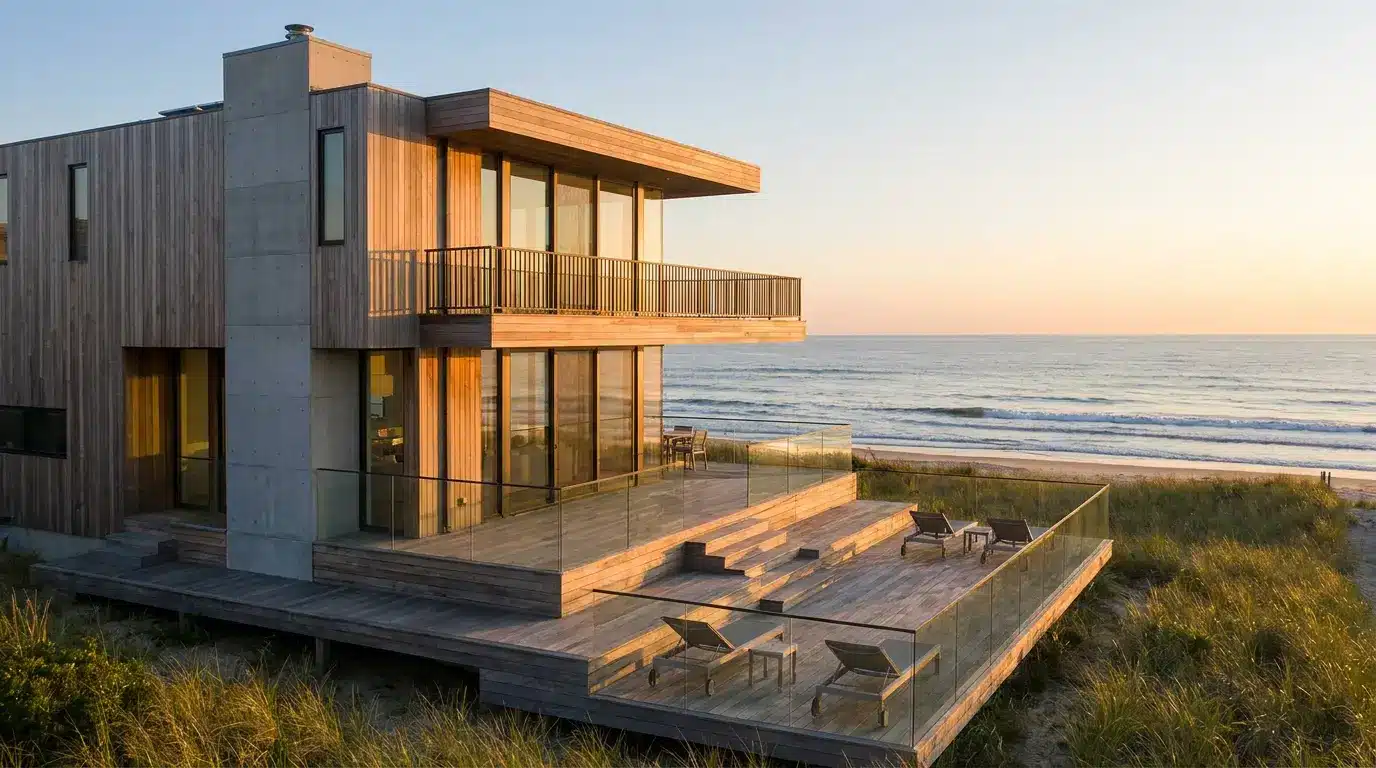
Decks and balconies are not exterior add-ons in a modern beach house. They’re part of the building’s architectural logic.
Layered decks give the facade depth and movement, and they signal from the outside that this home is organized around outdoor access.
Glass or cable railings preserve sightlines from the street while maintaining structural integrity in coastal wind environments.
- Layered exterior levels: A second-floor balcony above a ground-level deck creates visual interest and breaks up flat wall planes.
- Open railing systems: Glass or slim cable profiles keep the view clear in both directions, from inside looking out and from outside looking at the home.
6. Simple Coastal Landscaping
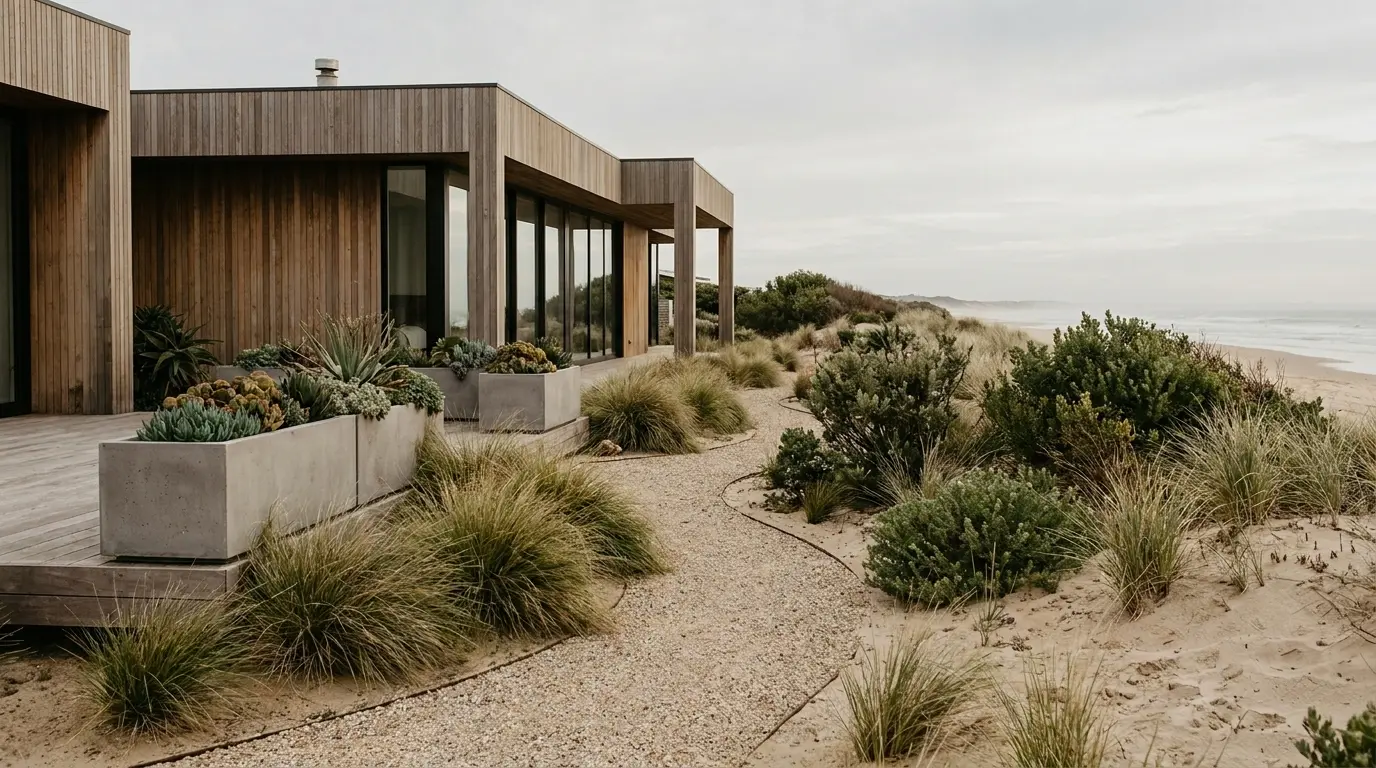
A modern coastal beach house exterior loses its effect when the landscaping fights it. Formal hedges and flower beds belong in a different design vocabulary.
The rule here is to let the architecture speak first and use planting to support it, not compete with it.
In US coastal environments, native plants solve three problems at once: they survive salt air, require less maintenance, and look like they belong there.
- Native coastal planting: Dune grass, sea oats, palms, and salt-tolerant shrubs all work. What matters is choosing plants specific to your stretch of coast. What grows in New England doesn’t belong in Destin.
- Clean ground surfaces: Gravel, crushed shell, and stone paths add texture and keep water from pooling near the foundation.
Modern Beach House Interior Design
The interior of a modern beach house has one job: make the coast feel present without making the room feel themed. That means prioritizing light and views over decor, and practical comfort over showroom aesthetics. Every section below follows that logic.
1. Open Living Room With a Water View
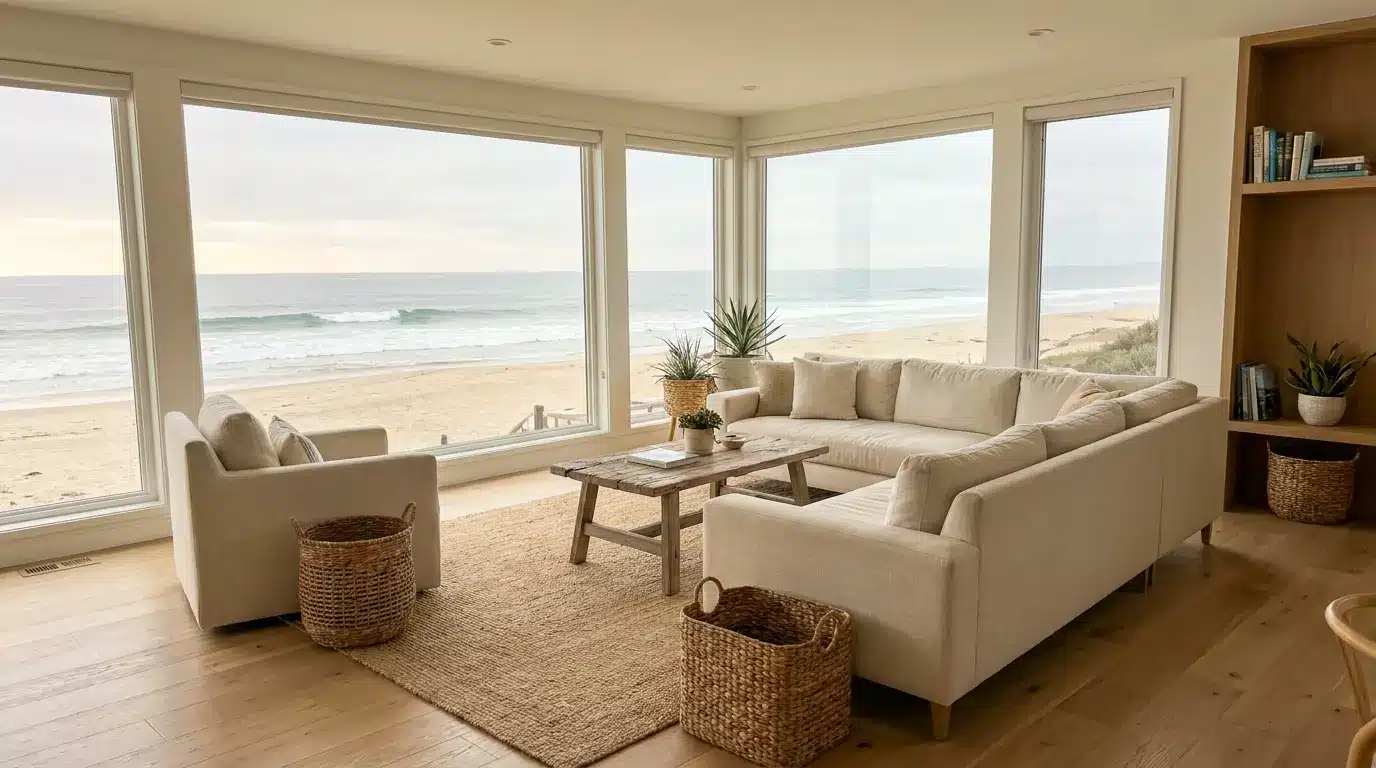
The living room in a modern beach house works as an extension of the view, not a room placed next to it.
Low-profile furniture keeps sightlines open so the window doesn’t become a framed picture; it becomes the room’s focal point.
For layout guidance on balancing seating arrangements with natural light and focal points, the modern minimalist living room layout covers clearance paths, sofa scale, and how to organize seating without blocking what the space was designed around.
- Low-profile seating: Sofas and chairs with low backs and visible legs keep horizontal sightlines clear from anywhere in the room.
- View-facing arrangement: Orient seating toward glass walls or sliding doors. The outside should function like a fifth wall, not a backdrop.
2. Modern Coastal Kitchen
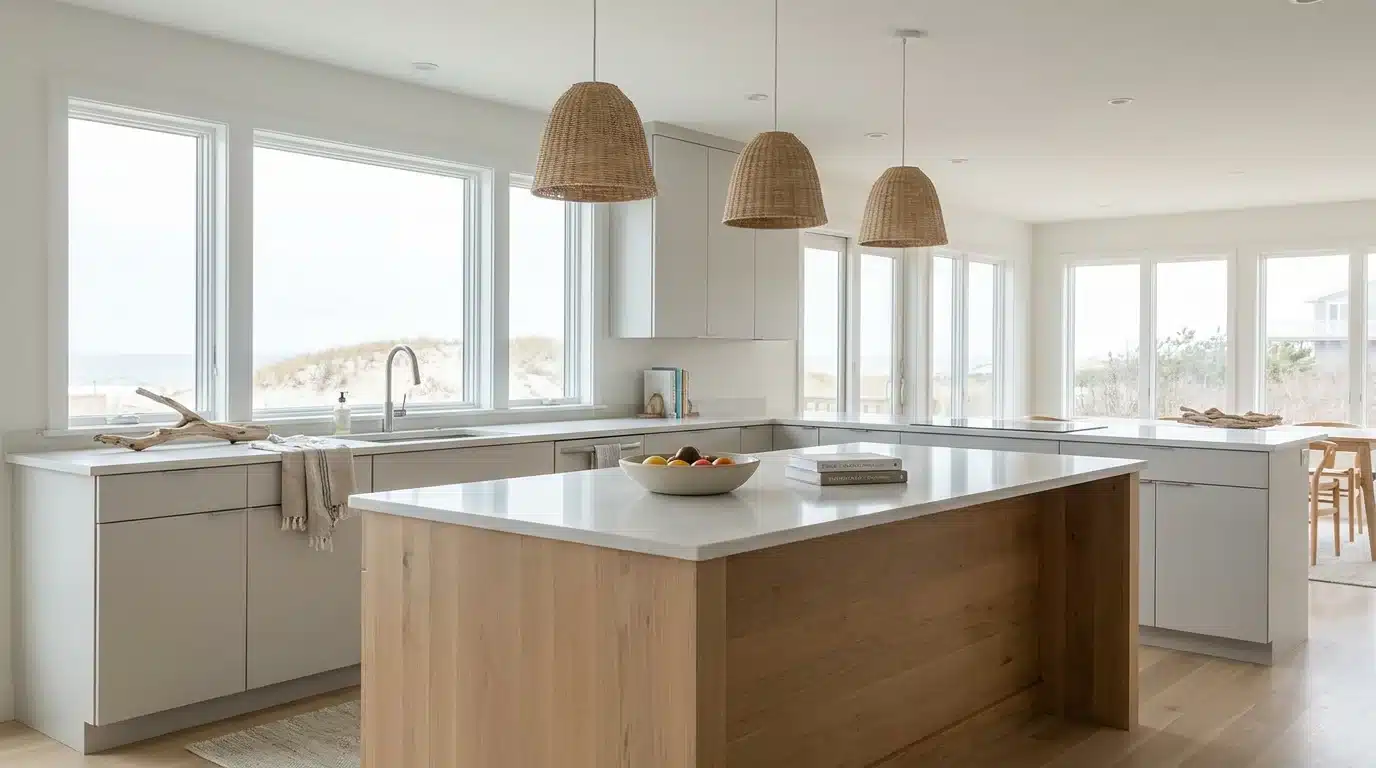
A coastal kitchen fails when it becomes too themed: blue cabinet pulls, starfish hardware, weathered barn boards. Modern beach house design treats the kitchen as a working room first.
Light finishes and flat-panel cabinets keep it visually clean. A central island does the functional and social work that most other decor choices can’t, creating prep space, casual seating, and a natural gathering point after a day outside.
This is especially important in rental properties and vacation homes where the kitchen runs hard with multiple people using it simultaneously.
- Central island: Adds prep capacity and a casual seating surface without requiring additional furniture. Size it so there’s at least 42 inches of clearance on all active sides.
- Flat-panel cabinets in pale finishes: White, off-white, or light gray cabinet fronts keep the space bright and avoid the visual weight of raised-panel doors.
3. Calm Beach House Bedroom
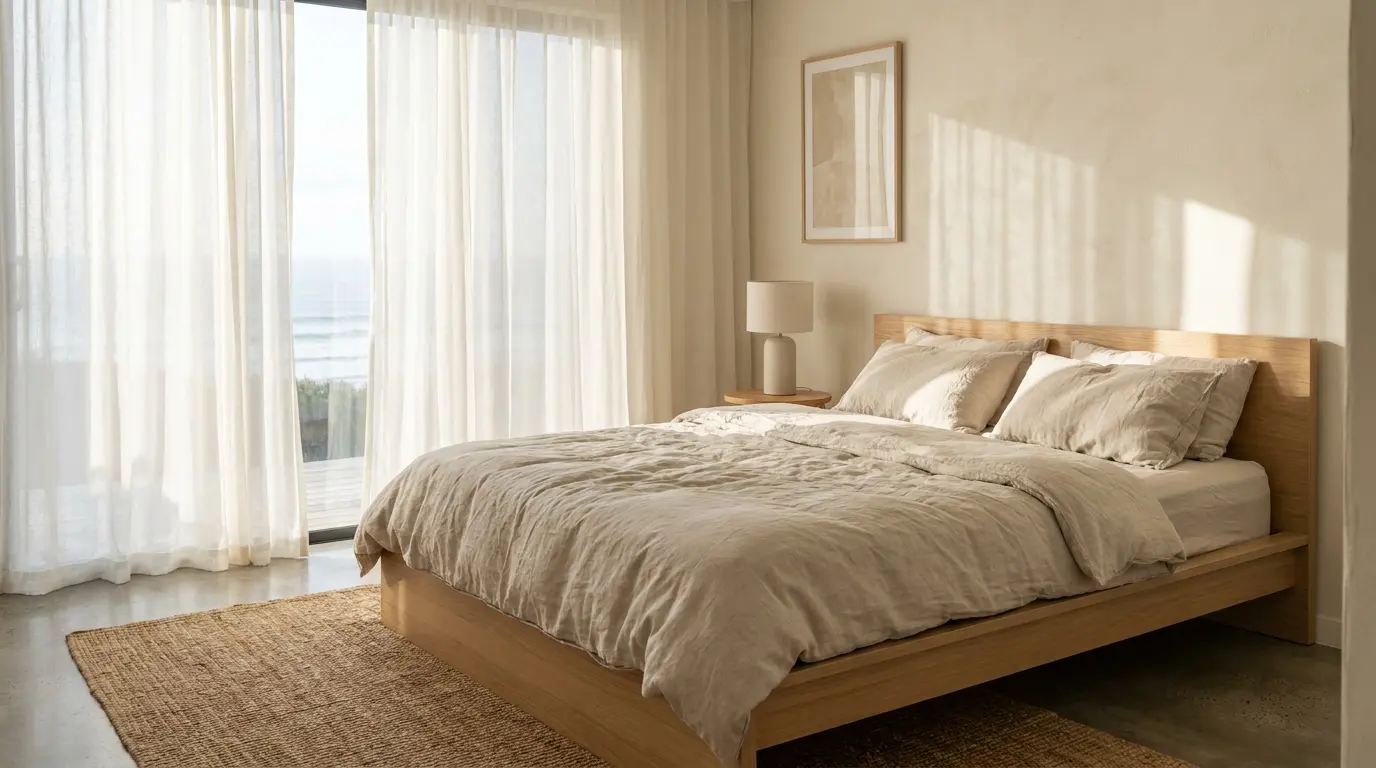
The bedroom in a modern beach house should feel like the quietest room in the building, not because it’s stripped bare, but because it’s edited. Sun, activity, and salt air wear people out.
The bedroom is where that gets recovered. Breathable fabrics, a simple furniture arrangement, and restrained natural light do more for rest than any amount of coastal theming.
For a practical framework on achieving this balance, the cozy minimalist bedroom guide covers layering textures, choosing wood tones, and placing lighting so the room feels personal rather than staged.
- Breathable fabric layers: Linen, light cotton, and loose weaves are functionally correct for coastal climates. They manage humidity and body temperature better than heavy bedding.
- Restrained bedside styling: A lamp, a small surface, and one piece of considered art. Anything more competes with the room’s primary purpose.
4. Spa-Like Bathroom
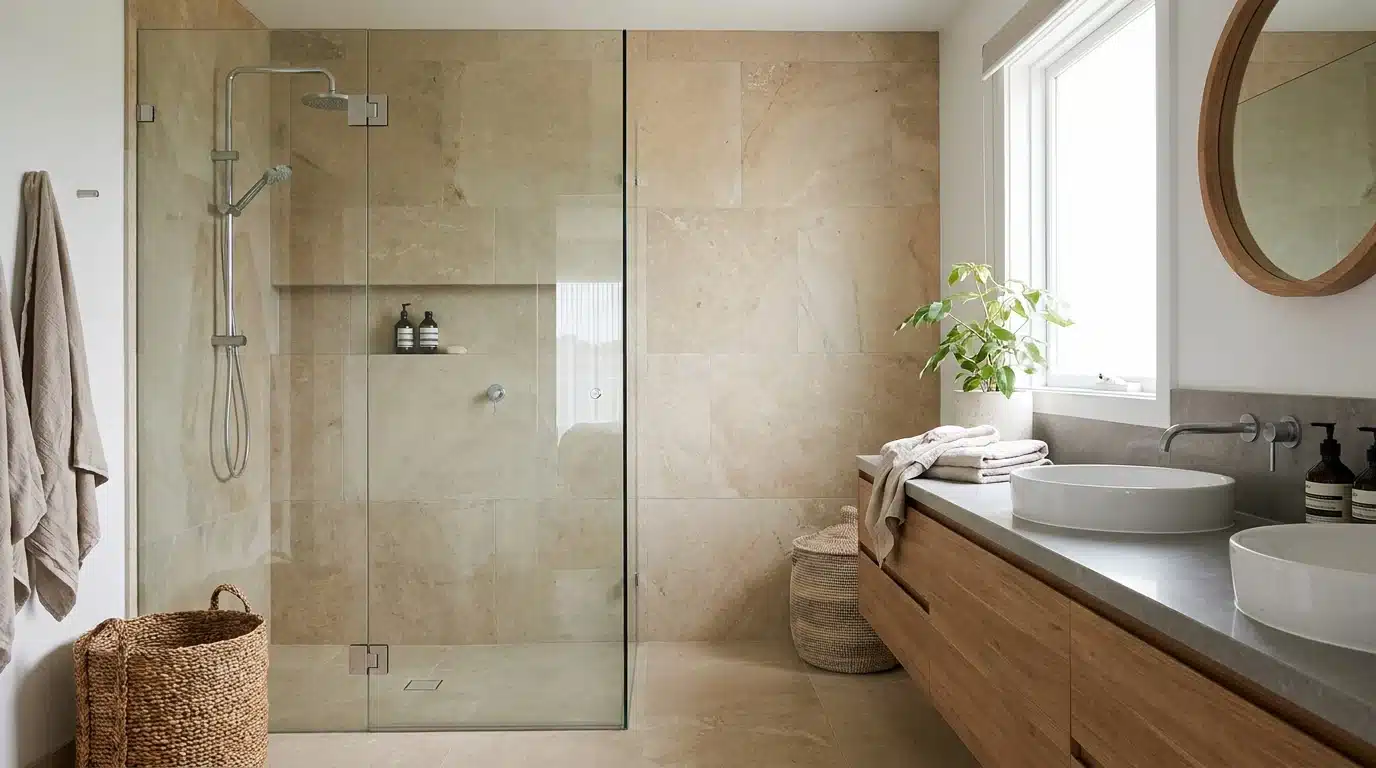
A bathroom designed around calm surfaces and minimal visual noise fits coastal living better than any themed alternative.
Stone tile, a walk-in glass shower, and a floating vanity create the spa-like quality that makes rinsing off after the beach feel like part of the experience rather than a logistical step.
For earthy material combinations that work in coastal bathrooms, including stone, raw wood, and warm tile options, the warm earthy bathroom ideas guide is worth using as a reference alongside these fixtures.
- Walk-in glass shower: Clear enclosures keep the bathroom open. Even in a smaller footprint, a frameless or minimal-frame glass shower reads as spacious.
- Floating vanity: Off-floor cabinetry lightens the room visually and simplifies floor cleaning in a space that handles sand and moisture daily.
5. Natural Textures and Minimal Decor
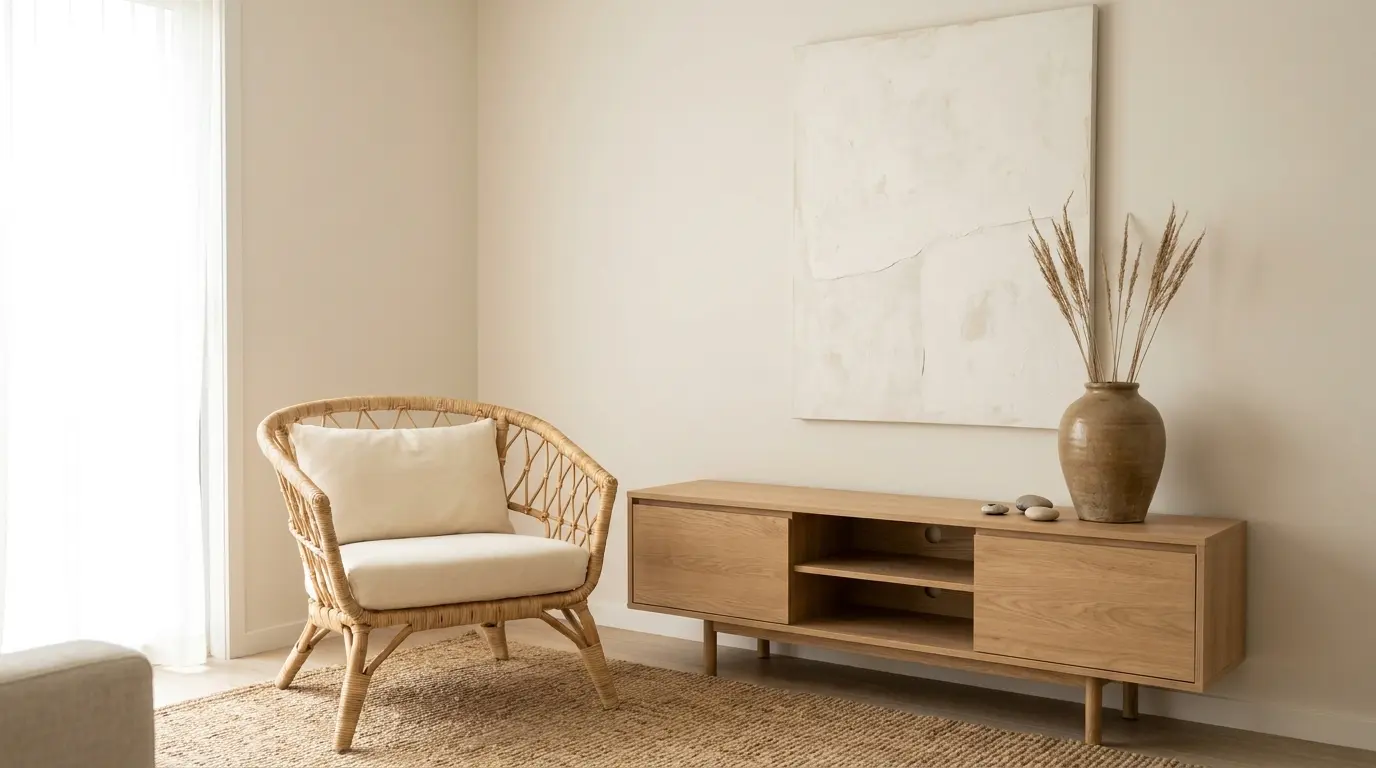
Texture is where modern beach house decor earns its warmth. Smooth concrete, flat-painted walls, and glass are clean but cold without something organic to offset them.
Rattan, jute, unfinished linen, and light wood introduce the coastal reference the home needs without resorting to anchors on the wall and driftwood frames on the shelf.
The principle applied in minimalist home decor holds here too: fewer, larger pieces over many small ones. One meaningful ceramic object says more than a shelf of small beach-themed items.
- Woven accent pieces: A jute rug, a rattan chair, or a woven basket introduces texture and softness without decorating the room to death.
- One considered statement piece: A large handmade ceramic or a single framed print beats a collection of small objects every time in this design language.
6. Indoor Dining Area
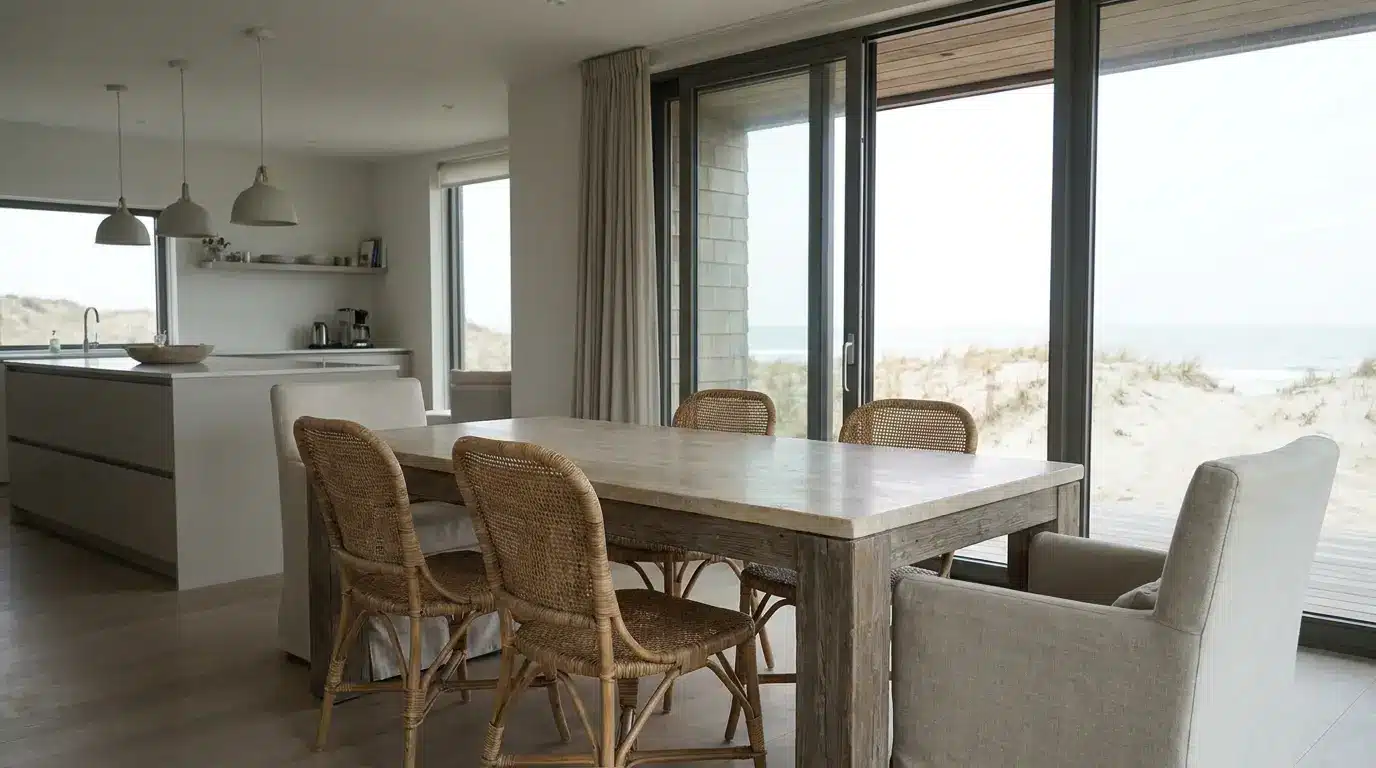
The dining area in a coastal home takes more physical wear than almost any other room: wet swimwear on chairs, sandy feet on floors, gear moving through the space between the beach and the rest of the house.
The furniture needs to be casual enough to handle that without looking neglected. A clean wood or stone-top table and chairs with open frames keep the area from feeling heavy or precious while still looking considered.
- Simple, durable table: Solid wood or stone tops handle daily beach household use. Avoid delicate finishes or glass surfaces in high-traffic rental situations.
- Clearance around seating: Aim for at least 36 inches between chair backs and any wall or furniture behind them. Tight dining areas feel strained in homes where people move through constantly.
7. Beach-Ready Entryway or Mudroom
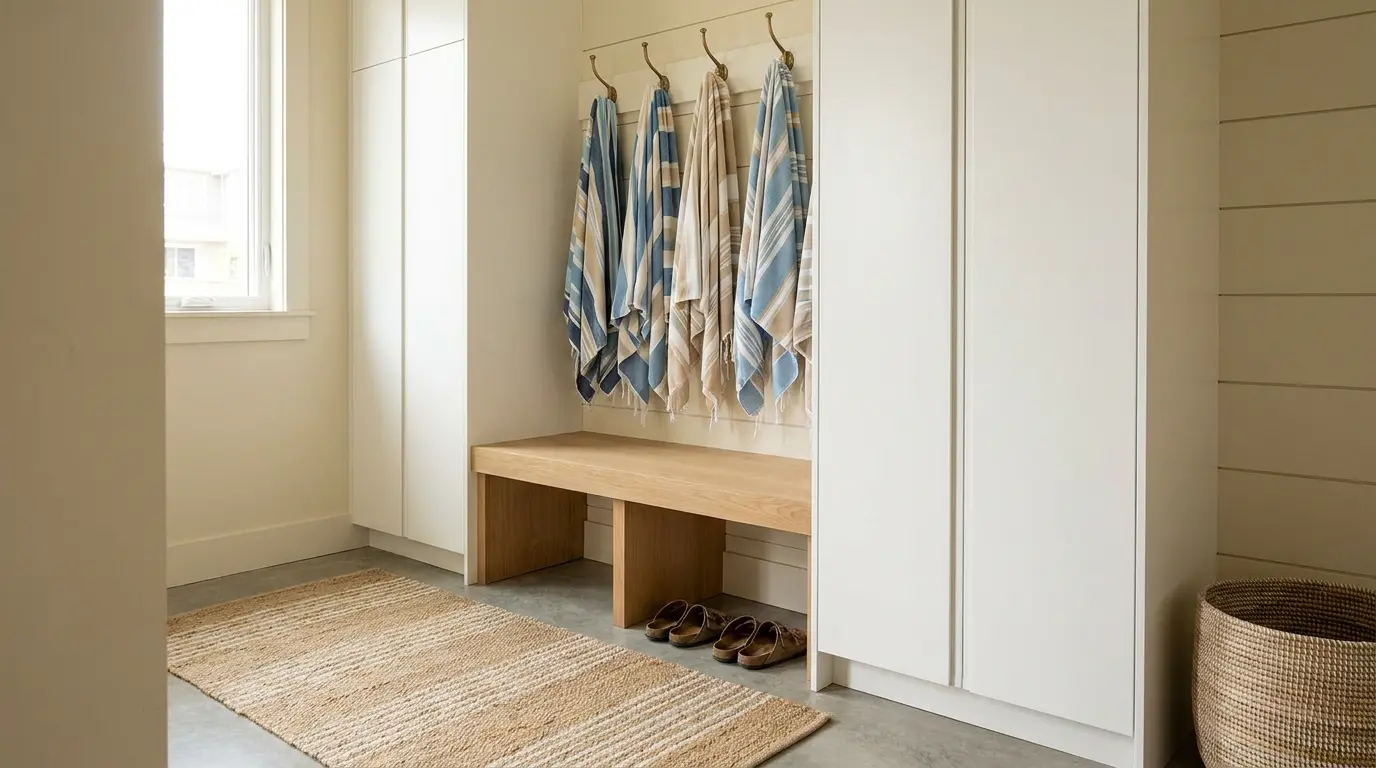
The entryway is the room that determines whether a beach house stays livable or becomes a sand-covered mess by day three.
In family beach homes and short-term rentals, this space handles more daily traffic than anywhere else: bags, towels, sandals, wet suits, boogie boards.
Closed storage is more functional than open hooks here. It keeps the visual noise out of the entry and gives guests a clear landing system without instruction.
A bench, hooks at two heights, and a washable rug solve most of the practical problems in a space under 50 square feet.
- Closed storage cabinets: Hidden storage keeps beach gear off the floor and out of sight. Open shelving in a beach entryway fills up and stays cluttered.
- Functional drop zone: Bench for gear removal, hooks at two heights for adults and children, and a washable rug that handles damp feet without showing wear.
Beach House Plans and Layout Ideas
The layout is the one decision that shapes everything else. A well-planned modern beach house places living spaces where the views are strongest, organizes movement so indoor-outdoor flow feels natural, and sizes rooms to support how coastal households actually use them.
These five layout approaches cover the most common planning scenarios.
- Open-concept beach house plans: Connecting the kitchen, dining, and living areas into one shared space makes the home feel larger and more social. This layout works especially well when the main living zone faces water, since the open plan eliminates interior walls that would otherwise obstruct the view and limit natural light.
- Small modern beach house plans: Compact layouts succeed when rooms are placed intentionally rather than squeezed. Fewer walls, a simple circulation path, and shared living zones let a small beach home function clearly. The key is not to reduce the number of spaces but to ensure each one earns its square footage.
- Two-story plans for better views: A two-story layout can place the main living area on the upper floor, where the elevation improves views and reduces direct exposure to foot traffic. Bedrooms sit below in a quieter zone while second-floor balconies extend the living area outward over the landscape.
- L-shaped and courtyard plans: These configurations create private outdoor pockets without sacrificing interior light. An L-shaped plan wraps the home around a sheltered outdoor space, which is useful in areas where beach winds are strong and an exposed deck would see limited use.
- Plans with defined indoor-outdoor flow: The strongest coastal plans place main rooms directly adjacent to decks, terraces, or screened porches, with wide-opening doors or sliders that disappear when the weather allows. This is the layout feature that separates a home that connects to the coast from one that merely overlooks it.
Modern Beach House Exterior Colors and Material Combinations
Color and material decisions affect how the home reads in different coastal light conditions, and coastal light is more intense, more reflective, and more variable than inland light.
The combinations below perform reliably across the main US coastal regions. One note before the table: choose a primary material first and use the others as accents.
Homes that give equal weight to four different materials tend to look expensive and confused at the same time.
| Palette or Material Mix | Works Best For | Design Note |
| White, sand, and light wood | Warm, sunny coastal homes (Florida, Gulf Coast, Southern California) | Use light wood as the warm anchor. Without it, this combination can read as too clinical in strong sun. |
| Gray, blue, and stone | Cooler coastal areas (New England, Pacific Northwest, Great Lakes) | Keep the blue muted. A dusty or soft teal reads as coastal without tipping into nautical. |
| Black, white, and cedar | Modern homes where sharp contrast is the design intent | Cedar weathers to silver-gray over time in coastal environments, which actually improves this palette as the home ages. |
| Glass, timber, stucco, and stone | Homes with a clean contemporary form and multiple exterior planes | Pick one dominant material and let the others appear in single-plane sections, not layered on the same surface. |
Climate matters here as much as aesthetics. A Florida beach house built around warm whites and pale wood looks correct because the light and vegetation support it.
That same palette in coastal Maine can look washed out against gray water and overcast skies, where the gray-blue-stone combination has a visual logic rooted in the actual landscape.
Design Mistakes That Weaken a Modern Beach House
These are the choices that most often undercut a modern coastal design, not because they’re obviously wrong, but because they’re easy to accumulate without noticing until the room is done.
- Too much nautical decor: Anchors, rope accents, driftwood frames, and shell arrangements individually feel harmless. Together, they shift the home from coastal to themed, and themed design ages quickly and poorly. Keep coastal references to texture and material, not objects.
- Heavy, dark furniture: Large upholstered pieces with dark finishes shrink rooms and fight natural light. In a modern beach house, furniture should feel light in scale: visible legs, clean profiles, and fabrics that read as relaxed rather than formal.
- Blocked sightlines: Tall furniture, thick curtain panels, and crowded window areas eliminate the one thing most people choose a beach house for. Keep the path between the eye and the view clear. This applies to furniture placement, window treatments, and landscaping near the building.
- Too many mixed coastal styles: Combining Hamptons, California coastal, tropical, and Cape Cod references in one home produces visual noise. Commit to one clear palette direction and repeat those finishes throughout the home.
Budget Planning for a Modern Beach House
| Cost Note: Figures in this article are estimates based on national averages. Actual costs vary significantly by region, contractor, materials, and project scope. Always get at least three quotes before committing to any project above $1,000. |
The most effective beach house budgets spend money where it changes the experience daily: windows, doors, and outdoor access. Savings come from items that look the same whether they cost $800 or $8,000. Here’s how those trade-offs typically break down:
| Budget Area | Typical Cost Range | Where to Spend vs. Save |
| View-facing windows | $775 to $1,652 per sliding unit (installed) | Spend here if the home faces water. Impact-rated glass adds cost but is typically required in coastal zones. Verify local building codes before budgeting. |
| Sliding glass doors | $1,167 to $4,144 installed | Prioritize the main living room opening to the deck. Secondary door locations can use lower-cost options without the same trade-off. |
| Kitchen refresh | $10,000 to $30,000 for a minor remodel | Save by using flat-panel cabinets and simple hardware. The island layout is more valuable than the cabinet finish in a coastal kitchen. |
| Cabinet refacing | $5,000 to $13,000 | A strong option if the existing layout works. Refacing changes the look without the cost or disruption of a full remodel. |
| Decor and interior styling | $500 to $2,500 | Fewer, larger pieces cost the same as many small ones and look more intentional. One good rug and two considered accent pieces outperform a room full of beach-themed objects. |
Cost estimates based on national averages from HomeAdvisor/Angi and US Bureau of Labor Statistics construction data, 2024–2025. Verify current pricing with local contractors before budgeting, particularly in high-cost coastal markets like California, New York, and coastal New England.
Frequently Asked Questions
These are the questions I get most often from people working through a modern beach house project, covering planning, budgeting, and building for real coastal conditions.
Is beach house insurance more expensive?
Yes, typically. Coastal properties face elevated risk from wind, storm surge, and flooding, which raises base premiums. Many standard homeowners policies exclude flood damage, requiring a separate NFIP or private flood policy. Check insurance costs before finalizing your purchase or build site, since elevation, construction type, and distance from water all affect rates significantly.
Can a modern beach house be energy efficient?
Yes. Good insulation, low-E glass, strategic roof overhangs for sun shading, and high-efficiency mini-split systems work together to control heat gain in coastal climates. Roof color and window orientation also matter. A light-colored roof reflects more heat than a dark one in sunny coastal markets like Florida and Southern California.
What landscaping works best near the beach?
Native plants suited to salt air, wind, sandy soil, and your specific coast. Dune grass and sea oats in the Southeast, ice plant and succulents on the Pacific Coast, bayberry and rugosa rose in New England. Avoid plants that require heavy irrigation or shelter from wind. Simple gravel paths and stone borders require less maintenance than planted beds.
What are the best exterior colors for a modern beach house?
White, pale gray, warm sand, and natural wood tones all perform reliably across US coastal regions. Warmer palettes suit sunny climates; cooler gray-blue combinations work better in the Northeast and Pacific Northwest. Keep the primary palette to two materials and introduce a third as an accent only.
What floor plan works best for a small modern beach house?
An open-concept single-floor plan that connects kitchen, dining, and living into one shared space. Fewer interior walls mean the available square footage reads larger and natural light reaches deeper into the home. A main-level bedroom and bath also simplify the layout and reduce stair traffic for mixed-age households.
Can a beach house work for aging in place?
Yes, with planning. Look for or design toward a main-level primary bedroom, wider doorways (36 inches minimum), a walk-in shower with a bench, lever hardware, and step-free exterior access. If the home is elevated on pilings, plan for a lift or elevator space from the beginning. Retrofitting it later costs significantly more than roughing it in during construction.
What makes a beach house plan feel modern rather than traditional?
Flat or low-slope rooflines, fewer interior walls, larger window and door openings, and integration of outdoor living areas into the plan footprint. Traditional beach house plans tend toward steep-pitched roofs, enclosed rooms, and decorative trim. Modern plans work in the opposite direction on every one of those decisions.
Summing Up
If you want a home that feels calmer and more connected to the coast than a traditional cottage, a modern beach house is the right direction.
The decisions that matter most are structural: the plan that places living spaces toward the view, the coastal beach house exterior that fits the climate without looking overdone, and an interior that prioritizes light and comfort over theming.
Start with the floor plan before touching finishes, because the layout determines what everything else is capable of doing. Once the plan is right, the rest follows naturally, and it feels that way to anyone who walks in.