

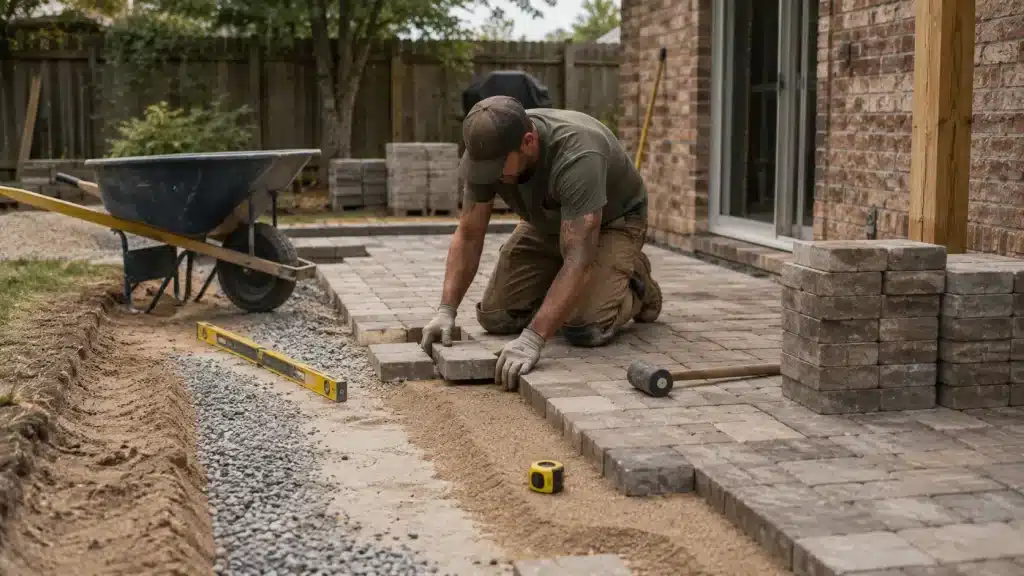


A paver patio sounds simple when someone gives you a square-foot price. Then the quote arrives, and that number suddenly includes gravel, grading, hauling, cutting, delivery, drainage, edge restraint, cleanup, and labor.
That is why the paver patio cost is hard to judge from one online average. A flat backyard with wide access is one job. A wet yard with clay soil, roots, tight access, and a curved border is another.
After years around outdoor builds, I care less about the prettiest paver sample and more about what is under it. The foundation work, pitch, packed stone, and edge system determine how the patio looks after rain, during winter, and under furniture weight. This article breaks down pricing, 20 x 20 patio math, cost factors, quote checks, and real homeowner feedback.
Average Paver Patio Cost Overview
A paver patio usually costs about $10 to $40 per sq. ft. installed. Basic concrete pavers with easy access and a simple shape may sit closer to the lower-middle range. Premium stone, difficult excavation, poor access, drainage work, deeper ground preparation, or complex patterns can push the price higher.
The Concrete Masonry & Hardscapes Association lists those steps as part of interlocking concrete pavement construction, which is why a patio quote should cover more than the top layer.
For homeowners, the number should not be judged by square footage alone. Two 400 sq. ft. patios can be priced very differently if one needs drain tile, root removal, deeper excavation, retaining edges, or more hauling.
Material prices also shift over time, and the U.S. Bureau of Labor Statistics tracks producer prices because construction inputs do not remain fixed.
Recommendation: If a bid is far below the others, ask what ground preparation, stone depth, edge system, water management, and joint sand are included. Low price often shows up later as sinking, spreading, or standing water.
How Much Does a 20 x 20 Paver Patio Cost?
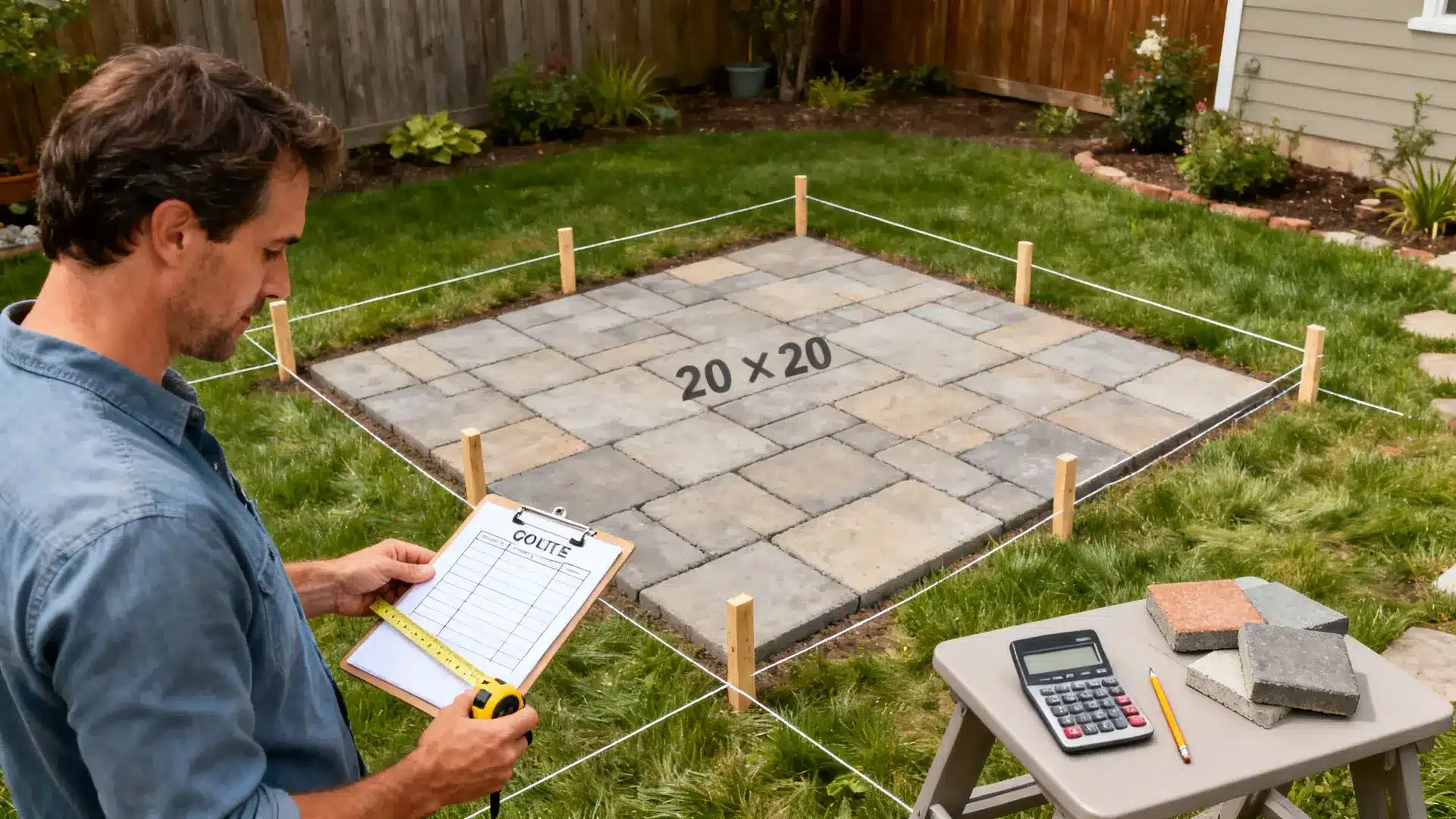
A 20 x 20 patio is 400 sq. ft. If the installed price runs from $10 to $40 per sq. ft., the broad installed range is $4,000 to $16,000. Many standard concrete or brick paver patios land somewhere around $4,000 to $10,000, but premium materials, site issues, and extra build features can push the number higher.
If the question is how much a 20×20 paver patio costs, the useful answer is usually $4,000 to $16,000 installed, with the final quote depending on the yard, base work, material, pattern, and labor market.
Here is the simple math:
- 400 sq. ft. x $10 per sq. ft. = $4,000
- 400 sq. ft. x $25 per sq. ft. = $10,000
- 400 sq. ft. x $40 per sq. ft. = $16,000
DIY material-only cost can be much lower, but that does not mean the job is easy. Excavation, base hauling, grading, compaction, cutting, and paver placement take real time and strength. On a 400 sq. ft. patio, a $10 per sq. ft. difference changes the total by $4,000. That is why bid details matter.
Cost Summary by Line Item
This breakdown reflects a typical installed paver patio in the 300 to 500 sq. ft. range. Line items shift depending on yard conditions, material choice, and contractor scope.
| Line Item | Low End | High End | What Drives the Variation |
| Excavation and grading | $300 | $1,500+ | Soil type, depth, root removal, slope |
| Gravel base (4–8 in. compacted) | $400 | $1,200 | Required depth by frost zone, soil drainage |
| Bedding sand layer | $100 | $300 | Area size and screeding method |
| Pavers (material only) | $600 | $6,000+ | Material type: concrete vs. natural stone |
| Edge restraint | $150 | $400 | Perimeter length, restraint type |
| Joint sand (polymeric) | $80 | $200 | Area and application method |
| Labor | $1,500 | $7,000+ | Region, crew skill, access, design complexity |
| Drainage (if needed) | $0 | $3,000+ | Yard grade, clay soil, existing pooling |
| Hauling and disposal | $100 | $800 | Volume of excavated soil, access, and disposal fees |
| Total (installed, 400 sq. ft.) | $4,000 | $16,000+ | Material, site, region, design |
Labor typically accounts for 50 to 70 percent of the total installed cost on a standard patio. That share rises when site access is tight, patterns are complex, or the ground needs significant prep work before the first paver goes down.
What Homeowners Say About Real Paver Patio Quotes
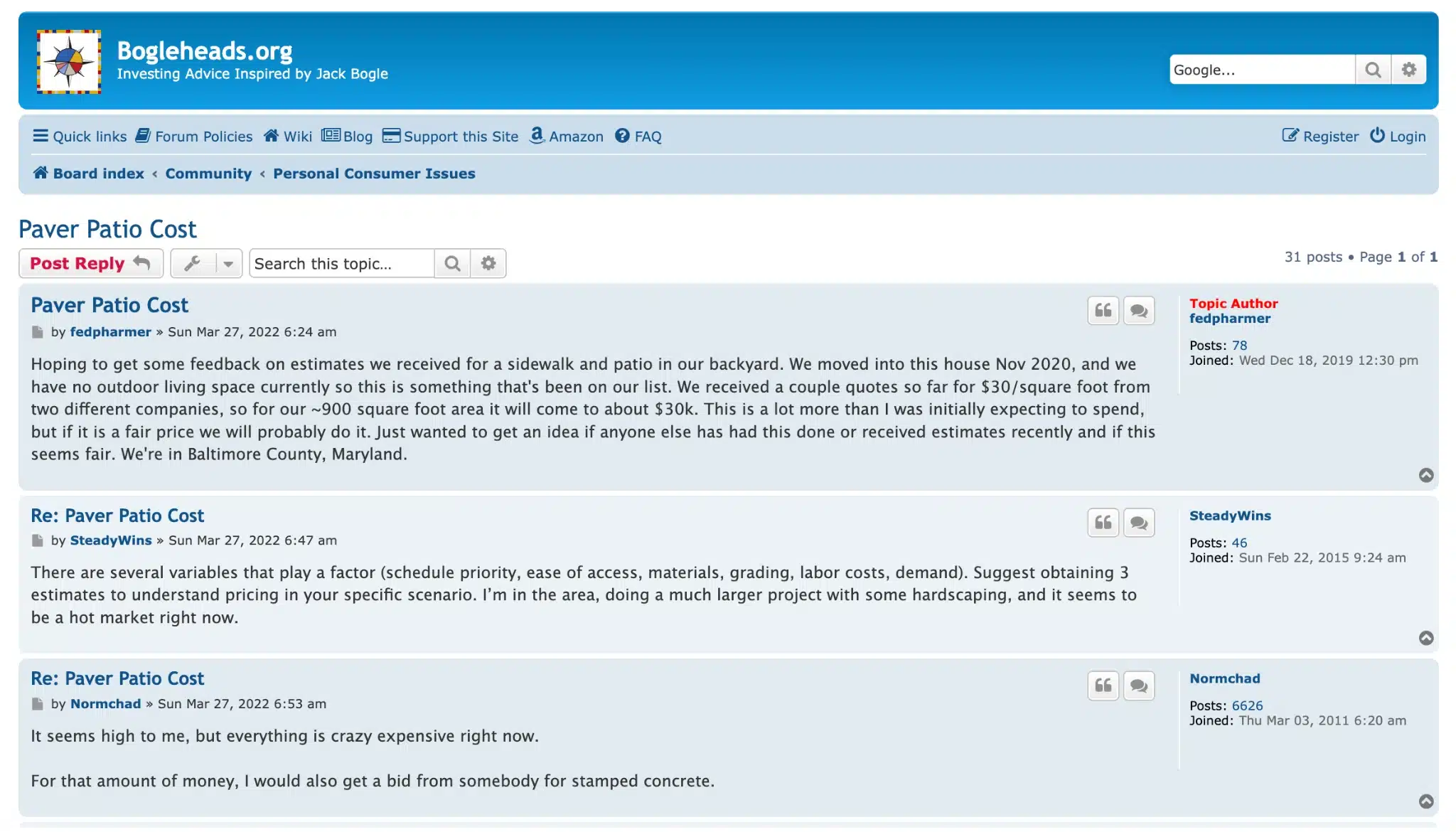
A useful homeowner discussion on Bogleheads shows why patio quotes can feel surprising. The original poster had about 900 sq. ft. of patio and sidewalk work quoted at roughly $30 per sq. ft., or about $30,000, in Baltimore County, Maryland. Several replies said that the number felt high but not impossible once location, contractor demand, grading, materials, access, and labor were considered.
The thread is helpful because it includes more than sticker shock. One homeowner said they paid about $25 per sq. ft. for a 450 sq. ft. patio in 2021. Another shared a 20 x 20 DIY patio with about $2,400 in materials, but also described digging, grading, root removal, gravel, bedding sand, compaction, and paver placement by hand. That is the part many cost calculators miss.
The clearest takeaway is to get at least three bids and ask for details. A fair price is not just one flat rate. It reflects the subsurface prep, water control, materials, crew skill, and full scope of work behind the patio.
Paver Patio Cost by Material and Size
The easiest way to estimate the cost is to look at both the material and the size. Material affects the price per square foot, while size shows the total budget impact. These ranges are planning numbers, not a replacement for a local quote.
| Paver Material | Typical Installed Cost per Sq. Ft. | Best For |
| Concrete pavers | $10 to $25 | Standard patios, tighter budgets, many shape options |
| Brick or clay pavers | $12 to $30 | Traditional patios, smaller spaces, walkways |
| Porcelain pavers | $18 to $40 | Higher-end patios, stain resistance, modern layouts |
| Travertine pavers | $18 to $40 | Warm climates, pool areas, premium outdoor spaces |
| Bluestone or flagstone | $20 to $45+ | Natural stone patios and premium hardscape work |
| Permeable pavers | $15 to $35+ | Drainage-focused installs and stormwater control |
The U.S. Environmental Protection Agency notes that permeable paving allows rain and snowmelt to filter through the surface into soil and gravel below, reducing runoff.
That drainage benefit makes permeable systems worth considering on wet sites, but they need a properly designed stone reservoir underneath and regular maintenance to keep water moving through.
If your yard already has a drainage issue, the drainage strategies behind regional landscaping apply directly to what goes under the patio, too.
| Patio Size | Square Feet | Estimated Installed Cost |
| 10 x 10 | 100 sq. ft. | $1,000 to $4,000 |
| 12 x 12 | 144 sq. ft. | $1,440 to $5,760 |
| 12 x 16 | 192 sq. ft. | $1,920 to $7,680 |
| 16 x 20 | 320 sq. ft. | $3,200 to $12,800 |
| 20 x 20 | 400 sq. ft. | $4,000 to $16,000 |
| 20 x 30 | 600 sq. ft. | $6,000 to $24,000 |
| 30 x 30 | 900 sq. ft. | $9,000 to $36,000 |
These tables show why patios feel expensive fast. Once the size passes 300 or 400 sq. ft., small changes in material, base work, or labor rate can move the total by several thousand dollars.
Note: Use these numbers for planning only. A real quote should include excavation depth, base material, bedding layer, edge restraint, joint sand, drainage, hauling, cleanup, and warranty terms.
Key Factors That Affect Paver Patio Cost
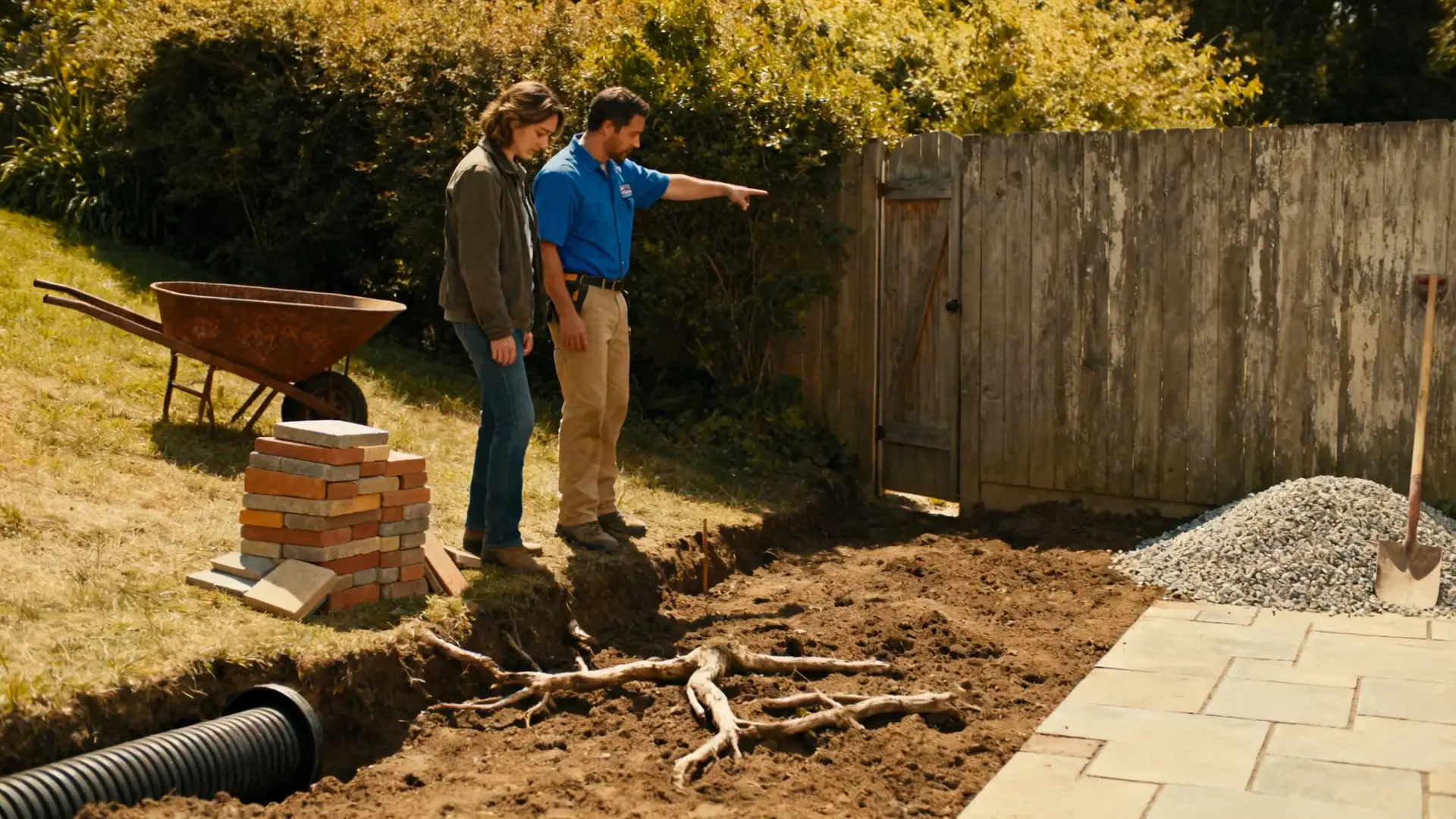
Paver patio costs change because the visible pavers are only one part of the job. The real price comes from digging, foundation depth, grading, water control, access, cutting, labor, and site cleanup. Those details decide whether the patio stays flat after real weather.
1. Patio Size and Square Footage
Larger patios cost more overall, but the price per square foot may drop slightly once setup, delivery, and equipment are already on site. A 150 sq. ft. patio can feel expensive per foot because the crew still has to mobilize. A 900 sq. ft. patio needs more material and labor, but some fixed costs are spread across a larger area.
2. Paver Material
Concrete pavers are usually the standard budget choice. Brick, clay, porcelain, travertine, bluestone, and other natural stone options cost more and may need different handling. Material choice also affects cutting time, waste, delivery, and edge details. A premium paver is not just a higher-priced product. It can add labor too.
3. Foundation Depth and Soil Conditions
Wet soil, clay, frost-prone areas, poor drainage, and soft or unstable ground all push the base requirements higher.
More excavation, deeper gravel, more compaction passes, or drain tile, each adds cost. This is not padding. Weak base work shows up as sunken pavers, uneven edges, and water sitting where it shouldn’t.
The base is where long-term paver patio cost either pays off or fails. Total backyard remodel cost often hinges on what the ground underneath needs before anything goes on top.
4. Site Access and Hauling
Easy access keeps labor costs lower. Tight side yards, steps, fences, slopes, and long hauling distances slow the crew down. If gravel, sand, pavers, or removed soil must be moved by wheelbarrow instead of machine, hours rise quickly. Access is one reason two patios with the same square footage can get very different quotes.
5. Design Shape and Cutting
Simple square and rectangular patios are usually cheaper to install than curved patios, borders, circles, inlays, and angled patterns. Every cut takes time and can create waste. A chevron, herringbone, or detailed border may look better, but it is not the same labor as laying a basic running pattern across a rectangle.
6. Drainage, Slope, and Existing Grade
A patio needs a proper slope so water moves away from the house and does not sit on the surface. If the yard drains poorly, the contractor may need grading, a drain pipe, extra base work, or soil correction. That cost can feel invisible, but drainage is one of the first things that shows when skipped.
7. Labor Market and Season
Local labor rates can change the quote more than the paver choice. High-cost metro areas, busy seasons, fuel prices, and contractor demand all affect pricing. A contractor with a trained crew, proper equipment, insurance, and a full schedule will not price the same as a casual weekend installer.
The right bid should explain these factors, not hide them behind one total. If a contractor can show foundation depth, materials, edge restraint, drainage plan, labor scope, and cleanup, the quote becomes easier to compare.
What Should Be Included in a Paver Patio Quote?
A good quote is a scope document, not just a number. Before signing anything, every line below should either be answered in the contract or answered directly by the contractor.
This is where the per-square-foot breakdown by material type also becomes useful for checking whether material costs in a bid are reasonable.
- Square footage: The quote should include the measured patio area and any walkways, borders, steps, or seating walls.
- Excavation depth: Ask how deep the crew will dig and why that depth fits the soil, frost level, and use.
- Base material: Gravel type, depth, and compaction method should be clear.
- Bedding layer: Sand or setting-bed details should be included.
- Drainage plan: The patio should slope away from the house and avoid low spots.
- Edge restraint: The quote should specify what keeps the pavers from spreading. CMHA says perimeter restraints are required where pavers meet another surface or open edge, and soil backfill should not be treated as a proper edge restraint through CMHA edge restraint guidance.
- Paver brand and style: Product line, color, size, pattern, and border pieces should be listed.
- Cutting and waste: Curves, borders, and patterns may affect labor and material waste.
- Hauling and disposal: Soil, old concrete, grass, or debris removal should not be vague.
- Warranty: Ask what is covered if pavers settle, edges move, or water ponds.
If two quotes are close in price, choose the one with the clearer scope. If one quote is much cheaper, compare the base, drainage, and edge details before assuming it is the better deal.
Tips to Save Money Without Sacrificing Quality
Saving money on a paver patio should not mean thinning the base or skipping edge restraint. Those shortcuts create expensive repairs later.
The better savings come from simplifying the shape, choosing practical materials, reducing waste, and doing limited prep work when it makes sense.
| Cost-Saving Move | Why It Helps | What Not to Cut |
| Choose a simple shape | Rectangles and squares reduce cutting, waste, and labor | Do not skip the proper slope |
| Use standard concrete pavers | Good value for many patios | Do not choose weak base materials |
| Limit borders and patterns | Detailed cuts add labor | Do not remove edge restraint |
| Prepare access | Clear paths reduce hauling time | Do not rush compaction |
| Ask about partial DIY | Cleanup, sealing, or finish work may save money | Do not DIY grading if unsure |
| Buy local materials | Local supply can reduce delivery costs | Do not buy mismatched pavers |
| Get three bids | Similar bids show the local market | Do not pick only by price |
| Build in phases | Patio first, walls and lighting later | Do not leave drainage for later |
| Avoid oversizing | A smaller patio may fit the yard better | Do not make it too small to use |
The best savings come from reducing complexity, not weakening the build. Keep the base, slope, edge restraint, and compaction right. Cut costs from shape, extras, size, and finish choices first.
Maintenance, Longevity, and Long-Term Value
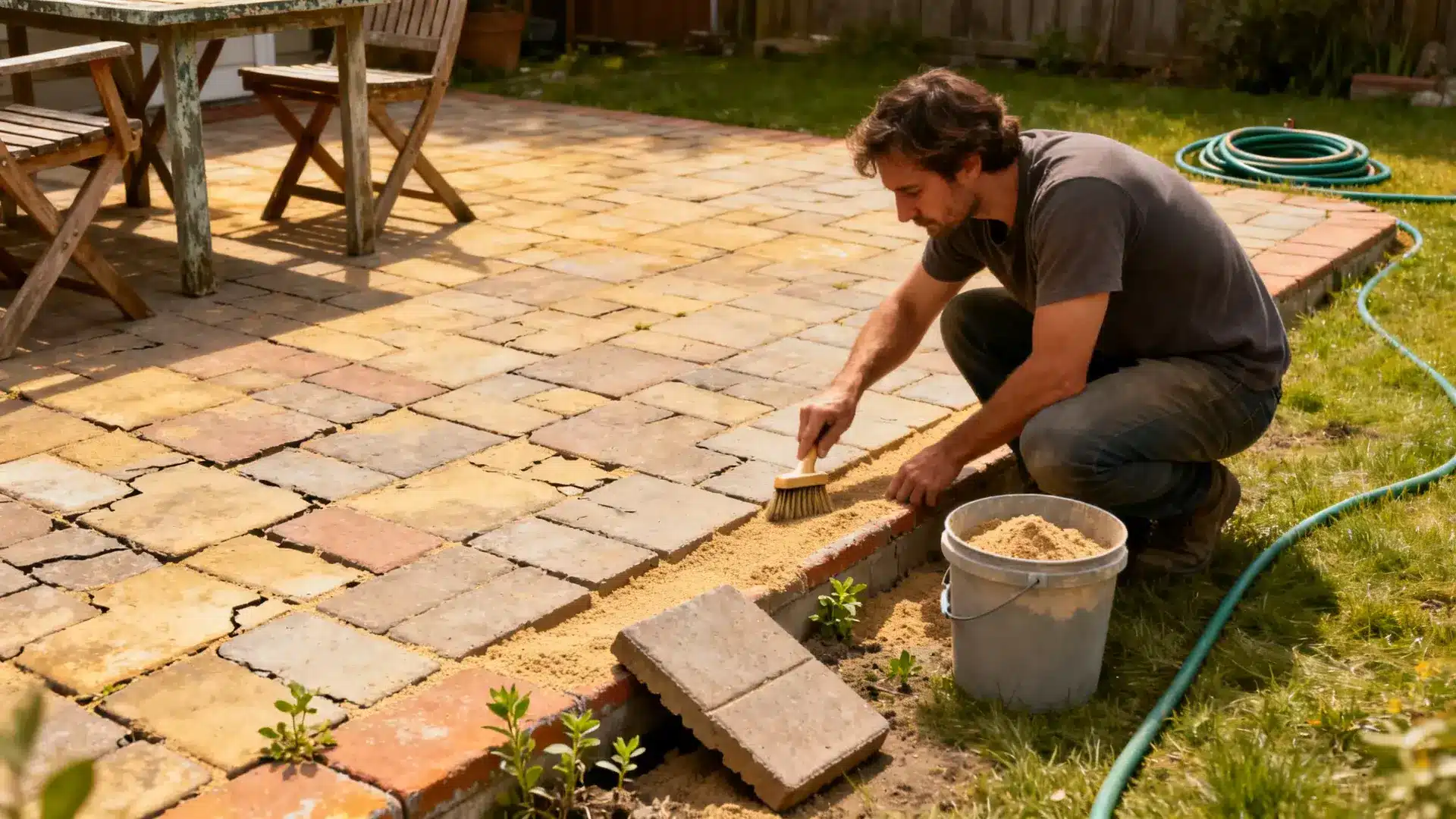
A paver patio can last for decades when the base is properly built and the surface is properly maintained. The value comes from repairability, drainage performance, and long-term use. The weak points usually come from poor base prep, joint sand loss, weeds, and edge movement.
- Expected lifespan: A well-built paver patio can last 25 years or more, depending on material, base, climate, and use.
- Repairability: Individual pavers can be lifted and replaced, which is a major advantage over poured slabs.
- Joint sand: Sand may need topping up, especially after pressure washing, heavy rain, or ant activity.
- Settling: Low spots usually point to base or compaction issues, not the paver itself.
- Weeds and ants: Proper joint sanding and maintenance reduce problems, but they do not remove them forever.
- Sealing: Some patios benefit from sealing, but it adds cost and repeat care.
- Winter performance: Freeze-thaw areas need the right base depth and drainage to reduce heaving.
If the patio is near an outdoor fireplace or fire pit, factor in the added heat and load on the surrounding paver surface. The outdoor fireplace cost and base requirements affect the patio design around it, particularly at the perimeter where foot traffic and heat cycling are highest.
Recommendation: Spend money on base prep before spending money on the fanciest paver. The surface matters, but the base decides how the patio ages.
Should You Choose Pavers or Stamped Concrete?
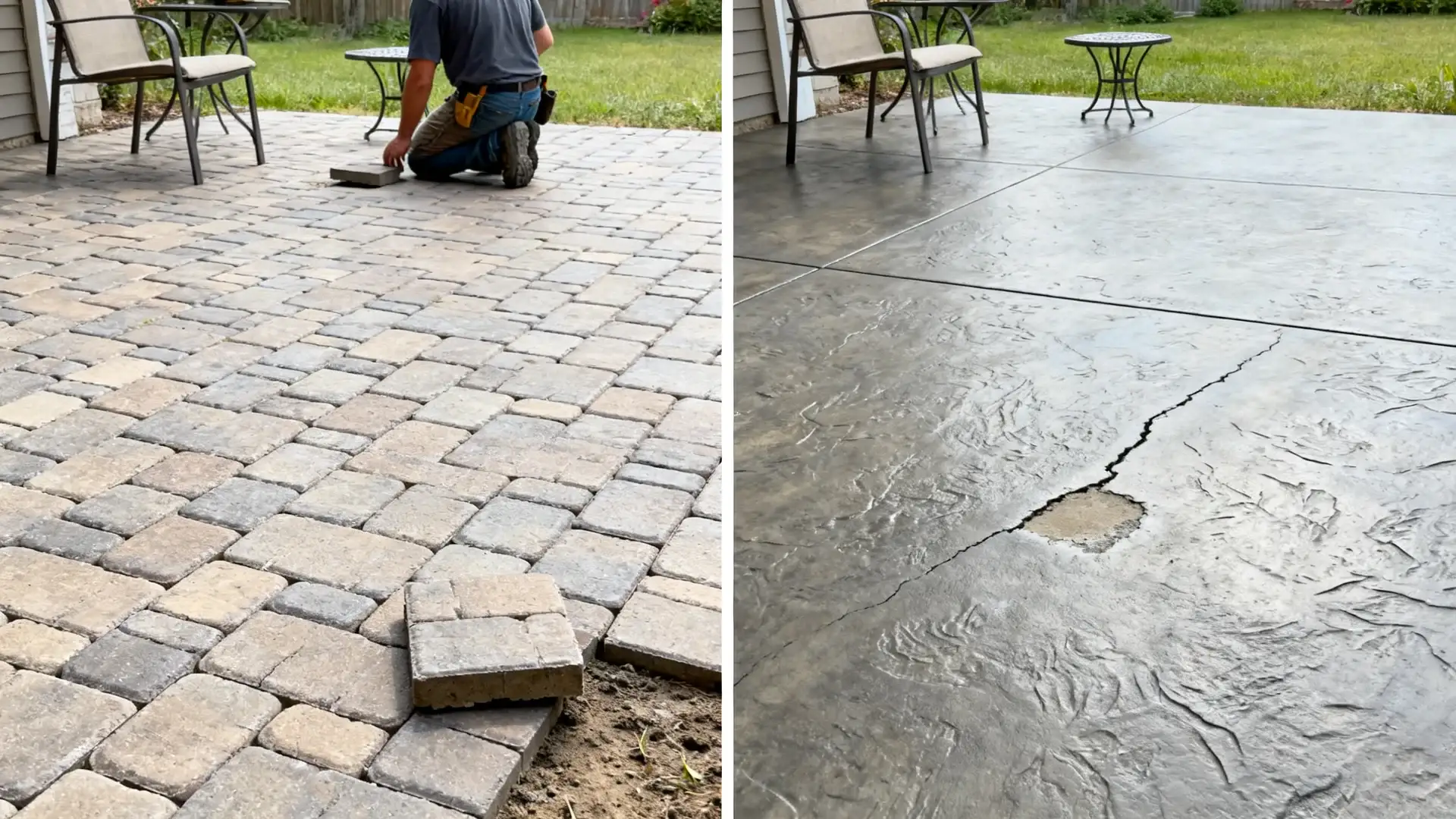
Stamped concrete typically costs less per square foot than pavers on a straightforward, flat patio. The gap narrows when the paver pattern is simple and the concrete design is custom. The full picture changes when you factor in repair costs over time.
A cracked stamped concrete slab is difficult to repair invisibly. The patched section rarely matches the original stamped finish, and the sealer fades unevenly around it.
A damaged or settled paver is a different problem; pull the affected area, reset the base, and drop in a matching paver. Done. For cold climates, wet yards, or soil that moves seasonally, pavers handle ground shift better than a solid slab.
Concrete can accommodate lower initial budgets and simple flat installs. Pavers are harder to damage irreparably. The full comparison of stamped concrete vs. pavers across cost and longevity breaks this down in more detail, worth reviewing before committing to either surface.
The decision comes down to budget, climate, and what repair looks like in 10 years. Compare the full build, base, drainage, labor, and maintenance, not just the surface price.
Do You Need a Deck Instead?
Some homeowners price out a paver patio and realize a deck is actually closer to what the yard needs, especially on sloped lots, soft ground, or where elevation change is significant. Decks and patios solve different problems. A patio sits at grade.
A deck works where the grade won’t. The installed cost of a deck build at the same square footage overlaps with mid-range paver patio pricing, so both should be in the conversation before committing.
Frequently Asked Questions
How much does a 20×20 paver patio cost with labor included?
A 20×20 patio is 400 sq. ft. At $10 to $40 per sq. ft. installed, the total range is $4,000 to $16,000. Most standard concrete paver patios with full base work, edge restraint, and drainage land between $5,000 and $10,000, depending on yard conditions and region.
Is stamped concrete cheaper than pavers?
Usually yes, upfront. Stamped concrete typically costs $8 to $18 per sq. ft. installed, while pavers run $10 to $40. Over 15 to 20 years, maintenance and repair costs often narrow that gap, especially in freeze-thaw climates where concrete cracks more readily.
How long does a paver patio last?
A properly built paver patio lasts 25 to 50 years depending on material, base quality, and climate. Individual pavers can be replaced without removing the whole surface, which is the main longevity advantage over poured concrete.
Do paver patios need a permit?
Many do not, but some jurisdictions require permits when a patio affects lot coverage, drainage, or is adjacent to a retaining wall or property line. Rules vary by city and county. Check with the local building or zoning office before the contractor starts.
Can pavers be installed over an existing concrete patio?
Sometimes, but only if the existing slab is stable, crack-free, and properly sloped. If the concrete is sinking or draining toward the house, laying pavers over it hides the problem rather than fixing it. Get a site-specific recommendation before assuming it is an option.
What time of year is best for paver patio installation?
Spring through fall in most US regions. Frozen or saturated ground slows excavation and compaction. Booking before peak season, late winter or early spring, can also help with contractor scheduling and sometimes pricing.
Should I choose permeable pavers?
Permeable pavers make sense when runoff, drainage, or local stormwater ordinances are a factor. They require a proper stone reservoir and periodic maintenance to keep water from infiltrating through the joints. Upfront cost runs higher, but they address drainage at the source rather than redirecting it.
Final Check
Paver patio cost is not just a square-foot number. It includes material, foundation prep, slope planning, labor, hauling, access, and local pricing. That is why one homeowner may see $17 per sq. ft. while another sees $35 per sq. ft. for work that sounds similar.
If the quote feels high, ask what is included before rejecting it. Stone depth, packed base layers, water management, edge restraint, and cleanup matter more than a low number on paper.
For a 20 x 20 patio, plan around $4,000 to $16,000 installed, then narrow it with local bids. If you are asking how much does a 20×20 paver patio cost, start with the size math, then compare yard conditions and build quality. Before hiring, use the quote checklist above to review each estimate line by line.
Have you received a paver patio quote recently? Share the size, price, and location in the comments to help other readers compare real numbers.