

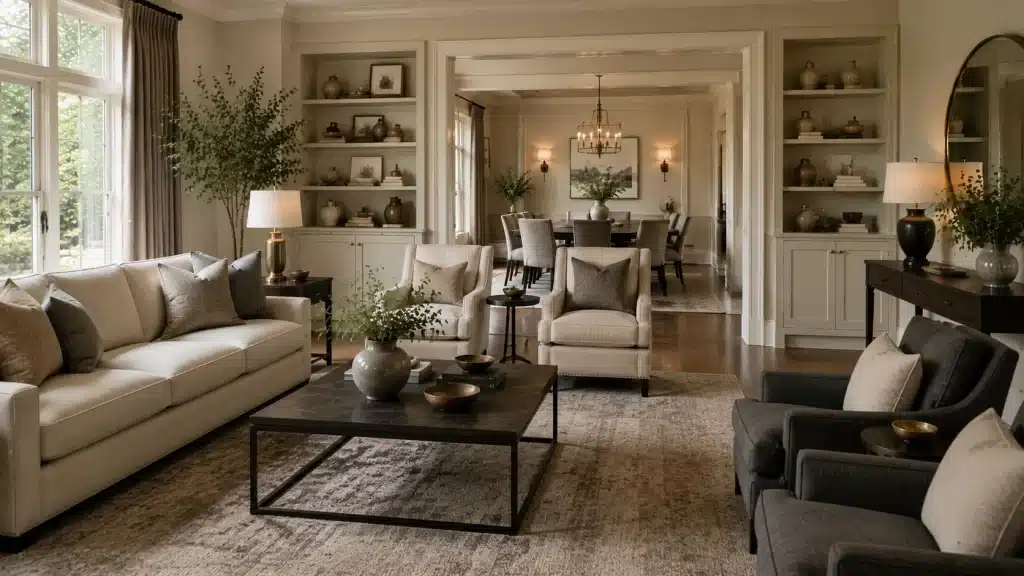


I’ve spent years walking into clients’ homes, where beautiful antique furniture sits awkwardly next to sleek modern lighting, and neither piece looks quite right.
That mismatch is usually the moment someone calls a designer.
It’s also exactly the problem this style was built to solve.
This style sits in the middle ground between traditional warmth and contemporary simplicity. It borrows the comfort and detail of classic rooms while keeping the clean lines and restraint of modern spaces.
In this blog, you’ll learn what defines the Transitional Interior Design, the key elements that make it work, how to apply it room by room, the mistakes that trip up, and how to get the look without a full renovation budget.
What Is Transitional Interior Design?
This style blends traditional furniture and details with the simplicity of contemporary design. It isn’t a strict rulebook so much as a balancing act.
You keep the warmth and craftsmanship of traditional rooms, then pair it with the restraint and cleaner silhouettes of modern interiors.
The style grew out of a simple shift in how people wanted to live. Formal, heavily decorated rooms started to feel impractical, while fully modern spaces often felt cold.
Transitional design emerged as the middle path, and it has stayed popular because it doesn’t chase trends.
A room designed a decade ago can still look current today, since it relies on proportion and material choices rather than whatever’s fashionable that year.
Designers describe it the same way: understated, textural, and comfortable rather than heavily ornamented. The goal isn’t to notice the furniture first. It’s worth noticing how the whole room feels.
Key Elements of Transitional Interior Design
No single piece of furniture defines transitional style on its own. It’s a handful of choices working together: color, furniture, texture, architecture, and materials.
Each one plays a small part, but together they create the balanced, comfortable feel the style is known for.
1. Neutral Color Palettes With Warm Undertones
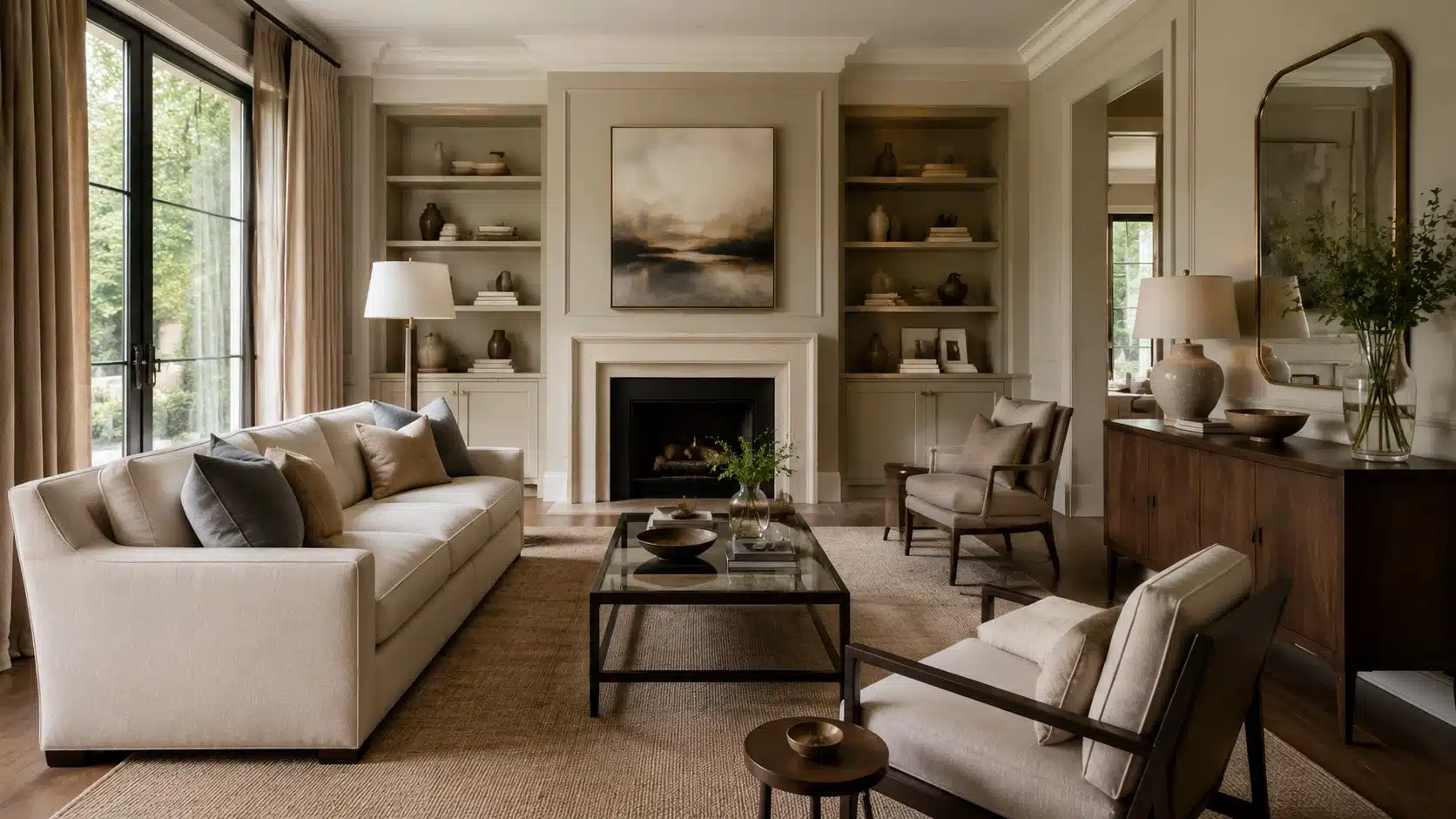
Transitional rooms almost always begin with a neutral base, typically featuring whites, beiges, taupe, warm greys, and soft browns. These colors don’t compete with the furniture or architecture, which is exactly the point.
A neutral wall lets a carved wood console and a simple modern sofa sit in the same room without visual conflict.
The trick is avoiding a flat, one-note space. Warm gray walls paired with wood furniture add depth. Cream upholstery grounded by black or bronze accents keeps a neutral room from feeling washed out.
2. A Mix of Traditional and Modern Furniture
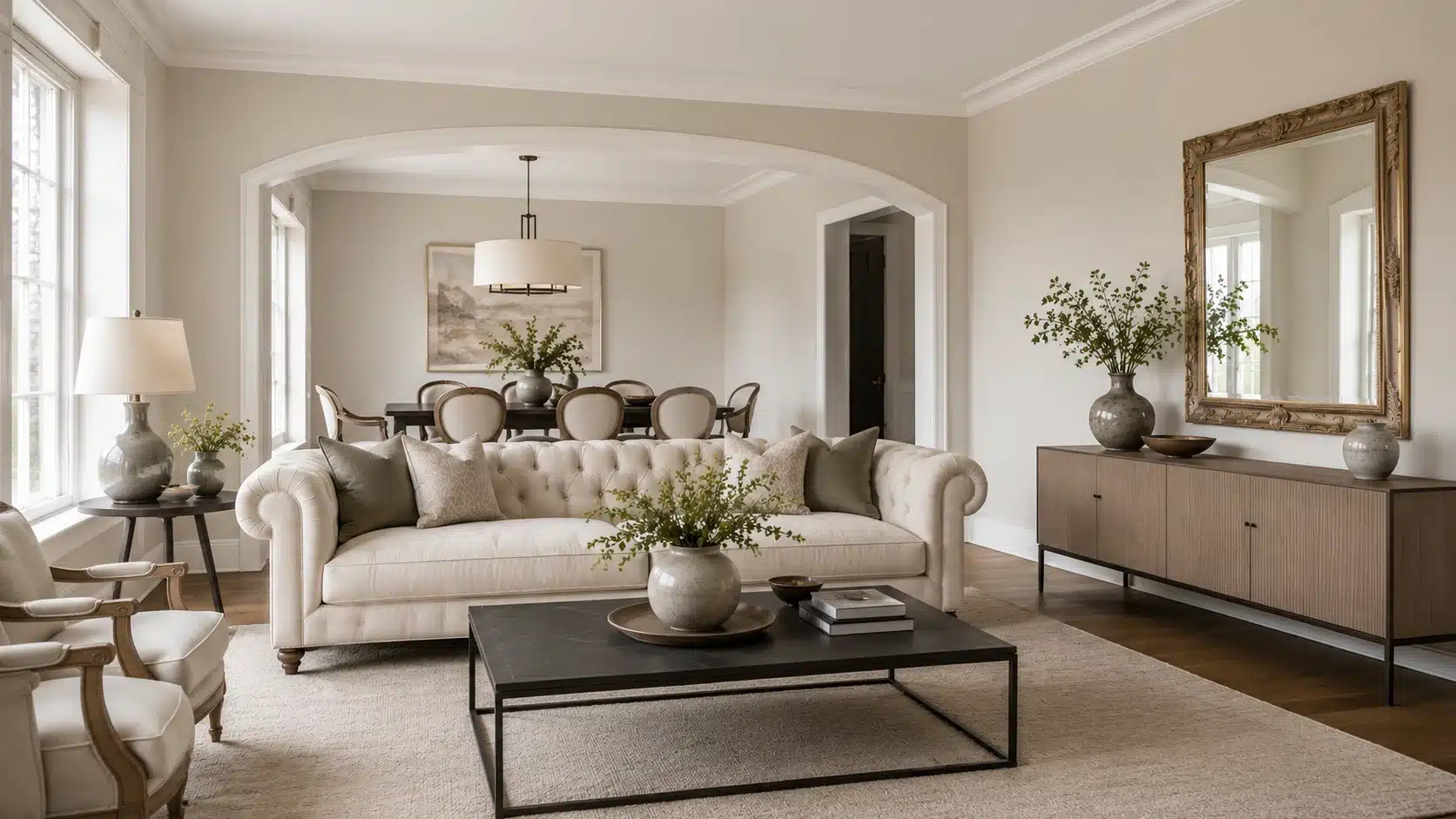
This is the clearest visual signal of the style. You’re not filling a room with only antiques or only contemporary pieces. You’re pairing them.
A few combinations that consistently work:
- A tufted, traditional-shaped sofa with a simple modern coffee table
- Classic dining chairs under a contemporary pendant light
- A carved wood mirror above a streamlined console
The one rule worth remembering is not to match every piece to the same era. A room full of only traditional furniture reads as traditional rather than transitional. The mix is the style.
3. Layered Textures Instead of Heavy Patterns
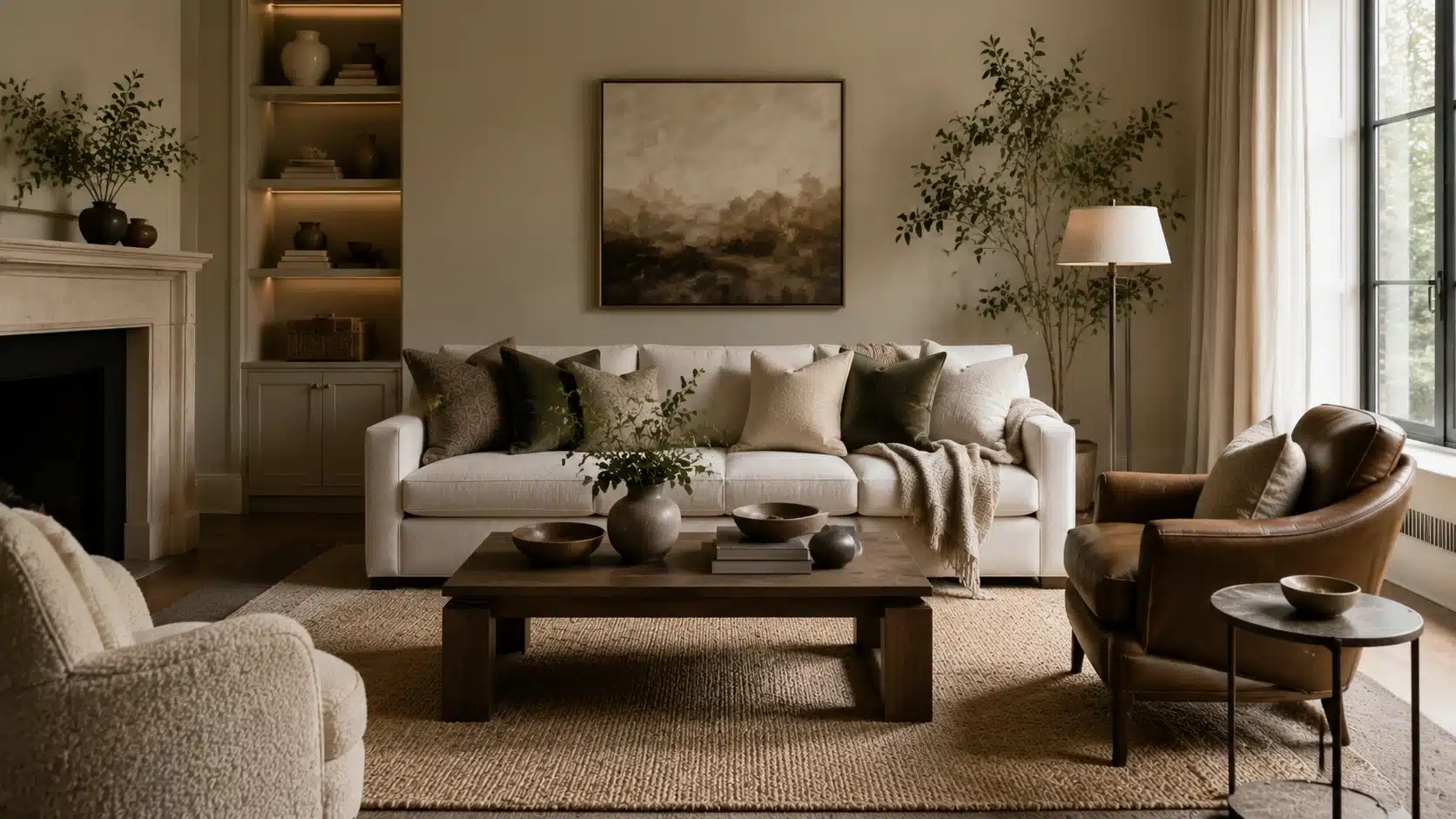
Traditional rooms often rely on bold patterns; modern rooms often rely on none at all.
This approach leans on texture instead, using linen curtains, wool rugs, leather accents, velvet cushions, and natural wood finishes to add depth without visual noise.
This layering is what gives a transitional room its sense of comfort. A plain sofa in the right fabric can feel more inviting than a heavily patterned one, simply because of how the material reads and feels.
4. Balanced Architectural Details
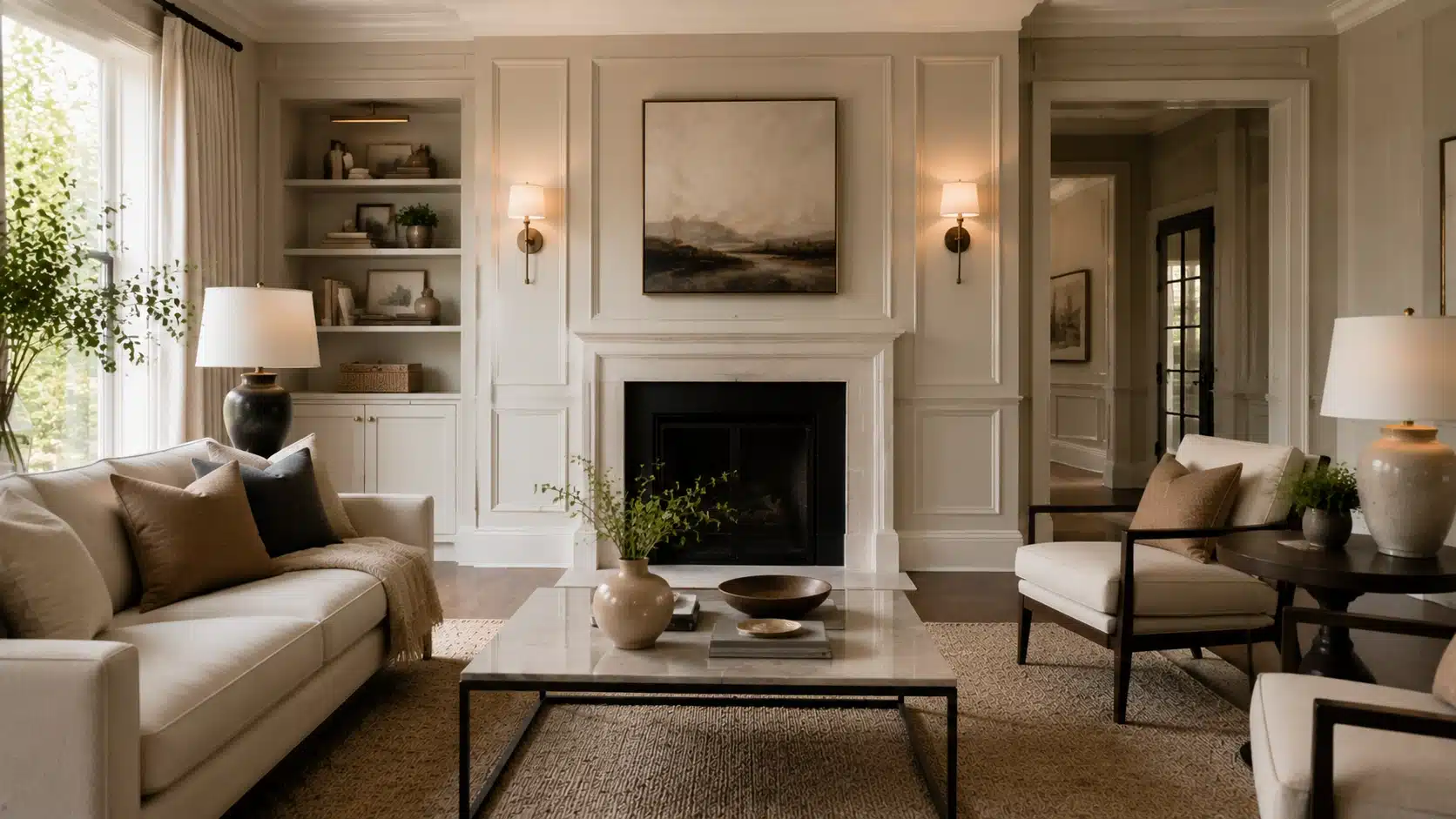
Crown molding, paneling, built-in shelving, and simple trim work all have a place in transitional homes, but the details are kept simpler than in fully traditional interiors.
Ornate crown molding gets swapped for a cleaner profile. Elaborate paneling gets simplified into flat panels. The architecture still nods to tradition, just without the extra flourish.
5. Mixed Materials and Finishes
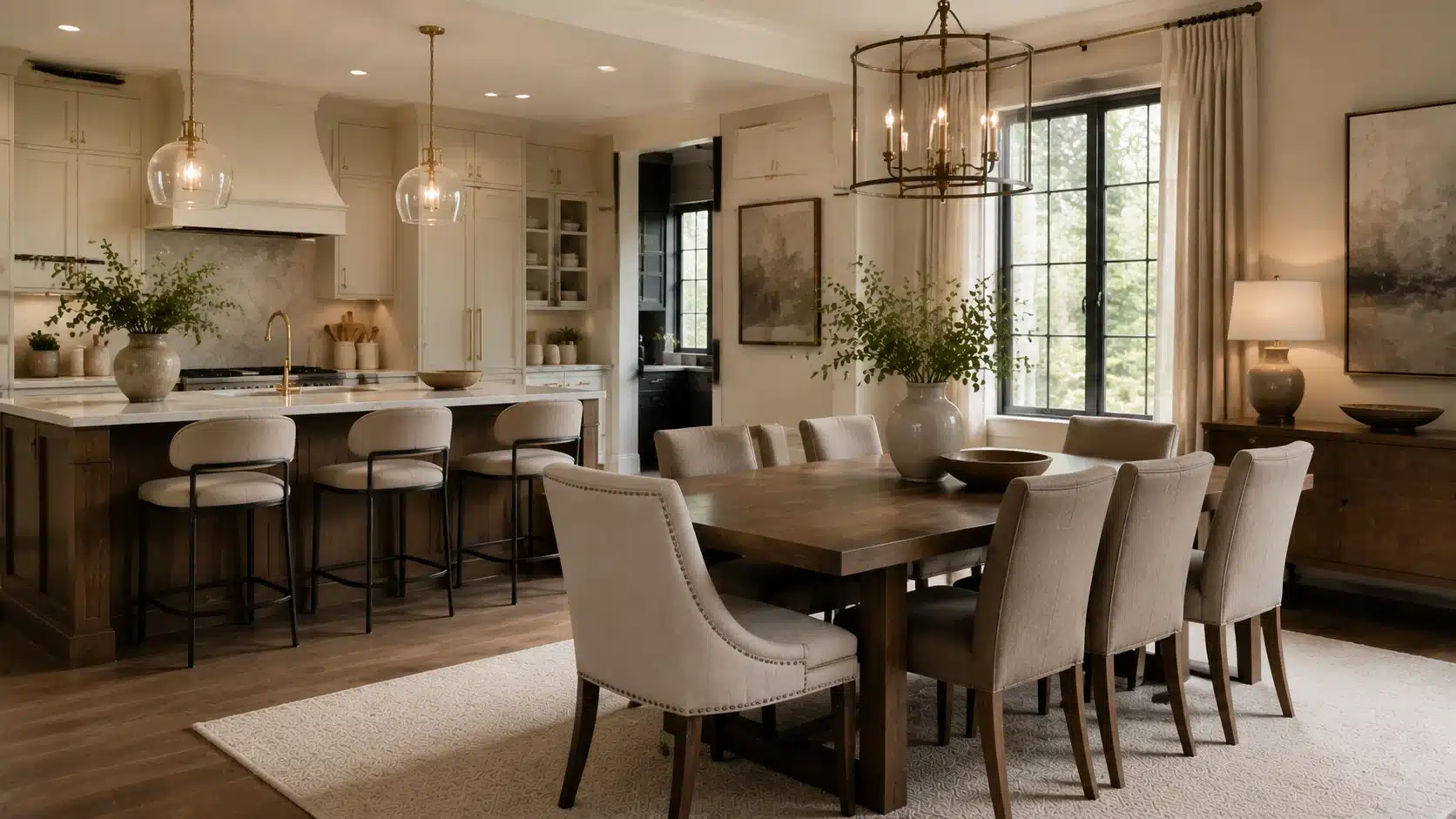
Wood, glass, stone, and metal working together is a hallmark of transitional spaces.
A stone fireplace surround, a glass coffee table, and matte black hardware can all coexist in the same room because none of them is fighting for attention.
Mixing materials, rather than repeating a single finish throughout, is what keeps the space from feeling flat or overly matchy.
Transitional Interior Design Ideas For Different Rooms
The principles behind transitional design stay the same from room to room, but how they show up changes. A living room leans on furniture and lighting, while a kitchen or bathroom leans more on materials and finishes.
1. Living Room
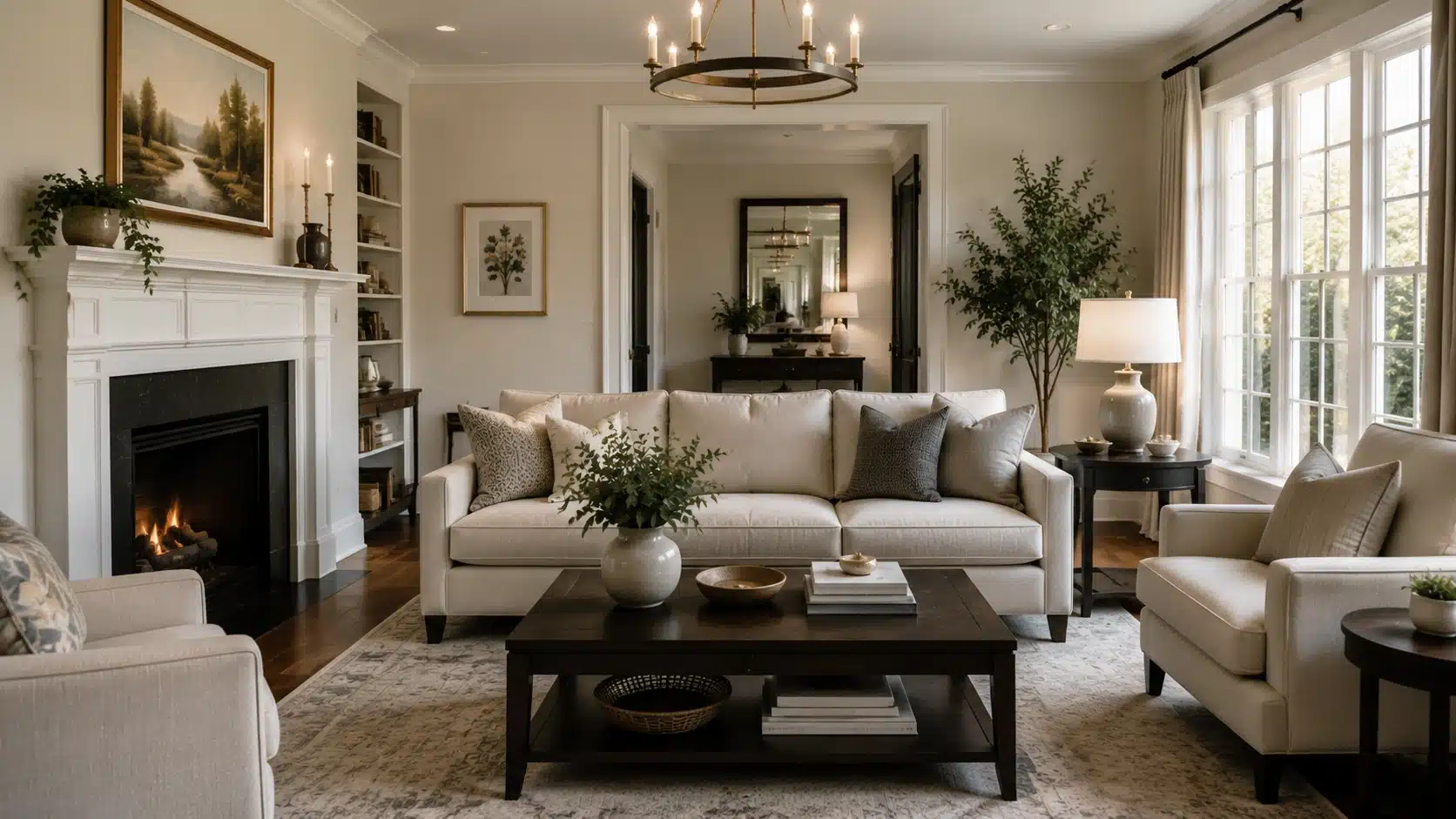
A transitional living room typically starts with a neutral sofa, rugs, and a mix of classic and contemporary lighting. Traditional details like a fireplace mantel or molding stay in place, while the furniture around them leans simpler.
Classic artwork in a clean frame and a balanced furniture arrangement (rather than a rigid, formal layout) complete the look.
2. Kitchen
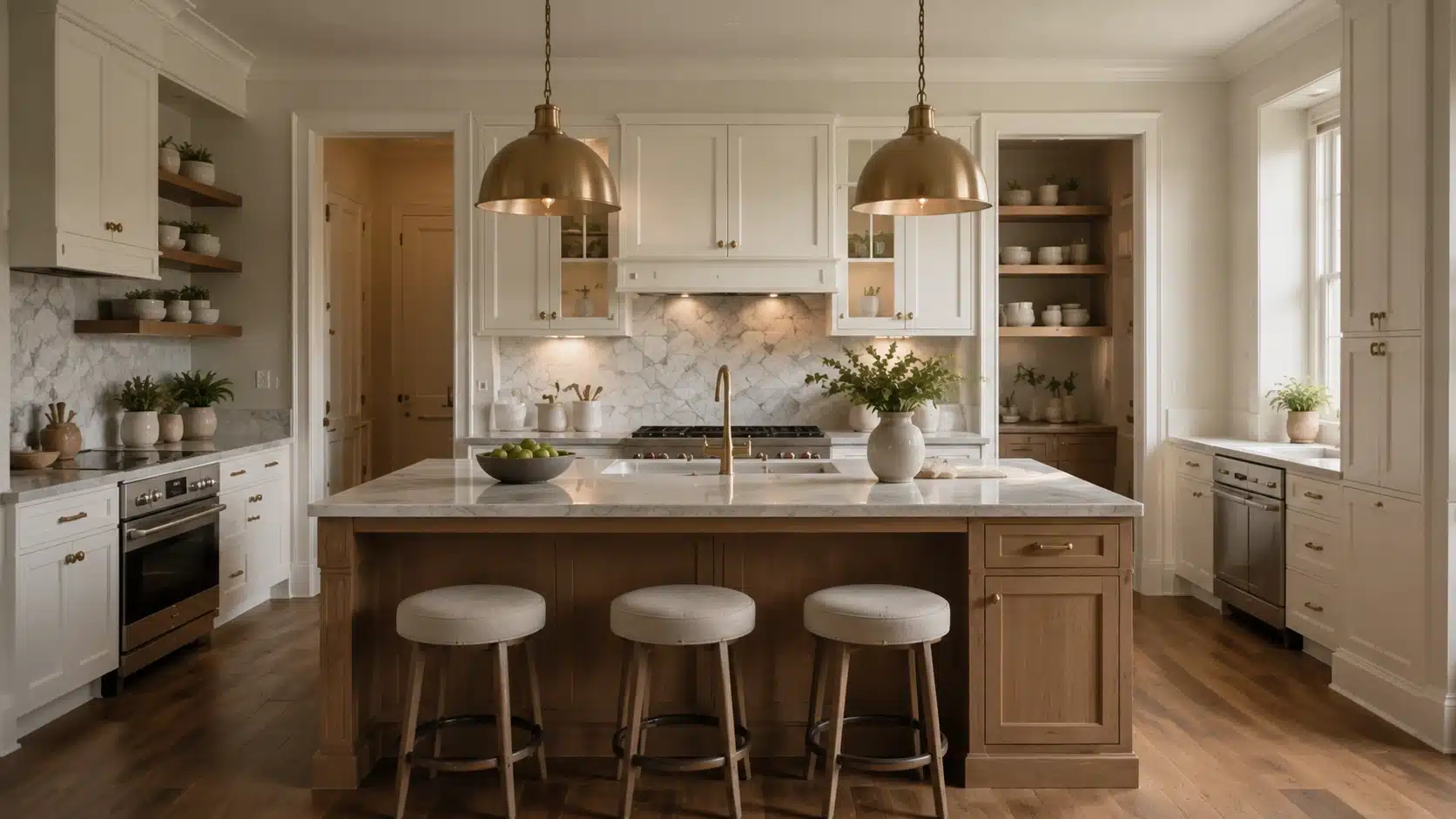
Shaker cabinets are the backbone of most transitional kitchen designs because the door style itself bridges traditional paneling and modern simplicity.
Pair them with marble or clean quartz countertops, mixed metal hardware, and simple backsplash tile. Wood accents, whether on an island or on open shelving, keep the space feeling warm rather than clinical.
3. Bedroom
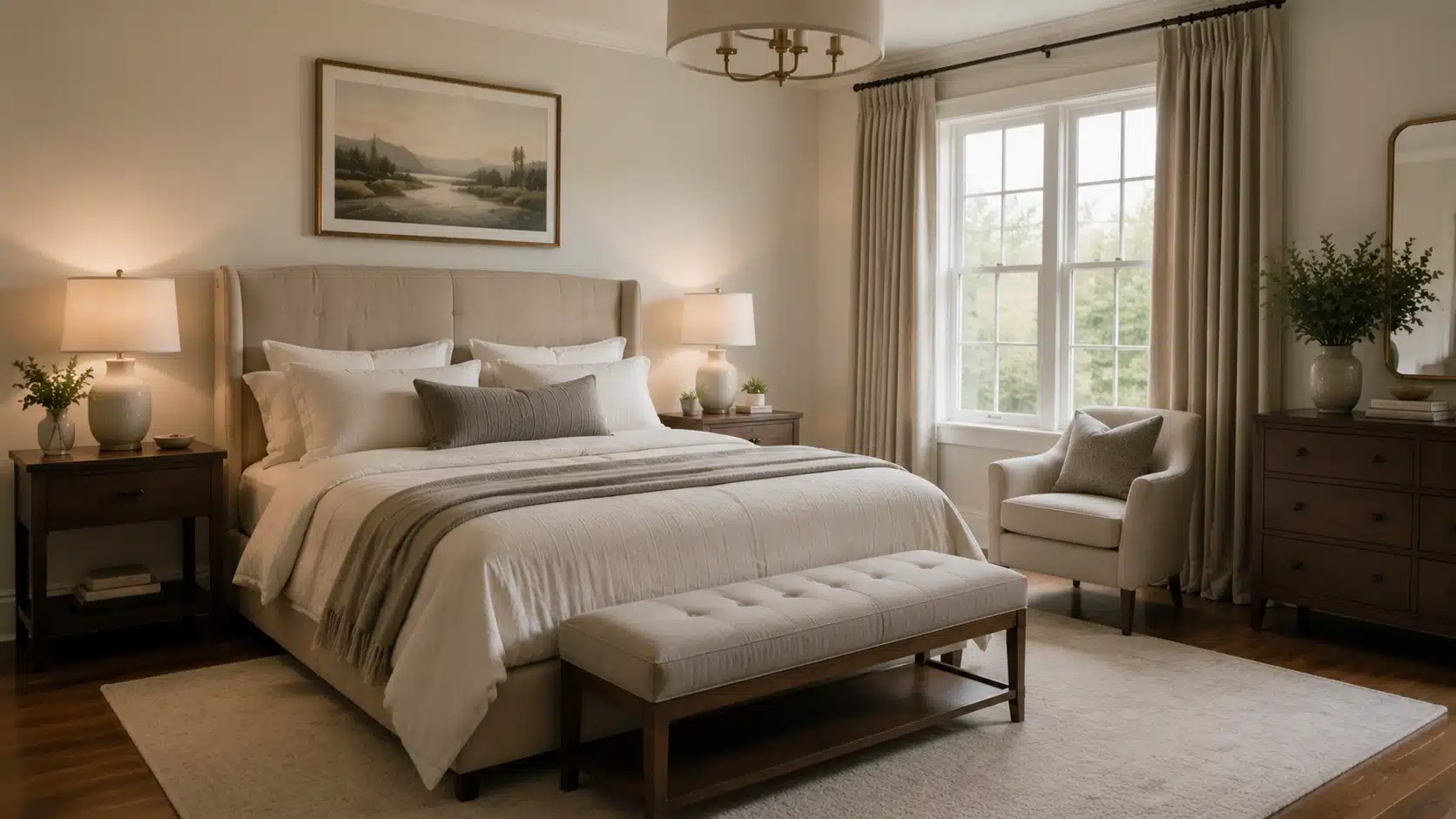
An upholstered headboard is one of the fastest ways to bring transitional style into a bedroom. Keep bedding neutral, then layer in texture through textiles like a knit throw or linen duvet cover.
Traditional bedside tables paired with modern lamps are a small detail that does a lot of visual work.
4. Bathroom
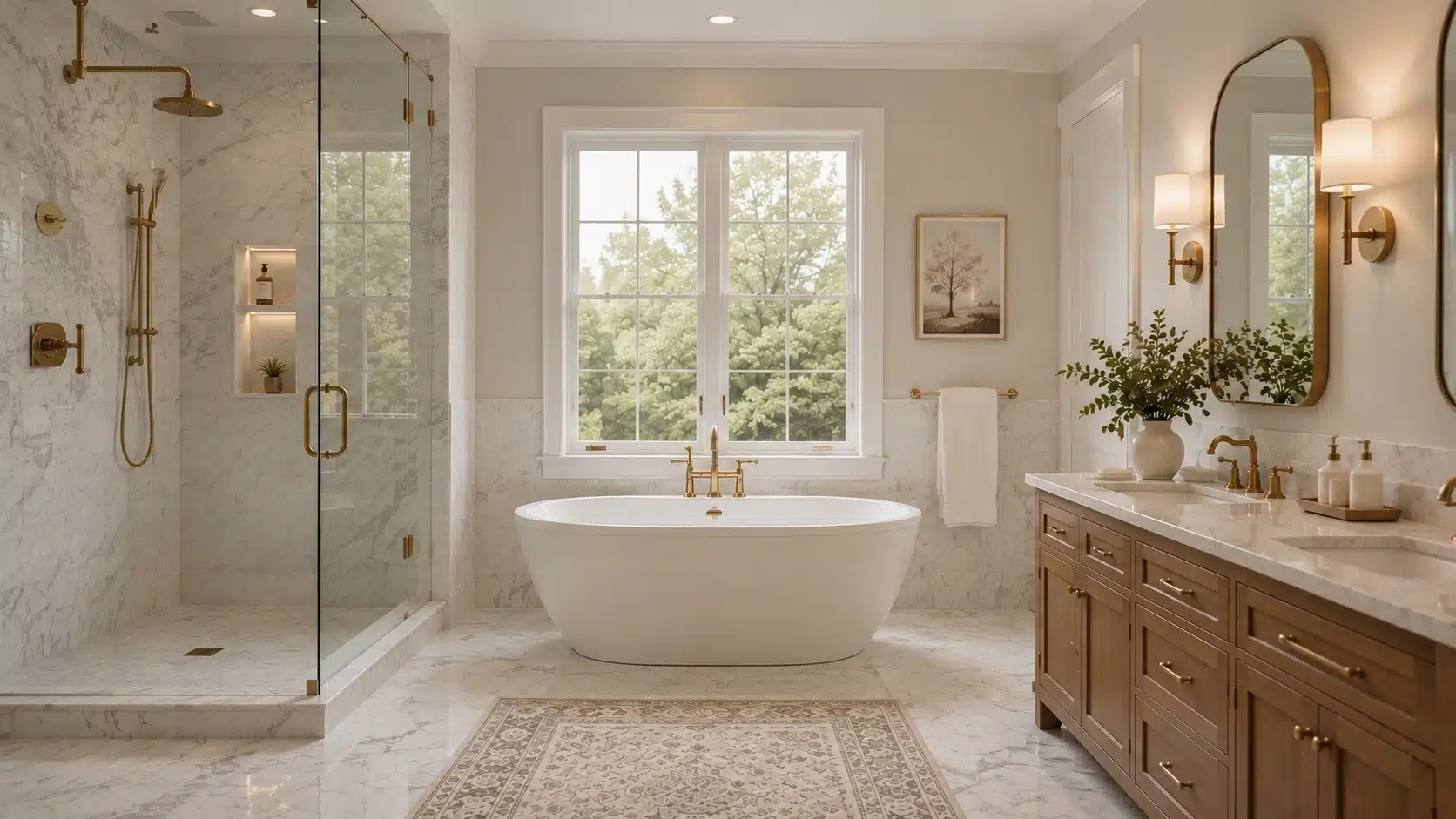
Bathroom designs lean transitional through a freestanding tub, classic tile patterns, and modern fixtures like a wall-mounted faucet or minimal cabinet hardware.
Natural stone finishes on countertops or flooring add the same warmth that wood does in other rooms. Once a foundation is in place, repetition, ratio, and scale work together, and a mixed room stops looking accidental.
Transitional Interior Design vs. Similar Styles
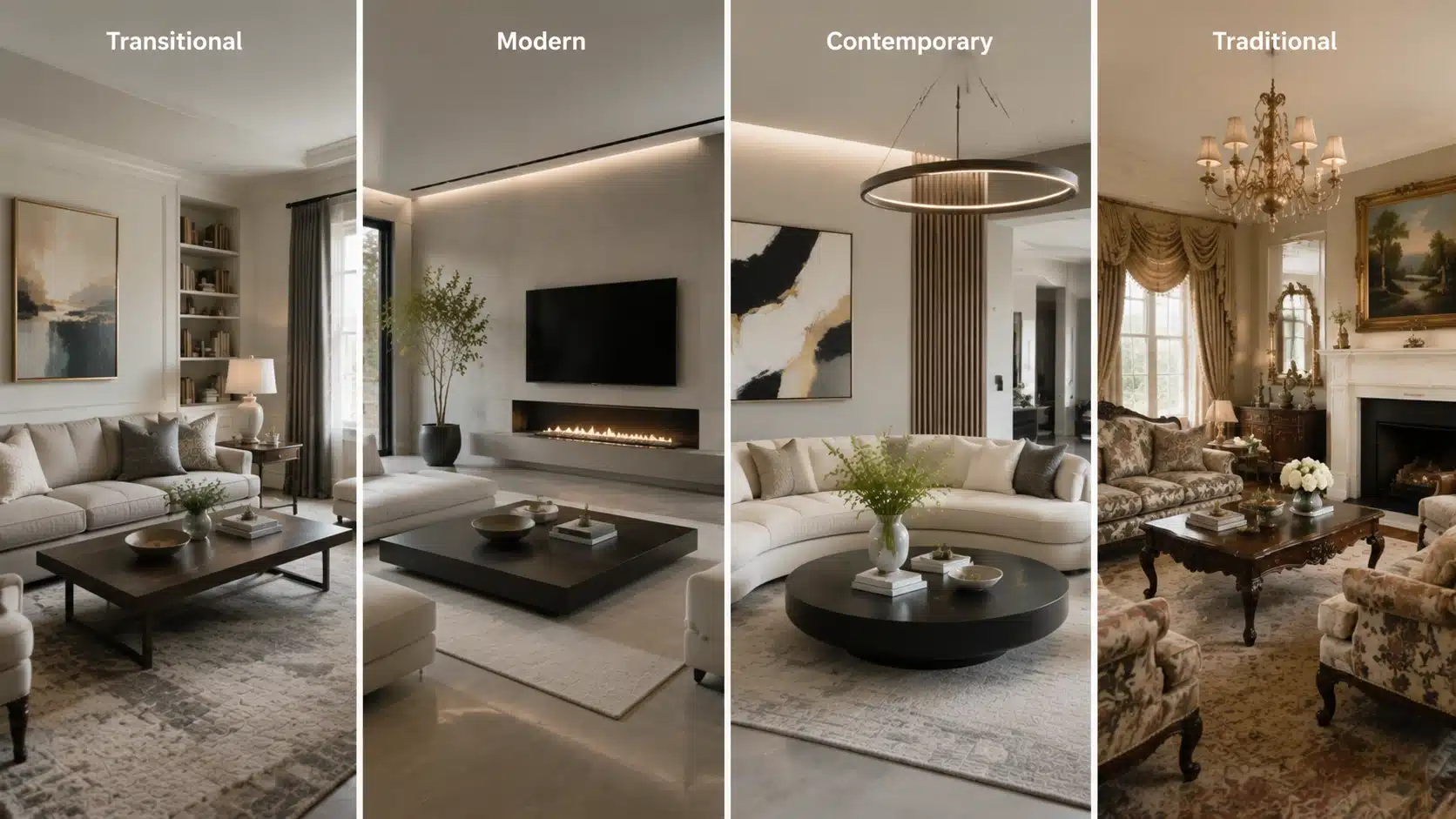
It’s easy to confuse transitional design with the styles sitting on either side of it. Modern, contemporary, and traditional all overlap, but each treats ornamentation, trend sensitivity, and formality differently.
1. Transitional vs. Modern Interior Design: Modern design prioritizes minimalism, sharp lines, and little to no ornamentation. This style keeps some warmth and softness in furniture shapes and finishes, making it feel more lived-in than a strictly modern room.
2. Transitional vs. Contemporary Interior Design: Contemporary design house style shifts with current trends, which means a contemporary room from ten years ago can look dated fairly quickly. This look is built around longevity rather than trend cycles, so it tends to age better.
3. Transitional vs. Traditional Interior Design: Traditional interiors lean into ornamentation, formal furniture arrangements, and detailed millwork. Transitional spaces simplify it all: less decoration, more relaxed layouts, and cleaner finishes throughout.
Quick comparison:
| Style | Ornamentation | Trend Sensitivity | Overall Feel |
|---|---|---|---|
| Transitional | Simplified, selective | Low, built for longevity | Balanced, comfortable |
| Modern | Minimal to none | Low | Sleek, sparse |
| Contemporary | Varies with trends | High | Current, ever-changing |
| Traditional | Heavy, formal | Low | Ornate, classic |
The common thread across all three comparisons is balance. Transitional design borrows just enough from each neighboring style to feel current and comfortable, without fully committing to any single extreme.
Errors to Avoid in Transitional Interior Design
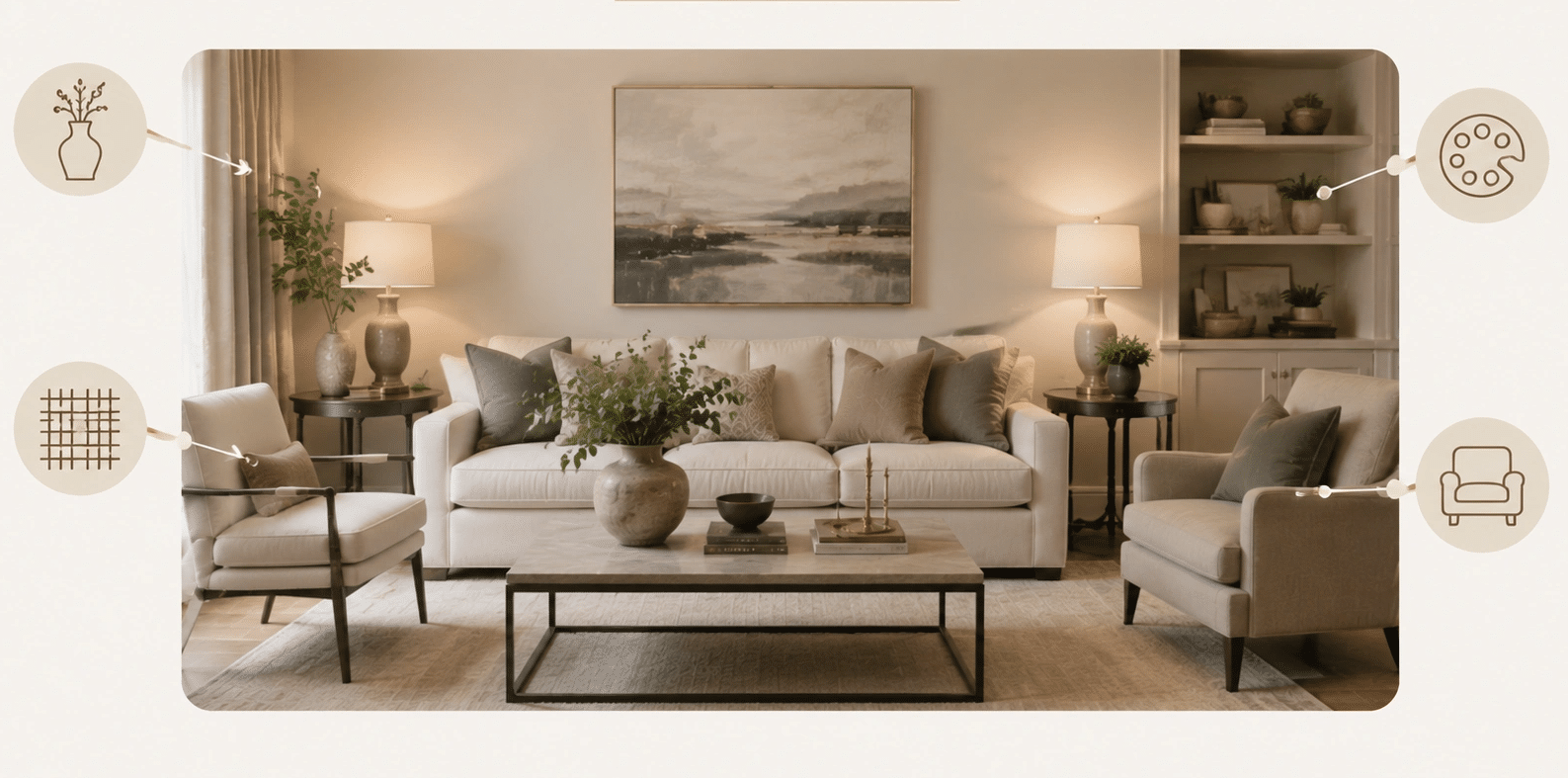
Even residential owners who understand the style well can tip a room too far toward one side without realizing it. These four mistakes come up the most, and each one is easy to fix once you know what to look for.
- Using too many decorative details. Overcrowding a room with antiques, patterns, and accessories pulls it back toward traditional design and away from transitional balance.
- Creating a completely neutral room without contrast. An all-neutral room without contrast can feel unfinished. Darker woods, metal accents, or textured fabric give the eye somewhere to land.
- Mixing styles without repeating elements. Furniture from different eras without a shared color, material, or finish feels disconnected rather than curated.
- Choosing trendy pieces over timeless ones. Trend-driven pieces undercut the entire point of the style. Ask if you’ll still want it in five years.
Most of these mistakes come from the same root cause: overcorrecting in one direction, whether that’s too much decoration, too little contrast, or too much trend-chasing.
Catching them early keeps a room feeling balanced instead of unfinished or overdone.
How to Create Transitional Style on a Budget
A full transitional redesign doesn’t require a renovation.
Most of the look comes down to smart, targeted swaps rather than tearing out what’s already there, which means you can work room by room and spread the cost out over time. A few lower-cost changes go a long way:
- Keep existing architectural features rather than removing them
- Update lighting first, since fixtures change a room’s feel quickly
- Add texture through throw pillows, a new rug, or linen curtains
- Replace cabinet or door hardware with an inexpensive material update
- Mix in a vintage or secondhand find alongside newer furniture
- Repaint walls in a warm neutral tone
None of these require a contractor, and most can be done over a weekend. Here’s a rough sense of what each change tends to cost:
| Change | Approx. Budget | Effort |
|---|---|---|
| Repaint walls in a warm neutral | $50–$200 | Weekend project |
| Replace cabinet or door hardware | $30–$150 | A few hours |
| Add a new rug or throw pillows | $50–$300 | Same day |
| Swap in linen curtains | $60–$200 | Same day |
| Update a light fixture | $75–$400 | Weekend project |
| Mix in a vintage or secondhand find | $20–$150 | Ongoing, as you find pieces |
Costs will vary by room size and materials, but none of these require touching the budget you’d set aside for a full renovation.
Is Transitional Interior Design Right for Your Home?
This interior design style tends to suit people who like classic details but don’t want a formal, museum-like room, and works less well for anyone drawn to a fully bare, minimal space or a heavily ornate, maximalist one.
I’m not sure your taste fits the style. Here’s a quick gut check:
| If Your Vibe Is… | Transitional Design Fit |
|---|---|
| “I love antiques, but I don’t want my living room to look like a museum” | Strong fit |
| “I want a calm, neutral space that still feels warm” | Strong fit |
| “I keep collecting furniture from different eras and can’t tie it together” | Strong fit |
| “I want a completely bare, ultra-minimal room” | Not a fit; lean modern instead |
| “I want every piece ornate, patterned, and formal” | Not a fit; lean traditional instead |
| “I want a space that still feels current in ten years” | Strong fit |
If most of your answers land in the “strong fit” column, transitional design is likely your style. If you’re drawn to the extremes on either end, one of its close cousins, fully modern or fully traditional, will probably serve you better.
Frequently Asked Questions
What is the 3-5-7 rule in interior design?
It’s a styling guide for grouping decor in odd numbers, since asymmetrical groupings tend to look more natural and balanced than even ones.
What colors are used in transitional interior design?
Neutral tones dominate transitional spaces, including white, beige, taupe, warm gray, and soft brown, often layered with darker wood or metal accents for contrast.
Is transitional design outdated?
No. It’s built around timeless proportions and materials rather than trends, which is why it tends to stay relevant far longer than trend-driven styles.
How do you make a room look transitional?
Pair traditional furniture shapes with modern finishes, keep the palette neutral, layer in texture through fabrics, and simplify architectural details rather than removing them entirely.
The Sweet Spot Between Old and New
Good design rarely asks you to pick a side, and transitional style proves it. It takes the comfort of a room your grandmother would recognize and pairs it with the ease of one built for how you actually live now.
No strict rulebook, no chasing whatever’s trending this year, just repetition, proportion, and texture doing the quiet work of holding a room together.
That’s also why it lasts. A well-styled transitional living room today will still feel right in ten years, long after trend-driven looks have cycled out.
If you’re ready to try it, don’t overhaul the whole house at once. Pick one traditional piece and one modern piece you already love, put them in the same room, and build outward from there.
The balance tends to reveal itself once you stop overthinking it.