

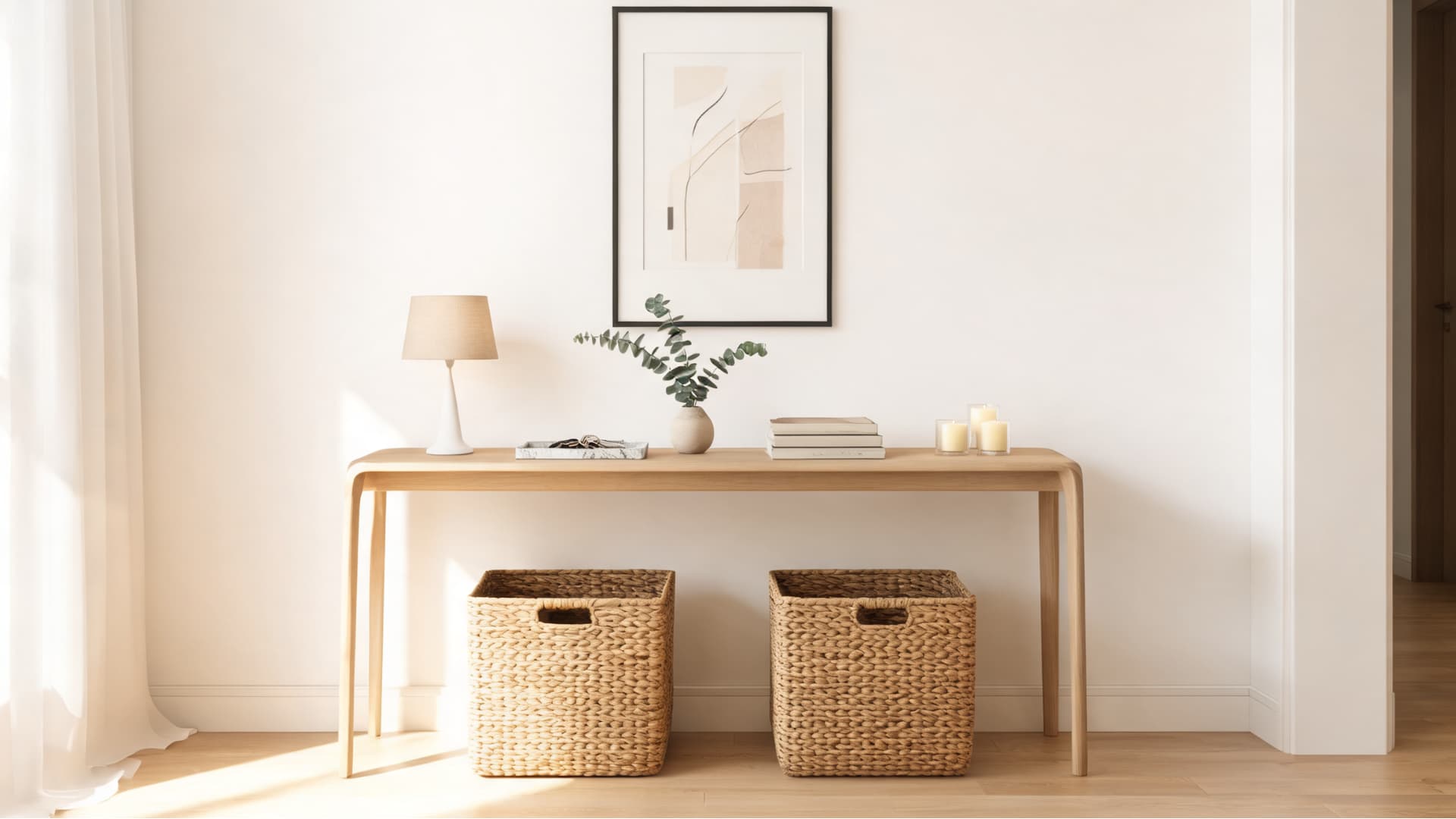


A console table is a long, narrow table designed to sit against a wall or behind a sofa, and the reason it works so well in so many rooms comes down to one thing: its depth is kept shallow enough that it doesn’t pull floor space away from you.
Most run 12 to 18 inches deep, 30 to 36 inches tall, and anywhere from 36 to 60 inches wide. That combination lets it function where full-sized furniture can’t, in hallways, entryways, behind sofas, and along blank walls that would otherwise go unused.
Here’s what actually happens when you add one to a room: the space stops feeling unresolved. An entryway gets a surface for daily essentials. A hallway gets a visual anchor. A living room gets storage or lighting without adding bulk. The console table isn’t a decorative afterthought — it’s solving a layout problem that most people don’t even name until after it’s fixed.
| Shape | Long and narrow |
| Common height | 30–36 inches (should match or sit just below sofa back height when used behind a sofa) |
| Common depth | 12–18 inches, stay under 14 inches in hallways to keep the passage clear |
| Common width | 36–60 inches, ideally no more than two-thirds of the wall width |
| Best placement | Entryway, hallway, living room wall, behind the sofa |
| Main use | Storage, display, lighting, daily essentials |
| Common materials | Wood, metal, glass, marble, rattan, and mirrored finishes |
Those depth numbers matter more than most guides let on. A 14-inch-deep console table in a 36-inch-wide hallway leaves you 22 inches of clearance, just enough. Go to 18 inches of depth, and you’re down to 18 inches of walkway, which starts to feel tight every time someone passes through carrying bags. Size first, then everything else.
What is a Console Table Used For?
Console tables are useful because they solve small space problems while also making a room feel more finished. Instead of being just decorative furniture, they add function to areas that would otherwise remain empty or underused.
- Holding everyday essentials: Console tables are commonly used in entryways to keep daily items like keys, mail, wallets, sunglasses, bags, phones, and trays in one easy-to-reach place. This helps create an organized “drop zone” right at the entrance of the home.
- Displaying decor: They work as a display surface for decorative pieces such as lamps, vases, framed photos, artwork, candles, plants, books, and decorative bowls. This makes them ideal for adding personality and style to a space.
- Adding extra storage: When designed with drawers, shelves, or baskets, console tables can store practical items like cables, remote controls, documents, table linens, dinnerware, or other small household essentials that often create clutter.
- Filling empty wall space: A console table can instantly make a blank wall, narrow hallway, or unused alcove feel intentional and functional without taking up much floor area or making the space feel crowded.
- Creating a room divider: When placed behind a sofa, a console table can subtly divide an open-plan layout into separate zones, such as distinguishing the seating area from a walkway, while still keeping the space visually open.
Where to Put a Console Table: Room-by-Room Placement
The right placement comes down to the specific layout problem you’re solving. Here’s what each location actually requires.
1. Entryway or Foyer
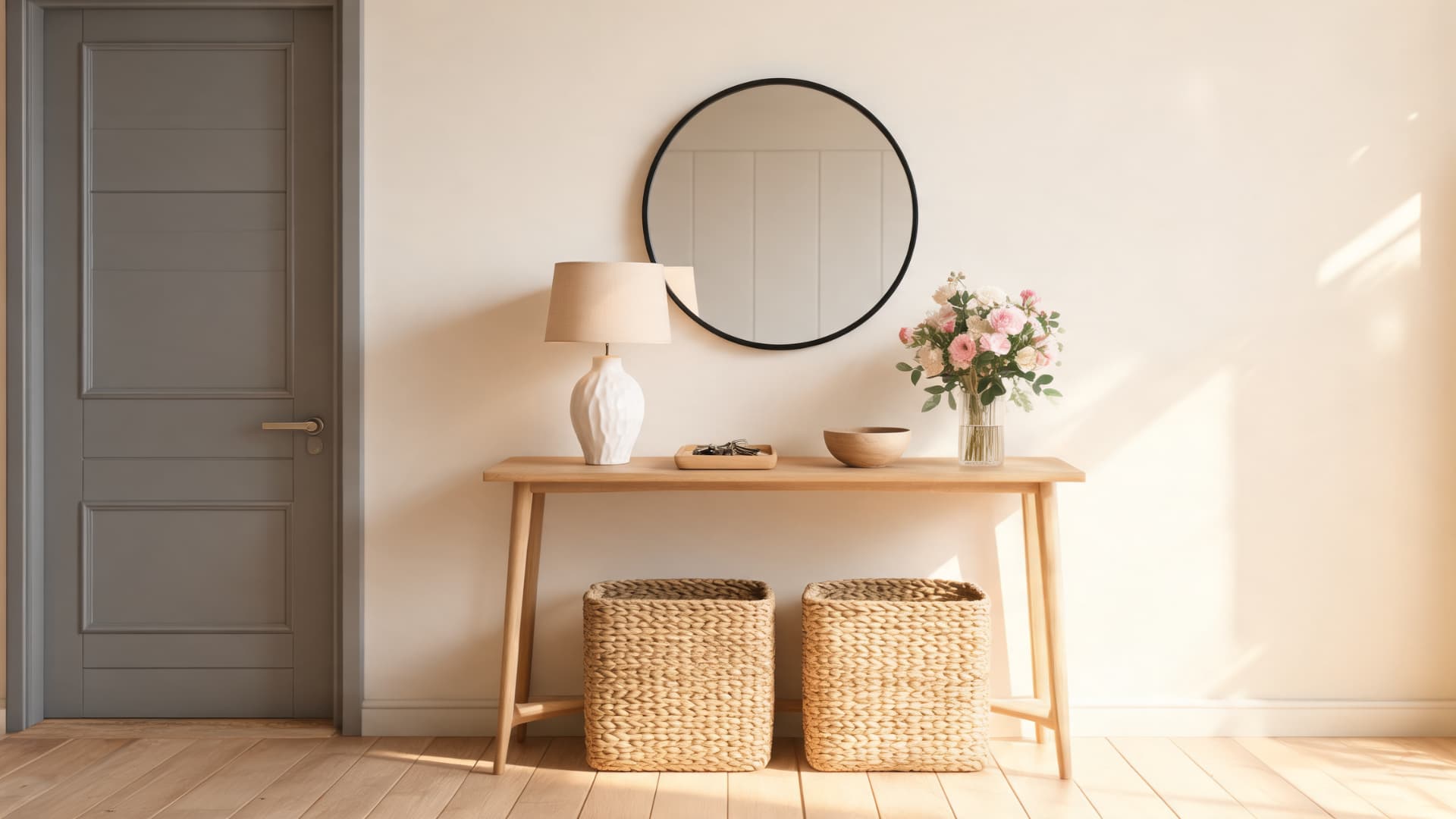
Near the front door, the console table functions as the organizational anchor of the entryway. The most useful setup: a tray or small bowl for keys and change, a lamp or wall-mounted light if the entryway is dim, and at least one basket or hook solution below for bags.
A mirror above it is one of the most practical additions in any entryway — a last look before you leave, and it bounces light into spaces that often have none.
Sizing note: In a foyer, leave at least 36 inches of clear walkway in front of the table. If the hall is narrower than 48 inches, stay at a maximum depth of 12 inches.
2. Hallway
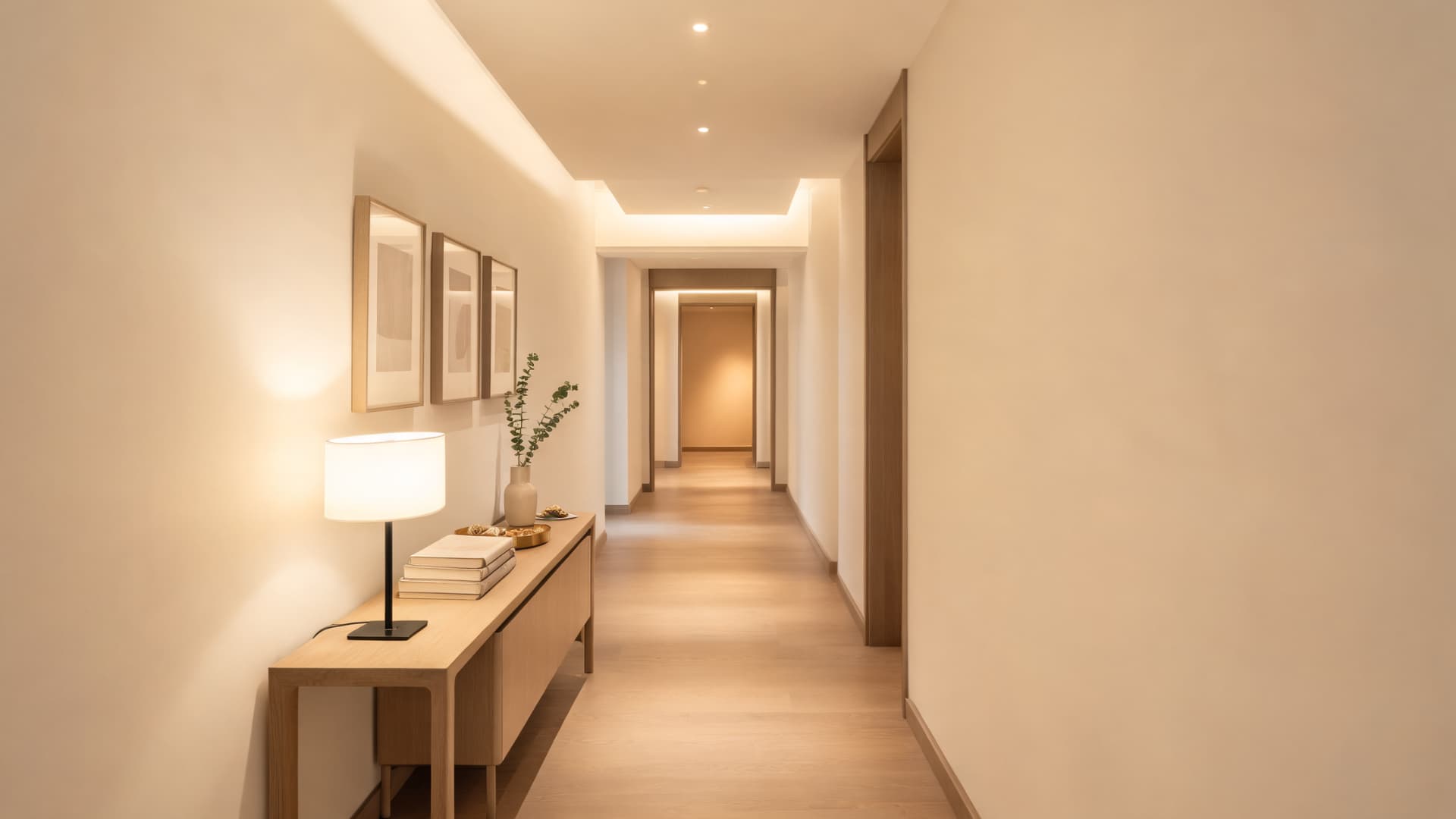
Hallways are the most difficult placement because the walkway constraint is real. A 12-inch-deep console works in most halls.
A slim lamp, a single piece of art above, and one small object on the surface, that’s all that fits before it starts to read as cluttered. If the hallway is also the path to bedrooms, leave the lower shelf completely clear so the space stays easy to move through.
3. Living Room Wall
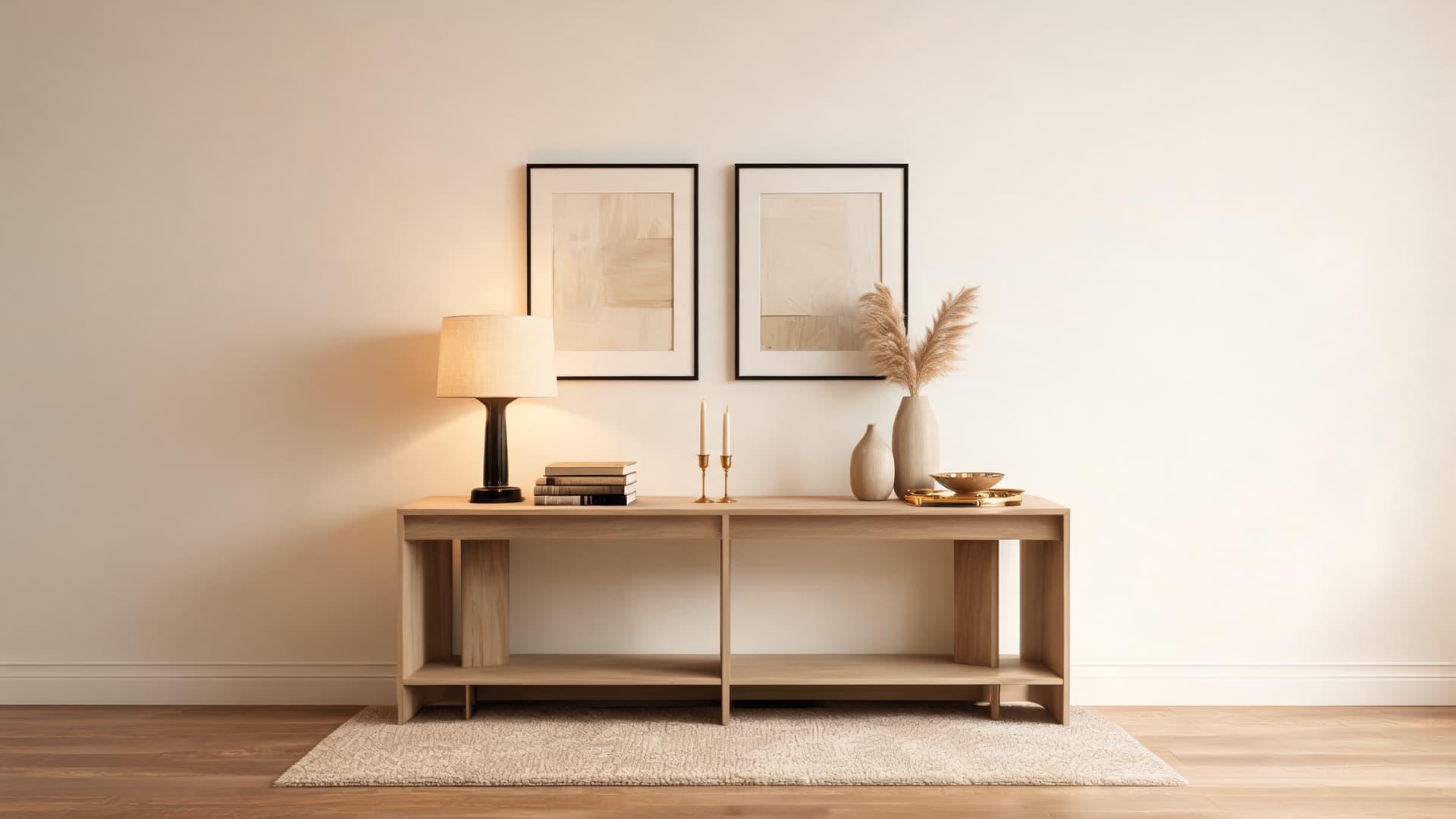
Against a living room wall, the console table works as a display anchor and lighting solution. This is where you have the most styling flexibility; it’s not a high-traffic zone, so you can go slightly deeper (up to 18 inches) and use the surface more fully.
The common mistake here is treating it like a shelf and stacking too much. Pick one anchor piece, a lamp, a large mirror, or a framed artwork, and build around it with two or three supporting objects. The wall above the table is part of the arrangement, not separate from it.
For more on minimalist living room layout and furniture proportions, the scale principles there apply directly to console table placement decisions.
4. Dining Room
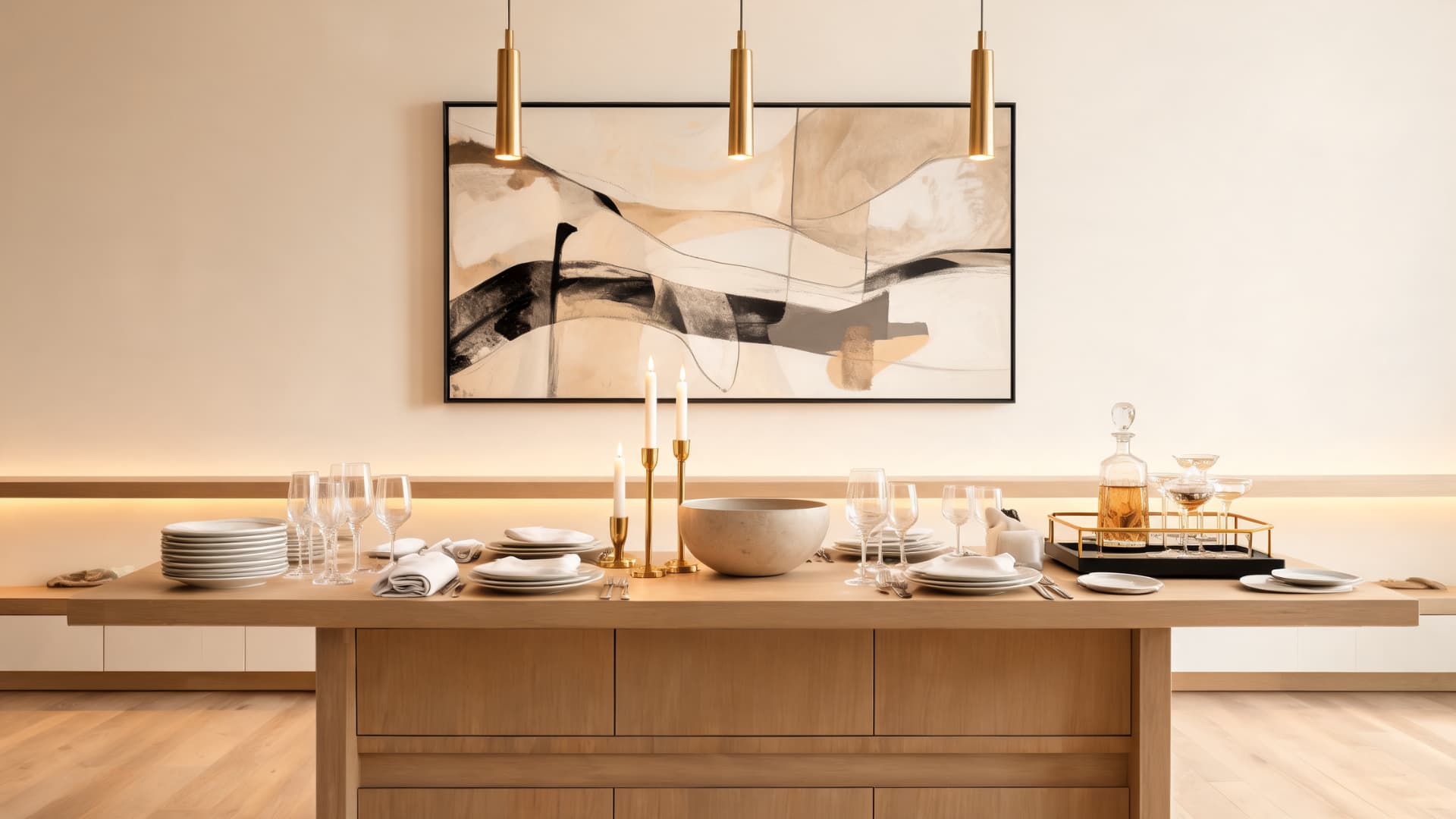
A console table in the dining room fills the role of a slim sideboard — serving surface, bar area, or storage for linens and glassware that don’t have another home. This works best in smaller dining rooms where a full buffet cabinet would dominate the wall.
At 15 to 18 inches of depth, you get enough surface for functional staging without the room feeling compressed.
5. Bedroom
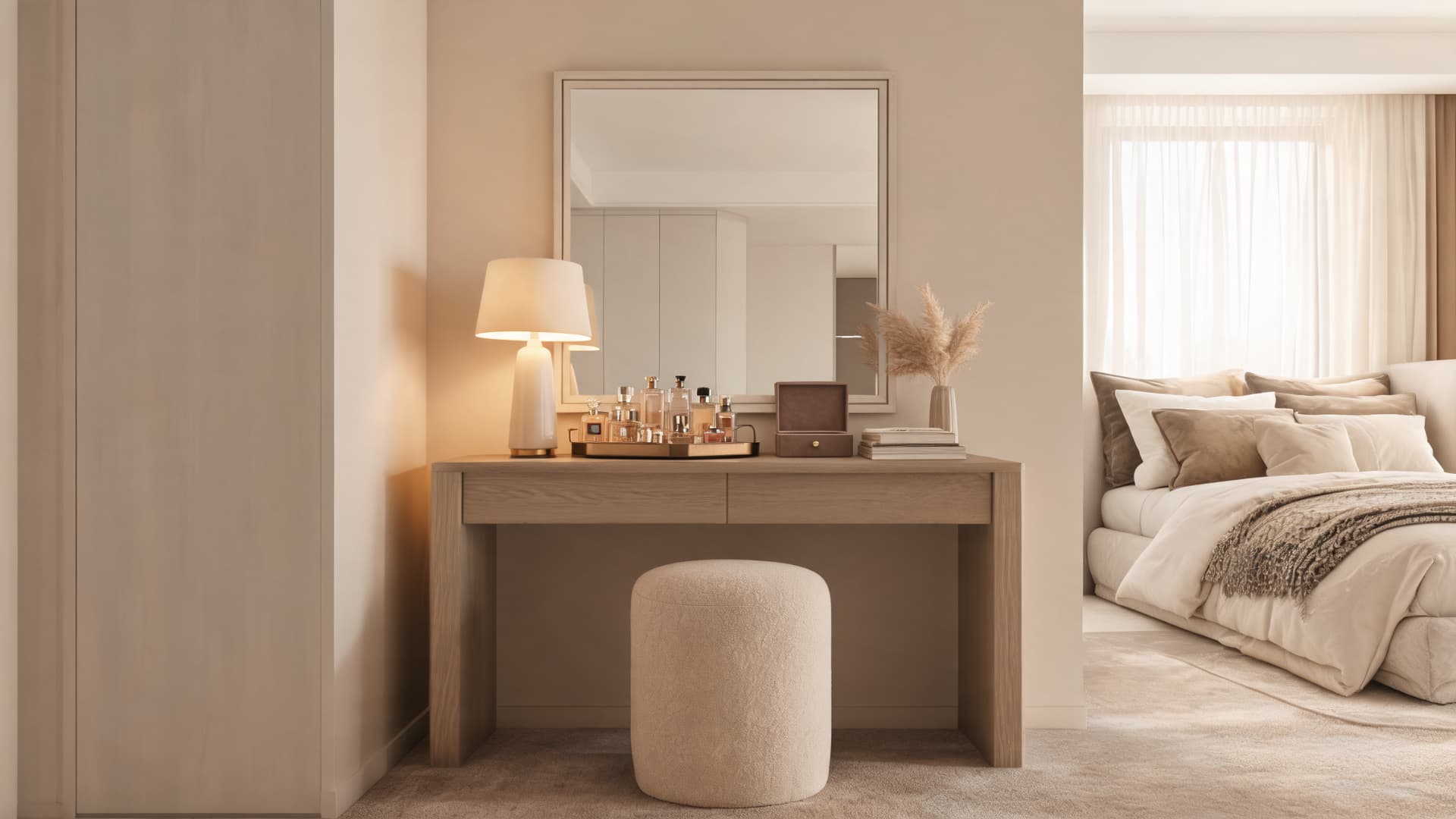
In the bedroom, a console table works as a compact vanity when paired with a mirror and stool.
The table depth here should match the stool depth so you can sit comfortably without the stool jutting out awkwardly when it’s pushed in. Look for a stool that tucks flush underneath the table’s apron when not in use.
6. Bathroom

In larger bathrooms, a console table organizes towels, baskets, and toiletries while keeping the surface accessible. Some bathroom console tables are specifically designed to support a vessel sink, with plumbing clearance built into the open frame.
Confirm weight capacity before loading a ceramic sink, standard decorative console tables are not rated for that load.
7. Alcove or Awkward Corner
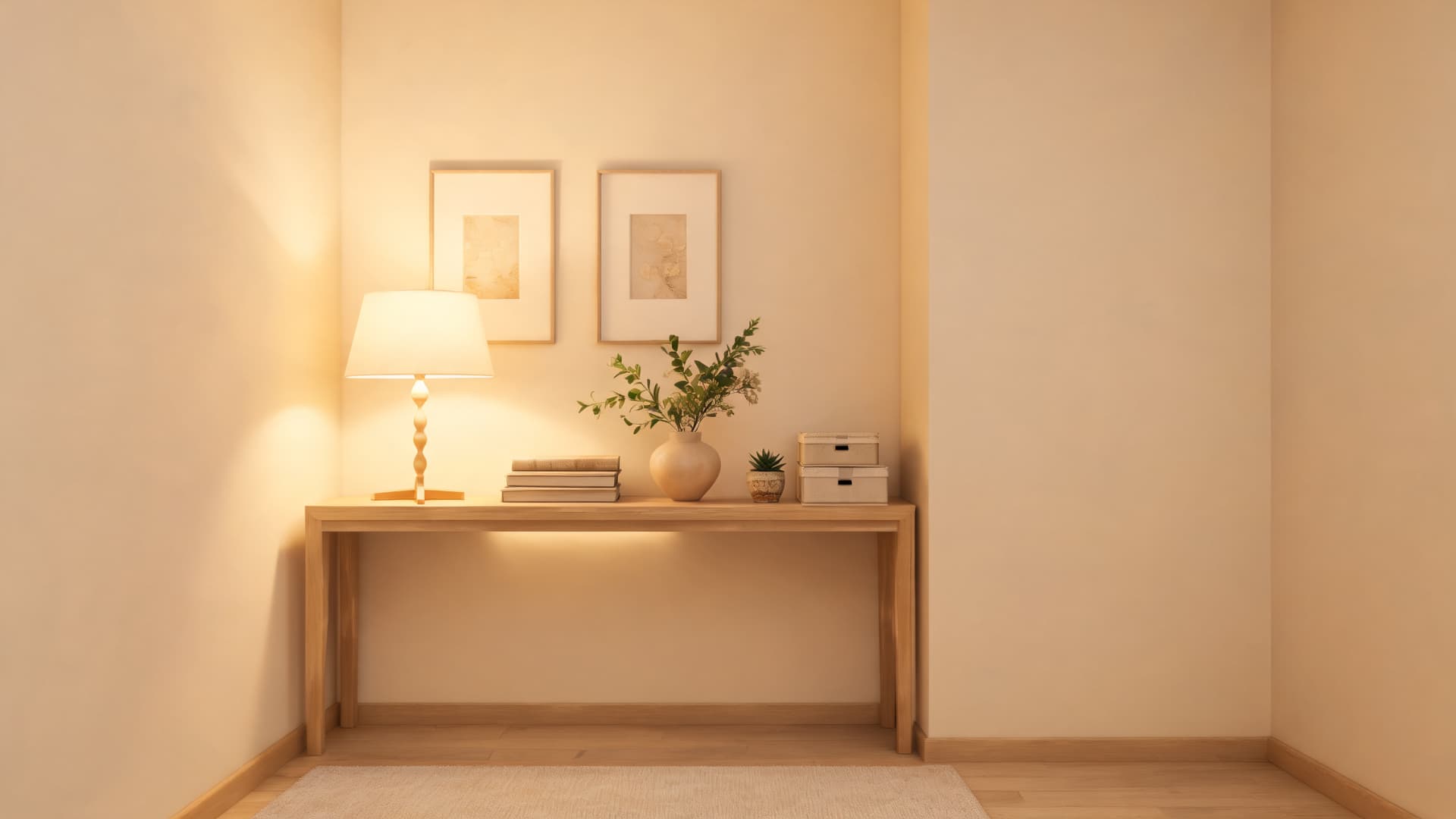
Alcoves and recessed walls are exactly what the narrow format was designed for. A console table fits the footprint without competing with the architecture. In an alcove, the depth of the recess usually determines how deep your table can be — measure the recess depth first and choose a table at least 2 inches shallower than that clearance so the table looks intentional rather than jammed in.
Best Console Table Materials
Material choice affects three things: maintenance burden, visual weight, and how the table holds up in high-traffic areas. Here’s an honest read on each.
| Material | Best For | Things to Consider |
| Wood | High-traffic areas, warm or traditional rooms | Solid wood holds up well; veneer can chip at corners in entryways |
| Metal | Modern or industrial rooms | Cold on its own — needs soft decor or a wood top to balance it |
| Glass | Small spaces and lighter layouts | Shows fingerprints constantly; tempered glass is safer in entryways |
| Marble | Formal or premium rooms | Heavy, requires sealing, and stains if liquids sit on it |
| Rattan or cane | Relaxed, natural, or coastal interiors | Collects dust in open weave — harder to keep clean in hallways |
| Mirrored finish | Compact rooms where light matters | High maintenance — smudges are visible from across the room |
| Mixed material | Modern homes with flexible styling | Must match at least one existing material in the room |
The entryway is the most demanding location for material choice because it’s the first thing you touch and see every day. Wood, particularly solid hardwood, handles daily use better than glass or marble in that context. For hallways and living room walls, where traffic is lower, the visual priority can take over from the durability concern.
If you’re also thinking through the broader material decisions for your space, the principles in minimalist home decor rules how material selection interacts with room scale and furniture choices.
Common Types of Console Tables
The type of console table you choose changes both the function and the visual weight of the piece in the room. Each works better in some contexts than others.
1. Rectangular Console Table
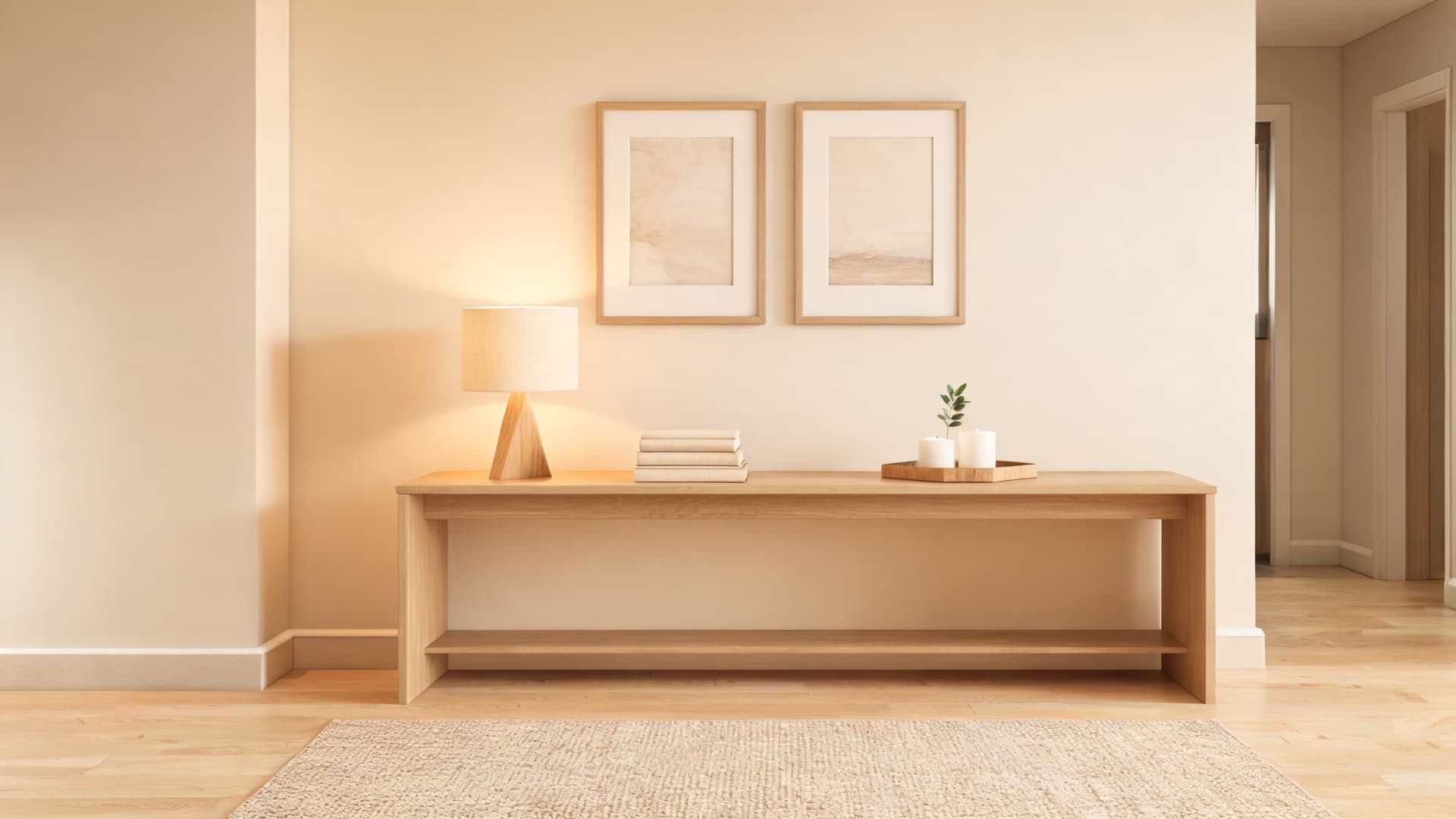
The standard format. Clean lines, easy to style, fits most rooms. This is the right starting point unless you have a specific layout constraint that calls for something else.
2. Demi-Lune Console Table
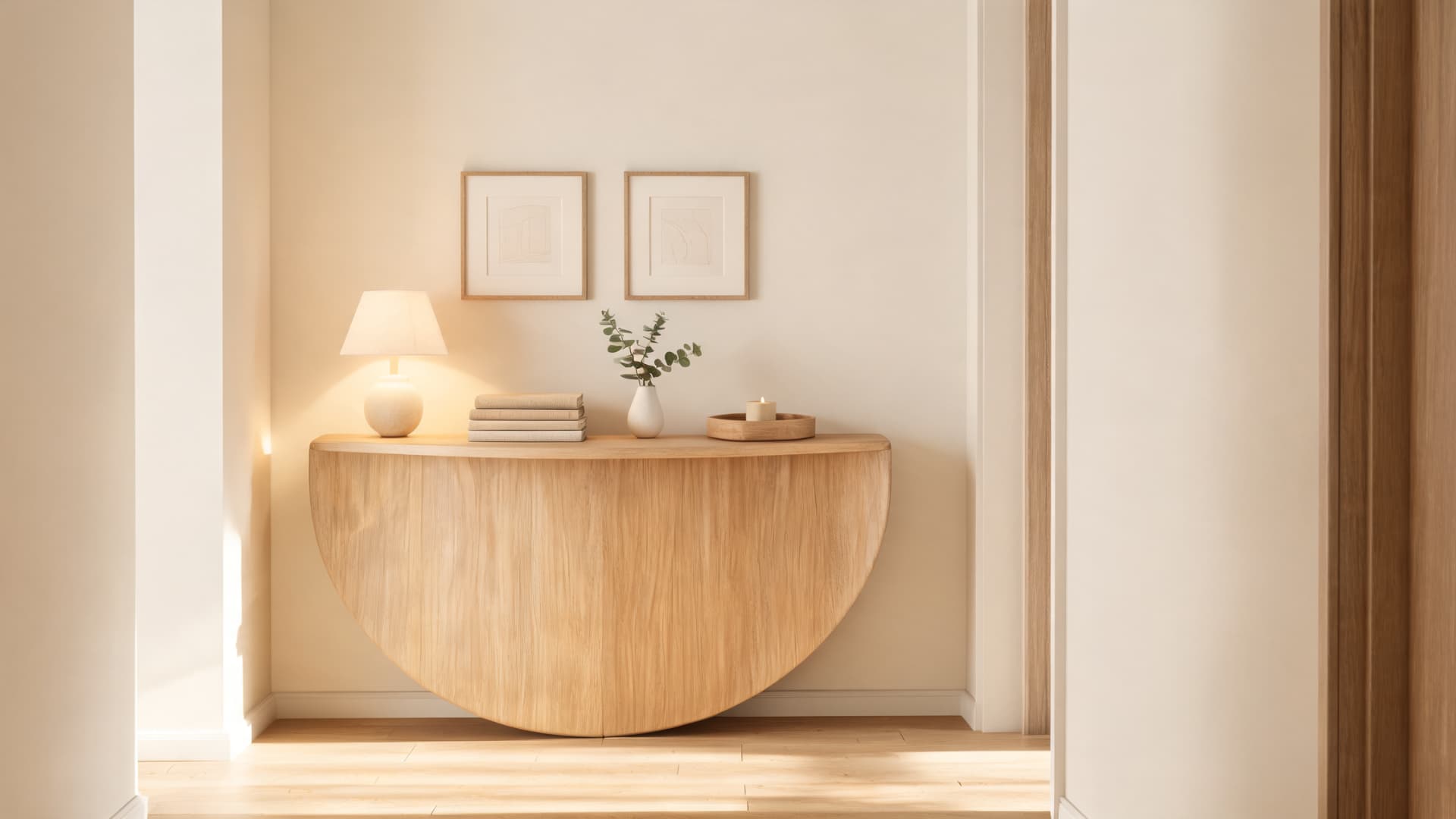
A half-moon shape that trades surface area for a softer edge profile. Works well in tight entryways where the curved front means fewer corners catching bags and elbows. You lose some usable surface depth, so it’s better suited to display-only setups rather than daily storage.
3. Console Table With Drawers
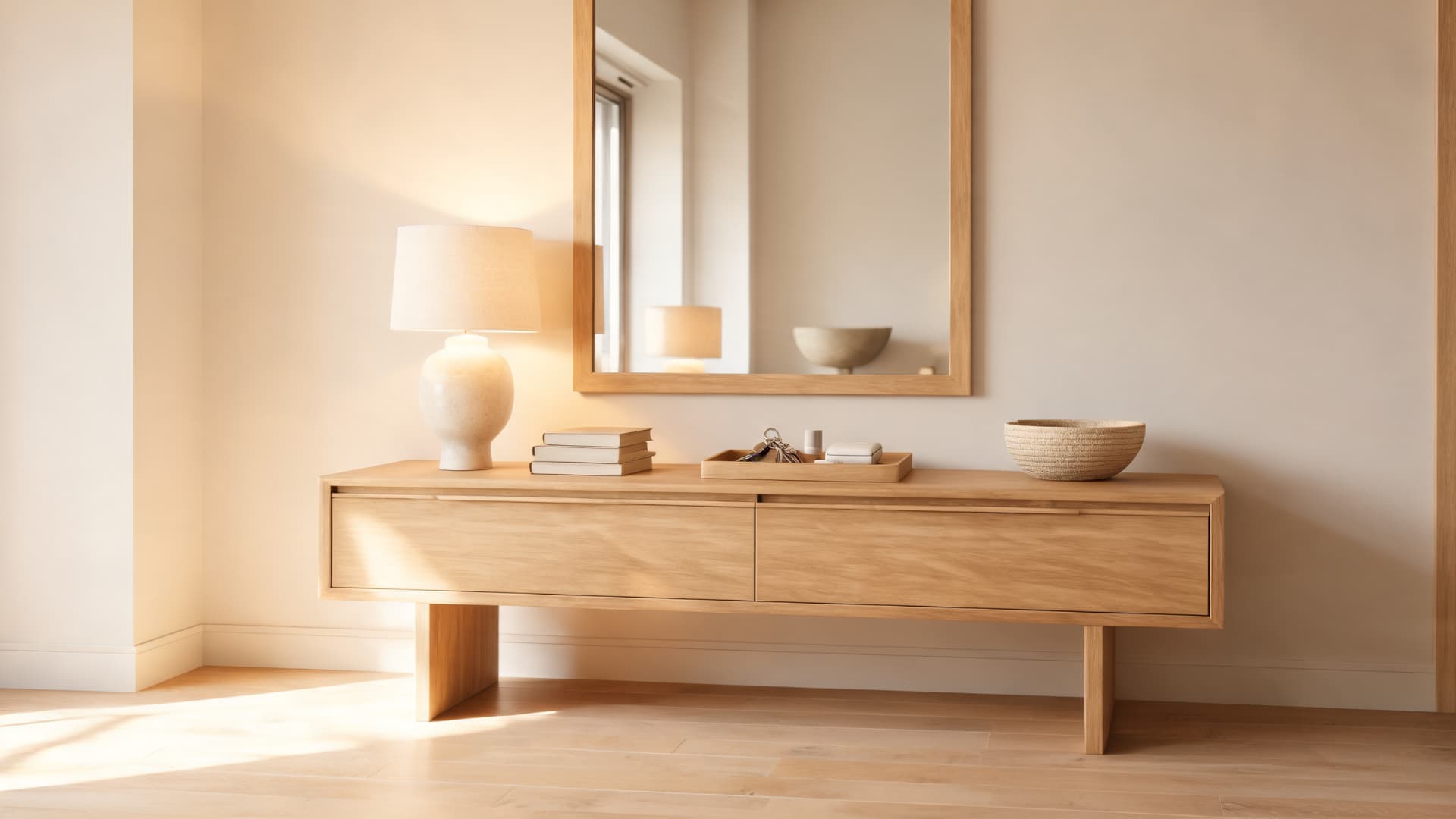
Drawers add hidden storage without increasing the footprint. This is the right call for entryways where daily clutter — chargers, receipts, spare keys, takeout menus — needs somewhere to go that isn’t the surface. One or two drawers is usually enough; a full bank of drawers starts to look like a dresser and reads oddly in a hallway.
4. Console Table With Shelves
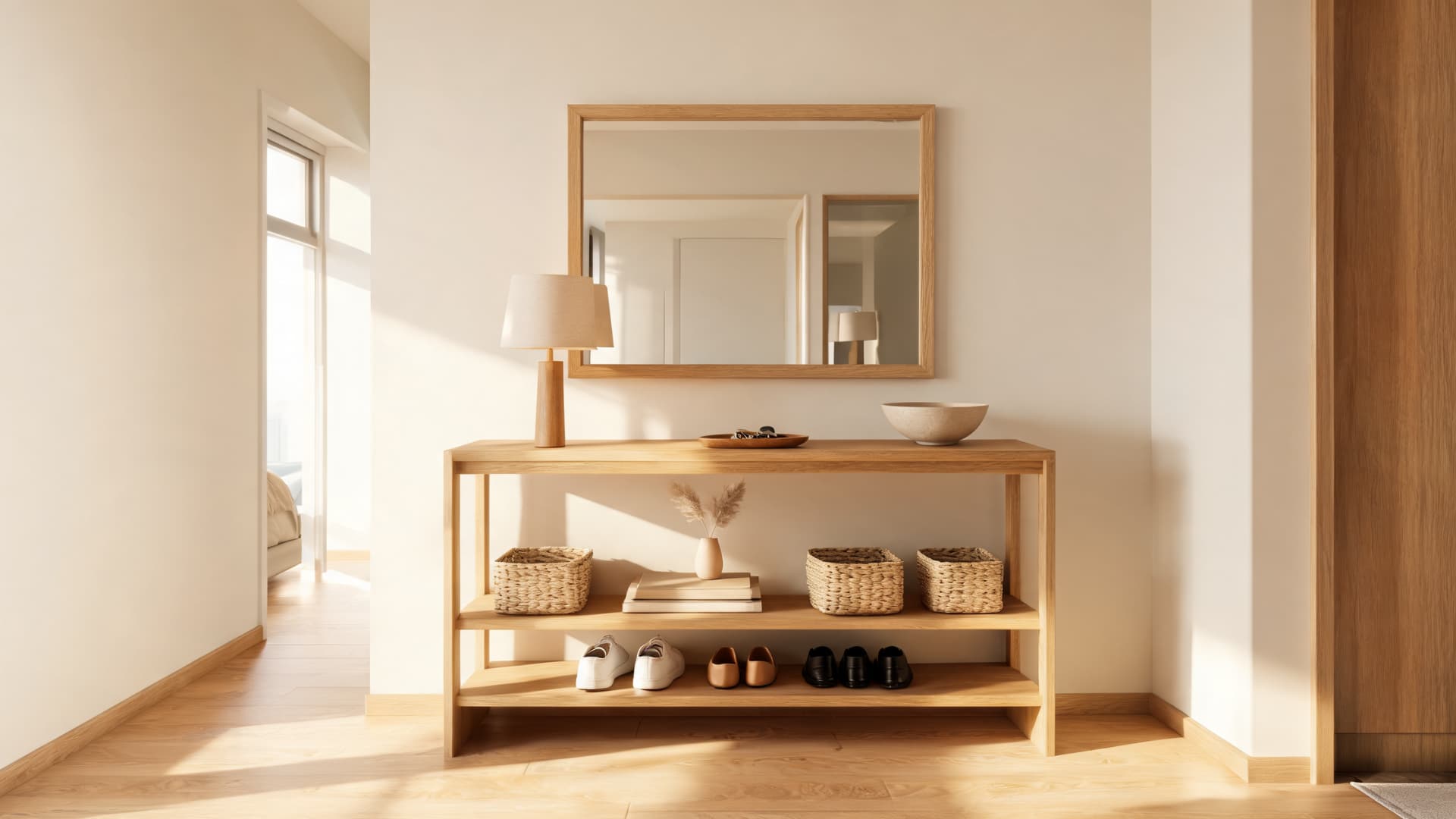
A lower shelf adds storage capacity without drawers. Baskets on the lower shelf handle shoes, bags, or charging cables while keeping the surface clear. The tradeoff: open shelves require more styling discipline than drawers because everything on them is visible.
5. Open-Frame Console Table
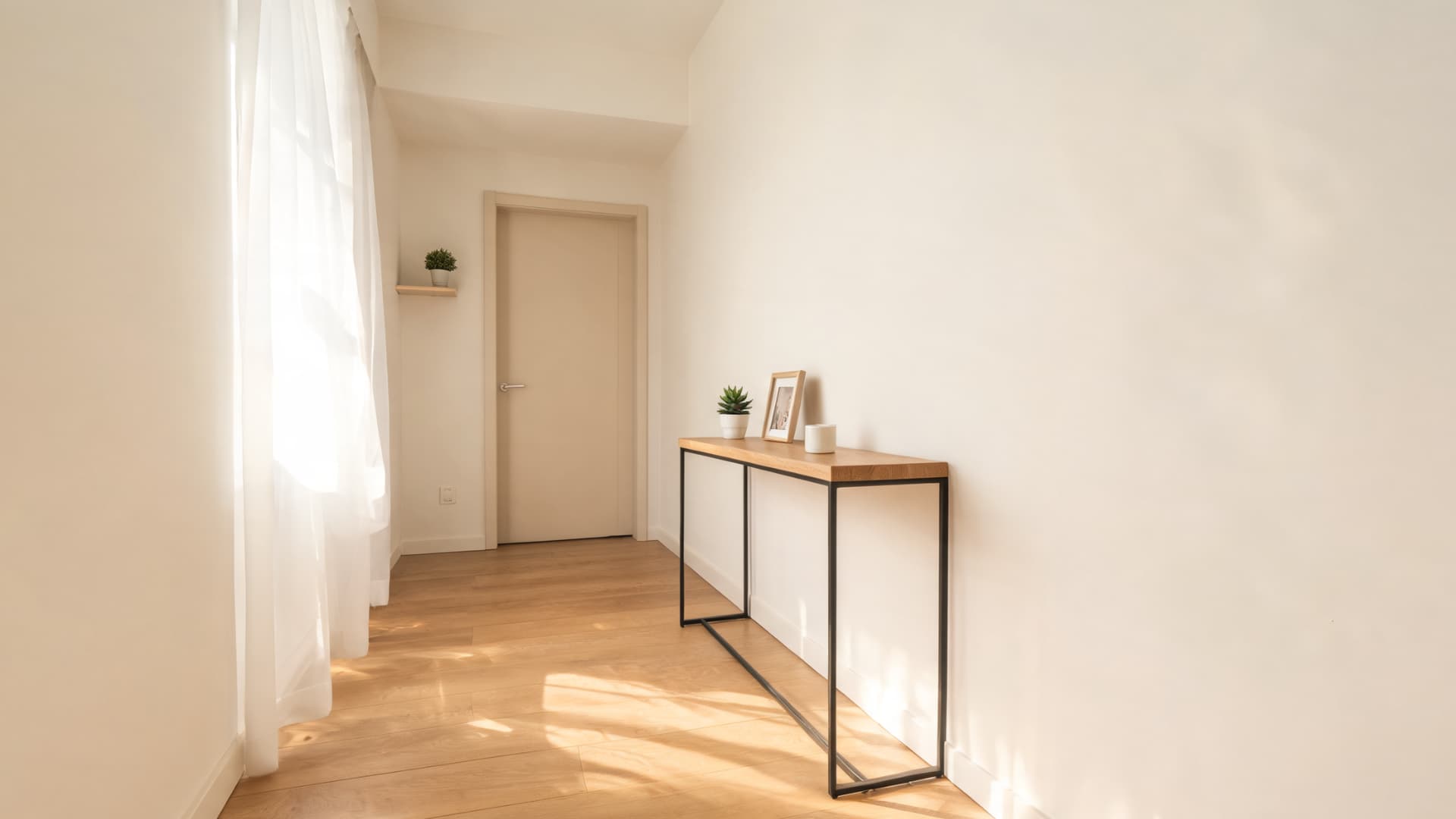
Slim legs and a minimal frame keep the floor visible, which makes small rooms feel larger than solid-sided furniture would. The right call for tight hallways and rooms where visual weight is the main concern. These typically have no storage beyond what you add with a basket or tray.
6. Mirrored or Glass Console Table
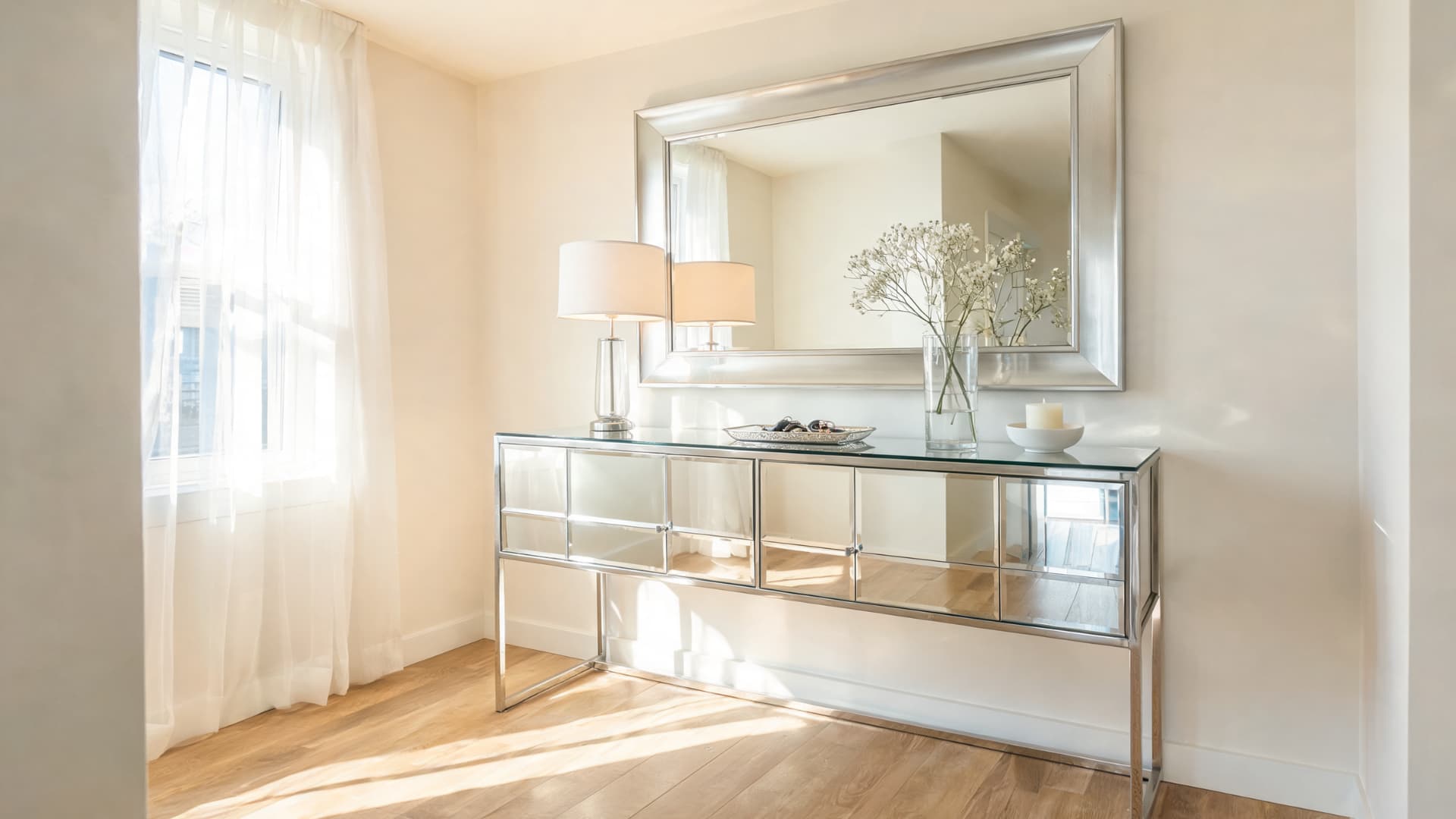
Reflective surfaces bounce light and reduce the visual footprint of the table in the room. Useful in dark or small rooms where solid furniture would feel heavy.
Practical downside: Mirrored and glass surfaces show every fingerprint and dust, so maintenance is higher than wood or metal.
7. Sculptural Console Table
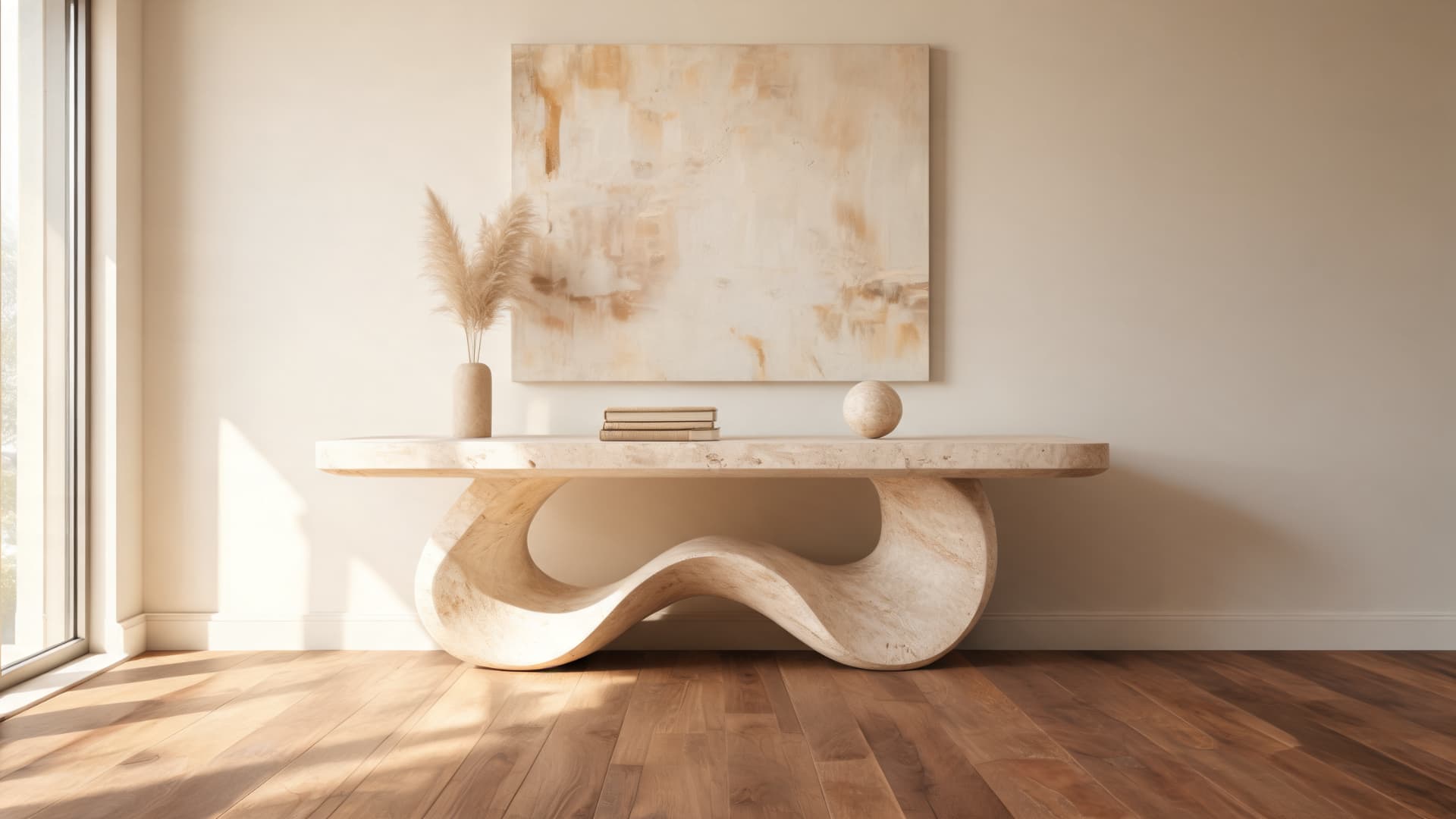
A sculptural console table is a statement piece first and a surface second. The base becomes the focal point, which means the styling on top needs to be minimal enough not to compete with it.
If you buy a table for its base design and then pile objects on top, you’ve hidden the reason you bought it.
Console Table vs. Side Table: What Is the Difference?
These two furniture pieces solve entirely different problems and shouldn’t be confused when planning a room layout.
| Feature | Console Table | Side Table |
| Shape | Long and narrow | Small, square, round, or rectangular |
| Height | 30–36 inches | 18–24 inches (matches arm height) |
| Placement | Against walls, behind sofas, in halls | Besides chairs, sofas, or beds |
| Main use | Display, storage, lighting, entryway surface | Drinks, remotes, books are accessible from the seat |
The height difference is the clearest signal: a side table is designed to be reached from a sitting position. A console table is not. If you use a console table next to a chair, the surface is above arm height, and anything you place on it requires you to reach up or stand, which defeats the point.
How to Choose the Right Console Table
The sequence matters: get the dimensions right first, then decide on the function, and pick the style last. Reversing this order is how you end up with a beautiful table that blocks traffic or sits too low to see from a standing position.
- Measure the space before anything else. Width of the wall, depth of the clearance zone in front of it, and height of any nearby furniture the console will sit beside or behind. For hallways, confirm 36 inches of clearance remains after the table is in place.
- Match height to context. In an entryway or hallway, 30 to 34 inches is comfortable for most adults. Behind a sofa, match the sofa back height exactly or go up to 2 inches lower.
- Choose depth by traffic. Narrow hallway, 12 inches max. Entryway with space, 14 to 16 inches. Living room wall, up to 18 inches if clearance allows.
- Decide whether storage is functional or decorative. If you actually have things to store, get drawers or shelves. If storage is conceptual, you’ll end up with empty drawers and a cluttered surface anyway, just buy the clean open frame and use a basket below.
- Check weight capacity before buying. If you’re adding a heavy lamp, a stone vase, or a mirror leaning against the wall above, confirm the table is rated for that load. Most decorative console tables have surface limits of 30 to 50 pounds.
How to Style a Console Table
Most console tables end up over-styled because the format is long enough that it feels like it should be filled. The rule that actually works: choose one anchor piece, add height with something tall, and leave at least a third of the surface empty.
| Styling Move | What It Does |
| One anchor piece (lamp, mirror, large art) | Establishes the focal point so everything else reads as supporting it |
| Vertical element (tall lamp, tall vase) | Counterbalances the horizontal length of the table |
| A tray for small items | Contains clutter, so it reads as intentional grouping, not scattered |
| Mix of object sizes | Creates visual rhythm — one large, one medium, one small reads better than three equal objects |
| Basket or storage on the lower shelf | Adds function and grounds the table visually |
| Empty surface space | Prevents the “cluttered shelf” look — negative space is part of the styling, not a failure to fill it |
One more specific note: if you’re adding a mirror above the console table, the bottom of the mirror should sit 4 to 6 inches above the table surface. Any closer and the mirror reads as resting on the table rather than hanging above it.
Any higher and the proportional relationship between mirror and table breaks — they start to look like two separate things sharing a wall rather than one coherent arrangement.
Console Table Mistakes to Avoid
- Too deep for the space. A 16-inch-deep table in a 36-inch hallway leaves 20 inches — that’s tight. Measure actual clearance, not available wall width.
- Too tall for the sofa. If the table tops the sofa back by more than 2 inches, the setup looks like a shelf bolted to the wall, not furniture that belongs together.
- Over-styling the surface. Ten small objects always look like a collection of things, not a styled surface. Edit to five maximum, and leave some surface empty.
- Ignoring the wall above. A blank wall above a console table makes the table look like it was put there because nowhere else worked. A mirror, artwork, or wall-hung fixture completes the arrangement.
- Using it as a TV stand. Most console tables are not rated for the weight of a television, and the surface height is wrong for viewing. TV-specific media consoles are built with load ratings and cable management that a decorative console table won’t have.
- Choosing style before dimensions. A console table that looks right in a showroom but doesn’t fit your clearance path is furniture that creates a problem rather than solves one.
Frequently Asked Questions
Can a console table go under a window?
Yes, a console table can go under a window if it does not block airflow, curtains, or natural light. Choose a low, simple design that sits below the window frame. Keep styling minimal so the setup feels open instead of crowded or visually heavy.
Should a console table touch the wall?
A console table should usually sit close to the wall, but it does not always need to touch it. Leave a small gap if there are baseboards, outlets, or cords behind it. The table should still feel stable and aligned with the wall.
Can I use a console table as a desk?
You can use a console table as a light desk if the height, depth, and chair clearance feel comfortable. It works best for laptops, writing, or short work sessions. For daily office use, a proper desk is usually better because it offers more depth.
What size lamp works on a console table?
A lamp should feel balanced with the table and nearby wall decor. For most console tables, a medium-height lamp works best. Avoid lamps that are too wide, too tall, or too heavy. The base should leave enough room for a tray or decor.
Can a console table work in a small apartment?
Yes, a console table can work well in a small apartment because it adds function without taking much floor space. Use it as an entryway surface, slim storage piece, or sofa-back table. Choose a shallow style with drawers or shelves for better use.
How do I stop a console table from wobbling?
First, check that the floor is level and all screws are tight. Add felt pads or furniture levelers under uneven legs if needed. If the table is tall, narrow, or placed in a busy area, consider securing it to the wall for safety.
What color console table should I choose?
Choose a color that connects with furniture already in the room. Wood tones feel warm, black adds contrast, white keeps things light, and metal can feel modern. If the room is small, a lighter or open-frame design often feels less heavy.
Can a console table replace a dresser?
A console table cannot fully replace a dresser because it has less storage and shallower depth. It can hold small items, decor, or baskets, but it is not ideal for full clothing storage. Use it as a support piece, not primary storage.
Final Verdict
A console table works best when it solves a real problem, not when it simply fills a gap.
I’d start by looking at where you need a slim surface, better storage, or a stronger visual anchor. Then check the depth, height, material, and placement before thinking about style.
You now have the basics for using a console table in an entryway, hallway, living room, dining room, bedroom, bathroom, or awkward corner. You also know how different types, materials, and styling choices affect daily use.
I hope this helps you choose with more confidence. Try measuring your space today, then share which console table setup fits your home best or needs.