



|
Quick Answer: An armoire is a freestanding storage cabinet used for clothes, linens, electronics, office supplies, or everyday items. It works as a flexible alternative to built-in storage and can be placed in bedrooms, living rooms, offices, or entryways. |
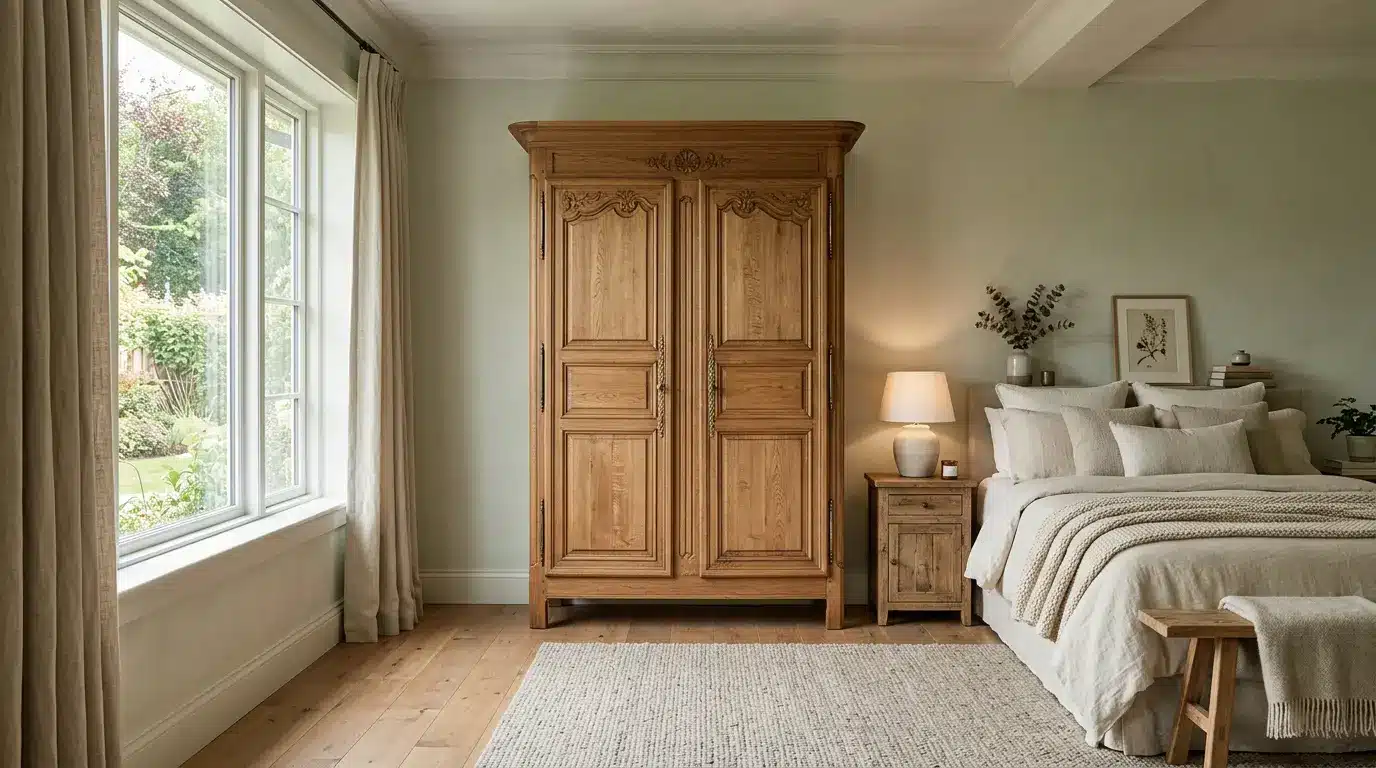
An armoire is a tall, freestanding storage cabinet built with doors and, traditionally, a good deal of carved wood detail.
Unlike built-in closets, an armoire gives homeowners storage they can move, replace, or repurpose as their needs change, which is exactly why the piece has stuck around for centuries while so many other furniture trends have come and gone.
Most versions include a full-height design with a mix of shelves, drawers, hanging rods, or compartments inside.
The word itself comes from French furniture tradition, tracing back to the Old French armarie, which originally meant a cabinet for storing weapons.
Designer Tip: An armoire should do more than solve a storage problem. Its size, finish, and placement need to balance the proportions of the room it sits in, or it ends up feeling like an afterthought rather than a piece of furniture.
History and Origins of Armoires
Armoires were not originally designed as bedroom furniture.
The name comes from the Old French armarie, which traces back to the Latin armarium, meaning a cabinet used for storing weapons, tools, or other valuable items.
Early armoires were large, simple storage pieces built mainly for function.
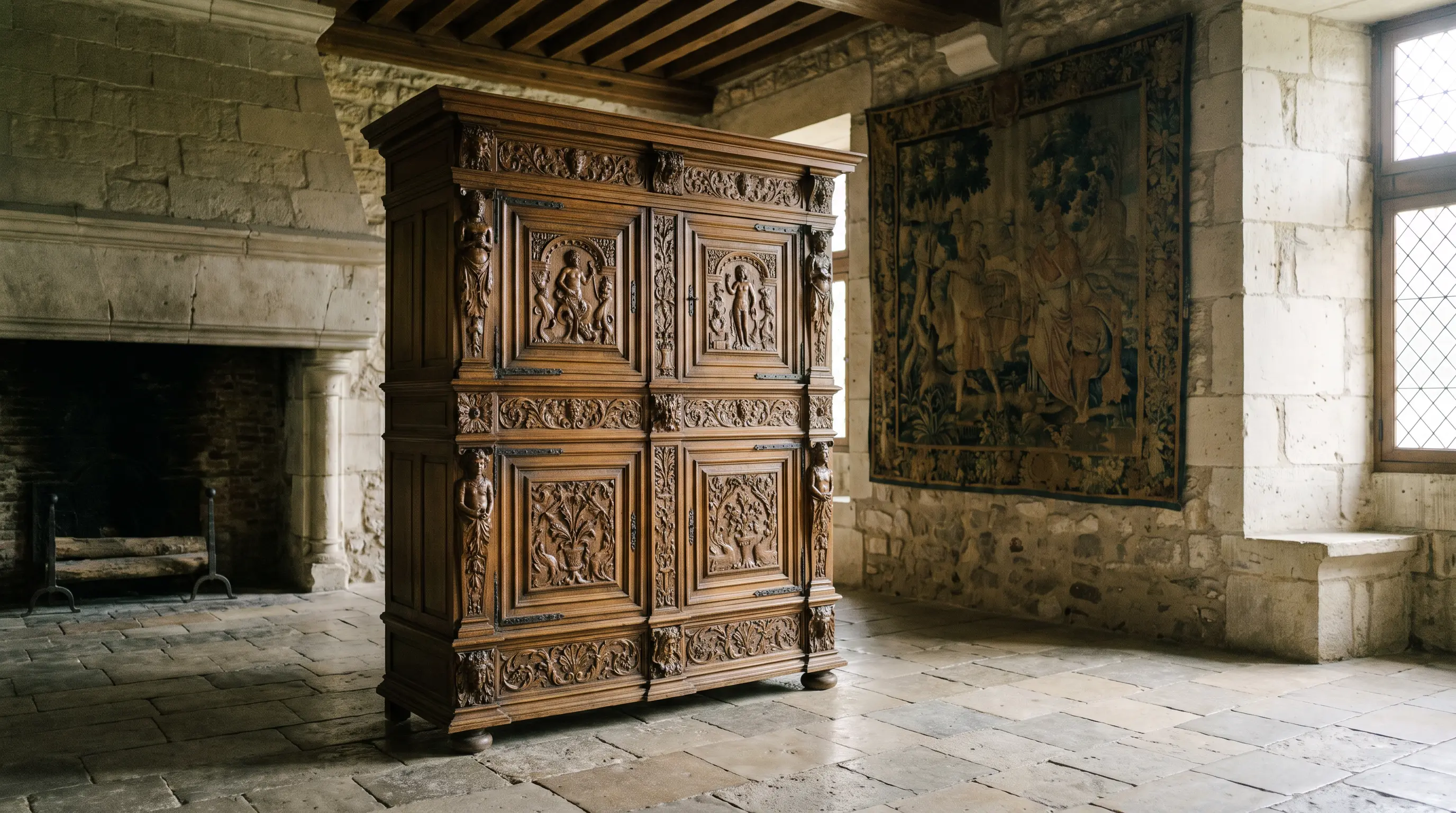
Over time, especially during the Gothic and Renaissance periods, artisans began adding carved details, decorative panels, and more refined designs as woodworking techniques improved.
By the 17th century, armoires had become symbols of craftsmanship and status in French homes, with makers like André Charles Boulle creating pieces featuring detailed marquetry and intricate carving.
This shift from practical storage to decorative furniture is why antique armoires remain valued today.
What are the Different Types of Armoires?
Armoires come in a variety of designs, and their purpose often depends on their internal construction. Some are designed primarily for clothing, while others work better for linens, electronics, or decorative storage.
The right type depends on what you need to store, the size of your room, and your home’s overall style.
1. Wardrobe Armoires
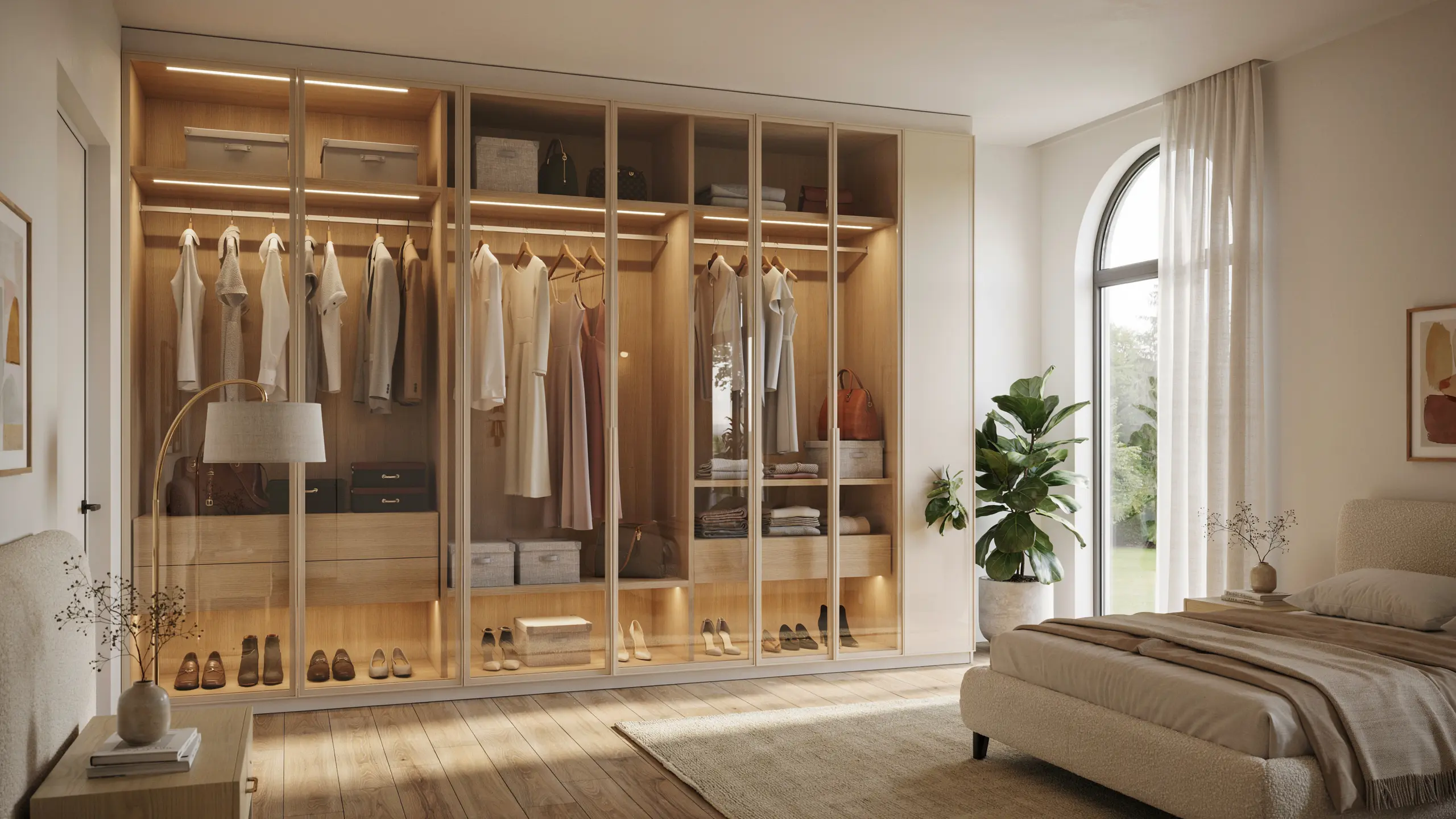
Wardrobe armoires are primarily designed for clothing storage and often serve as an alternative to a traditional closet.
They usually include a hanging rod for shirts, jackets, and dresses, along with shelves or drawers for folded clothes and accessories.
They are especially useful in bedrooms with limited closet space because they provide storage while adding a furniture-like design element.
2. Linen Armoires
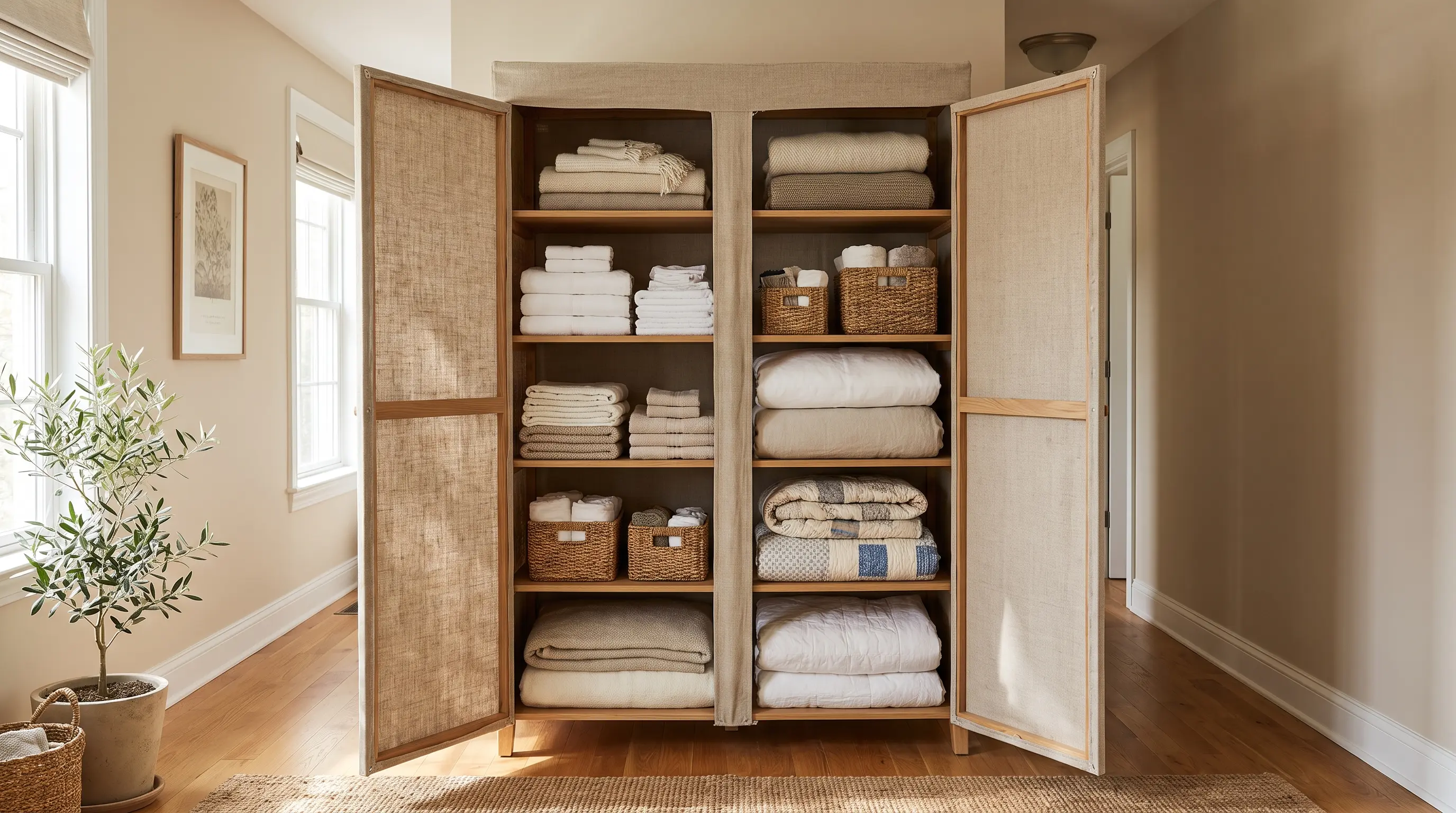
Linen armoires focus on shelf storage rather than hanging space, making them ideal for towels, bedding, blankets, and table linens.
Their enclosed design keeps fabrics protected from dust while giving rooms without built-in linen closets an attractive storage option.
They are commonly placed in bedrooms, hallways, or guest areas.
3. Entertainment Armoires
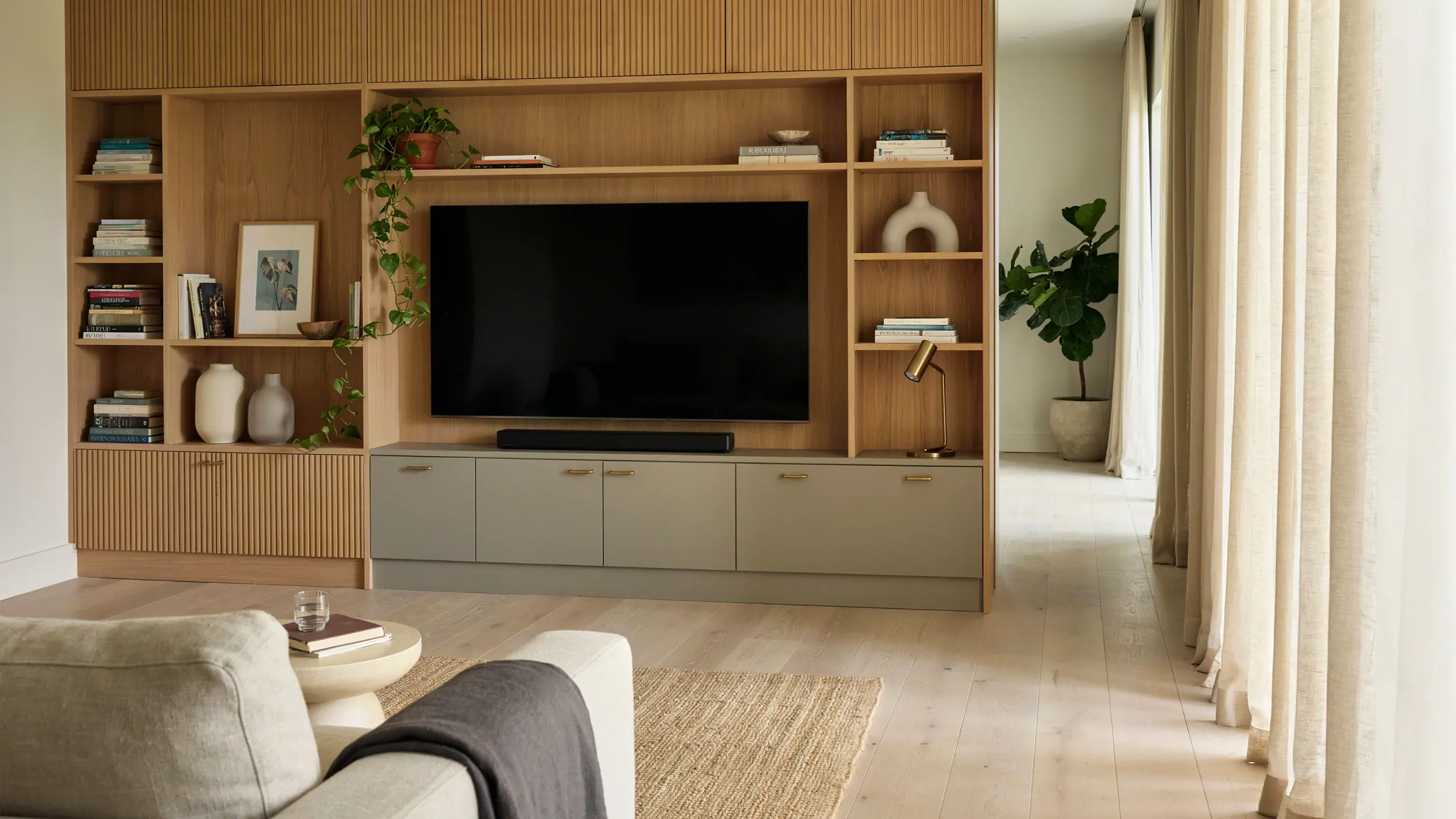
Entertainment armoires were originally designed to hide bulky televisions and media equipment behind closed doors.
They typically included deep compartments, cable openings, and shelves for electronics.
Although less common today, many are still reused for books, games, collectibles, or general living room storage, keeping clutter hidden.
4. Jewelry Armoires
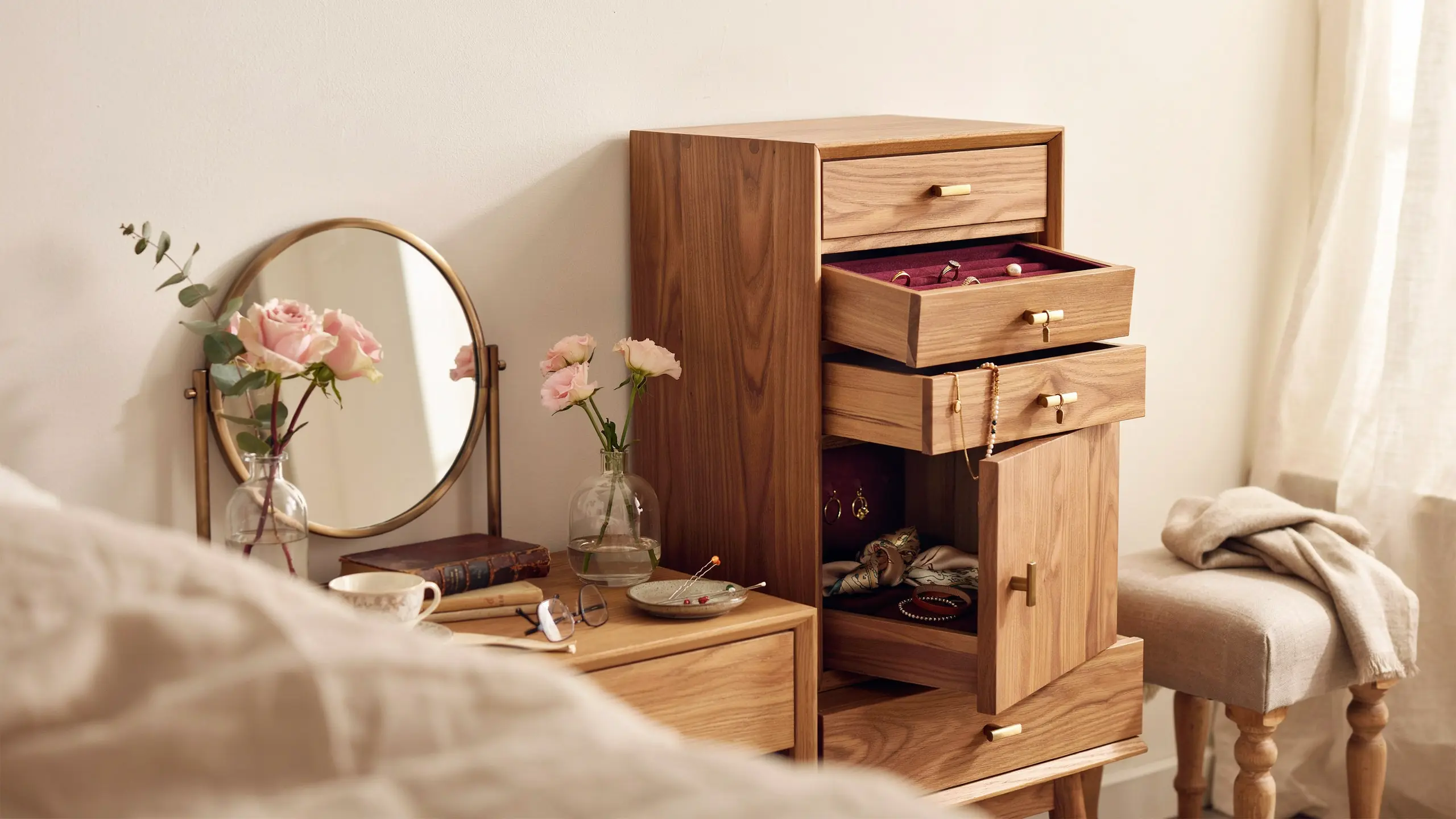
Jewelry armoires are compact storage pieces designed to organize smaller accessories.
They often include shallow drawers, velvet lined compartments, ring holders, and hooks for necklaces or bracelets.
Their slim design makes them a practical choice for bedrooms or dressing areas where regular jewelry boxes may not provide enough space.
5. Antique Armoires
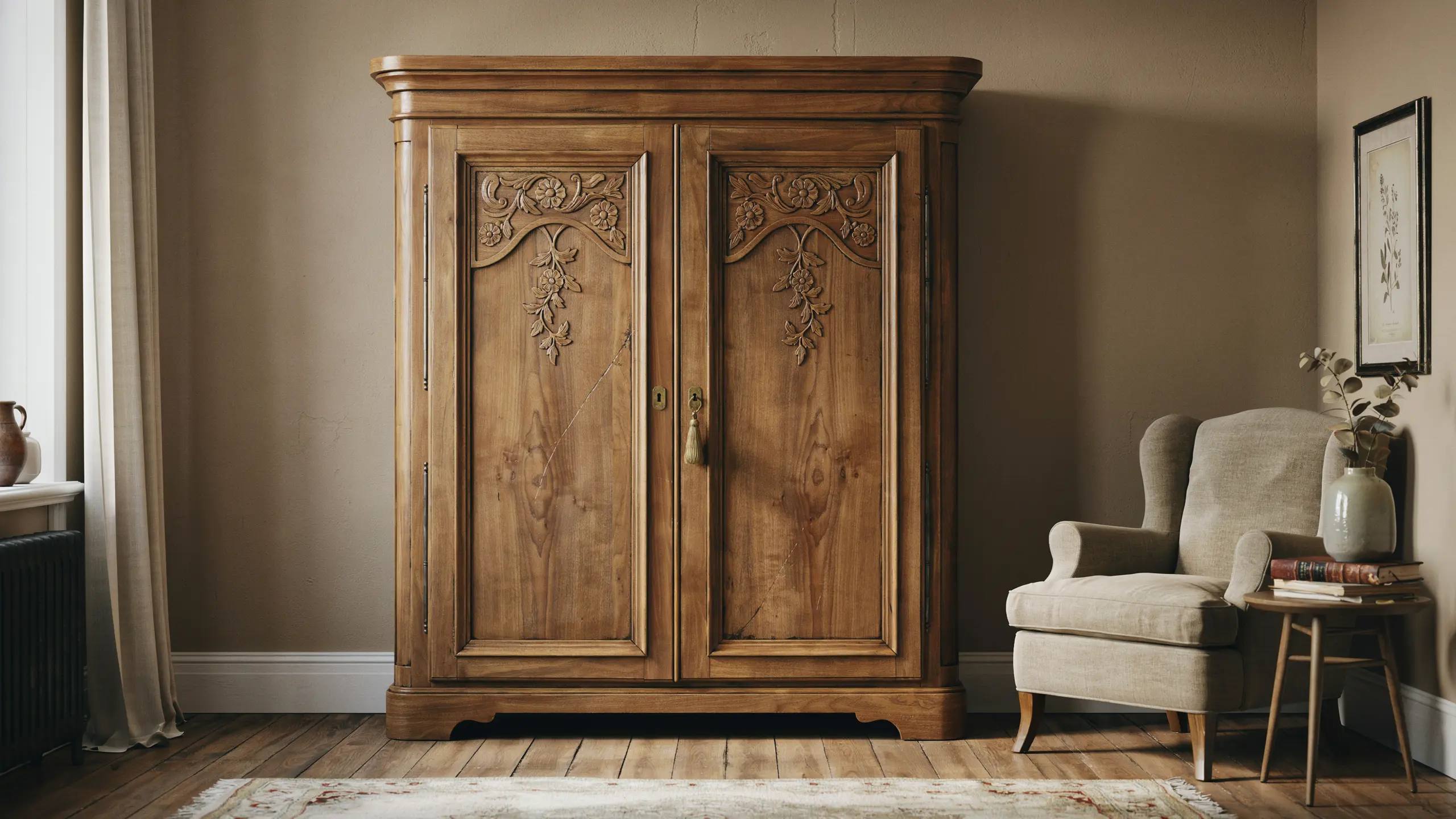
Antique armoires are known for their quality construction and timeless appearance.
Many are made from solid wood and feature carved details, traditional hardware, and natural aging that gives each piece its own character.
They are often used as statement furniture in traditional, vintage, or farmhouse-style interiors.
6. Modern Armoires
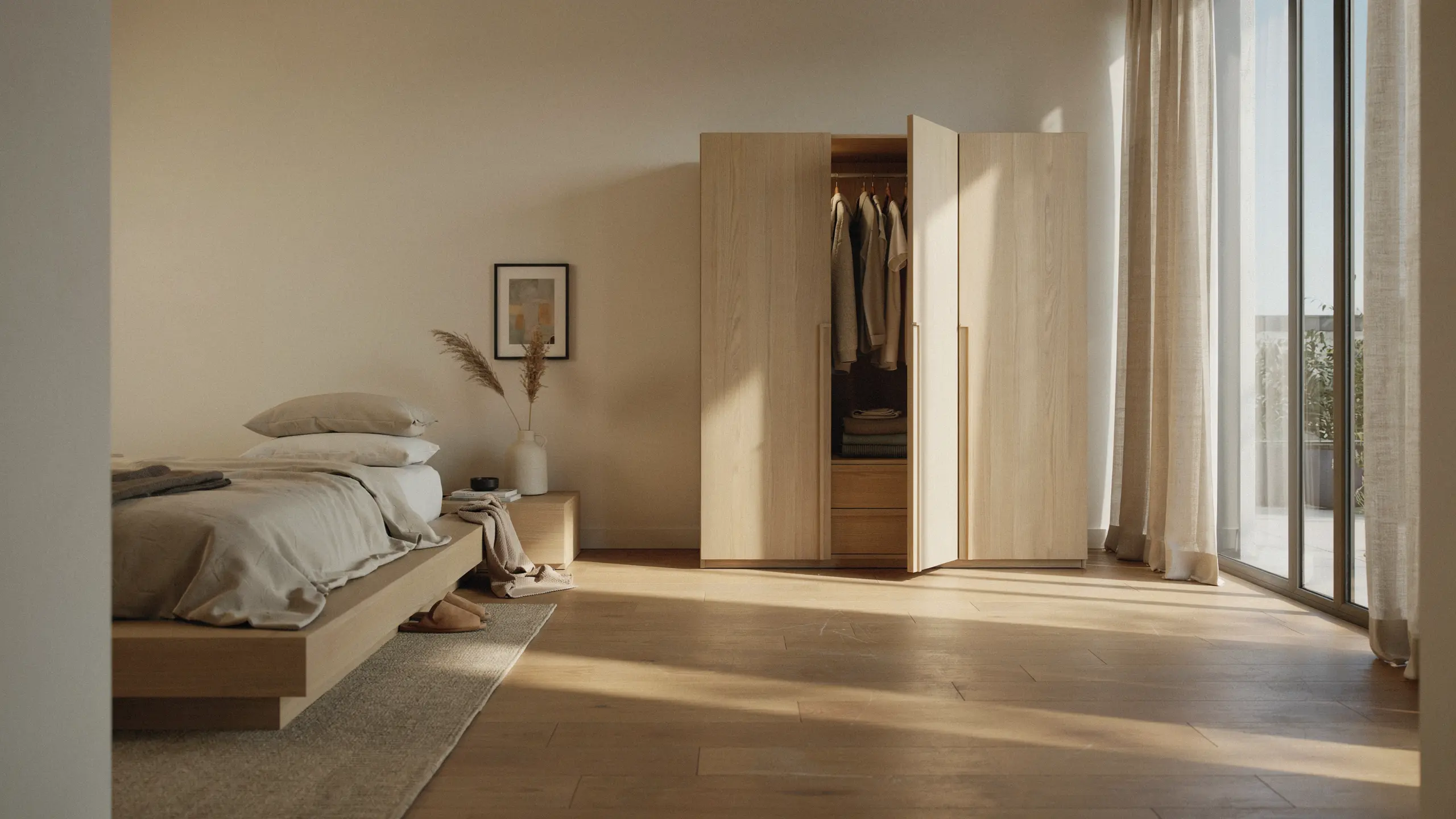
Modern armoires emphasize simplicity with clean lines, flat-panel doors, and minimal detailing.
They are designed to blend into contemporary interiors rather than act as heavily decorative pieces.
Many modern versions include adjustable shelves and practical storage layouts, making them suitable for bedrooms, living rooms, and multipurpose spaces.
What is an Armoire Used for?
An armoire’s role tends to shift depending on which room it lands in, which is part of what makes it such an adaptable piece of furniture.
1. Clothing Storage
This is the classic use. Hanging rods hold shirts, dresses, and jackets, while shelves or drawers hold folded sweaters and jeans.
A homeowner renovating an older house may choose an armoire specifically because adding a built-in closet would mean cutting into original walls or architectural details worth preserving.
2. Linen Storage
The shelving inside many armoires suits bedding, towels, and blankets just as well as clothing, especially in homes with limited linen closet space.
3. Entertainment Storage
Older TV armoires were built specifically to hide bulky televisions and media equipment behind closed doors. This use has faded with the rise of flat-screen TVs, though the furniture itself hasn’t gone anywhere.
4. Home Office Storage
A closed-door cabinet suits files, office supplies, and books, keeping a home office looking tidy when it’s not in use.
5. Entryway Storage
Shoes, bags, and seasonal items all fit comfortably in an armoire placed near a front door, a fairly modern use for a very old piece of furniture.
Armoire vs Wardrobe vs Closet
The difference between an armoire, wardrobe, and closet often comes down to design, storage style, and use.
An armoire is a freestanding piece of furniture with roots in French design, often featuring a mix of hanging space, shelves, and drawers.
Wardrobes are also standalone storage units, but they usually focus more on practical clothing storage, especially for hanging garments. Closets, on the other hand, are built into the home and provide permanent storage space.
| Feature | Armoire | Wardrobe | Closet |
|---|---|---|---|
| Type | Freestanding furniture | Freestanding furniture | Built-in storage |
| Design | Often decorative or furniture-focused | Usually simple and functional | Integrated into the room |
| Storage | Hanging space, shelves, and drawers | Mostly hanging clothing storage | Larger storage capacity with shelves and hanging areas |
| Placement | Bedrooms or living areas | Mostly bedrooms | Built into bedrooms or hallways |
An armoire adds storage with a decorative furniture feel, while a wardrobe focuses mainly on clothing organization.
A closet provides the most permanent storage but cannot be moved or easily changed. An armoire can work as a wardrobe, but not every wardrobe has the detailed design or furniture-like character associated with an armoire.
Choosing between them depends on your space and needs. Armoires work well in rooms lacking built-in storage or where flexibility matters, while closets suit larger storage needs and permanent organization.
How to Choose an Armoire for Your Space
Choosing the right armoire is about more than just appearance. Consider your available space, storage needs, interior style, and material quality to find a piece that feels practical and fits naturally into your home.
Measure Available Space: Before anything else, measure the height and width of where the armoire will sit, along with door clearance and enough walking space around it once it’s in place.
Choose the Right Storage Layout: Decide what you actually need inside. Hanging rods suit clothing, adjustable shelves handle folded items and linens, drawers fit smaller accessories, and open shelving suits books or display pieces.
Match Your Interior Style: The style of your armoire should complement the overall look of your room rather than stand out as a separate piece.
Traditional interiors pair well with dark walnut armoires featuring carved details and rich wood finishes. Modern spaces usually suit armoires with clean lines, flat panels, and simple finishes that keep the design minimal.
Consider Material Quality: Solid wood tends to last longer and holds up better over time, though it comes at a higher price point. Understanding which wood types hold up best for furniture helps narrow the choice, walnut, oak, and mahogany consistently outperform softwoods for pieces that see daily use.
Engineered wood offers a more affordable option without sacrificing too much durability for everyday use.
Either way, check the hardware quality, since hinges and handles are often the first parts of an armoire to wear out.
Where Should You Place an Armoire?
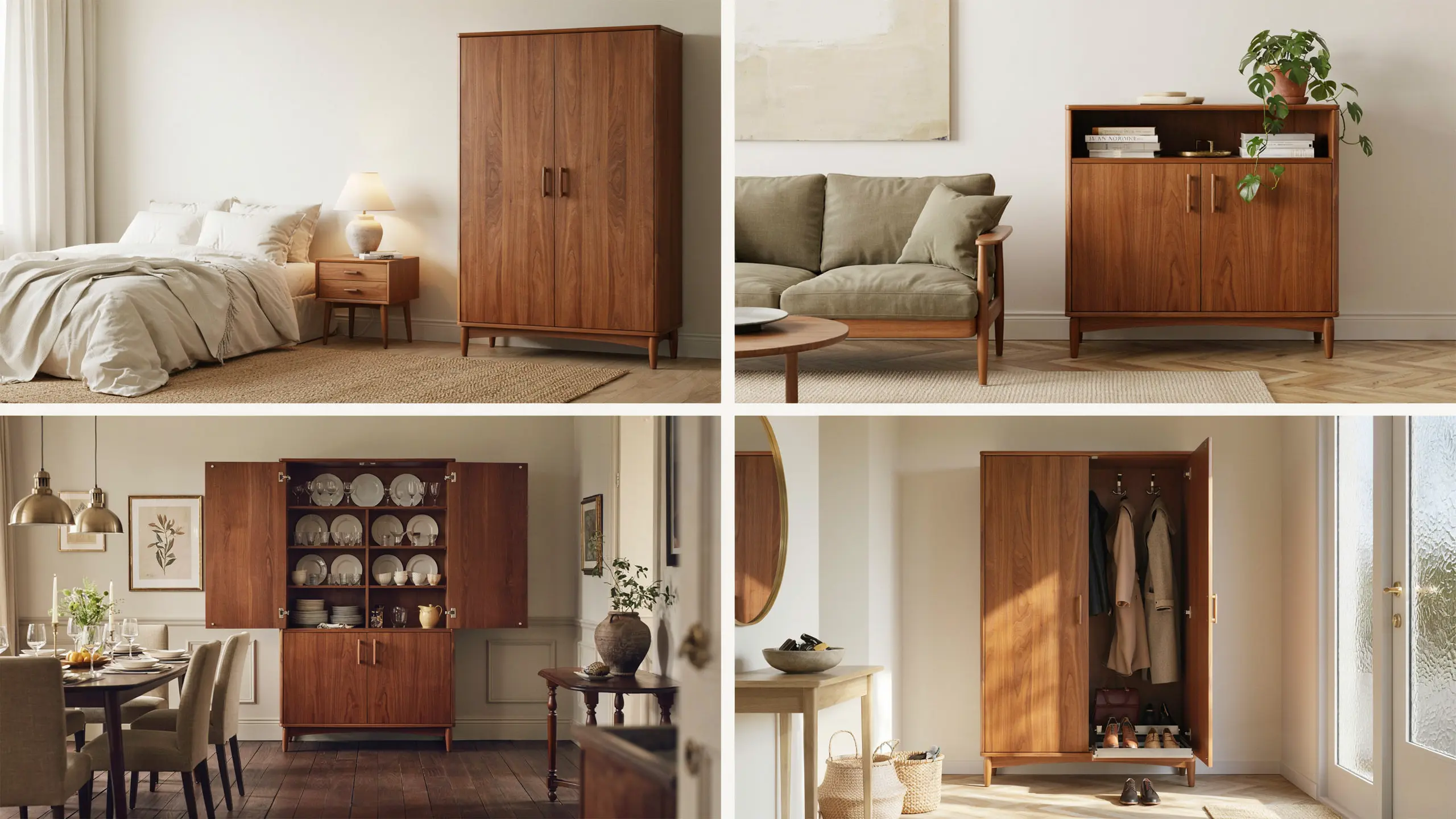
1. Bedroom: Use an armoire as a visual anchor beside the bed or against an empty wall where built-in storage isn’t available.
2. Living Room:A good spot for a piece that doubles as both storage and a design focal point, especially in rooms without built-in shelving.
3. Dining Room:Fits naturally against a long wall, giving the room a furnished, finished look beyond just a table and chairs.
4. Entryway: Positioned near the front door, an armoire can anchor the whole entry the way a console table might, while still hiding everyday clutter behind closed doors.
Are Armoires Still Popular Today?
Built-in closets have taken over much of the storage role of armoires, which, once filled, naturally reduces how often people reach for one out of necessity.
That said, armoires haven’t disappeared. The rise of adaptable, movable furniture has given it something of a second life, particularly in small homes and apartments where built-in storage is limited.
Modern armoires today are less about pure necessity and more about combining storage with genuine design intent.
People buying one now are often choosing it as much for how it looks as for what it holds.
How to Style an Armoire in Your Home
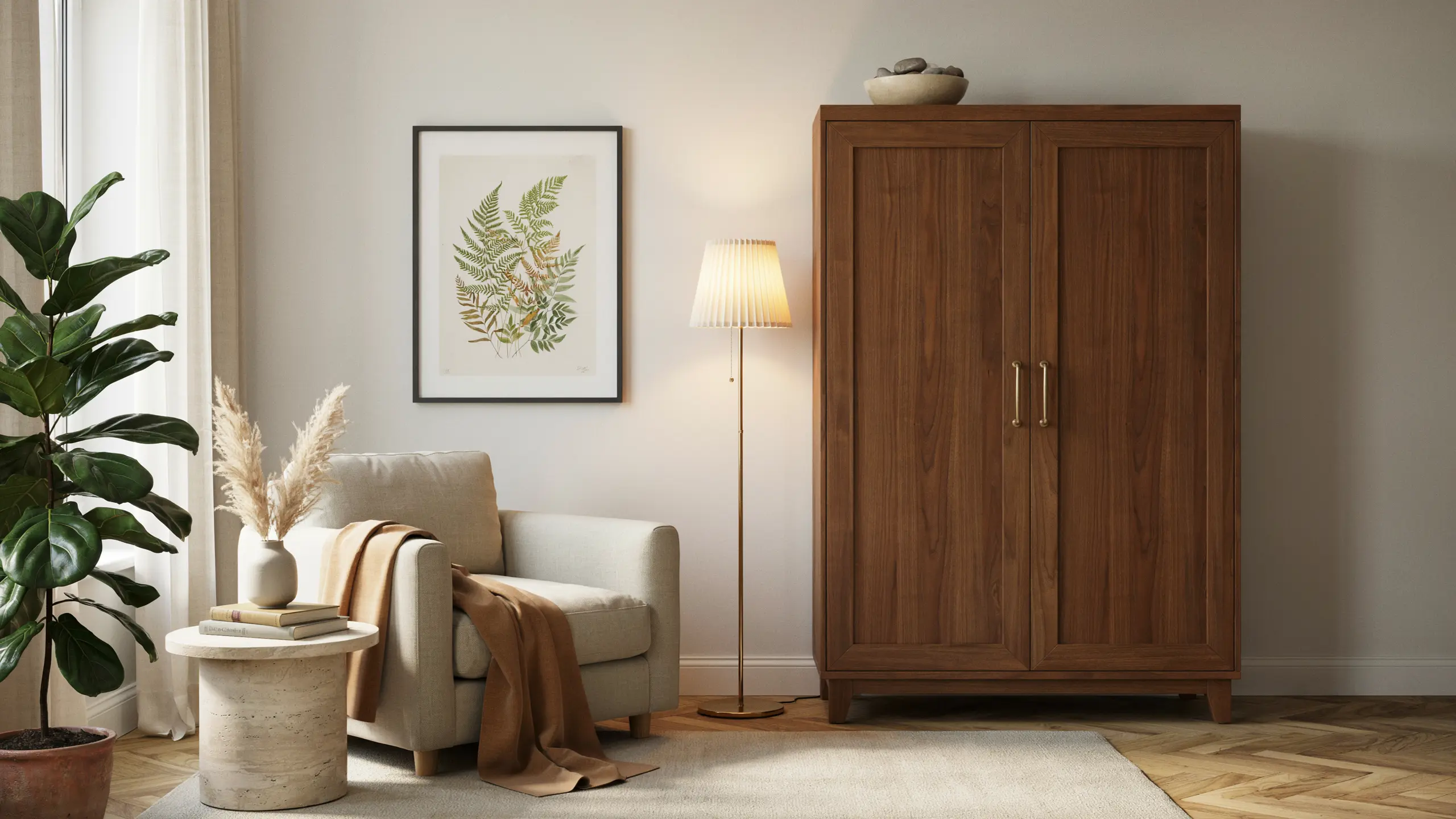
An armoire suits a room best when it’s treated as a statement piece rather than something to hide in a corner.
Pair it with surrounding furniture that complements its finish, add nearby lighting to highlight its details, and resist the urge to overcrowd the room around it.
Updated hardware, like new pulls or hinges, can also refresh an older piece without a full refinish.
A few pairings that tend to work well:
- A vintage armoire in an otherwise modern bedroom, used as a contrast piece
- A white or painted armoire in a farmhouse interior, keeping the overall palette light
- A dark walnut armoire in a traditional space, leaning into the furniture’s original character
Pros and Cons of Using an Armoire
An armoire can add both function and character to a home, but it is not the right storage solution for every space.
Its biggest advantage is the flexibility it provides: storage without permanent installation while adding a furniture-like element to the room.
However, armoires also take up valuable floor space and may not offer the same capacity as built-in closets.
| Pros | Cons |
|---|---|
| Adds architectural character | Takes up floor space |
| Movable storage solution | Can be heavy to move |
| Functions effectively without built-ins | Holds less than a walk-in closet |
| Serves multiple purposes | Requires careful placement planning |
Understanding both the benefits and limitations helps homeowners decide whether an armoire fits their storage needs, room size, and interior style.
Conclusion
An armoire is the kind of furniture piece that quietly proves it deserves a spot in the room.
It does not need to shout for attention or follow every passing design trend, it simply shows up, holds your things, and somehow makes the space feel more finished.
Whether it ends up holding clothes, books, keepsakes, or the mysterious collection of items that need a proper place someday, a well-chosen armoire can become part of your home’s personality.
The best pieces are not always the biggest or the most expensive. They are the ones that fit your space, match your style, and make everyday life just a little easier, more than most furniture can claim.
Frequently Asked Questions
What is the difference between an armoire and a wardrobe?
An armoire is usually more decorative and may include shelves, drawers, and hanging space, while a wardrobe is typically designed mainly for hanging clothes.
Why is it called an armoire?
The word “armoire” comes from the Old French armarie, which originally referred to a cabinet used for storing weapons, tools, or valuable items.
What is the English word for armoire?
In English, an armoire is generally called a large wardrobe or storage cabinet, though the original French term is commonly used in furniture.