

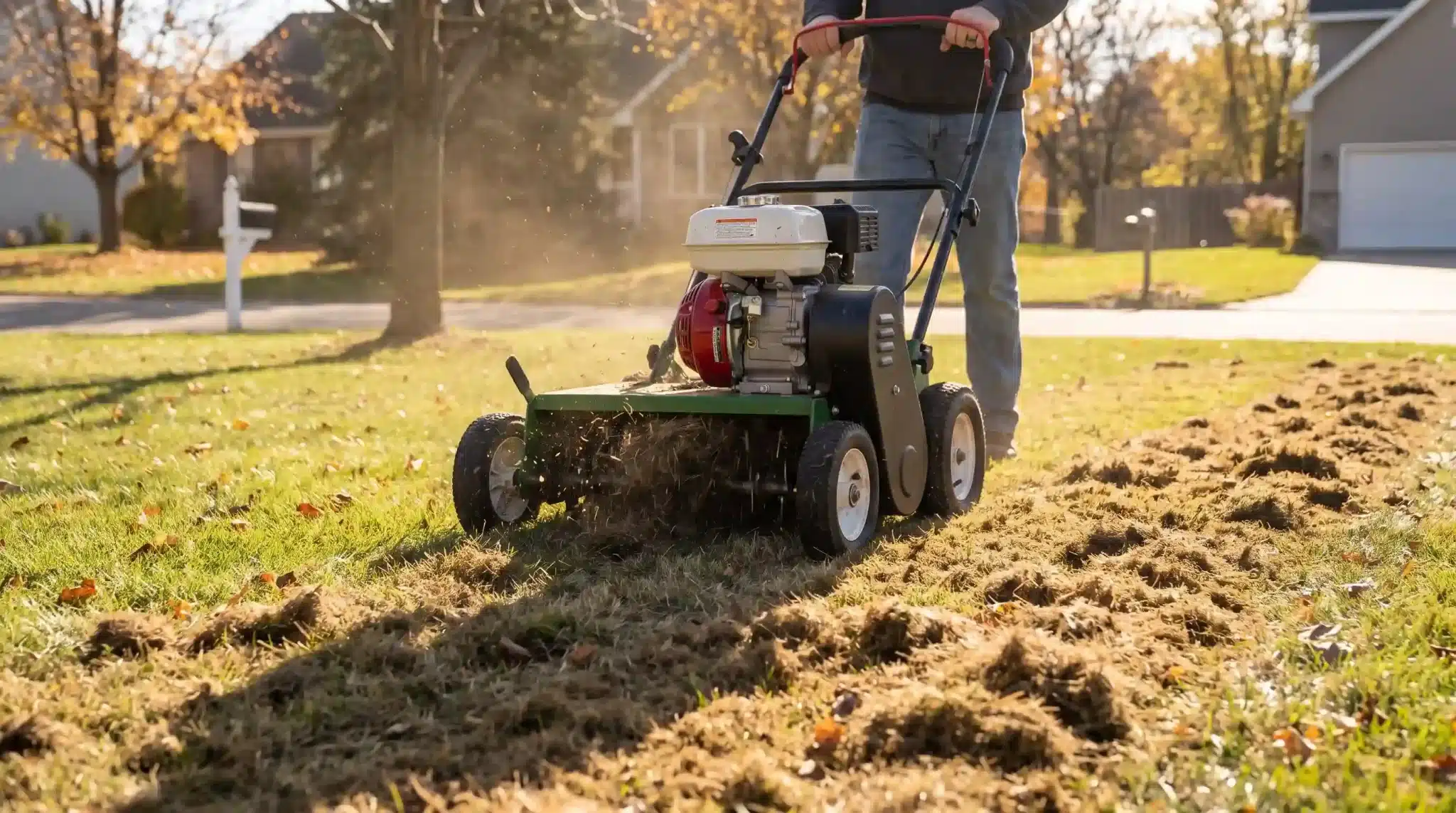


| Quick Answer: Dethatch cool-season grasses in early fall and warm-season varieties in late spring or early summer. The grass must be actively growing, and the soil must be moist but not soggy. Avoid dethatching during dormancy, drought, or extreme heat. |
Dethatching can improve a struggling lawn, but doing it at the wrong time can leave grass thinner and more stressed than before.
The best results depend on grass type, seasonal growth, soil moisture, and the actual thickness of the thatch layer.
This blog explains when to dethatch a lawn and the best timing for cool- and warm-season grasses.
It also covers signs that dethatching is needed, how to prepare your yard, safe removal steps, proper aftercare, and common mistakes that can slow recovery.
When is the Best Time to Dethatch a Lawn?
The best time to dethatch depends on your grass type. Cool-season grasses do best in early fall, with early spring as a backup. Warm-season grasses do best in late spring or early summer, once they’re actively growing.
No matter the grass type, dethatch only when the lawn is actively growing. The soil should be slightly moist, not soggy. Avoid drought, extreme heat, frost, or dormancy, since the grass needs time to recover.
In the transition zone, base your schedule on the dominant grass in your lawn. Mixed lawns need a lighter approach to avoid stressing either grass type.
Best Time to Dethatch by Grass Type:
| Grass Type | Best Time | Backup Option |
|---|---|---|
| Cool-season grasses | Early fall | Early spring |
| Warm-season grasses | Late spring to early summer | Not needed |
| Transition zone (cool-season dominant) | Early fall | Early spring |
| Transition zone (warm-season dominant) | Late spring to early summer | Not needed |
| Mixed lawn (both types) | Light dethatching, timed to dominant grass | Not needed |
Pro Tip: Always check soil moisture before you start. Dethatching dry, hard soil stresses the grass more than the thatch itself does.
How Do You Know When Your Lawn Needs Dethatching?
Don’t rely on appearance alone. Compaction, drought, pests, and disease can all look like thatch problems.
The best way to check is to cut a small 2–3 inch wedge of turf. Measure the brown, spongy layer between the green grass and the soil. A layer under ½ inch is usually healthy. Anything thicker may benefit from dethatching.
Signs of Excessive Thatch:
- Spongy feel underfoot
- Poor water absorption
- Weak fertilizer response
- Thinning or uneven grass
Lawns with Kentucky bluegrass, creeping bentgrass, creeping red fescue, Bermudagrass, or Zoysiagrass build up thatch faster. Watch these grass types more closely.
Should You Dethatch in Spring or Fall?
The right time to dethatch depends on your grass type and growing cycle. Choosing between spring and fall depends on when your lawn can recover most effectively after removal.
| Lawn Type or Condition | Better Timing | Reason |
|---|---|---|
| Cool-season grass | Early fall | Strong growth and better recovery conditions |
| Cool-season grass with severe spring buildup | Early spring | Allows treatment before summer stress hits |
| Warm-season grass | Late spring to early summer | Turf is entering active growth |
| Dormant warm-season lawn | Wait | Dormant turf repairs slowly |
| Drought-stressed lawn | Wait for recovery | Dethatching can worsen existing damage |
| Overseeding cool-season grass | Early fall | Timing supports seed germination and recovery |
Treat calendar months as regional estimates rather than fixed rules. Soil temperature, active growth, recent rainfall, and how the turf is holding up matter far more than a date on a calendar.
How to Prepare a Lawn for Dethatching
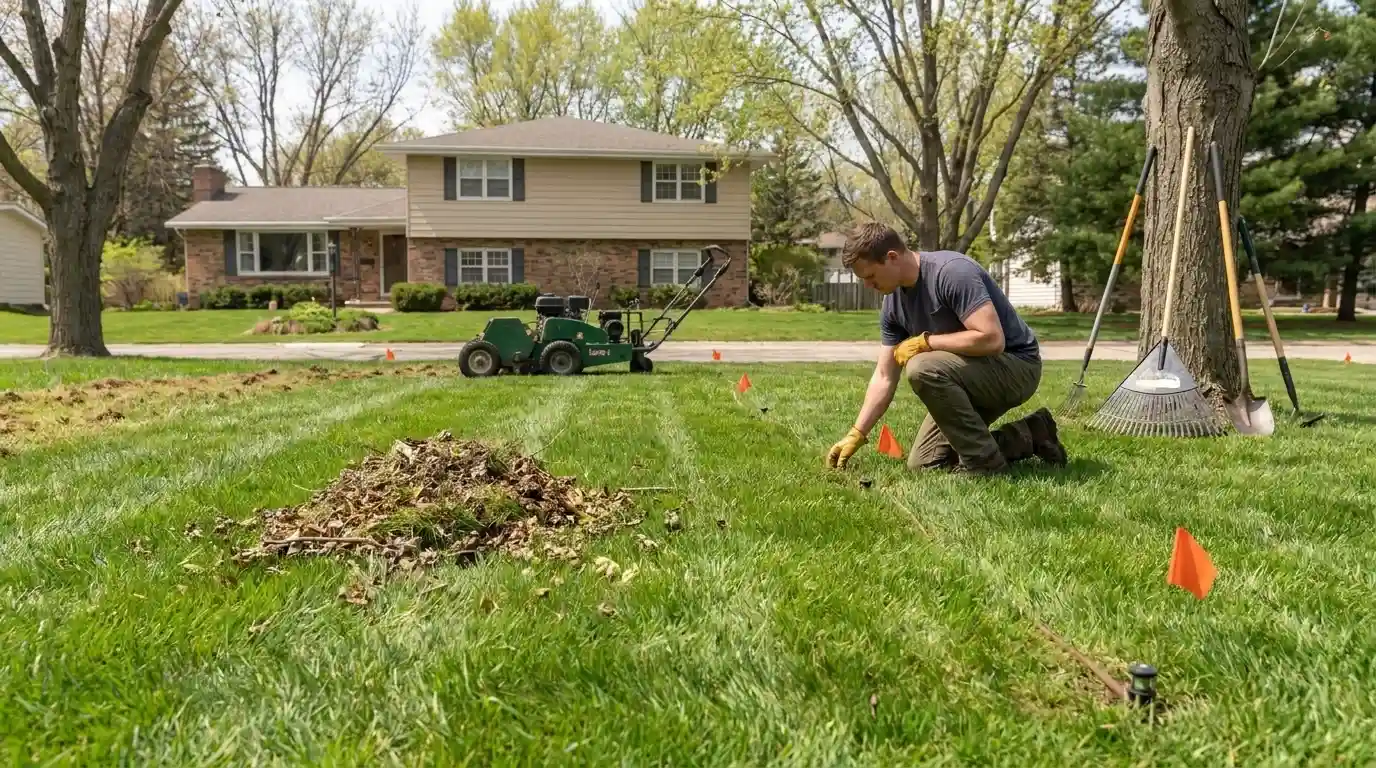
Before dethatching, make sure your lawn and equipment are ready. Confirm that the thatch layer is excessive, identify your grass type, and ensure the lawn is actively growing.
If the soil is dry, water lightly, mow the grass to about half its normal height, and remove any debris from the area.
Before starting, mark sprinkler heads, irrigation lines, cables, and shallow roots to avoid damage. Choose the right tine or blade depth for your equipment and test the dethatcher on a small area first.
Quick checklist:
- Check thatch thickness
- Identify grass type
- Confirm active growth
- Water the dry soil lightly
- Mow before dethatching
- Remove debris
- Mark hidden obstacles
- Set the proper machine depth
- Test equipment first
How to Dethatch a Lawn without Damaging It
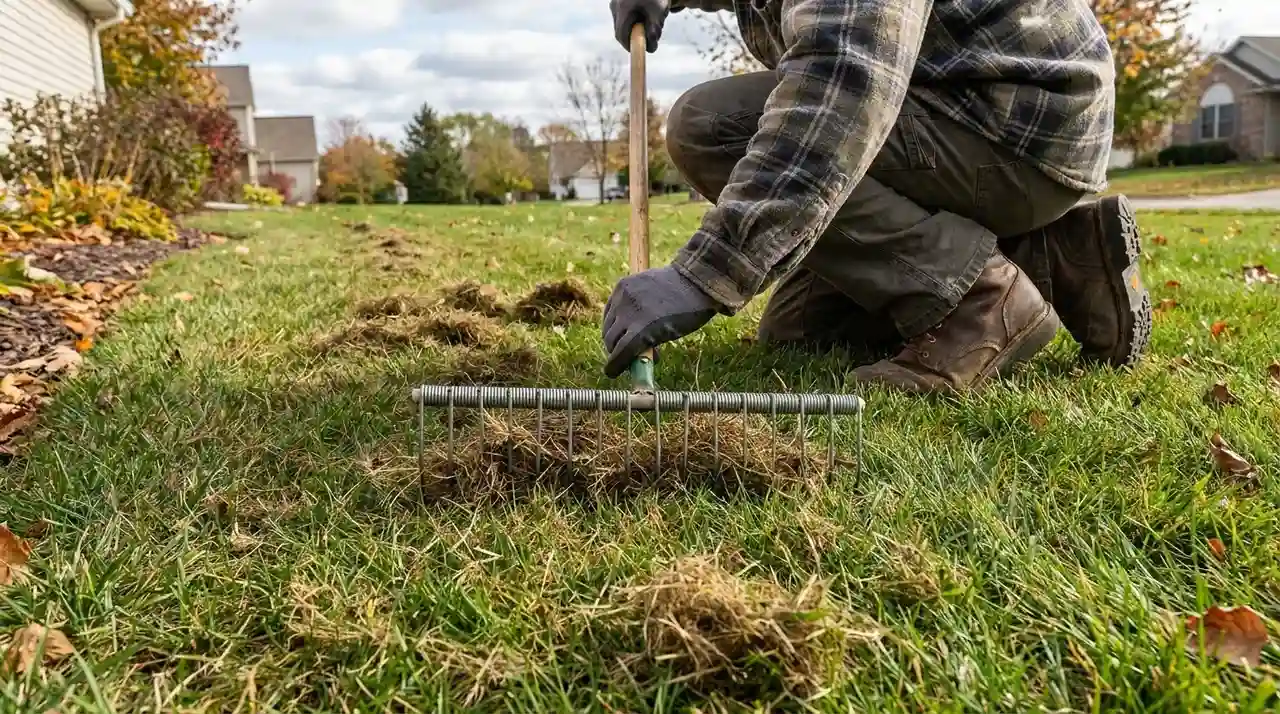
Dethatching is most effective when done with the right technique. Here is a step-by-step process to dethatch your lawn safely while protecting your grass and promoting healthy growth.
Step 1: Start with a Shallow Setting: Removing too much material in a single pass can tear healthy crowns and roots along with the thatch. Start conservatively, and go deeper only if needed.
Step 2: Work in Straight, Overlapping Rows: Keep a steady walking speed and overlap each row slightly so you don’t miss strips of lawn or double up unevenly.
Step 3: Make a Second Pass Only When Needed: If buildup is severe and spread evenly across the lawn, a second pass in a different direction can help. Avoid repeating passes over turf that’s already looking thin or weak.
Step 4: Rake and Remove the Loose Thatch: Debris left on the surface can block sunlight and smother the grass trying to recover underneath. Clear it away as soon as you’re done.
Step 5: Inspect the Lawn Before Continuing: Stop once you’ve pulled up the excess material. The goal is to remove buildup, not expose bare soil across the entire yard.
What Should You Do After Dethatching?
After dethatching, proper recovery care helps your lawn rebuild quickly. Remove leftover debris, water deeply without overwatering, and overseed thin areas if the timing is right.
Apply fertilizer or soil amendments only when needed based on your grass type, season, and soil test results. Avoid heavy foot traffic while the lawn heals, monitor moisture levels, and resume mowing once the grass is actively growing.
Dethatching creates better seed-to-soil contact, making it a good time to overseed bare patches. Choose a seed that matches your existing grass, climate, and growing conditions.
If the yard has defined planting beds or mixed-use zones alongside the grass, thinking through your outdoor space layout at this stage can help you plan watering and foot traffic patterns that support a clean recovery without stressing the lawn again too soon.
Recovery time depends on grass type, weather, soil moisture, and the degree of dethatching. Some lawns recover in a few weeks, while heavily stressed areas may take longer.
What Causes Excessive Thatch?
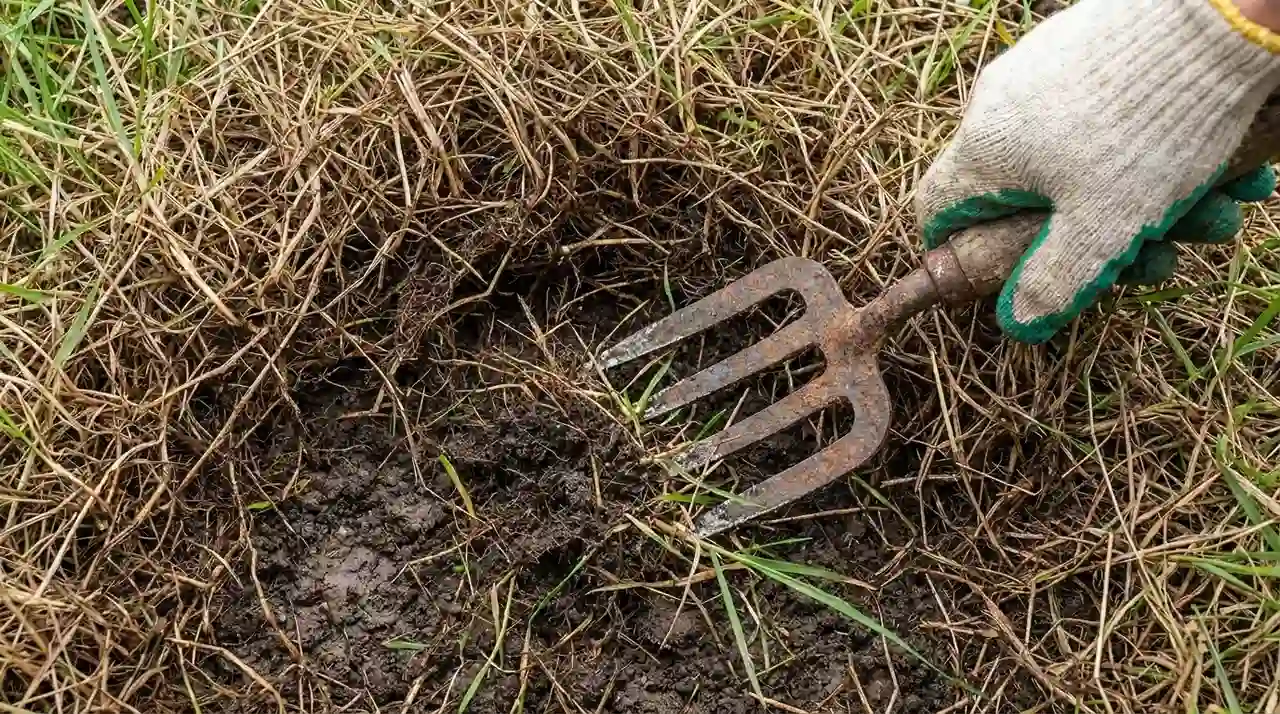
Thatch builds up when organic matter accumulates faster than soil microbes can decompose it.
Common causes include excessive nitrogen fertilizer, shallow watering, compacted or unhealthy soil, heavy pesticide use, limited aeration, and fast-growing grass varieties.
Grass clippings usually are not the cause of thatch when mowing is done correctly. Small clippings break down quickly and return nutrients to the soil.
However, overwatering and excessive fertilization can encourage rapid growth, shallow roots, and slower decomposition, thereby accelerating thatch buildup.
If the maintenance load feels like it keeps building year after year, pairing good lawn care habits with lower-maintenance yard choices around the edges can reduce the overall effort needed.
When Should You Not Dethatch a Lawn?
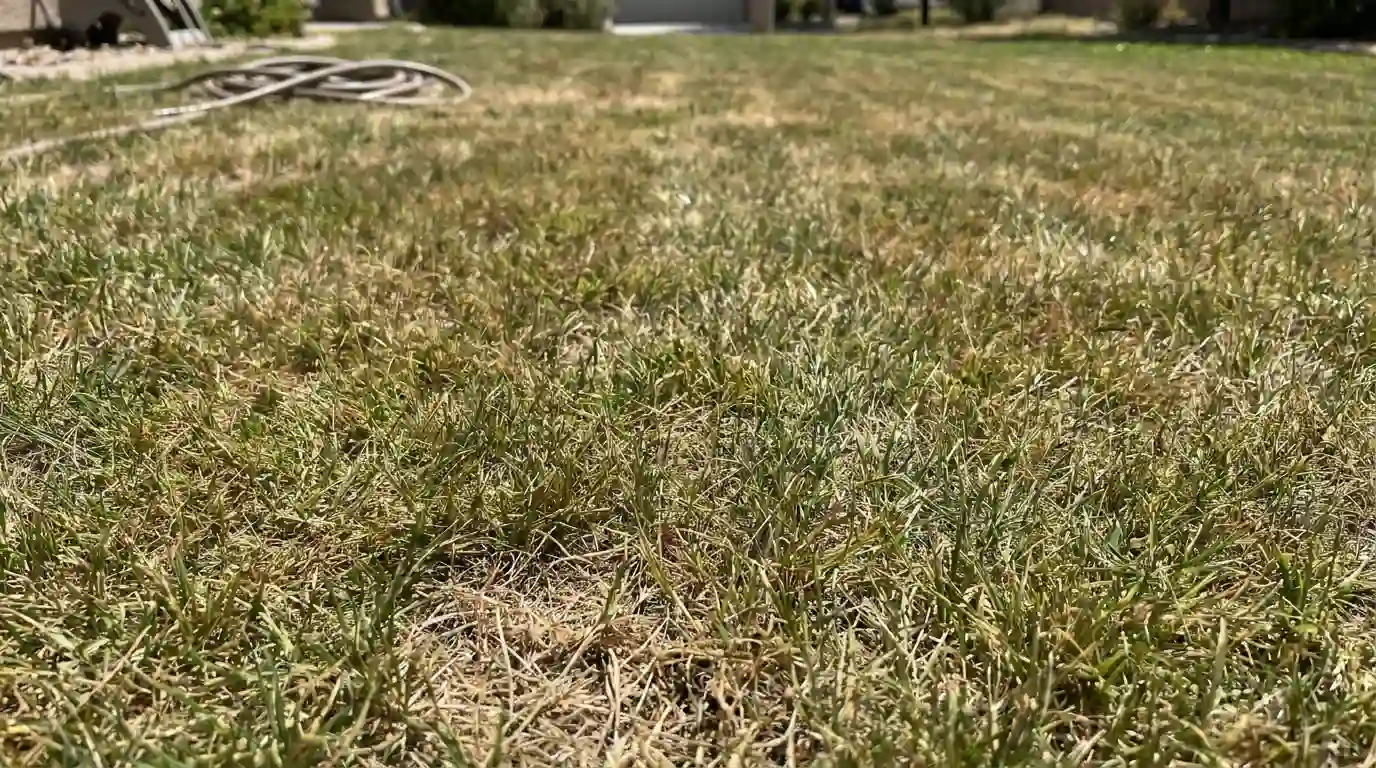
Dethatching at the wrong time can damage your turf rather than improve it. Avoid the process when grass is dormant, stressed, newly established, or when conditions are too harsh.
Slightly moist soil is ideal, but wet or muddy ground can damage roots, create ruts, and make debris harder to remove.
Young lawns need time to develop strong roots before dethatching, and some grasses, like St. Augustine, are more sensitive to aggressive dethatching. In these cases, lighter methods or professional guidance may be a safer choice.
If the lawn has been struggling repeatedly despite proper care, it may also be worth exploring grass-free yard options that hold up better with far less upkeep.
Avoid dethatching if:
- Grass is dormant, weak, diseased, or drought-stressed
- Temperatures are extreme, or frost is near
- Soil is muddy or waterlogged
- The lawn was recently seeded
- Thatch is less than ½ inch thick
- A recent herbicide treatment was applied
- You cannot water the lawn during recovery
- The grass type is sensitive to aggressive dethatching
Common Dethatching Mistakes to Avoid
Many dethatching mistakes start before the machine even turns on. Skipping the thatch measurement is common, along with confusing soil compaction with a real thatch problem.
Timing causes trouble too. Working during dormancy, on drought-stressed grass, or on newly seeded turf can all set the lawn back.
Wet, muddy soil creates its own risks, since heavy equipment can compact and tear the turf. Using the most aggressive machine setting right away is another mistake.
So, it’s making too many passes over the same spot. Both often remove more than necessary, including the thin, beneficial layer that didn’t need to be touched. Forgetting to mark sprinkler heads and irrigation lines can lead to costly damage.
Leaving piles of loosened thatch on the lawn also causes problems. So does applying heavy fertilizer too soon, which can undo the benefits of dethatching.
Conclusion
Timing decides whether dethatching helps your lawn or sets it back. Match the job to your grass type, check active growth first, and always measure the thatch layer before reaching for a machine.
Cool-season lawns generally do best in early fall, while warm-season lawns respond better in late spring or early summer.
Skip dormant, saturated, drought-stressed, or newly established lawns altogether.
Pair good timing with proper aftercare, and your lawn should recover fully and come back thicker. When do you plan to check the thatch layer on your own lawn?
Frequently Asked Questions
When Should You Not Dethatch Your Lawn?
Avoid dethatching during drought, extreme heat, frost, dormancy, wet soil conditions, or when grass is weak, newly seeded, or recovering from stress.
What to Do Immediately After Dethatching a Lawn?
Remove debris, water deeply, overseed thin areas as needed, avoid heavy traffic, and provide adequate nutrients to support a quick lawn recovery.
How Many Times Should You Go over Your Lawn with a Dethatcher?
Usually, one pass is enough. For heavy thatch buildup, make a second pass in a different direction without damaging healthy grass.