

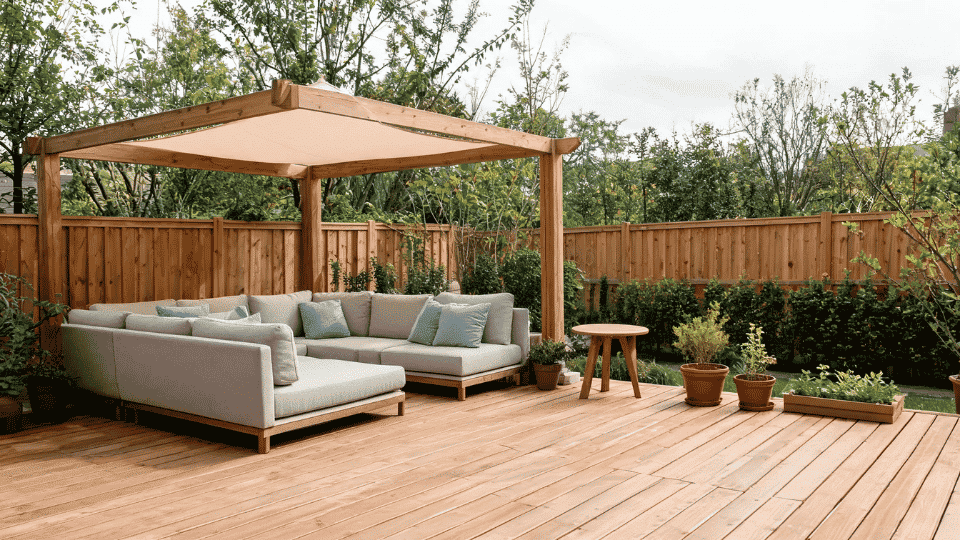


A bare deck can look inviting yet go unused when the sun is harsh, rain blows in, or the seating area feels too exposed.
Covered deck ideas on a budget are not about grabbing the cheapest cover first. They are about solving the right outdoor problem without wasting money.
I like starting with the worst hour of the day because that usually shows what the deck really needs.
My goal here is to help you compare shade, rain cover, privacy, airflow, and design details before you make a purchase. These covered deck ideas can make a simple deck feel useful again.
| Cost Note: Figures in this article are estimates based on national averages. Actual costs vary significantly by region, contractor, materials, and project scope. Always get at least three quotes before committing to any project above $1,000. |
Start With the Cover Your Deck Actually Needs
Before choosing a cover, think about what makes your deck uncomfortable. Shade, rain, wind, privacy, and heat all need different fixes.
A fabric sail can cool a sunny corner, but it will not work like a sloped roof during steady rain. A freestanding cover may be better for an older deck because it avoids adding stress to weak framing.
An attached cover can look cleaner, but it needs stronger mounting and careful water control. If your deck only needs shade, keep the solution light. If you need rain protection, plan for slope, drainage, and support from the start.
| Deck Situation | Best Budget Direction | Why It Works |
|---|---|---|
| Harsh afternoon sun | Shade sail, umbrella, or pergola | These options cool the main sitting area without the cost of a full-framed roof. |
| Light rain near the door | Small lean-to cover or panel roof | A limited roof protects the entry without covering parts of the deck that stay open. |
| Exposed neighbors | Curtains, lattice, or screen panels | Side coverage adds privacy while also helping with low-angle sun and wind. |
| Older deck frame | Freestanding cover beside the deck | This avoids adding unnecessary weight to framing that may already need repair. |
| Dining area only | Partial roof or fabric canopy | The budget goes toward the zone that gets used most often, not the full deck. |
| Rental or temporary setup | Umbrella, removable canopy, or sail | These choices add comfort without making permanent changes to the property. |
What to Check Before Adding a Budget Deck Cover
Even a simple cover changes how the structure handles water, wind, and weight. Getting these checks wrong can turn a budget cover into an expensive repair. Understanding deck build cost ranges before you start helps avoid the situation where a cheap cover ends up costing more to repair than it saved.
- Check the frame first: Look at joists, beams, posts, and boards before adding anything that catches wind or adds overhead weight.
- Inspect the ledger area: Any cover attached near the house needs a sound ledger, clean siding details, and proper water management.
- Think about wind uplift: Fabric sails, umbrellas, and canopies can pull hard on weak anchors during gusts.
- Plan for runoff: Rain-ready covers need slope, panel overlap, and a clear path to move water away from the house.
- Check local rules early: Permanent roofs, attached covers, and larger structures may need permits, HOA approval, or setback clearance.
- Match weight to support: A heavy gazebo or panel system should not sit on an older deck without checking support below.
A budget cover should reduce problems, not hide them. If the deck frame is weak, repair it first or place the cover beside the deck on its own footings.
Covered Deck Ideas on a Budget
The right cover should match how the deck is used, not just how it looks. These ideas focus on comfort, cost control, and practical outdoor use.
1. Cantilever Umbrella Deck Corner
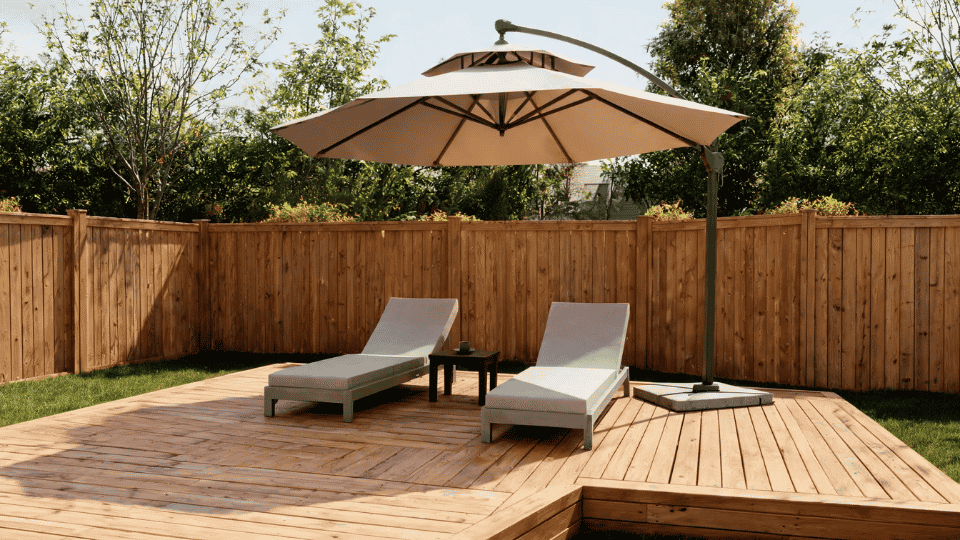
A cantilever umbrella creates a shaded corner without posts, drilling, or permanent framing. The offset design keeps the pole away from the furniture, so the seating area feels more open.
Choose a sturdy base, weather-rated fabric, and a canopy that can tilt as the sun moves during the day.
- Budget: Low, especially if you already have outdoor seating and only need focused shade.
- Situation: Best for sunny decks with light to moderate wind and strong afternoon glare.
- Deck size: Works well on small decks, balconies, and compact seating corners.
2. Sail-Shaded Dining Nook
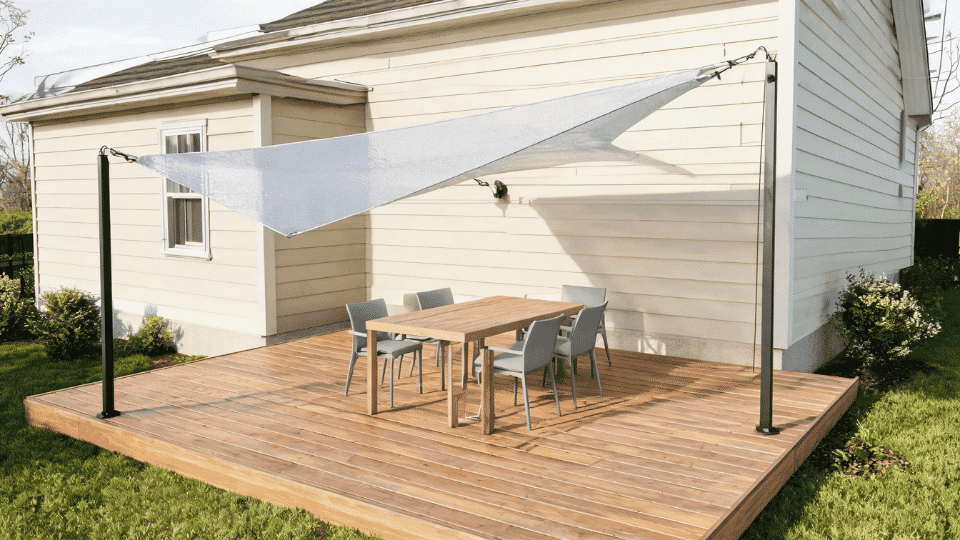
A shade sail gives a dining area a clean, modern cover without a full roof. The fabric stretches between strong anchor points, creating a lighter look than heavy framing.
Keep the sail tight, angled, and properly secured so it does not sag or collect water after summer rain.
- Budget: Low to mid, depending on sail quality, posts, and stainless hardware.
- Situation: Best for sunny decks that need overhead shade but still need airflow.
- Deck size: Works well on small to medium decks with one clear dining zone.
3. Freestanding Canvas Canopy Deck
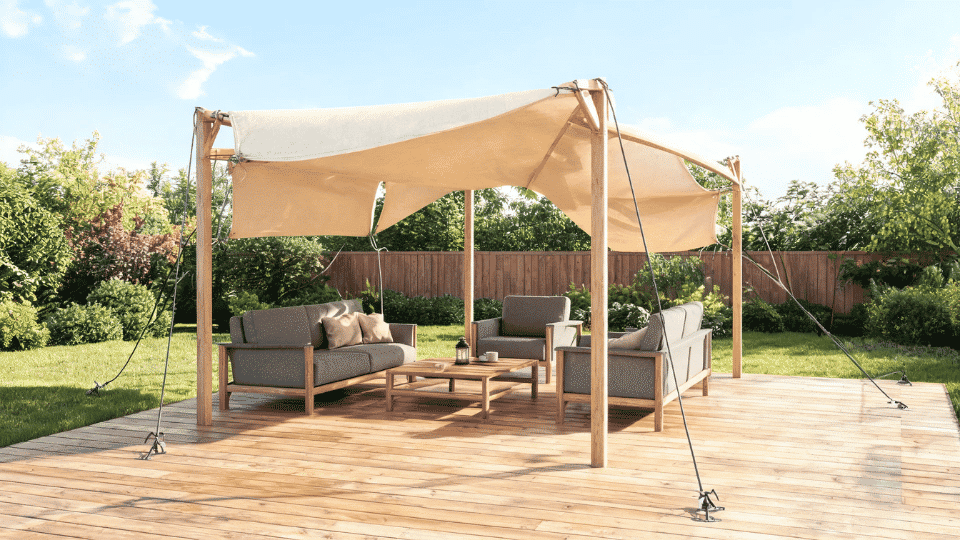
A freestanding canvas canopy gives seasonal coverage without attaching anything to the house.
It can create a soft outdoor room over furniture and can be removed when the weather changes. Choose outdoor-rated fabric, a stable frame, and secure tie-downs so the canopy feels planned rather than temporary.
- Budget: Low to mid, depending on frame material and fabric quality.
- Situation: Best for sunny or mildly exposed decks where a removable cover makes sense.
- Deck size: Works well on medium decks with enough room for a separate frame.
4. Manual Wall Awning Setup
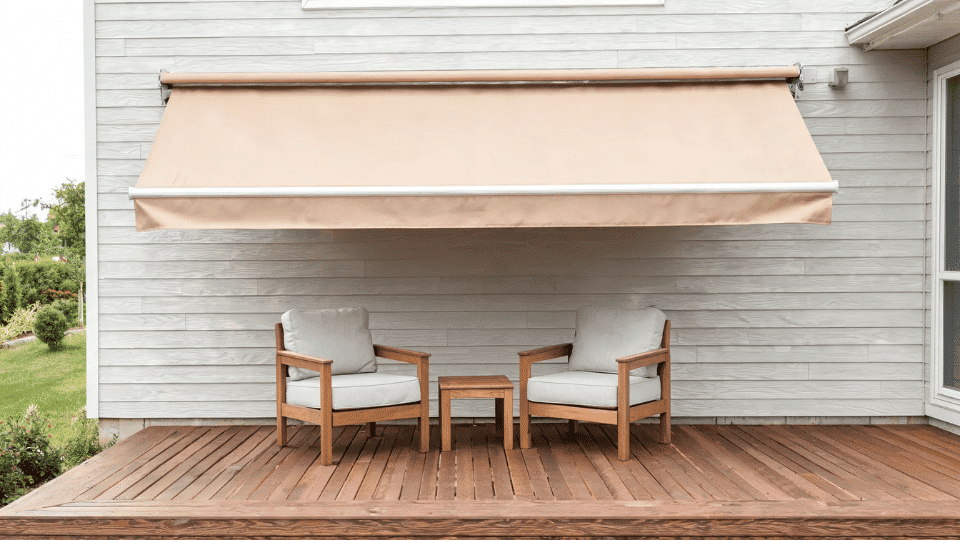
A manual wall awning adds shade when you need it and folds back when you want open sky. It is simpler than a motorized option and can look neat when the mounting is done correctly. The brackets must fasten into solid framing, not just siding, trim, or thin fascia boards.
- Budget: Mid, usually cheaper than motorized awnings or built-in roof structures.
- Situation: Best for sunny attached decks with a strong wall for mounting.
- Deck size: Works well on small to medium decks connected directly to the house.
5. Simple Slatted Wood Pergola
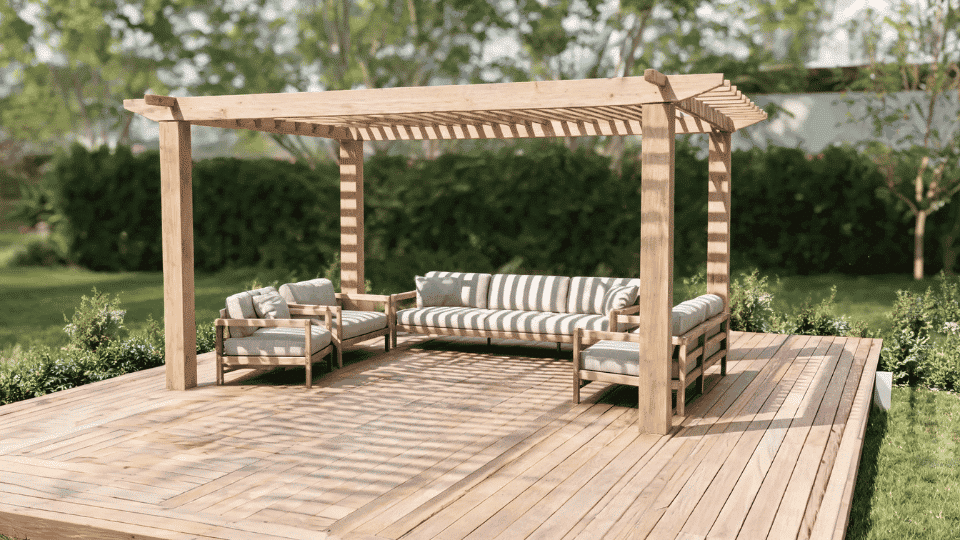
A slatted wood pergola gives the deck structure, filtered shade, and a more finished outdoor feel without completely blocking the sky. Use straight lumber, clean spacing, and simple hardware so the finished frame looks intentional.
If you want to take it further, it is possible to build a simple pergola from scratch with basic tools and a weekend, which keeps costs well below a contractor-built structure.
- Budget: Mid, with pressure-treated lumber keeping the cost lower than premium wood.
- Situation: Best for sunny decks where shade matters more than rain protection.
- Deck size: Works well on medium decks or larger decks with one main seating zone.
6. Vine-Covered Garden Pergola
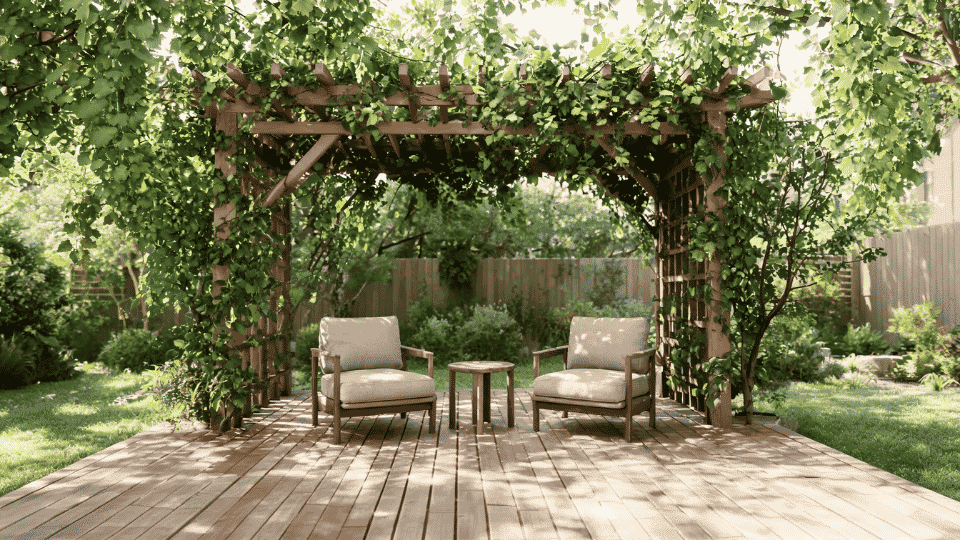
A vine-covered pergola adds natural shade and a softer garden feel. It takes time to fill in, but the result can feel more relaxed than fabric or metal.
Choose plants suited to your climate, and keep growth away from gutters, siding, roof edges, and any place where moisture can collect.
- Budget: Low to mid after the pergola is built, since plants are usually affordable.
- Situation: Best for sunny decks where long-term natural shade is the goal.
- Deck size: Works well on medium decks and garden-facing backyard decks.
7. Reed Mat Pergola Cover
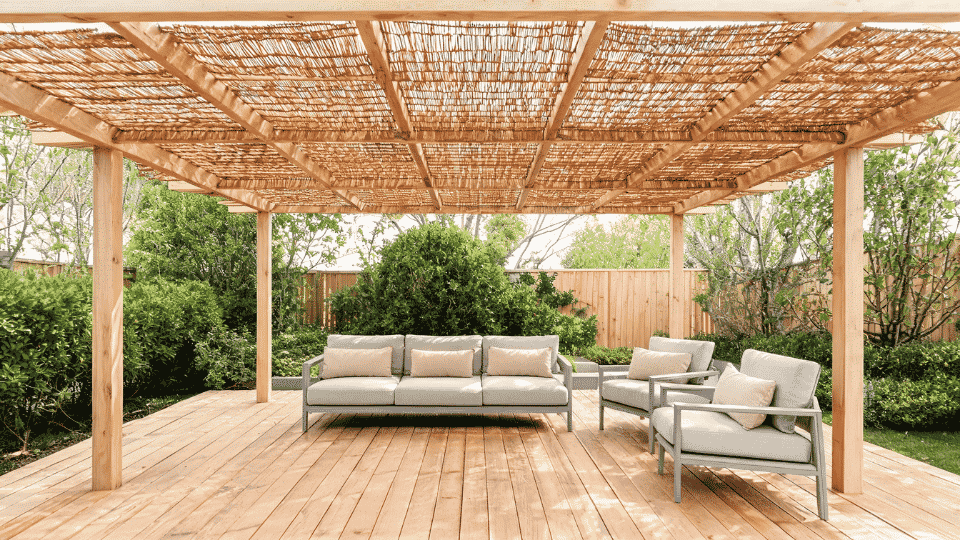
Reed, bamboo, or willow mats can be laid over pergola rafters to create warm, filtered shade. The texture gives a relaxed, casual look without the cost of solid roofing. Secure the material neatly along the edges so it does not curl, sag, or flap when the weather changes.
- Budget: Low to mid, depending on mat quality and pergola size.
- Situation: Best for sunny, dry, or mild climates where heavy rain is not the main concern.
- Deck size: Works well on small to medium pergola-covered decks.
8. Outdoor Curtain Cabana Deck
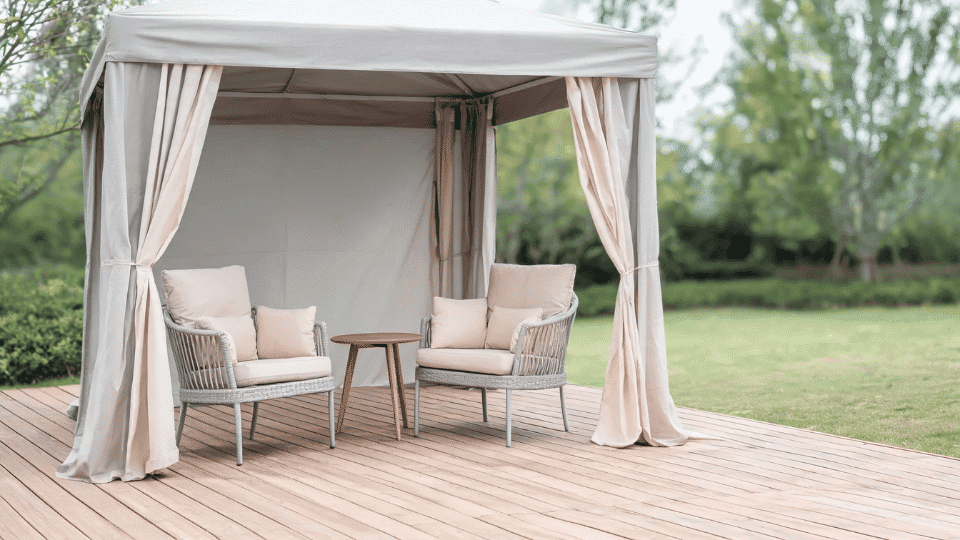
Outdoor curtains can turn a basic cover into a softer, more private sitting area. They work especially well when the top is already covered, but the sides feel exposed.
Use weather-resistant fabric, strong rods or cable, and enough clearance so the fabric does not drag across wet boards.
- Budget: Low, especially when added to an existing roof, pergola, or frame.
- Situation: Best for decks with side sun, close neighbors, or light wind exposure.
- Deck size: Works well on decks ranging from small to large, with a defined covered section.
9. Lattice-Screened Covered Corner
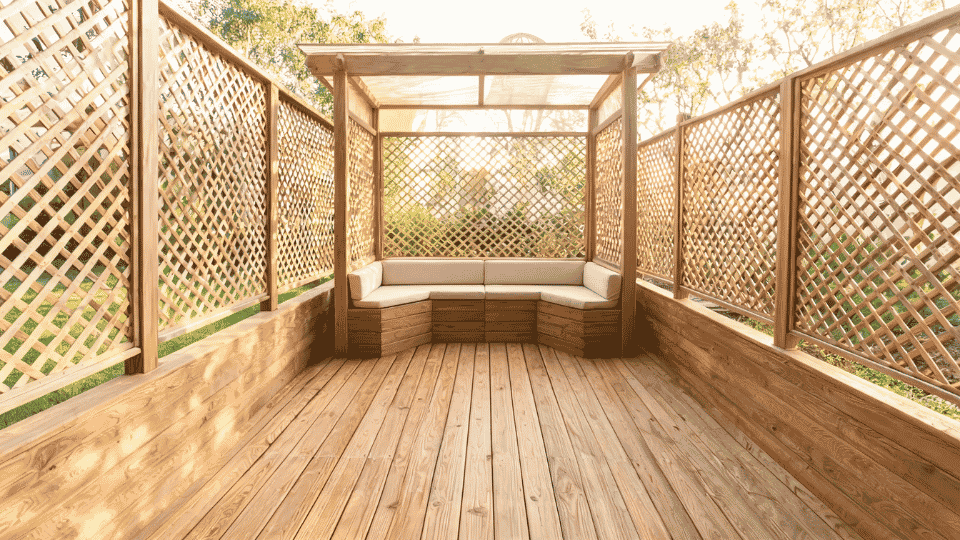
A lattice-screened corner adds privacy, filtered light, and a sense of enclosure without closing the whole deck. It can support climbing plants, frame a bench, or soften a seating nook near a property line.
For raised decks, adding clean skirting options below the screen makes the area feel fully finished rather than cut off mid-structure.
- Budget: Low to mid, depending on panel material and post requirements.
- Situation: Best for decks with low-angle sun, nearby homes, or exposed seating corners.
- Deck size: Works well on small decks, townhome decks, and raised decks.
10. Polycarbonate Panel Roof
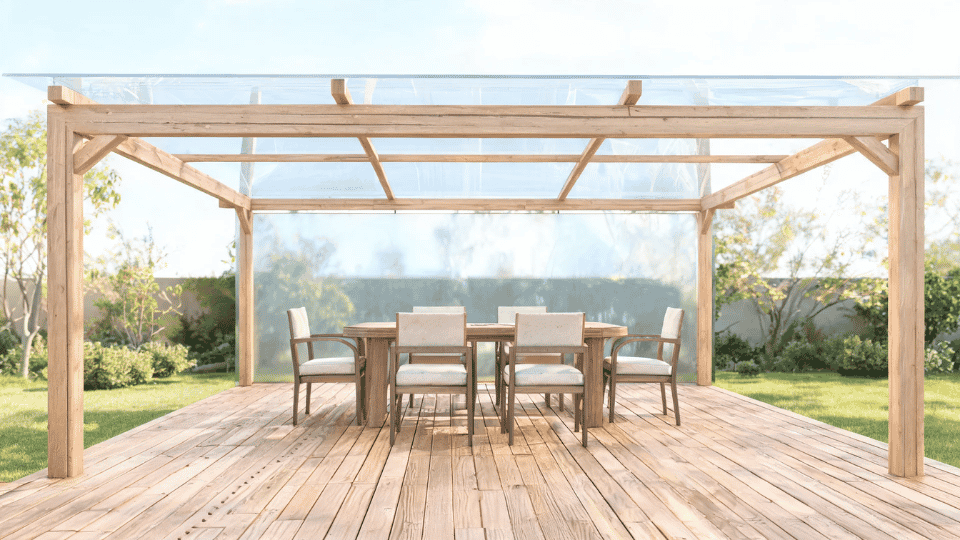
Polycarbonate panels create a rain-friendly cover while still letting daylight reach the deck. They work well over a pergola, doorway, or dining area when you want shelter without a dark roof. Install the panels with proper slope, overlap, closure strips, and fasteners made for outdoor expansion and contraction.
- Budget: Mid, usually less than a fully finished roof but more than fabric shade.
- Situation: Best for rainy decks that still need natural light.
- Deck size: Works well on small to medium covered zones and partial roof areas.
11. Corrugated Metal Shade Roof
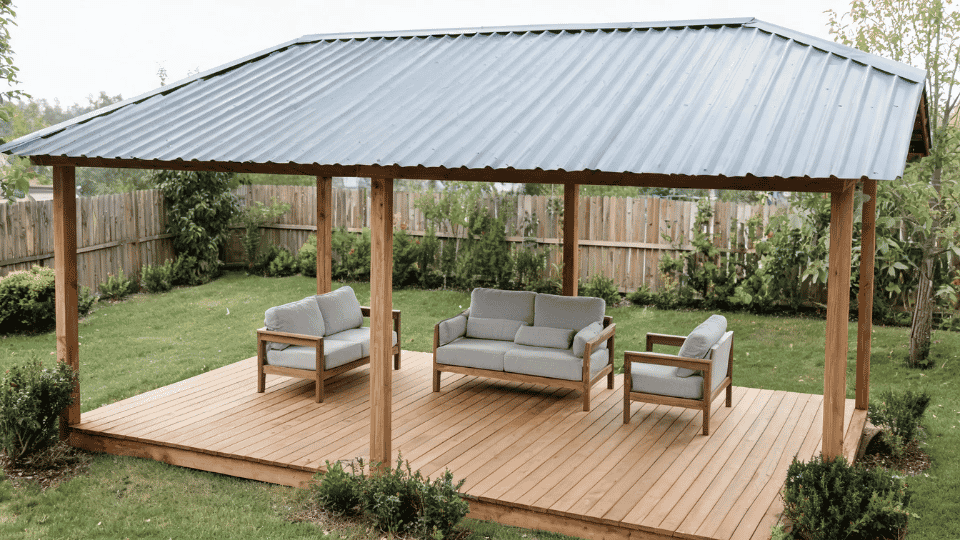
Corrugated metal gives the deck a stronger shade and a more durable overhead surface. It can suit rustic, cabin, farmhouse, or industrial outdoor styles.
Because it blocks more light than clear panels do, plan the area below for airflow, furniture placement, and lighting so the space does not feel heavy.
- Budget: Mid, depending on panel quality, framing, and fastening details.
- Situation: Best for sunny or rainy decks where full overhead shade is preferred.
- Deck size: Works well on medium decks or partial sections of larger decks.
12. Lean-To Doorway Cover
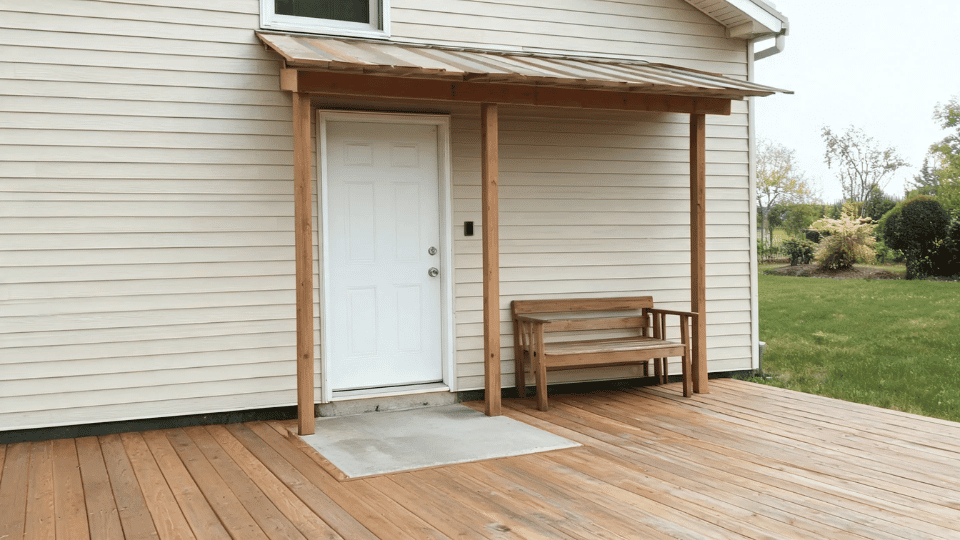
A lean-to doorway cover protects the transition between the house and deck. It can keep the threshold drier, reduce the risk of slippery boards near the door, and make everyday use easier.
Keep the shape simple and make sure any house connection is flashed correctly so water does not get behind the siding.
- Budget: Mid, since framing and water control matter more than size.
- Situation: Best for rainy decks or doors that get direct weather exposure.
- Deck size: Works well on narrow decks, small decks, and entry-focused layouts.
13. Freestanding Post-and-Beam Cover
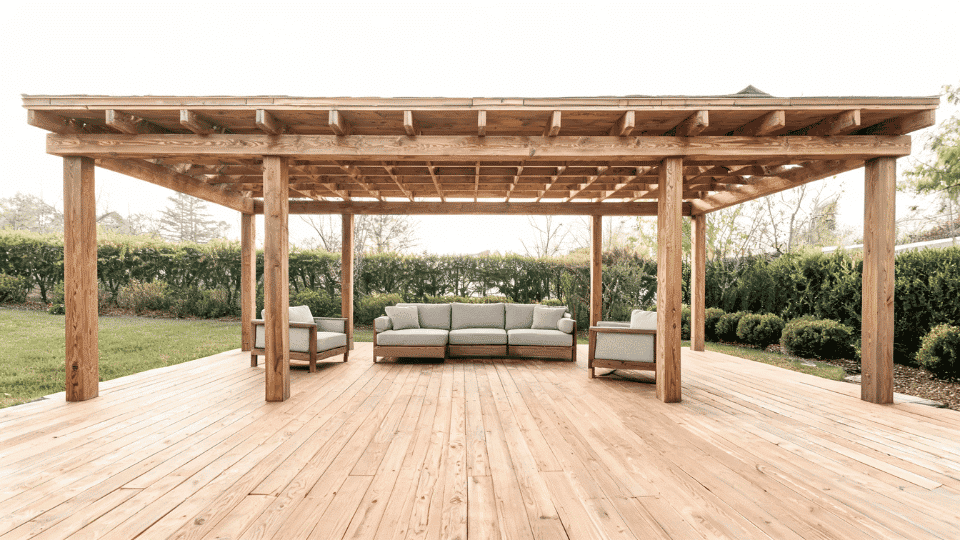
A freestanding post-and-beam cover gives a built-in feel without relying on the house wall. It works well when siding, brick, windows, or rooflines make attachment difficult.
The frame still needs proper footings, bracing, and clean proportions so it looks permanent rather than temporary.
- Budget: Mid to high, depending on post size, roof material, and footing work.
- Situation: Best for decks where attaching the house would create water or structural concerns.
- Deck size: Works well on medium to large decks with room for independent posts.
14. Grill Station Mini Roof
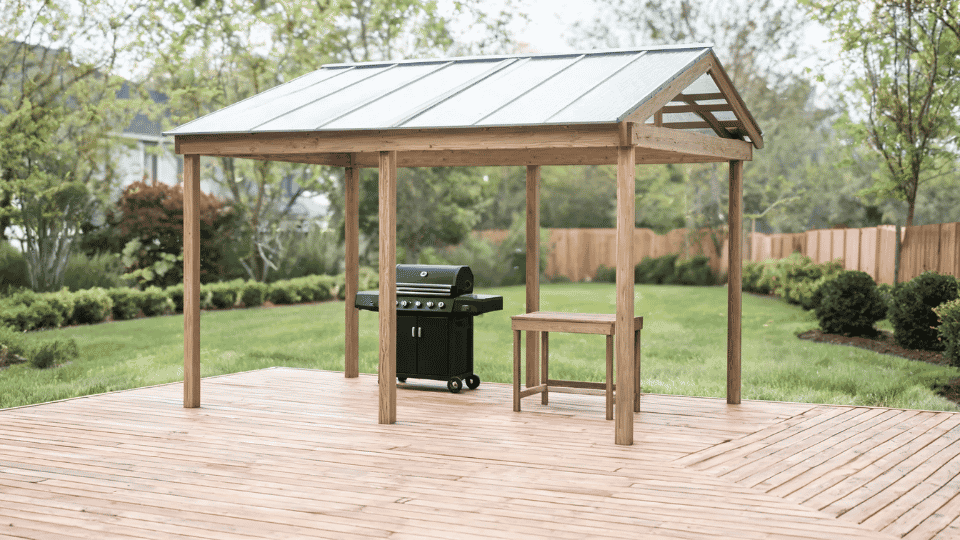
A grill station mini roof protects the cooking area without covering the entire deck. It can make weeknight grilling easier during light rain or strong sun.
Keep all fabric, trim, and low framing safely away from heat. Use materials and clearances that allow smoke, steam, and grease to move safely.
- Budget: Low to mid, depending on whether the roof is framed or canopy-based.
- Situation: Best for decks where cooking is the main outdoor activity.
- Deck size: Works well on small to medium decks with a dedicated grill corner.
15. Pop-Up Canopy Lounge Zone
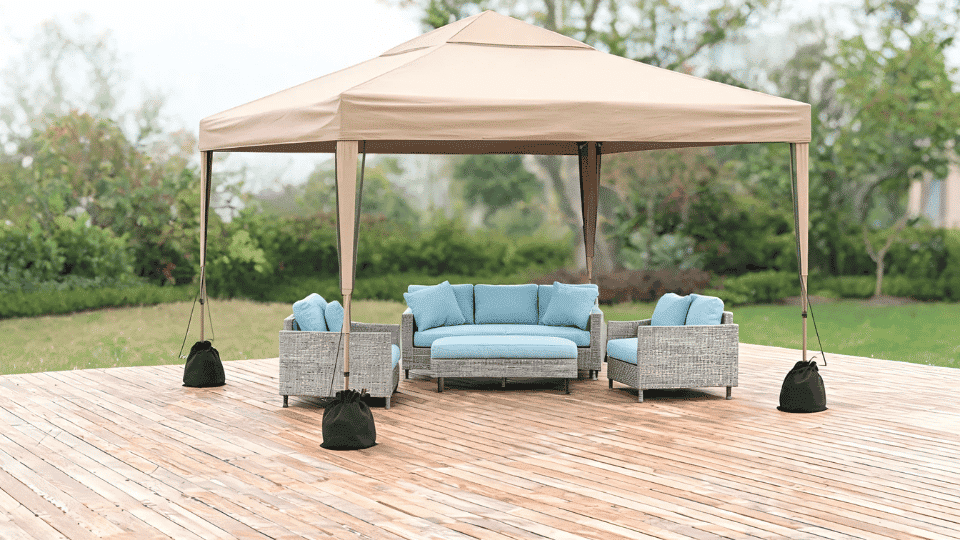
A pop-up canopy can help test where shade is needed before you commit to a permanent cover. It also works for parties, summer weekends, or rental spaces.
Choose one with a strong frame, secure weights, and outdoor fabric. Treat it as a temporary cover, not a structure for daily wind exposure.
- Budget: Low, especially for short-term shade or seasonal use.
- Situation: Best for temporary setups, calm weather, and flexible outdoor seating.
- Deck size: Works well on medium decks with enough open floor space.
16. Fabric Gazebo Seating Area
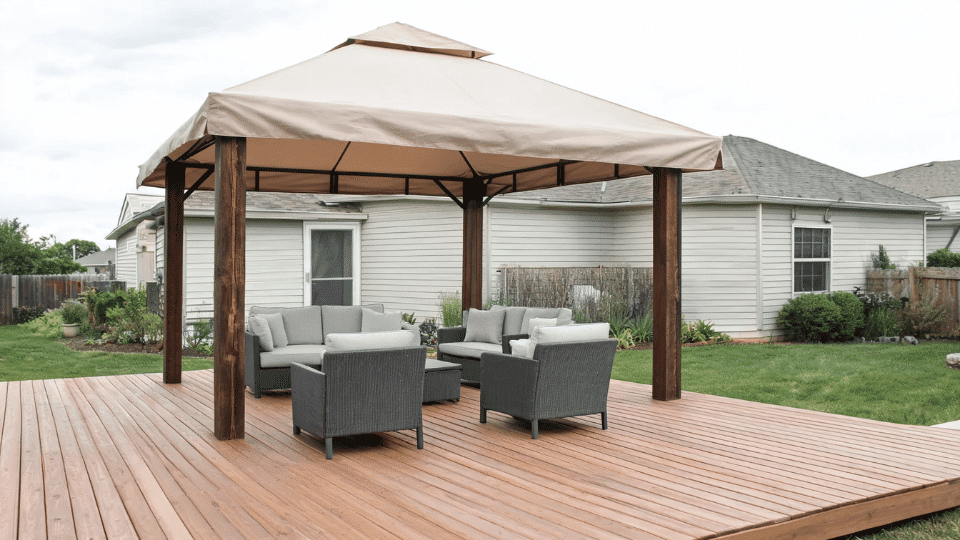
A fabric gazebo creates a soft outdoor room without the need for custom framing. It can hold a sofa set, a small dining table, or a reading area while giving the deck a more complete shape. Look for vented tops, sturdy posts, and fabric that can handle sun exposure without fading quickly.
- Budget: Mid, usually less than a wood pavilion or a fully built roof.
- Situation: Best for sunny decks with moderate weather and enough space for a frame.
- Deck size: Works well on medium to large decks with a clear seating layout.
17. Hardtop Gazebo Beside Deck
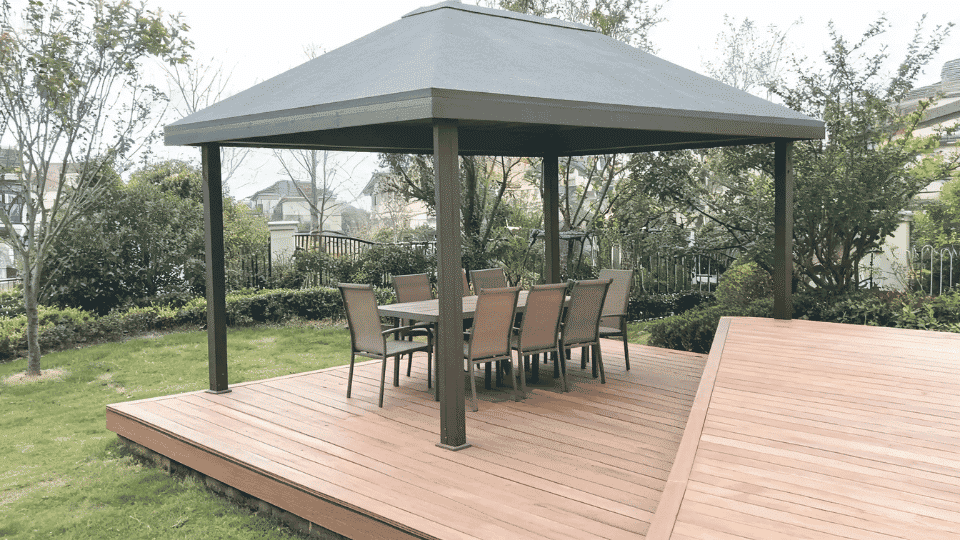
A hardtop gazebo placed beside the deck can create a covered room without loading the deck framing. This works well when the deck is older or too small for a roof. The gazebo can sit on a patio pad, a gravel base, or a proper foundation while still feeling connected to the deck.
- Budget: Mid to high, depending on kit size and foundation needs.
- Situation: Best for rainy, sunny, or mixed-weather yards needing stronger coverage.
- Deck size: Works well beside small decks or next to large open deck layouts.
18. Covered Alcove Seating Bay
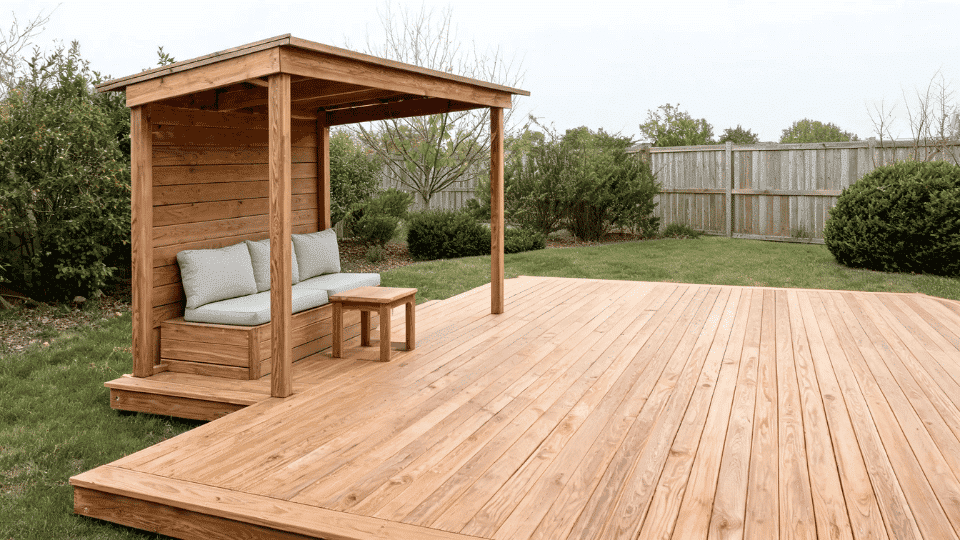
A covered alcove gives one small seating area a cozy, sheltered feel. Instead of covering the entire deck, it focuses the budget on the spot where you actually sit. Add a bench, two chairs, or a compact table, then frame the space with lighting or planters.
- Budget: Low to mid, because only one focused area needs coverage.
- Situation: Best for decks where one corner gets used more than the rest.
- Deck size: Works well on small decks, side decks, and narrow backyard decks.
19. Privacy Screen With Overhead Slats
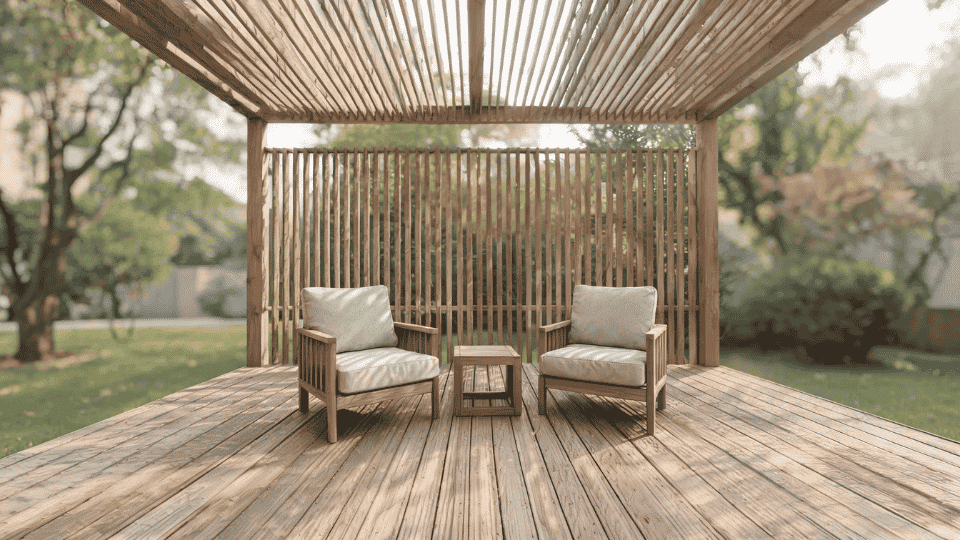
A privacy screen with overhead slats handles both exposure and overhead sun. The side panel blocks views from nearby homes or streets, while the slats create filtered light above. Keep the screen height balanced so the deck feels private without feeling boxed in or too closed.
- Budget: Mid, depending on post depth, slat material, and screen height.
- Situation: Best for decks with neighbors nearby, side glare, or street-facing exposure.
- Deck size: Works well on small to medium decks, especially narrow layouts.
20. Outdoor Roller Shade Cover
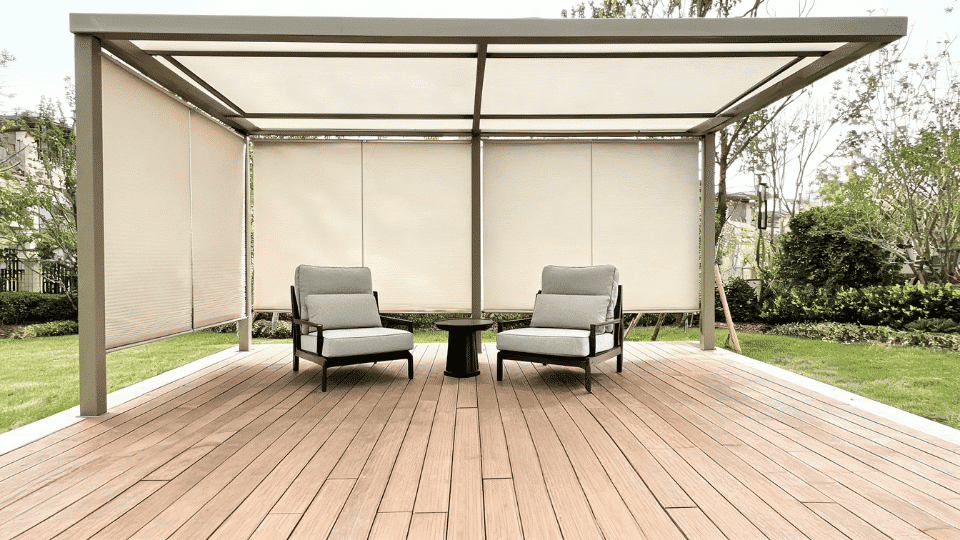
Outdoor roller shades help when an existing cover does not stop glare from the side. They can mount under a roof, awning, pergola, or framed structure.
Solar shades keep some visibility, while privacy shades block more of the view. Use exterior-rated hardware so the rollers hold up outdoors.
- Budget: Low to mid, depending on shade size and fabric quality.
- Situation: Best for west-facing decks, covered porches, and glare-heavy seating areas.
- Deck size: Works well on any deck with an existing top cover or frame.
21. Shade Cloth Wood Frame
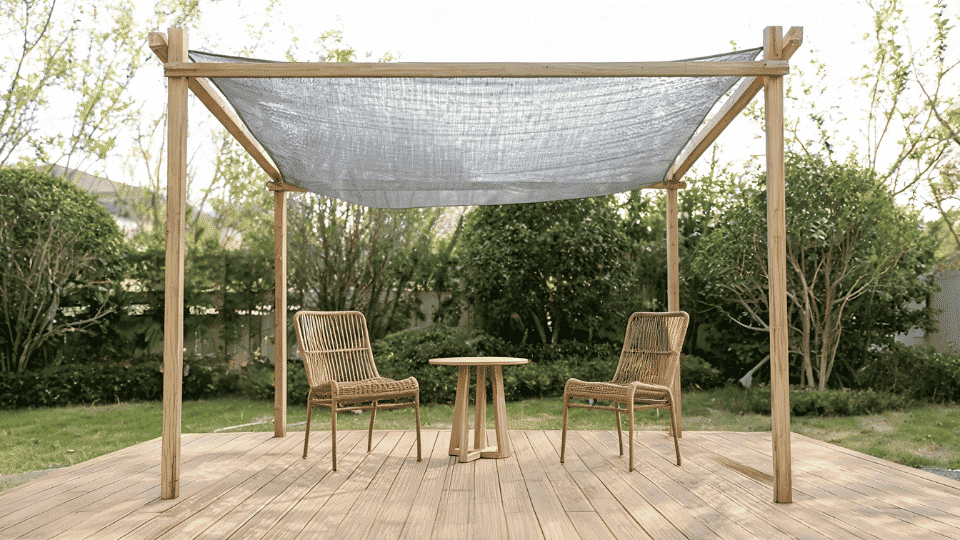
A shade cloth roof on a simple wood frame gives light coverage in a practical, affordable way. It is easier to remove than solid roofing and can cool the surface underneath. Pull the cloth tight, finish the edges cleanly, and use rust-resistant hardware so the cover does not look temporary.
- Budget: Low, especially when the frame is simple and the fabric is standard size.
- Situation: Best for hot, dry decks where rain protection is not the main goal.
- Deck size: Works well on small to medium decks with a simple rectangular layout.
22. Tree-Framed Deck Cover
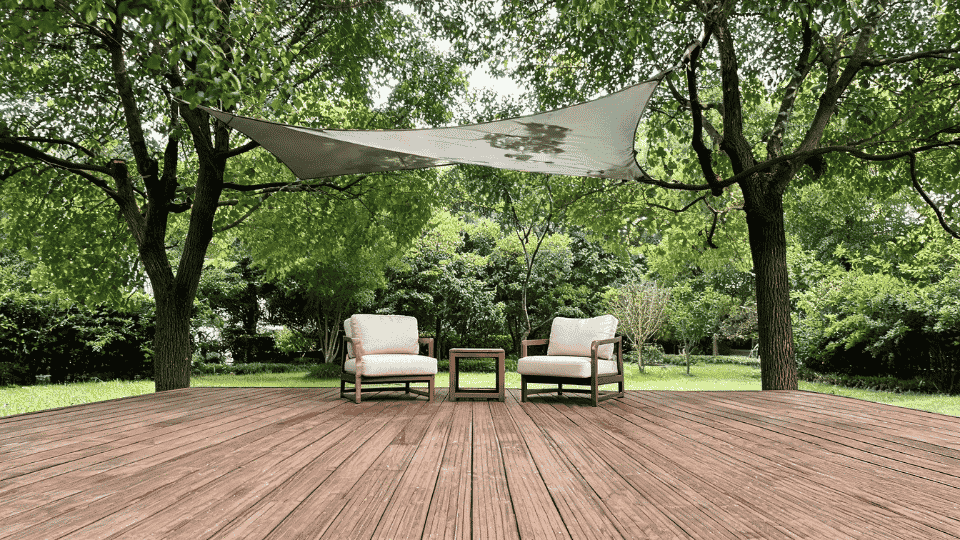
Existing trees can reduce how much artificial cover the deck needs. Instead of covering the whole area, use a smaller shade sail, pergola, or canopy to fill the gaps the branches leave.
Avoid damaging trees with permanent hardware, and keep branches trimmed so leaves do not overload fabric or panel roofs below. Patio and deck combinations in yards with mature trees often benefit most from this mixed approach.
- Budget: Low to mid, because natural shade reduces the size of the added cover.
- Situation: Best for decks with mature trees nearby and uneven sun patterns.
- Deck size: Works well on medium to large decks with partial natural shade.
23. Half-Covered Deck Layout
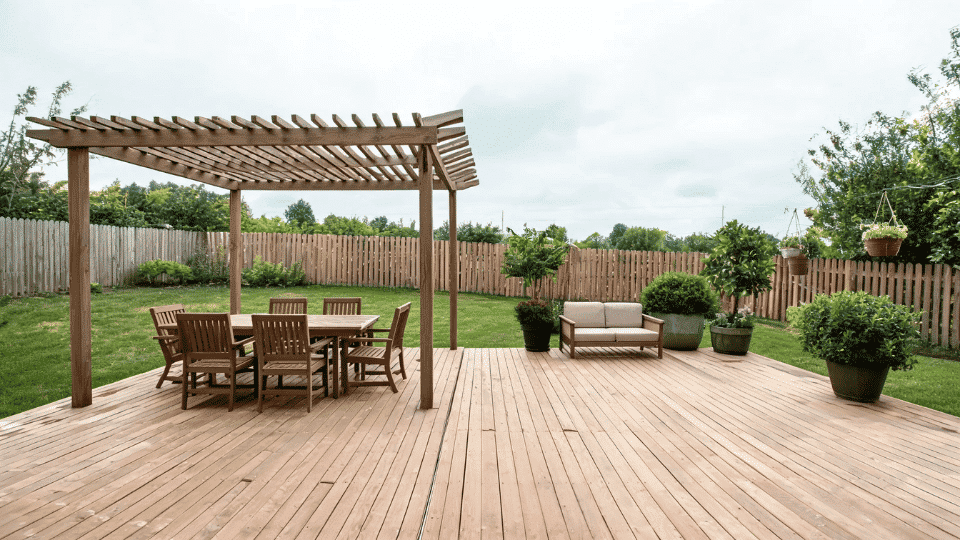
A half-covered layout keeps part of the deck protected while leaving part open. This can feel more balanced than covering every board, especially when you want both shade and sun.
Use the covered side for dining or seating, then leave the open side for plants, lounging, or flexible furniture.
- Budget: Mid, since covering less area reduces material and labor needs.
- Situation: Best for decks that need mixed shade, sun, and open-air space.
- Deck size: Works well on medium to large decks with more than one activity zone.
24. Rafter-Only Rustic Cover
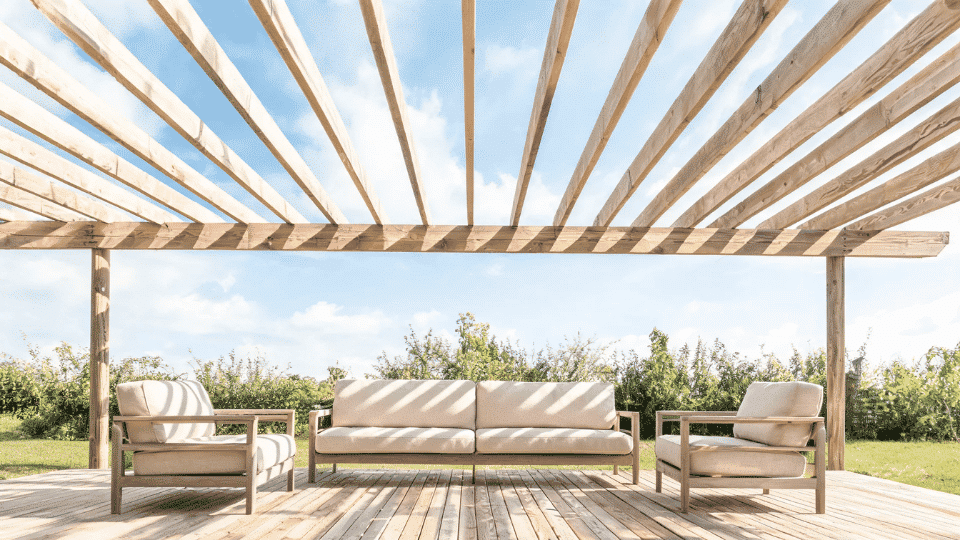
A rafter-only cover gives the deck structure, rhythm, and partial shade without solid roofing. It can support lights, hanging plants, or seasonal fabric while keeping the sky visible. This is a shade feature, not a rain solution. Keep the rafter spacing even so the final result feels built with purpose.
- Budget: Mid, depending on lumber size, post support, and finish quality.
- Situation: Best for sunny decks where style and filtered shade matter most.
- Deck size: Works well on medium decks and rustic backyard layouts.
25. Pergola With Built-In Bench Cover
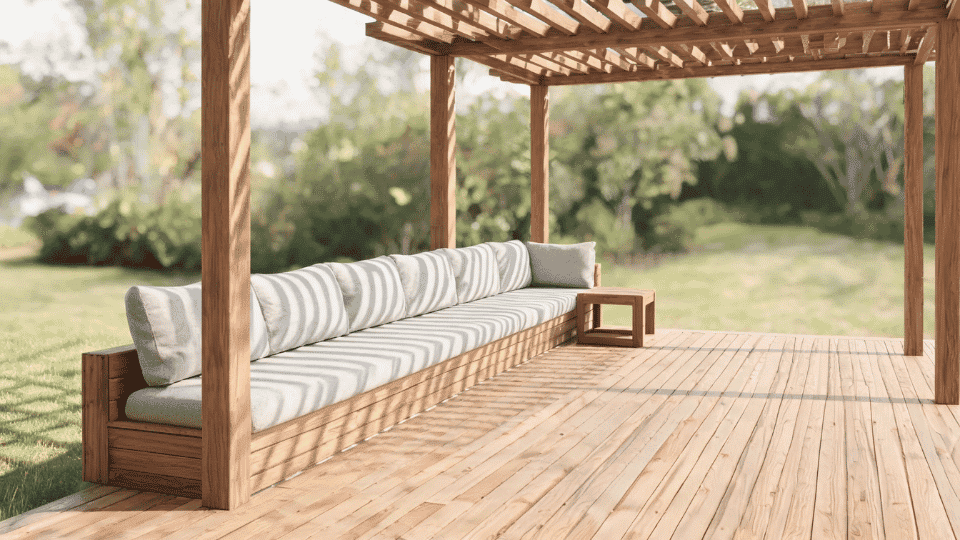
A pergola with a built-in bench works well when the deck needs both shade and seating, but loose furniture can make the layout feel crowded.
The bench can sit along one side of the deck, with the pergola frame built above it to create a small covered nook. This keeps the footprint tight and gives the space a planned, custom feel.
- Budget: Mid, because the same framing can support both the bench area and the overhead shade.
- Situation: Best for sunny decks where seating, shade, and structure need to fit within a single compact zone.
- Deck size: Works well on small to medium decks, especially narrow layouts where movable furniture wastes space.
How to Make a Budget Deck Cover Look More Expensive
A simple deck cover looks better when the finish details feel planned. These upgrades help affordable materials blend with the house and outdoor furniture.
- Use one finish color: Paint or stain posts, beams, brackets, and visible framing in one tone so the cover feels designed.
- Match fabric to trim: Choose sails, curtains, or awnings that connect with the house trim, door color, or furniture fabric.
- Keep hardware consistent: Use black, bronze, or stainless hardware throughout so screws, straps, and brackets do not look mismatched.
- Hide rough fabric edges: Use hems, battens, or clean seams so shade cloth and canvas do not look unfinished.
- Add warm outdoor lighting: Use string lights, sconces, or solar fixtures to make the covered zone feel useful after sunset.
- Ground the seating area: Add an outdoor rug under the covered zone so the furniture feels connected to the structure.
- Soften posts with planters: Place planters near posts or screens so budget framing does not feel bare or abrupt.
- Limit mixed materials: Avoid combining too many woods, metals, fabrics, and colors, as clutter makes a cheap cover look even cheaper.
The cover does not need to look expensive. It needs to look clean, balanced, and connected to the rest of the outdoor space.
Attached vs. Freestanding Deck Covers
Both cover types can work, but the safer choice depends on support, water control, and how much you want to change the house.
| Factor | Attached Cover | Freestanding Cover |
|---|---|---|
| Best fit | Works when the house wall can support safe mounting. | Works when the cover can stand beside or over the deck. |
| Cost risk | May need flashing, permits, and siding work. | May need posts, footings, and bracing. |
| Water control | Needs careful sealing where it meets the house. | Keeps runoff away from the wall connection. |
| Better choice | Choose it for a clean built-in look. | Choose it for fewer house-related risks. |
If both options solve the same problem, choose the one with simpler support, cleaner drainage, and fewer long-term repair risks.
Small Finishing Details That Help the Whole Deck Feel Planned
A covered area looks better when the rest of the deck supports it. These small choices can help the cover feel connected rather than added later.
- Repeat one material nearby: Match the cover frame to railings, furniture legs, or planter boxes to make the deck feel more cohesive.
- Keep the furniture scale right: Oversized furniture can make a budget cover feel cramped, especially on smaller decks. Thinking through furniture that fits the deck before buying saves money and floor space.
- Use plants to soften edges: Tall planters can make posts, privacy screens, and simple frames feel less harsh.
- Add one practical surface: A small side table, storage bench, or serving cart makes the covered area more useful.
- Choose simple accents: A few small style upgrades can do more than crowded decor or mismatched accessories.
When the covered zone connects with the furniture, plants, and lighting, even a budget-friendly cover can feel like part of the original deck.
Frequently Asked Questions
Can a covered deck make the inside of my house darker?
Yes, a solid cover near windows or patio doors can reduce indoor light. Clear panels, lighter fabrics, slatted pergolas, or partial covers help control glare while keeping rooms brighter. Check how sun moves past the house before choosing a fully solid cover near any window.
How do I make a budget deck cover look permanent?
Use outdoor-rated materials, consistent finishes, clean hardware, and a cover shape that follows the deck layout. Sagging fabric, rough edges, and random anchor points are what make cheap covers look temporary, not the price of the materials.
Should a deck cover match the house or contrast with it?
Both work when the choice feels considered. Matching trim gives a softer, built-in look. A contrasting frame can read as modern when it connects with railings or planters nearby. The problem is adding a new color with no visual connection to anything else on the property.
Can I add a cover if my deck boards need repair?
Repair weak, soft, loose, or rotting boards first. A cover reduces future exposure but should not hide existing damage. Check the surface and framing before deciding which cover the deck can safely support.
What cover works best for a windy backyard?
A properly braced pergola, strong freestanding frame, or professionally mounted awning performs better in windy yards than loose fabric. Shade sails need strong anchors and correct tension. Lightweight pop-up canopies should not be treated as permanent structures in gusty conditions.
What is the cheapest way to cover a deck?
A shade sail, shade cloth on a simple wood frame, or a pop-up canopy are the lowest-cost starting points. Each requires proper anchoring to hold up over time. For shade only, these options work well. For rain cover, budget more for slope, framing, and drainage.
Do I need a permit to add a cover to my deck?
It depends on your location and what you are building. Fabric and removable covers usually do not require permits. Permanent roofs, attached structures, and anything that changes the home’s footprint often do. Check with your local building department before starting any framed cover project.
Final Takeaway
The best covered deck ideas on a budget start with the problem you need to solve. A sail can fix glare, curtains can add privacy, and panels can help with rain.
The right choice depends on your deck structure, weather, and the area you use most. I would rather create one strong covered zone than stretch money across a weak full-deck build.
My advice is to begin with the biggest comfort issue, then upgrade in layers. If these covered deck ideas helped, share the deck problem you are trying to solve in the comments.