


Painted stairs can completely change how a staircase feels inside a home, and they do it without the cost of a full replacement. A fresh coat of paint covers scratches, uneven wood tones, and the kind of wear that stain would only draw attention to. It also opens up a color range that stained wood simply cannot reach, from soft warm whites to deep charcoal and everything in between. Painted stairs are not a shortcut. They demand proper surface prep, the right primer, and a paint product built for foot traffic. Skip any of those steps and the finish will chip, scuff, or peel within months instead of lasting years. This blog covers how to paint stairs correctly, which colors work best for different home styles, and how to keep the finish looking good long after the project is done. Are Painted Stairs a Good Idea? Paint hides dents, old stains, and uneven wood grain better than any other finish. It also opens up a full range of colors, from crisp white to deep charcoal. Stained wood cannot match that range. Softer woods like pine and poplar take paint especially well. These woods are common in older staircases. Paint covers the flaws that stains would only highlight. Here is a quick side-by-side to help you decide: Factor Painted Stairs Stained Stairs Color options Unlimited, any shade Limited to wood tones Hides imperfections Yes, very well No, highlights flaws Durability on treads Chips and scuffs faster Wears more evenly Best for Softer woods, budget updates Hardwoods with good grain Maintenance Touch-ups every 1-3 years Occasional resealing Upfront cost Higher, needs primer and coats Lower, fewer materials 15 Painted Stairs Ideas for Every Home Style This finish works with nearly every design style. Farmhouse, modern, minimalist- it fits them all. The right color and pattern depend on your home’s palette and ceiling height. It also depends on how much contrast you want between treads and risers. Below are six popular directions homeowners take, each suited to a different look and budget. 1. Classic White Painted Stairs White remains the most requested option for good reason. It reflects light and makes a narrow stairwell feel larger. White also pairs with almost any wall color. A soft white with a bit of warmth tends to feel more inviting than a stark, cool white. The tradeoff is that the scuffs show more easily. A durable, washable sheen matters here more than in most other rooms. 2. Black Painted Stairs for a Modern Look Black creates drama and works well in contemporary or industrial-style homes. It also hides scuffs and dirt better than white. That makes it a practical pick for busy households. Pairing black treads with white risers, or the reverse, adds contrast. It does this without overwhelming a small space. 3. Two-Tone Painted Staircases This look pairs one color on the risers and another on the treads. Some homeowners paint the stringer and leave the treads as natural wood. This approach adds color without committing to one bold shade. It also works well when you want to tie the staircase to a nearby room’s color scheme. 4. Painted Stair Risers with Pattern or Design Patterned risers turn a staircase into a focal point. Homeowners use stencils, wallpaper, or hand-painted designs on each riser. The pattern often varies from step to step. This works well in hallways or basements where the stairs are the main visual feature. Keep the treads in a solid, durable color. That way, the pattern will not compete with foot traffic wear. 5. Neutral Painted Stairs Gray, greige, and soft taupe offer a middle ground. They sit between stark white and bold color. Neutrals hide everyday wear better than white. They still keep the space feeling calm and put together. This is a popular pick for homeowners who plan to change decor over time. 6. Bold and Colorful Painted Stairs Some of us want our staircase to make a statement. Navy, emerald, and even a bright yellow bring real personality to the space. This approach works best when surrounding walls stay neutral and best to paint the stairs. That way, the staircase becomes the clear focal point. It won’t compete with busy wallpaper or artwork nearby. 7. Ombre Painted Stairs An ombre staircase shifts gradually from a dark shade at the bottom to a lighter tint near the top. Some homeowners mix white into the same base color for each step. Others go the opposite way, moving from light to dark as the stairs rise. This effect works well in entryways and adds real visual movement without using more than one color family. Keep the transition subtle, since jumps that are too dramatic between steps can look uneven instead of intentional. 8. Painted Faux Runner Stairs A faux runner mimics a fabric stair runner using paint alone. Painters tape off a center strip on each tread and riser, then fill it with a contrasting color. The outer edges stay in a solid neutral to frame the look. This approach offers the charm of a traditional runner without the need to clean or replace fabric. A satin or semi-gloss finish on the runner section keeps it easy to wipe down. 9. Striped Painted Risers Striped risers bring a graphic, structured look to a staircase. Horizontal stripes tend to make a narrow staircase feel wider. Vertical or diagonal stripes draw the eye upward instead. Homeowners often use two contrasting shades, such as gray and white or navy and cream, for a clean finish. Careful taping matters most here, since crisp lines make the difference between a polished look and a messy one. 10. Chalkboard Painted Stairs Chalkboard paint turns stair risers into a spot for notes, doodles, or seasonal messages. It works well in family homes because kids can draw without leaving permanent marks. The dark, matte finish also gives the staircase a simple, modern edge on its own. This style suits basements, playrooms, and other casual spaces more than formal entryways. Wipe risers clean with a soft cloth before adding a fresh chalk design. 11. Geometric Stencil Painted Stairs Geometric stencils bring a modern, graphic pattern to plain risers. Triangles, hexagons, and diamond shapes are common choices for this look. A single accent color against a neutral base keeps the pattern from feeling too busy. This style works especially well in contemporary or minimalist homes with clean, simple decor elsewhere. Stencils also let you repeat a pattern from a rug or backsplash for a more pulled-together space. 12. Painted Stairs That Match the Walls Painting a staircase the same color as the surrounding hallway creates a calm, continuous look. This approach works well in smaller homes because it eliminates visual breaks between the stairs and the walls. It also makes a narrow hallway feel larger and more open. This style suits homeowners who want their staircase to blend in rather than stand out. A slightly higher sheen on the stairs than on the walls still gives the treads enough durability for daily wear. 13. Dark Treads with Light Risers This is a practical twist on the standard two-tone staircase. Painting the treads dark while keeping the risers pale puts the contrast where it works hardest. Black, charcoal, deep brown, and navy hide everyday scuffs better on a walking surface than lighter shades do. The pale risers keep the staircase from feeling too heavy overall. This split shows up often in real staircase projects because it suits traditional and modern homes alike. Use floor-rated paint on the treads, and add an anti-slip additive for better grip. 14. Alternating Color Painted Risers Unlike an ombre staircase, which shifts gradually, this treatment repeats two fixed colors riser by riser. Muted green and cream, or dusty blue and soft gray, can alternate from the bottom step to the top. The look adds color without stencil work or complicated patterns. Keeping the treads in one neutral shade stops the staircase from feeling too busy. Benjamin Moore features this exact alternating-riser technique in its own painted stair gallery, which makes it a tested look rather than a purely decorative idea. 15. One-Color Statement Stairs Paint the treads, risers, stringers, and often the balusters in one solid color, while the surrounding walls stay a contrasting shade. Deep green, charcoal, navy, or terracotta can turn the whole staircase into one architectural feature. Unlike stairs painted to match the walls, this treatment intentionally sets the staircase apart. It also cuts maintenance, since there are no pattern lines or color transitions to touch up. How to Paint Stairs for a Long-Lasting Finish Step 1: Prepare the Surface: Remove dirt and grease with a mild cleaner. Sand any existing finish so the new paint has something to grip. Repair cracks, dents, or damaged wood before you pick up a brush. Step 2: Prime the Stairs: Primer seals the wood and provides a surface for paint to bond to. This one step reduces peeling and chipping more than almost anything else you can do. Step 3: Apply Stair Paint: Use quality brushes and rollers suited to the paint you choose. Apply thin coats rather than one thick layer. Follow the drying times on the label between coats. Step 4: Allow Proper Curing Time: Paint can feel dry to the touch within hours, but full curing takes longer. Keep heavy foot traffic off the stairs for at least 24 to 48 hours, longer if the label recommends it. Choosing the Right Paint for Stairs Picking paint for a staircase means two decisions, not one. First comes color, then comes the product itself. The right shade depends on light levels, nearby wall colors, and how much wear the stairs get. 1. Best Paint Colors for Stairs Below is a quick reference of colors that consistently perform well, based on guidance from major paint brands. Color Name Brand Best For Pure White Sherwin-Williams Bright, airy stairwells Alabaster Sherwin-Williams Soft warmth without stark white White Dove Benjamin Moore Warm white for treads and risers Hale Navy Benjamin Moore Bold, dramatic staircases Agreeable Gray Sherwin-Williams Neutral, hides everyday wear Revere Pewter Benjamin Moore Warm greige for busy households 2. Use Floor and Porch Paint Stair treads need floor or porch paint, not standard wall paint. These products are built for horizontal surfaces that take constant foot traffic. They resist scuffing, cracking, and peeling far better than a regular interior paint. Risers and balusters can use a durable semi-gloss wall paint instead, since they see less direct wear. For exterior stairs, choose a paint rated for outdoor use and temperature swings. 3. Choose the Right Paint Finish Sheen matters as much as paint type. Semi-gloss and high-gloss finishes hold up best on treads because they resist scuffs and wipe clean easily. A flat or matte finish hides small imperfections well, but scratches and dents show through quickly. For a balance of durability and a softer look, try satin on risers. Save semi-gloss or gloss for the treads. Problems with Painted Stairs and How to Avoid Them Most issues with a painted staircase trace back to prep, product choice, or timing. Here are the four problems homeowners run into most, along with simple fixes. 1. Paint Peeling or Chipping: Peeling almost always comes down to skipped primer or rushed prep. Grease, dust, or old wax left on the wood keeps new paint from bonding. Sand the surface, clean it well, and prime before you paint. Let each coat cure fully before the stairs see regular foot traffic again. 2. Visible Scratches and Scuff Marks: Scuffs show up fastest on flat or matte finishes and on very dark or very light colors. A semi-gloss or gloss sheen resists marks better and wipes clean more easily. Adding a runner or rug on the treads also reduces visible wear over time. 3. Slippery Painted Stair Surfaces: Glossy paint can feel slick underfoot, especially in socks or smooth-soled shoes. Adding a non-slip additive or choosing stair-tread paint adds grip without significantly changing the look. Runners, grip strips, or textured paint on treads also help on stairs used by kids or older family members. 4. Uneven Paint Coverage: Thin or blotchy coverage has a few common causes. The paint may have gone on too thick, too thin, or too soon after the last coat. Apply thin, even coats and let each one dry completely before adding the next. Two coats over a properly primed surface almost always give full, even coverage. Painted Stairs vs Stained Wood Stairs Painted stairs give you more design freedom and hide flaws better. Stained stairs cost less upfront and wear more evenly over time. Consideration Painted Stairs Stained Wood Stairs Color flexibility Any color or pattern Limited to wood tones Wood grain visibility Covered Highlighted Best wood types Softer woods, pine, older stairs Hardwoods with strong grain Repair visibility Touch-ups can show Touch-ups blend in more easily Upfront cost Higher, primer plus paint Lower, fewer coats needed Long-term upkeep More frequent touch-ups Occasional resealing Useful Tips for Creating Durable Painted Stairs A few habits separate a paint job that lasts years from one that needs redoing within months. Sand between coats: Light sanding removes dust nibs and helps each layer bond to the last. Work in thin coats: Thick paint traps moisture underneath and can crack or bubble as it dries. Match the primer to the surface: Bare wood, old paint, and glossy finishes each need a different bonding primer. Paint every other step first: This keeps a path open on the staircase while each coat cures. Round sharp tread edges slightly: Thin, sharp edges chip faster under regular foot traffic. Give paint real cure time: Dry to the touch is not the same as fully cured. Keep heavy traffic off treads for at least 24 to 48 hours. Choose floor-grade paint for treads: Standard wall paint was never built for constant impact. Touch up small chips early: A quick fix now prevents water and dirt from working their way under the paint later. Final Thoughts A painted staircase is one of the most affordable ways to change the feel of a home. The right paint type, sheen, and primer make the difference between a finish that lasts years and one that needs constant touch-ups. A classic white, a bold navy, or a two-tone design all follow the same rules. Prep well, prime first, and use paint made for foot traffic. With a bit of patience, a fresh coat can keep a staircase looking good for years before it needs attention again. Frequently Asked Questions Can You Paint Wooden Stairs Without Sanding? Light sanding is usually recommended because it helps the paint bond properly and reduces the risk of peeling. Are Painted Stairs Slippery? They can be if you use glossy paint. Satin finishes and slip-resistant additives can improve traction. What is the Most Durable Paint for Stairs? Floor and porch paints, or high-quality enamel paints designed for heavy traffic, usually last longer. Should Stair Treads or Risers Be Painted? You can paint both, but many homeowners paint risers and stain or seal treads because treads take more wear. How Many Coats of Paint Do Stairs Need? Most stair projects need primer plus two coats of paint, depending on the surface and paint coverage.
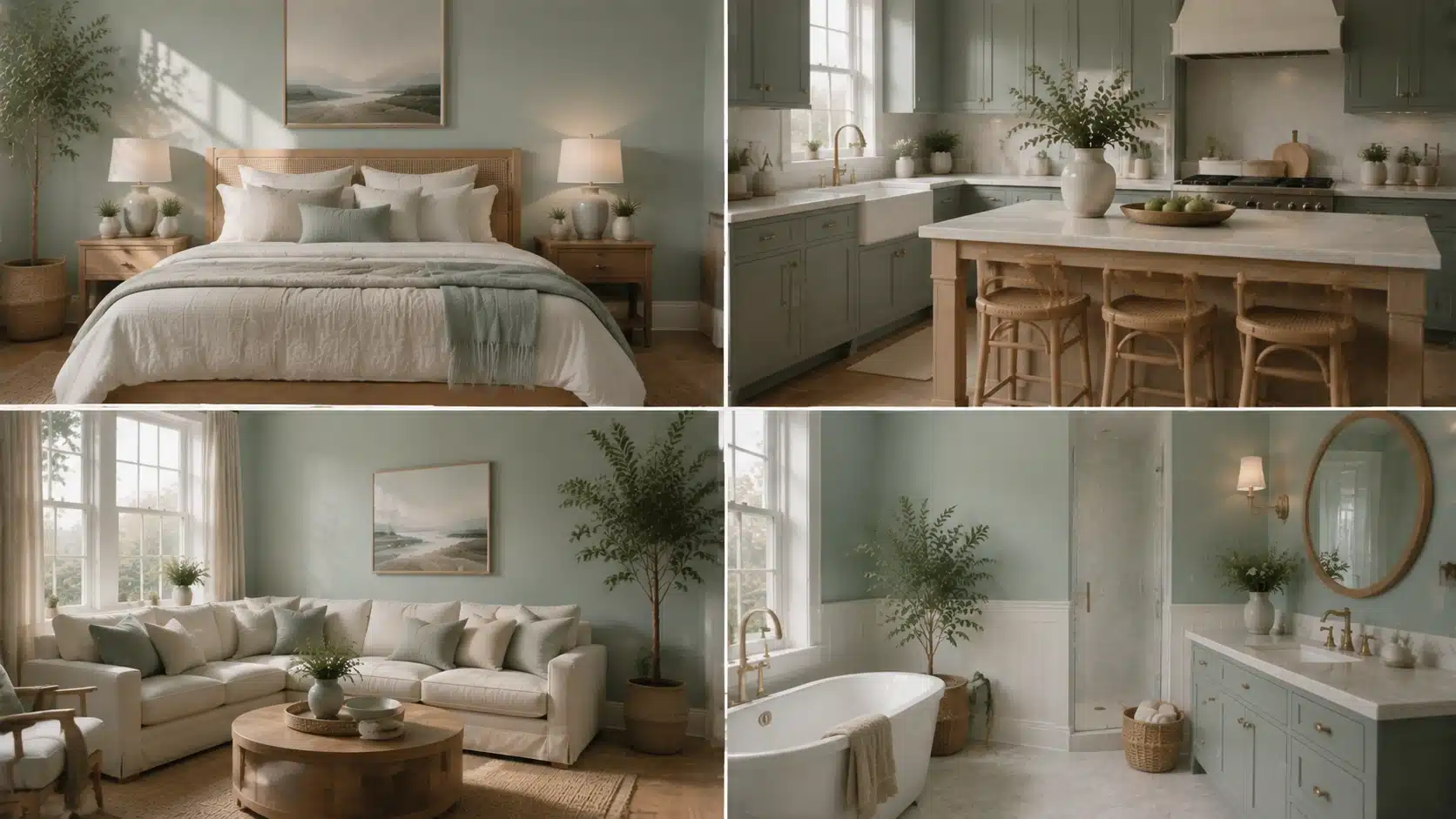
Quick summary: Benjamin Moore Beach Glass is a muted blue-green-gray shade that changes subtly with lighting and surrounding colors. Benjamin Moore Beach Glass is the kind of paint color that can look soft and coastal in one room, then slightly cooler or greener in another. That versatility is part of its appeal, but it also means choosing it requires a closer look at undertones, natural light, surrounding finishes, and coordinating colors. This article breaks down Benjamin Moore Beach Glass 1564, including its LRV and blue-green-gray undertones. How it behaves in different lighting conditions, the best rooms to use it in, how to coordinate whites and accent colors, and how it compares with similar popular shades. What Color is Benjamin Moore Beach Glass? Benjamin Moore Beach Glass 1564 is a soft blue-green paint color with a gray undertone that keeps it from ever looking too bright or too tropical. This shade sits in Benjamin Moore’s blue-green family, but it is not the bright aqua or classic beachy turquoise that its name might suggest. It reads as a muted, weathered blue-green with a gray cast, closer to the color of real sea glass than a swimming pool. Depending on lighting, some rooms will pull more blue while others lean slightly green, but the gray keeps both extremes in check. Benjamin Moore’s own product page describes it as a calming blue with a gray undertone, adding versatility to the shade. Color details Feature Details Paint brand Benjamin Moore Color name Beach Glass Color number 1564 Color family Blue-green LRV 49.7 Overall feel Calm, coastal, muted Benjamin Moore Beach Glass Undertones Undertones are the quiet influence sitting beneath the main color, and they are what make this shade a bit of a chameleon. Here is how each one shows up. Gray undertone: The gray keeps the color from ever feeling tropical or overly saturated. It softens the color and gives it a more grown-up, sophisticated quality, which is part of why it works in so many different design styles. Blue undertone: In cooler, north-facing light, the blue becomes more obvious. This is when the color leans closest to a true sea-glass blue, with an airy, almost weightless feel. Green undertone: Warm, direct sunlight tends to coax out the green side of the color. Paint experts who specialize in undertone analysis note that this warm-light shift is what gives the color its sea-glass character in south-facing rooms. Is Benjamin Moore Beach Glass Blue or Green? If you are trying to decide whether this color leans more blue or green, it can be a little hard to pin down at first. It is technically a muted blue-green, but on the wall it often reads more like a soft sea-glass blue. Its gray undertone keeps it from looking too teal or too close to seafoam. The gray undertone is what stops it from reading as a true teal or seafoam shade. How it compares to similar blues and greens: Color How it differs from Beach Glass Beach Glass Soft blue-green with gray Palladian Blue Brighter and more distinctly blue Healing Aloe Lighter and softer overall Quiet Moments Lighter, with an LRV close to 61, and leans slightly more blue Benjamin Moore Beach Glass LRV and Light Performance LRV, or light reflectance value, measures how much light a paint color bounces back into a room versus how much it absorbs. The scale runs from 0 (pure black) to 100 (white). This color has an LRV of 49.7, according to the official listing of Benjamin Moore, which places it almost exactly in the middle of the scale. North-facing rooms: Cooler, indirect light pulls the color deeper and grayer, and some of that airy, coastal quality fades. North-facing rooms never get direct sun, so the color settles into a moodier, more subdued side. South-facing rooms: Direct sun keeps the color feeling fresh and calming, and its blue-green tones read clearly without looking washed out. The strong, warm light in south-facing rooms tends to bring out the green side rather than the blue. East-facing rooms: Morning sun brings a brief window of warmth, so the color can look slightly greener early in the day before settling into a cooler, more blue-gray tone for the rest of the afternoon. West-facing rooms: Afternoon and evening sun bring the strongest warm light of the day, which can push the color toward its greener, warmer side as the sun gets lower in the sky. How Lighting Conditions Change the Look of Beach Glass Beyond room orientation, the type and intensity of light in a space play a big role in how the color performs day to day. Darker rooms: The color pulls deeper, grayer, and cooler, losing some of its lighter coastal quality when natural light is limited Lighter, sun-filled rooms: It reads fresh and clear, with the blue-green tones showing up most true to their intended shade. Warm bulbs: Warm-toned lighting emphasizes the green side of the color, giving it a slightly more sea-glass, earthy feel indoors. Cool LED bulbs: Cooler artificial light highlights the blue-gray side, making the color feel crisper and more subdued. Designer tip: Test the color on at least two walls in the room, ideally one that gets direct sun and one that does not, since the same gallon can look noticeably different depending on exposure. Where to Use Benjamin Moore Beach Glass in Your Home This color adapts well across the home, from calm living spaces to spa-style bathrooms, though its best use depends on light, function, and nearby finishes. 1. Living Rooms with Benjamin Moore Beach Glass This shade creates a relaxed, easygoing backdrop that works well with natural textures like linen, rattan, and light wood tones. It is calm enough to live with daily without feeling monotonous. In larger living rooms with plenty of natural light, it can anchor the whole space without competing with furniture or artwork. It also works well on a single accent wall for those who want the color without committing to a full room. 2. Bedrooms with Benjamin Moore Beach Glass Because it leans more toward soothing than energizing, it is a popular bedroom choice. Pairing it with soft white or warm cream bedding helps balance its cooler undertone. It tends to work best in bedrooms that get some natural light during the day, since darker bedrooms can make the color feel flatter and less restful. Layering in warm-toned nightstands or lamps also helps keep the room from feeling too cool at night. 3. Bathrooms with Benjamin Moore Beach Glass This is one of the most popular applications for the color, since its blue-green, water-inspired quality suits spa-style bathrooms especially well. It pairs naturally with white tile, marble, and brushed metal fixtures. Because bathrooms often rely more heavily on artificial lighting, it is worth testing the color under the room’s actual vanity lights before committing. This helps confirm whether it leans more blue or green once the sun goes down. 4. Kitchens with Benjamin Moore Beach Glass This shade also works as a cabinet color, particularly when the surrounding walls stay lighter and neutral. Warm hardware finishes, such as brass or bronze, help offset its cool base. It also pairs well with butcher block or light wood countertops, which help balance out the coolness of the paint. For kitchens with limited natural light, keeping the walls a shade or two lighter than the cabinets helps the space feel open. Colors That Pair Well with Benjamin Moore Beach Glass The right trim and accent colors can make this shade feel warmer, cooler, brighter, or more grounded, depending on the look you’re going for. Best White Trim Colors The right white trim can either soften the cool undertones of this shade or create a sharper contrast around doors, windows, and architectural details. Benjamin Moore White Dove: Adds warmth and prevents the overall palette from feeling too cool. Benjamin Moore Simply White: Creates a cleaner, crisper contrast against the blue-green walls. Benjamin Moore Super White: Gives the room a more modern, high-contrast finish. Benjamin Moore’s coordinating suggestions also include whites such as Snow White OC-66 and Super White OC-152, giving you additional options for creating a balanced color scheme. Overall, the best trim color depends on how much contrast you want. Softer whites create a warmer transition, while crisp whites highlight the wall color’s blue-green character. Best Accent Colors for Benjamin Moore Beach Glass Choosing the right accent colors can help this cool-toned shade feel more balanced and connected to the rest of the room. The best pairings either add warmth, create subtle contrast, or build on its soft coastal character. Navy Blue: Adds depth and a bit of drama without clashing with the cooler base tone. Warm wood tones: Balance the cool undertones and keep the space from feeling sterile. Soft beige and greige: Create a quiet, layered coastal palette that feels soft and cohesive. Natural greens: Reinforce the organic, sea-glass feel of the color and work especially well with plants and natural materials. Overall, these accent colors help bring out different sides of the shade. Navy creates contrast, wood adds warmth, and softer neutrals and greens keep the palette calm and natural. Benjamin Moore Beach Glass Compared with Similar Colors Beach Glass has good company among other Benjamin Moore blue-greens, and seeing how it stacks up can help confirm it’s the right fit before buying a sample. Paint color Difference from Beach Glass Benjamin Moore Quiet Moments Lighter and slightly softer, with a higher LRV near 61 Benjamin Moore Healing Aloe More muted and gray overall Benjamin Moore Palladian Blue Brighter and more clearly blue Benjamin Moore Mount Saint Anne Deeper and more saturated Benjamin Moore Night Mist Leans more green-gray and reads slightly lighter Benjamin Moore Iced Marble Very close in tone and often used as a match Of all these options, Beach Glass still stands out for its balance. It is neither as light as Quiet Moments nor as saturated as Mount Saint Anne, which is part of why it remains such a versatile, easy-to-live-with choice. What Not to Use with Benjamin Moore Beach Glass Choosing it without testing samples: Screen colors and in-store chips rarely match how a paint color behaves on an actual wall. A physical sample tested at home is the only reliable way to judge it. Using too many cool colors: Pairing this color with an entirely cool-toned room, including cool grays, cool whites, and chrome fixtures, can make the space feel cold rather than calm. Ignoring lighting direction: Because it sits at a mid-range LRV, the room’s light exposure has an outsized effect on how the color reads throughout the day. Pairing it with the wrong whites: Some stark, blue-based whites can make the color look flatter and more blue-gray than intended. Warmer whites tend to soften that effect. Is Benjamin Moore Beach Glass a Good Paint Color? Overall, Beach Glass earns its popularity. It suits many homes and styles, though like any mid-tone color, it rewards some planning around lighting and trim choices. Pros Cons Calm and versatile across multiple design styles Can shift noticeably depending on the room’s lighting Softer and more livable than a traditional bold blue May feel too cool in rooms with limited natural light Works well with both warm and cool accent colors Requires more careful trim selection than a true neutral Adds color to a room without overwhelming it Can look different across an open floor plan with varied light In the end, Beach Glass remains a dependable, versatile choice for homeowners seeking a calm, coastal-inspired color that adapts to nearly any room, style, or lighting condition. Testing at Different Times of Day Paint behaves differently under morning, afternoon, and evening light. Morning light tends to bring out the cooler blue-gray side of this shade, midday sun softens it toward green, and evening artificial light can deepen it slightly. Viewing a sample across all three helps avoid surprises after the whole room is painted. Real home application examples A Beach Glass bathroom vanity paired with brushed nickel hardware A single Beach Glass accent wall behind a bed with warm wood furniture Living room walls in Beach Glass paired with oak floors and linen upholstery Frequently Asked Questions Is Benjamin Moore Beach Glass Warm or Cool? It leans cool overall, thanks to its gray and blue undertones, though warm natural light can bring out softer green notes throughout the day. What is the LRV of Benjamin Moore Beach Glass? Benjamin Moore Beach Glass 1564 has an LRV of 49.7, placing it in the medium range of the light reflectance scale. Does Benjamin Moore Beach Glass Look Green? It can, particularly in warm, direct sunlight, but most homeowners describe it as a muted blue-green rather than a true green. What White Goes Best with Benjamin Moore Beach Glass? White Dove, Simply White, Snow White, and Super White are all strong options, depending on whether the goal is warmth or crisp contrast. Is Benjamin Moore Beach Glass Good for a Bathroom? Yes. Its soft, water-inspired blue-green tone pairs especially well with white tile, marble, and spa-style design details. Making Beach Glass Work in Your Home Benjamin Moore Beach Glass is the rare paint color that never quite settles, it shifts with the morning light, changes when a lamp turns on, and responds to every piece of furniture placed nearby. That quiet unpredictability is exactly what makes it worth living with. Test it on two walls, check it at different times of day, and pair it with a warm white trim before committing. Do that, and Beach Glass tends to earn its place on the wall, not just for one season, but for years.
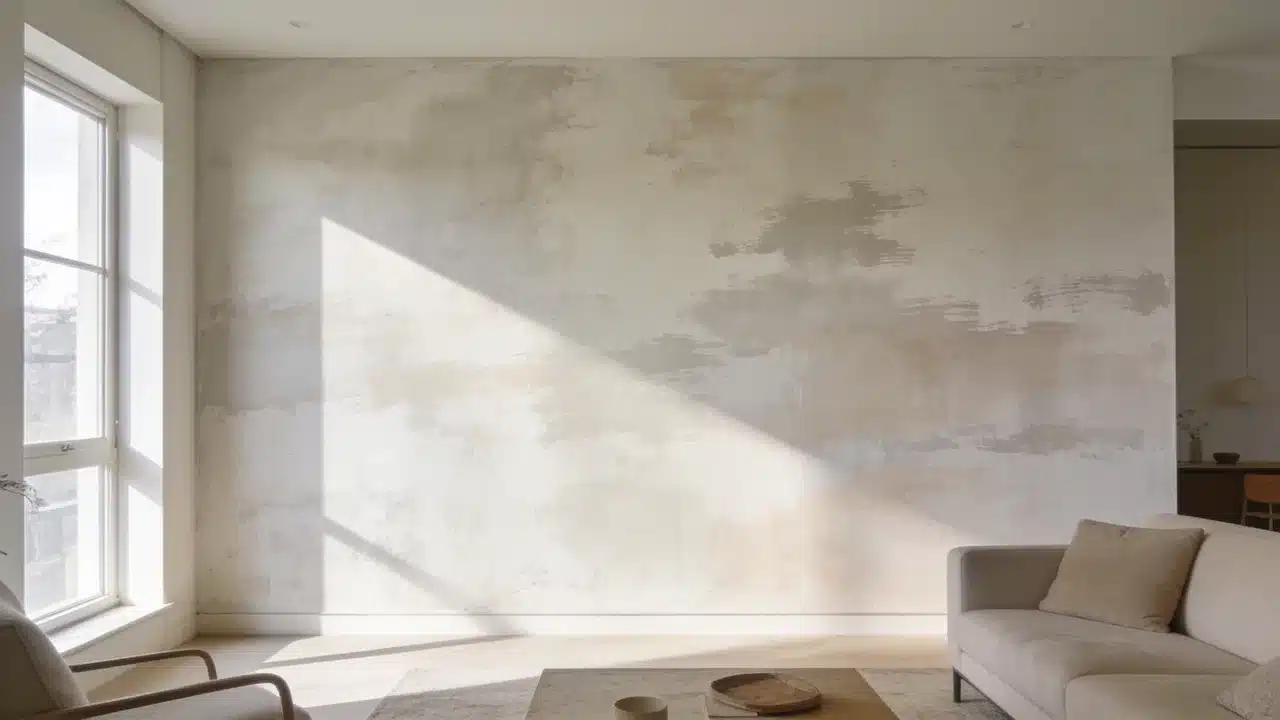
Limewashing walls starts with preparing the surface and applying thin mineral-based layers with a block brush. Random crisscross strokes create the cloudy variations that define this finish. The appeal comes from how the color changes as lighting shifts throughout the day. A wall that reads soft white at noon can look warm and shadowed by late afternoon. After a decade working with color, I have found that this changing appearance is one reason homeowners connect with limewash. The process involves preparing the wall, applying multiple coats, and caring for the finished surface. What is Limewash Paint and How Does It Work? Limewash is one of several textured wall finishes unlike regular paint, which creates an even surface with a consistent sheen, it’s applied in thin, semi-transparent layers that leave visible brushstrokes. Limewash is applied in thin, semi-transparent layers, allowing brushstrokes and color variation to remain visible. The brushwork stays visible in the final coat. That variation is the point. Color behavior matters here. The paint appears darker when wet and noticeably lighter once dry. Adding extra paint too early can reduce the soft variation that gives limewash its character. Let each layer dry fully before assessing the wall. Tools and Materials Needed to Limewash Walls Collect all materials before starting. Limewash dries differently from standard wall paint, so stopping halfway across a wall can create visible transition marks. Item Purpose Limewash paint Creates the textured finish Mineral primer Helps limewash bond with walls Block brush Creates the signature movement Drop cloth Protects floors Painter’s tape Protects edges Stir stick Keeps paint consistent Spray bottle Helps maintain a wet edge How to Prepare Walls for Limewashing Proper preparation helps limewash absorb evenly and creates a more consistent finish. Skipping any of these steps affects the final result. Clean and Repair the Wall: Remove dust, grease, and dirt with a damp cloth and mild cleaner. Fill holes with patching compound. Let everything dry before priming. Prime the Surface: New drywall requires mineral primer. Previously painted walls need primer only if the existing finish is glossy or in poor condition. Highly porous surfaces can absorb limewash quickly, resulting in uneven color if not properly prepared. Test the Color and Finish: Apply a sample patch to the actual wall. This finish reads differently at 7 am than at 7 pm. Check both before committing. How to Limewash Walls Step by Step Follow the order carefully because preparation, drying time, and application technique all affect the final appearance. Step 1: Prepare the Limewash Paint Stir thoroughly for at least two minutes before use. Follow the product’s dilution instructions if thinning is required. Pour the paint into a clean application bucket and stir again. Continue stirring during application to maintain an even consistency. Settled paint creates uneven coverage and color variation across the wall. Step 2: Apply the First Coat Using the Limewash Technique Load the block brush about a quarter of the way up the bristles. Apply using loose, unstructured crisscross strokes from the center of each section. Keep a wet edge throughout and work in small sections. Deposit most of the paint at the center and feather outward to blend the edges. Do not aim for full coverage on the first coat. Step 3: Add Additional Layers for Depth Let the first coat dry fully before adding a second coat, typically 12 to 24 hours, depending on humidity and temperature. The wall will look darker when wet and lighter when dry. Apply each additional coat using the same crisscross technique. Two coats suit most walls. A third thin coat adds consistency where needed. Step 4: Finish, Cure, and Evaluate the Wall Remove painter’s tape once the final coat dries. Stand back and assess the full wall in both morning and evening light before deciding if another coat is needed. Allow full curing before touching the surface. Mist lightly if the manufacturer recommends it. A matte sealer is optional but adds protection in high-traffic areas. Limewash Wall Care and Maintenance Limewash walls require less maintenance than many traditional painted surfaces. Keeping water exposure to unprotected areas to a minimum is what matters most. For cleaning, use a dry or barely damp cloth. Strong cleaners strip the finish. For repairs, apply a thin layer of the original product over the affected area. Feather the edges using the same crisscross approach as the original coat. Sealing is optional. A matte sealer adds protection in high-traffic areas. Without sealer, the surface may change gradually as it ages. How to Choose Limewash Colors for Different Rooms Limewash changes with lighting, so a shade can look different throughout the day. This helps reveal how the color responds to morning and evening light. Bedrooms: Soft neutrals like warm white, beige, and muted taupe work well. These shades create a calm backdrop while keeping the limewash texture visible. Living Rooms: Warm earth tones such as sand, clay, soft brown, and muted olive pair well with natural materials and add depth to larger spaces without feeling heavy. Small Rooms: Lighter shades like soft cream, pale beige, and light gray can help small rooms feel more open. Always test the color first, because limewash can appear stronger across an entire wall. Low-Light Rooms: Avoid very cool shades in rooms with limited sunlight, as they can make the space feel cold. Warmer neutrals and earthy colors usually work better under softer lighting. Can You Paint Over Limewash? You can paint over limewash after checking the surface condition and preparing it for the new coating. Run a hand over the existing wall. If material transfers, the layer must be stabilized before anything is placed on top. Remove loose or dusty limewash, or stabilize it before applying primer and new paint. Clean the wall with a damp cloth, then let it dry completely. Apply a suitable primer before the new paint. Water-based paints tend to work over primed limewash. Oil-based products need a compatible intermediate primer. Mistakes to Avoid When Limewashing Walls These common issues usually arise from problems during preparation or application. Mistake Cause Fix Finish looks streaky Too much paint applied Use thinner layers Texture looks flat Not enough stroke variation Add another coat Paint color does not stick Poor surface preparation Prime correctly first Color looks wrong Assessed before full drying Wait until completely dry Application lines visible Wet edge lost mid-wall Work faster and maintain wet edge Frequently Asked Questions What are The Disadvantages of Limewash Paint? Limewash may require more preparation than regular paint, and the final color can be difficult to judge until each coat has fully dried. Does Limewash Paint Need a Primer? Primer is recommended on new drywall, glossy surfaces, and highly porous walls to improve adhesion and create more even absorption. How Long Does Limewash Last on Interior Walls? A properly applied limewash finish can last for years indoors when protected from excessive moisture and cleaned gently. Can You Apply Limewash with a Roller? A roller can speed up coverage on large areas, but a block brush creates the natural variation and texture associated with limewash. What Surfaces Can be Limewashed? Limewash works best on porous surfaces such as plaster, brick, and mineral-based walls that allow the finish to be properly absorbed. Happy Reading The process for limewashing walls is more forgiving than most paint techniques. Variation is the point, and a perfectly even coat works against the finish. Get surface preparation right, use the crisscross stroke, and let each layer dry before assessing the color. The finish looks different at 7 am than at 7 pm. That movement is part of what makes it worth the effort. Try a small section first to test the technique. Share the result in the comments once done.
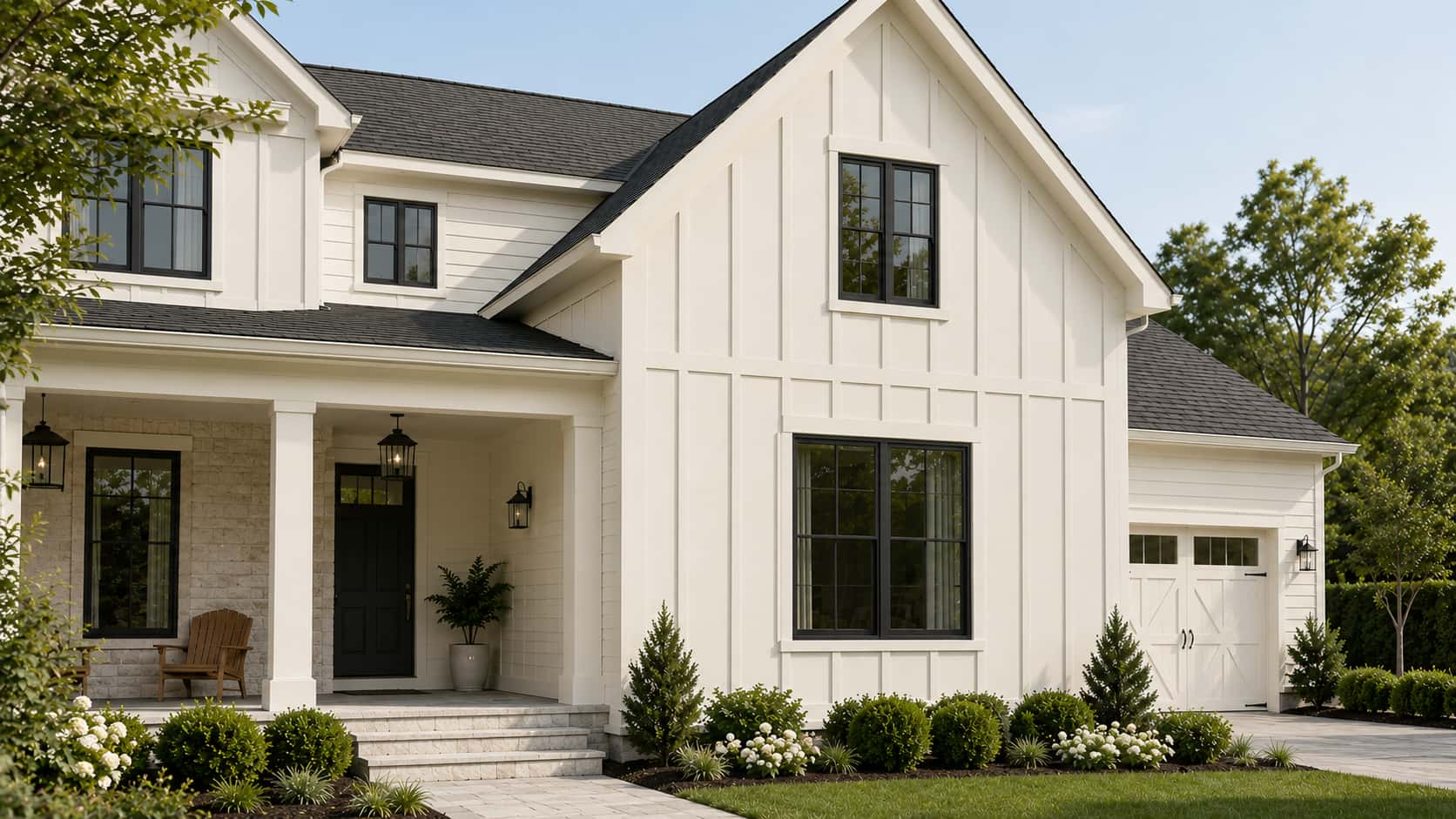
Color Name White Duck SW 7010 Brand Sherwin-Williams LRV 74, medium-light; reflects well without washing out Undertones Creamy beige with a soft greige pull; occasionally a faint pink in certain lighting Best For South- and west-facing rooms, exteriors, kitchens with warm wood, open-plan spaces Avoid In North-facing rooms with no warm lighting, spaces with cool gray floors or blue-gray tile Picking a white paint color sounds simple until you’re staring at 47 swatches that all look identical in the store. White Duck Sherwin Williams is one of those colors that genuinely surprises people; it reads differently depending on your light, your flooring, and your existing décor. It’s warm without being yellow, neutral without being cold, and versatile enough for both interiors and exteriors. If you’ve been going back and forth between creamy whites and greige neutrals, this color might be sitting right in your sweet spot. I’ll keep things practical here, with undertones, lighting, pairings, exterior use, and the Shoji White comparison covered clearly. What Sherwin-Williams White Duck SW 7010 Actually Looks Like on Your Walls Sherwin-Williams White Duck SW 7010 is a warm off-white that sits between a true white and a light greige, creamy without reading yellow, neutral without going cold. If you’ve been going back and forth between soft creams and warm neutrals, this color lands right in that overlap. At an LRV of 74, it reflects a solid amount of light while keeping enough depth to look intentional rather than washed out. A step warmer than Natural Choice SW 7011 and noticeably softer than a bright white, it sits in a genuinely useful middle range. I’ve placed White Duck in everything from sunny open-plan kitchens to dimmer east-facing bedrooms, and the results depend almost entirely on what surrounds it: your light, your trim, and your flooring matter here more than they do with most whites. White Duck Undertones and Lighting Effects Lighting strongly affects how Sherwin-Williams White Duck looks in a real home. This warm off-white has creamy beige and soft greige undertones, so it can shift between warm white, light beige, and muted greige depending on the room. Because White Duck is not a crisp white, it should be tested beside flooring, trim, cabinets, counters, and exterior materials before painting a full space. Check the sample in the morning, afternoon, evening, and at night so you can see how much warmth or depth appears throughout the day. In Natural Light Natural light can make White Duck look lighter, warmer, creamier, or more muted based on the direction of the room. In bright spaces, it often looks soft and clean. In shaded spaces, its beige and greige tones may become more noticeable. North-facing rooms: The light is usually cooler and softer. White Duck may look more muted, greige, or slightly beige in these rooms. It can still feel calm and cozy, but it works best with warm lighting, natural wood, soft white trim, and warm decor to keep the space from feeling dull. South-facing rooms: South-facing rooms get warmer daylight for much of the day. This light can make White Duck feel brighter, creamier, and more welcoming. It is one of the easier lighting conditions for this color because the natural warmth makes the paint look soft rather than flat. East-facing rooms: East-facing rooms get bright morning light, which can make White Duck look fresh and softly warm early in the day. As the light fades, the color may look more beige or greige. Warm bulbs can help keep the room feeling balanced later. West-facing rooms: West-facing rooms get stronger afternoon and evening light. During this time, White Duck can look warmer, creamier, and a little richer. This makes it a good choice for living rooms, bedrooms, dining rooms, and spaces where a cozy evening feel matters. In Artificial Light Artificial lighting can significantly change White Duck after sunset. Warm white bulbs can bring out more of its creamy beige side, making the room feel softer and cozier. Cool LED or daylight bulbs can make White Duck look flatter, grayer, or less warm. If you want the color to stay balanced, soft white bulbs are usually the safest choice. Layered lighting also helps White Duck look better. Use ceiling lights, table lamps, floor lamps, or wall sconces together so the color feels even across the room. This keeps White Duck looking soft, warm, and comfortable during the day and at night. Pro Tip: Before sampling on a wall, tape the chip next to your flooring, your trim, and the largest fixed surface in the room. White Duck’s undertones shift based on what surrounds it more than almost any other color in this range. The chip alone will not tell you what you need to know. Shoji White vs White Duck: Which One Do You Actually Need? These two come up together constantly, and with good reason — they’re close. But they’re not interchangeable, and getting this wrong means a repaint. Feature White Duck SW 7010 Shoji White SW 7042 LRV 74 74 Undertones Creamy beige with soft greige Warm cream with greige depth; occasional faint pink Overall Feel Slightly cleaner, more balanced Warmer, cozier, slightly richer Best For Exteriors, open-plan walls, cabinets Cozy interiors, bedrooms, spaces that need warmth Watch Out For Can look beige beside cool finishes Can look too warm or muted in low light The honest answer: if you want a soft off-white that reads a bit cleaner and works as well outside as it does inside, White Duck is the call. If you want more cozy warmth and you’re staying interior, Shoji White often suits a wider range of fixed finishes. Test both on the actual wall before committing, the difference between them is exactly subtle enough to read clearly only once they’re up. Choosing the Right Finish for White Duck Finish changes how White Duck reads on the wall, a higher sheen intensifies the undertones, while matte and flat finishes keep it soft and even. How paint sheens behave in different lighting conditions matters more with a warm off-white like White Duck than with most mid-tone colors, because sheen directly amplifies whether you see cream or greige on the wall. The right choice depends on the room’s traffic, moisture level, and how much shine you want. Finish Best For Why It Works Flat / Matte Bedrooms, ceilings, low-traffic walls Softest look; hides imperfections well; keeps White Duck from looking shiny Eggshell Living rooms, hallways, family rooms Balanced softness with light washability; most common choice for main walls Satin Kitchens, bathrooms, trim, doors Washable and durable; handles moisture without compromising the warm tone Semi-Gloss Cabinets, doors, exterior trim Hardest finish for high-contact surfaces; clean contrast at edges One note on trim: White Duck is generally not my recommendation as an interior trim color. At LRV 74, it’s deep enough that it won’t create meaningful contrast against most wall colors. Use it on the walls and bring the trim up, Pure White (SW 7005) or Extra White (SW 7006) create the clean separation that lets White Duck read as the warm wall it’s meant to be. Where White Duck Works Best, Room by Room White Duck is flexible, but it performs differently depending on the room’s light, fixed finishes, and how much warmth the space already carries. Here’s where it does its best work and what to pair it with in each space. Living Room White Duck creates a relaxed, livable backdrop in a living room. It works particularly well with linen sofas, wood coffee tables, black frames, woven rugs, and warm white curtains. Because it reads light without looking stark, it doesn’t compete with furniture — it recedes and lets the room breathe. In open-plan spaces, this color moves well through living, dining, and entry zones without getting tired. Bedroom In a bedroom, White Duck is quiet in the best way. It pairs naturally with white bedding, beige or taupe throws, wood nightstands, and muted green accents. Warm enough to feel cozy at 10pm under soft lighting, clean enough to feel fresh at 7am when the morning light comes in. For bedrooms, flat or matte finish is the call — it keeps the color soft and absorbs rather than reflects the overhead light. Kitchen White Duck on kitchen cabinets works well when the surrounding finishes are warm — brass hardware, wood floors, stone countertops, and warm white backsplashes all support it. The color brings softness without making the kitchen feel dim. Where it runs into trouble is beside icy quartz, blue-gray tile, or very cool white cabinet pairings; those cooler surfaces pull out the beige side of White Duck in a way that reads less warm, more muddy. Bathroom Bathrooms with warm stone, cream tile, beige floors, brushed brass, or wood vanities are where White Duck looks most at home. In bathrooms with cool gray tile or blue-toned marble, expect the beige undertones to become more pronounced- not necessarily a problem, but worth testing with a real sample before committing. Good layered lighting is more important in bathrooms than in any other room for this color; a single overhead bulb will not give you an accurate read. Hallways and Open Layouts White Duck is genuinely good for hallways and open-plan spaces because it stays consistent across different light exposures without getting dramatic. It threads through entries, stairways, dining rooms, and living areas without changing color. That said, open layouts with a mix of warm and cool fixed finishes need a careful sample test; what looks balanced in the south-facing living room can read more beige in the north-facing hallway off the same paint can. Sherwin-Williams White Duck on the Exterior Choosing a Sherwin-Williams White Duck exterior finish gives your home a soft white look that reads warm without the harshness of a bright white in direct sun. Its creamy beige and greige undertones help it sit naturally beside brick, stone, and wood; the color feels like it belongs rather than being applied on top. For modern farmhouse, craftsman, colonial, and transitional homes, this is a reliable exterior choice. Exterior Area Best Use Why It Works Siding Whole-house body color Soft white look that holds in direct sun without glare Painted Brick Full brick or accent surfaces Warms up the brick texture without flattening it Stucco Main exterior body Softens rough texture; creates a warm, finished look Trim and Fascia Subtle contrast with deeper body colors Works when you want trim that reads soft rather than bright white Garage Doors Matching or blended with siding Reduces the visual weight of large garage doors from the street Shutters Paired with dark accents Warm base for black, bronze, navy, or sage shutters The critical exterior testing note: sample White Duck on more than one side of the house. In direct sunlight, it reads as a clean, soft white. In shade, the north-facing wall, the covered porch, the areas under the roofline, the greige and beige pull forward. Both reads can work beautifully, but you want to see them before painting the whole house. For the strongest exterior contrast, pair it with a near-black like Greenblack for contrast on shutters, doors, and trim, the warm white and deep near-black combination is hard to get wrong. What People Discuss About Benjamin Moore White Dove Reddit user was overwhelmed by the paint selection process and worried that most creamy whites would look too yellow or dirty, or clash with orange-toned wood flooring. After trying different options, they chose Sherwin-Williams Creamy and were pleasantly surprised by how balanced and versatile it looked. Another Reddit user joined the discussion and specifically recommended Sherwin-Williams White Duck, noting that it is one of the brand’s strongest white paint colors and a reliable choice when searching for a warm off-white that works with a variety of finishes and lighting conditions. The conversation highlights how White Duck is often suggested by homeowners seeking a soft, warm white that avoids the harshness of bright whites yet remains flexible enough for different spaces. Coordinating Colors That Work With White Duck White Duck’s warm off-white base pairs best with colors that add warmth, depth, or contrast without pushing toward yellow or cool gray. Since it sits at LRV 74, it can hold its own against both light neutrals and deeper accent colors without disappearing. If you’re still deciding between White Duck and other options in this range, the broader comparison of warm white paint colors lays out how the whole family behaves side by side. Coordinating Color Code LRV Best Use With White Duck Accessible Beige SW 7036 58 Adjoining rooms; soft whole-home palette Natural Linen SW 9109 66 Layered neutral palette for bedrooms and living rooms Urbane Bronze SW 7048 8 Doors, shutters, accent walls, exterior accents Dried Thyme SW 6186 21 Cabinets, shutters, accent walls Tony Taupe SW 7038 37 Accent walls, adjoining rooms, exterior trim Use Accessible Beige or Natural Linen when you want a layered, soft neutral palette that moves between rooms without contrast. Reach for Urbane Bronze, Dried Thyme, or Tony Taupe when you need depth and contrast that White Duck’s warmth can anchor without being overwhelmed. When NOT to Use White Duck White Duck is versatile, but it has limits. These are the situations where it consistently underperforms, and where a different color would serve you better. Rooms with predominantly cool gray flooring will pull out the muted, beige side of White Duck, and the walls can end up looking dull rather than warm. Spaces with blue-gray tile, cool quartz countertops, or silver-toned fixtures have the same problem: the cool finishes win, and White Duck looks like it can’t decide what it wants to be. Very bright white trim– particularly cool whites like Chantilly Lace (BM OC-65), can make White Duck look darker or creamier than intended, especially in rooms where the trim is a dominant visual element. That’s not always a bad thing, but it’s rarely what people expect when they choose White Duck for its soft white quality. Basements and rooms with no natural light are a risk. White Duck’s warmth is an asset in light-starved spaces, but without the right artificial lighting setup, soft white bulbs, and layered sources, it can read more beige and flat than you’d want. If the artificial lighting can’t be improved, consider a lighter option like Alabaster (SW 7008) at LRV 82. Finally, if you’re expecting a true crisp white, White Duck will not deliver that. At LRV 74 with a creamy greige base, it is a deeper, warmer off-white by design. Going in with that expectation prevents the most common source of disappointment with this color. Mistakes to Avoid With White Duck SW 7010 Testing White Duck paint without proper sampling can lead to unexpected color shifts on your walls, exteriors, and trim. Relying on digital screens: Monitor settings and photo editing distort the color, causing a soft white to look beige in person. Pairing with warm trim: Matching it with Alabaster blends the tones together, creating a flat look instead of crisp separation. Testing one exterior spot: Different lighting conditions cause north-facing walls to look greige while south-facing walls look much brighter. Always test your paint swatches in multiple locations and different lighting environments to ensure you love the final results. How to Sample White Duck the Right Way A careful sample process is the difference between getting White Duck right and repainting a room three months later. Here’s what I recommend before buying the gallons. Buy the actual sample pot, not a peel-and-stick chip. Samplize and similar services are useful, but nothing replaces painting two large swatches, at least 12 by 12 inches, directly on different walls in the same room. Check those swatches at 7 am, noon, 5 pm, and again at 9 pm under your actual lighting. That sequence tells you more about how White Duck will behave in your space than any chip or digital swatch can. Place the swatches next to your real furniture, rugs, flooring, and cabinets, not on an empty wall in a stripped room. The color reads entirely differently when it’s surrounded by the fixed finishes it’ll actually live with. Check it against your trim color specifically; that relationship determines whether the undertones read as intentional warmth or as a muddy, indecisive beige. Let the paint dry completely before judging it; wet White Duck reads darker and warmer than the final dried result. Frequently Asked Questions About Sherwin-Williams White Duck Can you use White Duck on ceilings? Yes. Using it on ceilings creates a cohesive, wrap-around feel in large spaces. Pair it with Matte or Flat finish to soften the room’s corners, prevent glare from artificial lights, and mask minor drywall imperfections without making the ceiling feel too low or heavy. Does it look yellow in low-light basements? Instead of shifting yellow, White Duck leans flat and muddy in dark basements. Without natural sunlight, its greige undertones take over, turning the color a shadow-like beige. You will need strong, layered 3000K lighting to keep it looking like a fresh, warm off-white. How does White Duck handle wood rot or exterior grime? Its medium-light depth hides dust, pollen, and minor outdoor scuffs much better than a bright, crisp white. While it will not mask severe wood rot, the subtle greige baseline helps your exterior siding look cleaner for longer between seasonal power washings. Will it clash with trendy black steel windows? Not at all. It provides a stunning, high-contrast backdrop for modern black window frames. The inherent warmth of the paint softens the industrial look of the black steel, creating a balanced, contemporary facade that feels inviting rather than stark or clinical. Does White Duck work well in nursery spaces? It is an excellent choice for a calming nursery backdrop. The neutral base grows easily with your child, shifting effortlessly from soft pastel decor to vibrant toddler bedding without requiring a repaint. It stays peaceful under dim nightlight conditions. Can it be used for color-drenching a room? Color-drenching walls, trim, and doors in White Duck works beautifully if you vary the sheens. Apply Satin to the trim and Satin or Semi-Gloss to doors while keeping walls Eggshell. This maintains monochromatic harmony while preventing the architectural details from completely disappearing. Final Thoughts White Duck proves that a soft white can feel warm, clean, and practical when it complements the surrounding space. I like how it gives you a gentle off-white look without the sharp feel of a bright white. You just need to watch its creamy beige and greige undertones, especially near trim, flooring, lighting, brick, stone, and roof colors. The room-by-room notes, finish tips, exterior ideas, and sampling steps all point to one thing: test first. That small step helps you avoid costly mistakes and choose with more confidence. If White Duck Sherwin Williams paint is on your list, try a real sample and share how it looks in your home, or check a related paint color review next.
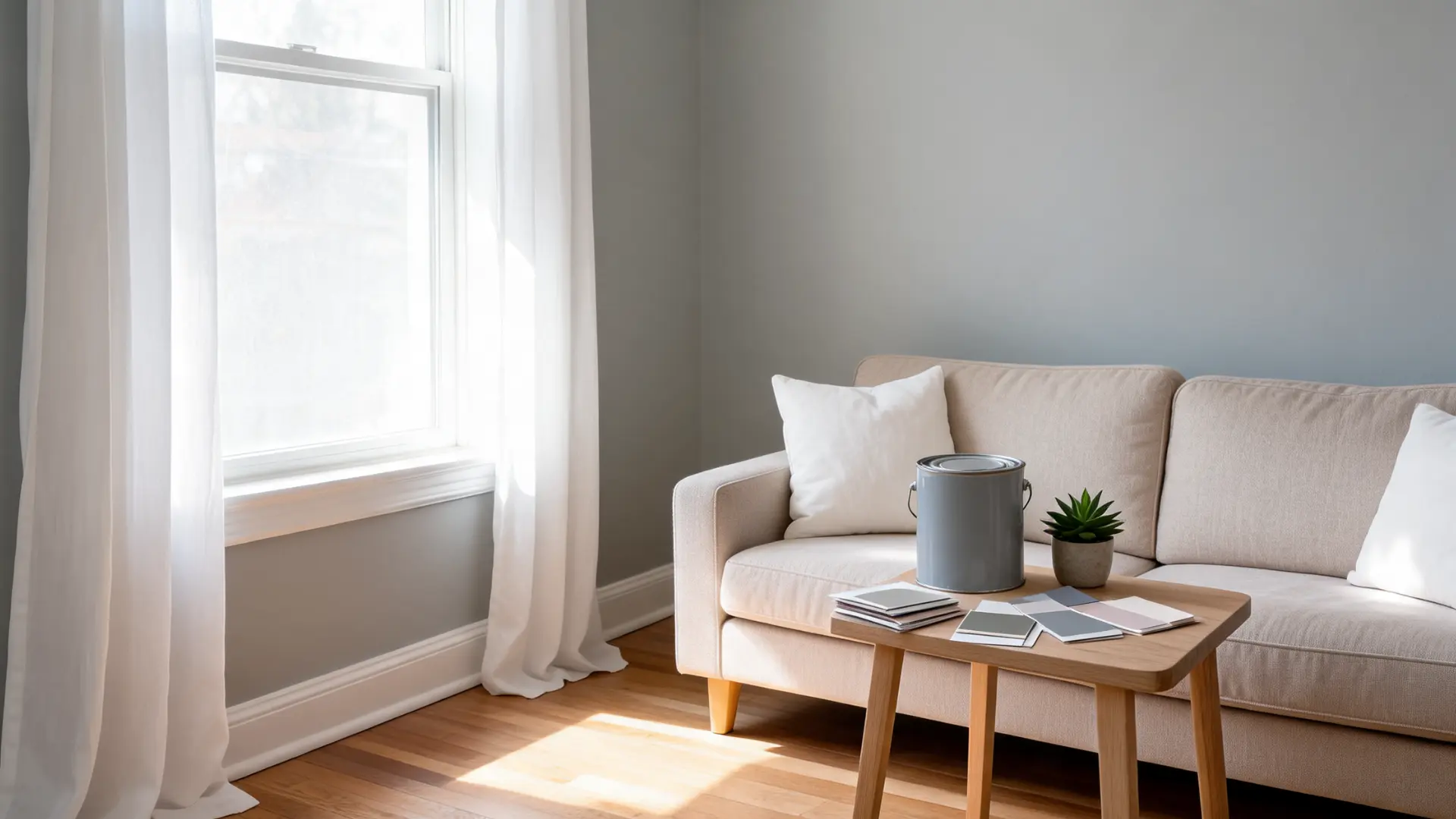
Benjamin Moore Gray Owl is a light gray paint color with a cool, crisp feel that shifts with lighting and surrounding finishes. It is often labeled as Gray Owl OC-52 or 2137-60, both of which refer to the same shade. I came across this color while comparing neutral paints for different rooms, and I noticed how easily it changes tone from space to space. I find it works best for me when tested on walls instead of relying on screens or chips. My focus here is to help you understand how it behaves in real rooms, from bright spaces to low-light corners. Small changes in trim, flooring, and light can make it look different, so sample testing before final paint choice matters Understanding Benjamin Moore Gray Owl Before choosing Benjamin Moore Gray Owl, check the key color details in one place. This quick table helps you confirm the right shade, compare samples, and understand the main paint information before buying. Detail Gray Owl Information Color Name Gray Owl Brand Benjamin Moore Color Codes OC-52 And 2137-60 LRV 64.51 Hex Value #D3D4CC Official Description A use-anywhere light gray with a cool, crisp cast Collections Off White Collection And Color Preview® Also Known As Gray Owl OC-52 / Gray Owl 2137-60 Buying Options Store locator, samples, paint, color chips, and digital dollop With an LRV of 64.51, Gray Owl sits in the light gray range. It is not white, but it can help a room feel brighter than deeper gray paint colors. Are Gray Owl OC-52 And 2137-60 The Same Color? Quick Answer: Yes, Gray Owl OC-52 and Gray Owl 2137-60 are the same Benjamin Moore paint color. They are not two separate shades, even though the two codes may appear on different Benjamin Moore pages, retailer listings, sample pages, or paint store systems. The difference comes from how Benjamin Moore organizes its color collections. Gray Owl OC-52 is listed with the Off White Collection, while Gray Owl 2137-60 is listed with the Color Preview Collection. Because the same color appears in more than one collection, shoppers may see either code while looking for samples, checking product pages, or asking a local retailer to mix the paint. Before buying, confirm the color name, color code, product line, and sheen. This matters most when ordering tinted paint, buying a sample, or choosing among wall, trim, cabinet, or bathroom paint. A quick check before checkout helps make sure you get Benjamin Moore Gray Owl, not a similar-looking gray. What Undertones Does Benjamin Moore Gray Owl Have? Benjamin Moore Gray Owl has soft blue-green undertones. This brief table shows how it may shift in different room conditions. Room Condition How Gray Owl May Look Cool Rooms Can lean slightly blue or feel crisper Warmer Rooms Can feel softer with a subtle green side Mixed Lighting Can shift throughout the day White Trim Often looks clean and fresh Beige Or Warm Finishes Needs testing to avoid undertone clashes Gray Owl is still a light gray, but lighting and nearby finishes can change how its undertones appear. Test a sample before buying full paint. Room Performance Of Benjamin Moore Gray Owl Benjamin Moore Gray Owl can work in different rooms, but it will not look exactly the same in every room. Lighting, trim, flooring, tile, cabinets, and sheen can all change how this light gray appears once it is on the wall. In bright spaces, Gray Owl may look clean and fresh. In darker rooms, it can feel cooler or slightly flat. Warm wood, white trim, gray tile, and artificial lighting can also pull out different sides of the color. These five room notes can help you decide where to sample it first and what to check before buying full paint. 1. Living Room Gray Owl can create a clean, soft gray backdrop in a living room without making the space feel too dark. It works well with white trim, warm wood floors, neutral sofas, black accents, and natural textures. If the room gets good daylight, Gray Owl can feel fresh and balanced. If the living room has limited natural light, it may look cooler or flatter. Warm lamps, wood furniture, and textured rugs can help soften the look. Quick Tip: Test Gray Owl behind the sofa and near the main window because these areas often show the biggest color shift. 2. Bedroom Gray Owl can feel calm and restful in a bedroom, especially with soft bedding, white or off-white trim, wood furniture, and muted accents. It gives the room a light gray base without feeling too heavy. In bedrooms with cool bulbs or north-facing light, Gray Owl may show more of its blue side. For a softer look, pair it with warm white bedding, beige linen, natural wood, or woven textures. Quick Tip: Check the sample at night with your bedside lamps on. Bedroom paint often looks different in evening lighting. 3. Kitchen Gray Owl can work well in kitchens with white cabinets, quartz counters, stainless steel appliances, chrome fixtures, and navy or charcoal accents. It can make the walls feel clean without competing with cabinets or countertops. Be careful if your kitchen has cream cabinets, beige backsplash tile, warm granite, or yellow-toned flooring. These finishes can make Gray Owl look cooler or slightly off. Quick Tip: Hold the sample beside your countertop and backsplash, not just on an empty wall. 4. Bathroom Gray Owl can look fresh in bathrooms with white tile, marble-style finishes, chrome, nickel, or clean white vanities. Its cool cast often works well because many bathroom finishes already feel crisp and light. If the bathroom has cool gray tile, Gray Owl may lean bluer. If it has beige tile or warm stone, the undertone may feel less balanced. Use a bathroom-friendly paint product for humid spaces. Quick Tip: Test Gray Owl beside the vanity, shower tile, and floor tile before buying full paint. 5. Hallway Gray Owl can brighten a hallway more than deeper gray colors, but hallways can be tricky because they often have limited natural light. In a narrow or shadowed hallway, it may look cooler, darker, or flatter than expected. If you use it in a hallway, add warm lighting and compare it with your trim color. Since hallways connect rooms, Gray Owl should also work with nearby wall colors, flooring, and doors. Quick Tip: Test it on both ends of the hallway. One side may look cooler than the other Benjamin Moore Gray Owl Paint Product Options Choosing the right Benjamin Moore Gray Owl product depends on where the paint will be applied, surface durability needs, finish preference for different rooms and surfaces, and overall usage requirements. Use Area Product Best Sheen Notes Walls Aura® waterborne Interior Paint / Regal® Select / ben® Interior Paint Matte or Eggshell Works well for bedrooms, living rooms, hallways, dining rooms, and open spaces with a soft, balanced finish. Bathrooms Aura® Bath & Spa Matte Designed for humid spaces like bathrooms, spas, and laundry rooms with added moisture resistance. Cabinets, Doors, Trim ADVANCE® Interior Paint Satin or Semi-Gloss (trim/doors), Satin or High Gloss (cabinets) Best for high-contact surfaces when properly cleaned, sanded, and primed before painting. Ceilings Benjamin Moore Ceiling Paint Flat Creates a smooth, low-sheen ceiling finish that keeps overhead surfaces subtle and clean. Matching product type and sheen to the space ensures better durability, appearance, and long-term performance of Gray Owl across walls, bathrooms, cabinets, and ceilings in any home. Overall, results matter. Official Benjamin Moore Coordinating Colors For Gray Owl Benjamin Moore lists several coordinating colors for Gray Owl. Use these bullet points as a quick starting point when planning trim, ceilings, accent walls, cabinets, or colors in nearby rooms. Super White (OC-152): Use this when you want a crisp white pairing with Gray Owl. It can work well for trim, ceilings, doors, and clean contrast. White Heron (OC-57): Choose this for a softer white option. It can feel less sharp than a bright white while still keeping the palette light. Silver Satin (OC-26): Use this for a soft, quiet neutral pairing. It works well when you want a lighter palette around Gray Owl. Taos Taupe (2111-40): Choose this when you want to add warmth beside Gray Owl’s cooler cast. It can help balance the palette. Hale Navy (HC-154): Use this for a classic dark blue accent. It can work for doors, cabinets, accent walls, or decor. Kendall Charcoal (HC-166): Choose this for a deep gray contrast. It pairs well with a stronger, more grounded look. Before choosing a final palette, test the coordinating colors beside your flooring, cabinets, counters, tile, and lighting. Gray Owl can shift slightly depending on the room. Similar Benjamin Moore Colors To Gray Owl Benjamin Moore Gray Owl is a popular light gray that many people choose for its soft, balanced look, but it can appear very different depending on the surrounding colors and lighting conditions. Comparing it with similar shades helps you see how subtle changes in undertone, depth, and brightness can completely shift the mood of a room. Some grays may feel cooler, others warmer, and some may stay more neutral throughout the day. Because of these variations, even small differences in paint selection can noticeably affect how walls look in real spaces, making side-by-side testing of close alternatives an important step before finalizing your room’s overall design and paint choice. 1. Vapor Trails (1556) Vapor Trails is a soft, light neutral that closely matches Benjamin Moore Gray Owl in brightness and overall tone. It offers a similar airy gray look but can appear slightly more muted depending on lighting conditions. In bright rooms, it stays clean, while in dim light, it feels softer and more blended with its surroundings. Works best in living rooms, bedrooms, and open-plan spaces 2. Moonshine (2140-60) Moonshine is a light, clean gray that feels more neutral compared to Gray Owl. It avoids strong blue-green undertones, so it looks more consistent across different lighting. In bright areas, it appears soft and smooth, while in lower light, it maintains a calm, balanced gray presence without feeling too heavy or dark. Works best in modern interiors and open living spaces 3. Alaskan Husky (1479) Alaskan Husky is a fresh light gray that can shift slightly depending on lighting and surrounding finishes. It feels crisp and airy in natural daylight, while artificial lighting can soften its appearance. Compared to Gray Owl, it has a bit more variation, making it important to test in multiple areas before final selection. Works best in bedrooms, hallways, and everyday living areas 4. Oystershell (864) Oystershell is a soft muted neutral that feels more relaxed and less crisp than Gray Owl. It leans slightly warm in some lighting and stays subtle in most spaces. It does not show strong undertones, making it an easy, forgiving choice for rooms where you want a gentle background color. Works best in calm, low-contrast interior spaces 5. Stonington Gray (HC-170) Stonington Gray is a cleaner, more structured gray than Gray Owl. It holds its tone better across different lighting conditions and feels more defined on walls. While Gray Owl has softer blue-green undertones, this shade appears more neutral and steady, especially in bright or evenly lit rooms. Works best in contemporary spaces with white trim 6. Wickham Gray (HC-171) Wickham Gray has stronger blue-green undertones than Gray Owl, giving it a cooler and slightly more noticeable color presence. It can look brighter in daylight and more pronounced in shaded rooms. Compared to Gray Owl, it feels more distinct and cooler, especially in north-facing or low-warmth lighting environments. Works best in bathrooms, bedrooms, and cool-toned interiors Benjamin Moore Gray Owl Sample Options Before buying full paint, test Benjamin Moore Gray Owl in your own space so you can see how it reacts to your lighting, trim, flooring, cabinets, and other fixed finishes. Start With A Color Chip: Pick up a Gray Owl color chip first for a quick look at the shade before buying a sample. Buy A Paint Sample: Order or buy a real paint sample before purchasing full paint. This gives you a better idea of how Gray Owl looks in your room. Test Near Trim: Place the sample beside your trim color because white, cream, or off-white trim can change how Gray Owl appears. Check Flooring and Tile: Test the sample near flooring, tile, counters, and cabinets since these fixed finishes can affect the undertone. Review Different Lighting: Look at Gray Owl in the morning, afternoon, evening, and artificial light before making a final choice. Compare Similar Colors: Check Gray Owl OC-52 / 2137-60 beside one or two similar Benjamin Moore colors if you are unsure. Confirm The Sheen: Choose the final sheen before ordering paint because matte, eggshell, satin, and semi-gloss can make the same color look slightly different. Avoid Screen-Only Decisions: A sample is more reliable than a screen image because Gray Owl can shift depending on lighting and surrounding finishes. Where To Buy Benjamin Moore Gray Owl Paint And Samples Benjamin Moore Gray Owl can be checked and purchased through official Benjamin Moore options and authorized retailers. Use the table below to decide which buying route makes the most sense before ordering full paint. Buying Option Best For Benjamin Moore Website Checking Gray Owl OC-52 or 2137-60 on the official color pages Find A Store Tool Locating a nearby Benjamin Moore retailer Buy Samples And Paint Ordering paint or samples directly through available Benjamin Moore buying options Free Color Chips Getting a first look at Gray Owl before buying a sample Local Retailers Buying Gray Owl samples, paint, and related Benjamin Moore products in person Digital Dollop Saving a digital color reference for planning, but not final color approval Screen colors and printed colors may differ from actual paint. For the safest result, test a Gray Owl sample in your own room before buying full paint. Common Mistakes To Avoid When Buying Benjamin Moore Gray Owl Gray Owl is a light gray that can shift in real rooms, so it is worth checking a few details before buying full paint. Choosing From A Screen Only: Digital colors may not match actual paint, so use a chip or sample. Skipping A Paint Sample: A real sample shows how Gray Owl looks in your lighting. Ignoring The Two Codes: Gray Owl may appear as OC-52 or 2137-60, but both refer to the same color. Testing One Wall Only: Check it near trim, flooring, cabinets, tile, and windows. Forgetting The Undertones: Gray Owl has soft blue-green undertones that can shift from room to room. Choosing The Wrong Sheen: Matte, eggshell, satin, and semi-gloss can change how the color reflects light. Buying Too Quickly: Compare samples first, then choose the final product and sheen. Frequently Asked Questions Can Benjamin Moore Gray Owl Be Used For A Whole House? Yes, Gray Owl can be used as a whole-house color if the lighting and fixed finishes work with its cool gray look. Test it in several rooms first, as it may shift slightly from room to room. Is Benjamin Moore Gray Owl Good For Small Rooms? Gray Owl can work in small rooms because it is a light gray. It may help the space feel open, but the final look depends on lighting, trim, flooring, and the paint sheen. Can Gray Owl Be Used On Exteriors? Gray Owl can be considered for exterior projects, but exterior light can make paint look much lighter. Always test a large outdoor sample before using it on siding, trim, doors, or shutters. Does Gray Owl Work In Rental Properties? Gray Owl can be a good rental paint color if you want a clean, neutral backdrop. It feels more current than many beige tones, but it still needs testing with flooring, cabinets, and existing trim. Is Gray Owl A Good Paint Color For Resale? Gray Owl can support resale because it is a soft neutral gray that many buyers may find easy to work with. It is best used in spaces where it looks clean, bright, and not too cool. How Long Does Benjamin Moore Paint Take To Dry? Dry time depends on the Benjamin Moore product, room temperature, humidity, and ventilation. Check the specific product label before recoating or moving furniture back against freshly painted walls. Is Gray Owl Easy To Clean? Cleanability depends more on the paint product and sheen than the color itself. Eggshell, satin, and semi-gloss finishes are usually easier to wipe than flat finishes, especially in busy areas. Can Gray Owl Work With Wood Floors? Yes, Gray Owl can work with wood floors, but the wood tone matters. Warm or orange-toned floors may make the color feel different, so place a sample beside the flooring before buying paint. Conclusion Gray Owl is easier to choose when you know what to check before buying. I would start with the official color details, then test a real sample in your own room. Benjamin Moore Gray Owl has two color codes, several buying options, and a light gray look that can shift with lighting, sheen, trim, flooring, and nearby finishes. You also have coordinating colors and similar Benjamin Moore shades to compare before making the final call. This matters because paint can look very different once it moves from a screen to your wall. If you are thinking about using Gray Owl, try a sample first, check it at different times of day, and read related blogs for more paint color ideas.
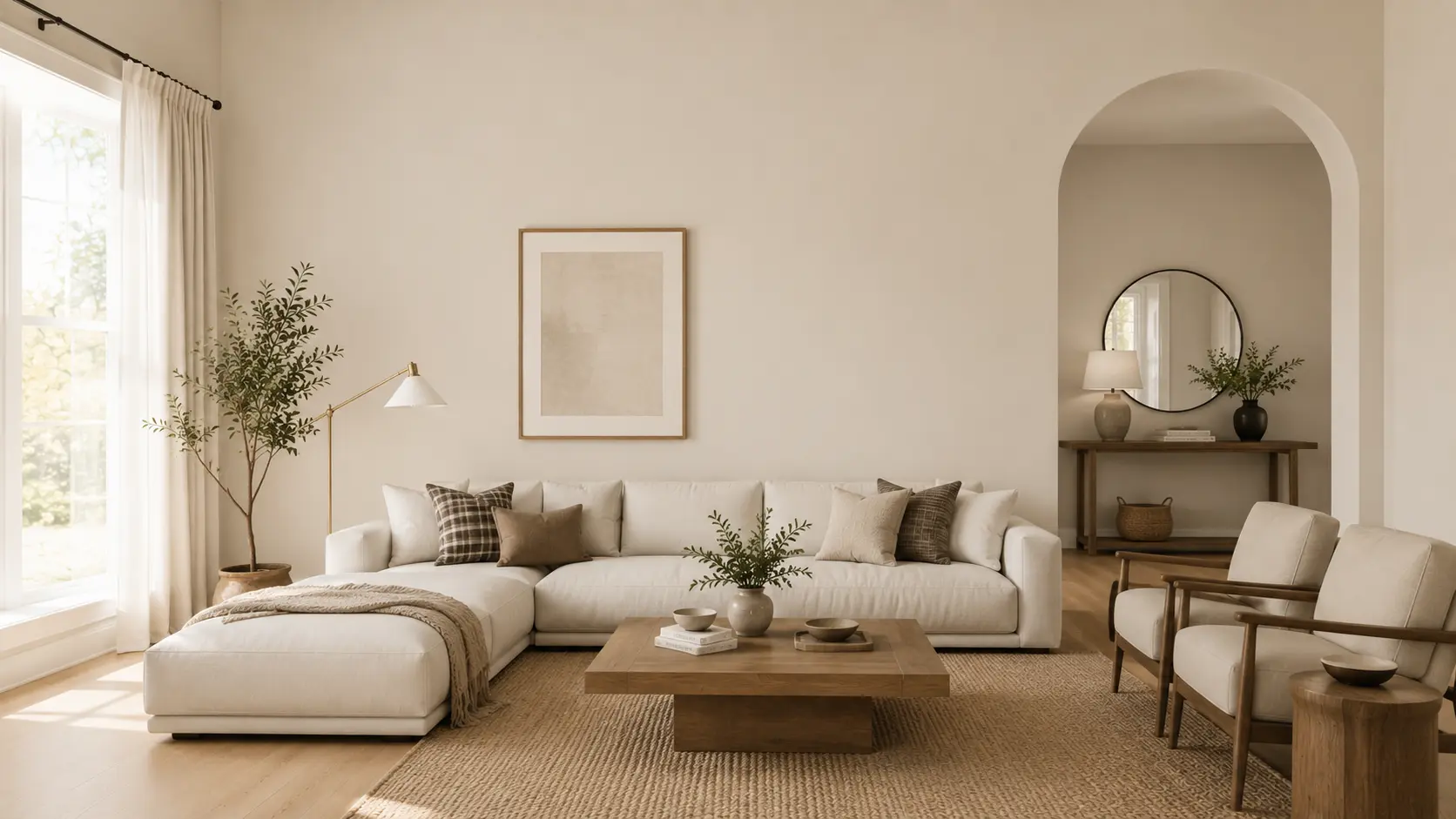
Color Name Pale Oak OC-20 (also known as Athena 858) Brand Benjamin Moore Collection Off-White Collection LRV 68.64 — light, reflects well without reading as white Undertones Warm gray-greige with a taupe base; can shift pink or lavender in cool or mixed light Best For Whole-home walls, bedrooms, living rooms, open layouts, hallways, south- and west-facing rooms Avoid In Dark rooms with little natural light; rooms with cherry, mahogany, or reddish wood floors; spaces with cool LED-only lighting Ever paint a room and feel the color shift the moment the sun goes down? Choosing a wall color is frustrating when it looks perfect in the store but different at home, especially with Pale Oak OC-20. I know how confusing that can feel when lighting keeps changing the tone. Here, I break down how this soft greige behaves in real rooms, from natural light to evening lamps. You will see where it works best, where it fails, and how to avoid undertone surprises so your space feels consistent and calm. I focus on practical lighting tips so you can test them before committing. What Pale Oak Benjamin Moore Actually Looks Like in a Real Room Pale Oak OC-20 is a greige, that mix of gray and beige that reads neither cold nor heavy. Most of the time, on a well-lit wall, pale oak by Benjamin Moore looks like a soft, warm neutral that falls somewhere between an off-white and a classic taupe. That description is accurate, but incomplete. Here’s the part that catches people off guard: Pale Oak has pink and lavender undertones that show up in certain light. It doesn’t look rosy in the way peach paint does. But in a north-facing room at midday, or under cool LED bulbs after dark, you can see a definite purple-pink cast that surprises people who only sampled it in a sunny spot. That’s not a flaw. It’s the color’s character. But it’s the reason I tell every client to test Pale Oak on multiple walls in different light before committing to a gallon. Pro Tip: Test Pale Oak on at least two walls, one that gets direct light and one that doesn’t. Check it at 7 am, at noon, at 5 pm, and after 8 pm with your artificial lighting on. If you see lavender after dark, swap your bulbs for warm white (2700K) before deciding against the color. Understanding Pale Oak’s Undertones The official description calls Pale Oak a warm gray-greige. That’s technically true, but it leaves out what makes this color interesting and occasionally tricky. Pale Oak sits in the yellow-to-yellow-red hue family on the color wheel. Colors in that neighborhood are known to shift purple in imbalanced or cool light. In a room with balanced, neutral light, Pale Oak looks like a calm warm gray-beige. Add a cool-spectrum light source, an overcast north-facing window, a daylight LED bulb, or even a gray tile floor, and the lavender-pink side appears. This is low chroma, which means the color has very little saturation. Low-chroma colors are chameleons. The room around them has as much influence on their appearance as the pigment itself. A cream sofa can make Pale Oak read warm and golden. A bright white cabinet can make the same wall look distinctly gray-pink. Understanding this before you paint a room saves a lot of regret. If you’re still working out how to choose paint colors that hold up against your fixed elements, that process applies here as much as anywhere. The practical takeaway: Pale Oak is not for anyone who dislikes even subtle pink or purple tones. If that’s a hard no, look at Edgecomb Gray HC-173 (warmer, more beige) or Classic Gray OC-23 (cooler, closer to off-white) instead. But if a soft, complex neutral that shifts through the day sounds appealing rather than alarming, Pale Oak earns its reputation. How Pale Oak Looks in Natural Light Natural light can make Pale Oak look warmer, cooler, brighter, or more muted depending on where your windows face. In bright rooms, it often feels soft and open. In cooler rooms, it may show more of its gray side. North-facing rooms: The light is usually cooler and softer. Pale Oak may look slightly grayer here and less warm than it does in sunny spaces. It can still feel calm and gentle, but it may need support from warm whites, natural wood tones, and soft lighting to keep the room from feeling flat. South-facing rooms: South-facing rooms get warmer daylight for much of the day. This light can bring out the beige or greige side of Pale Oak, making it feel brighter, softer, and warmer. This is one of the easiest lighting conditions for this color because the warmth helps balance its gray undertone. East-facing rooms: East-facing rooms get bright morning light, which can make Pale Oak look fresh and slightly warm early in the day. As the light fades later, the color may look more muted and gray. Warm bulbs can help keep the room from feeling too cool at night. West-facing rooms: West-facing rooms get stronger afternoon and evening light. During this time, Pale Oak can appear warmer and a little creamier. It often feels cozy and soft in the evening, which makes it a good fit for living rooms, dining rooms, and bedrooms. How Pale Oak Looks in Artificial Light Artificial lighting is where Pale Oak surprises people most often. Warm incandescent bulbs (2700K) bring out the soft beige side and keep the room feeling settled after dark. Soft white bulbs (3000K) are also a safe choice. The problem starts with daylight or cool white LED bulbs (4000K and above). Under those, Pale Oak’s lavender-pink undertone surfaces clearly. It doesn’t look bad on its own, but if you were expecting a classic greige, the shift reads as an error rather than a feature. Layering your light sources helps more than any single bulb swap. Combining overhead ceiling fixtures with table lamps, floor lamps, or wall sconces gives the color multiple light angles to interact with, which tends to smooth out any single undertone from dominating. If the room looks off after dark, start with the bulbs before repainting. Choosing the Right Finish for Pale Oak OC-20 Finish affects both how Pale Oak looks and how the surface performs over time. Flat and matte finishes absorb light, keeping the color soft and slightly deeper. Glossier finishes reflect light and make the color appear fractionally brighter. The practical guidance is straightforward. Finish Best For Why It Works Matte Bedrooms, low-traffic walls Absorbs light, keeps color soft and calm Eggshell Living rooms, hallways, family rooms Slight sheen, easy to clean, most popular for walls Satin Trim, doors, bathrooms, kitchens More washable, reflects enough light to look crisp Semi-gloss Cabinets, doors, trim details Durable, easy to wipe, holds up in high-contact spots Eggshell is the most common choice for Pale Oak walls. It gives the color a subtle depth without the washout that comes with flat finishes in well-lit rooms. Use satin or semi-gloss on any trim, door, or cabinet that gets regular contact; the finish difference between wall and trim also helps define the two surfaces, which matters for contrast against a near-neutral like Pale Oak. If you’re deciding between those two sheens, the satin vs. semi-gloss, exactly when each makes sense for trim and doors. Pale Oak in Different Rooms Pale Oak adapts well across most room types, but it performs differently depending on what else is in the space. Here’s how it actually behaves room by room. Living Room Pale Oak works well as a main wall color in living rooms, particularly open-plan layouts where you need a neutral that stays calm across different light exposures throughout the day. Pair it with Chantilly Lace trim, natural wood floors, and linen furniture. The color needs contrast to avoid looking washed out; introduce it through darker accents like Wrought Iron 2124-10 on a built-in or deep wood furniture. Without enough contrast, the room can feel like one flat field of beige. Bedroom Bedrooms are where Pale Oak earns most of its reputation. The soft, low-saturation quality that can make it tricky in high-traffic living spaces becomes an asset in a room built for rest. Matte or eggshell finish keeps it genuinely calm. White Dove OC-17 on the trim blends softly rather than cutting harshly. Keep bedding and fabrics in cream, warm white, or muted linen tones; bright whites can pull the lavender undertone forward. If you’re still comparing options, there’s a full palette of cozy bedroom paint colors worth checking before you decide. Kitchen Pale Oak works as a kitchen wall color, especially paired with white or natural wood cabinets. White cabinets can pull the cooler, grayer side of OC-20 forward, which looks refined, while cream cabinets amplify the pink-beige side. Test your specific cabinet finish against a Pale Oak sample before committing. Brass and nickel hardware read well against it either way. Use a satin or eggshell finish for ease of cleaning. If you’re designing the wider kitchen layout, minimalist kitchen design pairs naturally with a neutral like Pale Oak as its wall color. Bathroom In bathrooms with bright tile and reflective surfaces, Pale Oak softens the clinical quality that white-on-white schemes can have. Its warm gray-greige base creates a spa-like calm without requiring any warm-toned tile to get there. Satin or moisture-resistant finish is the right call for humidity. One caution: bathrooms with cool, recessed lighting and white tile together can bring out the lavender undertone fairly strongly. Test it under your actual bathroom lighting before rolling it out on all four walls. Exterior Pale Oak on an exterior reads lighter than it does indoors; direct sun bleaches the depth out of it. It works best for homes that want a warm, soft-white exterior rather than a true white. Pair it with deep charcoal or black window trim (Wrought Iron 2124-10 is a strong choice), and the contrast holds the facade together. It reads well against stone and brick too. For modern farmhouse and transitional exteriors, this is a genuinely useful color — softer than a true white, more refined than a heavy beige. Paint a large sample board (at least 12×12 inches) and look at it at multiple times of day before committing to the full exterior. Coordinating Colors for Pale Oak OC-20 Pale Oak pairs best with colors that either provide clean contrast or share its warm gray register without competing with it. When building a cohesive pale oak color palette, these four combinations are thoroughly tested formulas, each serving a distinct purpose: Color Pairing Character LRV Best Use Chantilly Lace OC-65 Clean contrast, crisp edge 90.04 Trim, ceilings, cabinets Gray Cardigan 1600 Cool, grounded contrast 34.74 Accent walls, doors, built-ins Dinner Party AF-300 Rich, warm depth 8.43 Dining room accent wall Wrought Iron 2124-10 Dramatic contrast, high impact 8.17 Doors, trim, exterior accents Chantilly Lace and Wrought Iron give you the clearest version of Pale Oak’s range, soft and airy at the top, bold and grounded at the bottom. Dinner Party is worth knowing if you’re working in a dining room or study where a moody accent wall alongside Pale Oak walls would give the space some real character. How Pale Oak Compares to Similar Colors The comparison questions about Pale Oak come up constantly, mostly because it reads so similarly to several other popular neutrals on a paint chip but behaves quite differently on the wall. Here are the three comparisons that matter most. Pale Oak vs. Balboa Mist 1549 Pale Oak (LRV 68.64) is lighter and a touch warmer. Balboa Mist 1549 (LRV 65.53) leans grayer and cooler; it has less of the pink-taupe quality and reads more cleanly as a classic gray-greige. If the lavender undertone in Pale Oak is a concern, Balboa Mist is worth sampling alongside it. It’s also a stronger choice for rooms where you want a color that reads definitively “gray” rather than “neutral greige.” The Moonshine BM another off-white in the same family if you want a third option to compare in that lighter neutral range. Pale Oak vs. Classic Gray OC-23 Classic Gray OC-23 is lighter (LRV around 73) and leans closer to off-white. It has a warm gray quality but far less of the taupe-pink complexity that makes Pale Oak interesting in some rooms and challenging in others. Choose Classic Gray if you want something cleaner and less inconsistent. Choose Pale Oak if you want more depth and are willing to manage the undertone. Pale Oak vs. Edgecomb Gray HC-173 Edgecomb Gray HC-173 is warmer and more distinctly beige than Pale Oak. It has less of the gray quality and leans toward a warm taupe without the lavender shift. If you want a beige-greige that stays consistent across light conditions and doesn’t surprise you after dark, Edgecomb Gray is more predictable. Pale Oak is more versatile across different décor styles but less stable in color behavior. When Not to Use Pale Oak Being specific about where a color fails is more useful than listing where it works well, because the failures are what cost people time and money. Skip Pale Oak in rooms with very little natural light and only cool-toned artificial lighting. Under those conditions, the lavender-pink undertone dominates, and the color looks neither gray nor beige, just slightly off. North-facing basements and interior bathrooms with recessed daylight LEDs are the most common problem scenarios. Also avoid Pale Oak on walls adjacent to cherry, mahogany, or reddish oak floors. Those warm red-brown tones conflict with the taupe undertone and amplify the pinkish quality to an unflattering degree. Pale Oak paired with those woods tends to look unintentional rather than warm. One more: rooms with predominantly yellow or yellow-beige finishes — think warm travertine tile or honey-toned hardwood throughout- can make Pale Oak read pink by contrast. Test carefully in those environments before painting all four walls. Tips for Using Pale Oak Successfully Always test on at least two walls — one sun-exposed, one not — before buying more than a sample. Check the sample at different times of day and under your actual artificial lighting, not just in daylight. Pair with warm whites (White Dove or Chantilly Lace) for trim; avoid cool-toned whites. Use warm (2700K) or soft white (3000K) bulbs — cool LEDs surface the lavender undertone. Add contrast through dark accents, wood tones, or pattern; without it, the room can look flat. Use Samplize peel-and-stick samples if you want to test multiple walls without painting directly on them. Avoid judging the color from photos on screens — screens shift undertones significantly. Where to Buy Benjamin Moore Pale Oak OC-20 Pale Oak OC-20 is available at any authorized Benjamin Moore retailer and directly through the official Benjamin Moore website. The color is offered in both interior and exterior formulas across multiple product lines. Use Benjamin Moore’s Find a Store tool on their website to locate the nearest authorized dealer. Order a physical sample or a Samplize peel-and-stick sample before buying a full gallon. Pale Oak is a color that earns its testing time. Frequently Asked Questions Does Pale Oak look purple or pink on the wall? It can. Pale Oak has taupe-pink undertones that shift toward lavender in cool or north-facing light. In balanced or warm light, it reads as a calm gray-greige. The purple cast surprises people who only sampled it in a sunny room. Always test under your actual lighting conditions, especially after dark. What is the best trim color for Pale Oak? Chantilly Lace OC-65 for crisp contrast, or White Dove OC-17 for a softer, more blended look. Avoid cool-toned whites and stark whites — they can make Pale Oak look dingy or amplify its pink undertone. Is Pale Oak too beige or too gray? Neither, in most lighting. It sits squarely between the two, which is exactly its appeal. South-facing rooms pull it beige; north-facing rooms pull it gray. The lavender undertone occasionally shows up under cool artificial light. Testing in your specific room tells you which side dominates. Can Pale Oak be used for whole-house paint? Yes, and it’s one of the most common uses. Its neutrality makes it easy to carry through connected rooms. The one risk with whole-house application is that rooms with different light exposures will show the color differently — some owners find that variation pleasing, others find it inconsistent. What is a good Sherwin-Williams equivalent to Pale Oak? Limewash SW 7520 is frequently cited as the closest match — similar warm greige base, slight taupe quality. Egret White SW 7022 is another option, sitting at a comparable LRV. Neither is an exact duplicate; always sample both in your space rather than substituting by spec alone. When should I not use Pale Oak? Avoid it in rooms with no natural light and cool artificial lighting, rooms with cherry or mahogany wood floors, and spaces where you need a truly bright white or a definitive gray. It’s a greige, not a neutral utility player — it has an undertone that shows up in the wrong conditions. Does Pale Oak work with gray furniture? Warm gray furniture pairs well. Cool gray furniture with blue or green undertones can clash, pulling the lavender quality in the wall forward. If your furniture reads blue-gray, test Pale Oak carefully — Balboa Mist or Classic Gray may be a better match for that combination. Final thoughts Paint color choices often feel simple until light changes how they behave in real spaces. You see how this soft greige can lean warm, cool, or even slightly lavender depending on lighting conditions. You also understand where it performs well, like balanced living rooms, and where it struggles, such as dark or cool-lit rooms. I also highlight how pairing furniture, flooring, and bulbs shapes the final look more than the paint itself. Pale Oak OC-20 works best when you test it under real lighting before deciding on full-room coverage. I encourage you to try samples in your space and share what changes you notice across different times of day.
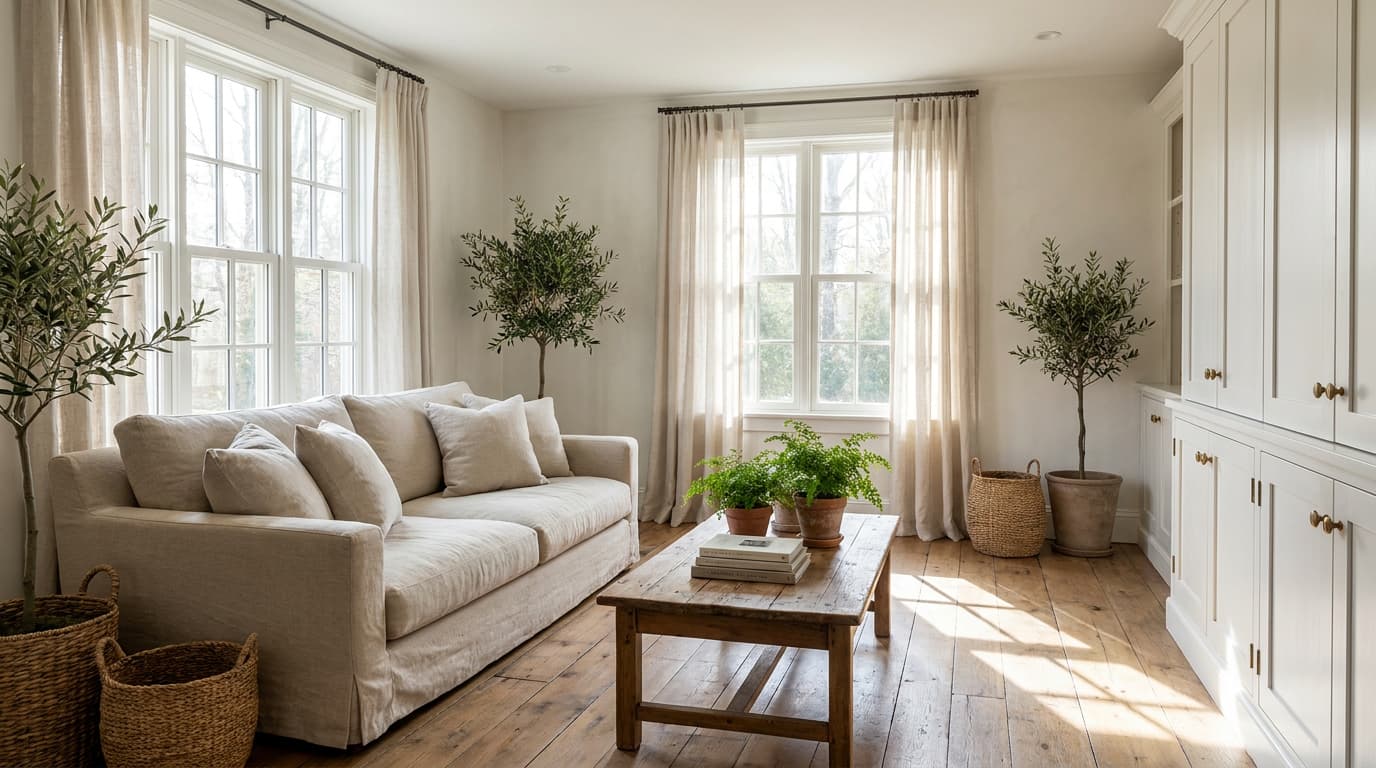
Color Name White Dove (OC-17 / PM-19) Brand Benjamin Moore LRV 83.16 — high, reads as a true white in bright rooms Undertones Soft yellow-gray, reads warmer in low light and cooler in strong north-facing light Best For Walls, trim, cabinets, ceilings, south- and east-facing rooms Avoid In North-facing rooms with cool gray or blue tones, next to bright white trim Benjamin Moore White Dove is the kind of white people search for when they want a soft, clean paint color that doesn’t feel cold or too creamy. It has a warm, calm look that works well in many homes, which is why I understand you’re looking at it more closely before choosing a sample. I’ve seen how tricky white paint can be because it shifts a lot with lighting, trim, flooring, and nearby colors. A shade that looks perfect online may feel different on the wall. You’ll see how the color behaves, where it works best, what undertones to expect, and what to check before using it in your space, so the final choice feels more confident. What Benjamin Moore White Dove Actually Looks Like in a Real Room White Dove OC-17 reads as a clean, soft white in a well-lit room. Put it in a north-facing space with cool gray furniture, and that yellow-gray undertone surfaces in a way that reads flat rather than fresh. That shift is the most important thing to understand before you order a sample. It is not a flaw in the color. It is the color telling you something specific about your room. White Dove sits in Benjamin Moore’s Off-White Collection under the code OC-17, also listed as PM-19. Its LRV of 83.16 puts it firmly in white territory, not cream. In bright rooms, it reflects light cleanly and holds its softness without reading yellow. In lower light, it shows more warmth, which is exactly what most people are looking for when they choose it for living rooms and kitchens. It has been one of Benjamin Moore’s most consistent performers precisely because that range is useful. White Dove Undertones: Yellow-Gray, Not Yellow The undertone of White Dove is a muted yellow-gray. This is different from a straightforwardly creamy white like Alabaster, which pulls clearly warm. White Dove’s gray component keeps it from reading as butter or cream in most conditions. The yellow is present but grayed out, which is why it can feel neutral one moment and slightly warm the next, depending on where you are in the room and what time of day it is. What causes problems is pairing it with colors that have a strong cool bias. Cool slate floors, blue-gray cabinetry, or stark white trim will make the yellow in White Dove visible in a way it wouldn’t be otherwise. Understanding how undertones interact with decor before committing saves you a repaint. The undertone interaction matters more than the swatch on its own. Pro Tip: Paint a large sample board (at least 12×12 inches) and move it to different walls in the room. The undertone shifts more than you’d expect between a north wall at 7 am and a south wall at noon. That undertone behavior directly affects how White Dove reads under different lighting conditions, which is the next thing worth mapping out carefully. How White Dove Looks in Different Room Directions White Dove changes noticeably with natural light. Room direction affects whether it looks bright, muted, warm, or creamy, so testing samples at different times matters before painting. Room Direction How White Dove Looks Best Tip North-Facing Rooms Looks softer and more muted, sometimes closer to greige than white. Cool gray or slate tones can make the yellow undertone more noticeable. Test carefully, especially with cool flooring or furniture. A warmer white like Alabaster SW 7008 may work better. South-Facing Rooms Looks clean, bright, and balanced. Warm natural light keeps the yellow-gray undertone from feeling too strong. Best direction for White Dove, especially in open kitchens, living rooms, trim, and cabinets. East-Facing Rooms Feels warm and inviting in morning light, then becomes calmer and more neutral later in the day. Works well in bedrooms because the color shifts gently with daylight. West-Facing Rooms Afternoon sun adds warmth and may push White Dove toward cream, especially near yellow-toned wood or stone. Test samples around 3 PM and 5 PM, not just in the morning light. White Dove works best when its undertones match the room’s light and materials. Always compare it beside flooring, furniture, and trim before deciding on the final paint choice. Choosing the Right Finish for White Dove The finish changes both how the color looks and how the surface performs. Flatter finishes read softer. Glossier finishes reflect more light, which makes the color appear marginally brighter and slightly more saturated. If you are deciding between Satin and Semi-Gloss for trim or cabinets, the difference between satin and semi-gloss comes down to sheen level and how much traffic the surface gets. Finish Best For Why It Works Matte Bedrooms, low-traffic walls Softest look, minimal sheen, hides imperfections Eggshell Living rooms, hallways, family rooms Balanced softness with enough durability for regular cleaning Satin Trim, doors, bathrooms, kitchens Washable, reflects light gently, holds up in higher-humidity spaces Semi-Gloss Cabinets, doors, trim Most durable option, easy to clean, slight brightening effect One rule worth following: never use Flat or Matte finish in bathrooms. Without the right sheen, moisture marks accumulate and the surface cannot be wiped down effectively. Satin or Semi-Gloss are the correct choices for any space with humidity. White Dove vs Alabaster: Which One Is Right for Your Room? These two colors come up together constantly. They are not the same white, and the difference is meaningful depending on your room’s light. Feature White Dove OC-17 (Benjamin Moore) Alabaster SW 7008 (Sherwin-Williams) LRV 83.16 82 Undertones Soft yellow-gray, balanced Warm, clearly creamy Look Muted warmth, reads closer to true white Cozy warmth, reads off-white Best For Trim, walls, cabinets, classic and contemporary spaces Walls, cabinets, farmhouse, and traditional spaces Potential Risk Can read flat or muted in cool north-facing light May read as overly creamy in very bright rooms Choose White Dove when you want something that reads as a true white in bright conditions but has enough warmth to avoid feeling clinical. Choose Alabaster when you want a consciously cozy, warmer result: farmhouse kitchens, traditional living rooms, spaces with rich wood tones. Both are reliable. The right choice comes down to your room’s light, not the color’s popularity. Where White Dove Works Best: Room by Room 1. Living Room In living rooms with good natural light, White Dove reads open and fresh without the sharpness of a true white like Chantilly Lace. It provides a backdrop that lets furniture and textiles do the work. Pair it with wood floors, linen curtains, and neutral sofas for a calm palette. For rooms that need more definition, add navy, charcoal, olive, or black in accents. Those darker tones stop the white from feeling flat without fighting it. 2. Kitchen Cabinets White Dove is a strong cabinet color because it reads clean without the sharpness that makes some kitchens feel cold. Satin or Semi-Gloss finishes are the right call here: easier to clean and durable enough for a busy kitchen. It pairs well with brass hardware, matte black fixtures, and brushed nickel. If you are working toward a minimalist kitchen design, White Dove cabinets keep the palette restrained without going stark. Test it beside your backsplash first. If your tile is a very cool white or blue-gray, White Dove will read noticeably warmer against it, which may or may not be what you want. 3. Bedroom In bedrooms, White Dove creates a calm backdrop that feels warm rather than sterile. Its softness works with warm lamps, natural textures, and layered bedding. If you are choosing between warm whites and deeper tones, the best bedroom colors for coziness tend to be those that hold warmth without going heavy, which is exactly where White Dove lands. Pair it with dusty pink, sage green, warm gray, or muted blue. Avoid stark white bedding or bright white trim alongside it: that contrast tends to make White Dove look yellow or slightly dingy rather than intentionally warm. 4. Bathroom White Dove reflects light well in bathrooms and keeps small spaces from feeling harsh. Use Semi-Gloss on walls for moisture resistance and a surface that can actually be wiped down. High-Gloss on trim gives a crisp finish. It pairs nicely with marble, warm wood vanities, brass mirrors, and soft gray stone. Check your tile before committing: cool white subway tile will make White Dove appear warmer by contrast. 5. Exterior Outdoors, White Dove reads clean in sunlight without the glare of a true white. It works particularly well on trim against greige, navy, deep green, charcoal, or warm beige siding. As a full exterior color, it gives a home a soft, classic look. Note that outdoor light is stronger than indoor light, so the color will read lighter than your interior samples. In harsh sun or weather, it can also show dirt and wear sooner than darker colors. Colors That Work With White Dove White Dove pairs best with colors that either support its warmth, provide gentle contrast, or add depth without making the palette feel sharp or competing. Coordinating Color Color Code LRV Best Use Classic Gray OC-23 73.67 Walls, bedrooms, hallways Balboa Mist OC-27 65.53 Living rooms, open-plan spaces, bedrooms Revere Pewter HC-172 55.05 Walls, cabinets, built-ins Hale Navy HC-154 8.36 Accent walls, doors, cabinets Kendall Charcoal HC-166 14.61 Built-ins, trim, doors Test these pairings with White Dove in both natural and artificial light before committing. Soft neutrals keep the palette calm, darker shades add structure, and earthy tones reinforce the warmth without fighting it. When You Should Not Use White Dove White Dove is not the right answer for every space. Being specific about where it fails will save you a repaint. North-facing or low-light rooms: The gray undertone takes over, and the color reads flat or slightly dirty. A warmer white like Alabaster SW 7008 holds up better here. Rooms where you want a crisp, true white: White Dove is an off-white. For sharp, minimalist spaces, Chantilly Lace OC-65 is the more appropriate choice. Rooms dominated by cool gray or blue tones: The yellow undertone will quietly conflict with cool slate floors, gray stone, or blue-gray cabinetry, making the whole palette look slightly off. Spaces where existing trim is already bright white: The contrast will make White Dove walls look yellowed rather than intentionally warm. Repainting the trim is necessary to make it work. Bathrooms painted in Flat or Matte finish: Poor ventilation plus the wrong finish means moisture damage and no way to clean the surface properly. Satin or Semi-Gloss are the correct choices for any high-humidity room. Tight budgets: Benjamin Moore is premium-priced. If you want to understand the full cost before committing, it helps to know how much painting a house costs before you factor in premium paint at the higher end of that range. How to Sample White Dove Before You Commit Testing properly is the difference between a confident decision and an expensive mistake. Peel-and-stick samples: Place on different walls at different heights. View them at 7 am, noon, and 7 pm to see the full range of the color’s behavior. Painted sample boards: A 12×12-inch board you can move around the room gives a more accurate read than a fixed swatch, particularly next to cabinetry or flooring. Test at least two spots: One in the room’s brightest area and one in the darkest corner. The gap between those readings tells you how much the color will shift. Use the actual finish: Matte and Semi-Gloss read as noticeably different colors. Test in the sheen you plan to use, not just what’s on the sample card. Step back six feet: Undertones are more visible from a distance than up close. Read the sample from across the room, not just from arm’s length. Sampling White Dove this way takes about a week but avoids the cost and frustration of repainting a room that wasn’t tested correctly. A Note on “SW White Dove” A large number of searches use the phrase “SW White Dove,” expecting to find a Sherwin-Williams product. Sherwin-Williams does not make a paint called White Dove. The color belongs entirely to Benjamin Moore (OC-17). If you are working within the Sherwin-Williams range and want something similar, the closest options are Alabaster SW 7008 for a warmer version, Extra White SW 7006 for a brighter and crisper match, or Shoji White SW 7042 for something slightly more muted. None of these are exact dupes. White Dove’s specific undertone balance is particular to its Benjamin Moore formulation. Frequently Asked Questions About Benjamin Moore White Dove These are the questions I hear most often from people who already have the chip on their wall and still aren’t sure what they’re looking at. Is Benjamin Moore White Dove warm or cool? White Dove is warm. Its yellow-gray undertone places it on the warm side of the white spectrum, though it is far more balanced than a clearly creamy white like Alabaster. In strong cool light it can read neutral, but it never reads cool. Does White Dove look yellow on walls? It can, in specific conditions: strong afternoon light, warm incandescent bulbs, or placement next to bright white trim. In balanced natural light it reads as soft white, not yellow. Sampling at different times of day in your specific room tells you whether yellow is going to be a problem for your space. What is the LRV of Benjamin Moore White Dove? White Dove has an LRV of 83.16 according to Benjamin Moore’s official specs. That places it firmly in white territory, lighter than most off-whites, which is why it reads as a true white in bright rooms rather than cream. Is White Dove good for trim? Yes. White Dove works particularly well on trim in rooms where the walls are a warm neutral or a deeper color. Its softness prevents trim from looking harsh or stark. Pair it with walls in Balboa Mist OC-27 or Classic Gray OC-23 for a tonal approach that reads calm and cohesive. What colors go with Benjamin Moore White Dove? Hale Navy HC-154, Kendall Charcoal HC-166, Classic Gray OC-23, Balboa Mist OC-27, and Revere Pewter HC-172 are all reliable pairings. Warm neutrals and deep contrast colors work best. Cool grays and blue-toned palettes tend to conflict with its yellow undertone. How does White Dove compare to Chantilly Lace? Chantilly Lace OC-65 is a crisp, near-true white with no meaningful undertone. White Dove is warmer and softer with an LRV about five points lower. Use Chantilly Lace for sharp, contemporary spaces that need brightness without warmth. Use White Dove when you want softness alongside that brightness. Can White Dove be used on kitchen cabinets? Yes, and it performs well there. Its softness keeps kitchens from feeling clinical. Use Satin or Semi-Gloss for durability and cleanability. Test beside your countertop and backsplash before committing, since very cool tile can make the cabinet color read warmer than expected. Final Thoughts White Dove is more than just a soft white; it’s a color that adapts to your space and lighting. I’ve shared how its undertones, LRV, and finishes affect walls, trim, cabinets, and exteriors. You’ve also seen how to sample it the right way, explore complementary colors, and understand when it may not be the best choice. By paying attention to lighting, pairing it thoughtfully, and testing properly, you can make sure your rooms feel balanced, warm, and inviting. I’ve found that seeing it in your own space changes everything. Try these tips yourself, and let me know in the comments how White Dove works in your home.
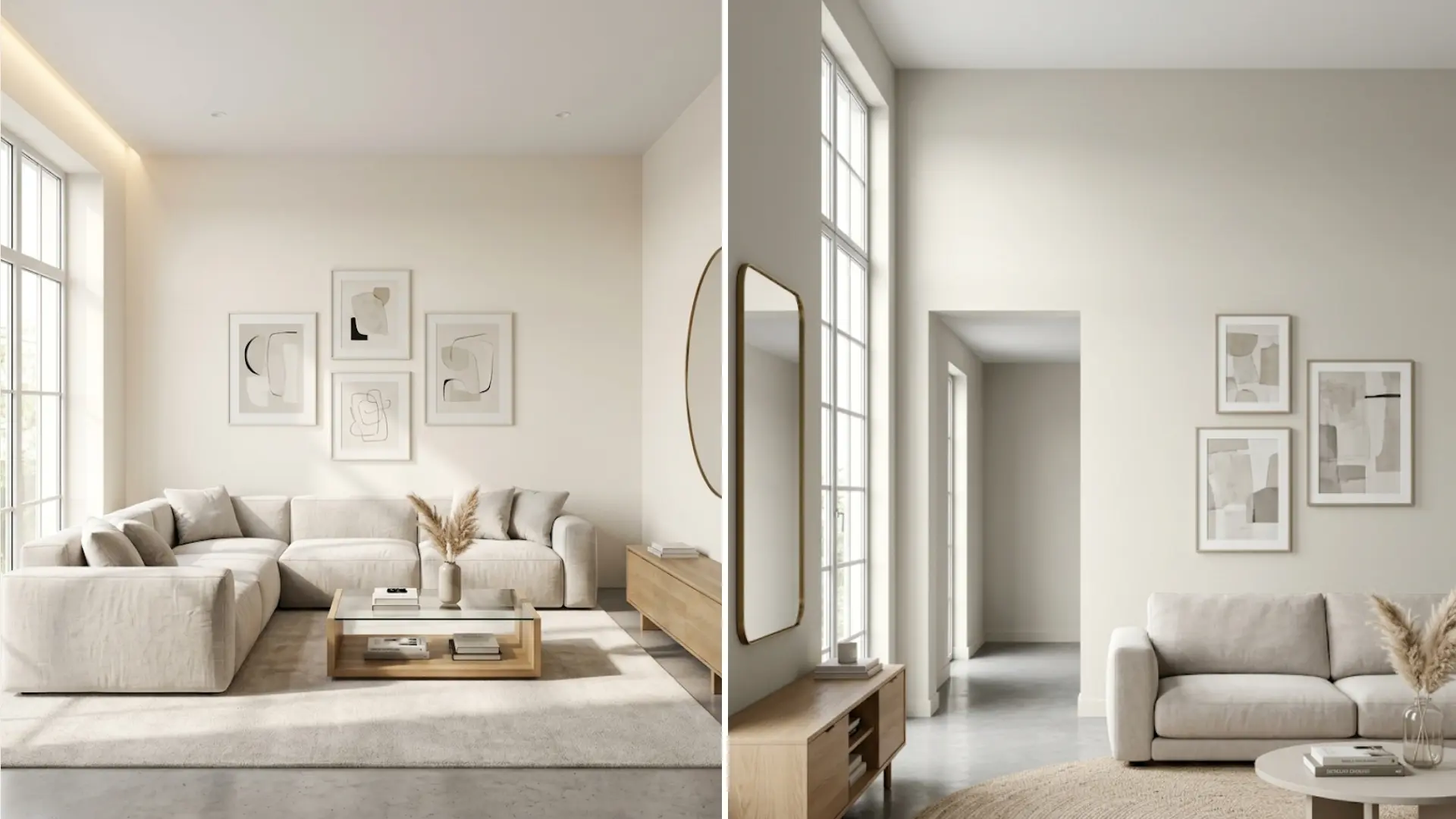
Picking between Greek Villa and Alabaster should feel like a simple decision. It rarely is. Both are warm Sherwin-Williams whites, both read soft and livable on the chip, and both end up on shortlists for nearly every room where the goal is “not too stark, not too creamy.” But once they hit the wall, they behave quite differently. Understanding the Greek Villa vs Alabaster distinction comes down to one key detail: their undertones are not the same, even though they look close on paper. I have watched clients choose Greek Villa expecting a quiet neutral and get a noticeably warm, creamy room instead. I have also seen Alabaster in rooms where it looked perfect, and in rooms where it read muddy next to the trim. The difference between those outcomes was almost never the paint. It was the light, the floors, and the fixed finishes around it. That is what this article will actually help you sort out. Greek Villa vs Alabaster: Side by Side Before getting into how each one behaves in a room, here is a direct comparison of the technical specs. These numbers are the starting point, not the decision. Feature Greek Villa SW 7551 Alabaster SW 7008 Color family Warm white Warm white LRV 84 82 Undertones Yellow-beige Yellow-beige with a gray base On-wall character Bright, creamy, warmer Softer, more muted, more stable Light stability Shifts noticeably in warm or evening light Holds closer to its chip color across conditions Main risk Reads creamy or yellow-warm under incandescent bulbs Can look dull or flat beside cool or bright whites Works well on Walls, trim, cabinets, exteriors Walls, trim, cabinets, ceilings, whole-house use The two-point LRV gap matters less than the undertone difference. Benjamin Moore Greek Villa runs warmer and shifts more. Alabaster is steadier. That distinction drives almost every room-use recommendation below. The Undertone Difference That Actually Matters This is the part most articles get wrong by calling both colors “warm white with beige undertones” and leaving it there. They are not the same. Greek Villa has yellow-beige undertones. That warmth is visible, and it intensifies as light changes. In a south-facing room in the afternoon, or under warm incandescent bulbs in the evening, Greek Villa can look noticeably creamy. If you were hoping for something that reads closer to white, that shift can feel like a surprise. Alabaster also has yellow-beige warmth, but there is a gray component in its base. That gray is its stabilizer. It keeps Alabaster from drifting too far into cream territory, which is why it holds its character across a wider range of light conditions. In a bright room, it still reads as white. In a dim room, it warms up without turning yellow. That behavior is why so many designers reach for Alabaster as a whole-house neutral: it is predictable in a way that Greek Villa is not. The Alabaster full color goes deeper into how that gray base performs across real rooms. The practical difference is this. Greek Villa gives you more visible warmth. Alabaster gives you warmth that stays controlled. Which one you want depends entirely on what your room already has going on around it. How Each Color Responds to Light Lighting is not just a variable. For these two whites, it is the deciding factor. Test both in your room before committing to either one. Light Condition Greek Villa Alabaster Better Pick North-facing rooms Holds brightness well in cool, indirect light Can read slightly muted or soft Greek Villa South-facing rooms May look creamy or yellow-warm by afternoon Stays balanced, does not shift much Alabaster East-facing rooms Bright and warm in morning light, cooler by afternoon Calm and soft throughout the day Greek Villa for brightness, Alabaster for softness West-facing rooms Turns creamier as afternoon sun hits it May lean warmer or beige in late light Test both carefully Warm incandescent bulbs Pushes into noticeable cream territory at night Warms up but stays controlled Alabaster Cool LED or daylight bulbs Reads cleaner, more white Holds its soft character without going gray Both can work Never judge either color from a single wall or a single time of day. Paint a large sample board, prop it upright against the wall, and check it in morning light, afternoon light, and with your actual room lamps on. The cool white vs daylight bulb how bulb color temperature interacts with warm whites like these two. Which One Is Brighter and Which One Is Warmer? Greek Villa is brighter. Its LRV of 84 means it reflects more light, which helps darker rooms feel more open. If the room needs lift, Greek Villa is the more direct tool for that job. Alabaster is warmer in a different sense. Its warmth is quieter, more settled. It does not push the room toward cream the way Greek Villa can. That is actually why many people describe Alabaster as feeling “cozy” rather than “warm.” The gray component in its base keeps the warmth from dominating. So the simple version is: choose Greek Villa when the room needs brightness, and choose Alabaster when the room needs softness without visual shift. If you want a white that is lighter and more energetic, Greek Villa. If you want a white that behaves the same in every corner of the house from 7am to 9pm, Alabaster. How Fixed Finishes Change Both Colors The biggest mistake I see is choosing a white paint without looking at what stays in the room. Floors, tile, counters, and trim are not neutral. They pull undertones out of the wall color, sometimes dramatically. Warm wood floors tend to support both colors. Greek Villa reads richer alongside pale or natural oak. Alabaster pairs well with medium and darker-stained wood because its gray component keeps it from fighting the floor. The wall color and wood floor exactly how warm whites interact with different stain tones. Gray or cool floors create contrast against either color’s warm undertones. That contrast makes both look creamier than they do in isolation. If your floors are cool-toned and you want a white that does not read beige, test Alabaster first. Its gray base gives it more resilience against cool surroundings. Cool marble with blue or white movement will pull the warmth out of both colors and make their undertones visible. Test samples directly against the stone before choosing. Warm bulbs at night are the most common source of surprise. A room that looked clean and balanced at noon can look like a different color by 8pm under incandescent light. This is especially true for Greek Villa. If your room has warm bulbs and warm floors together, Alabaster is the safer pick. Greek Villa vs Alabaster by Room Greek Villa and Alabaster can both work throughout the home, but each one performs better in certain spaces. The right choice depends on light, finishes, and the mood you want. 1. Living Room Greek Villa works well in living rooms that feel heavy, shaded, or north-facing. The extra brightness lifts the room without pushing it toward a stark or cold white. It pairs well with natural linen, pale wood, and black or iron accents. Alabaster is the better choice when the living room already has good light and you want the walls to sit quietly behind furniture, rugs, and artwork. It will not compete. Rooms with warm wood floors, layered textiles, and earthy neutrals consistently look settled with Alabaster on the walls. 2. Kitchen Kitchens are high-contrast environments. Cabinets, counters, backsplash, and hardware all sit close together, which means undertones become visible faster here than in any other room. Greek Villa works well in kitchens with wood shelving, black or matte hardware, and natural stone counters. It reads clean and bright without going sterile. Alabaster is better when the kitchen has cream-colored tile, brass hardware, warm countertops, or traditional shaker cabinets. Its softer warmth keeps the room from feeling too bright or clinical. 3. Bedroom Bedrooms need to work in morning light and under evening lamps. That dual requirement is where Alabaster often outperforms Greek Villa. Its more stable undertone means it reads soft and livable at night without looking like a different color than it did in the morning. Greek Villa is still a good bedroom choice in low-light rooms, particularly small or shaded spaces that need more brightness. But in a bedroom with warm bulbs and warm bedding, it can feel unexpectedly creamy by evening. If comfort and stability are the goal, Alabaster is the more reliable pick. 4. Bathroom Bathrooms amplify undertones faster than almost any other room because tile, mirrors, and vanity finishes all react to the wall color. Greek Villa performs well with warm tile, wood vanities, and lighter stone where a brighter, cleaner white is needed. Alabaster holds better beside cream or beige tile, warm stone, and natural wood accents. Both need to be tested against cool marble before committing. The gray movement in white marble can make either white read distinctly beige or cream depending on the stone’s exact undertone. 5. Trim and Doors Using either color on trim and walls together (in different sheens) can work well. Greek Villa creates a warm-white edge that reads clean beside beige, greige, and soft taupe wall colors. Alabaster on trim gives a creamier, gentler border and blends naturally with warm wall colors and wood floors. One thing to check before choosing: if your trim will be next to a brighter white on ceilings or adjacent rooms, Alabaster can sometimes look flat or slightly yellow by comparison. Test the trim color beside whatever white is on the ceiling before committing. 6. Exterior Exterior daylight is stronger and more variable than interior light. Both colors will look lighter on an exterior than they do inside, and undertones will be more visible on a large facade. Greek Villa on an exterior reads as a warm, lightly creamy white. It pairs well with black window frames, tan or warm stone, brick, and wood accents. Alabaster gives a softer, slightly more muted exterior white that suits homes with warm roofing, traditional trim, or cream-toned stonework. If you are working with cool siding colors or a very bright white roofline, test Alabaster carefully before using it as the main body color. Coordinating Colors for Greek Villa Greek Villa’s yellow-beige warmth pairs best with colors that support rather than fight that warmth. These are coordinates that consistently work well in real rooms: Accessible Beige SW 7036 for an adjacent room or lower wall where more color depth is needed Natural Linen SW 9109 for a warm transition between rooms without adding saturation Black Magic SW 6991 for trim, doors, or accents where strong contrast is needed Antique White SW 6119 for ceiling use when the walls are Greek Villa and you want the warmest possible whole-room feel Avoid pairing Greek Villa with very cool or gray-based whites on trim and ceilings. The contrast will make the wall color read yellower than it actually is. Coordinating Colors for Alabaster Alabaster’s gray-stabilized warmth makes it one of the most flexible whole-house whites available. It coordinates well with a wide range of neutrals. The Alabaster coordinating colors the full palette with room-by-room examples. Agreeable Gray SW 7029 for adjacent spaces or lower walls, the most common Alabaster pairing Repose Gray SW 7015 for a slightly cooler adjacent gray that still works with Alabaster’s undertone Intellectual Gray SW 7045 for accent walls or furniture in rooms where Alabaster is the primary wall color Eider White SW 7014 for a slightly cooler ceiling option when Alabaster is on the walls Alabaster also works well beside its close relatives. Among the cooler warm whites, Shoji White vs Alabaster how a grayer warm white sits beside it in real rooms. When NOT to Use Greek Villa Greek Villa is not the right choice in every “warm white” situation. Skip it when: The room has warm floors, warm bulbs, and warm wood furniture together. All that warmth will pull Greek Villa toward a yellow-cream that feels dated rather than cozy. You are painting beside a stark or cool white on ceilings. The contrast will make Greek Villa look yellower than it should. The room is south-facing with strong afternoon sun. Greek Villa will feel noticeably creamy in that light, which can make the room feel smaller and warmer than intended. The design direction is modern or minimal. Greek Villa’s visible warmth reads more traditional or Mediterranean. It works against clean-lined, cool-neutral interiors. When NOT to Use Alabaster Alabaster is close to a universal neutral, but there are conditions where it underperforms: The room has very cool floors (gray tile, blue-gray stone) and cool-toned furniture. Alabaster’s warmth will look muddy against that coolness rather than warm and intentional. You need true brightness. A shaded room with poor natural light needs more lift than Alabaster provides. Greek Villa or an even higher-LRV white would serve better. The trim and adjacent rooms use a bright or pure white. Alabaster will read as beige or cream beside those whites rather than as a warm white in its own right. Greek Villa vs Dover White and Dover White Dover White SW 6385 is the third option that comes up most often alongside these two. Here is how all three compare: Point Greek Villa SW 7551 Alabaster SW 7008 Dover White SW 6385 Overall look Bright warm white, slightly creamy Soft warm white, stable across light Creamy white with a clear yellow lean Undertones Yellow-beige Yellow-beige with gray base Yellow, more saturated Light behavior Shifts noticeably in warm light Holds steady across most conditions Turns distinctly yellow in warm light Best for Rooms needing brightness and lift Whole-house use, cozy rooms, cabinets Rooms with golden wood and traditional decor Main risk Looks creamy in warm or bright light Looks flat beside cool or bright whites Looks yellow beside cool finishes Dover White is the one to choose when you genuinely want a creamier white and the room supports it. Greek Villa and Alabaster are safer if you want warmth without a strong yellow cast. How to Test Greek Villa and Alabaster the Right Way These are the questions I hear most from people who already have the chip on the wall and are still not sure. The testing process is the answer to almost all of them. Use large boards, not small chips. A chip is too small to show how the color reads across four walls with your light hitting it at an angle. Stand them upright. A sample lying flat on a table catches light differently than a vertical wall. Always prop the board upright. Check at three times of day. Morning, afternoon, and evening with your room lamps on. For Greek Villa especially, the evening check is the one that surprises people. Move the board to different walls. The north wall of a room and the south wall can read as different colors with the same paint. Check both. Test the sheen you plan to use. Matte and eggshell absorb light. Satin reflects it. The same color in two sheens can feel different in the same room. Pro Tip: If you are torn between the two after testing, look at your trim. If your trim is a brighter or cooler white, Alabaster may look beige beside it. Greek Villa will hold up better in that situation. If your trim is warm or cream-toned, either color works. Frequently Asked Questions Does Greek Villa work better with warm or cool furniture pieces? Greek Villa usually works better with warm or natural furniture pieces. Think pale oak, rattan, linen, tan leather, beige upholstery, or black accents. Cool gray furniture can still work, but it may make Greek Villa’s creamy side more noticeable. Test it near your largest furniture pieces before painting. Can Alabaster make a small room feel too closed in? Alabaster can make a small room feel calm, but it may not always make it feel larger. If the room has weak light or dark flooring, it can feel a little soft instead of open. Use good lighting, lighter fabrics, and simple decor if you want Alabaster to feel less heavy. What ceiling color works best with Greek Villa walls? Greek Villa walls usually look best with a ceiling white that is warm, not icy or blue-based. A very bright ceiling white can make Greek Villa look creamier by contrast. For a softer look, use Greek Villa on both walls and ceiling, then change the sheen for trim. What ceiling color works best with Alabaster walls? Alabaster walls pair well with a soft white ceiling that does not feel too sharp. A cooler ceiling can make Alabaster look beige or slightly flat. If you want a seamless look, Alabaster can also go on the ceiling, especially in bedrooms, hallways, and calm living spaces. Is Greek Villa a good choice for open-concept spaces? Greek Villa can work in open-concept spaces if the flooring, trim, and lighting stay fairly consistent. It may shift more between bright and shaded zones, so large sample boards are important. If one area gets strong warm light, check that it does not turn too creamy there. Is Alabaster too creamy for a modern home interior? Alabaster is not too creamy for a modern home if the rest of the design has warm, simple finishes. It works well with wood, black accents, soft grays, and natural textures. It may feel less modern beside bright white trim, cool gray floors, or very sleek blue-toned materials. Should Greek Villa or Alabaster be used in rental homes? Alabaster is often the easier rental choice because it feels soft, neutral, and steady across different rooms. Greek Villa can also work if the rental needs brightness, but it may show more warmth under certain bulbs. For rentals, pick the shade that works with the existing floors and trim. Final Take Greek Villa and Alabaster may look close at first, but they create different results once they are on your walls. Greek Villa gives you more brightness and lift, so it works well in rooms that feel shaded or small. Alabaster feels softer and steadier, which makes it a strong choice for cozy rooms, cabinets, and whole-house use. I would not choose either color from a chip alone because lighting and fixed finishes can change everything. Test both beside your trim, floors, counters, and lamps before making the final call. If you have used either shade, share what it looked like in your home.
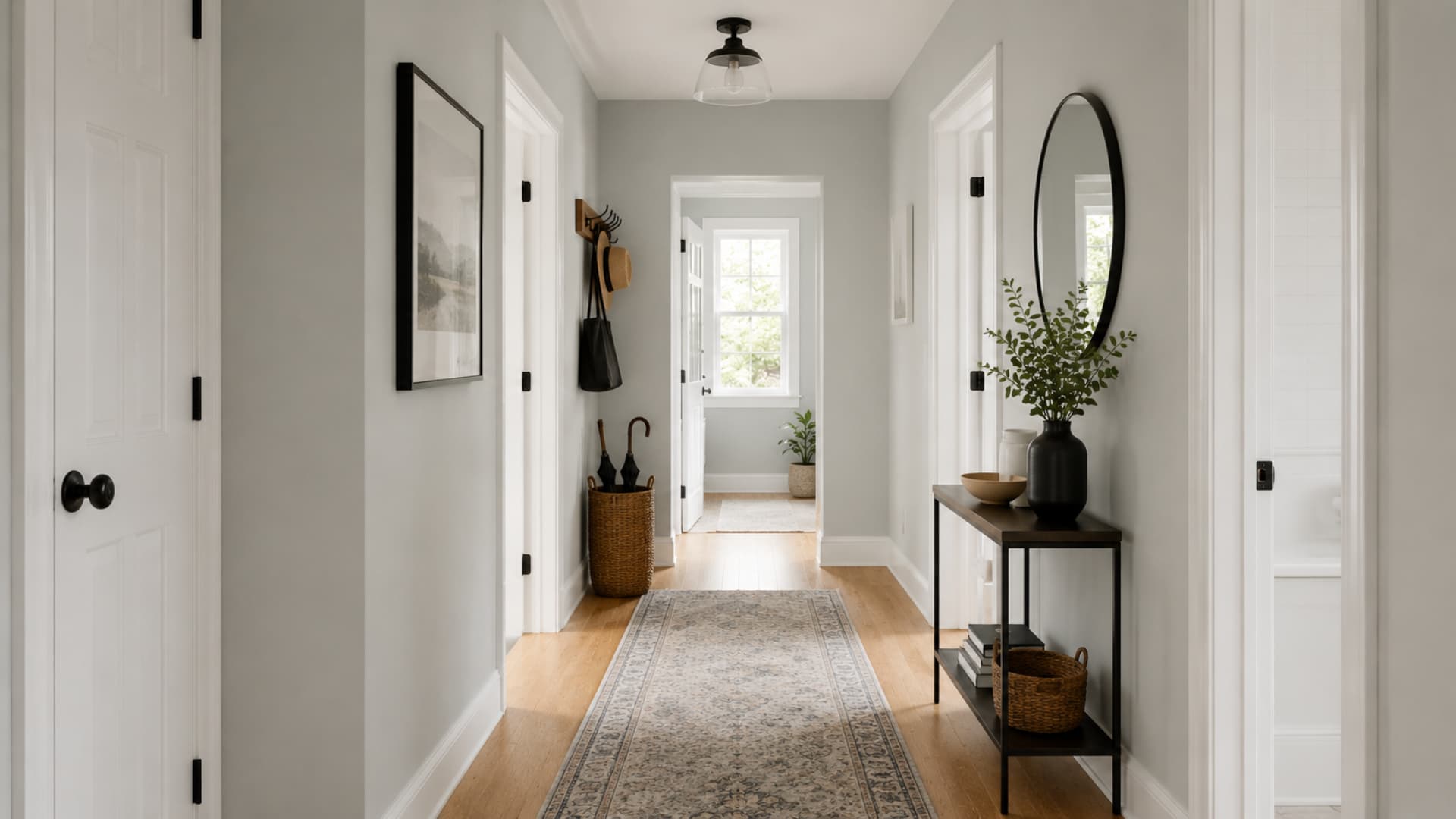
Stonington Gray can look calm, blue, or even stormy depending on the light in your room, and that often catches people off guard. Stonington Gray HC-170 is a cool gray with blue-green undertones and a medium depth that reacts strongly to its surroundings. You might think you’ve picked a safe neutral, but lighting, trim, and nearby finishes can quickly shift how it reads on your walls. I’ll help you understand how this color behaves so you know what to expect before painting. You and I will break down its undertones, lighting effects, and best uses so you can decide if it truly fits your space. Stonington Gray at a Glance Color Name Benjamin Moore Stonington Gray HC-170 Brand Benjamin Moore LRV 59, medium depth, not light and airy Undertones Blue-green (blue more noticeable than green) Best For Walls, cabinets, bathrooms, exteriors, in spaces with average to bright natural light Avoid In Rooms with yellow trim, cream tile, orange-toned floors, or minimal natural light Stonington Gray sits in the medium range. It will reflect a decent amount of light, but it will never disappear into the background. In rooms with strong natural light, it reads as a clean, composed gray. In darker rooms, it can feel heavier and cooler than the chip suggested. Stonington Gray Undertones: What the Blue-Green Actually Does The undertone in Stonington Gray is primarily blue, with a secondary green note that tends to show up in south-facing rooms and under warm afternoon light. Most of the time, the blue is the one you’ll notice. The green is subtle enough that many people never see it at all. What matters practically is this: that blue undertone is context-dependent. It stays quiet beside clean, cool whites. It becomes obvious beside creamy whites, warm beige tile, or orange-toned wood floors. If your existing finishes run warm, the undertone will read as blue because the warm surroundings amplify the contrast. This is the reason Stonington Gray can look exactly right in one room and strangely blue in the next. Besides Revere Pewter HC-172, the difference is stark. Revere Pewter reads warm and slightly green-beige. Stonington Gray reads noticeably cooler. If you’re comparing the two on a chip and thinking they look close, put them on a wall beside your trim and floors. The gap will show. Pro Tip: Before buying gallons, order a peel-and-stick sample from Samplize and move it around your room at different times of day. Test it beside your trim, your flooring, and the wall opposite your main window. One hour of testing prevents a costly mistake. How Light Changes Stonington Gray Light does more work on Stonington Gray than on most grays, because the undertone is responsive rather than neutral. The same color at 8 am can look markedly different at 4 pm, and markedly different again under your overhead lights at 9 pm. This is not unusual for cool grays, but it’s more pronounced here than in something closer to a true neutral. Light Direction How Stonington Gray Reads How to Balance It North-facing Cooler, bluer, sometimes close to stormy Warm bulbs, wood accents, soft white trim South-facing Softer, sometimes shows more green in the undertone Crisp white trim, navy accents East-facing Cleaner and fresher in the morning, flatter by evening Test at multiple times before committing West-facing Picks up warmth in the afternoon; reads softer Charcoal, navy, or warm wood to ground it Artificial light matters just as much. Cool LED bulbs will push the blue undertone further. Warm white bulbs (around 2700K) bring the gray back into balance. If a room relies on overhead lighting in the evenings, test Stonington Gray under both bulb types before painting. North-facing rooms are the riskiest application. I’ve seen Stonington Gray look genuinely beautiful in bright south-facing rooms and genuinely bleak in north-facing ones with no artificial warm light to compensate. The same can of paint. That’s how sensitive this color is to its environment. Colors That Pair Well With Stonington Gray When designing around Benjamin Moore Stonington Gray HC-170, selecting the right palette is crucial because its cool, context-dependent blue-green undertone reacts strongly to neighboring tones. To build cohesive Stonington gray color combinations, blue accents and clean white boundaries offer the most reliable ways to lean into or balance its shifting personality. White Trim Pairings The wrong white will turn Stonington Gray noticeably blue. Creamy whites with yellow undertones, like Antique White or some versions of Linen White, are the main culprits. The cool-blue undertone in Stonington Gray reacts against yellow-warm whites, and the contrast reads as “is that wall actually blue?” Chantilly Lace OC-65 gives the sharpest, cleanest contrast and is the safest choice for anyone who wants Stonington Gray to read as a true gray rather than a blue-gray. Oxford White CC-30 keeps the palette crisp without being as stark as Chantilly Lace. White Dove OC-17 works in rooms where the light is bright enough to carry the softness; it gives a warmer trim look without crossing into creamy territory. Simply White OC-117 can work, but sample it carefully beside your specific walls and lighting before committing. Blue Accent Colors Stonington Gray’s undertone already leans blue-green, so deeper blues create contrast rather than competition. Pale blues placed beside it tend to flatten the whole palette; the room starts to feel like a single wash of cool rather than a composed design. Hale Navy HC-154 is the most versatile accent; it works on front doors, kitchen islands, built-in cabinetry, and vanities. The contrast with Stonington Gray is strong without feeling harsh. Van Deusen Blue HC-156 is a slightly softer navy that works well on office built-ins and dining room accents. Boothbay Gray HC-165 creates a quieter blue palette, better suited to bedrooms and bathrooms where calm is the priority over contrast. Cheating Heart 1617 is a deep blue-black that works as a front door color or for a single dramatic accent wall. If you also want a deep, nearly-black wall color for interior spaces, the Sherwin-Williams Greenblack is a comparable dark option worth considering alongside it. Warm Materials as Counterbalance Wood is the easiest way to stop Stonington Gray from feeling clinical. White oak flooring, natural wood shelving, linen textiles, and woven baskets all add warmth without clashing with the cool undertone. You’re not trying to make the color warm; you’re giving the room enough warmth elsewhere that the gray feels intentional rather than cold. If you’re weighing whether to go warm or cool overall on your neutral palette, the Sherwin-Williams Natural Choice shows what a warm off-white approach looks like as a contrast. Best Rooms for Stonington Gray 1. Living Rooms Living rooms with average or better natural light are where Stonington Gray tends to earn its reputation. The color reads composed, clean, and calm without sliding into beige. White trim keeps it defined; warm wood floors and linen sofas keep it from feeling cold. In open-plan spaces, check how Stonington Gray reads beside adjacent wall colors. On a long wall facing a room with warm finishes, the blue undertone can become more noticeable than expected. Test the color on at least two walls, not just the sample board. 2. Bedrooms Stonington Gray suits bedrooms where the goal is quiet and composed rather than cozy and warm. Soft white bedding, muted navy or blue-gray textiles, and warm wood nightstands are the combination I’d lean on. The color has enough depth to feel present on the walls without overwhelming the room. North-facing bedrooms are the one application where I’d pause. Warm bulbs help, and wood furniture helps, but if the room already feels dim and cool, Stonington Gray can accentuate that rather than soften it. In that situation, Wickham Gray HC-171 is worth sampling alongside it, it’s a hair lighter, and the cooler feel is slightly less pronounced. 3. Bathrooms and Laundry Rooms Bathrooms are one of the stronger fits for Stonington Gray, particularly when the finishes run white and cool. White subway tile, marble-look quartz, chrome fixtures, and polished nickel hardware all work with the undertone rather than against it. The color reads crisp without feeling harsh in a tiled space. In laundry rooms, Stonington Gray combines well with white cabinets, black hooks or hardware, patterned floor tile, and light wood shelving. The cool-clean combination suits a utilitarian space without making it feel like a basement. Cream tile and beige flooring are the cautions here. Both warm finishes can make the blue undertone show more than expected. If your bathroom has travertine tile or warm stone, sample carefully, the contrast can make Stonington Gray read much bluer on the wall than the chip suggested. 4. Kitchens and Cabinets On kitchen walls, Stonington Gray works when the surrounding finishes support its cool undertone: white cabinets, white quartz or marble-look counters, chrome or matte black hardware, and navy accents. On cabinets, it gives more presence than white while keeping the kitchen from feeling heavy. A Stonington Gray island against white perimeter cabinets is one of the more reliable applications of this color — the contrast creates a focal point, and the cool undertone reads as intentional rather than accidental beside clean whites. The surfaces to watch carefully: cream backsplash tile, warm beige flooring, orange-toned wood floors, and yellow-beige granite. Any of these can pull the undertone visibly toward blue. For cabinets specifically, use a cabinet-grade paint rather than standard wall paint; the finish needs to handle regular cleaning and wear without showing scuffs. 5. Exteriors Stonington Gray has built a genuine following as an exterior color, and it earns it — but outdoor light tends to make it look lighter and cooler than it does inside. The sunny-side-of-the-house reading and the shaded reading can feel like two different colors on the same exterior. Good exterior combinations include: Stonington Gray siding, Chantilly Lace trim, and a Cheating Heart door Stonington Gray siding, White Dove trim, and Hale Navy shutters Stonington Gray painted brick, Oxford White trim, and a Soot front door Stonington Gray siding with Wrought Iron accents and black windows Stonington Gray with warm cedar, natural stone, or a brick path as an organic counterweight to the cool siding Before choosing it for an exterior, test on each side of the house, the north and south faces often read quite differently from each other. Test it beside the roof, driveway material, and any brick or stone detail. A cool gray on a warm stone foundation can look disconnected rather than style. Stonington Gray vs. Similar Benjamin Moore Colors Stonington Gray is often compared with other Benjamin Moore grays because the differences are subtle on a chip and significant on a wall. Here is where each comparison actually matters. Color How It Differs from Stonington Gray Choose It When Gray Owl OC-52 Lighter (LRV 65) with a green undertone; reads warmer than Stonington The room needs a paler, less directionally cool gray Wickham Gray HC-171 Slightly lighter with a similar cool feel; less pronounced in low light The room has less natural light and needs Stonington softened slightly Coventry Gray HC-169 Darker (LRV 46) and distinctly cooler; more dramatic More contrast and depth are needed, especially on cabinets or accent walls Revere Pewter HC-172 Warmer, with a beige-green undertone; clearly greige by comparison A warm neutral or greige fits the room better than a cool gray Classic Gray OC-23 Much lighter and warmer; a whisper of gray rather than a committed one A very pale gray is needed, and the room already runs cool Silver Chain 1472 Similar cool family; slightly different undertone character A comparable cool gray with a slightly different undertone signature is preferred The Stonington Gray vs Gray Owl comparison deserves a note: they look close on a chip, but they pull in opposite directions once they’re on a wall. Gray Owl leans green-warm. Stonington Gray leans blue-cool. In mixed lighting, Gray Owl tends to read as a fresh neutral, while Stonington Gray tends to read as more assertively gray. Neither is better, they suit different rooms. If you’re comparing the two and can’t decide, the undertone tells you everything: warm finishes in the room favor Gray Owl, and cool finishes favor Stonington Gray. For blue-gray color comparisons beyond Benjamin Moore, the Sherwin-Williams Debonair review covers a comparable blue-gray that behaves similarly to Stonington Gray in north-facing rooms. Paint Finish and Fixed Finishes Guide Finish affects how the undertone reads. A high-sheen finish amplifies undertones; a matte finish quiets them. That said, practical durability usually decides the finish in most rooms. Walls: Matte or eggshell. Eggshell gives enough durability for cleaning without amplifying the blue undertone. Bathrooms and laundry rooms: Eggshell or satin for moisture resistance. Trim, doors, cabinets: Satin or semi-gloss. These surfaces take wear and need to be wipeable. Exteriors: Low-luster or satin, depending on the Benjamin Moore product specified. Test the sheen choice on the actual surface, high sheen on a rough exterior wall can make undertones more visible than expected. The fixed finishes checklist for Stonington Gray: white oak floors, marble-look quartz, white tile, cool stone, and black windows all work with the undertone. Red oak floors, beige carpet, warm brick, cream granite, travertine, and orange-toned wood are the ones to sample against carefully first. The warmer finishes already fixed in a space, the more the blue undertone will push forward. Common Mistakes When Choosing Stonington Gray Expecting it to be a warm or neutral greige, it reads cool and blue in most conditions Pairing it with creamy white trim without testing first Using it in a dark or north-facing room and assuming warm bulbs will fully compensate Choosing it for the exterior and not testing it on both the sunny and shaded sides of the house Testing only one wall, or testing it at only one time of day Picking blue accents that are too similar in depth, pale blue beside Stonington Gray, tends to flatten the palette Judging it only from online photos, which vary dramatically by camera settings and screen calibration How to Sample Stonington Gray Before You Commit Place a large sample (at least 8 inches by 10 inches) beside the existing trim Move the sample to the wall beside the flooring Check it near counters, tile, and any large fixed furniture pieces View it in morning light, afternoon light, evening, and under both cool and warm artificial light Test it on more than one wall,1 the wall facing the window and the wall that the light falls on can read differently For exteriors, test on each elevation of the house Compare it directly beside Gray Owl, Wickham Gray, and Revere Pewter before making a final call Frequently Asked Questions Does Stonington Gray work well in small, windowless hallways? It can feel heavy and cool without light. Instead, use it in open areas and choose a lighter shade like Wickham Gray for dark hallways. Can I use brass or gold hardware with this paint color? Yes. Warm brass and gold fixtures beautifully contrast the cool blue undertones, preventing a utilitarian space from feeling overly clinical or cold. Will this paint show scuffs easily in high-traffic areas? An eggshell finish offers durability for walls. However, always use a specialized cabinet-grade paint for high-touch surfaces like doors and kitchen cabinets. What color ceiling should I pair with Stonington Gray? A clean, flat white ceiling like Chantilly Lace maintains a crisp boundary and ensures the cool gray walls don’t appear muddy or dark. How does it look paired alongside a true black accent? Excellent. True black or matte black accents ground the cool tones, creating a highly sophisticated, modern look with crisp, tailored visual contrast. Does it complement modern concrete or industrial finishes? Yes. It pairs seamlessly with cool concrete and industrial elements, though you should add warm wood or textiles to prevent it from feeling clinical. Is Stonington Gray a good choice for coastal decor styles? Absolutely. Its strong blue undertone acts as a sophisticated, stormy neutral that perfectly complements coastal palettes, crisp white trims, and natural jute textures. Should I use a tinted primer before applying this color? A standard white primer works best. Tinted primers are unnecessary because this medium-depth hue achieves excellent coverage and true color accuracy in two coats. Final Verdict Stonington Gray behaves like a shifting neutral that changes with light, surfaces, and surrounding finishes, so it requires careful testing before use. I’ve explained how its blue-green undertone responds differently in each room, how lighting can push it cooler or softer, and which trims and materials keep it balanced. You’ve also seen where it works best, from bright living spaces to bathrooms and exteriors. Stonington Gray fits beautifully when its cool nature is supported rather than fought. I’ve learned that sampling it in real conditions saves mistakes, and you should always do the same. Try testing it in your own space and see how it reacts before committing to paint.