

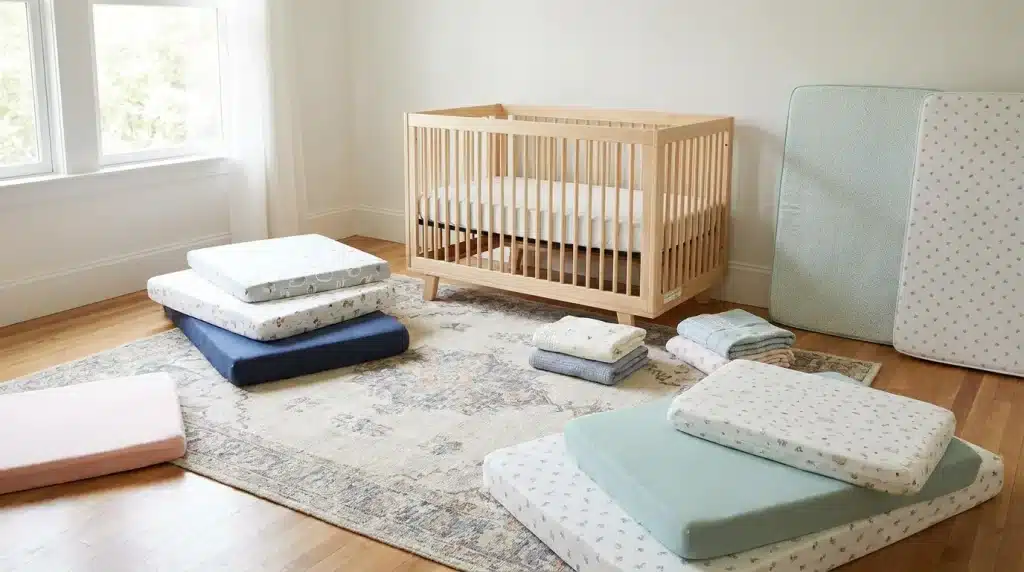


Your baby’s sleep space starts out feeling impossibly small. Then, almost overnight, that crib becomes the center of naps, midnight wake-ups, first rollovers, and eventually a toddler who thinks bedtime is a negotiation. That is why crib mattress size is not a tiny detail to skim past.
A crib mattress has to do more than fit the nursery theme. It needs to fit the crib properly, sit flat, feel firm, and leave no unsafe gaps around the edges.
I’ve seen plenty of home projects go sideways because someone trusted a label instead of measuring. Nursery setup is no different. Before you buy, here are the crib mattress dimensions that matter and the fit checks I would not skip.
| Common Size | About 28 x 52 inches |
| Fits | Full-size cribs and many toddler beds |
| Max Thickness | 6 inches |
| Regulated By | US Consumer Product Safety Commission (CPSC) |
What is a crib mattress?
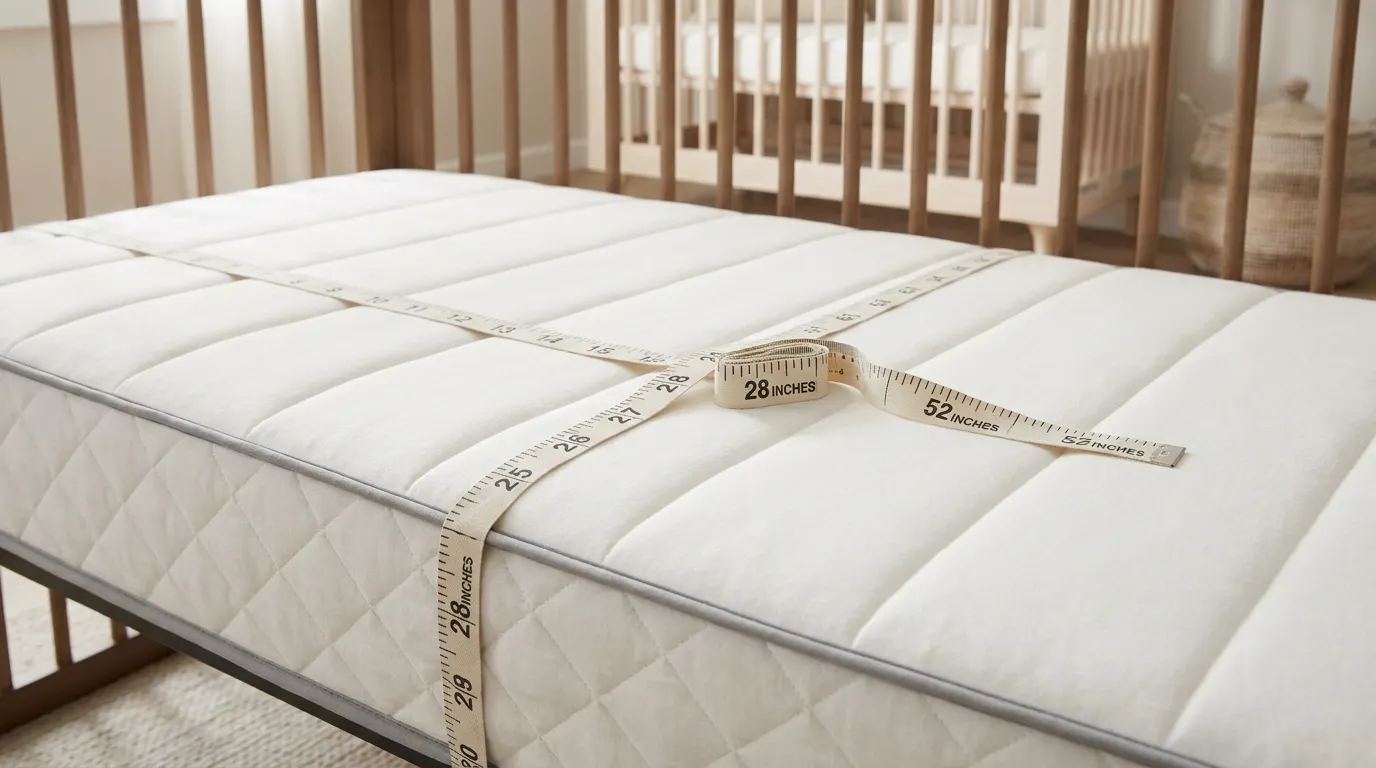
A standard crib mattress is designed to fit full-size cribs using regulated safety dimensions so the mattress stays snug and stable inside the frame.
The official federal minimum is 27 1/4 inches wide by 51 5/8 inches long, while most retail mattresses are rounded to 28 x 52 inches for simplicity and also limits thickness to 6 inches, enough to keep the crib’s side rails at a safe height above the sleep surface.
This sizing is not about convenience. It exists to reduce gaps that could pose entrapment risks or allow the mattress to shift during sleep.
A gap larger than two finger-widths between the mattress edge and crib wall is a flag. A properly fitting crib mattress should sit flat without bending or leaving noticeable space along any side.
Crib Mattress Dimensions
When you are comparing products, the numbers can blur together fast. Keep this chart nearby so you don’t bounce between tabs while trying to decode every mattress listing.
| Measurement | Inches | Centimeters |
|---|---|---|
| Width | 27 1/4 to 28 in. | About 69 to 71 cm |
| Length | 51 5/8 to 52 in. | About 131 to 132 cm |
| Thickness | 6 in. | About 15 cm |
| Common mini crib mattress | About 24 x 38 in. | About 61 x 97 cm |
A half inch may not sound like much. In a crib, it matters. A mattress that is too small can leave gaps along the rails or corners. A mattress that is too thick can affect how deep the crib feels once your baby starts sitting, pulling up, or standing.
That is why I would treat crib mattress dimensions as a safety check, not just a product detail.
How to Measure a Crib for the Right Mattress
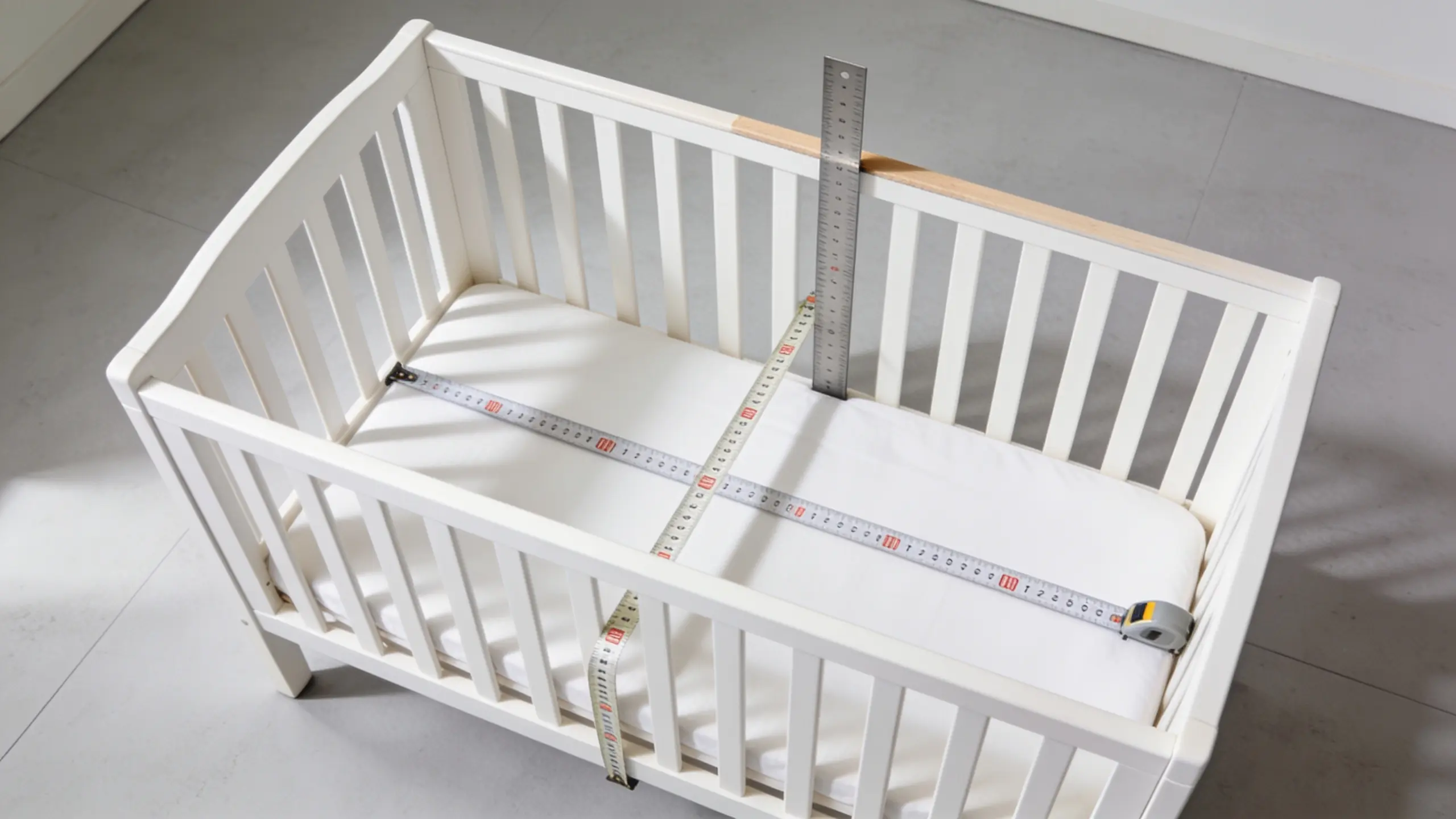
A correct crib mattress fit starts with accurate crib measurements rather than relying on labels like “standard size.” Small differences in crib manufacturing, frame wear, or design can change the usable interior space enough to affect safety and fit. Measuring the inside dimensions before choosing or using a mattress removes most guesswork and helps match the crib opening to the mattress exactly.
It helps to focus only on the interior space where the mattress actually sits. Outer crib dimensions don’t reflect usable room, and even slight irregularities inside the frame can affect how snugly the mattress fits. Along with width and length, mattress height settings also matter because they change how securely the mattress sits as the baby grows and the crib level is adjusted.
1. Inside Width Measurement
Measure from one inner rail to the opposite inner rail where the mattress will sit. Take measurements at both the head and foot ends, since older or lower-quality cribs can vary slightly in shape. Always use the smallest recorded width to avoid overestimating the available space.
A crib mattress should match this width closely enough that no noticeable side gaps appear once placed inside the frame.
2. Inside Length Measurement
Measure from the inside of the headboard to the inside of the footboard. Like width, this should be checked in more than one spot to account for uneven framing.
If two measurements differ, the shorter length becomes the reference point. A proper crib mattress should sit fully flush from end to end without forcing or bending inside the frame.
3. Mattress Support Height Check
Adjustable mattress levels don’t change mattress size, but they do affect real-world fit and safety. Measure the usable depth at each level if the crib has multiple height settings.
As the mattress is lowered for a growing child, stability becomes more important. A correctly sized mattress should remain steady at every support level without shifting or lifting at the edges.
Final Fit Comparison
Once width, length, and support depth are recorded, compare them directly with the mattress specifications. The goal is a near-exact match with no need to compress, force, or adjust the mattress inside the frame.
If even one measurement feels off, it’s safer to recheck the crib dimensions before use. A crib mattress should sit firmly in place on all sides without relying on force or pressure to stay positioned correctly.
How to Choose the Right Crib Size for You
The right crib size should fit the room, match daily routine, and support safe sleep. A common mistake is choosing the crib based on looks and working backward to the mattress.
The practical sequence goes the other direction: space first, then crib type, then mattress fit.
When planning a nursery layout, the same logic that applies to bedroom furniture arrangement applies here, clearance paths around the crib matter as much as the crib itself.
- Start with room dimensions: Measure the nursery, shared bedroom, or sleeping area before choosing a crib. This prevents buying a crib that feels too large, cramped, or hard to move around safely.
- Match the crib to daily use: Choose a full-size crib if it will be your baby’s main sleep space. A mini crib may work better for small rooms, apartments, or temporary setups — but confirm the mattress size before committing to either.
- Check the mattress fit: The mattress should sit flat and snug inside the crib. No loose edges, bending, or visible gaps.
- Think about how long you need it: A convertible full-size crib can extend use into toddler years. A mini crib serves shorter-term needs. Factor that into the upfront cost.
- Review the crib type: Portable, playard, and shaped cribs often require model-specific mattresses. Do not assume a standard mattress fits every crib style.
- Keep safety before style: A crib can be well-designed and still create problems if the mattress fit is wrong. Choose one that supports a firm, flat mattress and leaves enough clearance for safe daily use.
Once room dimensions, mattress fit, crib type, and long-term use are clear, the choice becomes a straightforward process rather than a guessing game.
Standard Cribs vs Other Crib Mattress Sizes
Cribs do not all use the same mattress size, even when labels make them sound interchangeable. The word “standard” usually applies only to full-size cribs, not every crib style. Here is how the main crib types differ:
| Crib Type | Mattress Size or Fit | What It Means |
|---|---|---|
| Standard Cribs | Usually around 28 x 52 inches | This is the most common crib mattress size and fits many full-size and convertible cribs. Still, measure the crib interior to make sure there are no visible gaps. |
| Mini Cribs | Usually around 24 x 38 inches | These are made for smaller rooms, apartments, or short-term nursery setups. A mini crib mattress should not be used in a full-size crib because it can leave unsafe gaps. |
| Portable Cribs and Playards | Model-specific sizing | These do not follow one universal mattress size. The mattress should match the exact product model, since small differences in thickness or shape can affect fit. |
| Shaped and Specialty Cribs | Custom-shaped mattress | Oval, round, and designer cribs usually need a matching mattress from the same brand. These mattresses are not interchangeable with standard or mini crib mattresses. |
The safest approach is to treat the crib and mattress as a matched pair. A label helps narrow the field, but the crib’s measured interior dimensions should always drive the final decision.
The same precision that goes into choosing nursery storage furniture for a small room applies directly to the crib mattress fit.
Crib Mattress Safety Measures Parents Should Not Skip
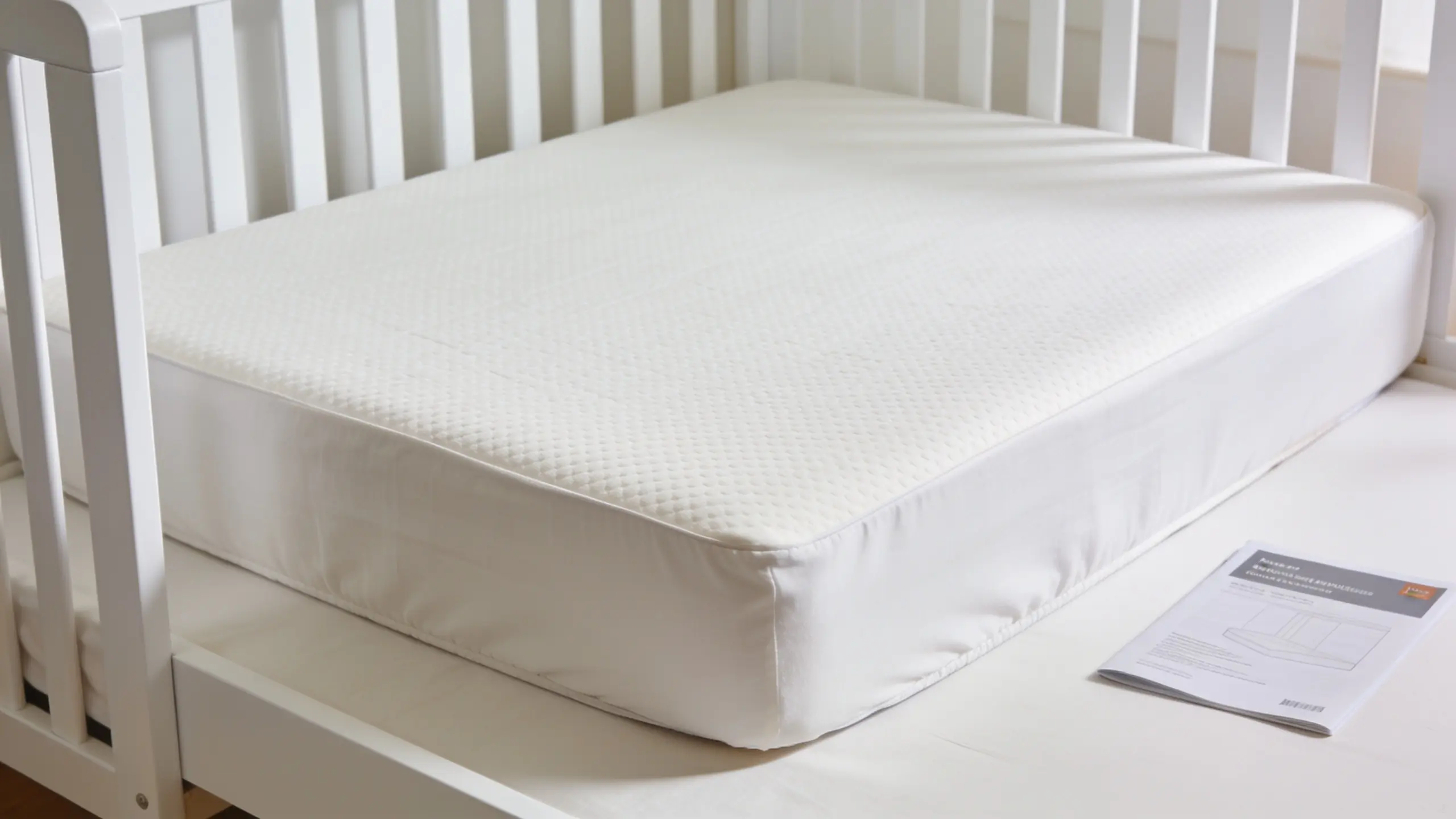
Crib mattress safety is not about adding more things; it is about removing the wrong ones. A simple crib is usually the safest option because every extra item in the sleep space increases risk. Before focusing on design or comfort, it is worth locking in the basic safety rules that actually matter in real use.
For sleep, keep the crib simple and check these basics:
- Firm Mattress: A crib mattress should feel firm, not plush. Soft adult-style comfort is not the goal for infant sleep.
- Flat Surface: The mattress should lie level inside the crib. Do not use wedges, inclines, or rolled blankets to change the sleep angle.
- Fitted Sheet Only: Use a fitted crib sheet sized for the mattress. Skip pillows, loose blankets, bumpers, quilts, stuffed animals, and sleep positioners.
- No Extra Toppers: Do not add foam pads or pillow-top layers to soften the mattress. Added layers can change both fit and firmness.
- Correct Thickness: A full-size crib mattress should not exceed 6 inches in thickness. Thicker does not mean safer or better.
- Manual Check: If your crib has a manual, read the mattress size section. If the manual is missing, search by the crib model number before buying a mattress.
Secondhand cribs and mattresses deserve extra caution. A used crib may be missing parts, and a used mattress may have sagging, hidden moisture damage, or a fit issue that is hard to spot in photos.
Once these safety checks are in place, the crib becomes predictable, stable, and easier to trust during sleep. Most issues with crib mattresses do not stem from major mistakes but from small add-ons or overlooked guidelines. Keeping the setup simple, firm, and properly fitted removes most of those risks before they ever show up.
Common Mistakes When Choosing a Crib Mattress
Most crib mattress problems don’t come from the mattress itself but from incorrect assumptions during selection. A crib can look “standard,” yet still end up with a poor or unsafe fit because of small measurement or compatibility errors. These mistakes are common, but they’re also easy to avoid once you know what to look for.
- Assuming All Cribs Use Standard Size: One of the biggest errors is assuming every crib fits a 28 x 52-inch mattress. That size only applies to full-size cribs, not mini, portable, or shaped designs.
- Ignoring Manufacturer-Specific Requirements: Portable cribs, playards, and specialty models often require exact mattress matches from the same brand.
- Relying Only on Labels Like “Standard Fit”: Terms like “standard fit” or “universal” are not strict guarantees. Different manufacturers may interpret these labels slightly differently.
- Not Measuring the Crib Interior First: Skipping this step is the most common cause of mismatch. Even new cribs can vary due to manufacturing tolerances. The same care used when measuring a bed frame for the right mattress applies here, interior dimensions, not outer frame size, determine the fit.
- Overlooking Shape-Based Cribs: oval, round, and custom-designed cribs require exact-match mattresses, but this detail is often overlooked at purchase.
Once these common errors are avoided, choosing the right crib mattress becomes a straightforward matching process instead of guesswork.
Frequently Asked Questions
Is a crib mattress the same size as a twin mattress?
No. A twin mattress is significantly larger, roughly 38 x 75 inches compared to a crib mattress at 28 x 52 inches. A standard crib mattress fits cribs and most toddler beds, not twin bed frames.
Are crib mattresses and toddler mattresses the same size?
Often yes. Many toddler beds are designed to use a standard crib mattress, same 28 x 52-inch dimensions. Check the toddler bed’s instructions before assuming the transition works, since some designs differ slightly.
Can I use a mini crib mattress in a regular crib?
No. A mini crib mattress is smaller and will leave unsafe gaps inside a full-size crib. The entrapment risk is real. Always use the mattress size listed for your specific crib model.
Do all standard crib mattresses fit all cribs?
They should fit full-size cribs built to federal guidelines, but you still need to measure. Crib age, brand, and minor production variation can affect the actual interior space. Verify before purchasing.
What is the two-finger rule for crib mattress fit?
After placing the mattress, press two fingers against the gap between the mattress edge and the crib wall. If more than two fingers fit into that space, the mattress is too small. The fit should be snug enough that a baby cannot wedge a limb into the gap.
When should I lower the crib mattress support?
Drop the support level before your baby can push up on hands and knees, typically around 5 to 6 months. At the lowest setting, the crib rail should sit well above the top of the mattress so a standing child cannot climb or fall over the side.
Final Thoughts
Crib mattress size is one of those nursery details that looks simple until you are staring at ten nearly identical options online. Start with the standard crib mattress dimensions, then measure the crib from the inside and check the gap once the mattress arrives.
My advice is to be practical, not sentimental, during this part. The crib can be beautiful, but the mattress has to be boring in the best way: firm, flat, snug, and correctly sized. Once that part is right, the crib becomes what it should be: a safer, calmer place for your baby to sleep.
If you are still unsure about two sizes or crib types, take a step back and compare them against your crib’s exact inside measurements rather than relying on product labels. That one extra check usually removes most of the confusion before buying.