

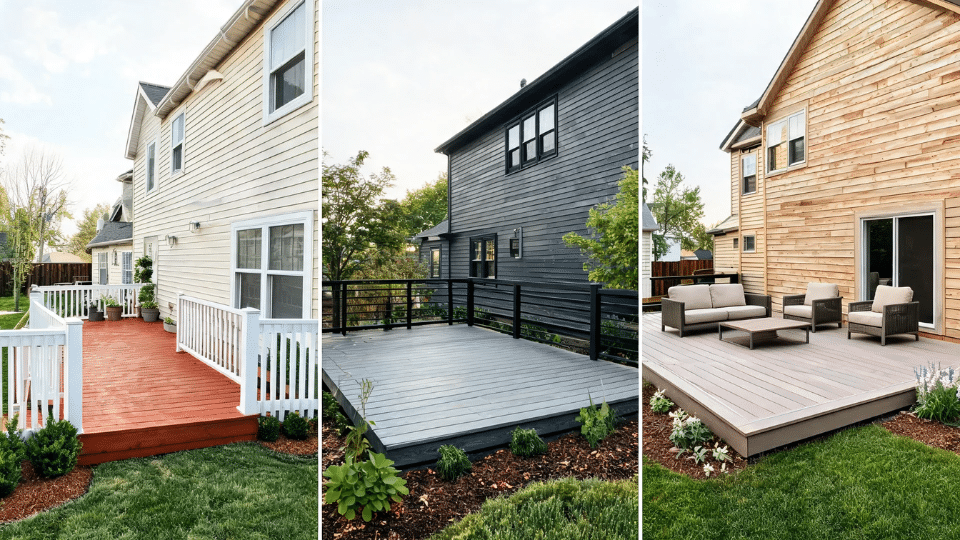


| Cost Note: Figures in this article are estimates based on national averages. Actual costs vary significantly by region, contractor, materials, and project scope. Always get at least three quotes before committing to any project above $1,000. |
Choosing the right deck color ideas can make your outdoor space feel more finished, comfortable, and connected to your home.
I like looking past a single sample board because sunlight, siding, trim, railings, furniture, and plants can all change how a color appears outside.
The best deck color schemes are complete looks, not isolated shades. They combine boards, borders, fascia, stairs, railings, and decor into a single cohesive style.
My aim here is to help you compare warm, cool, light, dark, natural, and modern combinations before you commit to a deck color that lasts.
What Makes a Deck Color Combination Work?
The deck should read as part of the home’s exterior without copying it. When boards and siding are the same color, everything flattens — there’s no definition, no sense that the deck is a separate space. A clear contrast, even a subtle one, makes both surfaces look more intentional.
Railings, fascia, and stairs are the framing. They decide whether the main board color reads as finished or unfinished. A great board color with mismatched trim often looks worse than a mediocre board color with clean, consistent framing around it.
Sun exposure is a practical constraint, not just an aesthetic one. Dark deck boards, charcoal, espresso, and mahogany absorb significantly more heat in full sun.
On an uncovered south-facing deck in summer, that translates to uncomfortable surface temperatures underfoot. Lighter mid-tones and natural wood colors reflect more heat and hide routine dirt better than either extreme.
| Color Tone | Heat in Full Sun | Maintenance Level | Best Climate |
| Whitewashed / Pale | Low | High, shows dirt fast | Covered, coastal, shaded decks |
| Natural Oak / Cedar / Light Brown | Low to medium | Medium, forgives dust and scuffs | Most climates, exposed decks |
| Greige / Taupe / Driftwood Gray | Medium | Low to medium, hides everyday dirt well | Most climates, mixed sun and shade |
| Walnut / Mid-Brown | Medium | Medium, needs sealing to hold depth | Most climates, works covered or open |
| Charcoal / Espresso / Mahogany | High | Medium to high, shows pollen, fading | Covered decks, northern climates, shaded yards |
That table is where to start before you look at any specific combination. Know your sun exposure and your appetite for cleaning before you fall in love with a shade that won’t work for your site.
Deck Color Ideas: Combinations That Hold Together
Each combination below covers the board color, accent framing, what it pairs with on the house exterior, and what the maintenance reality actually looks like two seasons in.
1. Warm Cedar Boards With White Railings
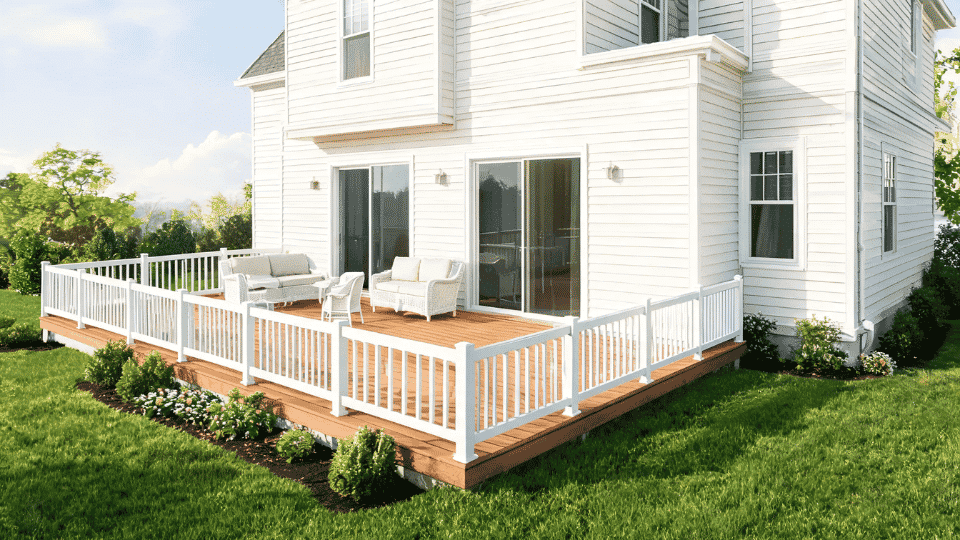
Cedar with white railings is the deck color combination that ages best with the fewest regrets.
The boards bring warmth underfoot without tipping into orange; white railings frame the perimeter cleanly and make the space feel larger than it is. It works across seasons because the neutral framing handles almost any furniture color you put against it.
One real-world note: white railings accumulate pollen and dust faster than the cedar boards do. Budget a seasonal wipe-down into your maintenance plan.
- Pairs with house colors: White, beige, cream, sage green, red brick
- Best for: Traditional homes, farmhouse exteriors, family decks
- Maintenance: Medium — boards hide dust well, but railings need regular attention
2. Driftwood Gray Boards With Black Railings
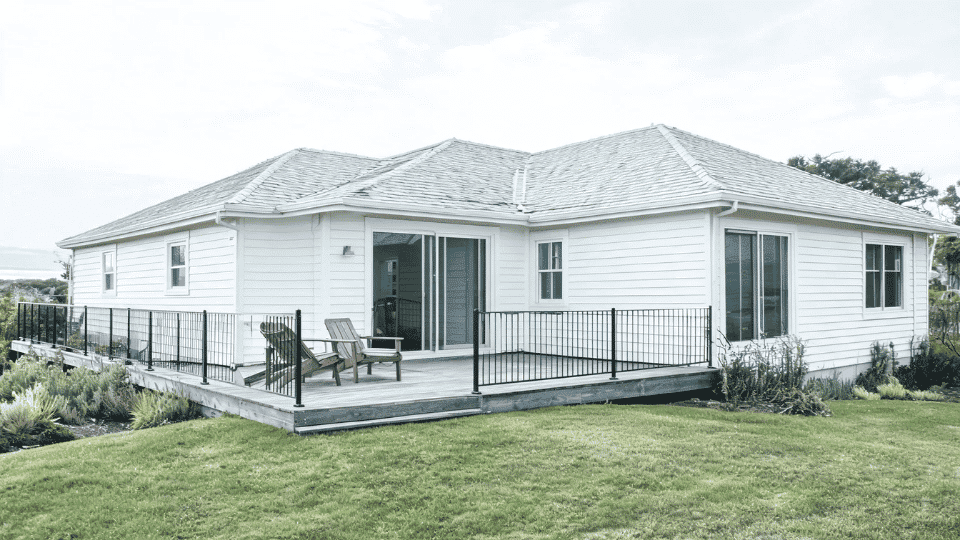
Driftwood gray is the most low-maintenance of the gray deck stain colors in real outdoor conditions. It reads as weathered and natural rather than painted, which means it doesn’t look tired when it fades slightly.
Black railings add definition without weight — this combination works particularly well when the house has dark window frames or a charcoal roof line, because the railing ties those details together.
- Pairs with house colors: White, navy, light gray, blue-gray, stone exteriors
- Best for: Modern homes, coastal decks, townhomes, updated ranch houses
- Maintenance: Low to medium — gray boards hide light dirt, black railings show pollen faster
3. Walnut Boards With a Dark Picture-Frame Border
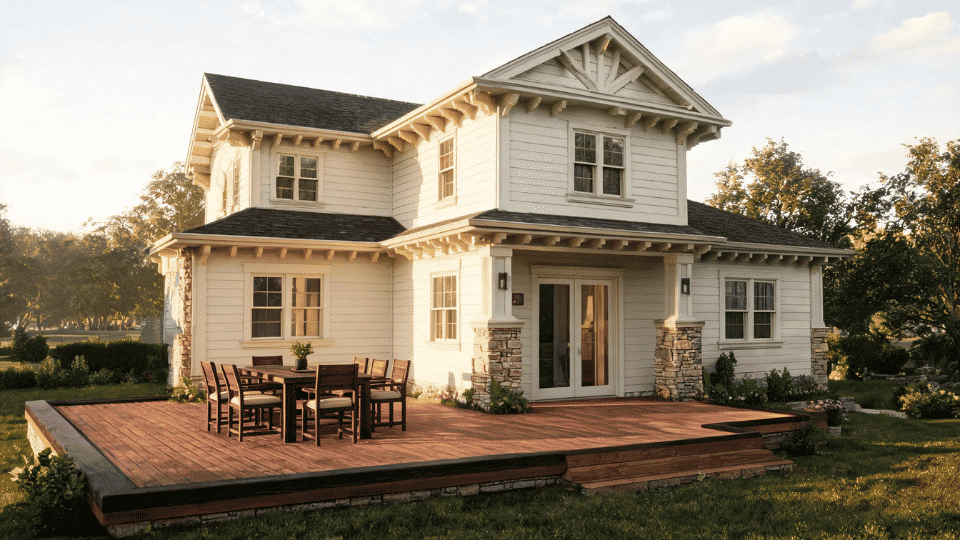
Two-tone deck board colors in walnut and a darker border are the move on larger platforms where a single flat shade makes the deck look like a slab.
The walnut surface brings warmth; the border defines zones and edges without requiring a second railing color. This is one of the better composite decking color combinations because composite holds two tones consistently in ways that natural wood sometimes doesn’t over time.
- Pairs with house colors: Cream, tan, brick, stone, warm white exteriors
- Best for: Large decks, dining zones, craftsman-style houses
- Maintenance: Medium, border hides edge scuffs, walnut surface needs sealing to avoid dullness
4. Light Gray Boards With White Trim and Fascia
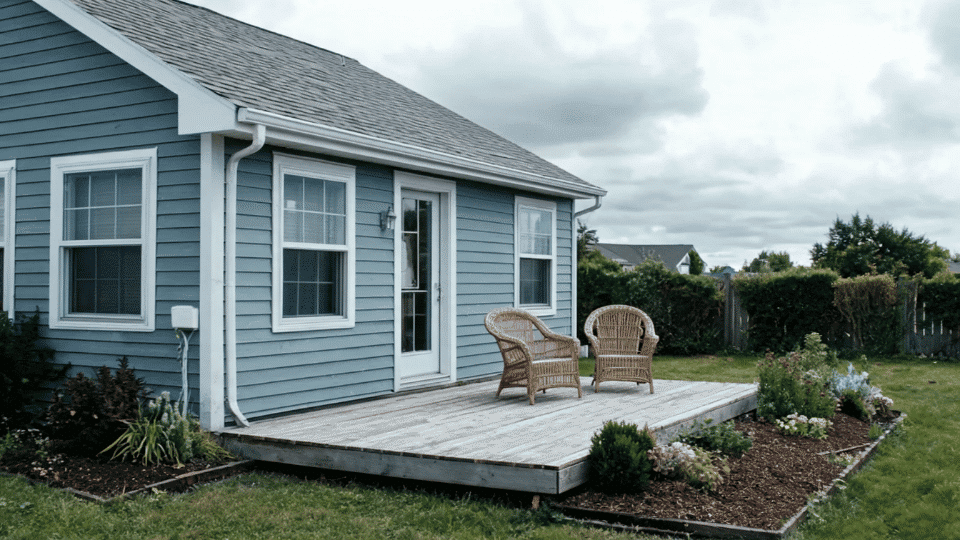
Light gray boards with white trim are the right house and deck color combination for small spaces or shaded decks that would absorb a darker tone.
The gray keeps the surface visually recessive; it doesn’t compete with planters, furniture, or landscaping — while white fascia sharpens the perimeter. On a north-facing or tree-shaded deck, this combination keeps the space from going dark and heavy in low light.
- Pairs with house colors: Navy, white, pale gray, soft blue, cool-toned siding
- Best for: Small decks, coastal homes, modern farmhouse exteriors, shaded spaces
- Maintenance: Medium to high, light colors show mud, leaves, and stains sooner
5. Charcoal Decking With Warm Wood Furniture
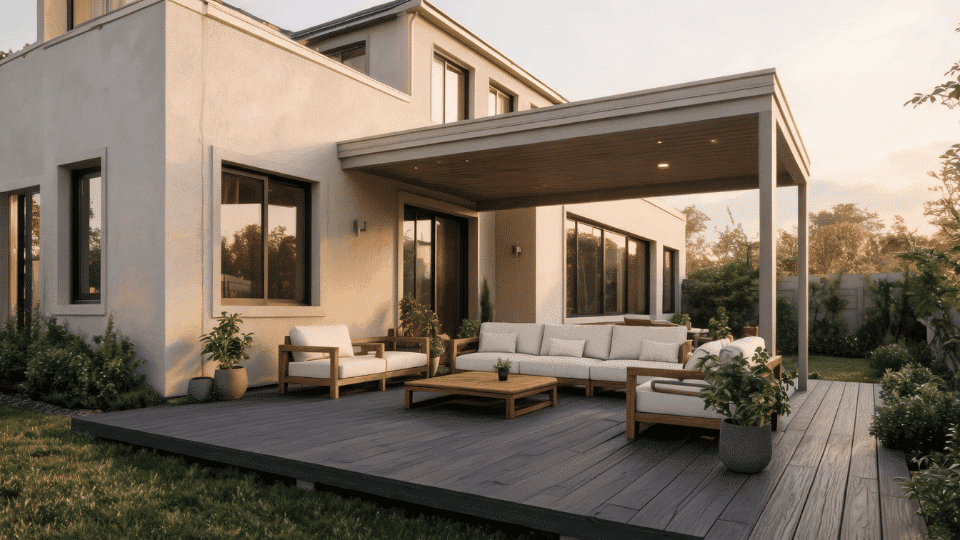
Charcoal deck boards look intentional and current, but they need the right conditions to hold up. Cover is the biggest one — on an uncovered south-facing deck, dark composite absorbs heat to the point of being uncomfortable in July.
On a covered deck or in a northern climate, charcoal works well paired with warm teak or acacia furniture, which prevents the space from reading as cold and industrial. Keep decor simple: cream cushions, natural fiber rugs, understated lighting.
| Pro Tip: If you’re set on a dark deck color but concerned about heat, look for composite boards with lighter-colored flecks or multi-tonal grain. They absorb less heat than solid-dark boards and hold their color better over time. |
- Pairs with house colors: White, black, light gray, stone, warm wood accents
- Best for: Covered decks, modern homes, evening entertaining spaces
- Maintenance: Medium, hides some stains but shows pollen and heat marks in sunny areas
6. Natural Oak Deck With Black Metal Accents
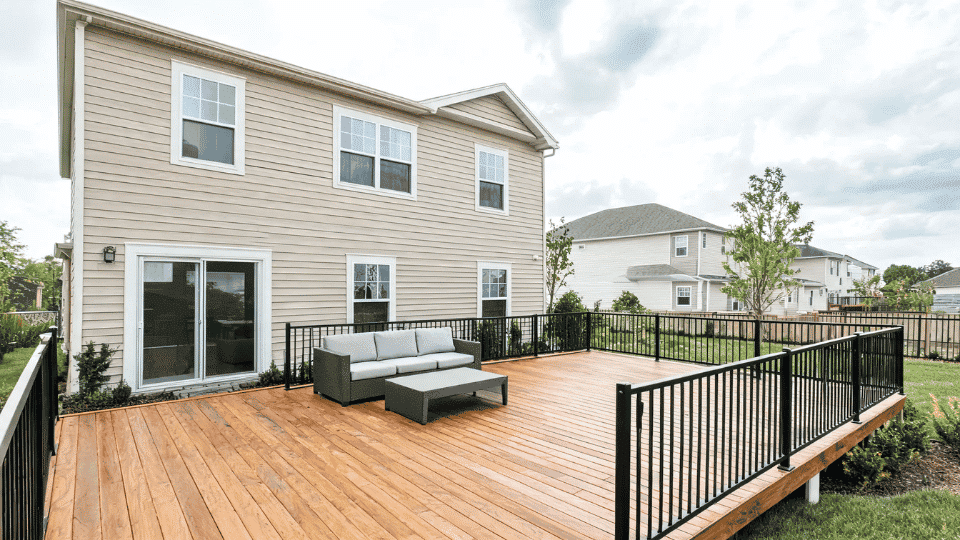
Natural oak is the deck color that does the most without trying. It reads as warm and honest, it doesn’t compete with landscaping, and it ages gradually rather than abruptly. Black metal railings or balusters give it a modern edge without switching the whole register of the space to gray.
This combination is the right answer for anyone who wants a house and deck color combination that looks updated without looking trendy. For the furniture pairing, look at natural teak or powder-coated black frames — both hold up and extend the palette.
- Pairs with house colors: White, beige, soft gray, black trim, cream siding
- Best for: Transitional homes, modern farmhouse decks, mixed wood-and-metal designs
- Maintenance: Medium — lighter wood tones need cleaning where dirt gathers around railing bases
7. Greige Boards With Dark Brown Fascia
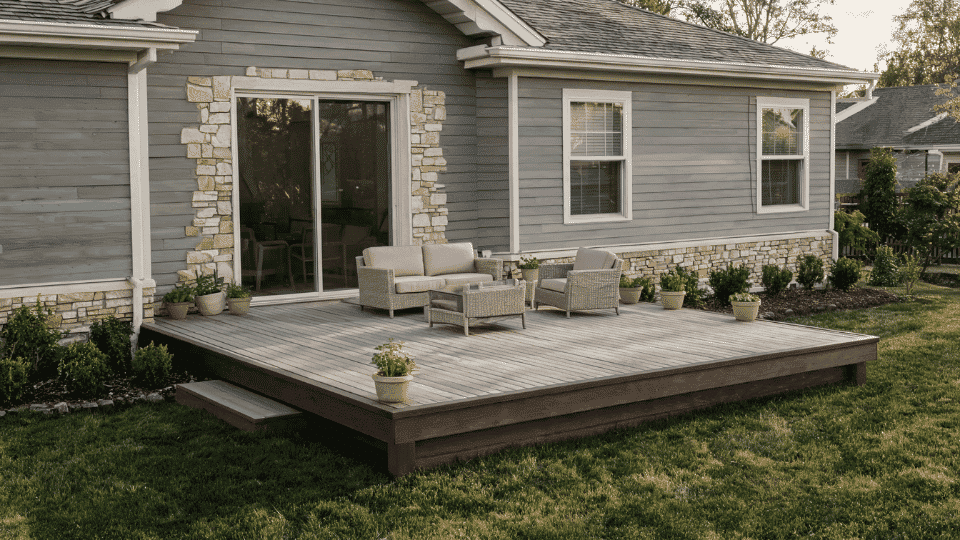
Greige is the deck stain color that earns its keep in mixed-material exteriors. Stone foundations, cedar shingles, stucco panels, greige reads as warm or cool depending on what’s beside it, which means it doesn’t fight with either undertone.
Dark brown fascia grounds the perimeter and stops the boards from looking washed out. This is a genuinely low-drama combination that holds up across furniture changes and seasonal decor shifts.
- Pairs with house colors: Beige, taupe, cream, stone, warm gray exteriors
- Best for: Transitional homes, medium decks, mixed-material exteriors
- Maintenance: Low to medium — greige hides dust well, dark fascia disguises edge scuffs
8. Espresso Brown Deck With Cream or White Railings
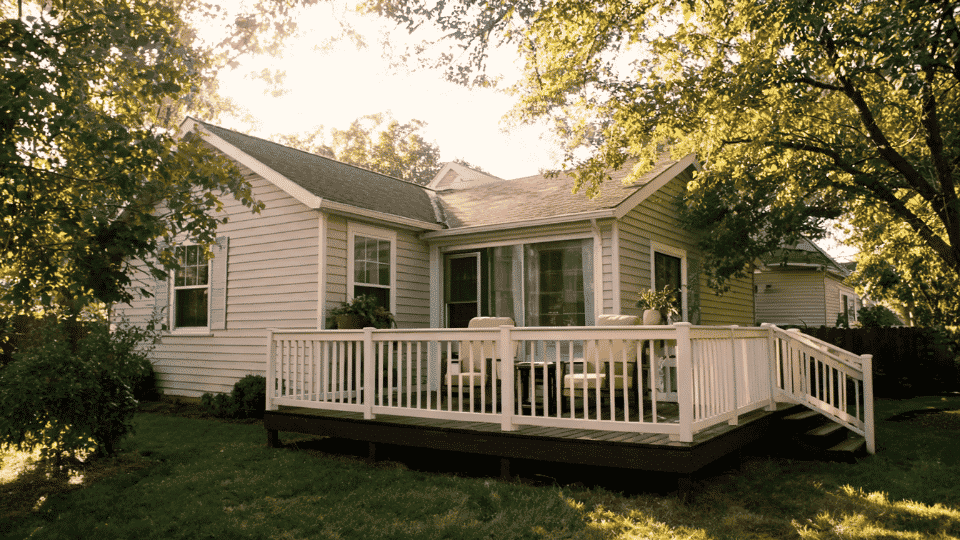
Espresso deck boards work best when the deck gets some shade and the house exterior is lighter. The dark surface grounds the space, while cream or white railings prevent it from reading as a single heavy mass.
On an open south-facing deck, espresso will absorb significant heat and show fading faster than mid-tone brown options. Under a pergola or in a canopy-heavy yard, it holds its depth and creates a rich contrast against a cream or beige house.
- Pairs with house colors: Cream, white, beige, tan, pale stone exteriors
- Best for: Traditional homes, shaded decks, formal outdoor seating areas
- Maintenance: Medium to high — espresso shows dust, heat marks, and scratches faster in full sun
9. Coastal Blue-Gray Deck With White Furniture
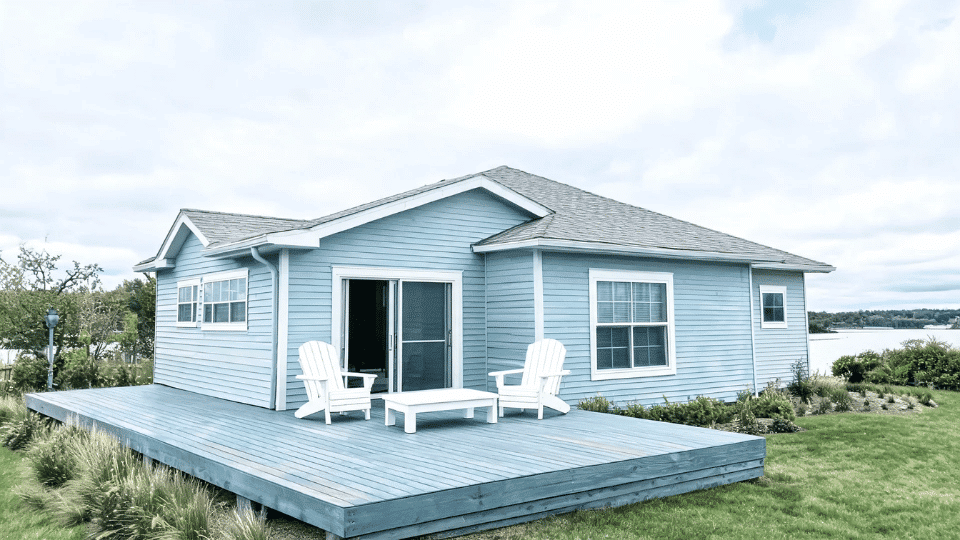
Coastal blue-gray is a specific kind of deck board color, not quite gray, not actually blue, but with enough of a cool undertone to feel connected to water, sky, or bleached wood. It reads differently at different times of day: cooler in the morning, warmer in the afternoon light when the undertone shifts.
White furniture sits cleanly against it without creating glare. This deck color combination belongs on cottage, lake house, or cape-style exteriors; it reads as forced on a suburban colonial with tan brick.
- Pairs with house colors: White, pale blue, soft gray, weathered wood, light stone
- Best for: Coastal homes, lake houses, cottage decks
- Maintenance: Medium — muted blue-gray hides light dirt, but white furniture needs more frequent wiping
10. Brown Deck Boards With Black Railings and Fascia
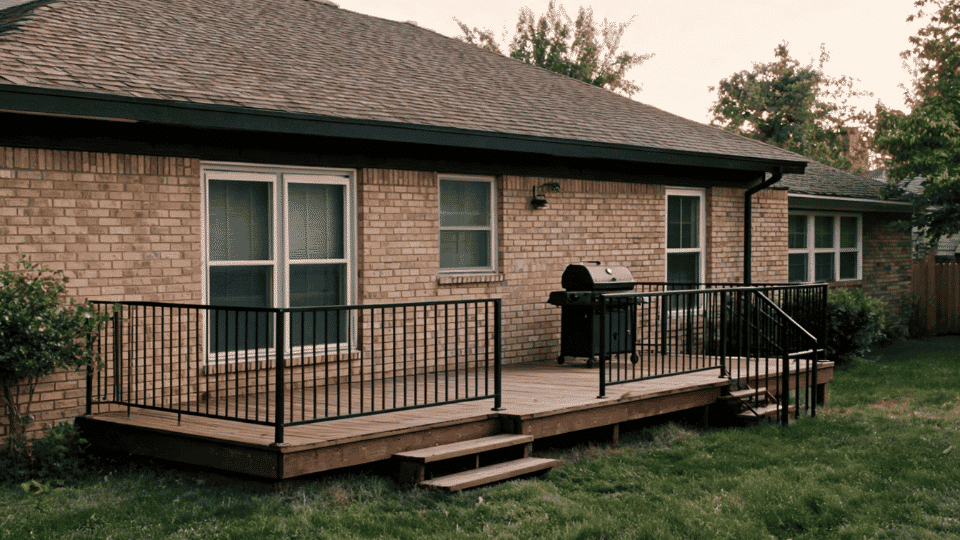
This is the deck paint color combination that updates a traditional ranch or colonial exterior without replacing the material.
Brown boards keep the warmth and familiarity that those house styles depend on; black railings and fascia sharpen everything and tie in dark window frames or a metal roof.
The contrast reads as current without requiring a full exterior overhaul. It also pairs well with almost any outdoor furniture choice, which gives you more flexibility down the line.
- Pairs with house colors: White, cream, tan, brick, warm gray exteriors
- Best for: Traditional homes, ranch houses, mixed classic-modern styles
- Maintenance: Medium — boards hide daily wear, black railings and fascia show dust or pollen
11. Soft Sage Deck With Natural Wood Accents
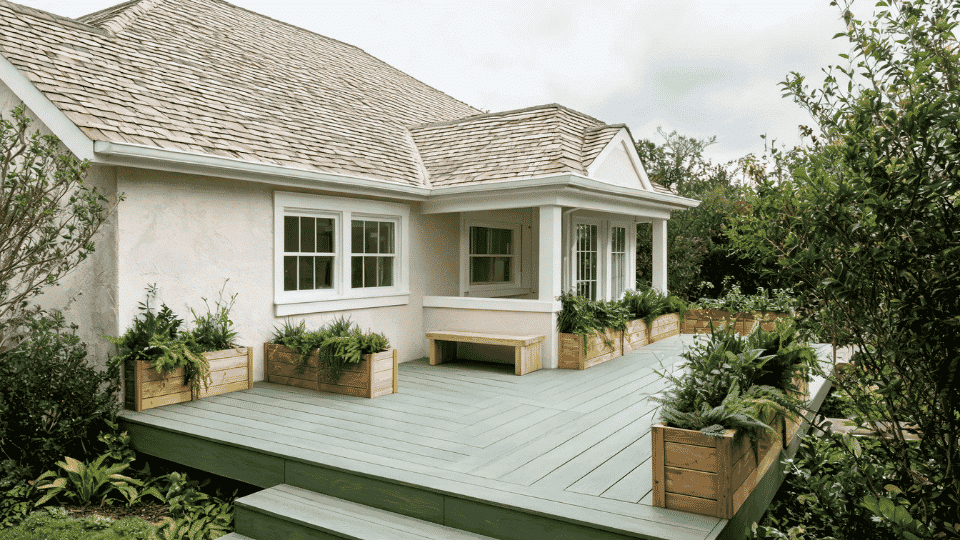
Sage deck boards are not for every yard, they earn their place when the surrounding landscape does some of the work. Mature trees, dense planting, or a garden bed running along the deck edge make sage read as intentional and organic.
In a bare, concrete-bordered yard, the same color looks out of place. Natural wood furniture, slatted privacy screens, or cedar planters anchor the color and prevent it from looking like it belongs indoors. Keep the palette to three elements: sage boards, natural wood accents, and one neutral (cream or white) for cushions or trim.
- Pairs with house colors: Cream, white, beige, natural wood, cottage-style exteriors
- Best for: Garden decks, cottage homes, shaded yards, plant-heavy outdoor spaces
- Maintenance: Medium — sage can hide light dust, but green undertones look dull if cleaning is skipped
12. Taupe Deck With White Railings and Stone Details
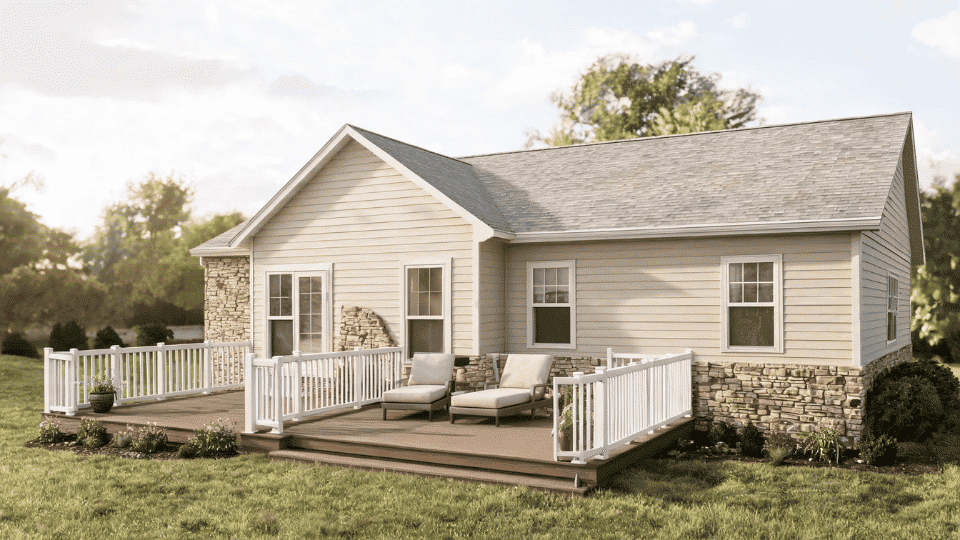
Taupe sits between brown and gray without committing fully to either, which makes it one of the more versatile outdoor deck color schemes for homes with mixed exterior materials. It reads as warm next to cream siding and neutral next to gray stonework.
White railings keep the structure from getting heavy. Where stone steps, a stone column, or a stone foundation wall are already in place, taupe deck boards tie the materials together in a way that plain brown or plain gray often doesn’t manage.
- Pairs with house colors: White, cream, beige, stone, warm gray exteriors
- Best for: Small to medium decks, patios with stonework, relaxed seating areas
- Maintenance: Low to medium — taupe hides dust and footprints well, white railings need regular wiping
13. Gray Main Boards With a Charcoal Border
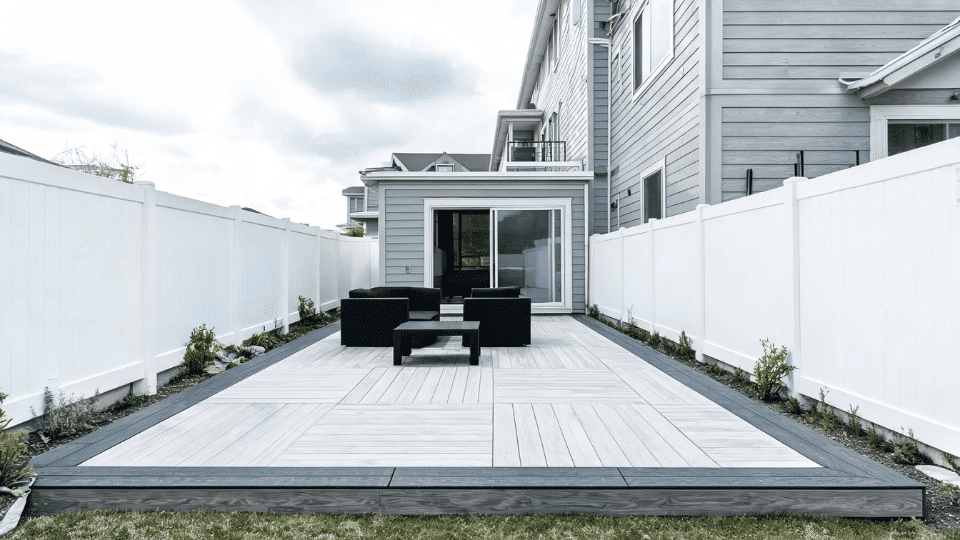
Gray boards with a charcoal border are a two-tone composite decking color combination that reads as designed rather than defaulted to.
The main field stays soft and usable; the border defines the footprint and guides the eye. This approach works particularly well on rectangular decks where a single flat color emphasizes the plainness of the shape.
The charcoal border also masks edge wear — scuffs and dents along the perimeter are the first signs of aging on any deck, and a darker border color absorbs that damage quietly.
- Pairs with house colors: White, light gray, navy, black trim, cool-toned exteriors
- Best for: Modern homes, townhomes, rectangular decks
- Maintenance: Medium — gray boards hide light dirt, charcoal border shows dust in high-pollen areas
14. Mahogany Finish With Bronze or Black Details
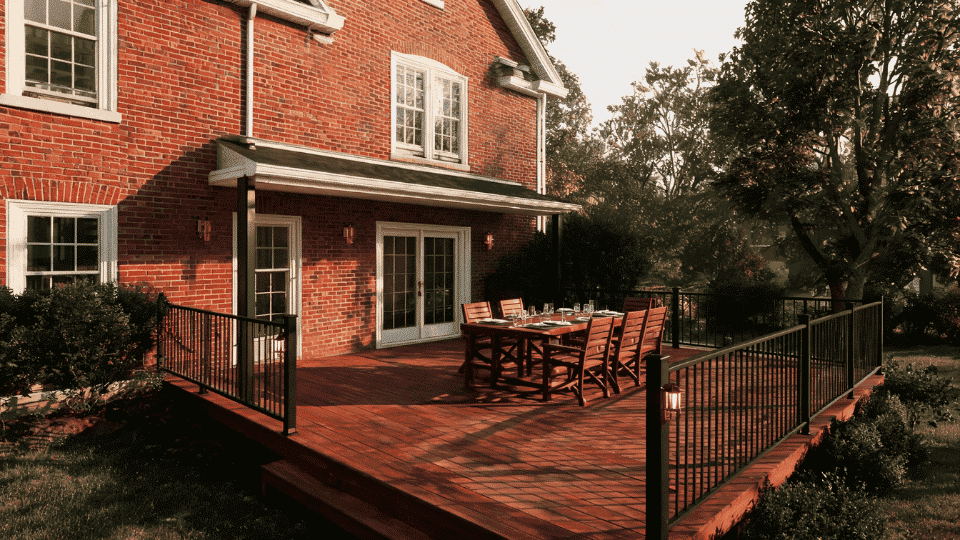
Mahogany’s red-brown depth earns its premium price point only when the surrounding materials support it. Cream siding, warm stone, or traditional brick creates the contrast the color needs to read as rich rather than heavy.
Bronze hardware and railing details add warmth at the joints; black details are a sharper, more modern take on the same combination. The failure mode for mahogany deck boards is neglect; without regular cleaning and sealing, the red undertones fade to a washed-out brown.
If the original stain has already broken down, understanding whether you can paint over stained wood changes what the remediation options actually are.
- Pairs with house colors: Brick, cream, beige, stone, warm white exteriors
- Best for: Traditional homes, formal decks, covered porches
- Maintenance: Medium to high, shows fading and scratches without regular sealing
15. Whitewashed Deck With Soft Neutral Decor
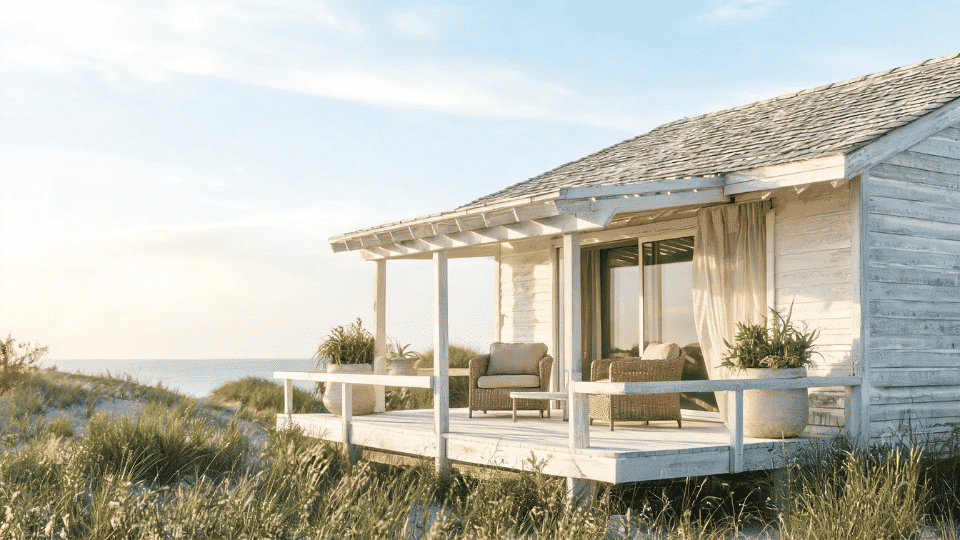
Whitewashed boards reflect light better than any other deck paint color, which is exactly why they belong on covered decks where the ceiling would otherwise make the space feel dim.
Beige cushions, cream umbrellas, and woven furniture in natural fiber extend the palette without adding busyness. On an open, uncovered deck, pale finishes show every leaf stain, tracked footprint, and pollen bloom, which means cleaning stops being optional and becomes weekly.
For high-traffic family decks, whitewash is the wrong direction regardless of how good it photographs.
- Pairs with house colors: White, pale gray, soft blue, beige, coastal-style exteriors
- Best for: Covered decks, small decks, coastal homes, shaded outdoor lounges
- Maintenance: High — shows dirt, mud, leaf stains, and furniture marks fast
How to Choose the Right Deck Color for Your Home
Start with the exterior before you start with the deck. Pull up photos of your siding, trim, roof line, and any stonework or brick near the deck. The deck color ideas that hold together long-term are the ones chosen in context, not in isolation at a showroom.
Work through these four questions in order:
1. What is the undertone of your siding? Warm siding (cream, tan, yellow-beige, red brick) pairs better with warm board colors (cedar, walnut, oak, brown). Cool siding (gray, white with blue or green undertones, stone) pairs better with cool-toned boards (driftwood gray, light gray, taupe, coastal blue-gray). Clashing undertones make a deck look like it was chosen separately from the house — because it was.
2. What direction does your deck face? South-facing decks in full sun get hot. Dark deck boards that look dramatic in a photo become a practical problem in July. North-facing or tree-shaded decks can carry darker tones without the heat penalty and actually benefit from them since lighter colors can look washed out in low light.
3. How is the deck used? High-traffic family decks with kids, dogs, and frequent entertaining need mid-tone forgiving colors — walnut, taupe, greige, driftwood gray. Low-traffic spaces or covered entertaining areas can handle pale or very dark finishes without the maintenance becoming a problem.
4. Have you tested samples in real light? The step most people skip. Get physical samples, hold them against your actual siding, and check them at 8 a.m., noon, and 6 p.m. Board colors that look balanced in morning and afternoon light are almost always safer picks than ones that only shine in one condition.
For anyone still weighing which structure makes the most sense for their outdoor space before finalizing colors, the outdoor deck ideas cover layouts, materials, and how to design for the way you actually use the space at different times of day.
Common Deck Color Mistakes Worth Avoiding
The most expensive mistakes are the ones made before the first board goes down. These are the ones I see most often on decks that looked fine on paper.
Picking the board color before the full palette. Railings, fascia, stairs, furniture, and planters all affect the final result. Choose the system, not just the boards.
Matching the deck too closely to the house. Slight contrast reads as intentional. Exact match reads as flat. Even a one-tone shift in value between siding and boards is enough to give the deck its own presence.
Going dark without accounting for heat. Charcoal, espresso, and mahogany all absorb heat. On an exposed deck in a warm climate, surface temperatures on dark boards can be significantly higher than the surrounding air temperature on a sunny afternoon.
Using three or more deck board colors at once. One main color, one framing or border color, and one accent from the furniture or railings is the ceiling. More than that competes with itself.
Testing samples only indoors or only on the chip. Outdoor light shifts undertones. A sample that looks purely gray indoors may read as blue or green outside. A brown that looks neutral in the showroom may pull orange against your specific siding.
If you’re planning skirting alongside the color, the deck skirting ideas that include finishes and materials that hold up under the deck, and how to match them to the board color you’ve chosen above.
Frequently Asked Questions
What is the most popular deck color?
Gray and brown remain the most widely chosen deck board colors in the US. Within gray, driftwood and light gray lead; within brown, natural oak and walnut tones are the most common. Multi-tonal composite boards that mimic natural wood grain have gained significant share because they hold color better than solid single-tone options.
Should a deck be lighter or darker than the house?
Either works, but the contrast needs to be deliberate. A darker deck grounds a pale house and gives the structure weight. A lighter deck softens a dark exterior and opens up the space visually. Matching exactly — same tone, same saturation — is the outcome to avoid, because it flattens both surfaces.
What deck color goes with a white house?
Nearly any deck board color works against white siding, which is why white houses give you the most flexibility. Warm wood tones (cedar, oak, walnut) are the most traditional pairing. Gray tones (driftwood, light gray, taupe) give a more modern or coastal result. Black or charcoal boards against white siding create maximum contrast for a contemporary look.
What deck color works best with black railings?
Cedar, walnut, natural oak, taupe, light gray, and brown all work well against black railings. The board color needs enough warmth or lightness to contrast the railing without darkening the whole deck. Avoid pairing black railings with dark espresso or charcoal boards — the combination loses definition, and the railing disappears.
Can I mix composite deck colors?
Yes, and for larger decks, it often produces a better result than a single flat color. Use one color for the main field and a second for the border, stairs, or fascia. Keep the undertones in the same family — mixing warm and cool tones across the same deck platform rarely resolves cleanly, even if both colors look fine individually.
What deck color is easiest to maintain?
Greige, taupe, and driftwood gray are the most forgiving in real-world conditions. They sit between the extremes that cause maintenance problems — pale enough not to absorb excessive heat, mid-tone enough to hide routine dirt, dust, and pollen without requiring frequent cleaning.
What is the best deck color for a small deck?
Light to mid-tone colors make small decks read as larger. Light gray, natural oak, and taupe all reflect enough light to keep a compact space from feeling enclosed. Dark boards on a small platform emphasize the confined footprint. If you want a darker accent, limit it to the border or fascia, not the main field.
Does deck color affect home resale value?
Neutral, well-maintained deck board colors in natural wood tones and mid-range grays generally show better at resale than highly specific or trendy choices. According to Remodeling Magazine’s Cost vs. Value Report, a wood deck addition typically recoups 50 to 75% of its cost at resale — how the deck looks and how well it was maintained matter more than the specific color chosen.
Final Verdict
The best deck color ideas come from planning the entire outdoor space, not from choosing a single attractive shade. Boards, borders, railings, fascia, furniture, sunlight, and cleaning habits all shape the final result.
Warm wood combinations feel classic, gray-and-black pairings look sharper, and softer tones like sage, taupe, and blue-gray create a calmer mood.
I always trust the color that looks balanced beside the real house, not just the sample card.
If these deck color schemes helped you narrow your choices, comment with your exterior color, and I’ll suggest a pairing worth testing.
Sources
- Remodeling Magazine, Cost vs. Value Report (2024) — deck addition resale value data
- TimberTech composite decking product documentation — color and heat performance specifications
- Benjamin Moore Woodluxe Exterior Stain product line — stain color references