

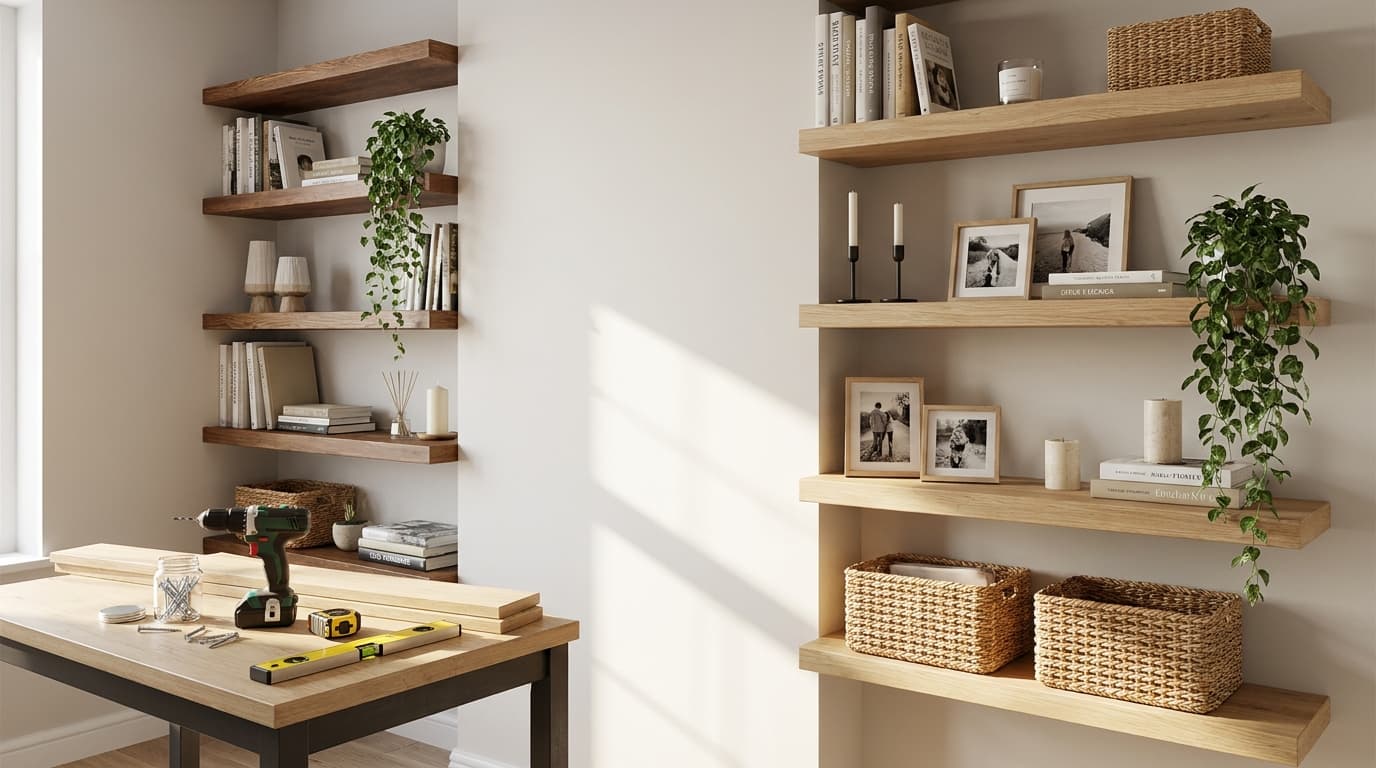


| Project Type | DIY wall shelves (5 methods) |
| Difficulty Range | Beginner to Intermediate |
| Time Per Shelf | 2–6 hours, depending on the method |
| Cost Range | $10–$180 depending on method and materials |
| Tools Needed | Drill, saw, level, stud finder, sandpaper, measuring tape |
| Skill Required | Beginner-friendly; no professional experience needed |
Learning how to build wall shelves is one of the most practical weekend projects you can tackle, and one of the few DIY jobs where a beginner can get a clean, useful result without owning a truck full of tools.
I’ve built all five methods in this guide. The first time I built bracket shelves, I drilled into a stud and had a level shelf up in an afternoon. The fifth time, I was cutting 30-degree angles for hexagons and wishing I’d started simpler. Start with the method that matches where you are right now.
There are five distinct approaches to building DIY wall shelves here, from basic scrap wood brackets to simple DIY floating shelves to honeycomb display shelves, with step-by-step instructions, a cost comparison, and the mistakes that trip people up most on their first build.
Is Building Your Own Wall Shelves Worth It?
If you want shelves that fit a specific wall, hold a specific load, and match a specific finish, yes. Store-bought shelves are built for average spaces. DIY wall shelves are built for you.
You choose the depth, the length, the wood species, the color, and how the brackets look. For a first project, a simple bracket shelf can cost under $30 and be done in a Saturday.
That said, not every situation calls for DIY. Very heavy shelves above beds, shelves on tile or masonry, or shelves in rental units where wall damage isn’t an option, those deserve a harder look at whether building is the right call.
For most rooms, a well-mounted bracket shelf is the safest and most beginner-accessible starting point.
Choose the Right Method Before You Buy Anything
Most people pick a shelf style because it looks good in a photo. The better question is whether that method suits your wall type, the weight you plan to put on it, and your current skill level.
Here’s a direct comparison before you spend a dollar on materials:
| Method | Best For | Skill Level | Cost Range |
| Scrap Wood Bracket Shelf | Beginners, books, everyday storage | Beginner | $10–$60 |
| No-Hardware Dowel Floating Shelf | Clean modern rooms, bathrooms, and light storage | Beginner to Intermediate | $10–$80 |
| Floating Corner Shelf | Small rooms, offices, unused corners | Beginner to Intermediate | $40–$150 |
| Picture Ledge Shelf | Frames, art, kids’ books, family photos | Beginner | $30–$120 |
| Hexagon / Honeycomb Shelf | Wall decor, plants, candles, light display items | Intermediate | $40–$180 |
The method you choose shapes every decision after it, what wood to buy, which hardware to use, and how long the project realistically takes. Once that’s settled, everything else becomes a checklist.
Planning Your Wall Shelves Before You Build
Good planning makes your DIY shelf project easier and safer. Before you buy wood or start drilling, decide where the shelf will go, what it will hold, and how much support it needs.
- Choose the location: Pick a useful wall in your living room, kitchen, bedroom, bathroom, office, or garage. Make sure the shelf will not block doors, windows, switches, or walkways.
- Decide the size: Measure the wall space before choosing the shelf length and depth. A small shelf may be 24 inches wide, while a larger shelf may be 36 to 48 inches wide.
- Think about weight: Light decor needs less support. Books, dishes, tools, and storage baskets need stronger brackets and better wall support.
- Check the wall: Use a stud finder before drilling. Wall studs provide the shelf with greater strength than drywall alone.
- Plan the spacing: If you are building more than one shelf, leave enough space between them for books, baskets, plants, or decor.
Once your plan is clear, the project feels much easier. A few careful choices at the start can help you avoid crooked shelves, weak support, and wasted materials.
Materials by Method: What You Actually Need to Buy
The materials list stays simple when it matches the shelf type. Here is what each wall-shelf method requires.
- Basic Bracket Shelf: Use a wood board, two or more shelf brackets, screws, wall anchors, sandpaper, wood filler, paint or stain, and a clear sealer if needed. This is the best first project for most beginners.
- Floating Shelf: Use a shelf board or shelf box, hidden floating-shelf brackets, or a wood cleat; long screws, wall anchors if needed, sandpaper, wood filler, paint, stain, or sealer. Floating shelves need strong hidden support to avoid sagging.
- Corner Shelf: Use two shelf boards or one corner-cut board, small brackets or cleats, screws, anchors, wood glue, sandpaper, and finish. Measure carefully because corner walls are not always perfectly square.
- Picture Ledge Shelf: Use a back board, bottom board, front lip, wood glue, brad nails or screws, sandpaper, and paint or stain. This is great for frames, books, and small decor, but not heavy storage.
- Heavy-Duty Shelf: Use thick boards or plywood, heavy-duty brackets, long structural screws, washers, wall studs, anchors if needed, and a strong finish. This shelf type is best for garages, laundry rooms, and pantries.
Once you have the materials matched to the shelf type, the build steps become much easier. The next section walks through each method from the first measurement to the final check.
How to Build Wall Shelves: Step-by-Step Guide by Method
The shelf method decides the build order. Each method below follows the same basic idea: measure carefully, find strong support, install level hardware, and test the shelf before loading it.
|
Pre-Use Safety Checklist:
|
Method 1: Scrap Wood Bracket Wall Shelf
Materials you need: 1x boards, 1×2 pieces, wood screws, pocket-hole screws, 5/8-inch brad nails, 1 1/4-inch wood screws, wall anchors if needed, primer, paint, drill, saw, countersink bit, level, safety gear, and sandpaper.
Step 1: Cut the Shelf Boards and Bracket Pieces: Cut your 1x shelf boards to the needed length. This project used one 1×6 board and one 1×4 board. Then cut 1×2 bracket pieces. Use 2 1/2-inch and 3 1/4-inch pieces for the narrow shelf, and 5-inch and 6-inch mitered pieces.
Step 2: Dry-Fit and Assemble the Brackets: Lay the bracket pieces under each shelf before fastening. Check the cuts, angles, and fit first. For the wider shelf, join the 5-inch and 6-inch pieces at a 90-degree angle with wood screws. Use a countersink bit so screw heads sit flush and neatly.
Step 3: Sand, Prime, and Paint the Shelves: Sand shelf boards and bracket pieces before mounting. Smooth the edges, corners, and cut ends so they feel clean and safe. Wipe away dust, then prime and paint. The shelves were painted black, while the brackets stayed natural wood. Let each coat dry.
Step 4: Attach the Brackets to the Shelves: Attach larger brackets under the wider shelf using 1 1/4-inch wood screws. For the narrow shelf, attach brackets to the back edge with pocket-hole screws. Keep each bracket straight and tight, and make sure screws do not poke through the top.
Step 5: Mount the Shelves to the Wall: Hold each shelf against the wall and mark screw spots. Use a level before drilling so the shelves sit straight. For a wider shelf, drive screws through each support piece. Use wall anchors without studs. For the narrow shelf, screw into studs when aligned.
Step 6: Add the Mitered Supports and Check the Shelf: Attach the mitered angled pieces with 5/8-inch brad nails to complete the bracket shape. These pieces add a handmade look. After installing both shelves, check that they are level, tight, and secure. Push gently, then tighten anything that moves
Method 2: No-Hardware Dowel Floating Shelves
The cleanest-looking method in this list. The shelf slides onto wall-mounted dowel pins with no visible hardware on the face. It takes more preparation than a bracket shelf, but the finished look is worth it for modern rooms and bathrooms.
Step 1: Cut Boards and Dowels: Start with one 2x8x8 board, remove any damaged corners, and cut it into three shelf pieces, each just under 31 inches long. Use a speed square as a saw guide. Cut a 36-inch oak dowel into nine 4-inch pins, giving each shelf three supports total.
Step 2: Mark and Drill Dowel Holes: Mark three dowel points on each shelf: one in the center and two about two inches from each outside edge. Find the center of each line. Tape the 1/2-inch bit to set depth, clamp the board, and drill all nine holes carefully and cleanly.
Step 3: Rip and Label Back Supports: Rip a 1 1/2-inch strip from each shelf board to create the back wall support. Use a circular saw guide, or a table saw if available. Mark each shelf-and-support pair before separating them, so the dowel holes stay aligned during final assembly.
Step 4: Sand Dowels and Shelf Pieces: Test each dowel in the holes. The back support side should fit tightly, but the shelf side should slide on smoothly. Sand the exposed dowel ends by spinning them in a drill with sandpaper. Sand all shelves and round edges for a cleaner finish.
Step 5: Install Dowels and Lock Supports: Line up each shelf with its matching back support. Hammer dowel pins into the back support holes. Add glue if needed, though a tight fit may hold well. Clamp the pieces, pre-drill, countersink, and add one screw through the middle dowel for stability.
Step 6: Stain and Seal the Shelves: Apply pre-stain conditioner to prevent blotchy absorption. Let it dry, sand lightly, then wipe on the stain and remove excess. Light woods like maple and pine behave differently under stain; a maple stain color chart helps you pick a tone before committing to a full board. Finish with two or three coats of spray polyurethane, sanding lightly between coats.
Step 7: Mount and Secure the Shelves: Level each back support on the wall and mark studs. Drill holes, then screw into studs or strong wall anchors. Slide the shelves onto their dowel pins, use scrap wood to ensure even spacing, and add a safety screw so the shelves cannot slide off.
Method 3: DIY Floating Corner Shelves
Materials you need: Shelf boards, small brackets or cleats, screws, anchors, wood glue, drill, level, stud finder, sandpaper, paint, stain, or sealer.
Step 1: Cut the Frame and Shelf Pieces: Cut the 2×4 frame pieces to length, then cut the 1/4-inch plywood for the top and bottom faces. Keep each shelf’s parts together so nothing gets mixed up. Use clean, straight cuts along the wall sides and front edges, as these areas remain visible.
Step 2: Assemble the Shelf Frames and Add Supports: Build each corner shelf frame with one long 2×4 and shorter side pieces. Add two middle supports inside each frame, using a scrap spacer to keep them even. Countersink the screw holes, drive in 3-inch screws, then nail one plywood face onto the frame.
Step 3: Sand, Fill, Trim, and Paint: Sand the rough edges, plywood faces, and exposed 2×4 areas until smooth. Fill nail holes, screw holes, and small gaps with wood filler or joint compound. Add decorative trim if needed, cut the visible corners at 45 degrees, then paint the shelves and trim before mounting.
Step 4: Mark the Wall and Mount the Frames: Set the first shelf on scrap spacers at your chosen height. Use a level, mark the wall, and find studs where possible. Drill pilot holes through the frame, then use screws into studs or strong wall anchors to secure each shelf firmly.
Step 5: Attach the Bottom Face and Front Trim: After the frame is mounted, attach the front 2×4 edge with countersunk screws. Nail the bottom plywood face in place, then install the painted molding along the exposed edges. Use brad nails for the trim, and check that every shelf fits tightly before finishing.
Step 6: Caulk, Touch Up, and Final Check: Caulk the back edges where the shelves meet the wall, especially if the corner is not perfectly square. Let it dry, then touch up the paint on the shelf and wall. Once everything is dry, load the shelves slowly and check for movement, sagging, or loose screws.
Method 4: DIY Picture Ledge Shelves
Materials you need: Poplar board, table saw, nail gun, wood glue, clamps, wood putty, sandpaper, stain, spar urethane, screws, drill, level, stud finder, tape measure, and safety gear.
Step 1: Cut the Shelf Boards: Start with a wide poplar board and cut it slightly longer than the final shelf size. For this project, the final ledges were 60 inches long, so the boards were first cut to 61 inches. Rip three pieces for each shelf: 2 inches, 3 inches, and 4 1/2 inches.
Step 2: Dry-Fit the Shelf Pieces: Gather the three boards for one ledge and dry-fit them before adding glue or nails. This helps you check that the pieces line up well. The 3-inch board forms the base, the 4 1/2-inch board becomes the back, and the 2-inch board creates the front lip.
Step 3: Glue and Nail the Back Board: Clamp the 3-inch board flat on the workbench to keep it straight. Run wood glue along the bottom edge of the 4 1/2-inch board. Attach it to the 3-inch board, nail both ends first, then check that everything is flush before adding more nails.
Step 4: Attach the Front Lip: Add the 2-inch piece to the front edge of the ledge the same way. Use wood glue first, then nail both ends to hold it in place. Check that the front lip is straight and flush with the base before nailing across the full length.
Step 5: Trim the Ends and Fill Holes: Cut one end of the ledge clean, then measure 60 inches from that fresh edge and cut the other end. This gives the shelf smooth, flush sides. Fill all nail holes with wood putty using your finger, then let the putty dry fully before sanding.
Step 6: Sand, Stain, and Seal: Sand off any excess wood putty and smooth the entire ledge before finishing. Apply the stain evenly, wipe off the excess, and let it dry for 24 hours. After that, add spar urethane to protect the wood and give the picture ledge a clean finished surface.
Step 7: Mount and Style the Ledges: Measure the wall so the picture ledges hang centered. Since they may hold frames and artwork, screw them into wall studs for stronger support. Once mounted, place frames and art on the ledges, stand back, rearrange, and keep adjusting until the display looks balanced.
Method 5: DIY Hexagon or Honeycomb Shelves
Materials you need: Lumber, miter saw or circular saw, stop block, painter’s tape, wood glue, brad nailer, 1 1/2-inch brad nails, sander, sandpaper, router with 45-degree bit, polyurethane, drill, screws, stud finder, and safety gear.
Step 1: Cut Matching Hexagon Pieces: Choose lumber like pine, walnut, or ash. For eight-inch sides, use about 50 inches of board per shelf. Cut each piece at a 30-degree angle, flipping the board after each cut. Use a stop block so all six pieces stay the same length.
Step 2: Sand and Tape the Pieces: Sand each cut piece before assembly to remove saw marks and rough edges. Smooth the faces and angled ends so the joints fit tightly. Lay all six pieces side by side, press the joints together, and run painter’s tape across them to hold the layout in place.
Step 3: Glue, Fold, and Nail the Shelf: Flip the taped pieces so the inside joints face up. Apply wood glue to each angled joint, then fold the strip into a hexagon shape. Press the corners tight, wipe away glue squeeze-out, and add 1 1/2-inch brad nails for extra strength if needed.
Step 4: Let It Dry and Fix the Joints: Let the shelf dry overnight before removing the tape. Check every joint for gaps or loose areas. If nail tips stick out, trim them first, then sand them down. Sand raised joints, glue marks, and uneven spots until the full shelf feels smooth.
Step 5: Add Bevels and Finish: If you want a cleaner edge, use a router with a 45-degree bit to bevel the outside edges. Then apply clear satin polyurethane or your chosen finish. Let it dry, sand lightly with 220-grit sandpaper, and add extra coats for better protection.
Step 6: Mark, Mount, and Secure: Choose your wall layout, then mark stud locations on the shelf and wall. Drill countersunk holes where screws will sit. Drive screws into studs, leaving them slightly proud. Hang the shelf on the screws, check that it feels secure, then style it with light decor.
These shelf methods give you several ways to match your skill level, room style, and storage needs while keeping the project practical and customizable.
What Each Method Actually Costs
These figures reflect material costs at a standard home improvement store. Your total will shift depending on wood species, finish quality, and whether you already own the tools.
| Method | Estimated Cost | Main Cost Drivers |
| Scrap Wood Bracket Shelf | $10–$60 | 1× boards, 1×2 brackets, screws, paint |
| No-Hardware Dowel Floating Shelf | $10–$80 | 2×8 lumber, oak dowel, stain, polyurethane |
| Floating Corner Shelf | $40–$150 | 2×4 frame, plywood faces, trim, paint |
| Picture Ledge Shelf | $30–$120 | Poplar board, glue, nails, stain, spar urethane |
| Hexagon / Honeycomb Shelf | $40–$180 | Lumber species choice, miter cuts, finish, and hardware |
The single biggest cost variable across all five methods is wood species. Pine sits at the low end. Walnut, ash, and hardwood poplar add $20–$60 to the same build.
The same poplar boards that work well for picture ledges also translate directly to a painted DIY bookshelf once you’re comfortable with the cuts. The hardware itself, brackets, anchors, and screws, is usually under $15 per shelf, regardless of method.
Common DIY Shelf Mistakes to Avoid
Small errors during measuring, mounting, or finishing can weaken your shelves. Watch for these common mistakes so your project stays straight, safe, and useful.
- Skipping the level: Always use a level before drilling, because even a small tilt can make the shelf look uneven.
- Not finding studs: Heavy shelves should be mounted to studs when possible, since drywall alone cannot safely hold heavy loads.
- Using weak anchors: Choose wall anchors that match your wall type and the total weight your shelf will carry.
- Choosing thin wood: Thin boards may bend or sag over time, especially when holding books, dishes, or storage baskets.
- Making shelves too deep: Deep shelves need stronger brackets because extra depth puts more pull on the wall support.
- Overloading the shelf: Stay within the hardware weight limit and keep heavier items close to the wall.
- Painting after mounting: Cut ends, and undersides are hard to reach once the shelf is on the wall. Finish the shelf completely before installing it.
If you’re starting with a stained board and want a painted finish, painting over stained wood needs different prep than bare pine does. Touching up the wall is fine; fully painting after the fact is a frustration. - Ignoring hidden wires or pipes: Check carefully before drilling, especially near outlets, switches, kitchens, bathrooms, and shared plumbing walls.
Avoiding these mistakes helps your DIY shelves stay secure, level, and clean-looking while reducing the chance of wall damage or future repairs.
Keeping Wall Shelves in Good Shape After Installation
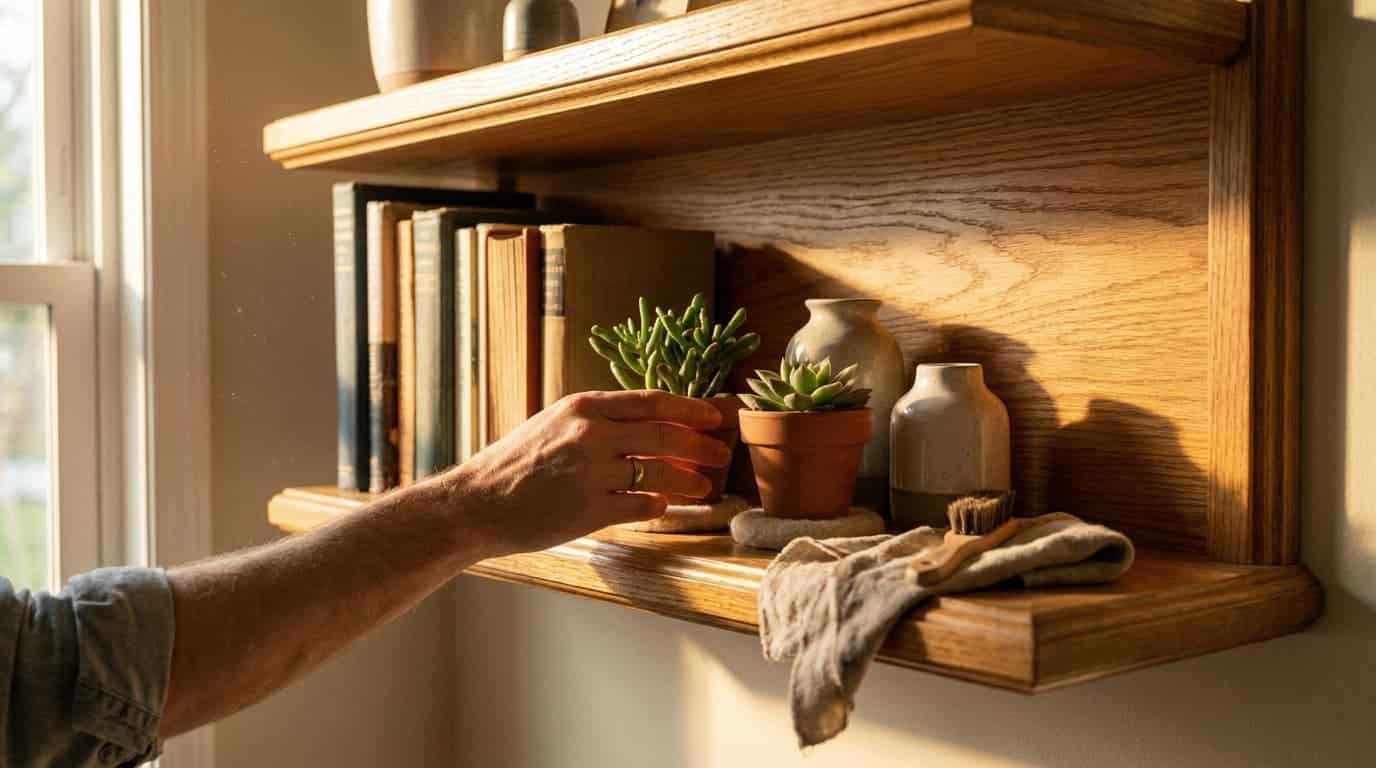
A well-built shelf can last decades. These habits help. Let the finish cure fully before placing items on the shelf; most paint and polyurethane products need 24–72 hours of full cure before they can be handled without contact.
Lift items rather than dragging them; dragging leaves scratches that are hard to fix without refinishing. Add felt pads under anything ceramic, glass, or metal to protect the surface.
In bathrooms, use sealed wood and keep the room ventilated. Unsealed wood in a humid bathroom will absorb moisture and eventually warp.
Check the shelf brackets and screws every 6–12 months. Wood expands and contracts with seasonal humidity changes, and fasteners can loosen over time in ways that aren’t visible until something shifts.
When things go wrong, a screw starts to pull, a bracket creaks, fix it immediately rather than waiting. A loose anchor is a 10-minute fix. A shelf that falls and damages the wall, floor, or whatever was on it is not.
Frequently Asked Questions
How do you build floating wall shelves without visible brackets?
Use the dowel method in Method 2 above: a back support mounts to the wall with screws, wooden pins extend from it, and the shelf slides over the pins. The result is a shelf with no visible hardware on the face or underside.
What wood is best for DIY wall shelves?
For most builds, 3/4-inch pine or poplar boards from a home improvement store work well and stay affordable. For heavier loads or a higher-end look, 3/4-inch birch plywood or hardwood boards like oak hold up better and resist sagging over wider spans.
How do you mount wall shelves without studs?
Use toggle bolts or snap toggles rather than standard plastic expansion anchors. Toggle bolts distribute load across a larger area of drywall and hold considerably more weight. Avoid drywall-only mounting for shelves that will hold books, dishes, or anything above 20 lbs.
How deep should DIY wall shelves be?
6 to 8 inches for decor and small plants. 8 to 10 inches for books. 10 to 12 inches for storage baskets. Beyond 12 inches, the leverage on the wall mount increases significantly; you’ll need stronger brackets or a cleat system mounted to multiple studs.
How do you build corner wall shelves?
Use the 2×4 frame method in Method 3. Build the L-shaped frame, attach plywood faces, paint before mounting, then drive screws into studs or anchors on both walls. Caulk the back edges after mounting; corners are almost never perfectly square, and a thin bead of caulk closes the gap cleanly.
Can I build wall shelves as a beginner with no woodworking experience?
Yes, with Method 1 or Method 4. Both use straight cuts with standard lumber sizes and visible hardware that’s forgiving to install. A miter saw helps, but a circular saw with a guide gets the same result. Allow extra time on the first build; the second one always goes faster.
How do you keep wall shelves level?
Mark the bracket or cleat locations with a spirit level before drilling any holes. Don’t rely on eyeballing it; even a 1/4-inch tilt is obvious once items are on the shelf. For shelves wider than 36 inches, check the level at both ends and the center before committing to screw positions.
Final Thoughts
Wall shelves can turn empty space into useful storage when you plan the build with care. I like this project because you can choose a simple bracket shelf, a clean floating style, a corner shelf, a picture ledge, or a hexagon design based on your room and skill level.
You have seen how to choose materials, compare costs, cut and finish boards, mount supports, avoid common mistakes, and keep shelves safe over time.
Knowing how to build wall shelves helps you save money, use your walls better, and create storage that fits your home. I would start with one easy shelf first, then try another method once you feel ready. Share your results or questions below.