

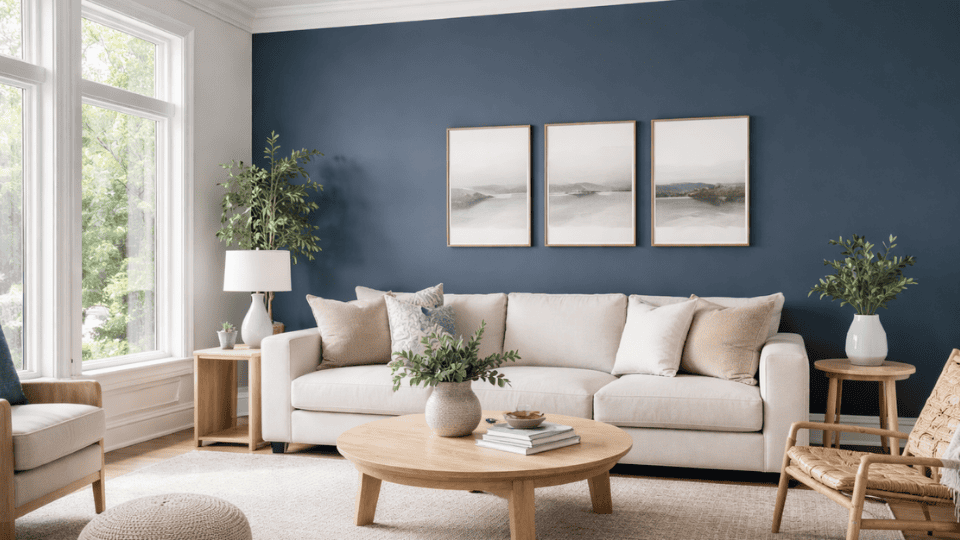


I’ve noticed that some paint colors look simple on a sample card but feel very different on a real wall. Sherwin-Williams Indigo Batik is one of those colors. It’s a deep blue that can look calm in one room and bold in another, depending on the light.
In this guide, I’ll walk you through everything you need to know about this paint color. You’ll learn its color code, LRV, undertones, and where it works best in a home.
I’ll also show you how lighting changes its look, which colors pair well with it, and how it compares to other popular navy paints. By the end, you’ll know if Indigo Batik is the right choice for your space.
What Is Sherwin Williams Indigo Batik (SW 7602)?
Sherwin-Williams Indigo Batik (SW 7602) is a deep blue paint color known for its rich and slightly muted look. It belongs to the blue color family and often reminds people of dark denim or classic navy.
This shade has cool undertones with a soft gray base, which keeps it from looking too bright or overpowering. Indigo Batik has a Light Reflectance Value (LRV) of 8, meaning it absorbs most light and appears quite dark on walls.
Because of this depth, it works well for strong contrast or a bold accent. Many people use this color on accent walls, cabinets, or doors to add a calm yet striking presence to a room.
|
SW Indigo Batik (SW 7602)
|
Why Does It Look Softer than Other Navies?
Many navy paint colors can feel very strong or even heavy on a wall. This shade often feels a bit softer than many other navy tones. I’ve noticed that this happens because the color contains gentle gray notes mixed into the blue.
Those gray hints calm the color and reduce the sharp brightness you sometimes see in darker blues. When you place it on a wall, the shade often feels more balanced and relaxed instead of bold and overpowering.
This mix of blue and gray helps the color work well in many spaces, from bedrooms to living rooms. It gives you the depth of navy while still keeping the overall look comfortable and easy to live with.
Important Undertone Note –
Indigo Batik also carries a visible purple undertone in certain lighting conditions, particularly under warm artificial light in the evening. This is different from Naval (SW 6244), which reads as a more pure navy.
If you’re sensitive to any hint of purple in your blue, test Indigo Batik carefully in evening light before committing. In well-lit rooms during the day, this undertone is subtle.
Under incandescent or warm LED bulbs at night, it becomes more pronounced.
LRV of Sherwin-Williams Indigo Batik
The Light Reflectance Value helps you understand how light or dark a paint color will appear on your walls. This number shows how much light a color reflects or absorbs, which can change how a room feels.
1. What LRV Means
LRV stands for Light Reflectance Value, which shows how much light a paint color reflects or absorbs. The scale runs from 0 to 100.
Lower numbers indicate that the color absorbs more light, while higher numbers indicate that it reflects more light. When you check LRV, you get a better idea of how dark or light a paint color will appear on your walls.
2. Indigo Batik LRV Value
Sherwin-Williams Indigo Batik has an LRV of 8, which places it in the dark color range. Because the number is low, the color absorbs most of the light instead of reflecting it.
This is why Indigo Batik looks deep and rich on walls. The shade creates a bold presence and often appears stronger than medium blue.
3. What This Means for Your Room
Because Indigo Batik has a low LRV, it works best in spaces that receive ample natural or artificial light. Bright rooms help the blue tones appear clearer and more balanced.
In darker rooms, the shade may appear deeper and moodier. Many homeowners use it on accent walls, cabinets, or doors to add contrast and depth.
LRV Reality Check
At LRV 8, Indigo Batik is in the same darkness range as some black paints (which typically sit around LRV 3–6).
In a room without strong natural light — a north-facing room, a windowless bathroom, or a basement — this color can read as near-black by evening.
That’s not necessarily a bad thing, but it’s worth seeing in person before painting a full room.
I always recommend testing this one on at least two walls, in both daylight and evening artificial light, before committing.
How Lighting Affects Sherwin-Williams Indigo Batik
Lighting plays a big role in how this paint color appears on your walls. The same shade can look brighter, deeper, or slightly different depending on the light source in the room.
Natural Daylight
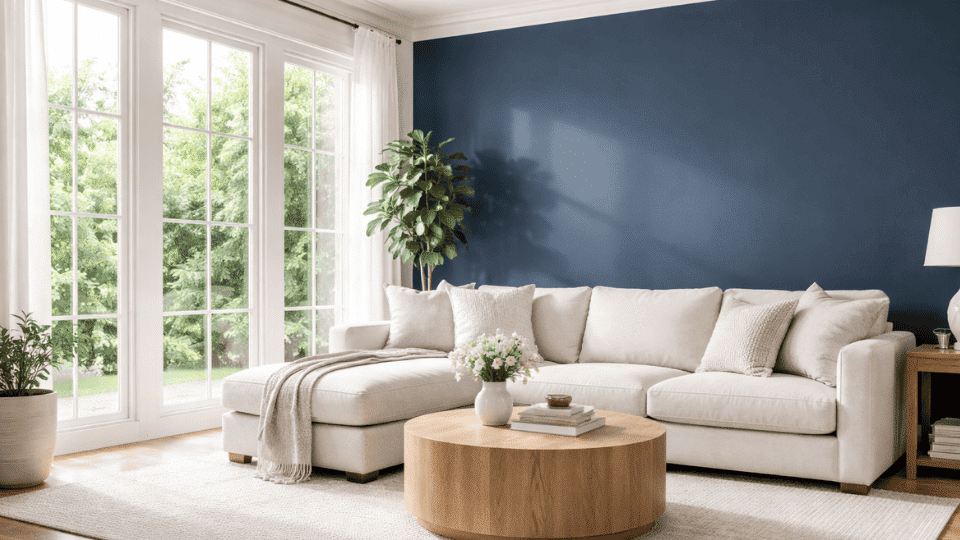
In rooms with plenty of natural daylight, Sherwin-Williams Indigo Batik often shows its true blue character. The color appears clearer and a bit brighter compared to dim spaces.
Sunlight helps reveal the rich, denim-like tone of the paint, making the blue feel fresh and balanced rather than overly dark or heavy.
Warm Artificial Light
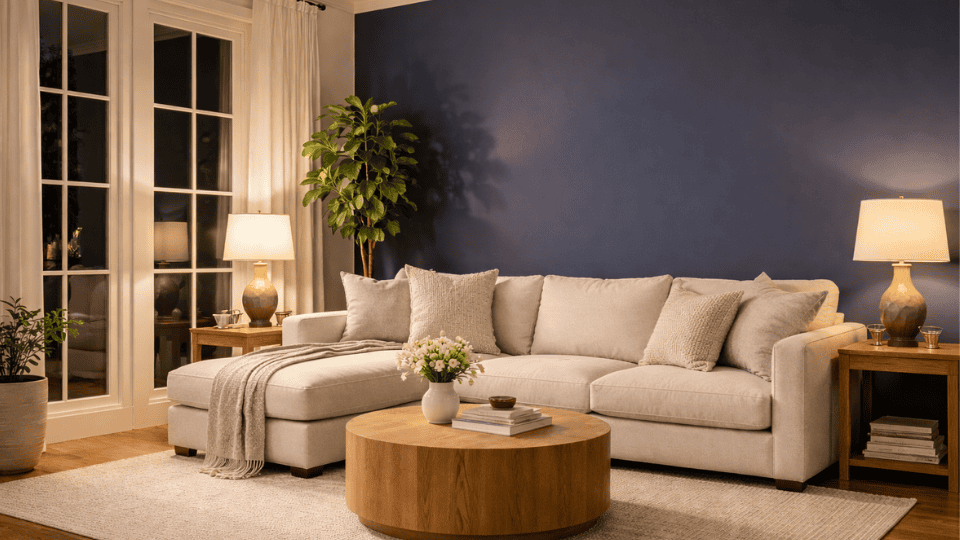
Under warm indoor lighting, Indigo Batik can appear slightly different. The warmth of the bulbs may bring out subtle violet or purple hints within the blue base.
This effect is usually gentle, but it can make the color feel softer and a little warmer during the evening or at night.
Bulb Temperature Matters Significantly Here
Warm bulbs (2700K–3000K) will pull the purple undertone forward noticeably in the evening. If you prefer Indigo
Batik to stay firmly blue throughout the day, use daylight-balanced bulbs (4000K–5000K) for your artificial lighting.
I’ve seen the same room look like rich denim navy in daylight and deep violet-blue at night, simply because of the incandescent fixtures. Neither is wrong, just know which you’re getting.
Low Light Rooms
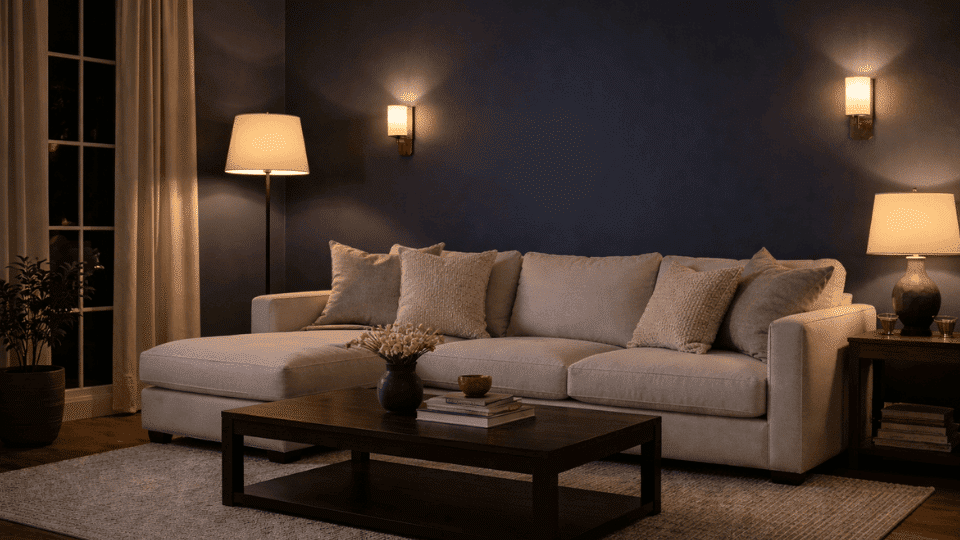
In spaces that receive little natural or artificial light, Indigo Batik can appear deeper and more dramatic. Because the color already has a low LRV, it absorbs more light than it reflects.
This can create a cozy, moody look, but in very dark rooms, the shade may look closer to navy or charcoal blue.
Direction of Natural Light
The direction your windows face changes how Indigo Batik reads throughout the day.
- North-facing rooms: Cool, blue-toned light throughout the day. Indigo Batik reads deeper and slightly cooler here, with less warmth in the blue. The purple undertone is less likely to appear, but the overall color reads darker and more muted.
- South-facing rooms: Warm, consistent light. This is where Indigo Batik performs best. The denim-blue quality comes through clearly, and the color feels bold rather than heavy.
- East-facing rooms: Warm golden light in the morning becomes neutral by noon. The color will look its most vibrant in the morning hours and gradually settle into a truer navy.
- West-facing rooms: Neutral to warm light in the afternoon. Late afternoon sun gives Indigo Batik a particularly rich, saturated quality.
Best Places to Use Sherwin-Williams Indigo Batik
Indigo Batik is a versatile dark blue, but it performs best in specific contexts. The notes below go beyond the general list to give you what I’ve actually observed in real spaces.
Accent Walls Indigo
Batik works well as an accent wall in living rooms, bedrooms, or dining areas. The deep blue color creates a strong contrast against light walls and neutral furniture.
For accent walls, avoid the wall behind the sofa in a narrow room, as it will visually close the space.
The most effective placement is a wall that faces you as you enter, or a fireplace wall where the depth adds drama without making the room feel compressed.
Kitchen Cabinets
Using Indigo Batik on kitchen cabinets can give your kitchen a bold but balanced look. It pairs nicely with white countertops, marble backsplashes, and brass or gold hardware.
On lower cabinets paired with white uppers, Indigo Batik creates a two-tone kitchen that feels contemporary and grounded.
Use satin or semi-gloss finish for durability and cleanability. Matte finish on kitchen cabinets wears through at hardware touchpoints within a year or two.
Front Doors
Indigo Batik is a strong choice for front doors because the deep blue shade stands out easily. It adds personality to your home’s exterior while still feeling classic.
For front doors, use an exterior-grade paint in satin or semi-gloss. Indigo Batik on a door reads as a rich navy in most daylight conditions and pairs cleanly with white, black, or natural wood surrounds.
Bedrooms
Indigo Batik can create a calm, relaxing atmosphere. The deep blue tone helps make the space feel cozy, especially when paired with soft bedding and warm lighting.
In bedrooms, this color works particularly well when you paint all four walls rather than just one.
The enclosure effect of a dark color on all sides feels intentional and serene rather than claustrophobic, especially when ceilings stay white and trim stays crisp.
Keep bedding and textiles in whites, creams, or warm oatmeal tones to prevent the room from going too dark.
Built-ins and Furniture
This color works well on built-in shelves, cabinets, and painted furniture. Indigo Batik helps these pieces stand out and adds depth without overwhelming the space.
Bathrooms
Indigo Batik works in bathrooms but requires careful handling of the LRV. In a bathroom with a window and white tile, the blue reads as moody and sophisticated.
In a windowless powder bath, pair it with a highly reflective white tile, bright vanity lighting, and a large mirror to prevent the space from going oppressively dark. Use eggshell or satin finish for moisture resistance.
Entryways and Hallways
One of my favorite applications for this color. An entry hall painted Indigo Batik makes an immediate impression without the risk of feeling overwhelming, since people pass through rather than spend long periods there.
Pair with bright overhead lighting and a light-toned floor to keep the energy from going heavy.
Because of its depth and versatility, Indigo Batik works well in many spaces. Small accents or large surfaces can both benefit from this rich blue color.
Indigo Batik vs Similar Blue Paint Colors
The comparisons below include updated details on undertones and real-world differences that go beyond LRV numbers alone.
|
Paint Color |
Brand |
LRV |
How It Compares to Indigo Batik |
|
Indigo Batik (SW 7602) |
Sherwin-Williams |
8 |
A balanced navy with gray and subtle purple undertones sits between true navy and mid-toned blue. More of a denim blue than a pure navy. |
|
Hale Navy (HC-154) |
Benjamin Moore |
8.4 |
Slightly lighter and more muted with gray undertones instead of purple. Hale Navy reads more traditionally navy; Indigo Batik reads richer and slightly brighter. |
|
Naval (SW 6244) |
Sherwin-Williams |
4 |
Noticeably darker (LRV 4 vs. 8). Naval is a more saturated, truer navy. Indigo Batik reads lighter and more like denim blue beside it. |
|
Salty Dog (SW 9177) |
Sherwin-Williams |
4 |
Much darker and more saturated than Indigo Batik. Salty Dog also leans toward teal-blue rather than the grayed navy of Indigo Batik. |
|
In the Navy (SW 9178) |
Sherwin-Williams |
4 |
Significantly darker and more saturated. In the Navy is a stark, bright navy that makes a bolder statement. Indigo Batik is the softer, more layered option between the two. |
Indigo Batik vs. Naval: The Key Distinction
|
Indigo Batik SW 7602 LRV: 8 Hex: #3E5063 Denim blue quality; more gray-green undertone visible Hovers between mid-tone blue and navy More forgiving in imperfect light |
Naval SW 6244 LRV: 4 Purer navy More saturated true navy; gray undertone dominates Deeper, bolder, more demanding of good light Can read near-black in dim conditions |
If you’re deciding between the two, Naval is the choice when you want the deepest, most saturated navy possible, and your room has strong natural light.Indigo Batik is the choice when you want a navy character with a bit more flexibility. It tolerates varied lighting conditions better and pairs more easily without demanding as much from the rest of the room.
Trim Colors That Work With Indigo Batik
Trim color plays a big role when you use this deep blue shade on your walls. Because the color is rich and dark, lighter trim colors help create contrast and balance. Many homeowners choose crisp whites to keep the room feeling bright and clean.
Popular options include SW Pure White, SW Snowbound, and SW Alabaster. Pure White offers a fresh and clear contrast that highlights the blue walls.
Snowbound has a soft, slightly cool tone that blends well with the paint’s undertones. Alabaster brings gentle warmth, which can soften the bold look of the blue and make the space feel more comfortable and inviting.
Trim Recommendation by Priority
My first choice is SW Pure White. It’s neutral enough not to clash with either the gray or the purple undertone in Indigo Batik. SW Extra White is a sharper, brighter option for a more high-contrast modern look.
Avoid overly yellow or warm creamy whites like SW Greek Villa or SW Antique White. The contrast between the yellow undertone in those whites and the cool blue of Indigo Batik can read as muddy rather than intentional.
For a more tonal, sophisticated look, SW Icicle (a cool blue-gray white at LRV 73) reads almost white next to the deep blue while sharing its cool undertone family.
Pros and Cons of Sherwin-Williams Indigo Batik
Before choosing Indigo Batik for your space, consider its main advantages and limitations. This quick table makes the decision easier.
|
Pros |
Cons |
|
Rich and timeless blue – feels classic and works well across many interior styles |
Can look near-black in small or dimly lit rooms due to the LRV of 8 |
|
Pairs well with neutrals – whites, beige, soft grays, and natural wood finishes all complement it |
Lighting can change its look significantly – warm light pulls out violet hints that some find unexpected |
|
More forgiving than darker navies like Naval (LRV 4) – better in varied lighting conditions |
Requires 2–3 coats for full coverage over lighter walls – factor this into your painting budget |
|
Works on both interior and exterior surfaces with strong results on doors, shutters, and cabinets |
Purple undertone can surface in evening light or north-facing rooms – must be tested in your specific conditions |
Is SW Indigo Batik Good for Exterior Use?
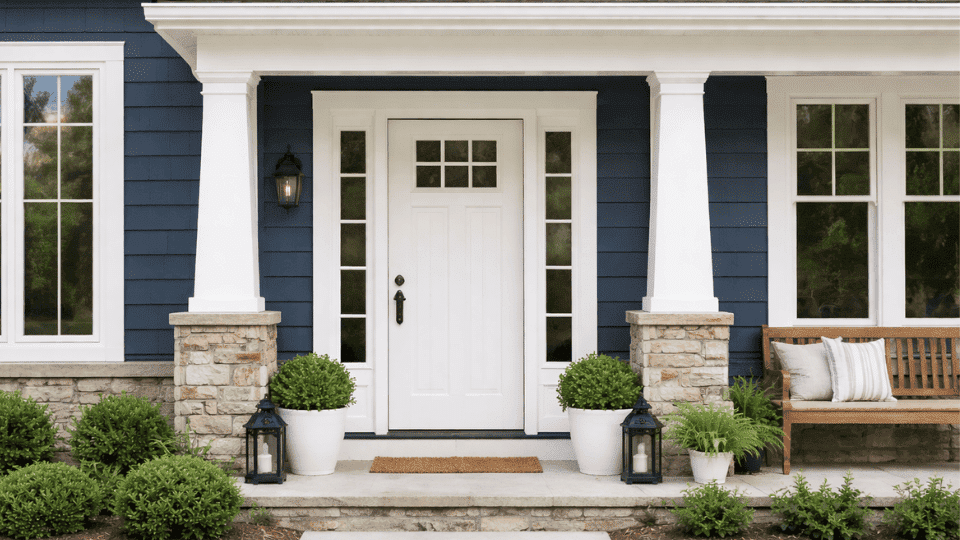
This deep blue shade can work well for exterior areas when you want a bold but classic look. The rich navy tone stands out nicely against light siding, brick, or other neutral exterior colors.
Many homeowners use it on front doors, exterior shutters, garage doors, and small siding accents to create contrast without repainting the entire house.
Because the color is dark and rich, it adds depth and character to exterior features. It also pairs well with white trim and natural stone.
When used on exterior accents, this shade can give a home a polished and balanced look while keeping the overall design simple and timeless.
Exterior Finish Note
For exterior applications, use Sherwin-Williams Emerald Exterior or Duration Exterior in satin. Flat exterior finishes on dark colors show every water streak, dust mark, and handprint.
Satin holds up better to weather and stays cleaner over time. On front doors specifically, semi-gloss gives the most durable finish and catches light in a way that makes the color read as richer and more polished.
Tips for Testing Indigo Batik Before Painting
Testing paint before committing to a full wall helps you see the true color. Indigo Batik can change slightly depending on lighting and nearby materials.
- Large Samples: Always paint a large sample area on your wall rather than relying on a small paint chip. Bigger samples help you see how Indigo Batik actually looks across a wider surface.
- Different Times: Check the painted sample during morning, afternoon, and evening hours. Natural daylight changes throughout the day, and Indigo Batik may appear brighter, softer, or deeper.
- Nearby Surfaces: Look at the sample next to trim, flooring, furniture, and décor. Surrounding colors can influence how Indigo Batik appears, sometimes making the blue look darker or cooler.
- Artificial Lighting: Turn on your room’s lights at night and observe the color carefully. Warm bulbs may soften the blue while cooler lighting can make the shade look sharper.
- Multiple Walls: Try the sample on more than one wall if possible. Light direction and window placement can change how Indigo Batik appears in different parts of the room.
Taking time to test paint samples helps you avoid surprises later. It also ensures Indigo Batik looks balanced and comfortable in your room.
Foam Board Testing Technique
Rather than patching directly on the wall, paint a large piece of white foam board (at least 12″x18″) with two coats of Indigo Batik.
You can move it around the room, hold it against the trim, test it in the corner versus against the window, all without committing.
This technique is especially useful with a dark, opaque color like Indigo Batik, where the existing wall color underneath can subtly affect how a small patch reads.
When Indigo Batik is Not the Right Call
Based on what I’ve seen in real projects, there are a few specific situations where I’d steer someone away from this color despite its appeal.
- Rooms where you need maximum light: A home office where you’re doing detail work, a kitchen with no window, or a bathroom without adequate ventilation lighting. Dark paint in these spaces works against the practical demands of the room.
- Rooms with existing warm-toned wood paneling: The cool blue of Indigo Batik can fight with orange or red-toned wood rather than complement it. In those spaces, a warmer navy like Naval or Hale Navy handles the pairing better.
- If you’re genuinely purple-averse: Some people are very sensitive to purple undertones. If you strongly dislike any hint of purple and the room uses warm artificial lighting, Naval is a cleaner, more purely blue option.
Wrap Up
Sherwin-Williams Indigo Batik is a rich blue that can add depth and character to many spaces. I like how it feels bold without being too bright or overwhelming.
The soft gray and violet hints make it more flexible than many other navy shades. If you’re thinking about using this color, take time to test it in your space.
Light, furniture, and trim colors can change how it looks throughout the day. Once you see it in your own room, you’ll have a much better idea of whether it fits your style.
If you’re planning a paint project soon, keep this color on your shortlist. Try a sample first and see how Indigo Batik works with your lighting and décor.