

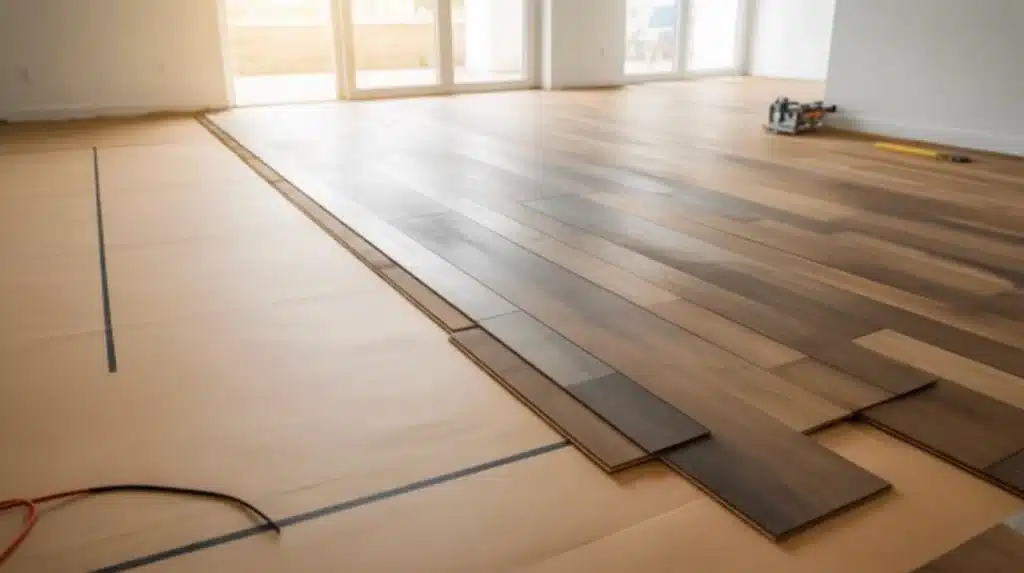


Choosing which direction to lay vinyl plank flooring seems simple until you start researching it. One source says follow the longest wall, another says follow the light, and a third says align with the joists.
By the time I had read five articles, I had five conflicting opinions and a room full of unopened boxes. If that sounds familiar, I’ve been right where you are. The answer isn’t hidden in some expert formula.
In my experience, it comes down to a few clear factors and making a call that fits your specific space. Let me help you by explaining everything you need to move forward with confidence.
What Determines the Direction of Vinyl Plank Flooring?
Before you lock in a direction, I find it genuinely useful to understand what’s actually driving the decision in the first place, because it’s less about rules and more about results. Here’s what determines which direction to lay vinyl plank flooring:
- Floating Floor Design: Plank direction is about visual outcomes, not structural rules, since vinyl isn’t nailed or glued down like hardwood.
- Room Shape Matters: Your room’s proportions determine which direction makes the space feel longer, wider, or more balanced.
- Natural Light Source: Running planks toward or across your light source can either highlight or soften the plank lines.
- Floor Joist Orientation: Joist direction rarely affects modern click-lock installs, but it’s still worth checking before you start.
- Entry Point Placement: Where someone first steps in sets the visual tone, making entry alignment a practical factor.
- Open Plan Continuity: One consistent direction across connected rooms creates flow and makes the whole space feel cohesive.
Once you understand these factors, the decision starts to feel a lot less overwhelming, and in my experience, the right direction for your space becomes fairly clear on its own.
The Main Rules for Which Direction to Lay Vinyl Plank Flooring
Most flooring advice circles back to the same core principles. Understanding how each rule works and when it actually applies makes the decision far more straightforward.
1. Run Planks Parallel to the Longest Wall
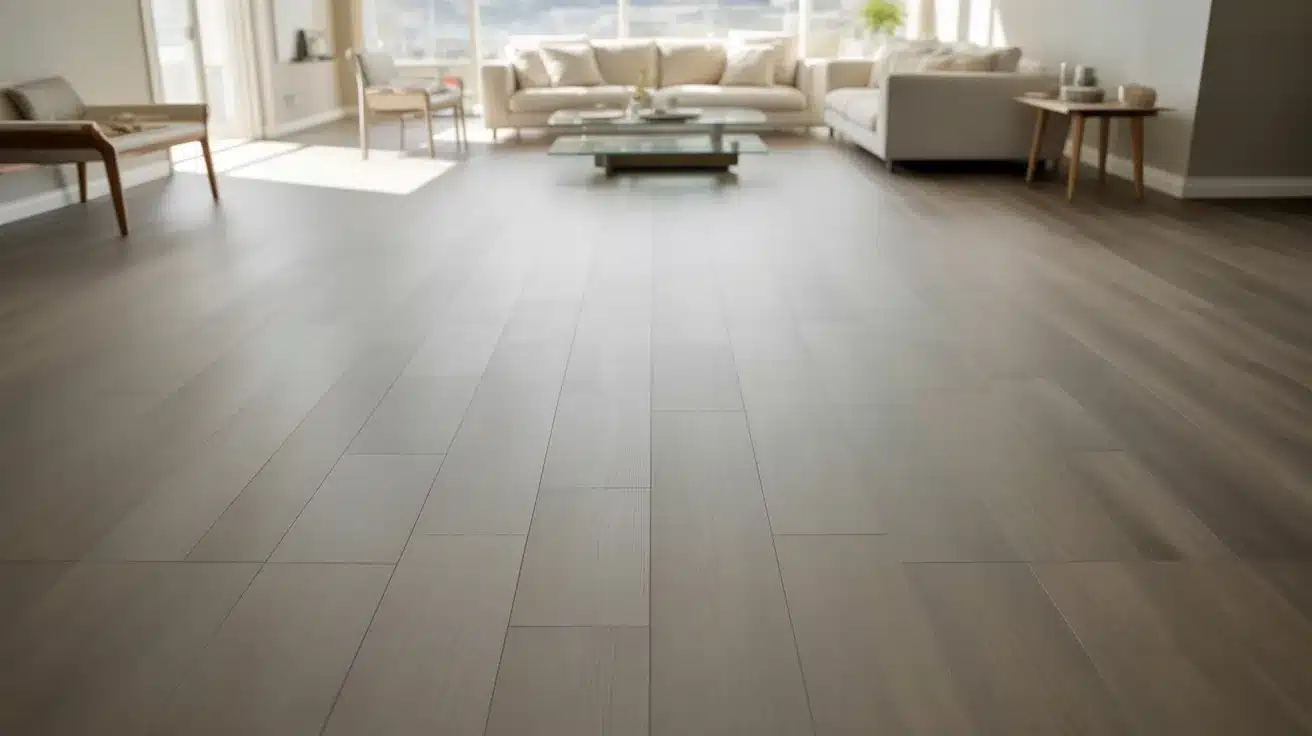
This is the most widely recommended starting point, and from my experience, it holds up in most situations. When planks run parallel to the longest wall, the eye follows them naturally from one end to the other.
The space feels longer and more open without any structural changes. It works cleanly in living rooms, bedrooms, and any rectangular room with a clear dominant length, while also reducing cuts along the shorter walls.
2. Follow the Main Natural Light Source
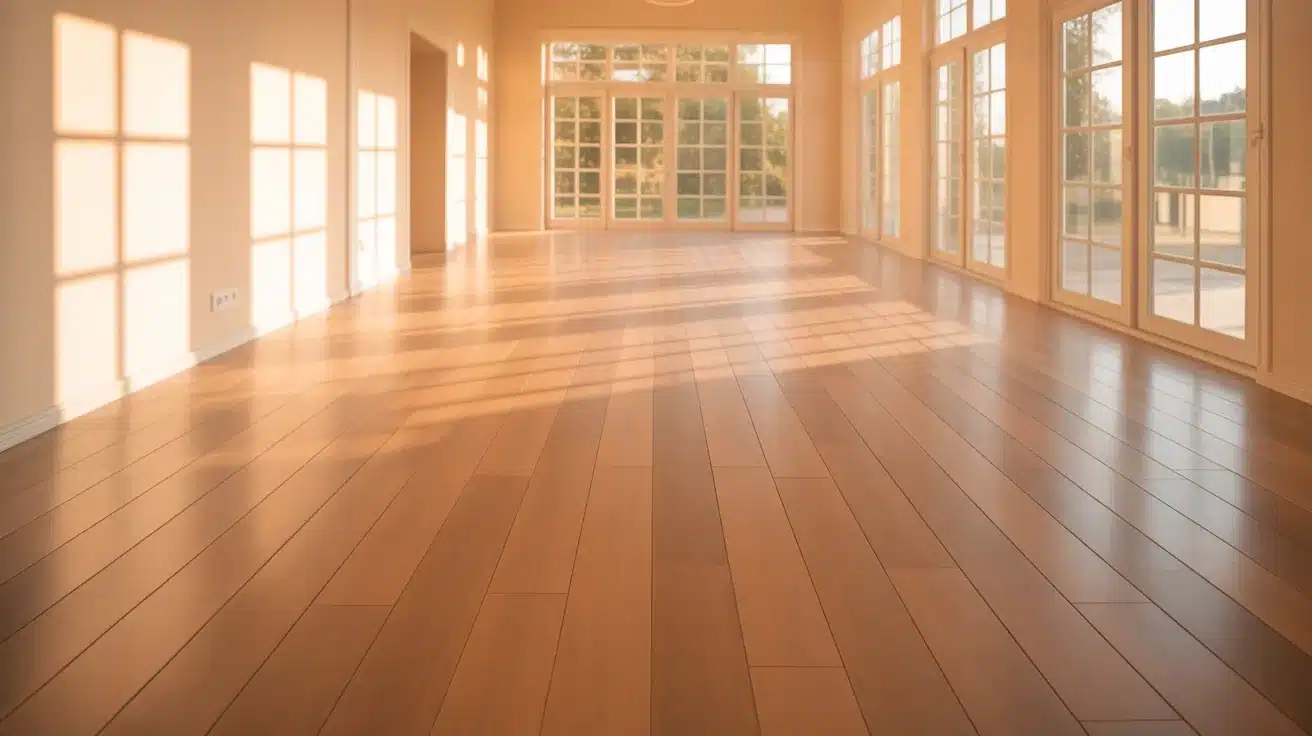
Some installers prioritize light direction over wall length, and there’s solid reasoning behind it. When planks run toward the main natural light source, light hits the floor surface more evenly across the full length.
Seams catch less shadow, minor gaps become far less noticeable, and the floor reads as smoother overall. This matters most in rooms with large south- or west-facing windows where light is strong throughout the day.
3. Install Perpendicular to Floor Joists
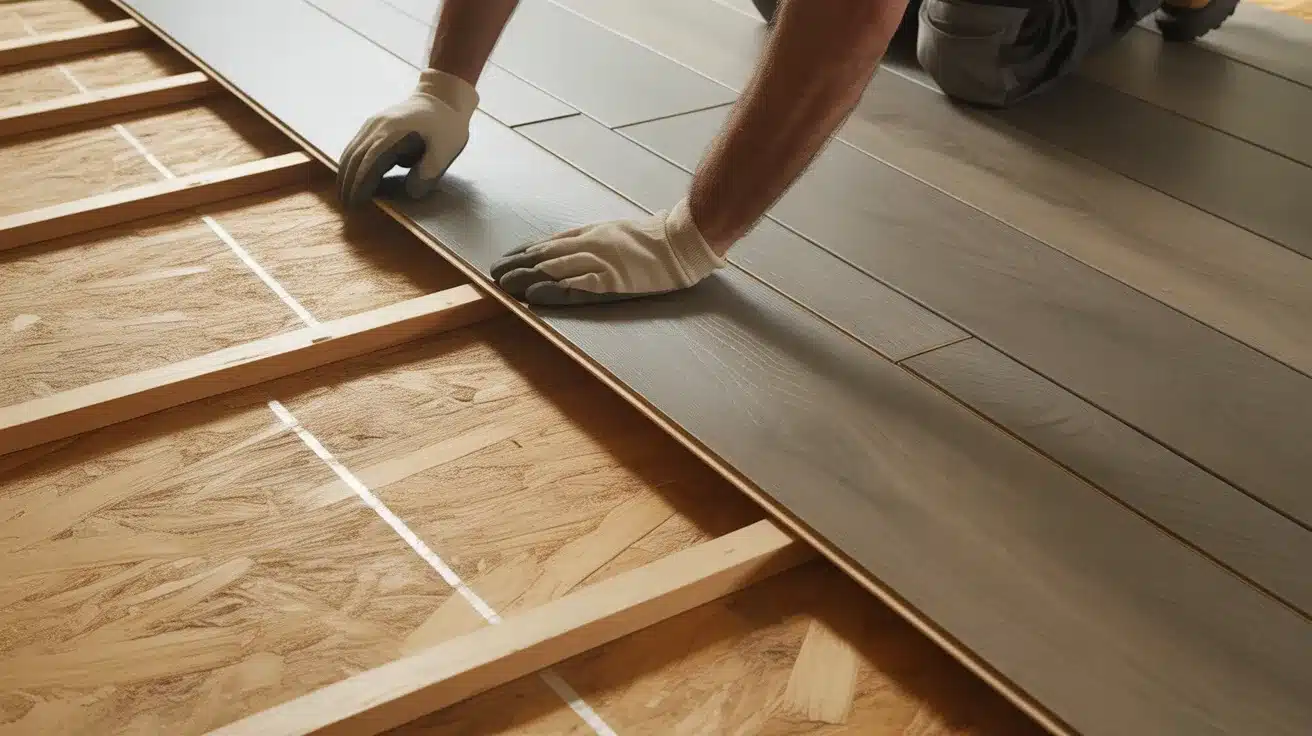
This rule most often applies to wood subfloor situations where stability is a genuine concern. Running planks perpendicular to floor joists adds rigidity and reduces the slight bounce older wood subfloors develop over time.
On a concrete slab, joist direction is entirely irrelevant. For most modern click-lock products, this isn’t a make-or-break decision, but on an older wood subfloor with noticeable give, it’s worth checking before the first row goes down.
4. Run Lengthwise in Hallways
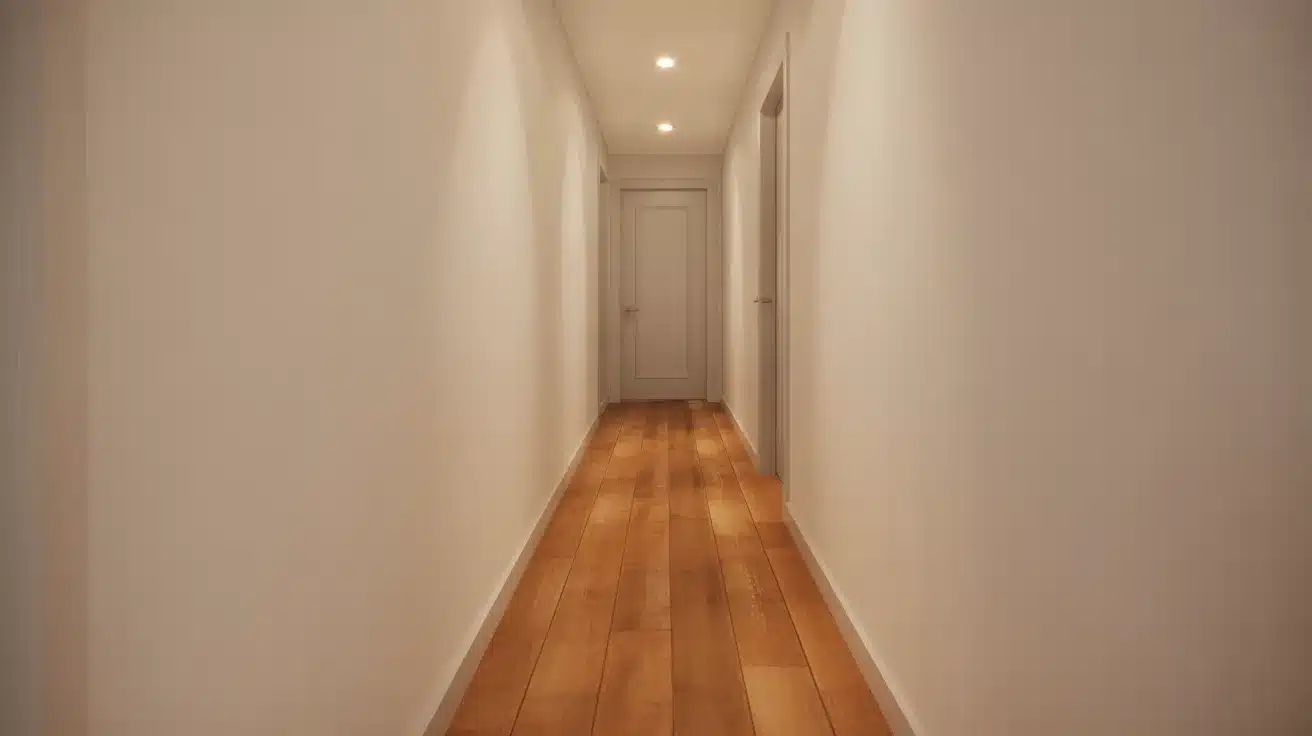
Hallways follow a different logic from open rooms, and this direction choice is rarely worth debating. Running planks lengthwise naturally move the eye forward, making the space feel connected rather than broken up.
Cross-installation creates short, choppy lines that make narrow spaces feel cramped. The hallway also reads as a natural extension of the adjoining room’s floor rather than a separate, disconnected zone, which is exactly what you want.
5. Keep Direction Consistent in Open Floor Plans
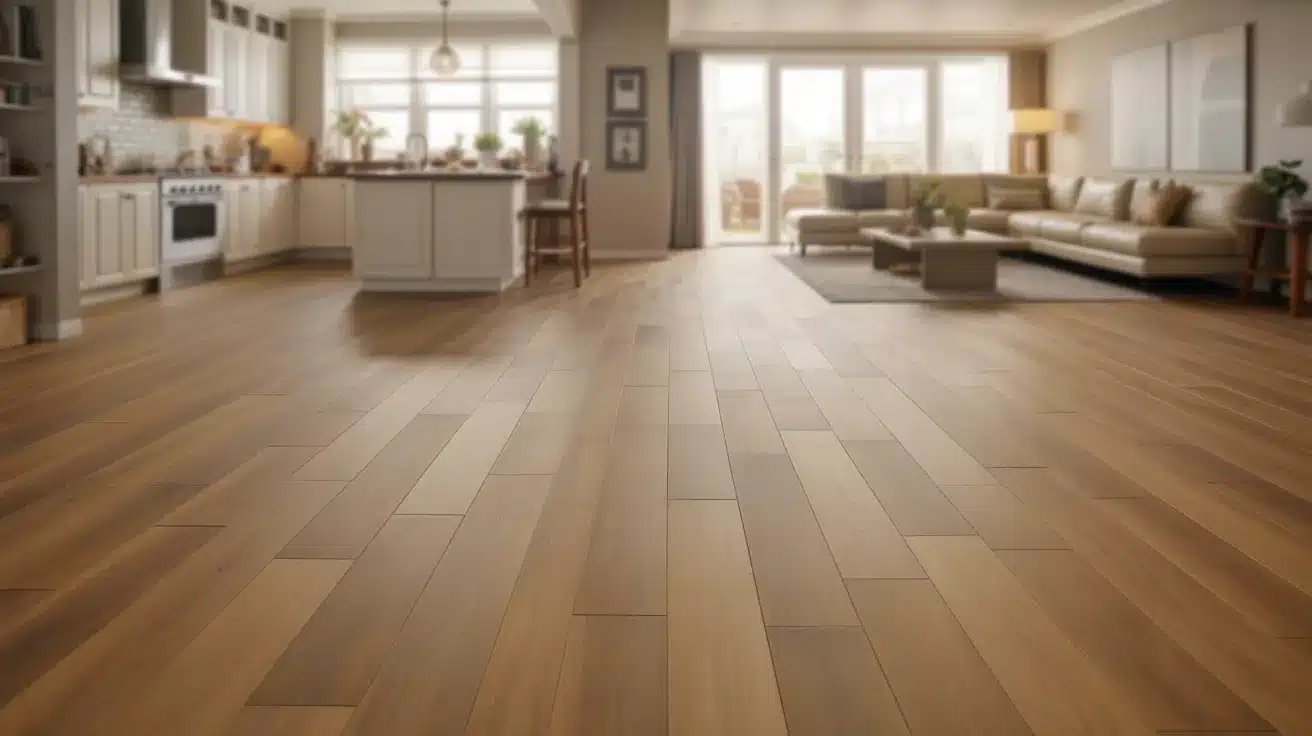
In open floor plans where rooms connect without walls, a direction change mid-space creates a visual break that most people notice immediately. Maintaining a single, consistent direction across the entire area allows the floor to read as a single continuous surface.
A transition strip can justify a change between doorway-separated rooms, but in fully open layouts, choosing direction based on the longest sight line across the whole space consistently produces the cleanest result.
How Direction Changes the Way a Room Feels
Most flooring guides focus on rules and skip the visual logic entirely. Plank direction controls where the eye travels, and that shapes how large or comfortable a room actually feels. Here’s a clear breakdown:
| Plank Direction | Visual Effect | Best Used When |
| Parallel to the longest wall | The room feels longer, the eye moves end to end | Space feels short or lacks depth |
| Across the longest wall | The room feels wider, and space opens sideways | Space feels narrow or cramped |
| Toward the main window | The eye moves toward the light, and the floor reads more smoothly. | The room has a strong natural light source |
| From the entry to the back wall | Creates depth, space feels more generous | The room is small or needs a sense of distance |
No extra material or cuts are needed to achieve any of these effects. The result comes entirely from which direction the lines run when someone stands at the doorway and looks in.
Vinyl Plank Layout Patterns Worth Knowing
Direction and pattern are distinct choices that both shape the final result. Getting the pattern right is just as important as deciding which way the planks run.
1. Standard Staggered Pattern
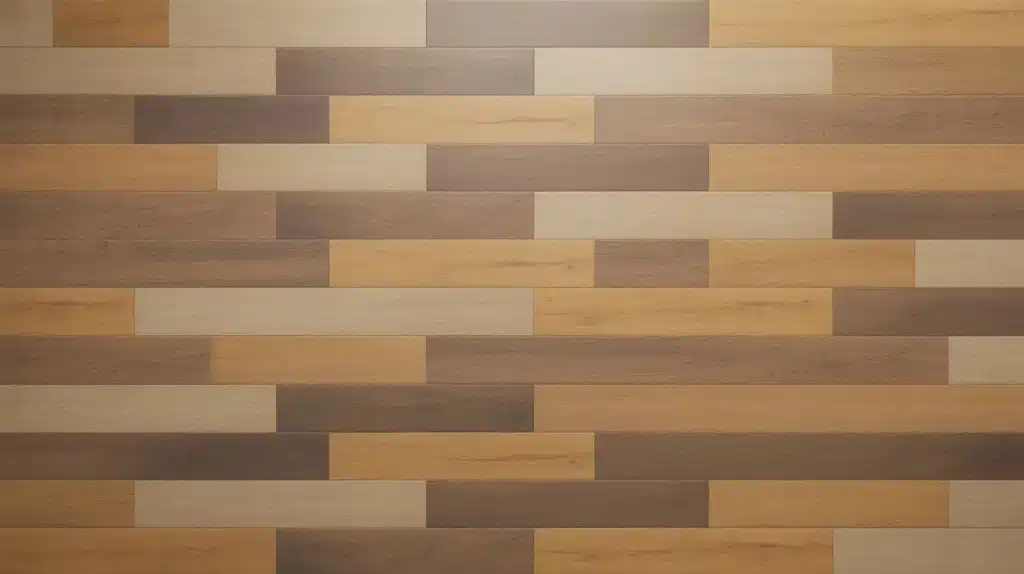
The most common starting point for good reason, it mimics natural wood closely and works across nearly every room type, size, and style without looking out of place. Here’s what to know before committing:
- End joints are randomized, closely resembling real hardwood and avoiding rigid, repetitive lines
- Avoid the H-pattern and stair-step offsets, where joints in alternating rows align predictably
- Beginner-friendly and the most forgiving pattern for anyone installing vinyl plank for the first time
Aside from avoiding those two specific joint patterns, this layout is difficult to get wrong and suits almost any space well.
2. Brick or Fixed Offset Pattern
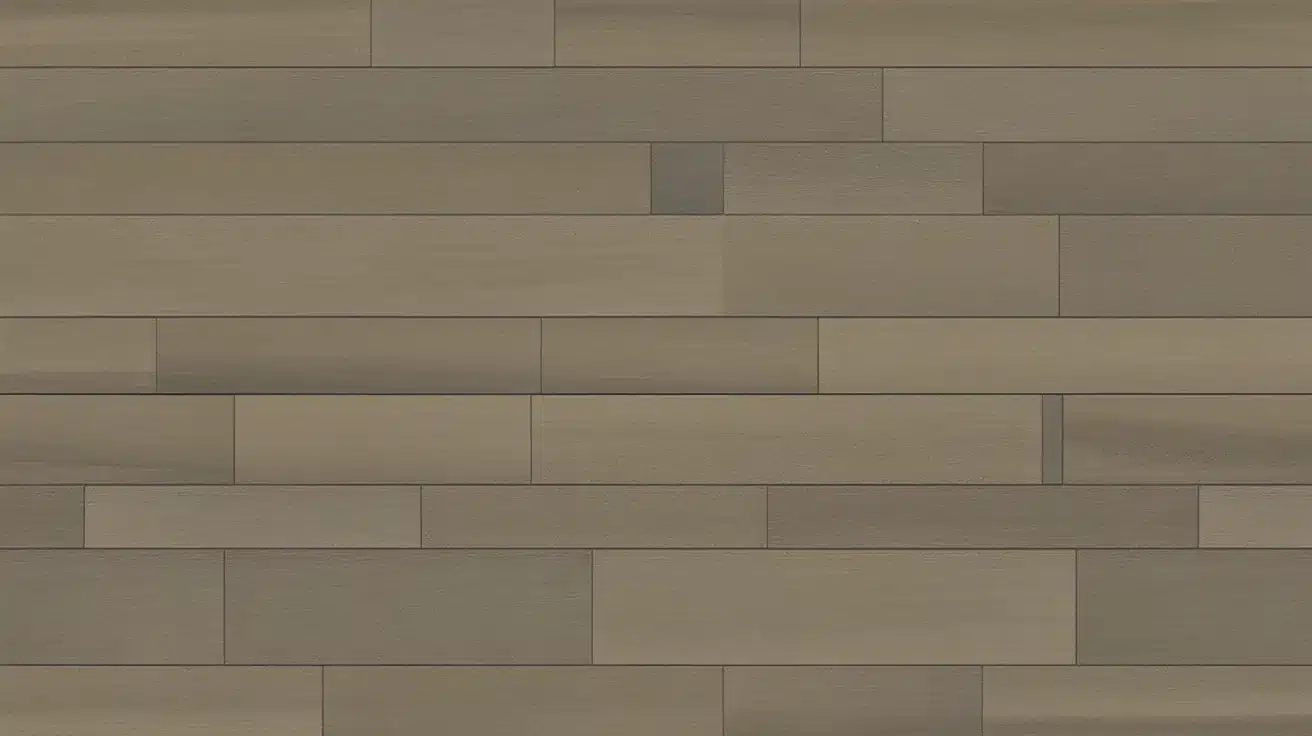
A fixed offset, typically one-third of a plank length, suits spaces where clean lines and deliberate symmetry matter more than a natural, organic floor appearance. Here’s the full picture:
- Creates a structured, uniform look with consistent and repeatable lines throughout the floor
- Works well in modern or contemporary interiors where geometry is part of the overall design
- Easier to plan than a randomized stagger, but less forgiving if plank lengths vary across the batch
The fixed offset is a deliberate stylistic choice rather than a default. It pays off most in rooms where the floor is meant to feel intentional and structured.
3. Diagonal Layout
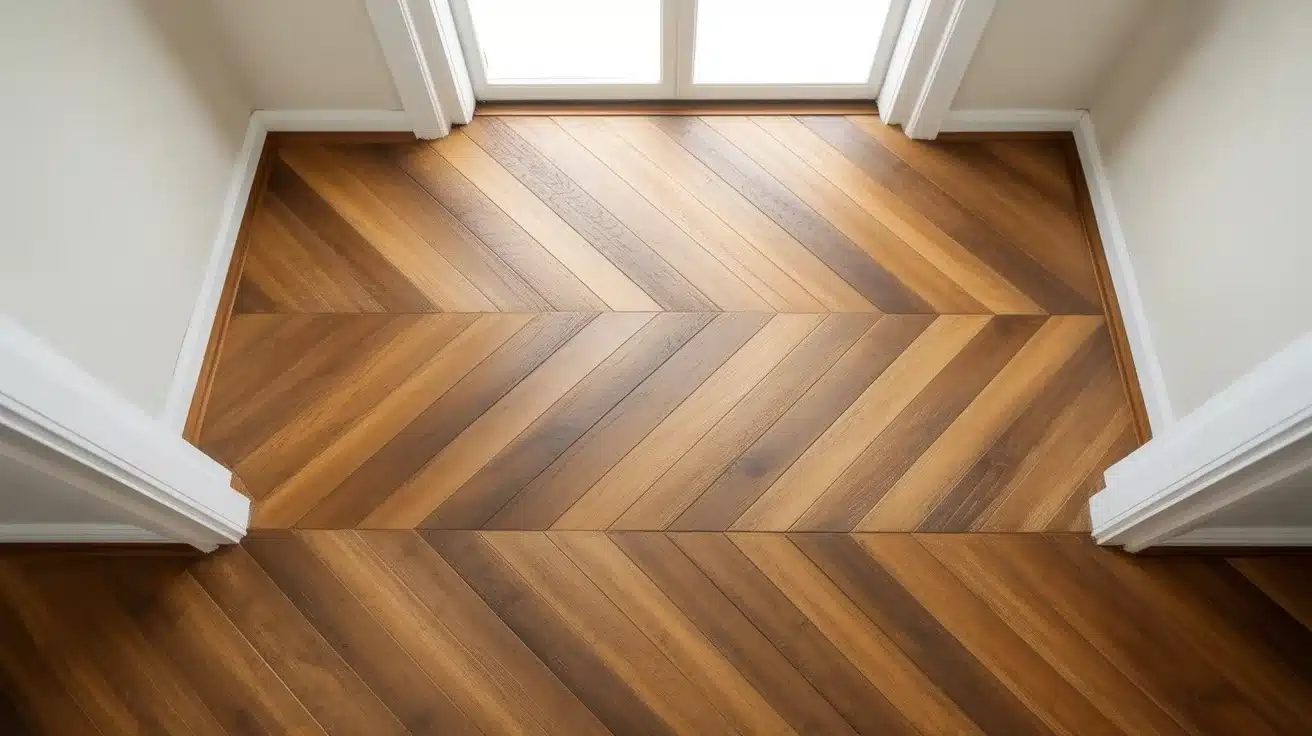
Running planks at a 45-degree angle is one of the more practical ways to make a small or awkward room feel noticeably larger without any structural changes to the space. Here’s what sets it apart:
- Diagonal lines draw the eye outward, making tight or square rooms feel more open
- Requires significantly more cuts along every wall edge and increases material waste by 10–15%
- Intermediate skill level, manageable with patience, but not ideal as a first installation attempt
The visual payoff is real in the right room, but the added cuts and waste make this a considered choice rather than a practical default for larger or straightforward spaces.
What the Reddit Community Actually Says About Plank Direction
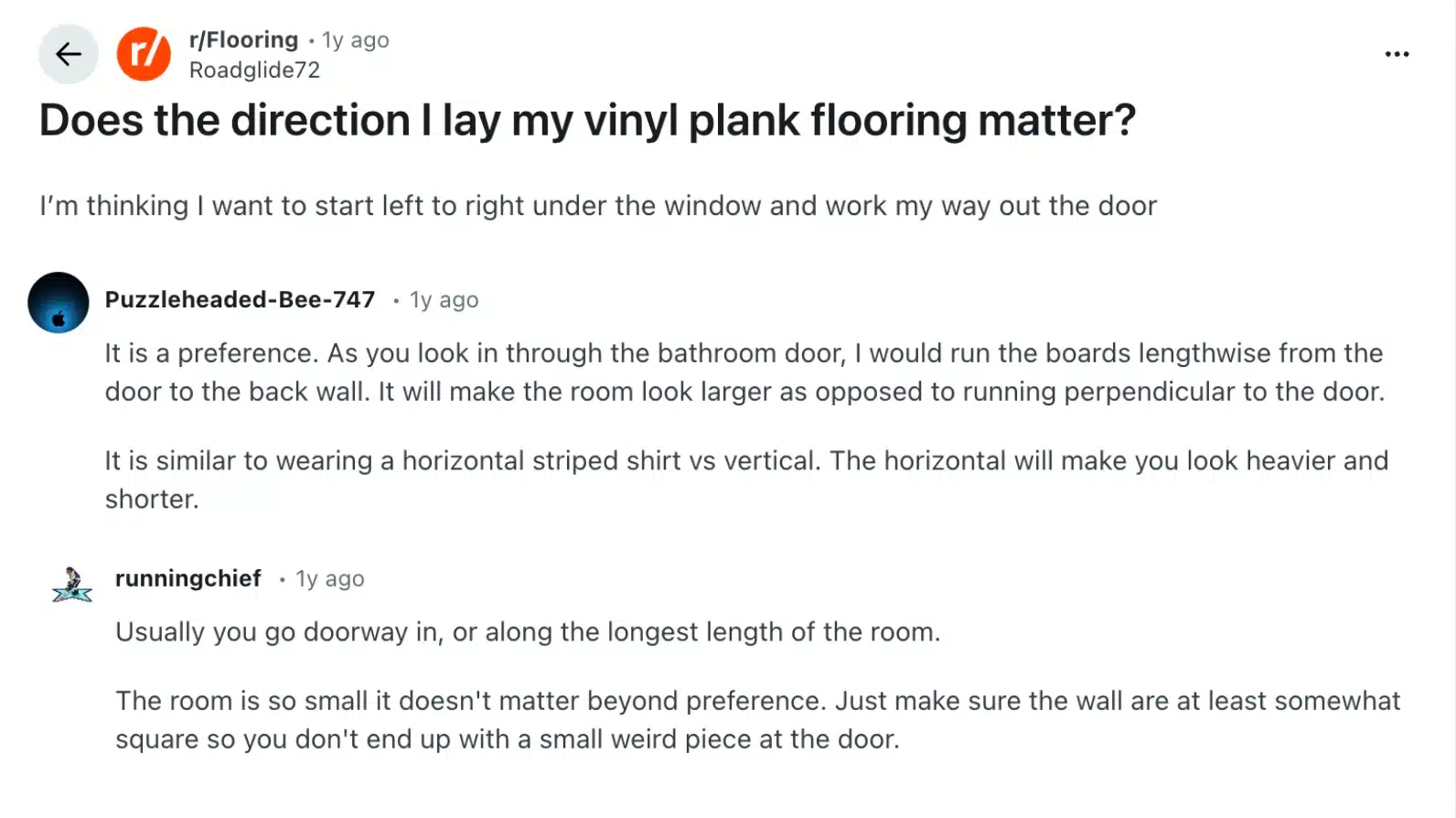
After going through that Reddit discussion, I noticed something consistent. No one pushed a single hard rule. Instead, most advice focused on visual flow and how the floor feels once everything is installed.
One user said following the longest line of sight from the main entrance made the space feel more natural.
Another user said they changed direction between connected rooms and later regretted it because the break looked awkward.
Many users preferred keeping one direction throughout an open floor plan, especially when rooms flow directly into each other. Several mentioned that changing direction without a wall or divider made the space feel chopped up.
A few users also brought up natural light, saying they didn’t consider how sunlight would hit the seams until after installation. From what I gathered, the shared mindset was clear: continuity and light matter more than strict rules.
How to Make the Final Call?
Before the first plank goes down, a few quick checks at the entrance will give you a clear, confident direction for the entire floor. Here’s what you need to check:
- Main entrance first: stand there and look toward the longest sight line in the room
- Natural light source: identify where the strongest light comes from before committing to a direction
- Room connections: check whether adjacent rooms connect openly or are separated by a doorway
- Visual flow: ask which direction makes the space feel larger and more continuous
- Small square rooms: skip the analysis and choose whichever direction needs fewer cuts
- Starting position: begin in the left-hand corner with the tongue side facing the wall, working left to right
- Expansion gap: Leave a quarter-inch around the full perimeter to prevent buckling over time
Taking two minutes to assess the room before the first plank goes down saves considerable frustration mid-installation. Get these basics right, and the rest of the process follows naturally.
Final Thoughts
Figuring out which direction to lay vinyl plank flooring comes down to reading the room rather than following a fixed rule. The longest wall is a reliable starting point in most spaces, but light, room shape, and open connections all shift that decision.
My approach, and the one that worked best for me, is to stand in the doorway, look at the space honestly, and think about where I want the eye to go.
The floor will be there for years, so a few minutes of thinking through direction before the first plank goes down is always worth it.
Get the direction right, keep the pattern consistent, and the rest falls into place. Drop your question or experience in the comments below.